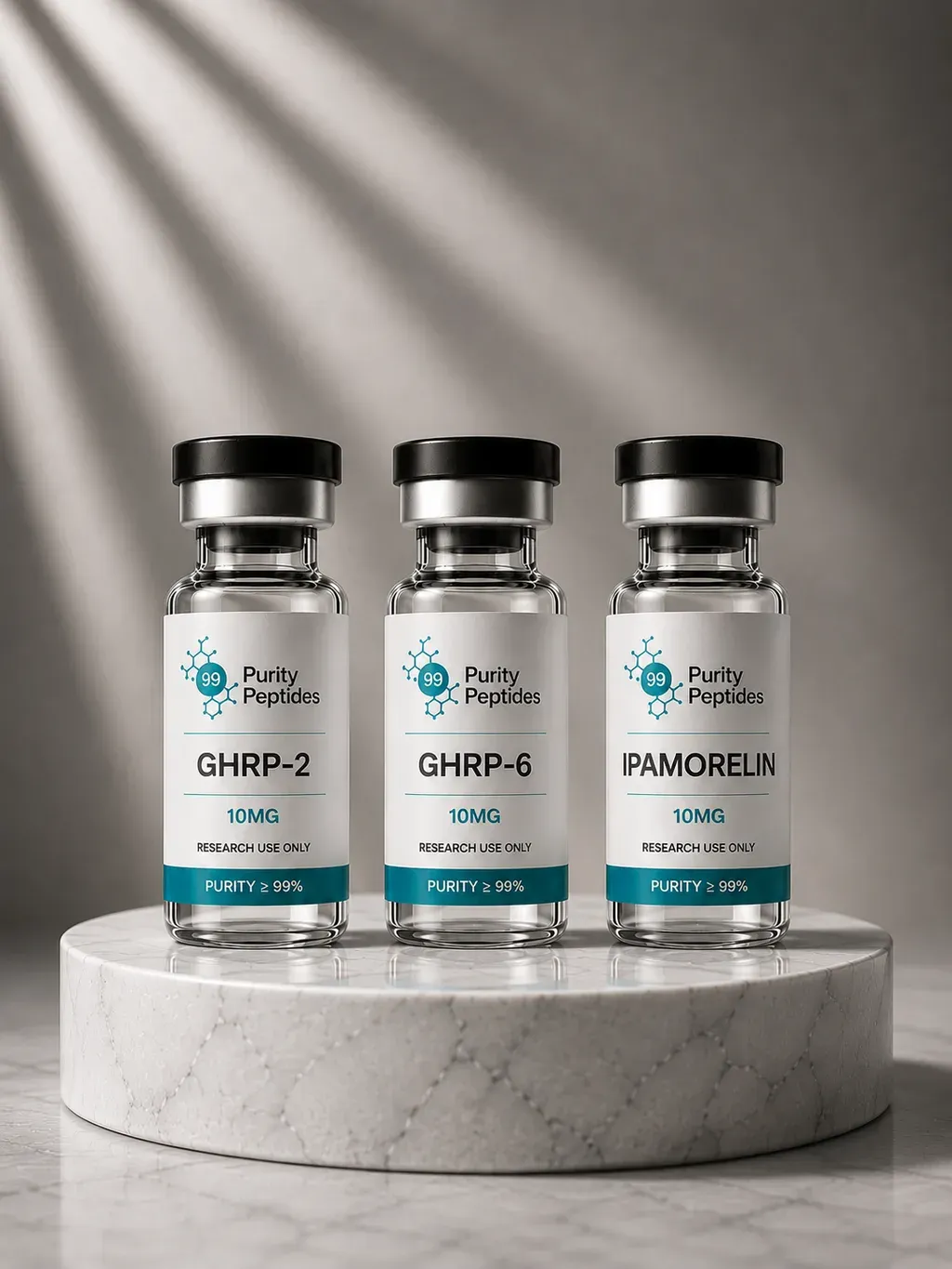
The GHS-R Ligand Comparator supplies three growth hormone secretagogue receptor agonists at 10 mg each: GHRP-6, GHRP-2 and Ipamorelin. All three act at the same receptor and share a primary mechanism. What separates them is the breadth of secondary endocrine response reported at GH-releasing concentrations, spanning first to third generation secretagogue design. For research use only.
HPLC certified
Independent analysis
Highest standard
Full traceability
The GHS-R Ligand Comparator brings together three agonists at the growth hormone secretagogue receptor, GHS-R1a, at matched 10 mg mass. Because all three engage the same receptor through the same primary route, the set compares selectivity rather than mechanism.
The three compounds represent successive generations of secretagogue design. GHRP-6 is a first-generation hexapeptide with pronounced appetite-axis signalling reported alongside its GH-releasing activity. GHRP-2, also known as pralmorelin, is a second-generation hexapeptide with greater GH-releasing potency and documented prolactin, ACTH and cortisol responses. Ipamorelin is a third-generation pentapeptide developed specifically to minimise those secondary endocrine responses at GH-releasing concentrations.
That progression forms a selectivity gradient — from broad secondary profile to narrow — which is among the more useful arrangements available for receptor pharmacology work, since it allows a receptor’s off-target profile to be mapped rather than assumed.
Ipamorelin is worth noting structurally. It is a pentapeptide where both GHRPs are hexapeptides. Its improved selectivity came from a shorter, redesigned sequence rather than from additional modifications. All three contain non-proteinogenic residues, including D-amino acids, which contributes to their protease resistance and has consequences for analytical verification.
All three vials are supplied lyophilized with batch documentation.
For Research Use Only. Not intended for human consumption, therapeutic use, veterinary use, or diagnostic applications.
The GHS-R Ligand Comparator is a three-vial set containing GHRP-2, GHRP-6 and Ipamorelin at 10 mg each. All three are agonists at the growth hormone secretagogue receptor GHS-R1a, so the primary mechanism is held constant. What differs is the breadth of secondary endocrine response reported for each, forming a gradient from GHRP-6 through GHRP-2 to the more selective Ipamorelin.
| Compound | Mass | Also known as | Residues | Generation |
|---|---|---|---|---|
| GHRP-6 | 10 mg | Growth hormone releasing peptide-6 | 6 — hexapeptide | First |
| GHRP-2 | 10 mg | Pralmorelin, KP-102 | 6 — hexapeptide | Second |
| Ipamorelin | 10 mg | NNC 26-0161 | 5 — pentapeptide | Third |
All three vials are supplied as lyophilized powder with batch documentation.
The three compounds share a receptor and a primary action. They differ in what else they engage.
All three are agonists at GHS-R1a, the growth hormone secretagogue receptor, for which ghrelin is the endogenous ligand. GHS-R1a is a class A G protein-coupled receptor signalling through Gq/11 to phospholipase C, generating IP3 and diacylglycerol and raising intracellular calcium.
All three also act through a shared secondary route: reducing somatostatin restraint on the somatotroph. Growth hormone release under GHS-R1a agonism reflects both direct stimulation and this reduction in inhibitory tone.
Because the receptor and both routes are common to all three, differences between the compounds are not differences in primary mechanism.
GHRP-6 is a hexapeptide and the earliest of the three. Alongside GH-releasing activity, GHRP-6 is characterised in the literature by pronounced signalling through appetite-related pathways, reflecting GHS-R1a expression in hypothalamic regions beyond the somatotroph population.
That breadth makes GHRP-6 the reference point in this set. It is the compound against which “more selective” is defined, and a selectivity comparison without the broad-profile compound has nothing to measure from.
GHRP-2, also known as pralmorelin and KP-102, is a second-generation hexapeptide. It is reported as more potent than GHRP-6 for GH release, with less pronounced appetite-axis signalling.
It carries its own documented secondary endpoints, however: prolactin, ACTH and cortisol responses appear in the published characterisation of GHRP-2 at concentrations producing GH release. Higher potency at the primary endpoint did not narrow the endocrine response.
Ipamorelin is a pentapeptide — five residues where both GHRPs have six. It was developed specifically to produce GH release with minimal prolactin, ACTH and cortisol response, and is described in the literature as the first selective growth hormone secretagogue.
The structural point is worth noting. Ipamorelin’s narrower profile came from a shorter, redesigned sequence rather than from additional modifications layered onto an existing one. Selectivity was achieved by subtraction.
Ipamorelin also incorporates α-aminoisobutyric acid, a non-proteinogenic residue, alongside D-amino acids shared with the other two compounds. See how GHRP-6 and ipamorelin compare.
Be the first to share your experience with this product and help other researchers!
GHRP-6 vs Ipamorelin compared for researchers: selectivity, mechanism, and study data. Research-use-only peptides — read the full comparison.
Ipamorelin vs CJC-1295 compared: mechanism, half-life, selectivity, and purity for research. See 99 Purity Peptides' full comparison guide.
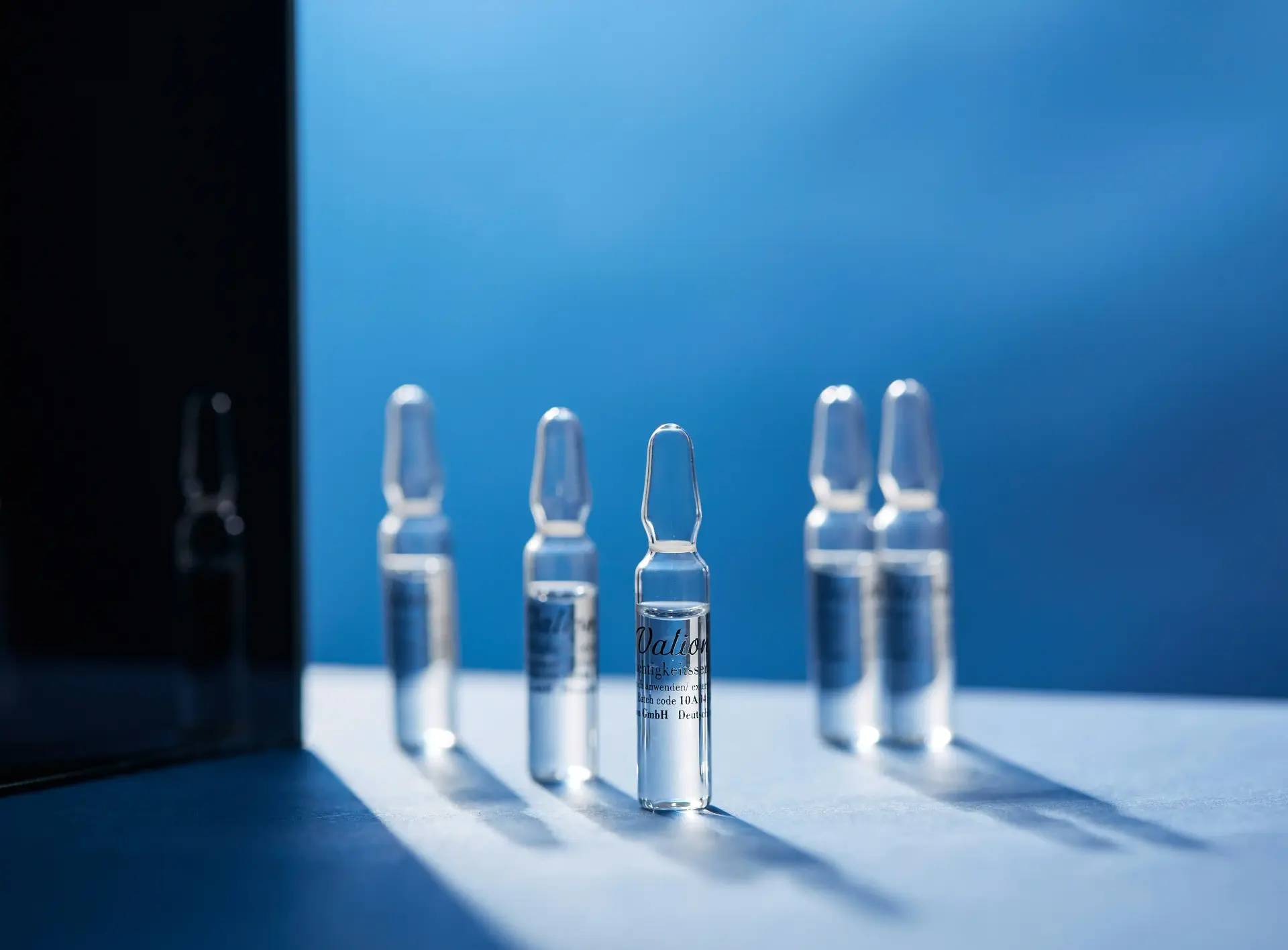
GHRP-2 vs GHRP-6 compared for researchers: mechanism, structure, appetite response, and study data. Research-use-only peptides — read the full comparison
(faqs)