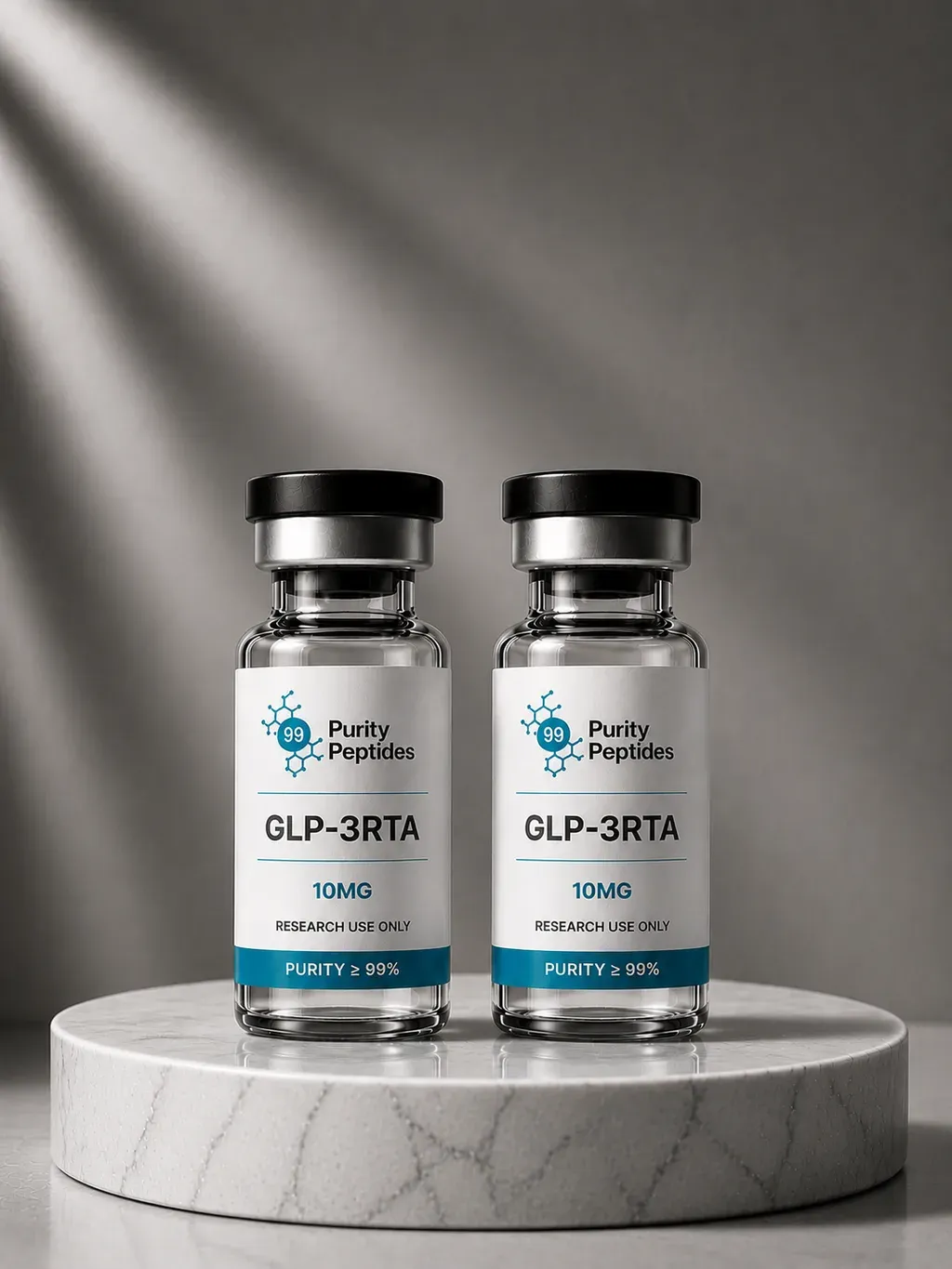
The Glp-3RTA Research Pair supplies two 10 mg vials of the same material, 20 mg in total. Two separate vials allow two independently reconstituted preparations rather than aliquots of a single one, and permit one vial to be held lyophilized while the other is in use. For research use only.
HPLC certified
Independent analysis
Highest standard
Full traceability
The Glp-3RTA Research Pair contains two 10 mg vials of identical material, supplied lyophilized with batch documentation.
The pair is a quantity configuration rather than a comparison set. Both vials contain the same material to the same specification, and no scientific comparison exists between them.
Two separate vials do offer something a single vial cannot. Reconstituting one vial and dividing it produces a single preparation measured more than once; every aliquot shares whatever occurred during that reconstitution. Two separately reconstituted vials produce two preparations, which allows preparation-to-preparation variability to be assessed as a control.
Holding two vials also allows one to remain lyophilized while the other is in use. Lyophilized material is more stable than material in solution. Both vials are supplied with individual batch documentation.
For Research Use Only. Not intended for human consumption, therapeutic use, veterinary use, or diagnostic applications.
The Glp-3RTA Research Pair contains two 10 mg vials of the same material, 20 mg in total. It is a quantity configuration, not a comparison set — both vials are identical. Two vials allow two independently prepared solutions rather than aliquots of one, and allow one to be held in reserve.
| Item | Quantity | Mass each | Total |
|---|---|---|---|
| Glp-3RTA vial | 2 | 10 mg | 20 mg |
Both vials are supplied as lyophilized powder with batch documentation. The same material is available as a single vial.
Two vials of identical material serve a procurement and preparation purpose rather than a comparative one. There is no scientific difference between them to examine.
What two vials allow is straightforward:
This distinction is the reason two vials can matter experimentally.
Reconstituting a single vial and dividing it produces one preparation measured more than once. Every aliquot shares whatever occurred during that reconstitution — an error in diluent volume, incomplete dissolution, a contamination event, a temperature excursion. Those are ordinary sources of variability, and aliquots from a common preparation cannot distinguish them from the material’s own behaviour.
Two separately reconstituted vials produce two preparations. Comparing them assesses preparation-to-preparation variability, which is a genuine control rather than a repeated measurement.
Whether that control is needed depends on the study. Where reproducibility across preparations is part of what is being examined, one vial cannot supply it however carefully it is divided.
Be the first to share your experience with this product and help other researchers!

Retatrutide cagrilintide research explained: what the 2026 rat combination study tested, why it is not human data, and the approval status of each compound.

GHK-Cu nasal spray research reviewed: three mouse studies from one lab, no human data, and what is still unknown about absorption and tolerability.
MOTS-c vs SS-31 compared on identity, mechanism, animal data and human trial evidence — including why no direct comparison exists.
(faqs)