Retatrutide 10mg is a research-grade synthetic peptide investigated for its simultaneous interaction with glucagon-like peptide-1 (GLP-1), glucose-dependent insulinotropic polypeptide (GIP), and glucagon receptors. Classified as a triple receptor agonist, Retatrutide has become an important molecule in metabolic and endocrine research because of its unique multi-pathway signaling profile. Each batch is manufactured for laboratory research and analytically verified to support reproducible scientific investigations.
HPLC certified
Independent analysis
Highest standard
Full traceability
Retatrutide 10mg is a synthetic investigational peptide designed to activate three distinct metabolic receptors: the GLP-1 receptor (GLP-1R), the GIP receptor (GIPR), and the glucagon receptor (GCGR). Unlike earlier incretin-based research compounds that primarily target one or two signaling pathways, Retatrutide was engineered to evaluate how coordinated receptor activation influences complex metabolic regulation in experimental models.
Researchers continue to investigate Retatrutide across multiple areas of laboratory science, including peptide pharmacology, receptor biology, metabolic signaling, endocrine regulation, energy homeostasis, and intracellular communication. Its multi-agonist profile has generated considerable scientific interest because it enables researchers to study interactions between complementary hormonal pathways within a single experimental system. As interest in next-generation metabolic peptides continues to expand, Retatrutide has become an increasingly valuable research compound for laboratories examining integrated peptide signaling mechanisms under controlled conditions.
Retatrutide 10mg is a research-grade synthetic peptide belonging to a new generation of multifunctional receptor agonists developed for laboratory investigations involving metabolic regulation and peptide signaling. It is distinguished by its ability to activate three physiologically significant receptors simultaneously: the glucagon-like peptide-1 receptor (GLP-1R), the glucose-dependent insulinotropic polypeptide receptor (GIPR), and the glucagon receptor (GCGR). This triple agonist design differentiates Retatrutide from earlier investigational peptides that primarily targeted one or two metabolic pathways, allowing researchers to explore coordinated endocrine signaling within a single experimental model.
From a molecular research perspective, Retatrutide provides an opportunity to investigate how multiple peptide hormone systems interact rather than functioning independently. GLP-1, GIP, and glucagon each regulate distinct but interconnected signaling networks associated with nutrient sensing, cellular metabolism, and endocrine communication. By combining activity across these receptor families, researchers can examine signaling cross-talk, downstream molecular responses, and pathway integration that may not be observable when receptors are studied in isolation. This systems-level approach has contributed to Retatrutide becoming one of the most actively investigated compounds in contemporary metabolic peptide research.
Current laboratory investigations examine Retatrutide's interaction with intracellular signaling pathways initiated following receptor activation. Studies explore mechanisms involving cyclic adenosine monophosphate (cAMP) production, protein kinase activation, receptor internalization, second messenger signaling, and transcriptional regulation. Researchers also investigate how simultaneous activation of GLP-1R, GIPR, and GCGR influences downstream cellular communication and coordinated physiological signaling in controlled experimental environments. While these mechanisms continue to be characterized, Retatrutide serves as a valuable molecular tool for understanding complex receptor biology rather than isolated receptor function.
Beyond receptor pharmacology, Retatrutide is frequently incorporated into studies of endocrine physiology and metabolic network biology. Experimental models investigate how integrated incretin and glucagon signaling contributes to broader regulatory systems governing energy balance, substrate utilization, hormonal communication, and adaptive metabolic responses. Because these pathways are highly interconnected, Retatrutide enables researchers to evaluate network-level biological behavior instead of focusing exclusively on individual signaling molecules. This has made the peptide particularly relevant for laboratories specializing in endocrinology, molecular metabolism, peptide pharmacology, and receptor signaling research.
Retatrutide is also valuable from an analytical perspective. Its structural complexity and multifunctional pharmacological profile provide opportunities for receptor-binding studies, assay development, biomarker investigations, ligand characterization, and comparative peptide research. Scientists often compare Retatrutide with related investigational compounds such as Semaglutide, Glp-1TRZ, and Survodutide to better understand differences in receptor selectivity, signaling bias, pharmacodynamic characteristics, and experimental outcomes. These comparative investigations contribute to a broader understanding of next-generation peptide engineering and receptor-targeted molecular design.
Each batch of Retatrutide 10mg is manufactured as a lyophilized research peptide using research-grade production standards designed to support consistency across laboratory studies. Comprehensive quality assurance procedures include analytical verification of identity, purity assessment through high-performance liquid chromatography (HPLC), and batch-specific quality control documentation. These measures help ensure that researchers receive material suitable for reproducible analytical and experimental work.
To preserve molecular integrity, Retatrutide should be stored under appropriate laboratory conditions according to established handling protocols for lyophilized peptides. Researchers commonly minimize repeated environmental exposure and follow validated storage procedures to reduce the potential for degradation before experimental use. Appropriate laboratory handling contributes to maintaining analytical consistency across research programs.
Scientific interest in Retatrutide continues to expand as investigators explore its receptor pharmacology, integrated signaling mechanisms, and systems biology applications. Nevertheless, many aspects of its molecular behavior remain active areas of investigation. Current evidence continues to evolve through preclinical and clinical research, and ongoing studies seek to further characterize receptor dynamics, signaling pathways, and broader biological interactions. For this reason, Retatrutide should be regarded as an investigational research compound whose primary value lies in advancing scientific understanding of multi-receptor peptide biology.
Retatrutide 10mg is supplied exclusively for laboratory research and analytical applications. It is intended for Research Use Only (RUO) and is not approved for human consumption, therapeutic use, veterinary use, or diagnostic purposes.
Vial was vacuum sealed and packaging was clearly done with care. Asked a question before ordering and customer service was straight to the point and helpful. Will be back for sure.
Shipping took 5 days but everything arrived intact. Packaging held up well and the product page has all the info you need. Happy with the purchase.
Legit supplier. Packaging is professional grade, shipping tracked accurately the whole way. Product specs on the site are detailed and the lab documentation is solid. Solid all around.
Ordered twice now, both times smooth. Packaging is identical each time, secure and clean. Product spec page gives you everything before you order. No complaints.
Professional from start to finish. Clean website, fast checkout, quick shipping. The vial arrived with a tight seal and the label looked exactly as it should from a legit supplier.
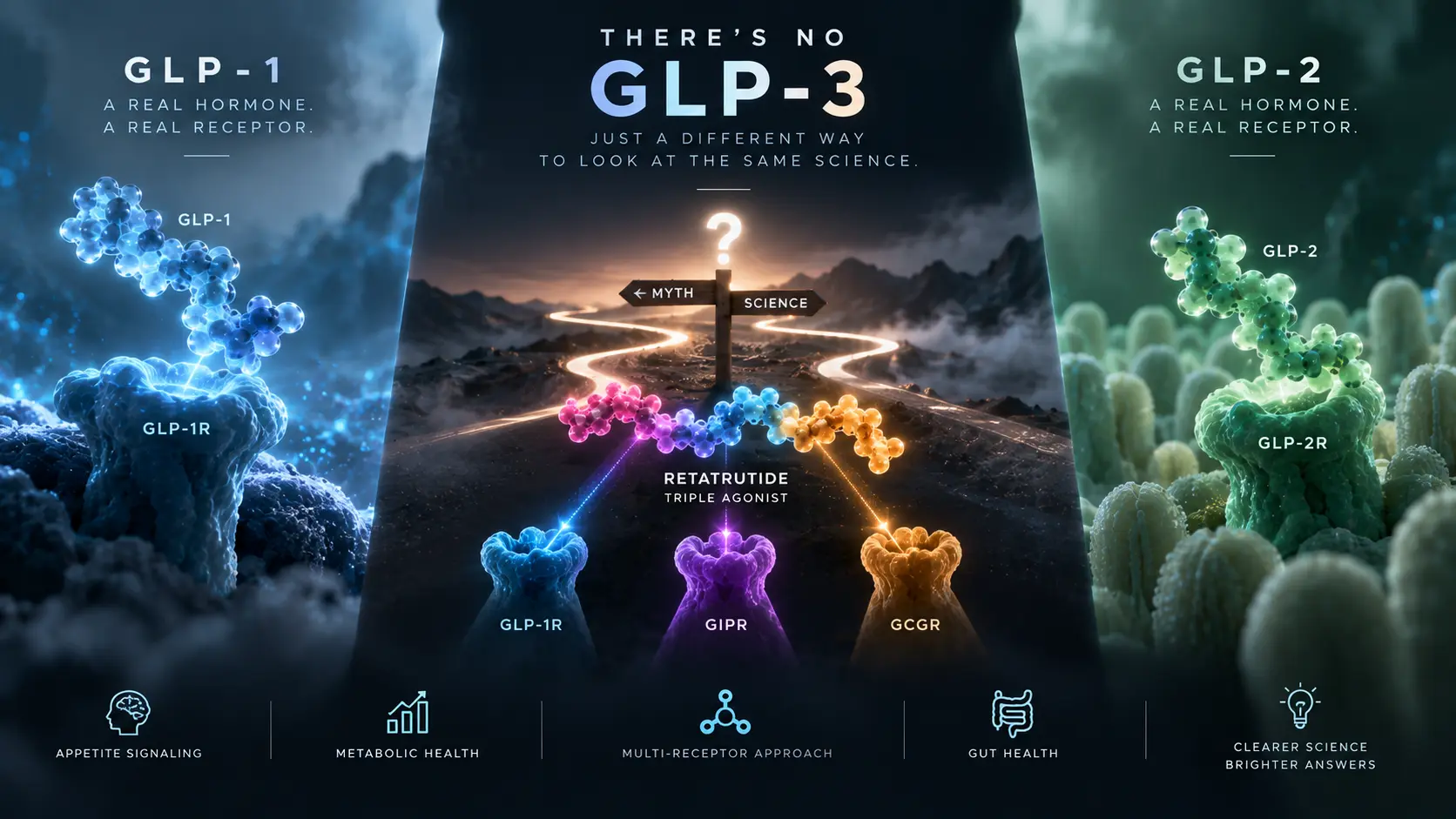
There is no GLP-3 receptor or hormone. Here is what the name refers to, why some vendors use it for retatrutide, and how the hormone GLP-2 differs.

The GLP-1 peptide pipeline in 2026: which compounds are FDA-approved, which are under review, and which are still in trials. Research overview, not advice.
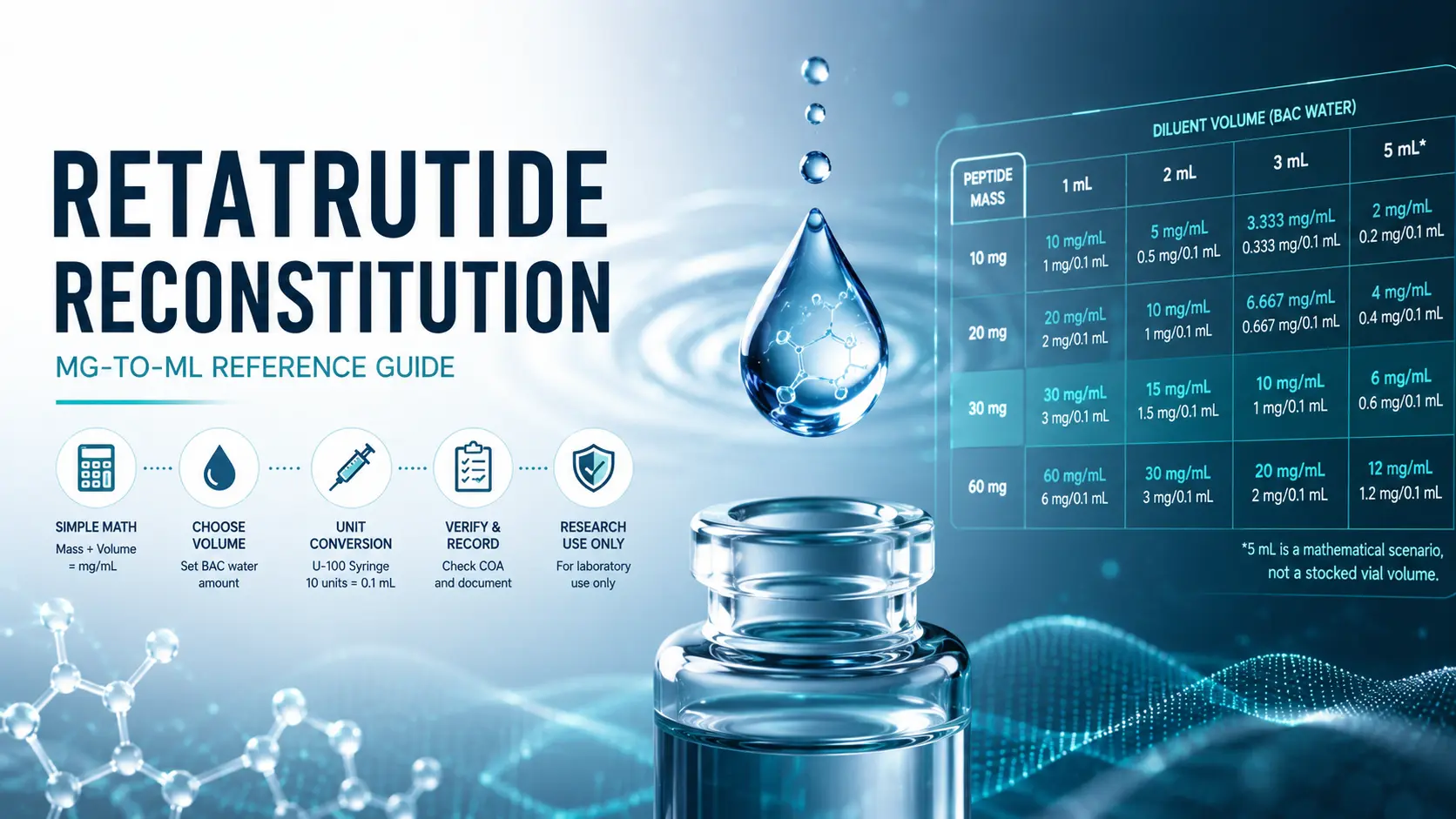
Retatrutide reconstitution reference with 10mg, 20mg, 30mg and 60mg mg-to-mL math, BAC water volume options, U-100 unit conversion and COA checks.
(faqs)