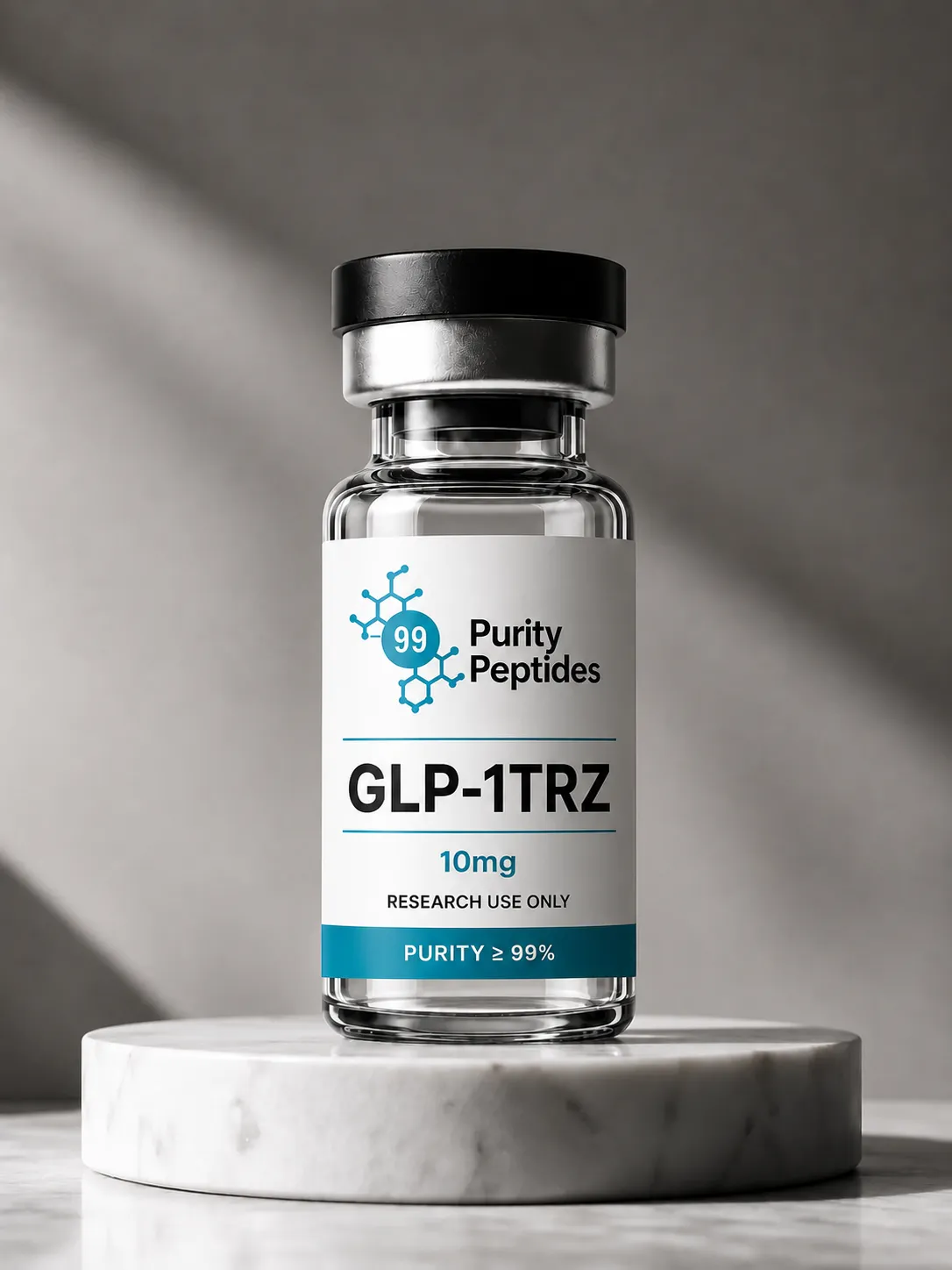
Glp-1TRZ 10mg is a research-grade lyophilized peptide developed for laboratory investigations involving simultaneous activation of the glucose-dependent insulinotropic polypeptide (GIP) receptor and glucagon-like peptide-1 (GLP-1) receptor. As a synthetic dual incretin receptor agonist, it is extensively studied in receptor pharmacology, peptide engineering, endocrine signaling, and molecular biology. Each batch undergoes analytical verification to support purity, consistency, and reproducibility for scientific research.
HPLC certified
Independent analysis
Highest standard
Full traceability
Glp-1TRZ 10mg is an investigational synthetic peptide engineered to selectively activate both the glucose-dependent insulinotropic polypeptide receptor (GIPR) and the glucagon-like peptide-1 receptor (GLP-1R). Unlike selective GLP-1 receptor agonists, Glp-1TRZ enables researchers to investigate coordinated dual incretin receptor signaling, receptor cross-talk, intracellular communication, and integrated endocrine biology. This dual receptor profile has established Glp-1TRZ as one of the most extensively investigated investigational peptides within modern incretin pharmacology and peptide engineering.
The 10mg presentation is well suited for laboratories conducting receptor pharmacology studies, comparative peptide investigations, analytical method development, assay validation, and extended research programs. Researchers continue to investigate Glp-1TRZ's receptor-binding characteristics, signaling pathways, molecular stability, and pharmacological behavior under controlled laboratory conditions. Manufactured according to research-grade quality standards and supported by comprehensive analytical verification, Glp-1TRZ 10mg provides laboratories with a dependable investigational peptide for advanced endocrine and molecular biology research.
Glp-1TRZ 10mg is a research-grade synthetic peptide belonging to the dual incretin receptor agonist class. Developed through advanced peptide engineering, it simultaneously activates the glucose-dependent insulinotropic polypeptide receptor (GIPR) and the glucagon-like peptide-1 receptor (GLP-1R), allowing researchers to investigate coordinated signaling across two complementary endocrine pathways. This dual receptor activity distinguishes Glp-1TRZ from traditional single-receptor investigational peptides and provides laboratories with a unique model for studying integrated receptor biology within complex endocrine systems.
One of the defining characteristics of Glp-1TRZ is its balanced dual receptor pharmacology. Rather than focusing solely on GLP-1 receptor activation, Glp-1TRZ allows researchers to evaluate the biological consequences of concurrent GIP and GLP-1 receptor engagement. Laboratory investigations examine receptor affinity, ligand-binding kinetics, receptor activation, intracellular signaling dynamics, receptor trafficking, receptor internalization, and downstream molecular communication. These investigations contribute to a broader understanding of incretin receptor biology and coordinated endocrine signaling.
Scientific investigations frequently focus on intracellular signaling pathways initiated after activation of GIPR and GLP-1R. Researchers evaluate cyclic adenosine monophosphate (cAMP) production, protein kinase A (PKA) activation, β-arrestin recruitment, receptor phosphorylation, intracellular trafficking, transcriptional regulation, second messenger signaling, and peptide-mediated cellular communication. Understanding these signaling mechanisms helps characterize coordinated receptor responses and molecular interactions within endocrine networks.
Glp-1TRZ has become an important investigational compound for studying receptor cross-talk between incretin signaling pathways. Researchers investigate how simultaneous receptor activation influences signaling hierarchy, receptor regulation, ligand specificity, intracellular communication, adaptive biological responses, and systems-level endocrine integration. These investigations provide valuable insights into receptor cooperation that cannot be fully characterized using selective GLP-1 receptor agonists alone.
Comparative peptide pharmacology represents another major application of Glp-1TRZ. Scientific investigations routinely compare Glp-1TRZ with investigational compounds such as Semaglutide, Retatrutide, and Survodutide to evaluate receptor selectivity, signaling bias, molecular architecture, pharmacological properties, and peptide engineering strategies. These comparative studies contribute to advancing scientific understanding of incretin biology and the evolution of next-generation receptor agonists.
The 10mg presentation is particularly appropriate for laboratories conducting comparative receptor studies, assay development, analytical validation, collaborative investigations, and ongoing research programs. Although the quantity supplied differs between product strengths, the molecular identity, receptor profile, analytical quality standards, and scientific applications remain consistent across all Glp-1TRZ presentations.
Beyond receptor biology, Glp-1TRZ is widely incorporated into analytical chemistry, ligand-binding assays, peptide characterization, biomarker investigations, molecular stability studies, pharmacodynamic research, assay optimization, and peptide pharmacology. Its reproducible dual receptor profile and extensive scientific characterization make it an important analytical reference compound for laboratories investigating incretin signaling and endocrine biology.
Each batch of Glp-1TRZ 10mg is manufactured under research-grade production standards and undergoes comprehensive analytical verification before release. Quality assurance procedures include High-Performance Liquid Chromatography (HPLC) purity assessment, molecular identity confirmation, and rigorous batch-specific quality control testing. These analytical measures support reproducibility, consistency, and confidence across independent laboratory investigations.
To preserve molecular integrity, Glp-1TRZ should be stored and handled according to accepted laboratory procedures for lyophilized peptides. Appropriate storage conditions, careful handling practices, and adherence to laboratory protocols help maintain peptide stability prior to experimental preparation and analytical evaluation.
Although considerable progress has been made in characterizing Glp-1TRZ's receptor pharmacology, scientific investigations continue to examine receptor regulation, intracellular signaling dynamics, peptide engineering, molecular adaptation, and endocrine communication. Consequently, Glp-1TRZ 10mg should be regarded as an investigational research compound intended exclusively to support laboratory research and scientific discovery.
Glp-1TRZ 10mg is supplied exclusively for laboratory research and analytical applications. This product is intended for Research Use Only (RUO) and is not approved for human consumption, therapeutic use, veterinary applications, or diagnostic purposes.
Been ordering from here for a while and tirzepatide has been consistent every time. Packaging is always the same, solid and professional. COA documents are up to date. Dependable supplier.
Third order from 99 Purity and once again no issues. Site navigation is intuitive and the product specs are all right there on the page. Glad I found a supplier I can actually trust.
Good overall. One of the more organized suppliers I've dealt with. Website has clear product info and checkout was simple. Shipping was a bit slower this time, 5 days, but the product arrived in perfect shape.
Placed the order, got the confirmation, tracking was accurate, delivery was on time. Vial was sealed properly. No complaints. Clean site, clean packaging, good support. That's all you want.
Packaging alone tells you this is a serious operation. Thoughtful and the vials are well protected. Support was quick to answer a question I had about COA documentation. Clearly the real deal.

The GLP-1 peptide pipeline in 2026: which compounds are FDA-approved, which are under review, and which are still in trials. Research overview, not advice.

Semaglutide vs tirzepatide for weight loss — compare efficacy, side effects & cost using real clinical trial data. Read the full comparison now.

Retatrutide vs tirzepatide: compare mechanisms, clinical trial results, FDA status, and safety data in this evidence-based 2026 guide.
(faqs)