
Blog Introduction
Choosing between semaglutide and tirzepatide is one of the most common questions patients ask when starting a medically supervised weight-loss program. Both are once-weekly injectable medications that have transformed obesity treatment in the United States, but they aren't identical — they work slightly differently, produce different average results, and carry different costs and side-effect patterns.
This guide breaks down what the clinical trial evidence actually shows, so you can have an informed conversation with your doctor about which medication — if either — fits your health profile and goals.
Full Blog Content
Key Takeaways
- Tirzepatide and semaglutide are both once-weekly injectable medications approved for chronic weight management in adults with obesity or overweight plus a weight-related condition.
- Tirzepatide acts on two hormone receptors (GLP-1 and GIP); semaglutide acts on one (GLP-1 only). This dual action is the leading explanation for tirzepatide's stronger effect.
- SURMOUNT-5, the first head-to-head trial (published in NEJM, 2025), found tirzepatide produced about 20.2% average weight loss versus 13.7% for semaglutide over 72 weeks.
- Both drugs cause similar gastrointestinal side effects, though the specific patterns differ — semaglutide leans toward nausea and constipation, tirzepatide toward diarrhea.
- Neither drug is appropriate as a self-sourced "research chemical." Both require a prescription, a medical evaluation, and physician monitoring throughout treatment.
What Are Semaglutide and Tirzepatide?
Semaglutide and tirzepatide belong to a class of medications called incretin-based therapies. They mimic gut hormones that regulate appetite, blood sugar, and digestion.
- Semaglutide is a GLP-1 (glucagon-like peptide-1) receptor agonist, sold as Ozempic and Rybelsus (type 2 diabetes) and Wegovy (chronic weight management).
- Tirzepatide is a dual GIP/GLP-1 receptor agonist, sold as Mounjaro (type 2 diabetes) and Zepbound (chronic weight management).
Both are administered as once-weekly subcutaneous injections, typically self-administered at home after a doctor prescribes the medication and demonstrates the correct technique.
How They Work
Both drugs slow gastric emptying, increase feelings of fullness, reduce appetite signals in the brain, and improve insulin sensitivity. Tirzepatide's added GIP activity appears to further enhance fat metabolism and reduce food intake, which is the leading theory for why it tends to outperform semaglutide on weight loss.
Weight Loss Efficacy: Head-to-Head Trial Data (SURMOUNT-5)
The most reliable comparison comes from SURMOUNT-5, the first randomized, head-to-head trial directly comparing the two drugs in the same patient population (751 adults with obesity, no diabetes) over 72 weeks:
Outcome | Tirzepatide | Semaglutide |
Average weight loss | ~20.2% of body weight | ~13.7% of body weight |
Approximate pounds lost | ~50 lbs | ~33 lbs |
Reached ≥10% weight loss | Higher proportion | Lower proportion |
Reached ≥15% weight loss | Higher proportion | Lower proportion |
Reached ≥20% weight loss | Higher proportion | Lower proportion |
Waist circumference reduction | Greater | Smaller |
Tirzepatide also produced greater improvements in blood pressure, HbA1c, fasting insulin, triglycerides, and HDL cholesterol at 72 weeks.
Supporting Evidence
- A 2025 systematic review and meta-analysis of nearly 29,000 patients across observational studies and randomized trials found tirzepatide produced significantly greater weight reduction than semaglutide, with notably higher odds of achieving at least 10% weight loss.
- A U.S. real-world retrospective cohort study of over 2,300 patients found a 6-month average weight reduction of 11.15% with tirzepatide versus 8.83% with semaglutide.
- A dose-ranging network meta-analysis found tirzepatide at its maximum tolerated dose produced the largest average weight reduction (about 20.9%) of any dose tested, ahead of semaglutide's maximum tolerated dose (about 14.4%).
Featured Snippet Answer: Tirzepatide produces more weight loss than semaglutide. In the SURMOUNT-5 head-to-head trial, tirzepatide led to about 20% average body weight loss over 72 weeks, compared to about 14% for semaglutide — a difference of roughly 6 percentage points, or about 50 lbs versus 33 lbs for an average participant.
Side Effects: How Do They Compare?
Both drugs share a similar side-effect profile because they act on overlapping digestive and metabolic pathways. The most common side effects for both include:
- Nausea
- Vomiting
- Diarrhea
- Constipation
- Abdominal pain
- Decreased appetite
- Fatigue
- Injection-site reactions
Notable Differences
- Semaglutide tends to be associated more often with nausea and constipation.
- Tirzepatide tends to be associated more often with diarrhea, with some clinical experience suggesting somewhat less nausea at comparable points in dose titration.
- Discontinuation rates due to side effects have been broadly similar between the two drugs in trials, though individual tolerance varies significantly.
Less Common but Serious Risks
Both drugs carry warnings for:
- Pancreatitis
- Gallbladder problems (gallstones)
- Kidney injury (often related to dehydration from GI side effects)
- Risk of thyroid C-cell tumors (based on animal studies); both carry a boxed warning against use in people with a personal or family history of medullary thyroid carcinoma or MEN2 syndrome
- Worsening of diabetic retinopathy in some patients with type 2 diabetes
- Hypoglycemia, particularly when combined with insulin or sulfonylureas
This is one of the central reasons both medications are prescription-only and require an initial medical evaluation plus ongoing follow-up — a prescriber needs to screen for these risk factors and monitor for early warning signs.
Dosing and Titration
Both medications start at a low dose and increase gradually (titrate) over weeks to months to reduce GI side effects.
Typical semaglutide (Wegovy) titration: starts at 0.25 mg weekly, increasing roughly every 4 weeks up to a maintenance dose of 2.4 mg weekly.
Typical tirzepatide (Zepbound) titration: starts at 2.5 mg weekly, increasing roughly every 4 weeks up to a maintenance dose between 5 mg and 15 mg weekly, depending on tolerability and response.
A doctor determines the right starting dose, titration speed, and maintenance dose based on the individual's health history, tolerance, and goals. Self-adjusting doses without medical supervision increases the risk of severe GI side effects, dehydration, and other complications.
Cost and Insurance Coverage
- List prices for both Wegovy and Zepbound have historically run over $1,000/month without insurance, though manufacturer savings programs, employer coverage, and recent price adjustments have changed this landscape — patients should check current pricing directly with their pharmacy or prescriber.
- Insurance coverage varies widely by plan. Many plans require prior authorization, and some require patients to try one medication before covering the other ("step therapy").
- Because tirzepatide is a newer and often more expensive drug per dose, some clinicians start patients on semaglutide first for cost reasons when both are otherwise appropriate.
Which One Is “Better” for You?
There's no universal answer — the right choice depends on individual factors that only a healthcare provider can properly evaluate.
Tirzepatide may be favored when:
- Maximum weight loss is the primary goal and cost/insurance isn't a barrier
- A patient has type 2 diabetes and would benefit from tirzepatide's strong glycemic effects
- A patient didn't achieve adequate results on semaglutide
Semaglutide may be favored when:
- Cost or insurance coverage strongly favors semaglutide
- A patient's prescriber has a longer track record of clinical experience with the drug (semaglutide has been used clinically for weight loss for longer)
- A patient tolerates GLP-1-only therapy well and doesn't need the added GIP effect
Neither may be appropriate when:
- A patient has a personal or family history of medullary thyroid carcinoma or MEN2 syndrome
- A patient is pregnant, breastfeeding, or planning pregnancy soon
- A patient has a history of pancreatitis or certain GI conditions, without further evaluation
A doctor or obesity-medicine specialist will weigh medical history, current medications, lab work, weight-loss goals, and cost before recommending either drug — and will monitor treatment over time, adjusting the plan as needed.
A Note on Safety and Sourcing
Semaglutide and tirzepatide are prescription medications in the United States, regulated by the FDA. Legitimate use involves:
1. A medical evaluation by a licensed prescriber
2. A prescription filled through a licensed pharmacy
3. Ongoing monitoring for side effects and dose adjustments
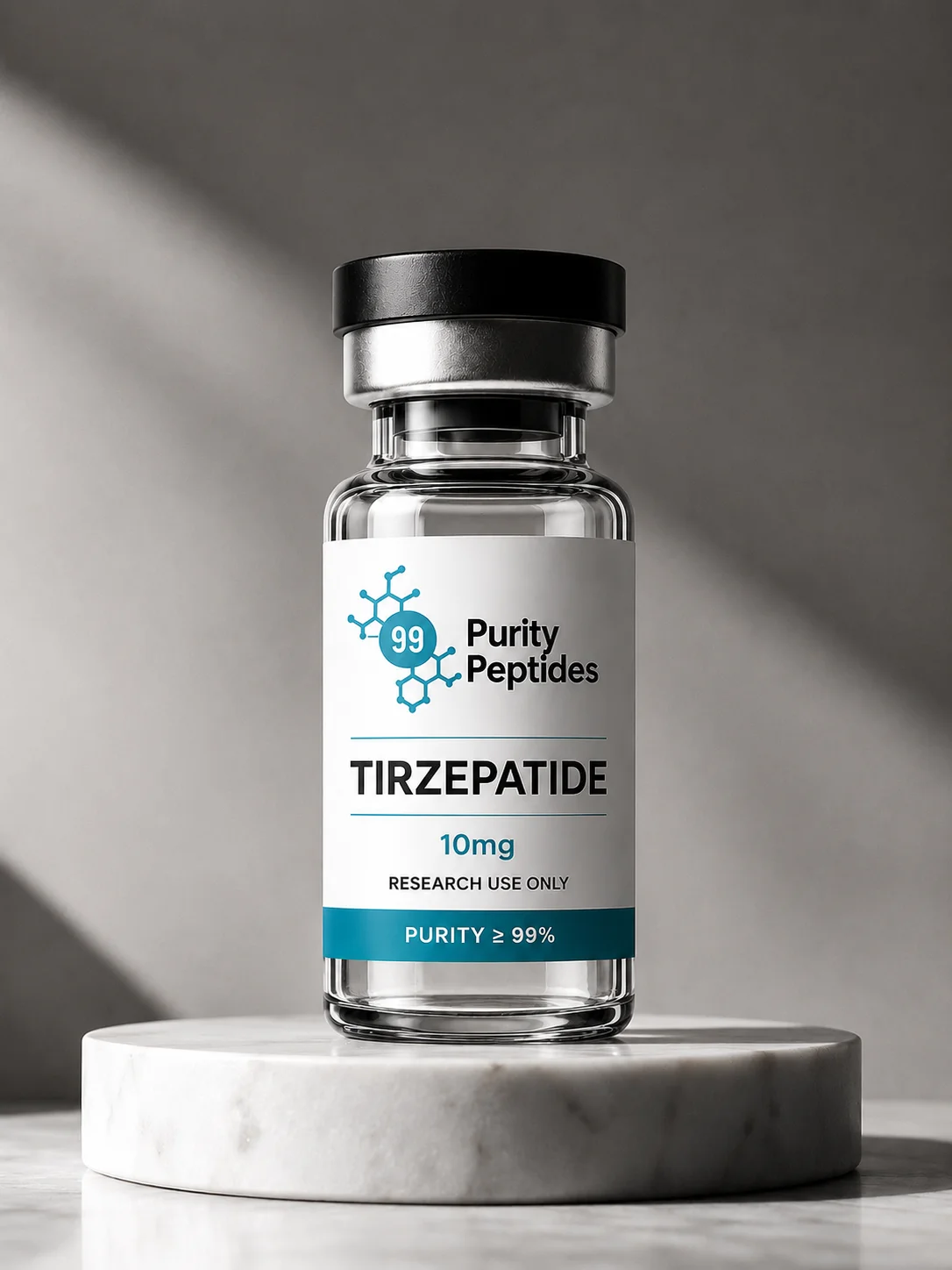
Products marketed online as “research peptides” or research-use-only versions of semaglutide or tirzepatide are not the same as an FDA-approved prescription, are not intended for human use, and are not subject to the same manufacturing, purity, and safety oversight as pharmacy-dispensed medication. Using such products without medical supervision carries meaningfully higher risk — including dosing errors, contamination, and the absence of monitoring for the serious side effects described above. Anyone considering either medication for weight loss should pursue it through a licensed healthcare provider.
Key Takeaways
- Tirzepatide produced significantly greater average weight loss than semaglutide in head-to-head trials (~20% vs ~14% at 72 weeks).
- Tirzepatide's dual GLP-1/GIP mechanism is the likely driver of its stronger effect.
- Side-effect profiles are similar overall, with slightly different GI symptom patterns.
- Cost, insurance coverage, and individual tolerance often decide which drug a patient starts on.
- Both require a prescription, medical evaluation, and ongoing physician monitoring — neither should be self-sourced or self-administered without supervision.
Frequently Asked Questions
Is tirzepatide better than semaglutide for weight loss?
In head-to-head clinical trial data, tirzepatide produced significantly greater average weight loss than semaglutide — about 20% versus about 14% of body weight over 72 weeks. However, individual response varies, and “better” also depends on cost, side-effect tolerance, and insurance coverage.
Why does tirzepatide cause more weight loss than semaglutide?
Tirzepatide activates two hormone receptors (GLP-1 and GIP), while semaglutide activates only GLP-1. The added GIP activity is believed to enhance appetite suppression and fat metabolism, contributing to greater weight loss.
What is the brand name for semaglutide used for weight loss?
Wegovy is the brand name of semaglutide approved specifically for chronic weight management. Ozempic is the same drug approved for type 2 diabetes, sometimes prescribed off-label for weight loss.
What is the brand name for tirzepatide used for weight loss?
Zepbound is the brand name of tirzepatide approved for chronic weight management. Mounjaro is the same drug approved for type 2 diabetes.
How much weight can you lose on tirzepatide in 3 months?
Individual results vary, but early-phase trial data generally shows meaningful weight loss beginning within the first 12 weeks, with the largest losses occurring after several months as the dose is titrated upward.
Are the side effects of tirzepatide worse than semaglutide?
Overall side-effect rates are similar. Semaglutide is more often linked to nausea and constipation, while tirzepatide is more often linked to diarrhea. Neither has been shown to have a clearly worse overall tolerability profile in trials.
Can I switch from semaglutide to tirzepatide?
Yes, this is common in clinical practice, but the switch should be managed by a prescriber, who will determine an appropriate starting dose on the new medication rather than continuing at the equivalent dose from the previous one.
Is tirzepatide safe for people without diabetes?
Yes — tirzepatide (as Zepbound) is FDA-approved specifically for chronic weight management in adults with obesity or overweight with a weight-related condition, independent of diabetes status.
Do you regain weight after stopping semaglutide or tirzepatide?
Clinical studies of both drugs show that most patients regain a significant portion of lost weight after discontinuing treatment, which is why both are generally used as part of a long-term, ongoing treatment plan rather than a short course.
Which drug has more clinical experience behind it — semaglutide or tirzepatide?
Semaglutide has been used clinically for longer (initially approved for diabetes in 2017, for weight loss in 2021), giving prescribers a longer track record with it. Tirzepatide is newer (approved for diabetes in 2022, for weight loss in 2023) but has grown quickly.
Can I buy semaglutide or tirzepatide without a prescription?
No. Both are prescription-only medications in the United States. Products sold online labeled “research use only” are not legal or safe substitutes for a prescribed, pharmacy-dispensed medication and are not intended for human use.
Does insurance cover semaglutide or tirzepatide for weight loss?
Coverage varies significantly by plan. Many insurers require prior authorization and documentation of a qualifying BMI or weight-related condition; some require trying one drug before covering the other.
What's the difference between Ozempic/Mounjaro and Wegovy/Zepbound?
Ozempic and Mounjaro are the same active drugs as Wegovy and Zepbound, respectively, but are FDA-approved for type 2 diabetes rather than weight management. Dosing schedules and approved indications differ.
Can these drugs be taken together?
No. Semaglutide and tirzepatide are not intended to be combined, as they act on overlapping pathways, and combining them would increase side-effect risk without established benefit.