
What Is GHRP-6?
GHRP-6 (growth hormone releasing peptide-6) is a synthetic hexapeptide and one of the original compounds in the growth hormone secretagogue class, first characterized in the 1980s. It acts as a ghrelin receptor agonist, binding to GHS-R1a to stimulate pulsatile growth hormone release in research models. GHRP-6 is also widely studied for its comparatively strong association with appetite stimulation, making it a common tool in ghrelin-signaling and feeding-behavior research.
Featured Products
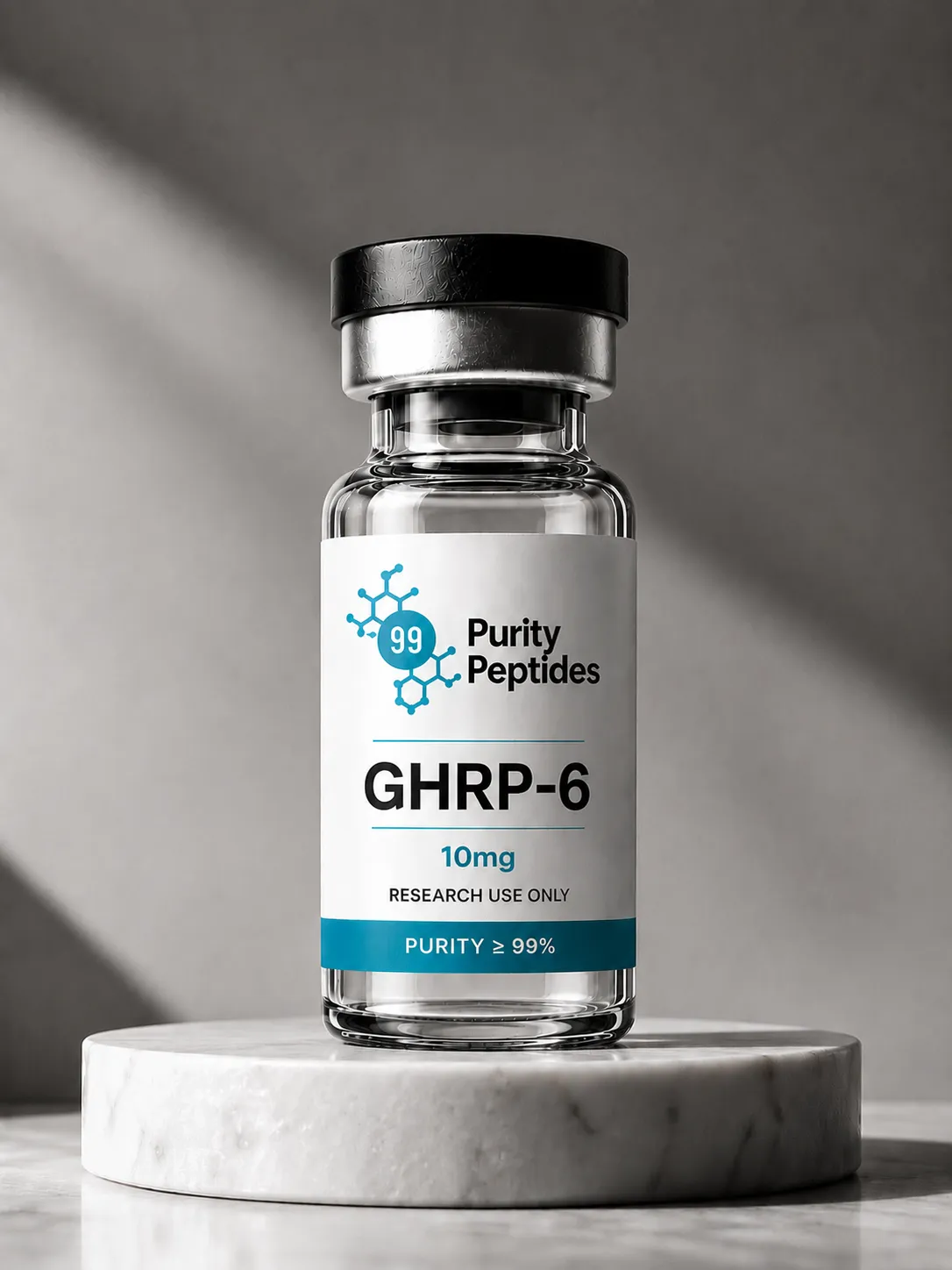
- Chemical class: synthetic hexapeptide, GHS-R1a agonist
- Primary research interest: GH secretion and appetite/ghrelin signaling
- Typical form supplied: lyophilized powder for laboratory reconstitution
What Is Ipamorelin?
Ipamorelin is a synthetic pentapeptide developed after the original GHRP compounds, specifically to improve receptor selectivity. Like GHRP-6, it activates the GHS-R1a ghrelin receptor to stimulate growth hormone release, but research literature consistently describes it as the more selective compound in this class — meaning it triggers GH release with comparatively minimal downstream effect on cortisol, prolactin, or appetite. This selectivity profile is the main reason Ipamorelin gets studied as a cleaner tool for isolating GH-axis effects.
- Chemical class: synthetic pentapeptide, GHS-R1a agonist
- Primary research interest: selective GH release with minimal off-target hormone response
- Typical form supplied: lyophilized powder for laboratory reconstitution
Mechanism of Action: GHRP-6 vs Ipamorelin
Both peptides work through the same receptor pathway, which is what makes the comparison meaningful. GHRP-6 and Ipamorelin bind to the growth hormone secretagogue receptor (GHS-R1a) — the same receptor activated by endogenous ghrelin — triggering a signaling cascade that increases pulsatile growth hormone release from the pituitary. Where they diverge is in receptor selectivity and downstream hormonal effects.
Selectivity: The Core Difference
Ipamorelin's pentapeptide structure was specifically engineered to reduce activation of pathways associated with cortisol and prolactin release, giving it a research reputation as the more selective GH secretagogue. GHRP-6, as a hexapeptide, tends to produce a broader hormonal response in comparative studies — including its well-documented appetite-stimulating effect, which Ipamorelin largely lacks.
GHRP-6 vs Ipamorelin: Full Comparison Table
Attribute | GHRP-6 | Ipamorelin |
|---|---|---|
Peptide class | Hexapeptide, GHS-R1a agonist | Pentapeptide, GHS-R1a agonist |
Primary research focus | GH secretion, appetite/ghrelin signaling | Selective GH secretion with minimal off-target effects |
Receptor selectivity | Broader activation profile | Reported as the most selective in its class |
Appetite (orexigenic) effect | Reported as pronounced in research models | Reported as minimal to negligible |
Cortisol/prolactin co-release | Present, often reported as comparatively higher | Reported as minimal in comparative studies |
Research history | Original GHRP-class compound; longest research history | Developed later, specifically for improved selectivity |
Common comparators in literature | GHRP-2, Ipamorelin, Hexarelin | CJC-1295, GHRP-6, Sermorelin |
Often paired with (in study designs) | GHRH analogs for combined-axis research | CJC-1295 for combined GH-axis research |
Supplied form | Lyophilized powder, research use only | Lyophilized powder, research use only |
Reported values vary across studies and models; researchers should consult primary source literature for study-specific data rather than relying on general comparisons.
GHRP-6 vs Ipamorelin: Selectivity and Side-Effect Profile in Research
This is usually the deciding factor for protocol design. If a study needs to isolate the GH-release pathway without the confound of appetite changes or cortisol/prolactin shifts, Ipamorelin's selectivity profile makes it the more common choice in the literature. If the research question specifically involves ghrelin's appetite-regulating role, GHRP-6's stronger orexigenic signal makes it more directly relevant — the same property that makes it noisier for pure GH-axis work is the property that makes it useful for appetite research.
Key Takeaway Choose based on your research question: Ipamorelin for cleaner, more selective GH-secretion studies; GHRP-6 for research specifically examining ghrelin's role in appetite regulation alongside GH release. |
Molecular Structure: Pentapeptide vs Hexapeptide
The structural distinction between these two compounds is not just academic — it's the reason their receptor behavior differs. GHRP-6 is built on a six-amino-acid backbone, while Ipamorelin's five-amino-acid pentapeptide structure was designed to fit the GHS-R1a receptor with more precision, reducing activation of the broader hormonal cascade that hexapeptide secretagogues tend to trigger. Researchers requiring exact amino acid sequences, molecular weights, or CAS numbers for citation purposes should reference peer-reviewed structural studies or PubChem entity records rather than vendor marketing pages, and independently verify any such figures against primary chemical databases.
Purity, Testing, and Documentation in Research Settings
As with any research peptide, purity verification directly affects the reliability of dose-response and receptor-binding data. Reputable suppliers provide independent, third-party HPLC and mass spectrometry verification alongside a certificate of analysis (CoA) for each batch. When evaluating a supplier for institutional purchasing, ask for:
- A batch-specific certificate of analysis (CoA)
- Independent third-party lab verification, not just in-house testing
- Clear research-use-only (RUO) labeling and compliance documentation
- Documented cold-chain shipping and handling practices
How GHRP-6 and Ipamorelin Compare to Other Growth Hormone Secretagogues
Both compounds are frequently discussed alongside other members of the growth hormone secretagogue and GHRH-analog families:
Ipamorelin vs CJC-1295
CJC-1295 is a GHRH-receptor analog rather than a ghrelin-receptor agonist, making it mechanistically distinct from Ipamorelin. The two are frequently studied together in combined-axis research designs, since they act on different receptors to produce a synergistic effect on GH release.
GHRP-6 vs GHRP-2
GHRP-2 is a related hexapeptide generally reported as more potent and more selective for GH release than GHRP-6, though it produces a milder appetite response — see our dedicated GHRP-2 vs GHRP-6 comparison guide for the full breakdown.
GHRP-6/Ipamorelin vs Sermorelin
Sermorelin, like CJC-1295, acts through the GHRH receptor pathway instead of GHS-R1a, making it a useful mechanistic comparator when researchers want to contrast ghrelin-receptor-mediated GH release with GHRH-receptor-mediated release.
Best Practices and Common Mistakes in Research Protocols
Best Practices
- Confirm peptide identity and purity via CoA before beginning any protocol
- Store lyophilized peptides as directed by the supplier's documentation, away from light and moisture, until laboratory use
- Select GHRP-6 or Ipamorelin based on the specific hormonal pathway your study is designed to isolate
- Cite primary, peer-reviewed literature rather than vendor blogs when reporting comparative data
Common Mistakes
- Treating GHRP-6 and Ipamorelin as interchangeable — their selectivity and side-effect profiles differ meaningfully
- Overlooking that GHRP-6's appetite effect can confound GH-axis-only study designs
- Sourcing from suppliers that don't provide independent purity verification
Key Takeaways
- GHRP-6 and Ipamorelin both act on the GHS-R1a ghrelin receptor but belong to different structural classes — hexapeptide vs pentapeptide.
- Ipamorelin is generally reported as the more selective GH secretagogue, with minimal cortisol, prolactin, and appetite effects.
- GHRP-6 produces a broader hormonal response, including a more pronounced appetite-stimulating effect useful in ghrelin-signaling research.
- Both are supplied and sold strictly for laboratory research use, not for human consumption.
- Purity documentation (CoA, third-party testing) is essential when selecting a research peptide supplier.
Frequently Asked Questions
What is the main difference between GHRP-6 and Ipamorelin?
GHRP-6 is a hexapeptide with a broader hormonal effect, including appetite stimulation, while Ipamorelin is a pentapeptide generally reported as more selective for growth hormone release with minimal off-target effects.
Is Ipamorelin more selective than GHRP-6?
Yes — research literature consistently describes Ipamorelin as the more selective GH secretagogue, with comparatively minimal impact on cortisol, prolactin, and appetite.
Does GHRP-6 cause more appetite stimulation than Ipamorelin in research models?
Yes. GHRP-6 is well documented for its orexigenic (appetite-stimulating) effect, while Ipamorelin's selectivity profile means it produces little to no comparable appetite response.
Which peptide has a cleaner side-effect profile in published studies, GHRP-6 or Ipamorelin?
Ipamorelin is generally reported as having a cleaner profile, with reduced cortisol and prolactin co-release compared to GHRP-6.
What receptor do both GHRP-6 and Ipamorelin target?
Both act on the growth hormone secretagogue receptor (GHS-R1a), the same receptor activated by endogenous ghrelin.
Can GHRP-6 and Ipamorelin be studied together in a research protocol?
Comparative research designs sometimes include both as parallel arms, but protocol design should follow institutional review and the specific research question being examined.
What is the typical purity level for research peptides sold for laboratory use?
Reputable suppliers typically provide batch-specific certificates of analysis documenting purity, verified through independent third-party HPLC and mass spectrometry testing.
Are GHRP-6 and Ipamorelin approved for human therapeutic use?
No. Neither compound is FDA-approved for human or animal use; both are sold strictly for laboratory research purposes.
What is the difference between a GH secretagogue and a GHRH analog?
GH secretagogues like GHRP-6 and Ipamorelin act on the ghrelin receptor (GHS-R1a), while GHRH analogs like CJC-1295 and Sermorelin act on a separate GHRH receptor pathway to stimulate GH release.
Why do some studies pair Ipamorelin with CJC-1295?
Because they act on different receptors, combining a GHS-R1a agonist with a GHRH-receptor analog is studied for a potentially synergistic effect on growth hormone release.
What amino acid sequence differences distinguish GHRP-6 from Ipamorelin?
GHRP-6 is built on a six-amino-acid (hexapeptide) backbone, while Ipamorelin uses a five-amino-acid (pentapeptide) structure engineered for greater receptor selectivity.
What distinguishes a pentapeptide from a hexapeptide secretagogue?
The distinction refers to the number of amino acids in the peptide chain — five for a pentapeptide like Ipamorelin, six for a hexapeptide like GHRP-6 — which affects how precisely each binds the target receptor.
What research applications commonly use GHRP-6?
GHRP-6 is commonly used in studies of pulsatile growth hormone secretion and ghrelin-mediated appetite regulation.
What research applications commonly use Ipamorelin?
Ipamorelin is commonly used in studies isolating selective growth hormone release with minimal confounding hormonal effects.