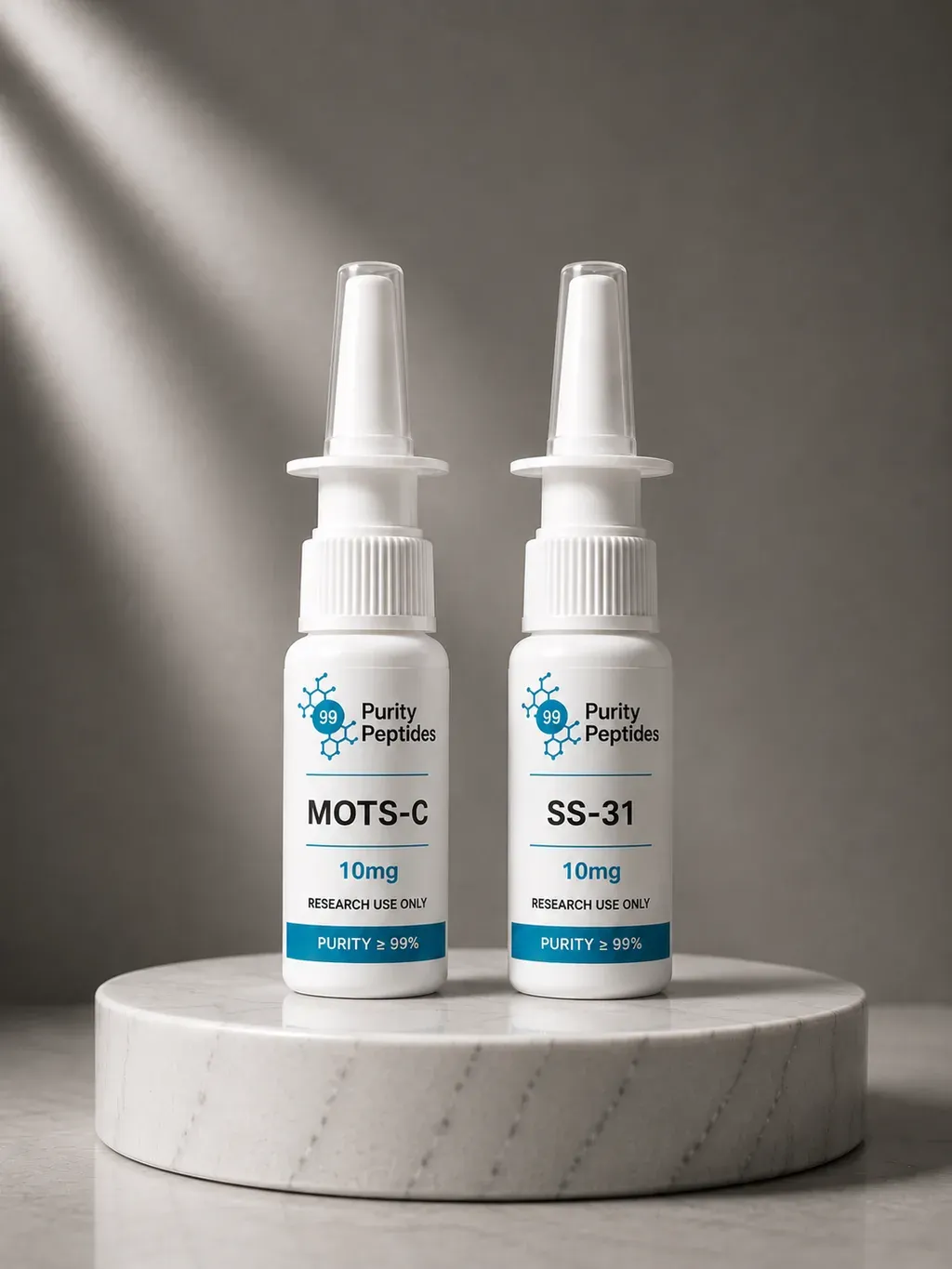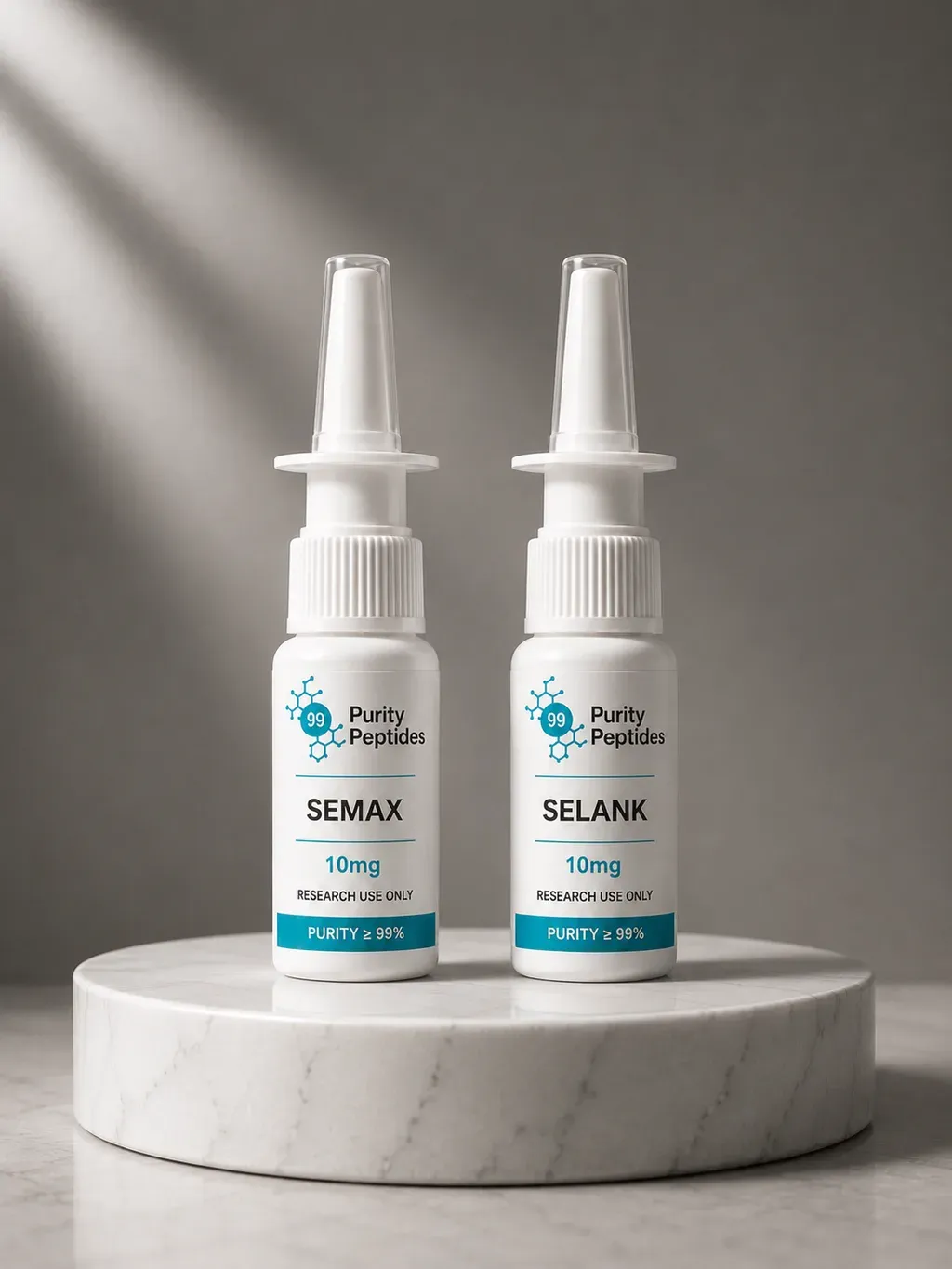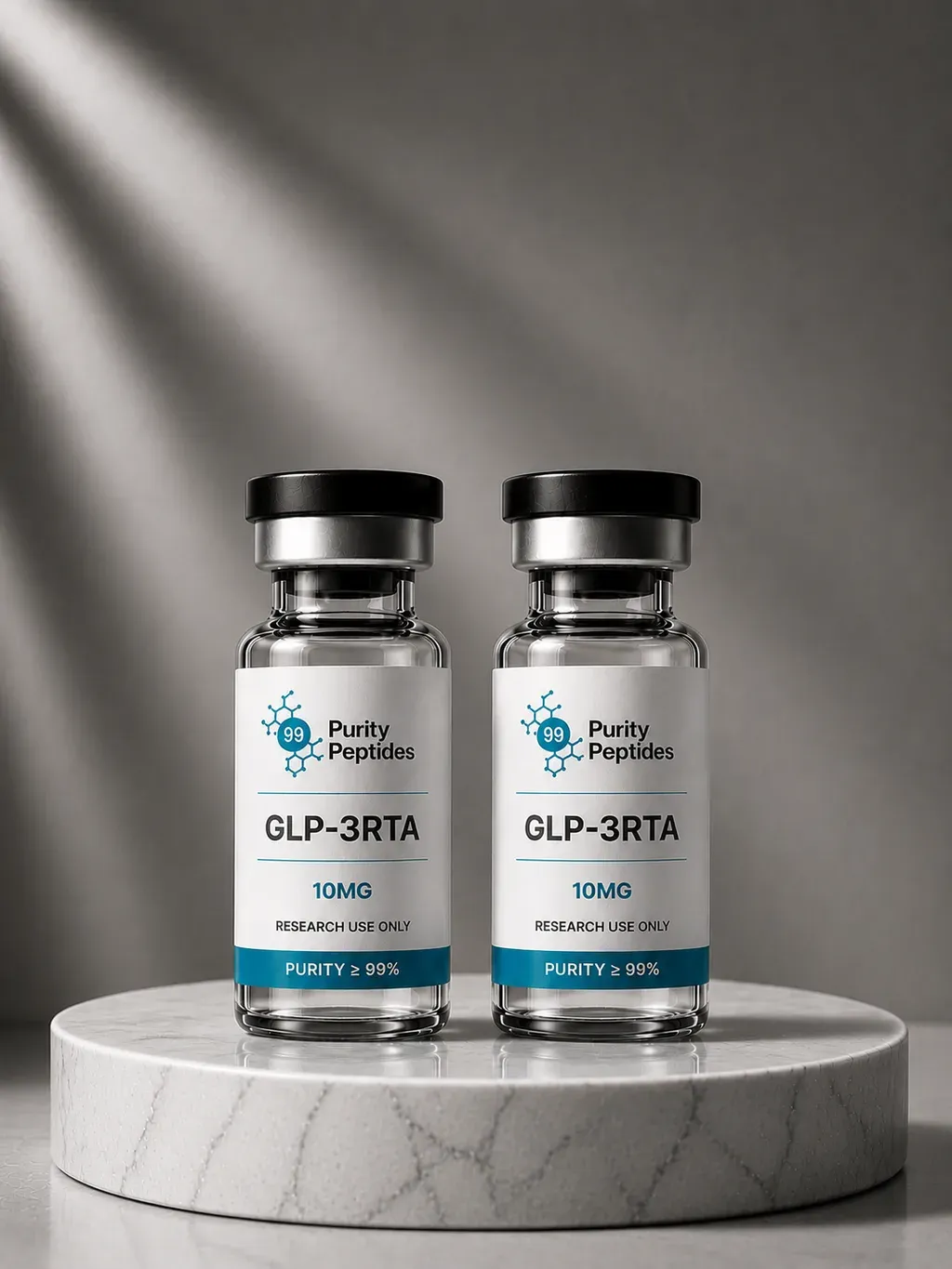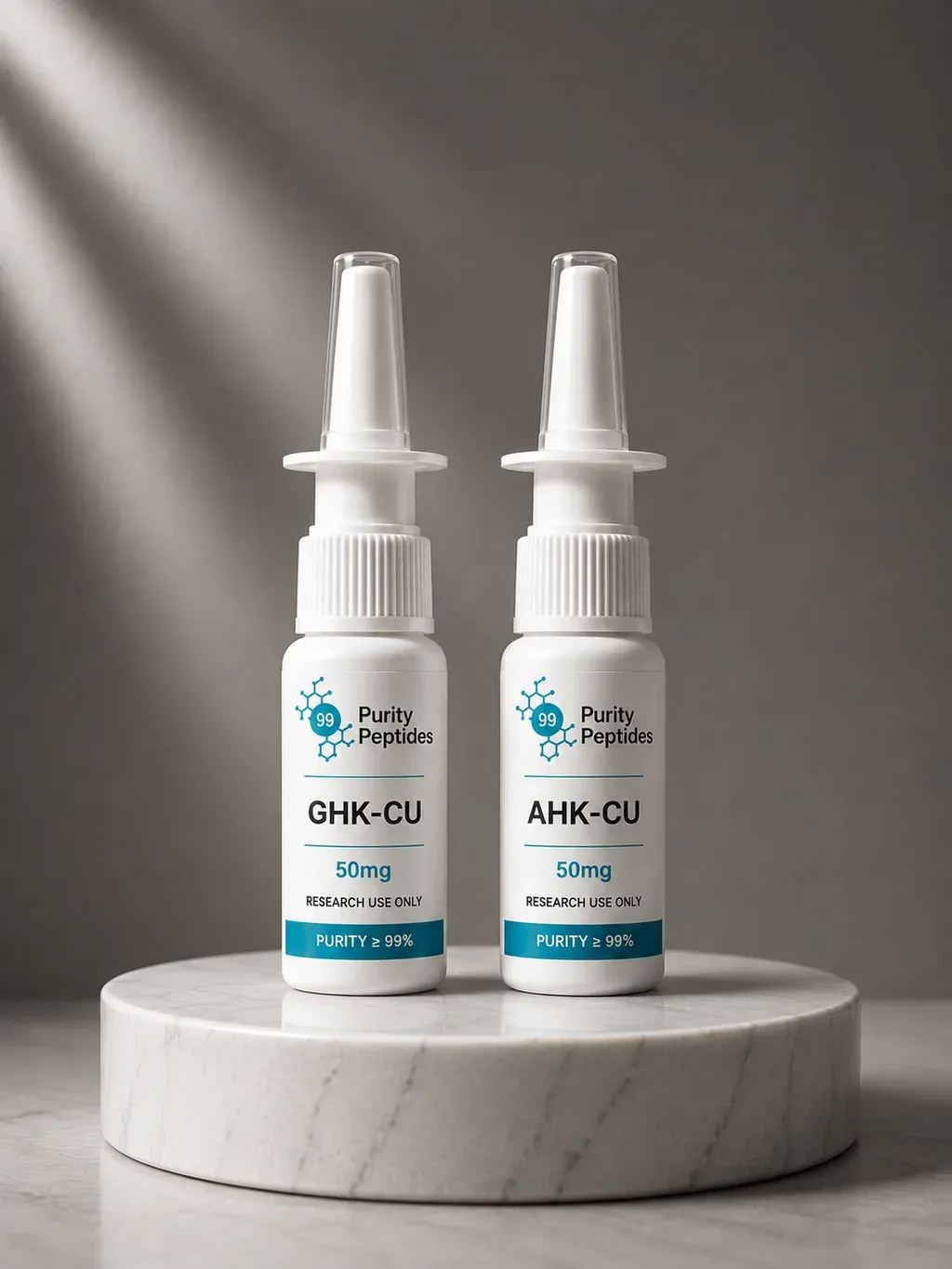
The Copper Peptide Nasal Spray Comparator supplies GHK-Cu and AHK-Cu in nasal format, each bottle containing 50 mg across approximately 45 actuations. Both copper tripeptides fall well below 1,000 daltons, the range in which nasal absorption of peptides is most favourable. Both are supplied as prepared copper(II) complex solutions. For research use only.
Certificado por HPLC
Análisis independiente
El más alto estándar
Trazabilidad completa
The Copper Peptide Nasal Spray Comparator brings together the two most frequently compared copper-binding tripeptides in nasal format. Each bottle contains 50 mg across approximately 45 actuations, giving roughly 1.1 milligrams nominally per actuation — the labelled mass describes the bottle, not the individual spray.
Molecular weight favours both compounds in this format. GHK-Cu and AHK-Cu are small molecules by peptide standards, both well under 1,000 daltons, which is the range where nasal absorption is most favourable. On size alone they are among the better nasal candidates available.
The published research for both compounds is, however, overwhelmingly topical. GHK-Cu’s literature developed in dermal and matrix contexts, and AHK-Cu’s smaller record is more topical still. No published intranasal pharmacokinetic study was identified for either compound. Molecular weight predicts that absorption should be more efficient than for larger peptides; it does not establish what occurs, and no study bridges a topical research base to a nasal format.
One consideration is specific to this format. These products are copper(II) complexes rather than peptides alone, and they are supplied as prepared solutions rather than as lyophilized material. Complex integrity in solution is therefore a specification question that does not arise for dry material.
For Research Use Only. Not intended for human consumption, therapeutic use, veterinary use, or diagnostic applications.
The Copper Peptide Nasal Spray Comparator contains GHK-Cu and AHK-Cu in nasal format, each bottle holding 50 mg across approximately 45 actuations. Both are copper(II) complexes of tripeptides, and both fall well below 1,000 daltons — the molecular weight range where nasal absorption is most favourable. Published research on both compounds is predominantly topical rather than intranasal.
| Product | Peptide content | Actuations | Designation |
|---|---|---|---|
| GHK-Cu nasal spray | 50 mg per bottle | ~45 | Copper Tripeptide-1 |
| AHK-Cu nasal spray | 50 mg per bottle | ~45 | Copper Tripeptide-3 |
Both are supplied as prepared copper(II) complex solutions with batch documentation. Copper complexes appear blue in solution; the colour derives from the complex rather than the peptide. Confirm actuation count and concentration against the documentation supplied with your lot.
The labelled mass is the bottle total, not the content of a single actuation.
A 50 mg bottle delivering approximately 45 actuations contains roughly 1.1 milligrams per actuation nominally. That is a considerably more concentrated nasal format than most peptide sprays — around ten times the per-actuation content of a 10 mg bottle delivering 90 actuations.
Nominal content is not delivered content. Priming consumes actuations, residual volume remains in the device, and delivery varies between actuations. Nominal content is also not absorbed content, which depends on absorption efficiency.
Each figure in that chain is smaller than the one before it, and the labelled bottle mass sits at the top of it.
Nasal absorption of peptides falls sharply with increasing molecular size. Peptides below roughly 1,000 daltons absorb considerably better than those above it, with absorption declining further through the higher ranges.
Both compounds here are small. GHK-Cu’s peptide component is around 340 daltons and its copper complex around 400. AHK-Cu’s complex is around 416 daltons. Both sit comfortably within the most favourable range — smaller than most peptides supplied in nasal format.
On molecular weight alone, copper tripeptides are among the better nasal candidates in a research catalogue.
Be the first to share your experience with this product and help other researchers!
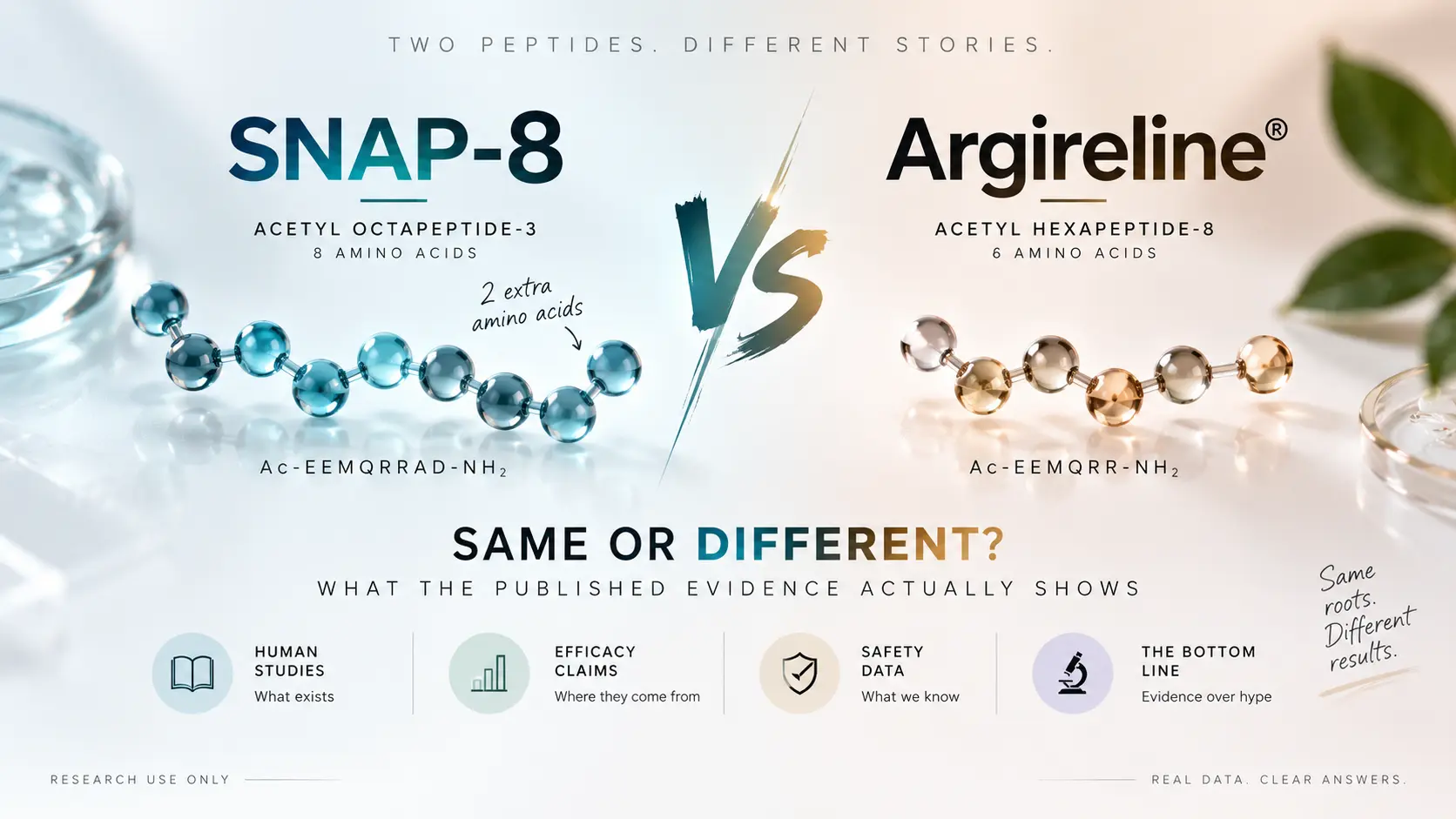
SNAP-8 vs Argireline: son péptidos distintos. Rastreamos la cifra del 63.13% hasta la literatura del fabricante y calificamos la evidencia humana real.
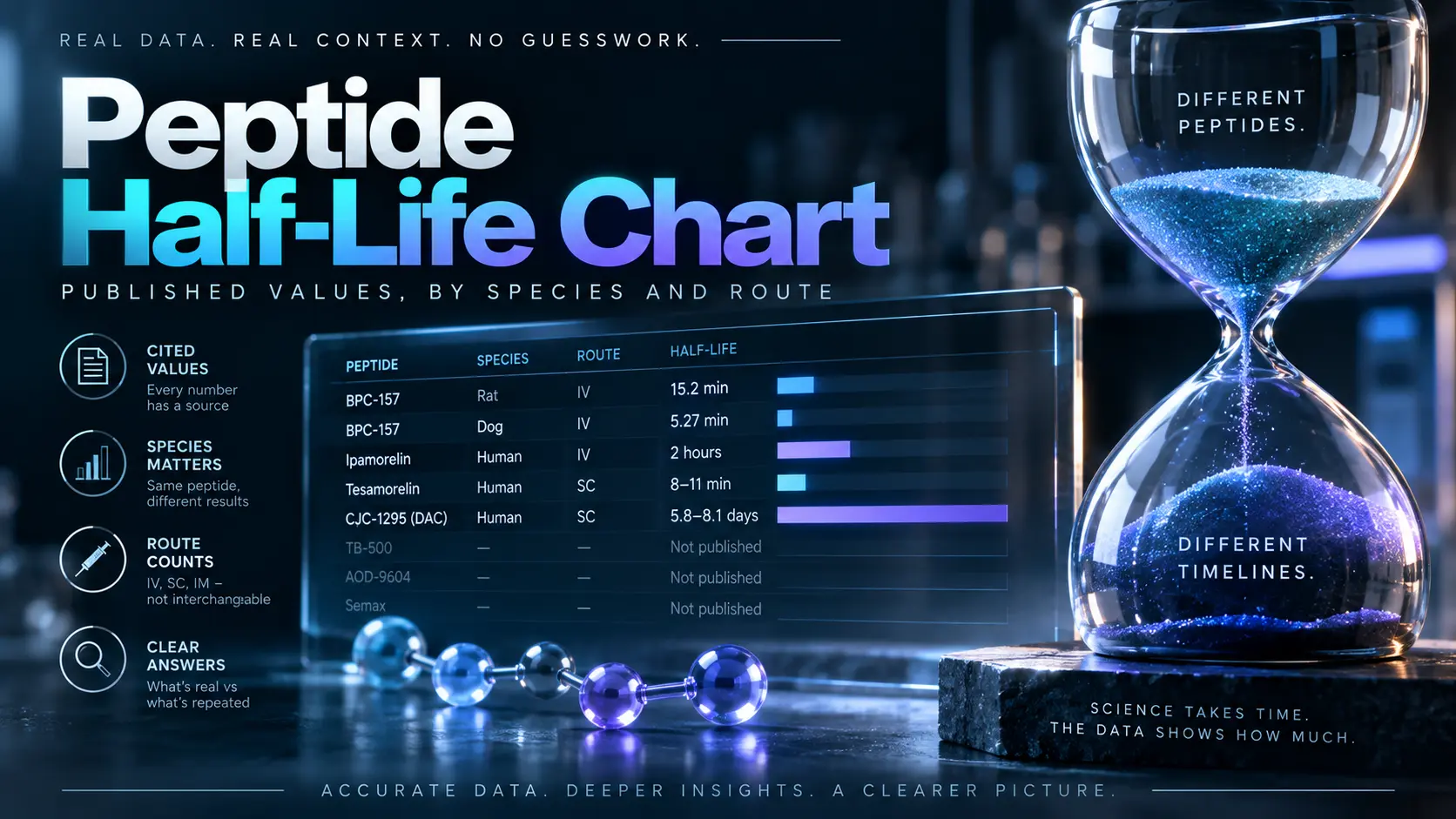
Tabla de semivida de los péptidos con especie, vía y una cita detrás de cada valor, y las cifras muy repetidas que no proceden de ninguna medición.
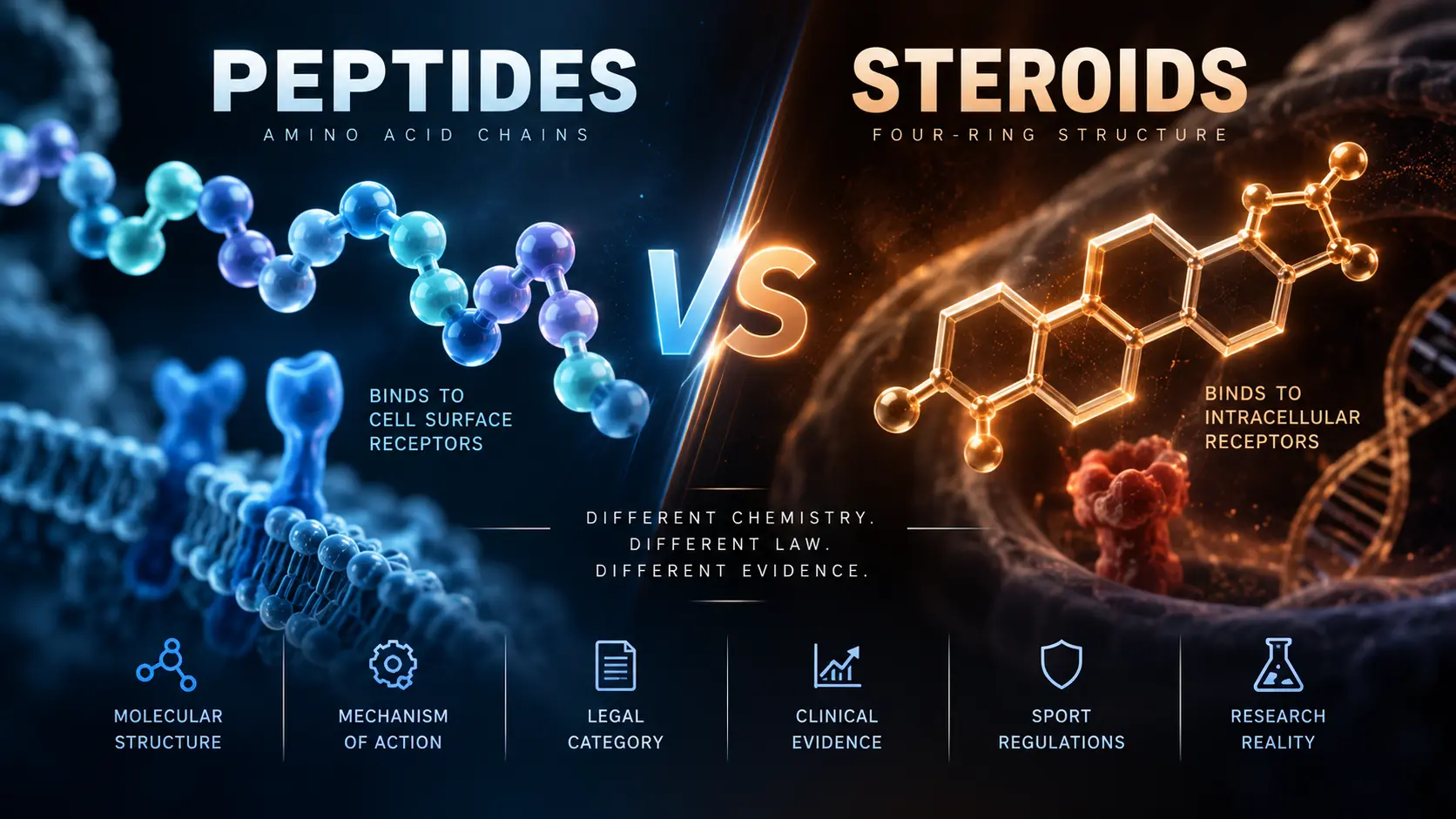
Péptidos vs esteroides: distinta química, distinta ley, distinta evidencia. Lo que dicen las leyes, la lista WADA 2026 y el historial real de ensayos.
(preguntas frecuentes)