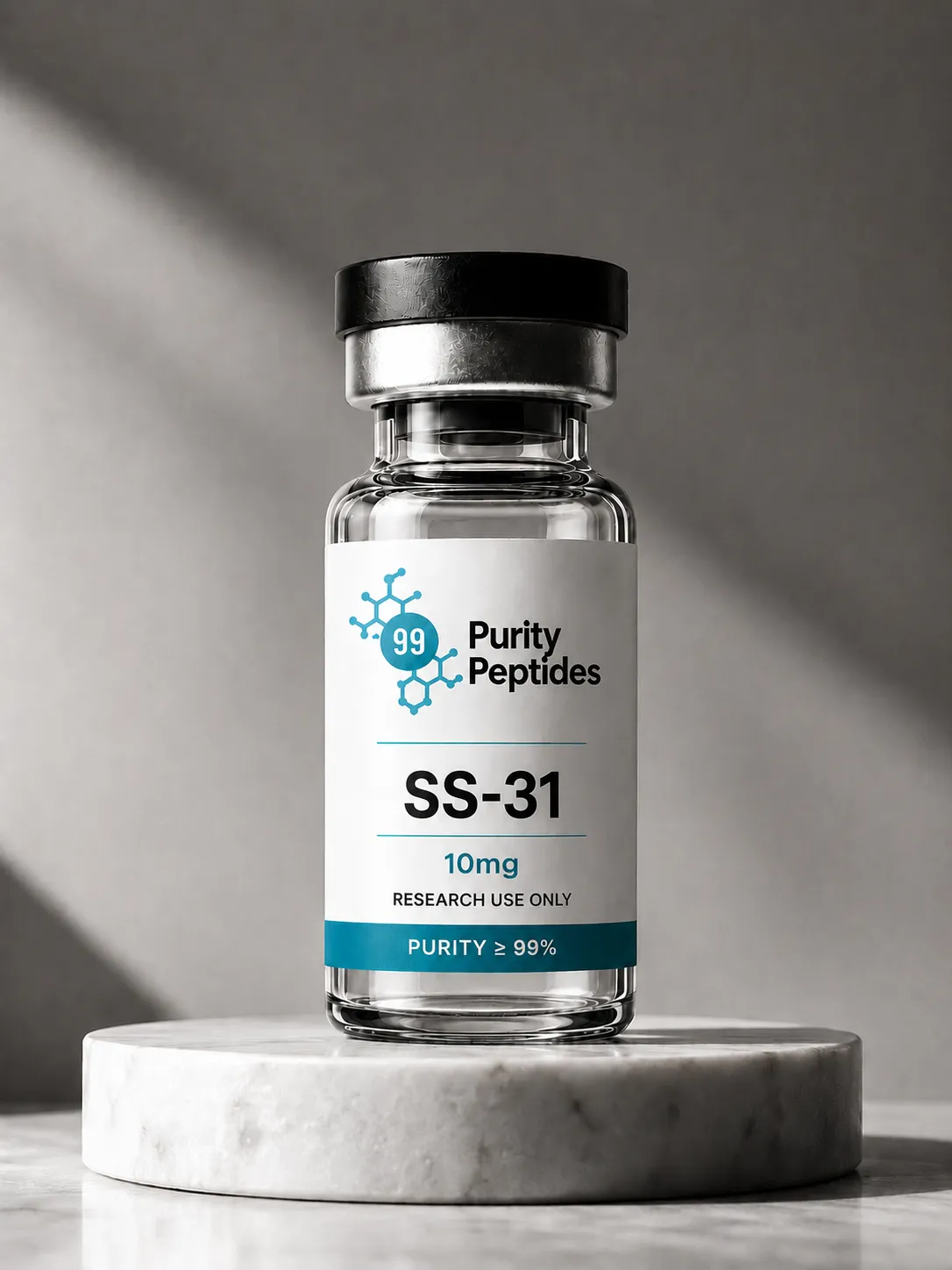

SS-31 10mg is a research-grade mitochondria-targeting synthetic tetrapeptide developed for laboratory investigations involving mitochondrial bioenergetics, cardiolipin interactions, oxidative stress biology, electron transport chain function, and cellular metabolism. Every batch undergoes comprehensive analytical verification to ensure purity, consistency, and reproducibility for advanced mitochondrial biology, peptide pharmacology, and biochemical research.
HPLC certified
Independent analysis
Highest standard
Full traceability
SS-31 10mg is an investigational synthetic tetrapeptide engineered to selectively interact with mitochondrial membranes, making it one of the most extensively investigated compounds in mitochondrial biology research. Researchers study SS-31 because of its association with cardiolipin interactions, mitochondrial bioenergetics, oxidative stress regulation, ATP production, electron transport chain function, and intracellular energy metabolism. Its unique mitochondrial-targeting characteristics distinguish it from many conventional investigational peptides used in molecular biology laboratories.
The 10mg presentation is particularly suitable for mechanistic mitochondrial investigations, analytical validation, biomarker discovery, peptide interaction studies, and collaborative laboratory research projects. Manufactured according to rigorous research-grade quality standards and supported by comprehensive analytical verification, SS-31 10mg provides laboratories with a dependable investigational peptide for advanced mitochondrial and cellular metabolism research.
SS-31 10mg is a research-grade mitochondria-targeting synthetic tetrapeptide developed for laboratory investigations involving mitochondrial bioenergetics, cardiolipin-associated signaling, oxidative stress biology, cellular metabolism, peptide pharmacology, and molecular biochemistry. Also known throughout scientific literature as Elamipretide (SS-31 peptide), this investigational peptide has become an important research tool for laboratories studying mitochondrial function and intracellular energy regulation. Its ability to selectively associate with mitochondrial membranes has established SS-31 as one of the most recognized investigational compounds within mitochondrial research.
One of the defining characteristics of SS-31 research is its relationship with cardiolipin, a phospholipid located within the inner mitochondrial membrane. Researchers investigate how SS-31 interacts with cardiolipin-rich mitochondrial membranes to better understand membrane organization, mitochondrial structural integrity, electron transport efficiency, and intracellular bioenergetic regulation. These investigations continue expanding scientific knowledge of mitochondrial biology without implying approved clinical outcomes.
Scientific investigations also focus extensively on mitochondrial bioenergetics. Laboratory studies evaluate molecular interactions involving ATP production, oxidative phosphorylation, mitochondrial membrane potential, respiratory chain complexes, proton gradients, and coordinated intracellular energy metabolism. Researchers continue investigating these biological mechanisms to better understand cellular energy regulation within controlled experimental environments.
Another major area of investigation involves oxidative stress biology and reactive oxygen species (ROS) regulation. Researchers examine molecular communication involving mitochondrial redox balance, intracellular antioxidant systems, reactive oxygen species generation, oxidative signaling pathways, and coordinated biochemical adaptation. These investigations remain central to mitochondrial biology while maintaining an exclusive Research Use Only designation.
Current laboratory investigations further evaluate intracellular signaling involving AMPK, Nrf2, NF-κB, MAPK/ERK, PI3K/Akt, mitochondrial stress-response pathways, and additional second messenger systems associated with cellular metabolism. These molecular investigations continue advancing peptide pharmacology, systems biology, mitochondrial physiology, and intracellular signaling research.
Comparative metabolic research represents another major area of scientific interest. Researchers frequently compare SS-31 with MOTS-c, NAD+, Glutathione, AOD-9604, and additional metabolism-focused investigational compounds to evaluate differences in mitochondrial targeting, intracellular signaling, molecular stability, metabolic regulation, and laboratory applications. Comparative investigations continue expanding scientific understanding of mitochondrial pharmacology and peptide engineering.
The 10mg presentation is particularly appropriate for laboratories conducting mitochondrial bioenergetics investigations, cardiolipin interaction studies, oxidative stress research, biomarker discovery, analytical validation, peptide stability assessments, assay development, molecular characterization, and collaborative scientific projects. While presentation sizes vary, the molecular identity, analytical quality standards, manufacturing process, and intended research applications remain consistent throughout the SS-31 product family.
Beyond mitochondrial investigations, SS-31 serves as an important analytical reference material within peptide chemistry, analytical chemistry, molecular biology, metabolomics, biomarker discovery, analytical method development, systems biology, and cellular physiology. Its reproducible analytical profile makes it valuable for laboratories investigating intracellular energy metabolism and mitochondrial signaling.
Each batch of SS-31 10mg is manufactured according to research-grade production standards and undergoes comprehensive analytical verification before release. Quality assurance procedures include High-Performance Liquid Chromatography (HPLC) purity analysis, molecular identity confirmation, peptide sequence verification, molecular weight characterization, and rigorous batch-specific quality control testing. These analytical measures support reproducibility, consistency, and confidence across independent laboratory investigations.
To preserve molecular integrity, SS-31 should be stored according to accepted laboratory recommendations for lyophilized peptides. Appropriate storage conditions, controlled handling practices, and adherence to established laboratory protocols help maintain peptide stability before analytical evaluation and experimental preparation.
Although SS-31 remains one of the most extensively investigated mitochondria-targeting peptides, ongoing scientific research continues exploring mitochondrial bioenergetics, cardiolipin biology, oxidative phosphorylation, cellular metabolism, oxidative stress pathways, and comparative mitochondrial peptide pharmacology. Consequently, SS-31 10mg should be regarded exclusively as an investigational research peptide intended to support laboratory research and scientific discovery.
SS-31 10mg is supplied exclusively for laboratory research and analytical applications. This product is intended for Research Use Only (RUO) and is not approved for human consumption, therapeutic use, veterinary applications, or diagnostic purposes.
Research Focus & Mechanism Overview
SS-31 is extensively investigated for its relationship with mitochondrial bioenergetics and intracellular energy production. Researchers study peptide-mediated interactions with mitochondrial membranes, ATP generation, oxidative phosphorylation, respiratory chain efficiency, and bioenergetic regulation to better understand cellular energy metabolism. These investigations continue expanding scientific knowledge of mitochondrial physiology under controlled laboratory conditions.
One of the principal areas of SS-31 research involves its interaction with cardiolipin, a phospholipid located within the inner mitochondrial membrane. Laboratory investigations evaluate peptide-lipid interactions, mitochondrial membrane organization, structural stability, electron transport efficiency, and coordinated intracellular communication. These studies continue improving scientific understanding of mitochondrial membrane biology within experimental research environments.
Scientific investigations frequently examine SS-31 within studies involving oxidative stress biology and reactive oxygen species (ROS) regulation. Researchers investigate mitochondrial redox balance, intracellular antioxidant networks, ROS generation, oxidative signaling pathways, and adaptive biochemical responses. These investigations contribute to advancing mitochondrial biology while maintaining an exclusive Research Use Only focus.
Researchers investigate SS-31 in relation to intracellular signaling pathways involving AMPK, Nrf2, NF-κB, MAPK/ERK, PI3K/Akt, mitochondrial stress-response pathways, and additional second messenger systems associated with cellular metabolism. Laboratory investigations evaluate how these pathways coordinate intracellular signaling, transcriptional regulation, mitochondrial adaptation, and peptide-mediated molecular communication within experimental models.
Current laboratory investigations evaluate SS-31 within broader studies involving the electron transport chain (ETC) and oxidative phosphorylation. Researchers investigate peptide interactions with mitochondrial respiratory complexes, proton gradient regulation, ATP synthesis mechanisms, membrane potential maintenance, and coordinated energy production to better understand mitochondrial physiology.
Researchers frequently compare SS-31 with MOTS-c, NAD+, Glutathione, AOD-9604, and additional metabolism-focused investigational compounds to evaluate differences in mitochondrial targeting, intracellular signaling, molecular stability, metabolic pathways, and laboratory applications. Comparative investigations continue expanding scientific understanding of mitochondrial pharmacology and peptide engineering.
Beyond mitochondrial investigations, SS-31 is widely utilized in peptide chemistry, analytical chemistry, molecular biology, metabolomics, cellular physiology, biomarker discovery, analytical method validation, assay development, molecular characterization, and systems biology. The 10mg presentation is particularly valuable for mitochondrial bioenergetics investigations, cardiolipin interaction studies, analytical validation, comparative peptide research, and collaborative laboratory projects requiring research-grade investigational material.
Be the first to share your experience with this product and help other researchers!
Discover SS-31 (Elamipretide/Bendavia), the mitochondrial-targeting peptide for energy production and cellular health. Learn how it works, clinical evidence, benefits, and emerging research for performance recovery.
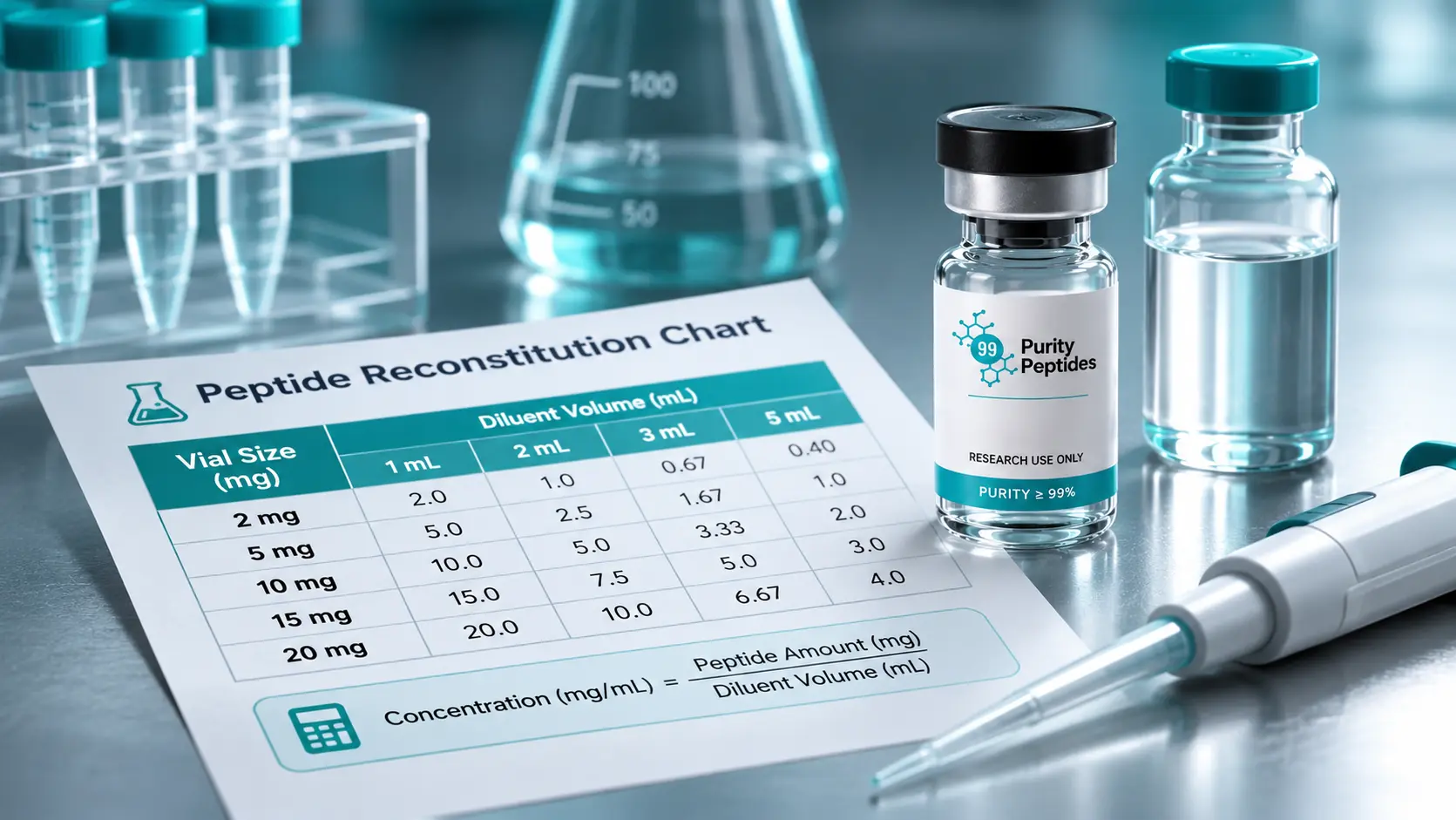
A printable peptide reconstitution chart showing mg/mL for common vial sizes and diluent volumes, plus the formula, net peptide correction and dilution math.
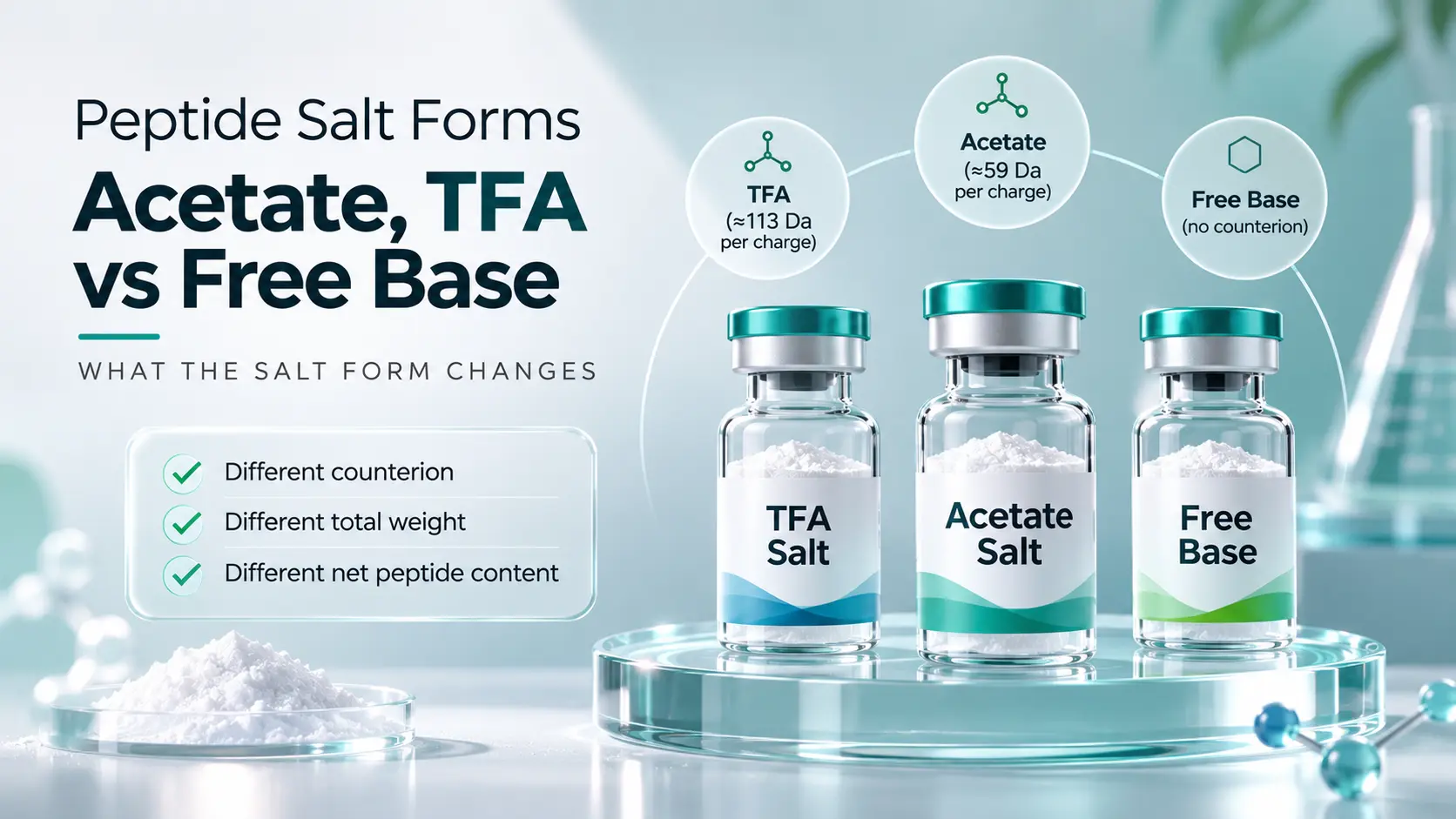
A 10 mg TFA salt and a 10 mg acetate salt do not hold the same amount of peptide. Learn how salt form affects net peptide content, assays and COAs.
(faqs)