99Purity Peptides
Tienda
Categorías
COAsNosotrosBlogPreguntasContactoAfiliados
Comprar Ahora
Navegación
Top Formulations
View All in Category

Listo para elevar tu investigación.
Explora nuestro catálogo completo.

Explorar Catálogo
Category
Vial
Vial on Ice
Purity
Identity
99 Purity Peptides Logo

Purity You Can Trust.

Setting the gold standard in peptide synthesis with verified HPLC/MS testing for uncompromised results.

Stay ahead of the curve. Join 5,000+ top-tier labs getting exclusive formulations, early drop access, and breakthrough research news.

Explorar

  • Inicio
  • Nosotros
  • Tienda
  • Blog
  • Preguntas Frecuentes
  • COAs
  • Shipping Locations
  • Afiliados

Contacto

orders@99puritypeptides.com
support@99puritypeptides.com
+1 (843) 330-7365
@99puritypeptide

Contáctanos

Comunícate con nuestro equipo de soporte

Ver Catálogo

Ver todos los péptidos de investigación

99purity

Aviso Legal:El contenido de este sitio web no ha sido evaluado ni aprobado por la Administración de Alimentos y Medicamentos de EE. UU. (FDA). Los productos vendidos por 99 Purity Peptides se ofrecen únicamente con fines de investigación y laboratorio, y no están destinados a diagnosticar, tratar, curar o prevenir ninguna enfermedad. 99 Purity Peptides no es una farmacia de preparación magistral y no opera como una instalación de composición química según lo definido en la Sección 503A de la Ley Federal de Alimentos, Medicamentos y Cosméticos. Los productos no son para uso humano ni veterinario, y no están destinados a la ingestión, inyección ni ninguna forma de administración. Los niveles de pureza pueden variar según el producto y el lote; ciertos artículos pueden mostrar una pureza inferior al 99%.

Pay
Pay
PayPal
Zelle
VISA
AMEX
mastercard
+ more
99Purity Peptides © 2026·Política de Privacidad·Términos de Servicio·Política de Reembolso·Política de Uso en Investigación·Política de Envío·Aviso Médico·Política de Correcciones
Diseñado y Desarrollado por Belk Digital
Vista del producto 1
InicioTiendaPeptide BundlesKLOW Component-Control Set
Peptide Bundles

KLOW Component-Control Set

$234.99

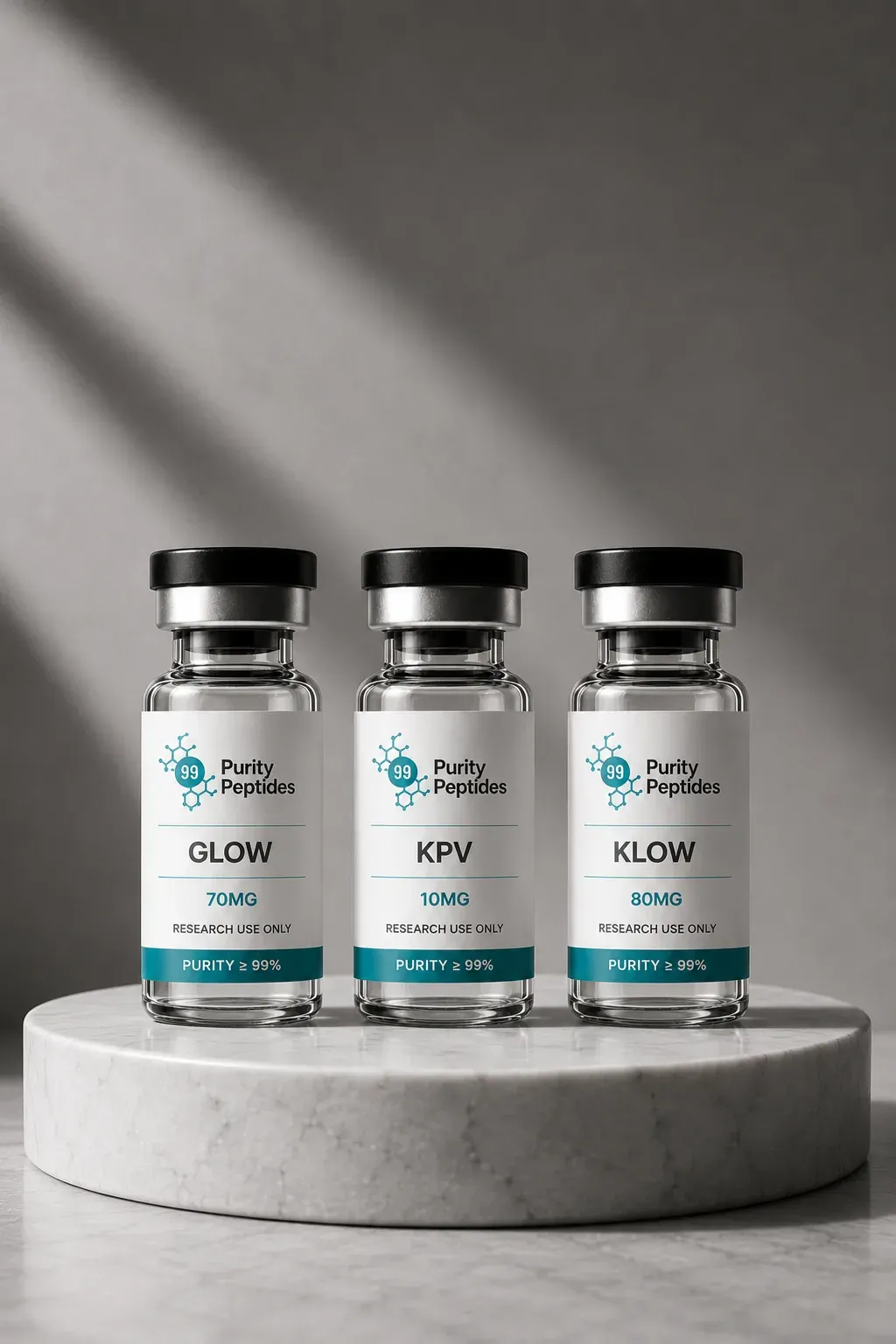
The KLOW Component-Control Set supplies three research vials: GLOW at 70 mg, KPV at 10 mg, and KLOW at 80 mg. GLOW is the three-component base, KLOW is that base plus KPV, and the standalone KPV vial isolates the compound that separates them. All three reconstitute to matching concentrations at a single volume. Supplied lyophilized for laboratory use. For research use only.

Este Kit Incluye
In StockEnvío estándar gratis en pedidos de más de $300
1
Guaranteed Safe Checkout
Pay
Pay
PayPal
Zelle
VISA
AMEX
mastercard
+ more
Envío Rápido
99% Pureza
Probado por Terceros
Garantizado
99.9
Perfil del Compuesto

La
Ciencia.

≥99%

Certificado por HPLC

Pureza Verificada

Terceros

Análisis independiente

Probado en Laboratorio

Investigación

El más alto estándar

Calidad de Grado

COA

Trazabilidad completa

Documentado
KLOW Component-Control Set
Product Profile

Overview

The KLOW Component-Control Set is a three-vial research set built around a single compositional variable. GLOW contains GHK-Cu, BPC-157 and TB-500 at 70 mg total. KLOW contains those same three compounds at the same individual masses, plus KPV, at 80 mg total. The third vial supplies KPV alone at 10 mg — the same mass it carries inside KLOW.

The structure is deliberate. A comparison between GLOW and KLOW alone establishes that the two preparations differ by KPV, but it cannot separate an independent contribution from one that depends on the surrounding components. An isolated KPV arm makes that distinction available.

The arithmetic supports the design without adjustment. Reconstituted to the same volume, GHK-Cu, BPC-157 and TB-500 reach identical concentrations in GLOW and KLOW, while KPV reaches the same concentration in the standalone vial as it does within KLOW. A single volume matches every arm.

KPV is a tripeptide corresponding to the C-terminal residues of α-melanocyte-stimulating hormone, examined in inflammatory-signalling research including NF-κB pathway modulation and peptide-transporter-mediated uptake. It is the only compound in this set absent from GLOW.

All three vials are supplied lyophilized with batch documentation. No published study has compared these preparations.

For Research Use Only. Not intended for human consumption, therapeutic use, veterinary use, or diagnostic applications.

The KLOW Component-Control Set is a three-vial research set containing GLOW (70 mg, three components), KPV (10 mg, isolated), and KLOW (80 mg, the same three components plus KPV). The set supplies a base preparation, the single compound that distinguishes the two blends, and the combined blend — the three arms required to attribute an observed difference to KPV rather than to the preparation as a whole.

Key Takeaways

  • The KLOW Component-Control Set contains one GLOW vial at 70 mg, one KPV vial at 10 mg, and one KLOW vial at 80 mg, all supplied lyophilized.
  • KPV is the only compound present in KLOW and absent from GLOW, which makes it the single compositional variable across the set.
  • The standalone KPV vial carries 10 mg — the same mass KPV occupies within a KLOW vial.
  • Reconstituted to the same volume, every compound reaches the same concentration in each arm where it appears, so no adjustment is needed to match the set.
  • The three-arm structure allows a researcher to distinguish an independent contribution from a context-dependent one; a two-blend comparison cannot separate those possibilities.
  • No published study has compared these preparations, and all three vials are supplied strictly for laboratory research.

What’s Included in This Research Set

VialTotal massComponentsRole in the set
GLOW70 mgGHK-Cu 50 mg, BPC-157 10 mg, TB-500 10 mgThree-component base — the control arm
KPV10 mgKPV 10 mgIsolated variable — the single-compound arm
KLOW80 mgGHK-Cu 50 mg, BPC-157 10 mg, TB-500 10 mg, KPV 10 mgBase plus variable — the combined arm

All three vials are supplied as lyophilized powder with batch documentation. Component masses should be confirmed against the certificate of analysis for each lot received, since published specifications for these blends vary between suppliers.

Why This Set Is Structured as Three Vials

The set contains three vials because two are not enough to attribute a result.

GLOW and KLOW differ by one compound. Comparing them establishes that a difference exists between a three-component preparation and a four-component one. Adding the isolated KPV vial supplies the arm needed to determine what that difference should be assigned to.

What a two-blend comparison cannot separate

A GLOW-versus-KLOW comparison produces one measurement: how the four-component preparation behaves relative to the three-component one. Two quite different situations produce that same measurement.

In the first, KPV contributes something on its own, and the blend result reflects that contribution added to the base. In the second, KPV’s contribution depends on the presence of the other three compounds, and it would behave differently in isolation.

A two-arm comparison cannot tell those apart. Both yield the same answer.

What does KPV add to KLOW?

KPV adds 10 mg of a melanocortin-derived tripeptide to the three compounds already present in GLOW. It is the only compositional difference between the two blends — no component is removed, substituted or re-weighted.

What KPV contributes functionally within the blend has not been established in published work. The KLOW Component-Control Set supplies the three arms needed to investigate that question. It does not answer it, and no claim of interaction between KPV and the other components is made or implied here.

How this differs from the two-vial pairThe GLOW / KLOW Comparative Pair answers what the difference between the blends is. This set adds a standalone KPV vial, which addresses what that difference should be attributed to. The pair is the entry point; this set is the three-arm version.
Aviso de InvestigaciónTodos los productos de cada categoría son únicamente para uso en investigación y no aptos para uso humano o veterinario, diagnóstico o tratamiento.
Sigue Explorando

También Considerado.

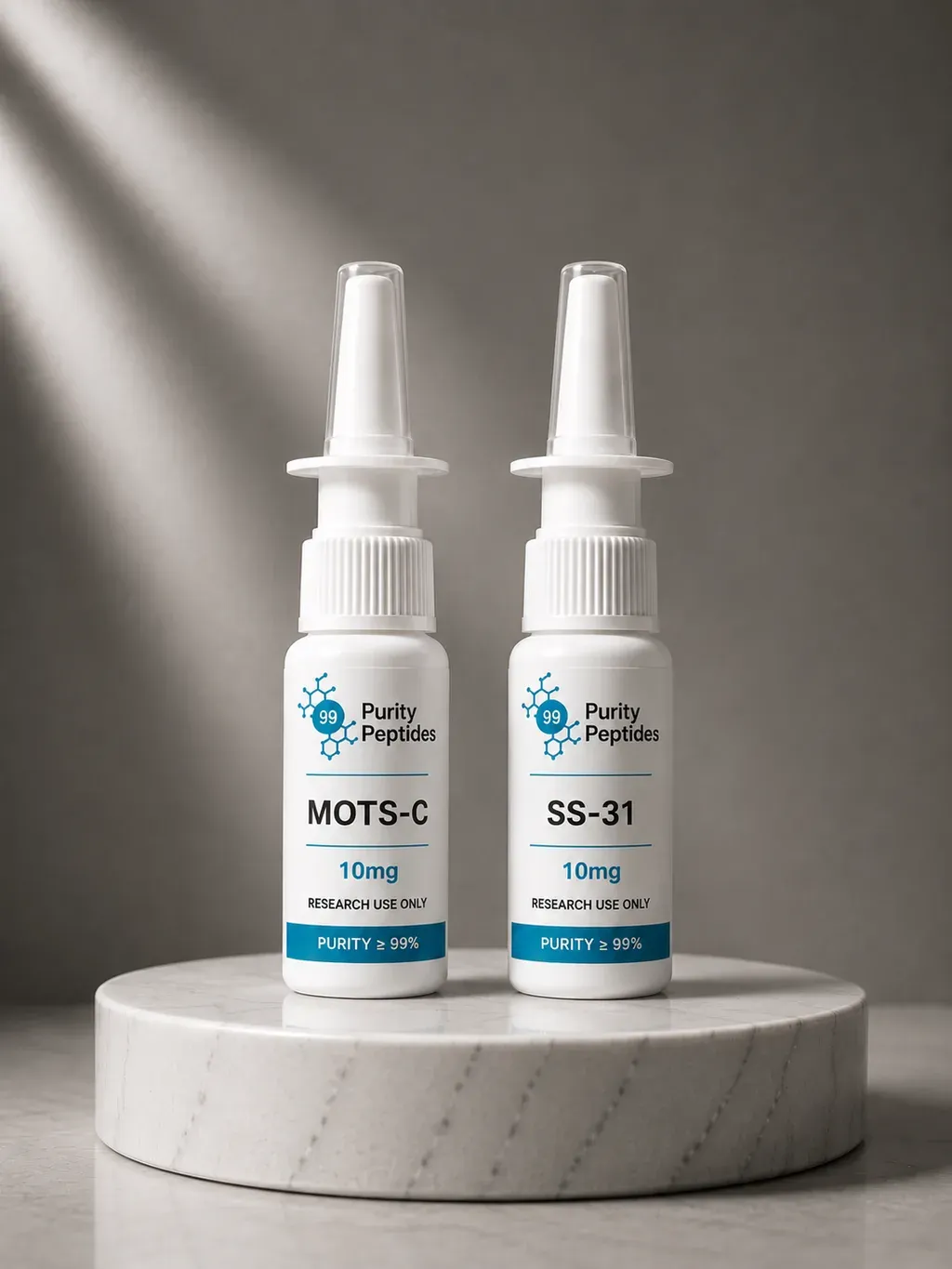
Mitochondrial Spray Pair

RESEARCH PEPTIDE

SS-31 and MOTS-c fall in different nasal absorption bands — one comfortably favourable, one considerably less so. The size gap is intrinsic to what each compound is.

Mitochondrial Spray Pair
From
$139.99

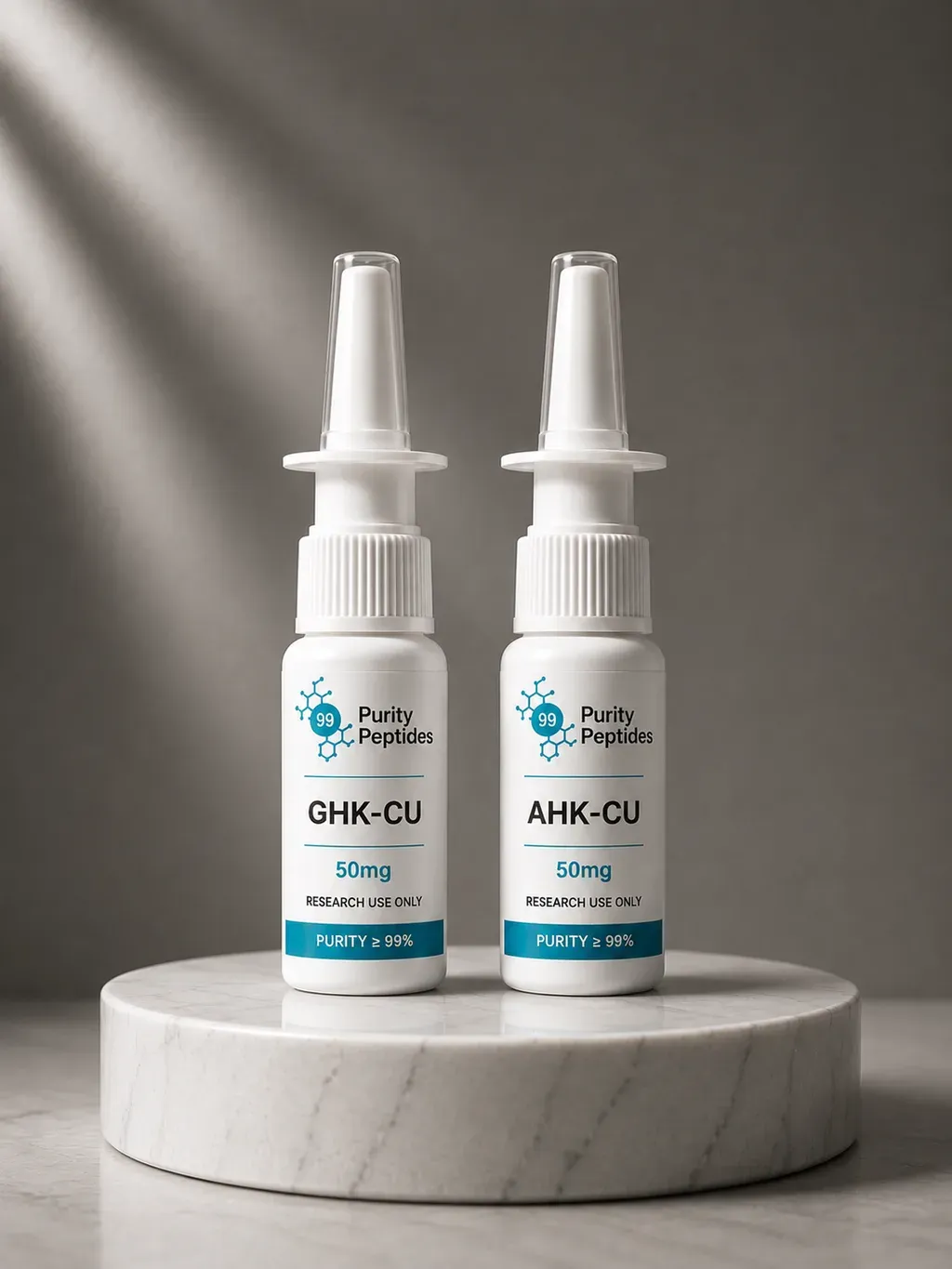
Copper Peptide Spray Comparator

RESEARCH PEPTIDE

Both copper tripeptides sit in the favourable nasal absorption range. Their published research is almost entirely topical, and no intranasal study bridges the two.

Copper Peptide Spray Comparator
From
$114.99

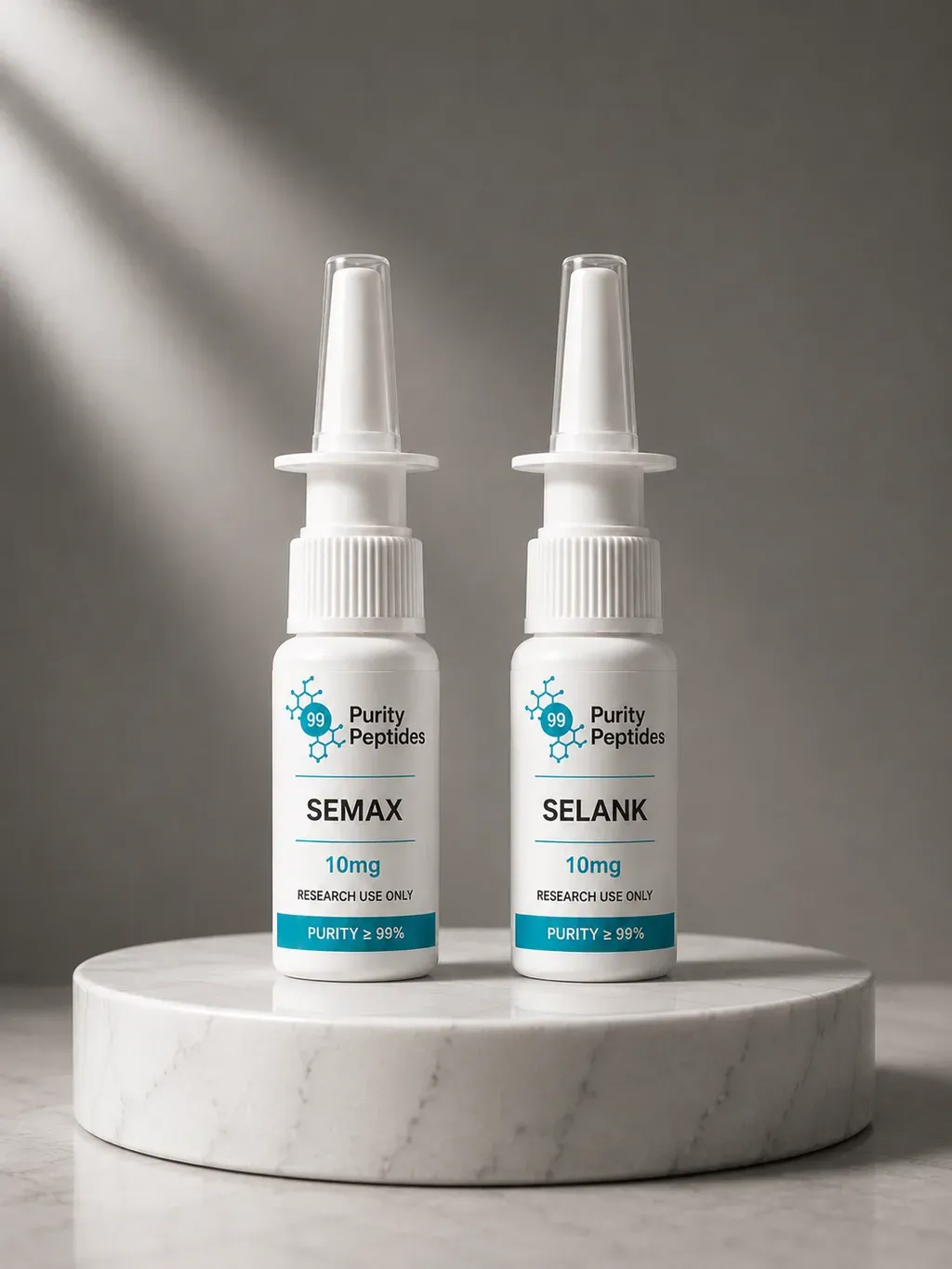
Neuropeptide Spray Comparator

RESEARCH PEPTIDE

10 mg is the bottle total, not the per-spray content. Both peptides sit under 1,000 Da, where nasal absorption is most favourable. Research use only.

Neuropeptide Spray Comparator
From
$109.99

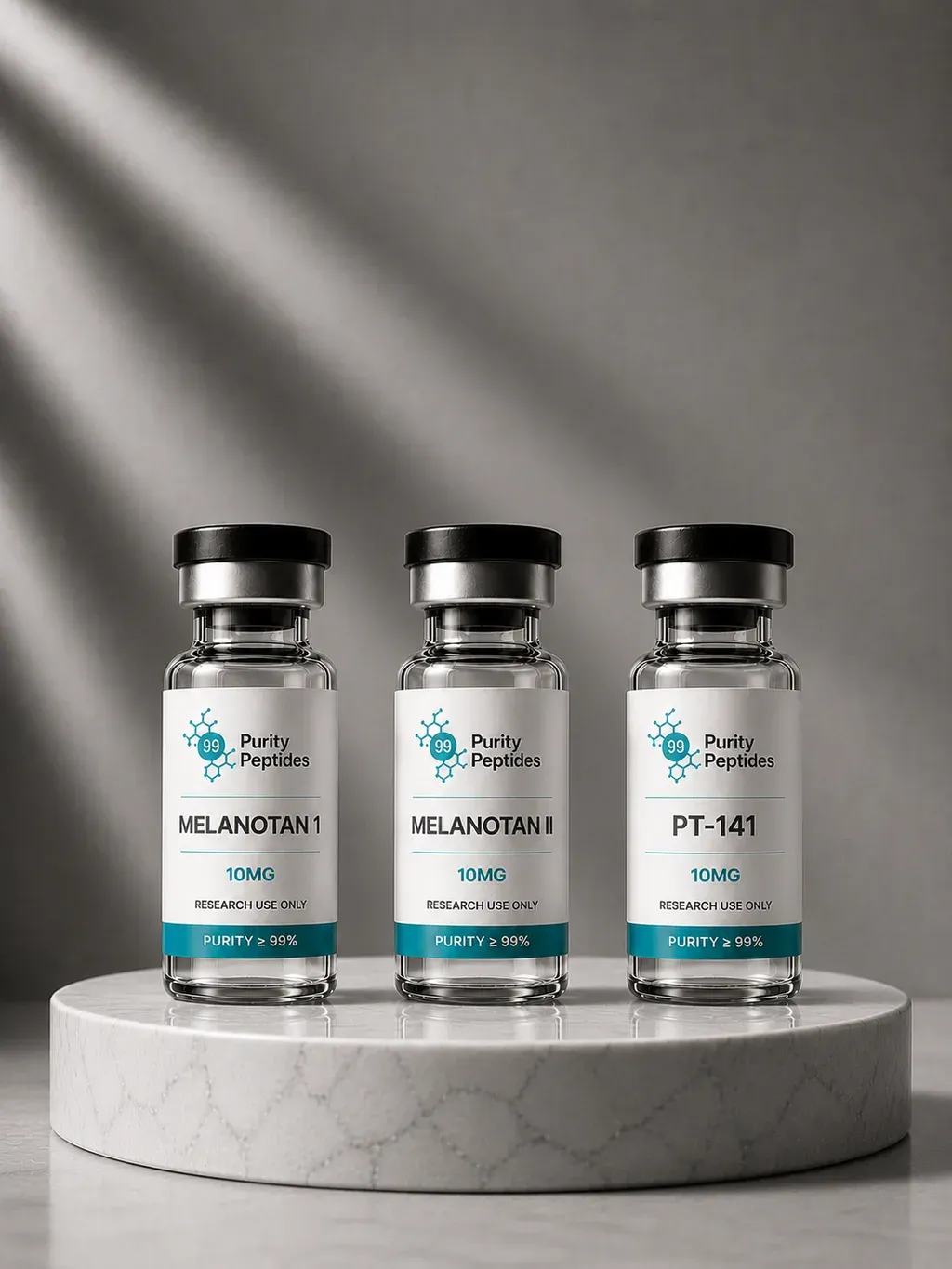
Melanocortin Analog Comparator

RESEARCH PEPTIDE

Three analogs of one hormone across a five-receptor family. Linear, cyclic and a metabolite of the cyclic — compared by structure and receptor selectivity. RUO.

Melanocortin Analog Comparator
From
$134.99
Customer Reviews
0.0
0 Reviews
5
0
4
0
3
0
2
0
1
0
0 Reviews

No Reviews Yet

Be the first to share your experience with this product and help other researchers!
Educación e Investigación

Más Información.

Mezcla KLOW 80 mg: Referencia de Reconstitución y Concentración (50/10/10/10)
Product Guides
Jul 29, 20265 min read

Mezcla KLOW 80 mg: Referencia de Reconstitución y Concentración (50/10/10/10)

Tabla de dosificación y referencia de reconstitución de KLOW para la mezcla de 80 mg 50/10/10/10. Tablas de concentración, matemáticas de unidades de jeringa, y datos de almacenamiento de laboratorio.
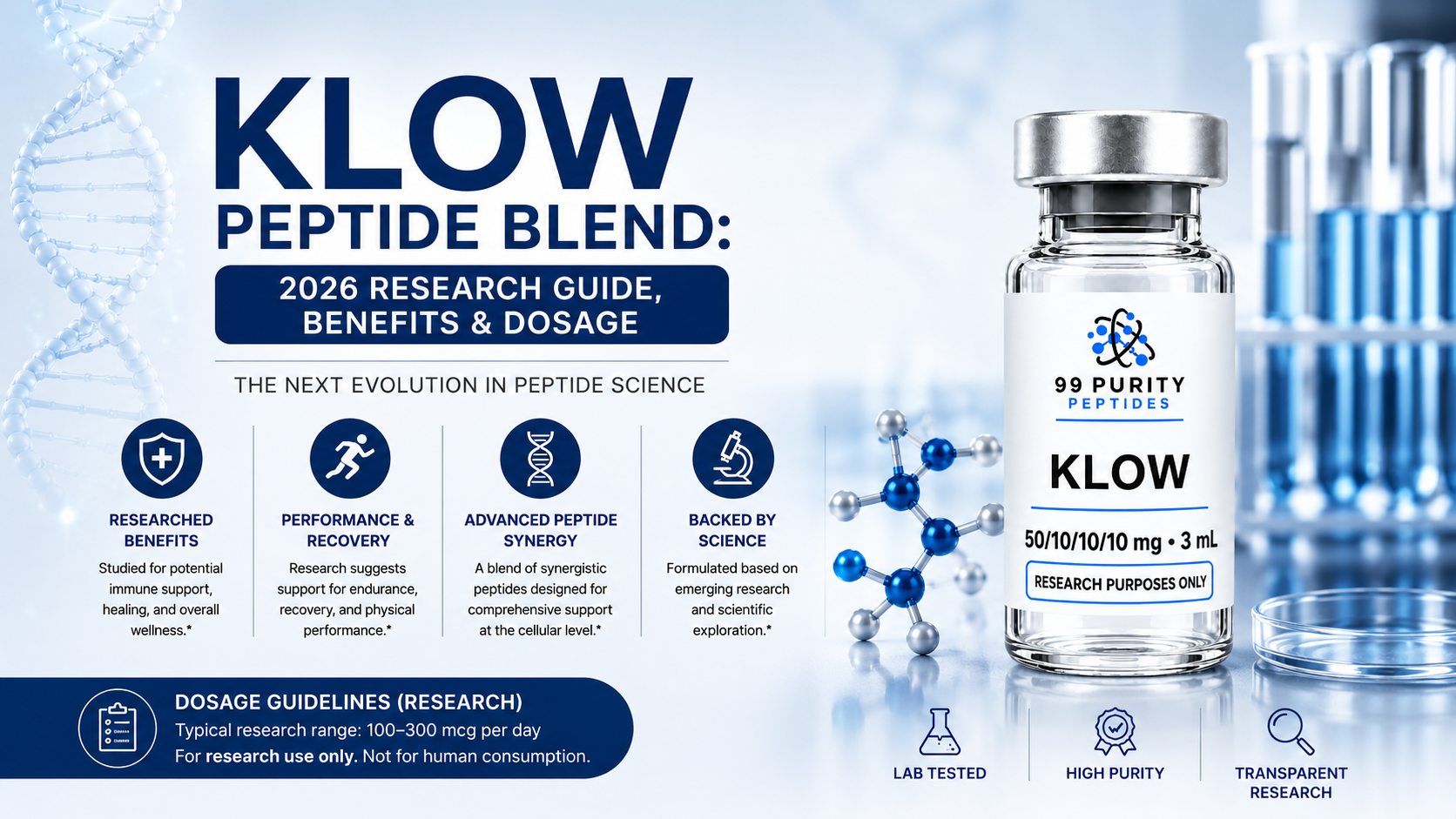
Mezcla de Péptidos KLOW: Guía de Investigación 2026, Beneficios y Dosis
Investigación de crecimiento
11 de junio de 202610 min de lectura

Mezcla de Péptidos KLOW: Guía de Investigación 2026, Beneficios y Dosis

Mezcla de péptidos KLOW: composición verificada de 50/10/10/10mg, BPC-157, TB-500, KPV, GHK-Cu. Beneficios de investigación, tabla de dosis, comparación KLOW vs GLOW. Referencia 2026.

Bundles de Péptidos de Investigación: Cómo Comprobar si el Precio Es un Ahorro Real
Product Guides
Oct 5, 20265 min read

Bundles de Péptidos de Investigación: Cómo Comprobar si el Precio Es un Ahorro Real

Cómo comprobar si un bundle de péptidos es realmente más barato: divida entre los miligramos totales, compare viales sueltos el mismo día y lea el COA.

READ

(preguntas frecuentes)

Preguntas Frecuentes

01

What is included in the KLOW Component-Control Set?

The set includes three lyophilized vials: GLOW at 70 mg containing GHK-Cu, BPC-157 and TB-500; KPV at 10 mg as a single compound; and KLOW at 80 mg containing those same three compounds plus KPV. All three are supplied with batch documentation for research use only.
02

Why does this set include three vials instead of two?

Two vials establish that GLOW and KLOW differ by KPV but cannot separate an independent contribution from a context-dependent one. The isolated KPV vial supplies the third arm needed to distinguish those possibilities. The KLOW Component-Control Set is structured around that distinction.
03

Does GLOW contain KPV?

No. GLOW contains three compounds — GHK-Cu, BPC-157 and TB-500. KPV is present only in KLOW among the two blends. That absence is precisely why GLOW functions as the control arm in this set, and why a standalone KPV vial is included as the isolated variable.
04

What does KPV add to KLOW?

KPV adds 10 mg of a melanocortin-derived tripeptide to the three compounds already present in GLOW. It is the only compositional difference between the blends. What KPV contributes functionally within a blend has not been established in published work, and this set supplies materials to investigate the question rather than an answer to it.
05

How much KPV is in KLOW?

KLOW contains 10 mg of KPV within its 80 mg total, alongside GHK-Cu at 50 mg and BPC-157 and TB-500 at 10 mg each. The standalone KPV vial in this set carries the same 10 mg, which is what allows both arms to be matched at a single reconstitution volume.
06

What is KPV?

KPV is a tripeptide composed of lysine, proline and valine, corresponding to residues 11–13 of α-melanocyte-stimulating hormone. It is examined in inflammatory-signalling research, including NF-κB pathway modulation and uptake through the PepT1 peptide transporter in experimental epithelial models.
07

Can all three vials be reconstituted to the same volume?

Yes, subject to physical vial capacity. Because the shared compounds carry identical masses across vials, one volume produces matching concentrations in every arm — including KPV, which reaches the same concentration in the standalone vial as within KLOW. Check each vial's capacity before selecting a volume.
08

How does this set differ from the GLOW / KLOW Comparative Pair?

The Comparative Pair contains two vials and answers what the difference between the blends is. The KLOW Component-Control Set adds a standalone KPV vial, which addresses what that difference should be attributed to. The pair is the entry point; this set is the three-arm version.
09

Can KPV be studied separately from KLOW?

Yes. The standalone 10 mg KPV vial in this set exists for that purpose. Studying KPV in isolation alongside both blends is the structure that makes attribution possible, rather than studying it only as a blend component.
10

Is KPV in a blend the same as KPV alone?

Compositionally the compound is identical, but the preparations differ. A single-compound lyophilized vial and a co-lyophilized four-component blend may behave differently in solubility, reconstitution or stability. That difference is a known limitation of this comparison and is stated on this page rather than left implicit.
11

Has any study compared GLOW, KPV and KLOW together?

No. GLOW and KLOW are commercial blend names rather than studied preparations, and no published work has evaluated them against each other or against isolated KPV. Peer-reviewed literature covers the individual compounds. This set supplies materials for comparative investigation only.
12

Which compound is the largest component in the blends?

GHK-Cu at 50 mg is the largest single component of both GLOW and KLOW, with the remaining compounds at 10 mg each. Because GHK-Cu carries the same mass in both blends, it is constant across the comparison. Confirm per-component mass on your lot certificate.
13

Is TB-500 the same as thymosin β-4?

No. TB-500 is a synthetic fragment corresponding to a region of thymosin β-4, not the full-length 43-residue protein. Research conducted with full-length thymosin β-4 does not automatically describe the fragment supplied in these blends, and materials should be recorded accordingly.
14

Can these materials be used on humans or animals?

No. All three vials are supplied for laboratory research only. They are not intended for human consumption, therapeutic use, veterinary use, or diagnostic applications, and no dosing, protocol or administration guidance is provided for them.