99Purity Peptides
Tienda
Categorías
COAsNosotrosBlogPreguntasContactoAfiliados
Comprar Ahora
Navegación
Top Formulations
View All in Category

Listo para elevar tu investigación.
Explora nuestro catálogo completo.

Explorar Catálogo
Category
Vial
Vial on Ice
Purity
Identity
99 Purity Peptides Logo

Purity You Can Trust.

Setting the gold standard in peptide synthesis with verified HPLC/MS testing for uncompromised results.

Stay ahead of the curve. Join 5,000+ top-tier labs getting exclusive formulations, early drop access, and breakthrough research news.

Explorar

  • Inicio
  • Nosotros
  • Tienda
  • Blog
  • Preguntas Frecuentes
  • COAs
  • Shipping Locations
  • Afiliados

Contacto

orders@99puritypeptides.com
support@99puritypeptides.com
+1 (843) 330-7365
@99puritypeptide

Contáctanos

Comunícate con nuestro equipo de soporte

Ver Catálogo

Ver todos los péptidos de investigación

99purity

Aviso Legal:El contenido de este sitio web no ha sido evaluado ni aprobado por la Administración de Alimentos y Medicamentos de EE. UU. (FDA). Los productos vendidos por 99 Purity Peptides se ofrecen únicamente con fines de investigación y laboratorio, y no están destinados a diagnosticar, tratar, curar o prevenir ninguna enfermedad. 99 Purity Peptides no es una farmacia de preparación magistral y no opera como una instalación de composición química según lo definido en la Sección 503A de la Ley Federal de Alimentos, Medicamentos y Cosméticos. Los productos no son para uso humano ni veterinario, y no están destinados a la ingestión, inyección ni ninguna forma de administración. Los niveles de pureza pueden variar según el producto y el lote; ciertos artículos pueden mostrar una pureza inferior al 99%.

Pay
Pay
PayPal
Zelle
VISA
AMEX
mastercard
+ more
99Purity Peptides © 2026·Política de Privacidad·Términos de Servicio·Política de Reembolso·Política de Uso en Investigación·Política de Envío·Aviso Médico·Política de Correcciones
Diseñado y Desarrollado por Belk Digital
Vista del producto 1
InicioTiendaPeptide BundlesCopper Peptide Comparator
Peptide Bundles

Copper Peptide Comparator

$89.99

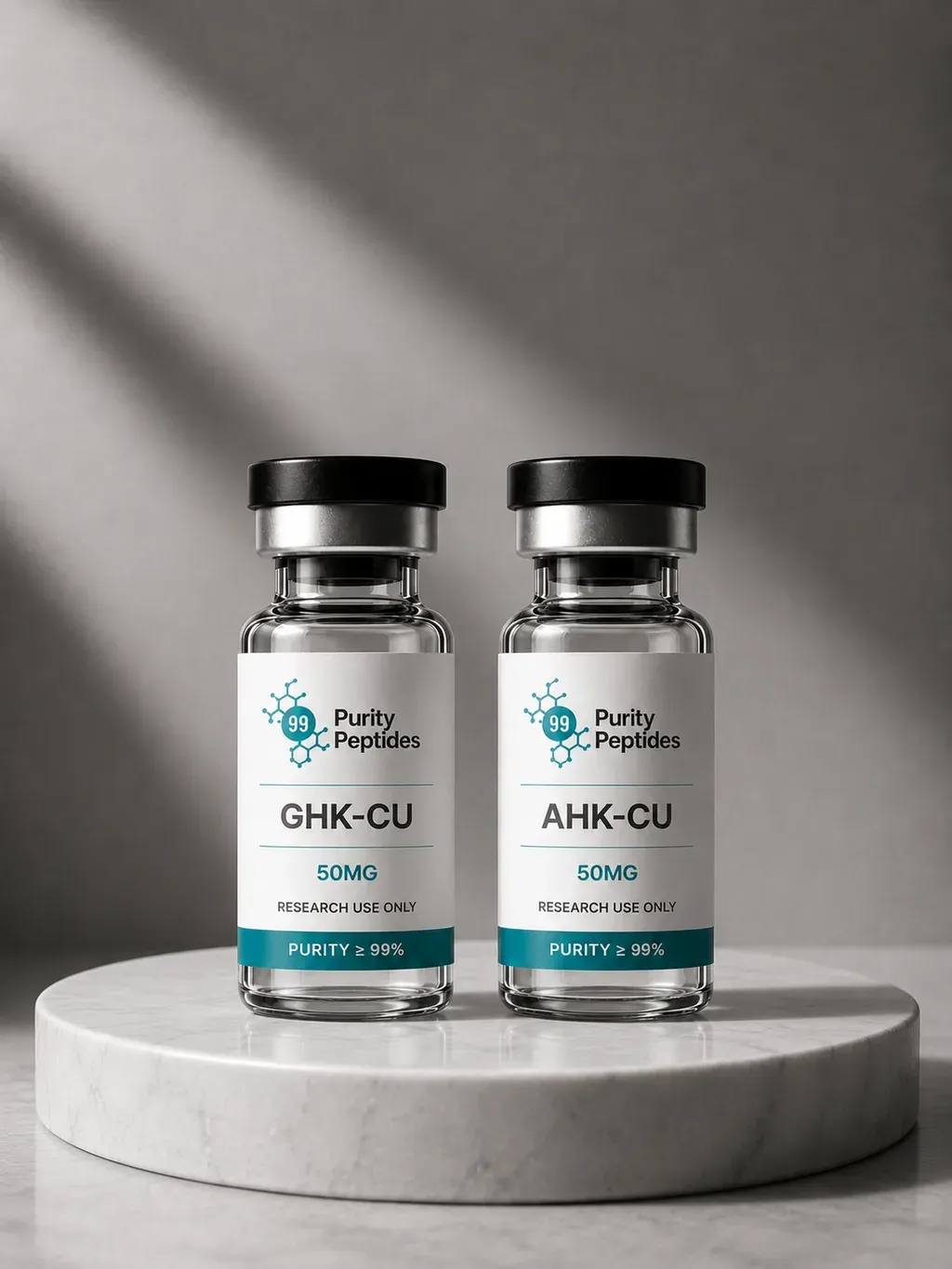
The Copper Peptide Comparator supplies GHK-Cu and AHK-Cu as matched 50 mg research vials. The two copper-binding tripeptides differ at a single position — glycine in GHK-Cu, alanine in AHK-Cu — at a residue that participates directly in copper coordination. The pair supports structure-activity comparison between a well-characterised endogenous peptide and its synthetic analog. Supplied lyophilized. For research use only.

Este Kit Incluye
In StockEnvío estándar gratis en pedidos de más de $300
1
Guaranteed Safe Checkout
Pay
Pay
PayPal
Zelle
VISA
AMEX
mastercard
+ more
Envío Rápido
99% Pureza
Probado por Terceros
Garantizado
99.9
Perfil del Compuesto

La
Ciencia.

≥99%

Certificado por HPLC

Pureza Verificada

Terceros

Análisis independiente

Probado en Laboratorio

Investigación

El más alto estándar

Calidad de Grado

COA

Trazabilidad completa

Documentado
Copper Peptide Comparator
Product Profile

Overview

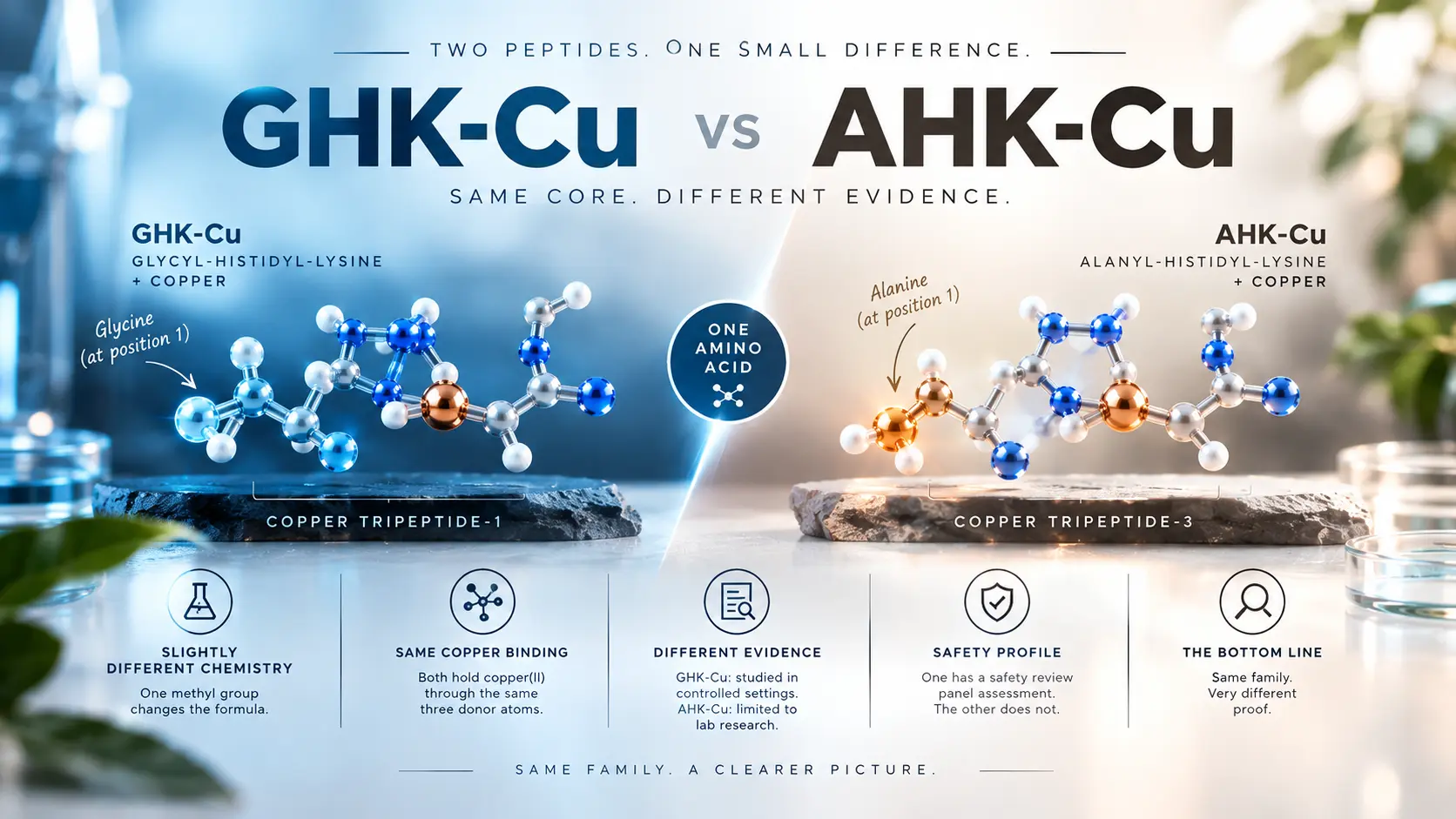
The Copper Peptide Comparator brings together the two most frequently compared copper-binding tripeptides at matched mass. GHK-Cu, designated Copper Tripeptide-1, is the copper(II) complex of glycyl-histidyl-lysine. AHK-Cu, designated Copper Tripeptide-3, is the copper(II) complex of alanyl-histidyl-lysine. The peptides differ at position 1 alone.

That substitution replaces glycine with alanine — a difference of one methyl group. Its position matters: the N-terminal residue’s α-amino nitrogen participates directly in copper coordination, so the change sits at a coordinating residue rather than remote from the metal centre. Few peptide pairs offer a structure-activity comparison this narrow.

The two compounds are not, however, equally characterised. GHK-Cu occurs naturally in human plasma and carries a substantial published literature covering matrix biology, tissue-repair models and gene-expression research. AHK-Cu is a synthetic analog with a smaller literature concentrated in topical and formulation contexts, and several widely repeated claims about it have not been independently established.

That asymmetry is a reason to hold both rather than a reason to avoid either. A compound with a limited evidence base is difficult to interpret without a well-characterised reference, and GHK-Cu serves as that reference.

Both vials are supplied lyophilized as pale blue powder, with batch documentation including copper content and identity confirmation.

For Research Use Only. Not intended for human consumption, therapeutic use, veterinary use, or diagnostic applications.

The Copper Peptide Comparator is a two-vial research pair containing GHK-Cu (Copper Tripeptide-1) and AHK-Cu (Copper Tripeptide-3) at 50 mg each. Both are copper(II) complexes of tripeptides that differ at a single position — glycine in GHK-Cu, alanine in AHK-Cu. The pair supports structure-activity comparison between an endogenous, well-characterised copper peptide and a synthetic analog with a narrower evidence base.

Key Takeaways

  • The Copper Peptide Comparator contains one GHK-Cu vial and one AHK-Cu vial, both at 50 mg, supplied lyophilized.
  • GHK-Cu is designated Copper Tripeptide-1 and AHK-Cu is designated Copper Tripeptide-3; the names describe two different compounds, not two grades of one.
  • The two peptides differ only at position 1, where GHK-Cu carries glycine and AHK-Cu carries alanine — a single methyl group.
  • That position participates directly in copper(II) coordination, which makes the pair an unusually narrow structure-activity comparison.
  • GHK-Cu occurs naturally in human plasma and carries a substantially larger published literature than AHK-Cu, which is synthetic.
  • Both compounds are supplied strictly for laboratory research and are not intended for human consumption, therapeutic use, veterinary use, or diagnostic applications.

What’s Included in This Research Pair

CompoundMassDesignationPeptide sequenceWhy it is included
GHK-Cu50 mgCopper Tripeptide-1Glycyl-histidyl-lysine, Cu(II) complexThe well-characterised reference compound in copper peptide research
AHK-Cu50 mgCopper Tripeptide-3Alanyl-histidyl-lysine, Cu(II) complexThe synthetic analog differing at a single residue

Both vials are supplied as lyophilized powder with batch documentation. Copper complexes of these tripeptides present as pale blue solids; colour is a general visual characteristic of the complex rather than a purity indicator.

Why GHK-Cu and AHK-Cu Are Compared

GHK-Cu and AHK-Cu are compared because they are close structural relatives. Both are copper(II) complexes of a three-residue peptide ending in histidine and lysine. They differ at position 1 only, where GHK-Cu carries glycine and AHK-Cu carries alanine. Every other structural feature, including the histidine that anchors copper binding, is shared.

A single-residue substitution at a copper-coordinating position

Alanine differs from glycine by a single methyl group. In most peptides a substitution that small, at a terminal position, would be unremarkable.

Here it is not, because of where it sits. In copper(II) complexes of these tripeptides, coordination involves the N-terminal α-amino nitrogen, the deprotonated backbone amide nitrogen, and the imidazole nitrogen of the histidine residue. The substituted position is therefore part of the coordination environment rather than remote from it.

That makes GHK-Cu and AHK-Cu something close to a minimal pair — two compounds separated by one atom-scale change at a functionally significant site. Structure-activity comparisons rarely get narrower, and matched 50 mg vials are what make the comparison practical to run.

Endogenous peptide versus synthetic analog

The two compounds also differ in origin, and this is not a minor distinction.

GHK-Cu occurs naturally. The tripeptide was first isolated from human plasma, and reported plasma concentrations decline substantially with age. GHK-Cu is therefore studied as an endogenous factor with a physiological context of its own.

AHK-Cu does not occur naturally. It is a synthetic analog designed around the GHK scaffold. Any research on AHK-Cu describes a laboratory compound rather than a naturally present one — which is relevant when interpreting comparisons between them, since only one of the two has a baseline biological presence to be compared against.

The Evidence Base Behind Each Compound Is Not Equal

GHK-Cu and AHK-Cu are frequently presented as interchangeable options separated only by research focus. They are not equally characterised, and a comparison built on the assumption that they are will misread its own results.

GHK-Cu carries a substantial published literature spanning matrix biology, tissue-repair models, copper coordination chemistry and gene-expression research, accumulated over decades and available through indexed journals.

AHK-Cu carries a much smaller literature, weighted toward topical and cosmetic-formulation contexts. Several claims about AHK-Cu that circulate widely — including assertions about comparative penetration and distinct gene-expression behaviour — trace substantially to industry and supplier sources rather than to independently replicated published work.

Why the asymmetry is the argument for holding bothAHK-Cu results are difficult to interpret in isolation, since there is limited independent literature to compare them against. Run alongside GHK-Cu under matched conditions, they acquire a reference point. The evidence asymmetry is the argument for holding both compounds, not an argument against either one.
Aviso de InvestigaciónTodos los productos de cada categoría son únicamente para uso en investigación y no aptos para uso humano o veterinario, diagnóstico o tratamiento.
Sigue Explorando

También Considerado.

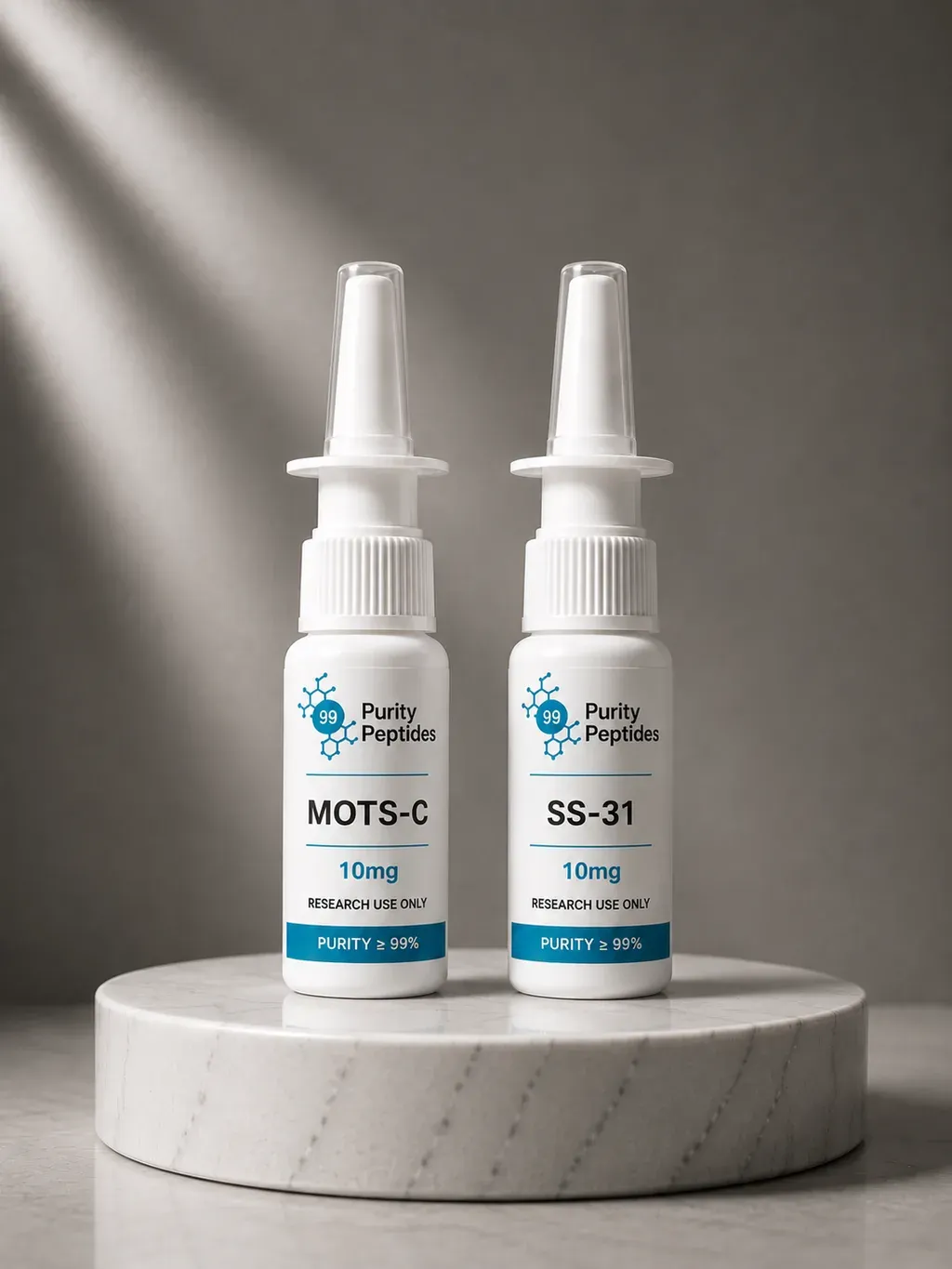
Mitochondrial Spray Pair

RESEARCH PEPTIDE

SS-31 and MOTS-c fall in different nasal absorption bands — one comfortably favourable, one considerably less so. The size gap is intrinsic to what each compound is.

Mitochondrial Spray Pair
From
$139.99

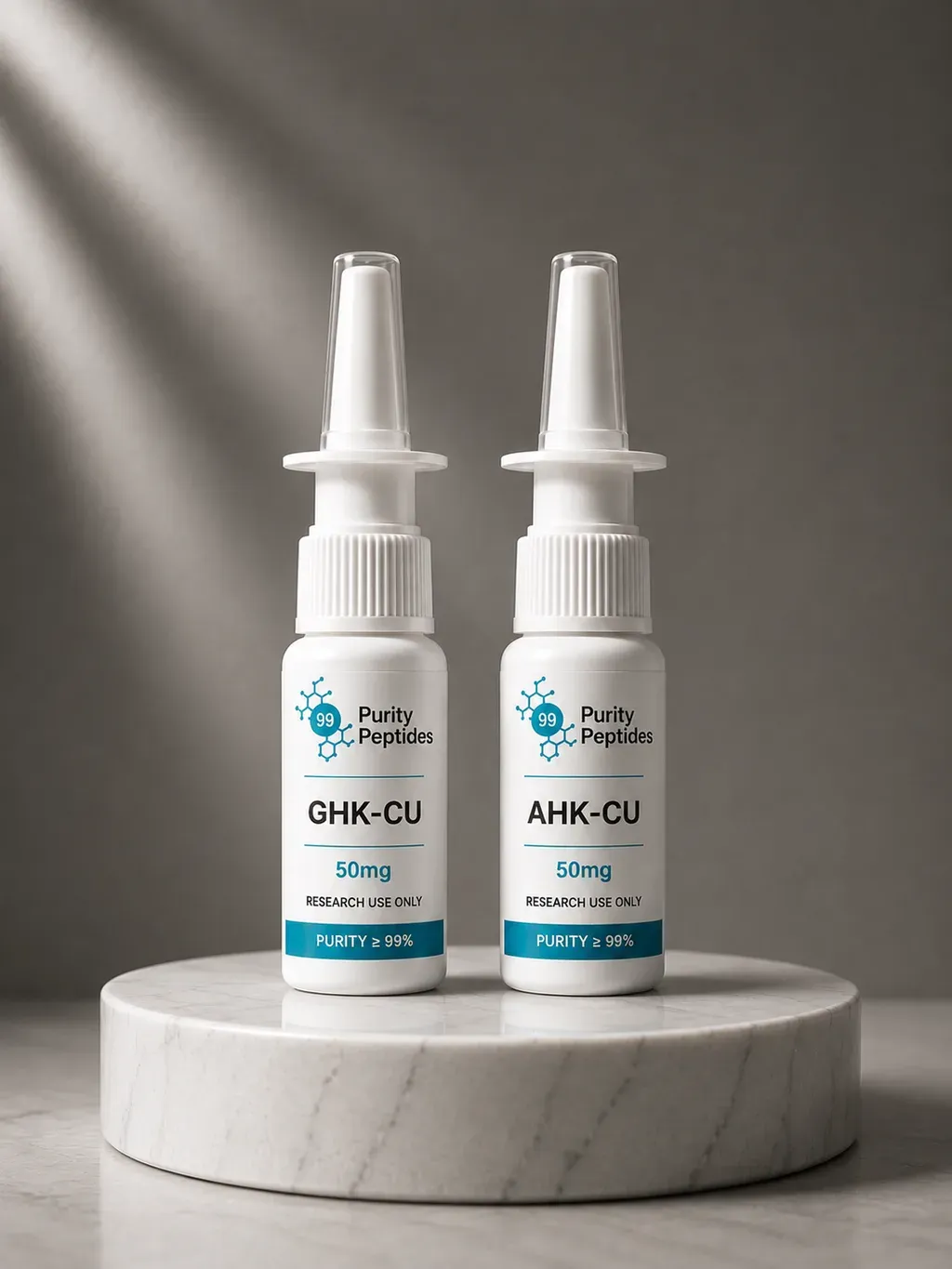
Copper Peptide Spray Comparator

RESEARCH PEPTIDE

Both copper tripeptides sit in the favourable nasal absorption range. Their published research is almost entirely topical, and no intranasal study bridges the two.

Copper Peptide Spray Comparator
From
$114.99

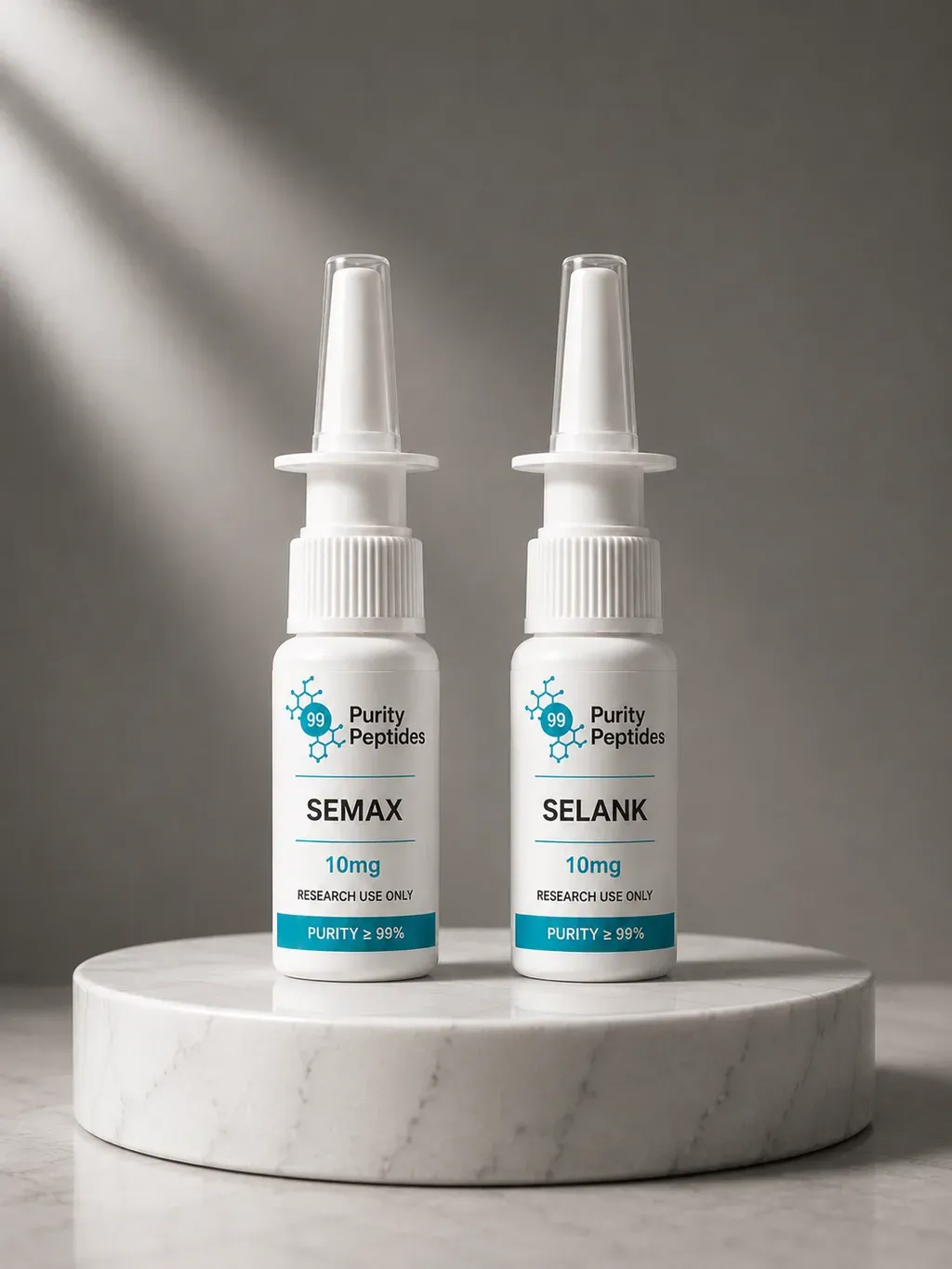
Neuropeptide Spray Comparator

RESEARCH PEPTIDE

10 mg is the bottle total, not the per-spray content. Both peptides sit under 1,000 Da, where nasal absorption is most favourable. Research use only.

Neuropeptide Spray Comparator
From
$109.99

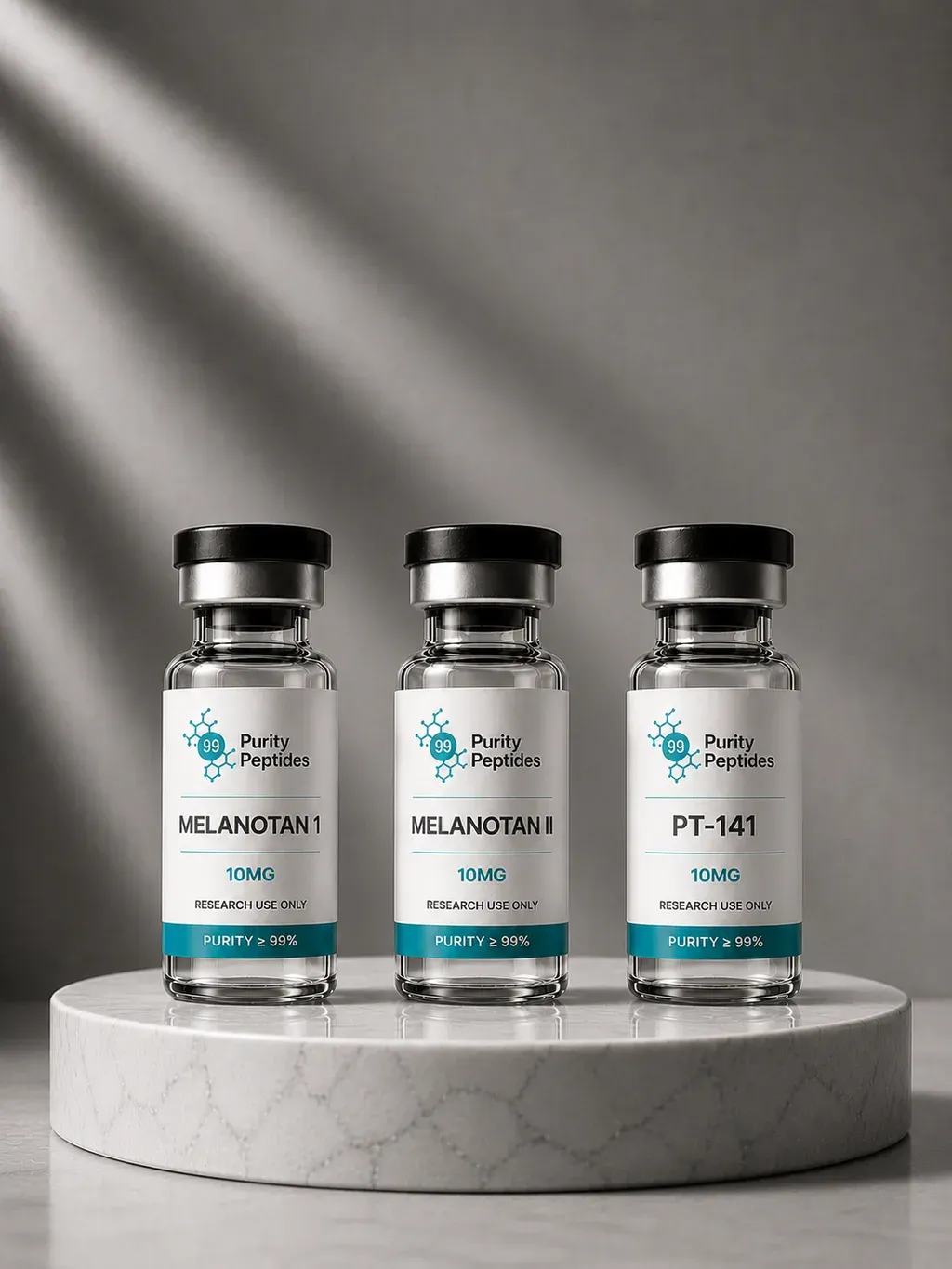
Melanocortin Analog Comparator

RESEARCH PEPTIDE

Three analogs of one hormone across a five-receptor family. Linear, cyclic and a metabolite of the cyclic — compared by structure and receptor selectivity. RUO.

Melanocortin Analog Comparator
From
$134.99
Customer Reviews
0.0
0 Reviews
5
0
4
0
3
0
2
0
1
0
0 Reviews

No Reviews Yet

Be the first to share your experience with this product and help other researchers!

Educación e Investigación

Más Información.

Aerosol nasal de GHK-Cu: ¿qué muestra realmente la investigación?
Product Guides
Oct 17, 20265 min read

Aerosol nasal de GHK-Cu: ¿qué muestra realmente la investigación?

Investigación sobre el aerosol nasal de GHK-Cu: tres estudios en ratones de un mismo laboratorio, sin datos en humanos y lo que aún se desconoce.
GHK-Cu vs AHK-Cu: un aminoácido, dos bases de evidencia muy distintas
Product Guides
Sep 12, 20265 min read

GHK-Cu vs AHK-Cu: un aminoácido, dos bases de evidencia muy distintas

GHK-Cu vs AHK-Cu: los separa un grupo metilo, pero no un mismo nivel de evidencia. Comparación con fuentes de la química, los ensayos y el marketing.
AHK-Cu Spray Nasal 50mg: Lo Que la Investigación de Copper Tripeptide-3 Realmente Muestra
Product Guides
Aug 21, 20265 min read

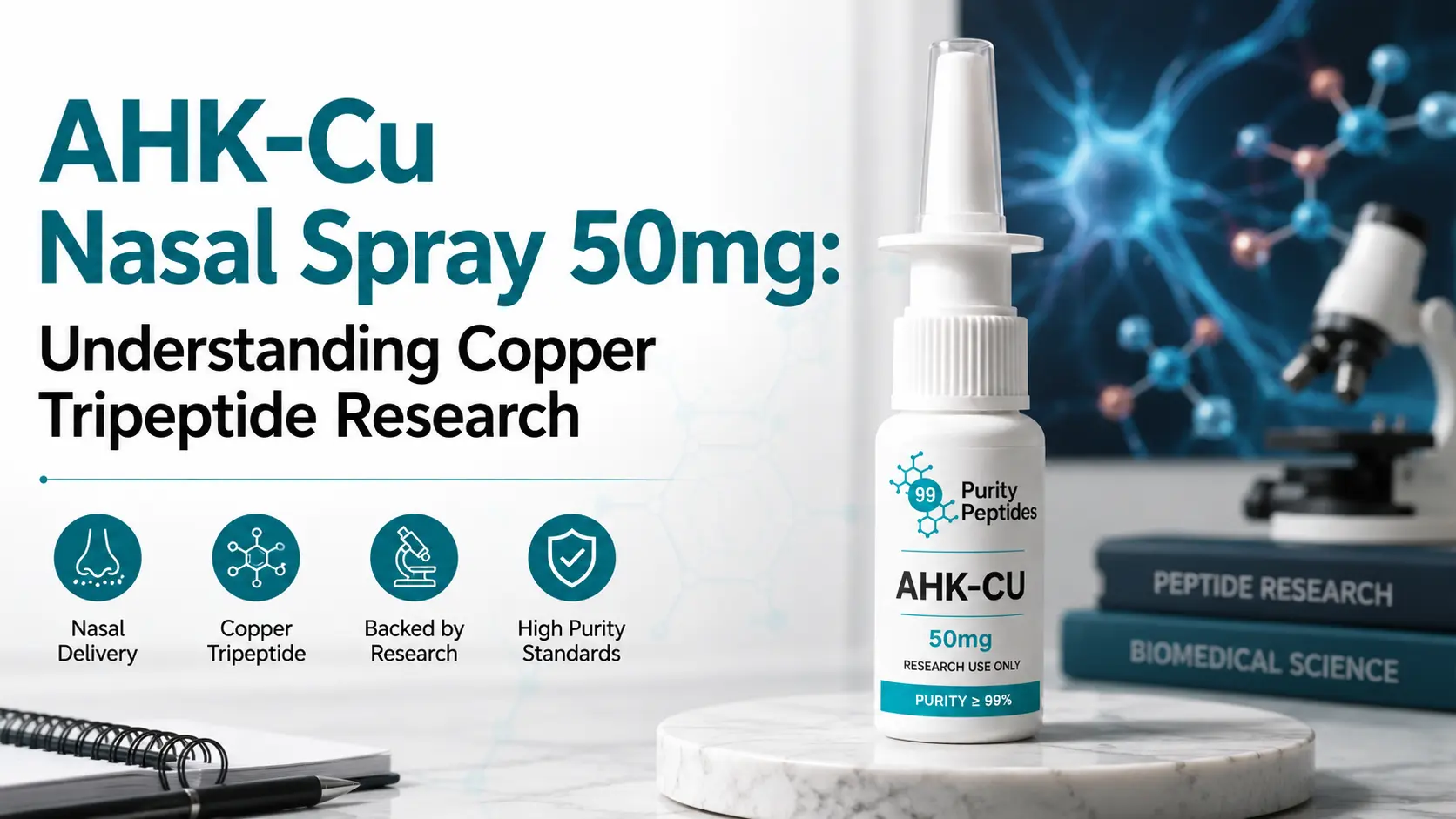
AHK-Cu Spray Nasal 50mg: Lo Que la Investigación de Copper Tripeptide-3 Realmente Muestra

AHK-Cu spray nasal 50mg explicado: estructura de Copper Tripeptide-3, diferencias con GHK-Cu, verificaciones de COA y límites honestos de investigación. Uso exclusivo en investigación.

READ

(preguntas frecuentes)

Preguntas Frecuentes

01

What is included in the Copper Peptide Comparator?

The pair includes one GHK-Cu vial at 50 mg and one AHK-Cu vial at 50 mg, both supplied lyophilized with batch documentation. Both are copper(II) complexes of tripeptides, matched in mass to support direct comparison under identical preparation conditions. For research use only.
02

Is AHK-Cu the same as GHK-Cu?

No. GHK-Cu and AHK-Cu are different compounds. Both are copper(II) complexes of a tripeptide, but GHK-Cu contains glycine at position 1 while AHK-Cu contains alanine. The remaining residues, histidine and lysine, are shared. They are close structural relatives rather than the same compound.
03

What is the difference between GHK-Cu and AHK-Cu?

The peptides differ at position 1: glycine in GHK-Cu, alanine in AHK-Cu — a difference of one methyl group. That position participates in copper coordination. GHK-Cu also occurs naturally in human plasma while AHK-Cu is synthetic, and GHK-Cu carries a substantially larger published literature.
04

Is AHK-Cu Copper Tripeptide-1 or Copper Tripeptide-3?

AHK-Cu is designated Copper Tripeptide-3. GHK-Cu is Copper Tripeptide-1. The two designations refer to different compounds rather than to different grades or concentrations of the same one, and the numbering is a common point of confusion when sourcing either material.
05

Is AHK-Cu naturally occurring?

No. AHK-Cu is a synthetic analog built on the GHK scaffold with alanine substituted at position 1. GHK-Cu, by contrast, occurs naturally and was first isolated from human plasma. This difference in origin is relevant when interpreting research that compares the two compounds.
06

Which copper peptide has more research behind it?

GHK-Cu, by a considerable margin. Its published literature spans matrix biology, tissue-repair models, coordination chemistry and gene-expression research across multiple independent groups. AHK-Cu's record is smaller and weighted toward topical and formulation contexts, with several widely repeated claims not independently established.
07

Do GHK-Cu and AHK-Cu bind copper the same way?

Both form copper(II) complexes through the N-terminal amine, the deprotonated backbone amide and the histidine imidazole. Because the substituted position sits within that coordination environment, whether the substitution alters coordination behaviour is one of the questions a matched comparison of the two compounds can address.
08

Why is copper peptide powder blue?

The colour comes from the copper(II) complex rather than from the peptide, and pale blue is a general visual characteristic of these materials. Colour is not a purity or concentration indicator. Verify identity and copper content on the certificate of analysis rather than by appearance.
09

Why are both vials supplied at 50 mg?

Matched mass allows both compounds to be prepared at the same concentration using the same diluent volume, so no correction is needed between them. For a comparison built on a single-residue structural difference, removing concentration as a variable keeps the substitution as the thing being examined.
10

Is GHK-Cu in this pair the same material used in the GLOW and KLOW blends?

GHK-Cu appears at 50 mg within both the GLOW and KLOW blends, the same mass supplied as a standalone vial in this pair. Component masses should be confirmed against the certificate of analysis for each lot, since blend specifications vary between suppliers.
11

What should be verified on a copper peptide certificate of analysis?

Check identity, peptide purity, copper content and lot number. Copper content matters specifically for metal complexes — a peptide purity figure alone does not confirm that copper is present at the correct stoichiometry, and an incompletely complexed batch can report high peptide purity.
12

Can GHK-Cu and AHK-Cu be distinguished analytically?

Yes. The two peptides differ by 14 mass units, which mass spectrometry resolves readily. A purity assay alone will not distinguish them, so identity confirmation on both certificates is worth retaining as part of the record for any comparison built on the substitution.
13

Which compound suits a given research area better?

That depends on the research question rather than on compound quality. GHK-Cu carries the larger literature in matrix and tissue-repair contexts. AHK-Cu is reported to be examined in dermal papilla and VEGF-associated contexts, on a narrower evidence base. Neither is presented here as preferable.
14

Can these compounds be used on humans or animals?

No. Both vials are supplied for laboratory research only. They are not intended for human consumption, therapeutic use, veterinary use, or diagnostic applications, and no dosing, protocol or administration guidance is provided for them.