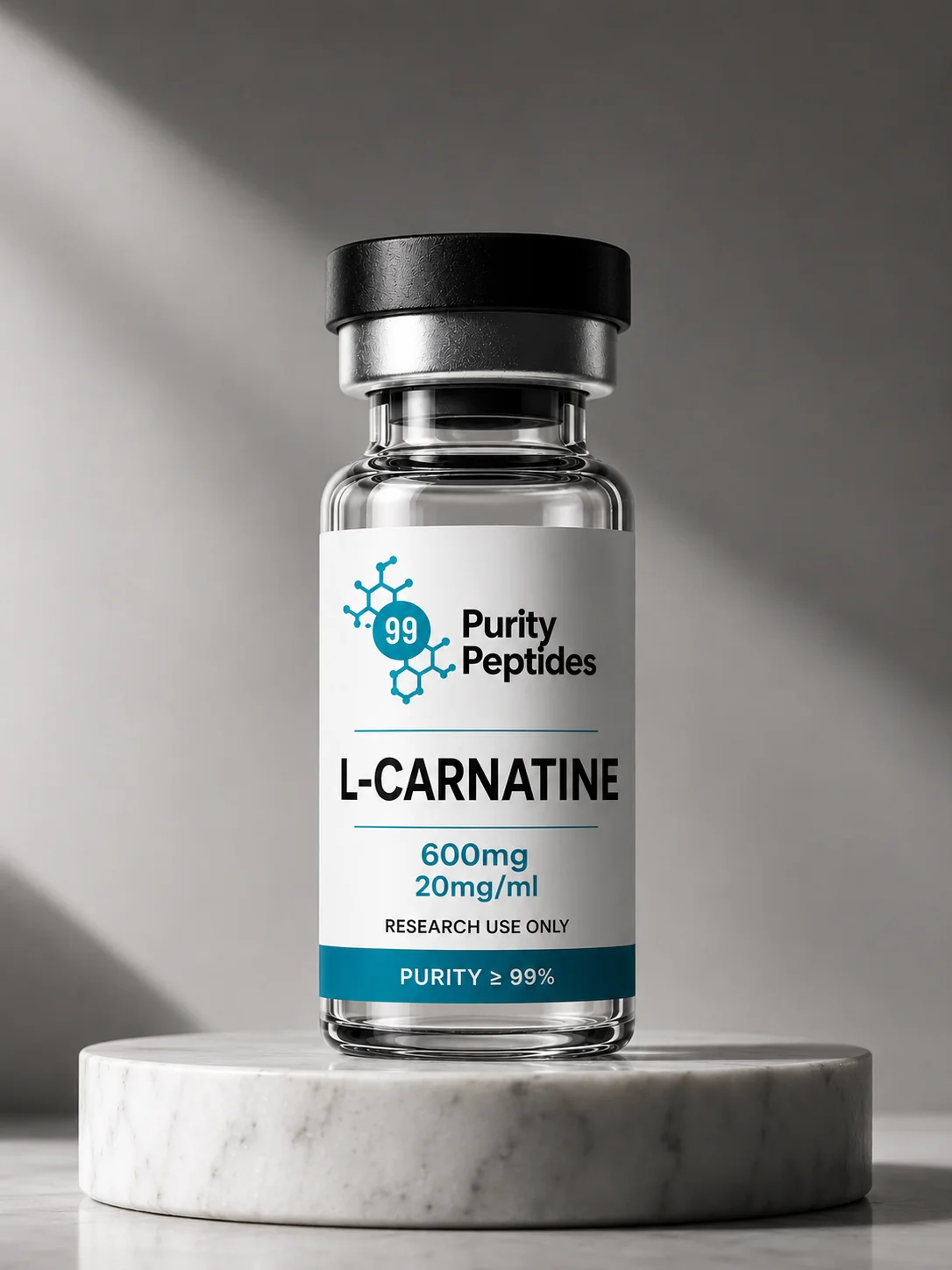
L-Carnitine 600mg is a research-grade carnitine compound extensively investigated for its role in mitochondrial fatty acid transport, cellular energy metabolism, and biochemical regulation. Unlike receptor-targeting peptides that initiate extracellular signaling cascades, L-Carnitine functions primarily as a molecular transporter responsible for facilitating the movement of long-chain fatty acids across the mitochondrial membrane. This unique biochemical role has established L-Carnitine as one of the most widely studied compounds in mitochondrial biology, metabolic research, and cellular bioenergetics.
One of the defining characteristics of L-Carnitine research is its involvement in the carnitine shuttle system, a biochemical transport mechanism that enables long-chain fatty acids to enter mitochondria where β-oxidation occurs. Researchers investigate how L-Carnitine interacts with enzymes including carnitine palmitoyltransferase I (CPT-I), carnitine palmitoyltransferase II (CPT-II), and carnitine-acylcarnitine translocase (CACT) to better understand intracellular lipid metabolism, mitochondrial transport processes, and energy production pathways. These investigations continue expanding scientific knowledge of mitochondrial physiology and metabolic regulation.
Current laboratory investigations focus on molecular pathways associated with mitochondrial bioenergetics, fatty acid oxidation, acylcarnitine metabolism, cellular energy homeostasis, oxidative metabolism, and intracellular biochemical signaling. Researchers evaluate transport efficiency, metabolic adaptation, mitochondrial function, enzymatic regulation, and molecular interactions under carefully controlled laboratory conditions. These studies contribute to advancing scientific understanding of mitochondrial metabolism and cellular energy regulation.
Scientific investigations also examine the broader role of L-Carnitine in cellular metabolism through metabolomic profiling, biochemical pathway analysis, and systems biology approaches. Research includes studies involving mitochondrial function, intermediary metabolism, oxidative phosphorylation, acetyl-CoA metabolism, acyl group transport, and intracellular metabolic communication. These investigations provide valuable insight into the complex biochemical networks supporting cellular energy production.
Comparative metabolic research represents another important area of investigation. Researchers frequently compare L-Carnitine with investigational compounds including Acetyl-L-Carnitine (ALCAR), Propionyl-L-Carnitine, MOTS-C, NAD+, and other metabolic research compounds to evaluate differences in biochemical transport mechanisms, mitochondrial interactions, intracellular localization, and metabolic pathway regulation. These comparative investigations continue advancing metabolic biology and mitochondrial research.
The 600mg presentation is particularly appropriate for laboratories conducting high-throughput metabolic studies, long-duration biochemical investigations, analytical method validation, metabolomics research, enzyme activity assays, and collaborative research programs requiring larger research quantities. Although additional strengths and formulations may be available, the molecular identity, biochemical characteristics, analytical quality standards, and scientific applications remain consistent throughout the L-Carnitine product family.
Beyond mitochondrial metabolism research, L-Carnitine serves as an important analytical reference compound for metabolomics, analytical chemistry, molecular characterization, enzyme kinetics, biomarker investigations, assay optimization, pharmacodynamic studies, and advanced laboratory validation procedures. Its well-characterized biochemical properties and reproducible analytical profile make it valuable for laboratories conducting sophisticated biochemical and molecular research.
Each batch of L-Carnitine 600mg is manufactured according to research-grade production standards and undergoes comprehensive analytical verification before release. Quality assurance procedures include High-Performance Liquid Chromatography (HPLC) purity analysis, molecular identity confirmation, and rigorous batch-specific quality control testing. These analytical measures support reproducibility, consistency, and confidence across independent laboratory investigations.
To preserve molecular integrity, L-Carnitine should be stored according to accepted laboratory recommendations appropriate for research solutions. Proper storage conditions, controlled handling practices, and adherence to established laboratory protocols help maintain compound stability before analytical evaluation and experimental use.
Although L-Carnitine has been extensively characterized within biochemical research, scientific investigations continue exploring mitochondrial transport mechanisms, metabolic regulation, fatty acid utilization, intracellular signaling, and cellular bioenergetics. Consequently, L-Carnitine 600mg should be regarded as an investigational research compound intended exclusively to support laboratory research and scientific discovery.
L-Carnitine 600mg is supplied exclusively for laboratory research and analytical applications. This product is intended for Research Use Only (RUO) and is not approved for human consumption, therapeutic use, veterinary applications, or diagnostic purposes.