IGF-1 LR3 1mg is a research-grade long R3 insulin-like growth factor-1 (IGF-1) analog developed for laboratory investigations involving IGF-1 receptor (IGF1R) signaling, intracellular kinase activation, cellular proliferation pathways, protein synthesis mechanisms, and peptide pharmacology. Every batch undergoes comprehensive analytical verification to ensure purity, consistency, and reproducibility for advanced molecular biology, receptor biology, and endocrinology research.
HPLC certified
Independent analysis
Highest standard
Full traceability
IGF-1 LR3 1mg is an investigational synthetic long R3 insulin-like growth factor-1 analog engineered with structural modifications that increase receptor interaction characteristics and reduce affinity for insulin-like growth factor binding proteins (IGFBPs) in laboratory environments. Researchers investigate IGF-1 LR3 because of its interaction with the IGF-1 receptor (IGF1R), making it an important research tool for studying intracellular signaling networks, receptor biology, protein synthesis pathways, cellular communication, and molecular endocrinology. As one of the most extensively studied IGF-1 analogs, IGF-1 LR3 continues to play a significant role in receptor pharmacology and comparative peptide research.
IGF-1 LR3 1mg is a research-grade synthetic long R3 insulin-like growth factor-1 analog developed for laboratory investigations involving insulin-like growth factor-1 receptor (IGF1R) signaling, intracellular kinase activation, molecular endocrinology, cellular communication, and peptide pharmacology. Compared with native IGF-1, the Long R3 analog incorporates structural modifications that are widely investigated for their influence on receptor interaction characteristics and reduced binding affinity toward insulin-like growth factor binding proteins (IGFBPs), making it a valuable research compound for mechanistic laboratory studies.
One of the defining characteristics of IGF-1 LR3 research is its interaction with the IGF-1 receptor (IGF1R). Researchers investigate receptor activation kinetics, receptor phosphorylation, intracellular messenger systems, signal amplification, receptor sensitivity, and downstream molecular communication following ligand-receptor binding. These investigations continue expanding scientific understanding of growth factor receptor pharmacology under carefully controlled laboratory conditions.
Scientific investigations also focus extensively on PI3K/Akt signaling, one of the principal intracellular pathways associated with IGF1R activation. Laboratory studies evaluate kinase activation, protein synthesis regulation, cellular metabolism, intracellular communication, transcription factor activity, and coordinated molecular responses. Researchers continue investigating these signaling networks to better understand cellular physiology without implying therapeutic outcomes.
Another major area of investigation involves the MAPK/ERK signaling pathway. Researchers examine how IGF-1 LR3 influences intracellular communication involving ERK1/2 phosphorylation, cellular proliferation pathways, gene transcription, molecular adaptation, and coordinated signaling events. These investigations remain central to molecular biology and receptor pharmacology while maintaining an exclusive Research Use Only designation.
Current laboratory investigations further evaluate signaling involving mTOR, IRS-1, Shc proteins, RAS/RAF, ERK1/2, and additional intracellular signaling networks associated with IGF1R activation. These molecular investigations continue advancing peptide pharmacology, receptor biology, systems biology, and growth factor signaling research.
Comparative peptide pharmacology represents another major area of scientific interest. Researchers frequently compare IGF-1 LR3 with IGF-1 DES, MGF (Mechano Growth Factor), PEG-MGF, IGF-1, and additional growth factor analogs to evaluate differences in receptor interaction, signaling duration, intracellular communication, molecular stability, and laboratory applications. Comparative investigations continue expanding scientific understanding of insulin-like growth factor biology and peptide engineering.
The 1mg presentation is particularly appropriate for laboratories conducting receptor biology investigations, mechanistic signaling studies, biomarker discovery, analytical validation, assay development, molecular characterization, peptide interaction experiments, and collaborative research projects. Although presentation sizes vary, the molecular identity, analytical quality standards, and intended research applications remain consistent throughout the IGF-1 LR3 product family.
Beyond receptor investigations, IGF-1 LR3 serves as an important analytical reference material within peptide chemistry, receptor biology, molecular characterization, analytical method development, growth factor signaling research, peptide stability investigations, biomarker discovery, and systems biology. Its reproducible analytical profile makes it valuable for laboratories investigating growth factor receptor pharmacology and intracellular molecular signaling.
Each batch of IGF-1 LR3 1mg is manufactured according to research-grade production standards and undergoes comprehensive analytical verification before release. Quality assurance procedures include High-Performance Liquid Chromatography (HPLC) purity analysis, molecular identity confirmation, peptide sequence verification, and rigorous batch-specific quality control testing. These analytical measures support reproducibility, consistency, and confidence across independent laboratory investigations.
To preserve molecular integrity, IGF-1 LR3 should be stored according to accepted laboratory recommendations for lyophilized peptides. Appropriate storage conditions, controlled handling practices, and adherence to established laboratory protocols help maintain peptide stability before analytical evaluation and experimental preparation.
Although IGF-1 LR3 remains one of the most extensively investigated insulin-like growth factor analogs, ongoing scientific research continues exploring IGF1R biology, PI3K/Akt signaling, MAPK/ERK pathways, mTOR regulation, growth factor receptor pharmacology, and comparative peptide engineering. Consequently, IGF-1 LR3 1mg should be regarded exclusively as an investigational research peptide intended to support laboratory research and scientific discovery.
IGF-1 LR3 1mg is supplied exclusively for laboratory research and analytical applications. This product is intended for Research Use Only (RUO) and is not approved for human consumption, therapeutic use, veterinary applications, or diagnostic purposes.
Be the first to share your experience with this product and help other researchers!
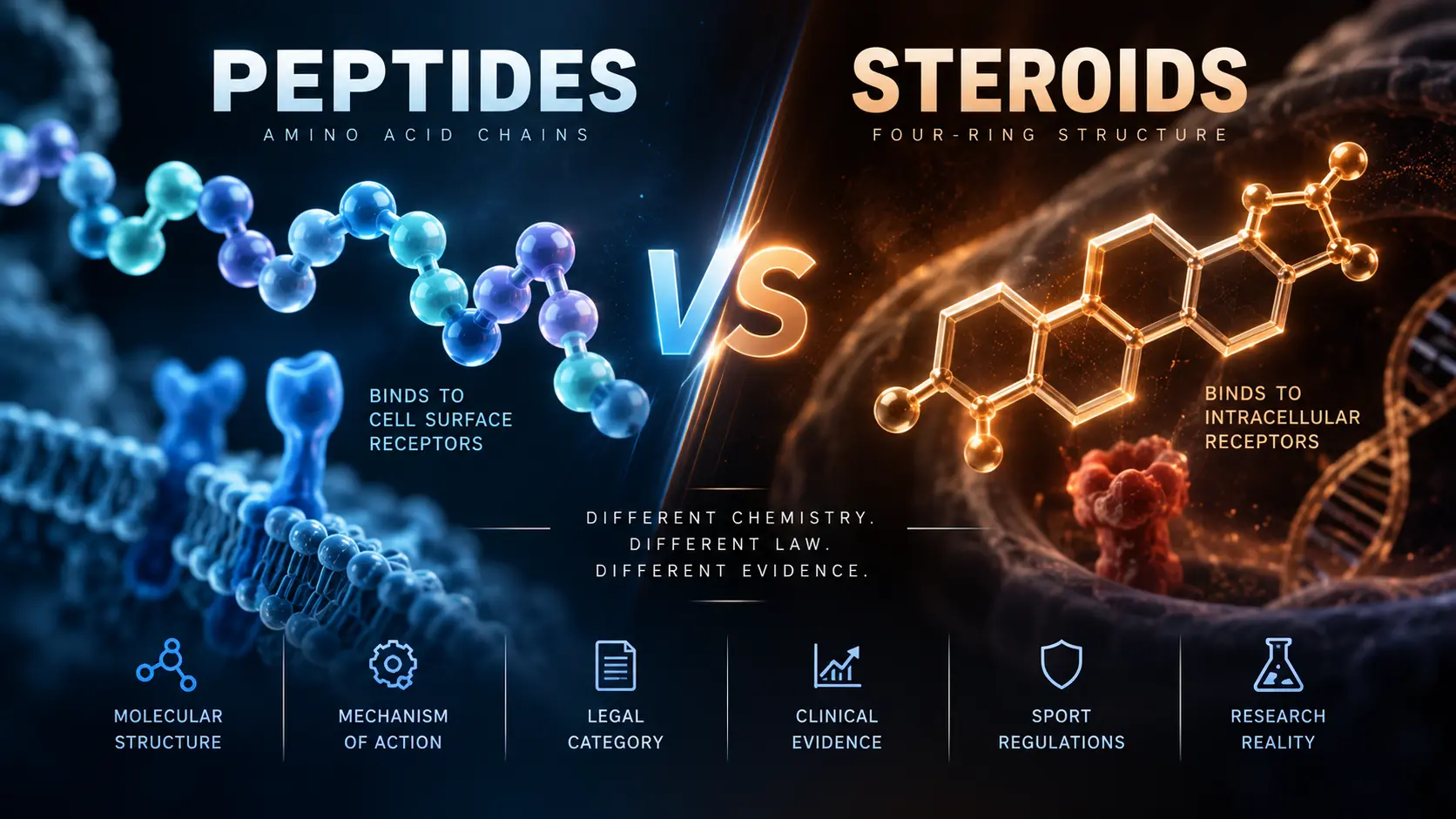
Peptides vs steroids: different chemistry, different law, different evidence. What the statutes, the WADA 2026 list and the actual trial record say.
Compare IGF-1 LR3 vs IGF-1 DES by half-life, potency, and receptor binding. Shop third-party-tested research peptides at 99 Purity Peptides.
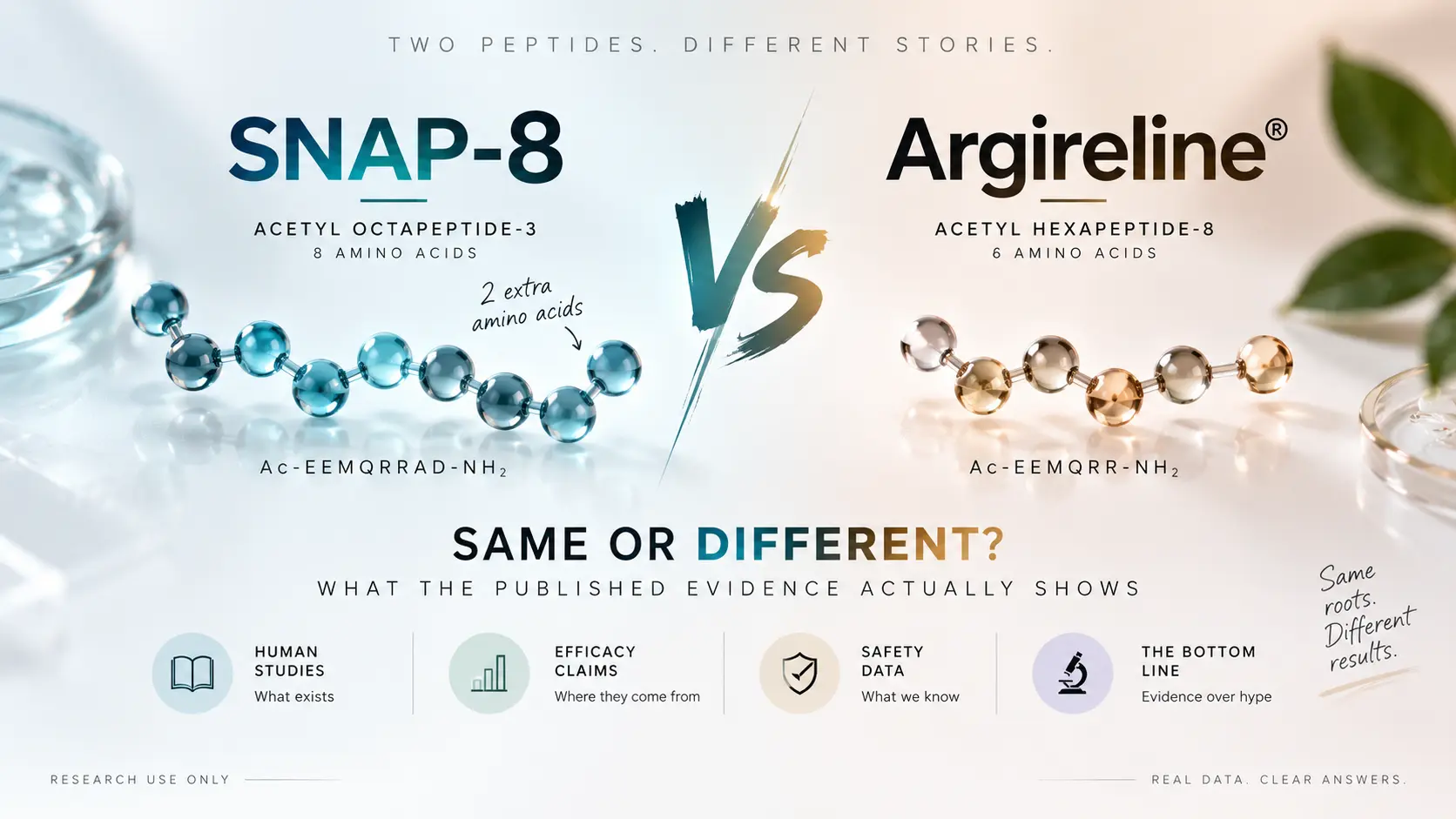
SNAP-8 vs Argireline: they are different peptides. We trace the 63.13% wrinkle claim to manufacturer literature and grade the real human evidence.
(faqs)