Gut-health research pulls in two peptides more often than any others: KPV and BPC-157. Both show up in inflammation and barrier-repair studies, both have loyal followings in the research community, and both get lumped together in casual conversation as if they do the same job. They don't — and picking the wrong one for a given research question wastes time, budget, and material.
Featured Products

This guide lays out exactly where KPV and BPC-157 overlap and where they diverge: what each peptide is, how each works mechanistically, which research goals each one fits best, whether they're studied together, and what to check before sourcing either one. By the end, you'll have a clear decision framework instead of a guess.
What Is KPV?
KPV is a tripeptide — a three-amino-acid fragment (lysine-proline-valine) derived from the C-terminal end of alpha-melanocyte-stimulating hormone (alpha-MSH). It's studied in research models for anti-inflammatory activity, particularly in the context of gut inflammation, without the pigmentation effects associated with the full alpha-MSH molecule.
What Is BPC-157?
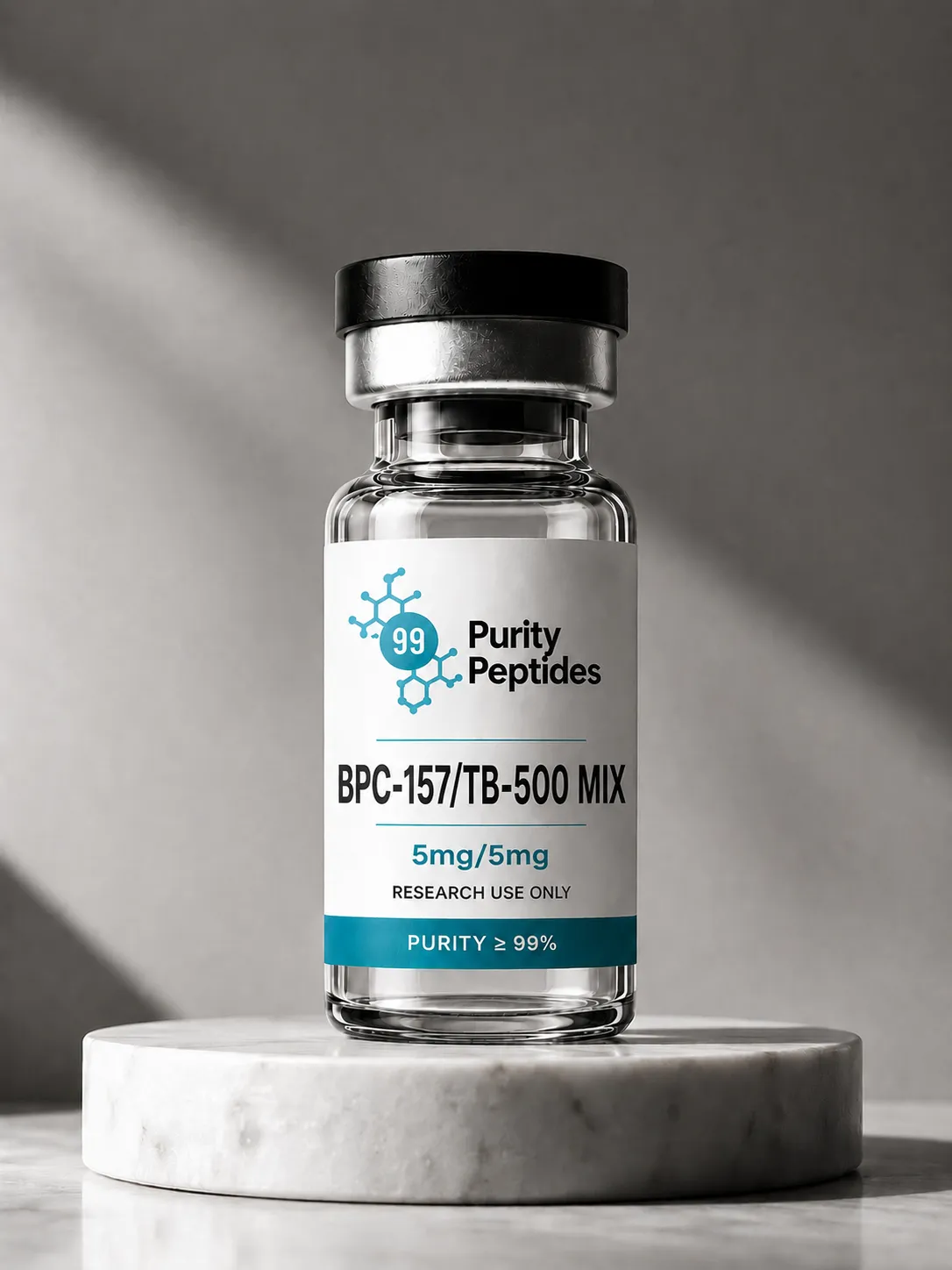
BPC-157 is a pentadecapeptide — a 15-amino-acid sequence derived from a protective protein found in human gastric juice. It's studied extensively in tissue-repair research, with a substantial body of literature covering gut lining protection, angiogenesis, and healing across muscle, tendon, and ligament models.
KPV vs BPC-157: Quick Comparison
Both peptides are studied in gut-health contexts, but their origin, structure, and primary research focus differ enough that they answer different research questions.
Factor | KPV | BPC-157 |
Structure | Tripeptide (3 amino acids) | Pentadecapeptide (15 amino acids) |
Origin | C-terminal fragment of alpha-MSH | Derived from a protective gastric-juice protein |
Primary mechanism studied | Anti-inflammatory signaling, cytokine modulation | Tissue repair, angiogenesis, gut lining protection |
Core research focus | Gut inflammation, colitis models, inflammatory markers | Gut barrier repair, tissue regeneration, broader soft-tissue healing |
Structural size | Very small, simple sequence | Larger, more complex sequence |
Research literature volume | Growing, more focused body of research | Extensive, well-established across multiple tissue types |
Featured-snippet answer: KPV is a small anti-inflammatory tripeptide derived from alpha-MSH, primarily studied for gut inflammation and cytokine modulation. BPC-157 is a larger pentadecapeptide derived from gastric juice, primarily studied for tissue repair, gut barrier protection, and angiogenesis — a broader research profile than KPV's more targeted anti-inflammatory focus.
How KPV Works: Mechanism in Gut Inflammation Research
KPV's research profile centers on modulating inflammatory signaling. In laboratory models, it has been studied for its ability to reduce pro-inflammatory cytokine production and influence NF-κB pathway activity, a signaling route central to inflammatory response regulation. Because KPV retains the anti-inflammatory activity of alpha-MSH without significantly engaging the melanocortin receptors responsible for pigmentation, researchers use it to isolate the anti-inflammatory mechanism specifically.
This has made KPV a frequent subject in colitis research models and studies examining gut inflammation biomarkers, where the goal is understanding inflammatory pathway modulation rather than structural tissue repair.
How BPC-157 Works: Mechanism in Gut Barrier Repair Research
BPC-157's research profile is broader and more structurally oriented. It's studied for effects on angiogenesis (new blood vessel formation), which supports its examined role in tissue regeneration across the gut lining and beyond. Research models have also looked at BPC-157's relationship to tight junction proteins — the structures that hold the gut's epithelial cells together and regulate intestinal permeability — making it relevant to leaky-gut and barrier-function research specifically, not just inflammation.
Because BPC-157's research base extends well beyond the gut — tendon, ligament, and muscle repair models are common — it's studied as a more general tissue-repair compound with gut healing as one significant application among several.
KPV vs BPC-157: Research Applications Compared
Research Application | KPV | BPC-157 |
Gut inflammation / colitis models | Strong research focus | Studied, secondary to repair mechanisms |
Intestinal permeability / tight junctions | Limited direct focus | Directly studied |
Angiogenesis research | Not a primary focus | Well-documented research area |
Cytokine / inflammatory marker modulation | Core research focus | Studied as part of broader repair mechanism |
Soft-tissue repair (tendon, ligament, muscle) | Not typically studied | Extensive research base |
Skin and wound-related research | Limited | Studied in some models |
Which Peptide Fits Which Research Goal?
Rather than asking which peptide is “better,” the more useful research question is which peptide matches the specific mechanism under study.
- Studying inflammatory cytokine modulation or colitis-model inflammation specifically → KPV is the more targeted fit
- Studying gut barrier structure, tight junction integrity, or intestinal permeability → BPC-157 has the more directly relevant research base
- Studying angiogenesis or tissue regeneration alongside gut healing → BPC-157's broader mechanism fits better
- Studying inflammation isolated from structural repair → KPV's narrower mechanism offers cleaner isolation
- Studying gut research alongside soft-tissue repair in the same protocol → BPC-157's wider research base covers more ground
Key takeaway: KPV and BPC-157 aren't competing for the same research question — KPV isolates inflammatory signaling, while BPC-157 spans barrier structure and broader tissue repair. The right choice depends on which mechanism the research protocol is actually targeting.
Can KPV and BPC-157 Be Studied Together?
Yes — because they act through different primary mechanisms (inflammatory modulation versus structural tissue repair), researchers have studied KPV and BPC-157 in combination when a research design calls for examining both inflammation and barrier repair as connected processes. Any combination protocol should be developed based on the specific research question, with each compound's independent research profile understood first.
Purity, Storage & Reconstitution for KPV and BPC-157
Purity and Certificate of Analysis
Both peptides require the same verification standard. A trustworthy certificate of analysis (COA) for either KPV or BPC-157 should be issued by an independent third-party lab and include:
- Purity percentage backed by HPLC data
- Molecular weight/identity confirmation via mass spectrometry
- Batch or lot number matching the vial received
- Testing lab name and test date
Storage Guidelines
- Store both peptides lyophilized, frozen, and protected from light until reconstitution
- Refrigerate reconstituted vials and use within the supplier's recommended window
- Avoid repeated freeze-thaw cycles for both compounds
Reconstitution Basics
KPV and BPC-157 follow the same general reconstitution process:
- Bring the lyophilized vial and bacteriostatic water to room temperature
- Slowly inject the diluent down the interior wall of the vial
- Gently swirl — never shake — until fully dissolved
- Label the vial with date and concentration
- Store per the supplier's documentation and use within the recommended timeframe
A peptide reconstitution calculator handles step 3 automatically for both KPV and BPC-157, converting vial size and target concentration into an exact diluent volume.
How to Choose a Reliable Supplier for KPV and BPC-157
- Request batch-matched third-party COAs for each compound separately
- Confirm sequence and molecular weight are explicitly disclosed, not just a purity percentage
- Look for RUO labeling with no human-use dosing language on either product
- Ask about US-based manufacturing and quality-control practices
- Check for a documented policy on batch replacement if a COA doesn't match on arrival
Key Takeaways
- KPV is a small anti-inflammatory tripeptide derived from alpha-MSH; BPC-157 is a larger pentadecapeptide derived from a gastric-protective protein
- KPV's research focus is inflammatory pathway and cytokine modulation, particularly in colitis-style gut inflammation models
- BPC-157's research focus is broader, spanning gut barrier structure, angiogenesis, and tissue repair beyond the gut
- The right peptide depends on the research mechanism being studied, not a general “better/worse” comparison
- KPV and BPC-157 have been studied together when a research design examines inflammation and structural repair as connected processes
- Both require the same purity-verification standard: a batch-matched third-party COA with HPLC and mass spectrometry data
- Proper storage and consistent reconstitution protect data quality for either compound
Frequently Asked Questions
What is KPV peptide?
KPV is a tripeptide derived from the C-terminal fragment of alpha-MSH, studied in research models for anti-inflammatory activity, particularly in gut inflammation contexts.
What is BPC-157 peptide?
BPC-157 is a pentadecapeptide derived from a protective protein found in gastric juice, studied for tissue repair, gut barrier protection, and angiogenesis.
What is the main difference between KPV and BPC-157?
KPV is a small, three-amino-acid peptide focused on inflammatory pathway modulation, while BPC-157 is a larger, 15-amino-acid peptide with a broader research profile spanning tissue repair, angiogenesis, and gut barrier structure.
Which peptide is better for gut barrier repair research?
BPC-157 has the more directly relevant research base for gut barrier structure and tight junction proteins, while KPV is more targeted toward inflammatory signaling rather than structural repair.
How does KPV reduce inflammation in research models?
KPV is studied for its ability to modulate pro-inflammatory cytokine production and influence NF-κB pathway signaling, isolating anti-inflammatory activity without the pigmentation effects of full alpha-MSH.
How does BPC-157 support gut healing in research?
BPC-157 is studied for effects on angiogenesis and tight junction protein function, supporting its examined role in gut lining protection and broader tissue regeneration.
Can KPV and BPC-157 be studied together?
Yes, researchers have studied KPV and BPC-157 in combination when a research design examines inflammation and structural barrier repair as connected processes, since the two act through different primary mechanisms.
What is KPV derived from?
KPV is derived from the C-terminal end of alpha-melanocyte-stimulating hormone (alpha-MSH).
What is BPC-157 derived from?
BPC-157 is derived from a protective protein found in human gastric juice.
Is KPV or BPC-157 more researched for colitis?
KPV has a more focused research base specifically around colitis-model inflammation, while BPC-157's colitis-related research sits within its broader gut barrier and tissue-repair literature.
How is KPV peptide reconstituted for lab use?
Bring the vial and bacteriostatic water to room temperature, slowly inject the diluent down the vial wall, gently swirl until dissolved, then label and store per the supplier's guidance — the same general process used for BPC-157.
What purity level should KPV or BPC-157 research peptide have?
Look for a supplier-documented purity percentage backed by a third-party certificate of analysis showing both HPLC and mass spectrometry results for the specific batch, for either compound.
How should KPV and BPC-157 be stored?
Store both lyophilized, frozen, and protected from light; refrigerate reconstituted vials and use within the supplier's recommended timeframe, avoiding repeated freeze-thaw cycles.
Is KPV peptide legal to purchase for research in the USA?
Yes, KPV sold as an RUO-labeled research peptide for legitimate laboratory research is legal to purchase in the United States, the same as BPC-157, provided it is not marketed or sold for human use.
How do researchers decide between KPV and BPC-157?
The decision comes down to the mechanism under study: KPV for isolated inflammatory pathway research, BPC-157 for gut barrier structure, angiogenesis, or broader tissue-repair research questions.