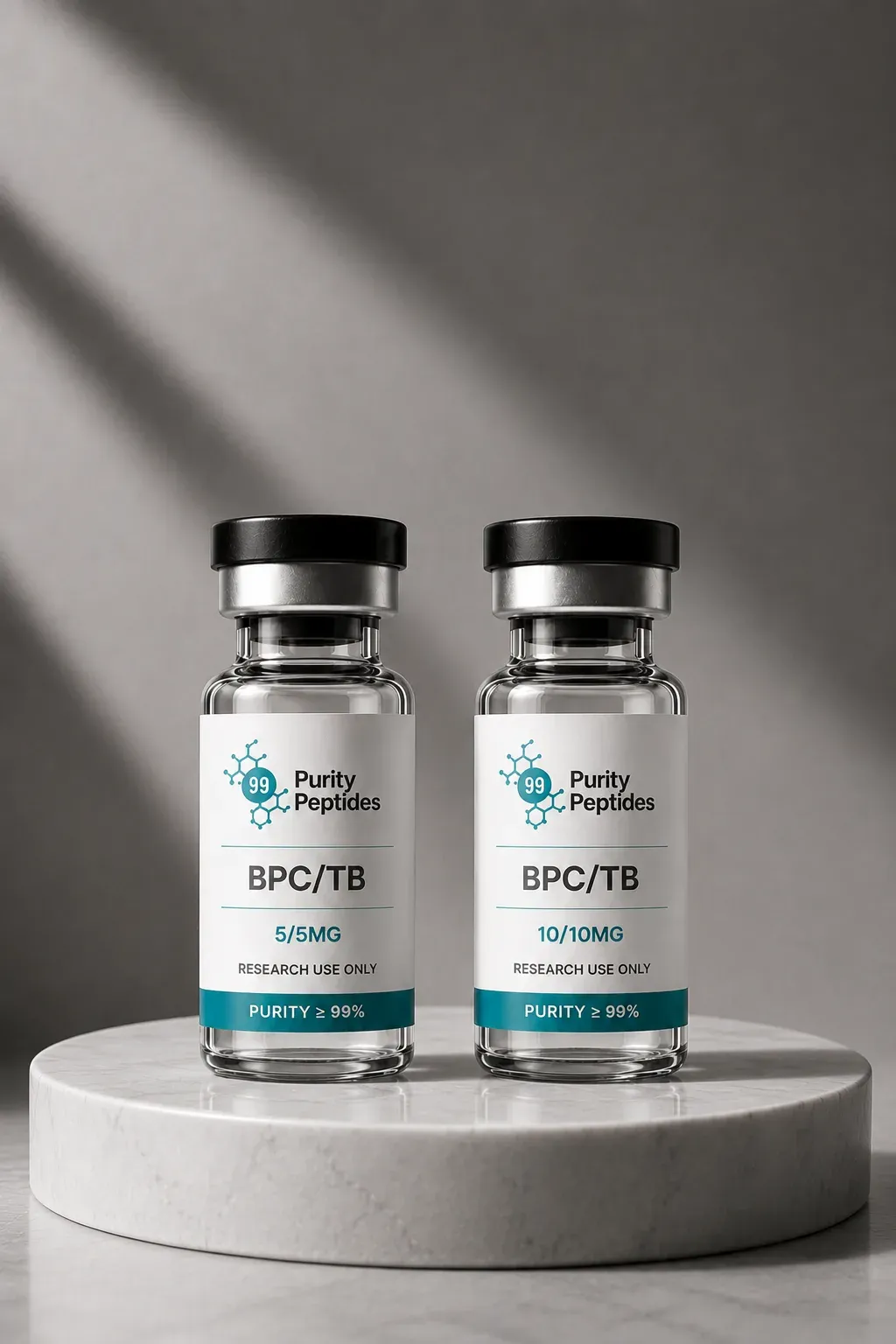
The BPC-157 / TB-500 research blend is supplied in two formats: 5 mg/5 mg and 10 mg/10 mg. The notation gives per-component mass, so a 5/5 vial contains 10 mg in total and a 10/10 vial contains 20 mg. Both formats hold the two compounds at a 1:1 ratio. Supplied lyophilized for laboratory reconstitution. For research use only.
Certificado por HPLC
Análisis independiente
El más alto estándar
Trazabilidad completa
The BPC-157 / TB-500 research blend combines two peptides frequently examined together in soft-tissue research, supplied premixed in a single vial at two formats.
The format notation describes mass per component rather than vial total. A 5/5 vial contains 5 mg of BPC-157 and 5 mg of TB-500, 10 mg in total. A 10/10 vial contains 10 mg of each, 20 mg in total. Both formats hold the compounds at a 1:1 ratio, so moving between them rescales concentration without altering the compositional relationship.
Because the vial contains two compounds, concentration after reconstitution is best tracked per component rather than as a single total figure. A 10/10 vial reconstituted to 5 mL yields 2 mg/mL of BPC-157 and 2 mg/mL of TB-500.
BPC-157 is a synthetic pentadecapeptide examined in preclinical cytoprotective and angiogenic models. TB-500 is a synthetic fragment corresponding to a region of thymosin β-4 — not the full-length protein — investigated for actin-binding behaviour.
No published trial has evaluated the two compounds together in this blend form. Both are supplied lyophilized with batch documentation.
For Research Use Only. Not intended for human consumption, therapeutic use, veterinary use, or diagnostic applications.
The BPC/TB Blend Strength Comparator supplies the premixed BPC-157 / TB-500 research blend in both of its formats: 5 mg/5 mg and 10 mg/10 mg. The notation gives mass per component — a 5/5 vial holds 10 mg in total, a 10/10 vial holds 20 mg. Both formats carry a 1:1 ratio, so the two vials differ in absolute mass rather than in composition.
| Format | BPC-157 | TB-500 | Total mass | Ratio |
|---|---|---|---|---|
| 5/5 | 5 mg | 5 mg | 10 mg | 1:1 |
| 10/10 | 10 mg | 10 mg | 20 mg | 1:1 |
Both formats are supplied as premixed lyophilized powder in a single vial, with batch documentation. Component masses should be confirmed against the certificate of analysis for the lot received.
Absolute mass changes. Composition does not.
A 5/5 vial contains 10 mg in total — 5 mg of BPC-157 and 5 mg of TB-500. The notation gives mass per component, not vial total. A 10/10 vial correspondingly contains 20 mg in total, 10 mg of each compound.
This is worth stating directly because the convention is not self-evident. A buyer comparing a “5/5” blend against a “10 mg” single-compound vial is comparing equal total masses, though the labels do not look equivalent. Reading “5/5” as a 5 mg vial understates its content by half.
Both formats carry BPC-157 and TB-500 in equal proportion. Doubling from 5/5 to 10/10 doubles each component, leaving the ratio unchanged.
That matters when moving between formats mid-project. A researcher switching from 5/5 to 10/10 rescales concentration but does not alter the compositional relationship between the two compounds — so preparation adjustments are arithmetic rather than formulational.
Neither format is preferable in general. Holding both means the choice can be made per experiment rather than per order:
Lyophilized material is more stable than material in solution, so preparing only what an experiment requires — and holding the second vial lyophilized — is generally preferable to reconstituting the larger format without need.
Be the first to share your experience with this product and help other researchers!
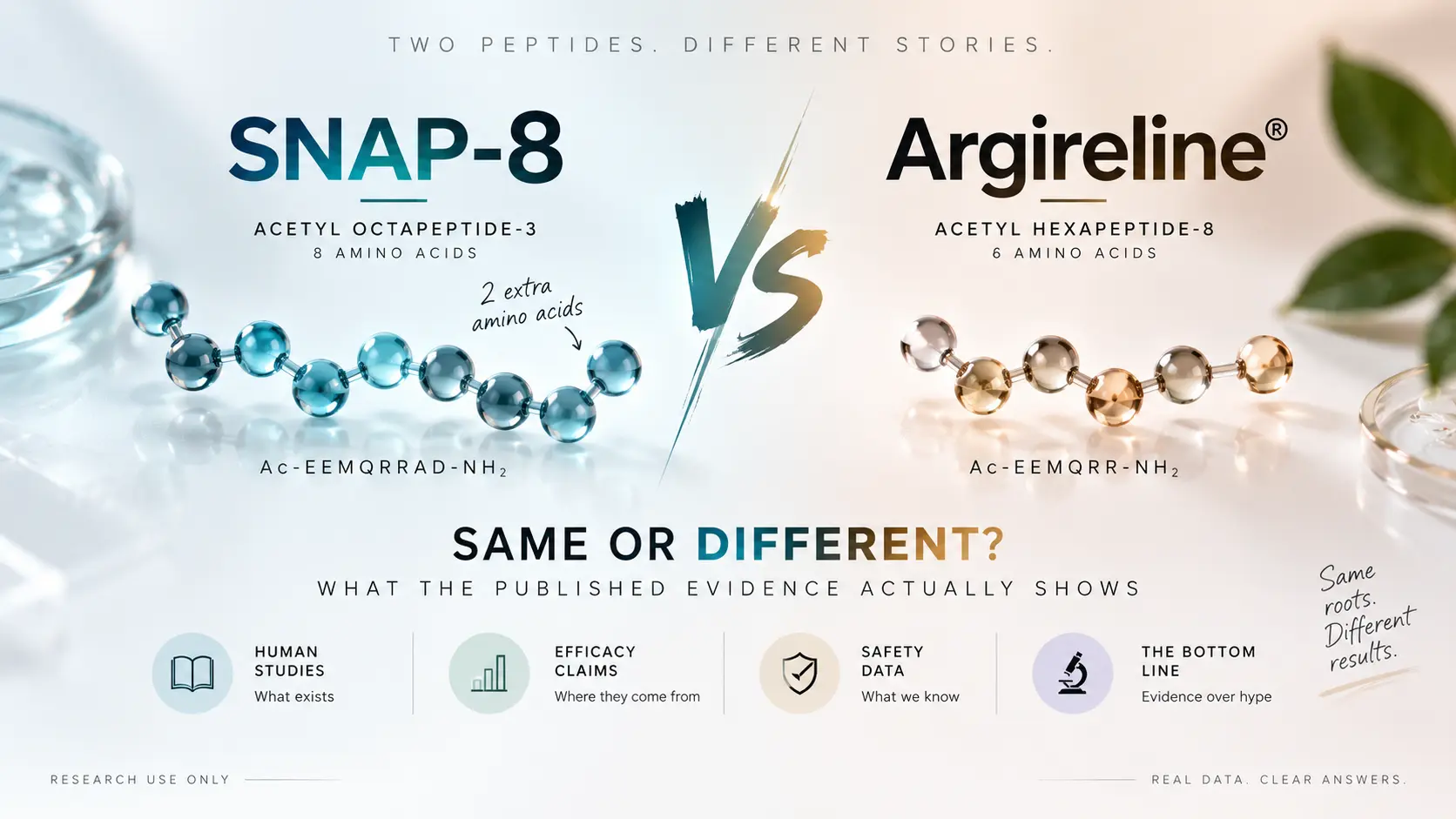
SNAP-8 vs Argireline: son péptidos distintos. Rastreamos la cifra del 63.13% hasta la literatura del fabricante y calificamos la evidencia humana real.
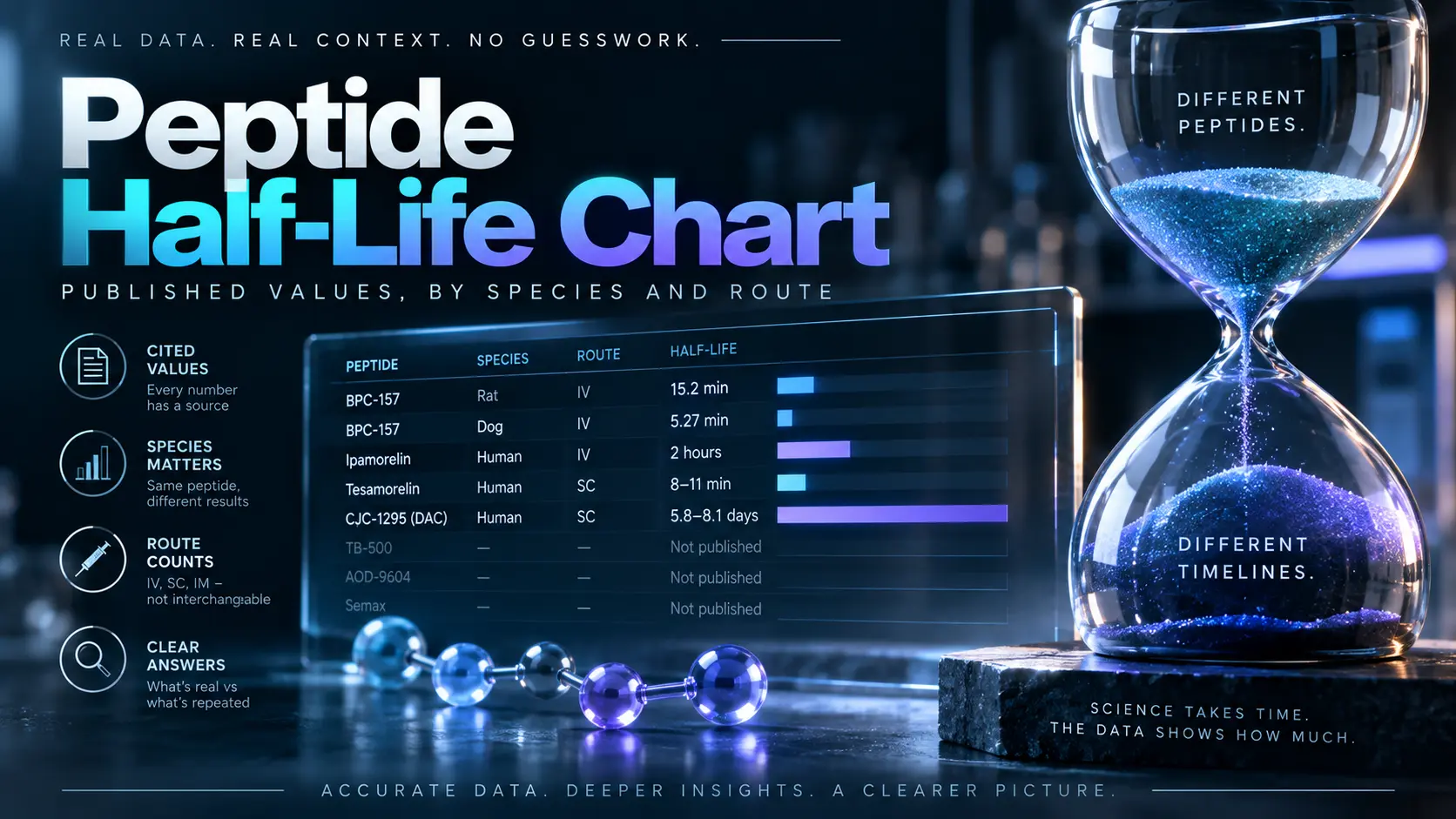
Tabla de semivida de los péptidos con especie, vía y una cita detrás de cada valor, y las cifras muy repetidas que no proceden de ninguna medición.
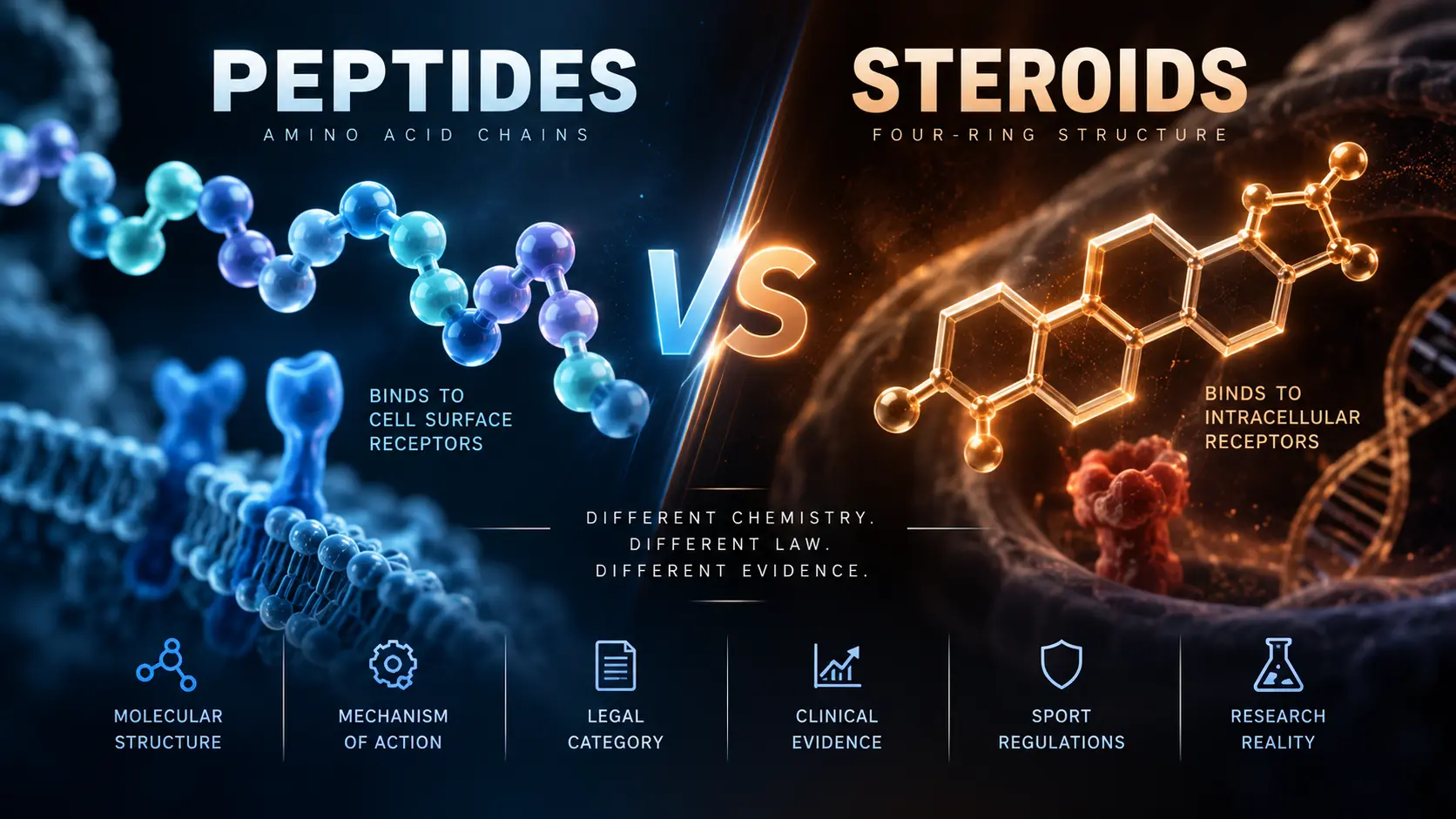
Péptidos vs esteroides: distinta química, distinta ley, distinta evidencia. Lo que dicen las leyes, la lista WADA 2026 y el historial real de ensayos.
(preguntas frecuentes)