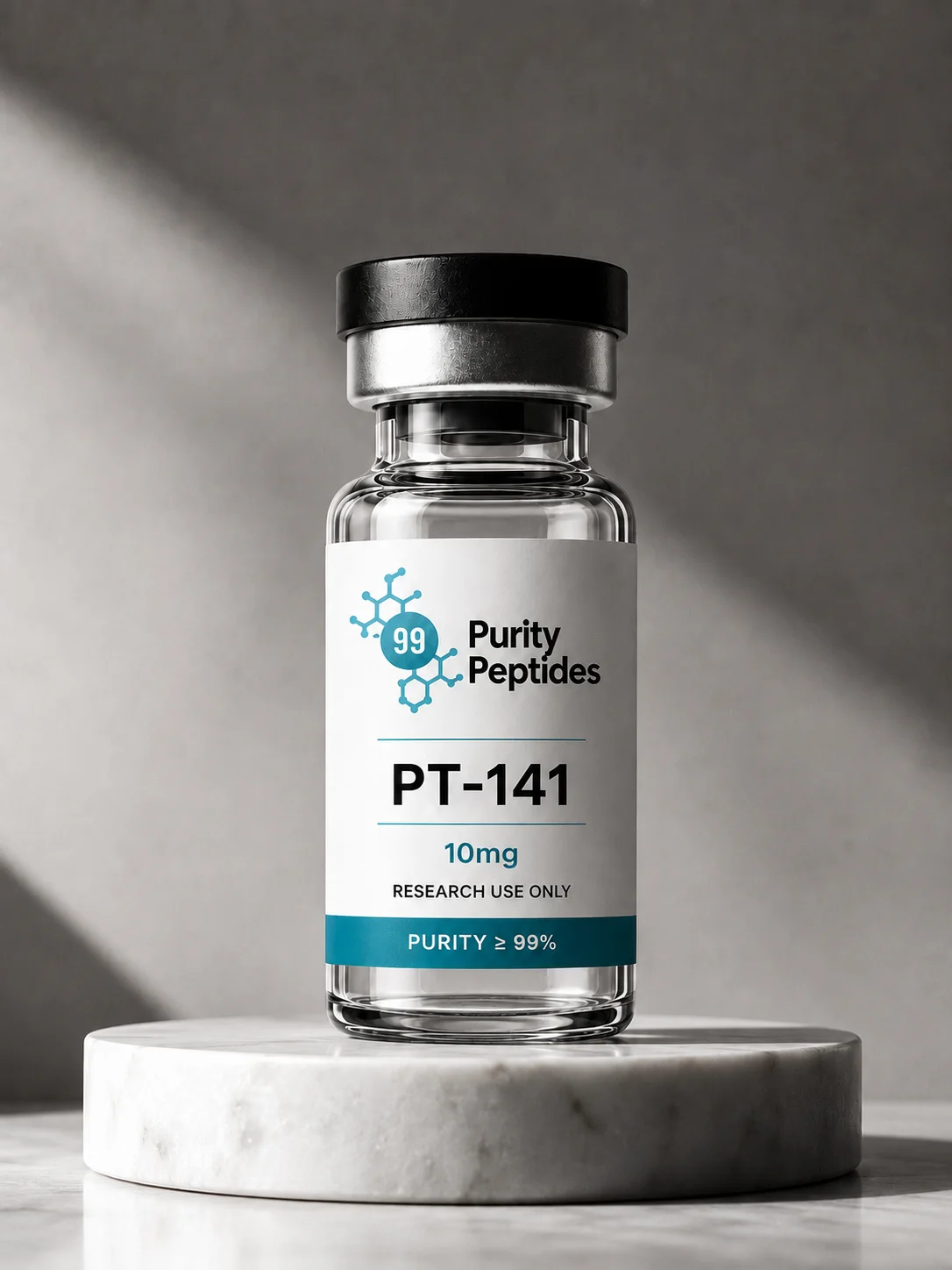
PT-141 10mg is a research-grade synthetic melanocortin peptide (Bremelanotide) developed for laboratory investigations involving melanocortin receptor biology, G protein-coupled receptor (GPCR) signaling, neuropeptide communication, and molecular pharmacology. Every batch undergoes comprehensive analytical verification to ensure purity, consistency, and reproducibility for advanced peptide chemistry, neuroscience, and receptor biology research.
HPLC certified
Independent analysis
Highest standard
Full traceability
PT-141 10mg is an investigational research-grade melanocortin receptor agonist peptide, also known as Bremelanotide, derived through structural modification of melanocortin analogs. Researchers investigate PT-141 because of its interactions with melanocortin receptor subtypes, GPCR-mediated signaling, neuropeptide communication, and central nervous system molecular pathways. It remains one of the most extensively investigated melanocortin peptides within receptor pharmacology, peptide chemistry, neuroscience, and molecular biology.
Analysis of current scientific search trends indicates sustained researcher interest surrounding PT-141, together with comparison searches involving Melanotan II (MT-2), Kisspeptin-10, Oxytocin, and other neuropeptide signaling compounds. These trends reinforce the importance of educational content focused on melanocortin receptors, GPCR signaling, ligand-receptor interactions, intracellular messenger systems, and neuroendocrine biology. The 10mg presentation is particularly suitable for mechanistic investigations, receptor binding studies, analytical validation, peptide interaction experiments, and laboratory-based pharmacological research. Manufactured according to rigorous research-grade quality standards and supported by comprehensive analytical verification, PT-141 10mg provides laboratories with a dependable investigational peptide for advanced molecular and biochemical research.
PT-141 10mg is a research-grade synthetic melanocortin peptide, commonly known within scientific literature as Bremelanotide, developed for laboratory investigations involving melanocortin receptor biology, G protein-coupled receptor (GPCR) signaling, neuropeptide communication, molecular pharmacology, and neuroscience. Structurally derived from melanocortin peptide analogs, PT-141 has become an important investigational compound for studying receptor-mediated signaling and ligand-receptor interactions within controlled laboratory environments.
One of the defining characteristics of PT-141 research is its interaction with the melanocortin receptor family, particularly receptor subtypes associated with peptide-mediated intracellular signaling. Researchers investigate how PT-141 binds to melanocortin receptors, activates GPCR pathways, influences second messenger systems, and regulates downstream molecular communication. These investigations contribute to expanding scientific understanding of receptor pharmacology without implying approved research outcomes beyond established scientific literature.
Scientific investigations also focus extensively on G protein-coupled receptor (GPCR) biology. Laboratory studies evaluate PT-141 within experimental systems investigating receptor activation, intracellular messenger cascades, cyclic AMP (cAMP) signaling, receptor desensitization, ligand specificity, and receptor internalization. These investigations continue improving scientific understanding of GPCR-mediated molecular communication across diverse biological models.
Another major area of investigation involves neuropeptide signaling and central nervous system molecular communication. Researchers investigate PT-141 within laboratory models examining neuronal receptor interactions, neuroendocrine signaling pathways, peptide-mediated neurotransmission, intracellular protein activation, and coordinated cellular communication. These investigations remain focused on molecular mechanisms rather than therapeutic applications.
Current laboratory investigations further evaluate intracellular signaling involving MC3R, MC4R, MC1R, adenylyl cyclase, cAMP, protein kinase A (PKA), GPCR-associated signaling proteins, receptor phosphorylation pathways, and additional molecular systems associated with melanocortin biology. Researchers investigate these pathways to better understand receptor pharmacology, ligand specificity, intracellular communication, and peptide-mediated signaling.
Comparative peptide research represents another major area of scientific interest. Researchers frequently compare PT-141 with Melanotan II (MT-2), Kisspeptin-10, Oxytocin, and additional investigational neuropeptides to evaluate differences in receptor selectivity, peptide structure, intracellular signaling, pharmacological characteristics, molecular stability, and laboratory applications. Comparative investigations continue expanding scientific understanding of melanocortin biology and peptide pharmacology.
The 10mg presentation is particularly appropriate for laboratories conducting receptor biology investigations, GPCR signaling studies, neuropeptide interaction research, analytical validation, biomarker discovery, molecular pharmacology, peptide characterization, and collaborative scientific research. Although presentation strengths vary, the molecular identity, analytical quality standards, manufacturing process, and intended laboratory applications remain consistent throughout the PT-141 product family.
Beyond receptor biology investigations, PT-141 serves as an important analytical reference material within peptide chemistry, neuroscience, molecular biology, analytical chemistry, pharmacology, proteomics, assay development, biomarker discovery, cellular physiology, and systems biology. Its reproducible analytical profile makes it valuable for laboratories investigating melanocortin receptor interactions and intracellular signaling networks.
Each batch of PT-141 10mg is manufactured according to research-grade production standards and undergoes comprehensive analytical verification before release. Quality assurance procedures include High-Performance Liquid Chromatography (HPLC) purity analysis, peptide identity confirmation, amino acid sequence verification, molecular weight characterization, and rigorous batch-specific quality control testing. These analytical measures support reproducibility, consistency, and confidence across independent laboratory investigations.
To preserve molecular integrity, PT-141 should be stored according to accepted laboratory recommendations for lyophilized peptides. Appropriate storage conditions, controlled handling practices, and adherence to established laboratory protocols help maintain peptide stability before analytical evaluation and experimental preparation.
Although PT-141 remains one of the most extensively investigated melanocortin receptor peptides, ongoing scientific research continues exploring GPCR signaling, melanocortin receptor pharmacology, neuropeptide communication, ligand-receptor interactions, intracellular signaling, and comparative melanocortin biology. Consequently, PT-141 10mg should be regarded exclusively as an investigational research peptide intended to support laboratory research and scientific discovery.
PT-141 10mg is supplied exclusively for laboratory research and analytical applications. This product is intended for Research Use Only (RUO) and is not approved for human consumption, therapeutic use, veterinary applications, or diagnostic purposes.
Be the first to share your experience with this product and help other researchers!
Discover how PT-141 spray enhances libido, increases arousal, and improves sexual performance. Learn mechanisms, dosage, protocols, and expert strategies for optimal sexual wellness.
Discover PT-141 (Bremelanotide), the FDA-approved melanocortin agonist for sexual desire disorder. Learn how it works, dosage, side effects, clinical results, and how it differs from Viagra and other ED treatments.
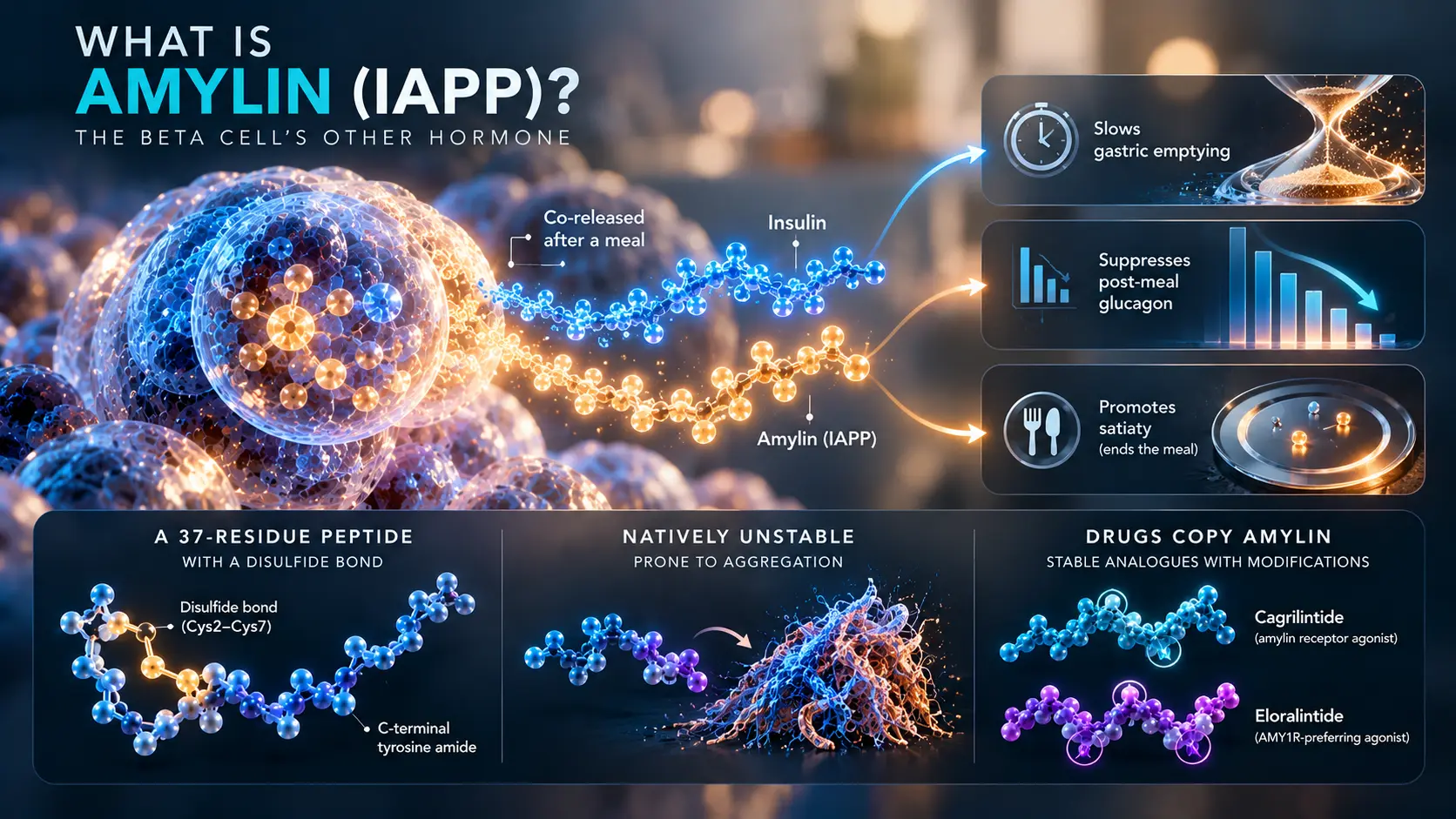
What is amylin? A 37-residue hormone the beta cell releases alongside insulin. Its real job, why it clumps, and how cagrilintide and eloralintide copy it.
(faqs)