What Is PT-141? (Product Description)
PT-141, clinically known as Bremelanotide, represents a revolutionary departure from traditional erectile dysfunction and sexual desire treatments. Rather than targeting the vascular system like phosphodiesterase-5 (PDE-5) inhibitors such as Viagra or Cialis, PT-141 operates through a fundamentally different mechanism: it activates melanocortin receptors in the brain and nervous system to enhance sexual desire, arousal, and response at the neurological level.
Featured Product
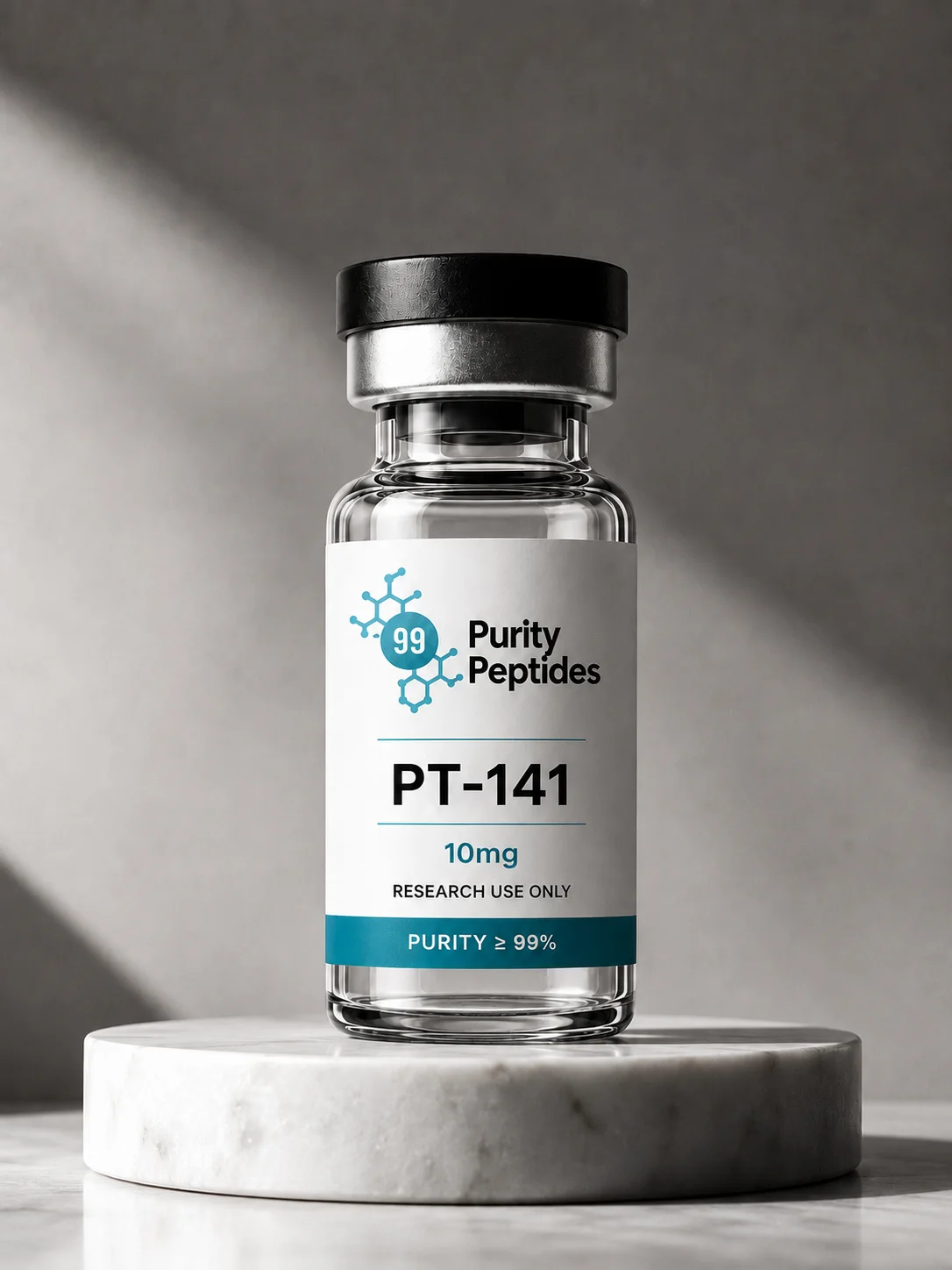
Originally developed by Palatin Technologies and later acquired by AMAG Pharmaceuticals, PT-141 was FDA-approved in June 2019 under the brand name Vyleesi® for the treatment of premenopausal women with hypoactive sexual desire disorder (HSDD) — a condition affecting approximately 10% of reproductive-age women. However, ongoing research and off-label use exploration suggest that PT-141's benefits extend to men experiencing erectile dysfunction and low sexual desire, making it a versatile compound for sexual wellness across genders.
Unlike oral medications that must be taken daily or 30–60 minutes before sexual activity, Vyleesi® is delivered as a prefilled subcutaneous autoinjector pen administered 45 minutes before anticipated sexual activity. This unique delivery method, combined with its novel mechanism of action, positions PT-141 as a game-changing option for individuals seeking alternatives to traditional ED medications or those who have not responded adequately to conventional therapies.
This comprehensive 2025 guide explores PT-141's mechanism, clinical evidence, dosing, side effects, efficacy comparisons, and practical guidance for maximising sexual wellness with this innovative therapeutic.
How Does PT-141 Work? The Melanocortin Receptor Agonist Mechanism
PT-141's efficacy stems from its elegant and novel mechanism of action, distinct from all other sexual dysfunction medications. Here's how it operates:
1. Melanocortin Receptor Activation: The Central Mechanism
PT-141 is a non-selective melanocortin receptor agonist, meaning it activates multiple melanocortin receptors (MC1R, MC3R, MC4R, MC5R) located throughout the central and peripheral nervous system. Of these, MC4R activation in the hypothalamus and brainstem is the primary driver of its sexual desire and arousal-enhancing effects.
The melanocortin system is a primitive, evolutionarily ancient signalling pathway involved in multiple physiological processes, including appetite regulation, pain perception, and critically, sexual motivation and arousal. When PT-141 activates these receptors, it essentially "switches on" the brain's intrinsic sexual desire circuitry.
2. Enhancement of Sexual Desire (Libido)
Unlike PDE-5 inhibitors (Viagra, Cialis) which improve blood flow to genital tissues, PT-141 directly stimulates the neurobiological substrates of sexual motivation in the brain. Patients report increased sexual thoughts, fantasies, and spontaneous desire — not just improved erectile or lubrication responses, but genuine, psychological activation of sexual interest.
For women with HSDD, this is particularly impactful. HSDD often stems from neurochemical imbalances, hormonal fluctuations, or psychological factors — not vascular insufficiency. PT-141's central nervous system mechanism directly addresses the root cause of low desire in many women, making it uniquely effective in this population.
3. Enhanced Genital Arousal & Physiological Response
Beyond desire, PT-141 enhances the physiological arousal response. In women, this manifests as increased vaginal lubrication and clitoral engorgement. In men, it supports erectile function through both neurogenic mechanisms and peripheral vascular effects. These downstream physiological changes occur as a natural consequence of elevated sexual motivation and arousal.
4. Increased Sensitivity & Pleasure Response
Melanocortin receptor activation also enhances sensory sensitivity, including tactile sensation in erogenous zones. This heightened sensitivity amplifies pleasure perception and can intensify the intensity and quality of sexual experiences and orgasmic response.
5. Rapid Onset of Action
PT-141 is administered as a subcutaneous injection 45 minutes before anticipated sexual activity. Within 15–30 minutes of injection, users report onset of increased sexual desire and arousal. Peak effects occur at 45–60 minutes and persist for 3–4 hours, providing a distinct activity window for sexual engagement.
💡 TIP: Unlike daily oral medications like Viagra, PT-141's 45-minute timing window requires some planning. Couples often find that the anticipation and preparation time actually enhances intimacy and sexual connectedness.
Key Benefits of PT-141 (Bremelanotide)
- Enhanced sexual desire and libido in both men and women
- Increased spontaneous sexual thoughts and fantasies — not just responsive arousal
- Improved genital arousal (enhanced erections in men; increased lubrication in women)
- Enhanced pleasure and satisfaction from sexual activity
- Novel mechanism distinct from PDE-5 inhibitors — works for patients who have failed or are intolerant to Viagra/Cialis
- Works regardless of baseline hormonal status — effective even in low-estrogen or low-testosterone states
- No systemic cardiovascular effects — safe in patients with cardiac contraindications to vasodilatory ED drugs
- On-demand dosing — can be used as needed, without daily commitment
- FDA-approved and clinically validated — rigorous safety and efficacy data from Phase 3 trials
✅ BEST PRACTICE: PT-141 is most effective when combined with sexual education, relationship counselling, and psychological support. Sexual desire disorders are often multifactorial — medication works best alongside communication and intimacy coaching.
What Is Hypoactive Sexual Desire Disorder (HSDD)? The Primary Indication
Hypoactive sexual desire disorder is characterized by persistently low or absent sexual desire, sexual fantasies, or initiation of sexual activity. It must be present for ≥6 months, cause personal distress, and not be better explained by relationship factors, medical conditions, medications, or psychiatric disorders.
Prevalence & Impact
HSDD affects approximately 10% of reproductive-age women and up to 16–20% of postmenopausal women. It is also increasingly recognized in men, with an estimated 15–20% of adult men experiencing significant desire deficits at some point.
Beyond the individual, HSDD significantly impacts relationship satisfaction, partner intimacy, and overall quality of life. Many sufferers experience shame, relationship conflict, and emotional distress.
Common Causes of Low Sexual Desire
- Hormonal factors: Low estrogen (postmenopausal), low testosterone (both sexes), thyroid dysfunction
- Psychological: Depression, anxiety, trauma, body image concerns, relationship conflict
- Medication-induced: Antidepressants (SSRIs), antipsychotics, beta-blockers, hormonal contraceptives
- Lifestyle: Chronic stress, poor sleep, overwork, sedentary lifestyle, excessive alcohol use
- Medical conditions: Diabetes, cardiovascular disease, chronic pain, hormonal disorders
- Relationship factors: Poor communication, unresolved conflict, mismatched libido
PT-141 addresses the neurochemical substrate of desire, making it particularly effective when low desire is primary (not secondary to other factors).
PT-141 Clinical Evidence: The PRECESSM Trial Programme
PT-141's efficacy and safety were established through the PRECESSM (Palatin Receptor Agonist in Females for Interest and Satisfaction Study) trial programme, a series of Phase 3 randomised controlled trials published in the Journal of the American Medical Association (JAMA) and other peer-reviewed journals.
PRECESSM I & II: Efficacy in Premenopausal Women with HSDD
Study Population: 1,247 premenopausal women with generalized HSDD
Primary Outcome: Change in "desire" domain score on the Female Sexual Function Index (FSFI)
Results:
- PT-141 0.75 mg (approved dose): 0.75 mg showed superior efficacy vs placebo, with ~30% of women achieving clinically meaningful improvement in sexual desire
- Placebo: ~16% improvement (placebo response in sexual medicine is notably high)
- Net Benefit: PT-141 provided a 14–15 percentage-point advantage over placebo
- Number Needed to Treat (NNT): Approximately 7 — meaning treatment of 7 women with PT-141 would result in one additional woman achieving clinically meaningful desire improvement
Secondary Outcomes:
- Improved sexual satisfaction and pleasure
- Enhanced genital arousal
- Increased frequency of sexual activity
- Improved relationship satisfaction
PRECESSM III: Real-World Effectiveness & Persistence
This phase examined long-term persistence and real-world effectiveness over 52 weeks.
Key Findings:
- Efficacy persistence: Continued improvements or maintenance of benefit over 52 weeks; no tachyphylaxis (tolerance) observed
- Satisfactory responders: ~60% of women using PT-141 reported being "satisfied" or "very satisfied" with treatment
- Discontinuation rate: Only ~15% discontinued due to lack of efficacy; most discontinuations were due to AEs or personal reasons
FDA Approval & Regulatory Status
Current Status: PT-141 (Bremelanotide/Vyleesi®) is FDA-approved for premenopausal women with generalized hypoactive sexual desire disorder (HSDD) since June 2019.
Approved Indication:
- Treatment of acquired, generalized hypoactive sexual desire disorder (low sexual desire) in premenopausal women who have no medical cause for their condition
Not Approved For:
- Men (though off-label use and research are ongoing)
- Postmenopausal women (insufficient evidence in regulatory review, though some off-label use occurs)
- Female sexual arousal disorder or orgasmic dysfunction alone (without desire component)
EMA & International Status:
- European Medicines Agency (EMA) approved Vyleesi® in April 2019 for the same indication
- Available in Canada, Australia, and other advanced healthcare systems
- Regulatory discussions ongoing for male sexual dysfunction indication
⚠️ WARNING: PT-141 is NOT approved for men as of 2025, though research is ongoing. Any use in men is off-label and should only occur under close medical supervision with informed consent about the lack of FDA approval for this population.
PT-141 Dosage & Administration
Approved Dosing (Vyleesi®)
Dose: 1.75 mg (delivered via prefilled autoinjector pen)
Route: Subcutaneous injection (under the skin)
Timing: Inject 45 minutes before anticipated sexual activity
Injection Sites:
- Abdomen (avoid the area immediately around the navel)
- Outer thigh
- Upper arm
Frequency:
- As needed, up to 8 times per month (approximately twice weekly)
- Do not inject more frequently than every 24 hours
- Maximum: 8 injections per 30-day period
How to Inject:
- Remove the autoinjector from the refrigerator 15–30 minutes prior to use (allow to reach room temperature)
- Hold the autoinjector with your thumb on the blue button
- Place the black tip against your skin at a 90-degree angle
- Press firmly until you hear/feel a click — this triggers the injection
- Hold in place for 3 seconds to ensure full dose delivery
Storage:
- Refrigerate unopened pens at 2°C–8°C (36°F–46°F)
- Do not freeze
- Once removed from refrigeration, can be kept at room temperature (below 30°C / 86°F) for up to 14 days
- Protect from light
Dose Adjustments & Titration
Unlike oral medications, PT-141 is not titrated up over time. The standard 1.75 mg dose is used from first injection. There is no established lower or higher dose for routine use.
However, patients with certain risk factors (see below) may require careful consideration before use.
💡 TIP: Some patients report that repeated use (over several months) may lead to diminished efficacy — this is anecdotal, not well-documented in trials. If efficacy wanes, discuss with your healthcare provider before increasing frequency. A drug holiday of several weeks may restore responsiveness.
PT-141 Side Effects: Safety Profile from Clinical Trials
Most Common Adverse Events
Nausea: 40–50% incidence (most common AE)
- Usually mild-to-moderate
- Often transient, lasting 30 minutes to a few hours
- Worse with first injections; many patients report adaptation over time
- May be reduced by avoiding heavy meals immediately before injection
Flushing & Facial Redness: 35–45% incidence
- Transient, resolving within 1–2 hours
- Generally mild and well-tolerated
Headache: 15–20% incidence
- Mild to moderate
- Usually self-limited
Skin Darkening at Injection Site: 10–15% incidence
- Mild hyperpigmentation
- Usually resolves over weeks to months
- More noticeable in darker skin tones
Injection Site Reactions: 5–10% incidence
- Minor erythema, bruising, or soreness at injection site
- Resolves within days
Abdominal Pain or Nausea: 20–25% incidence
- Mild to moderate
- Often dose-related
Less Common but Serious Adverse Events
Hypertension (Elevated Blood Pressure):
- Transient increases in systolic/diastolic BP observed in some users
- Usually mild, resolving within 2–3 hours
- Avoid or use cautiously in patients with uncontrolled hypertension
Melanoma Risk (Theoretical):
- Melanocortin receptors are involved in melanin production and skin cell proliferation
- Animal data showed increased melanoma in genetically predisposed mice
- No increased melanoma risk observed in human trials to date
- FDA warning exists; patients with personal or family history of melanoma should avoid PT-141
Arrhythmias (Heart Rhythm Disturbances):
- Rare; a few cases of palpitations reported
- Predominantly in patients with pre-existing cardiac conditions
- Cardiovascular evaluation recommended before use in high-risk individuals
Contraindications & Precautions
Absolute Contraindications:
- Personal or family history of melanoma or suspicious moles
- Multiple endocrine neoplasia
- Uncontrolled or severe hypertension (BP >140/90 mmHg)
- Coronary artery disease or recent myocardial infarction
- Uncontrolled arrhythmias
Relative Contraindications (use with caution):
- Pregnancy or breastfeeding (teratogenicity unknown)
- Severe hepatic impairment
- Severe renal impairment
- History of bipolar disorder (melanocortin system involved in mood regulation)
Drug Interactions:
- No significant interactions with most medications
- Use cautiously with other agents affecting blood pressure
- Avoid concurrent use with other melanocortin agonists (theoretical risk of excessive receptor stimulation)
✅ BEST PRACTICE: Before starting PT-141, undergo a comprehensive skin examination by a dermatologist, especially if you have multiple moles or freckles. Document baseline skin findings. Screen for melanoma risk factors. This is particularly important for patients with fair skin or positive family history of skin cancer.
⚠️ WARNING: PT-141 carries an FDA black box warning regarding melanoma risk. While no human cases have been causally linked to PT-141, patients with personal or family history of melanoma should avoid this medication. Discuss risks/benefits thoroughly with your healthcare provider before starting treatment.
PT-141 vs. Other Sexual Dysfunction Treatments: Comparative Analysis
Drug/Treatment
Mechanism
Indication
Route
Onset
Duration
Efficacy
PT-141 (Bremelanotide)
Melanocortin agonist
Desire ↑, Arousal ↑
Subcut injection
45 min
3–4 hrs
30% responder rate (vs 16% placebo)
Sildenafil (Viagra)
PDE-5 inhibitor
Erectile dysfunction
Oral
30–60 min
4–6 hrs
60–75% efficacy; vascular action
Tadalafil (Cialis)
PDE-5 inhibitor
ED, BPH
Oral
30–60 min
24–36 hrs
60–75% efficacy; longer duration
Vardenafil (Levitra)
PDE-5 inhibitor
ED
Oral
25–60 min
4–5 hrs
60–75% efficacy
Alprostadil (Caverject)
Prostaglandin E1
ED
Injection or intraurethral
5–20 min
30–60 min
70–85% efficacy; invasive
Testosterone (TRT)
Androgen replacement
Low T, low desire
Injection, patch, gel
Variable
Days–weeks
Modest desire ↑; requires monitoring
Flibanserin (Addyi)
5-HT agonist/antagonist
HSDD (women)
Oral (daily)
Days–weeks
Continuous
20% responder rate; oral burden
Buspirone
Dopamine agonist
Sexual dysfunction
Oral
Days
Continuous
Modest, variable; research-only
PT-141's Competitive Advantages
✓ Works on desire directly — not just peripheral vascular effects like Viagra ✓ Effective for women with HSDD — where PDE-5 inhibitors have limited benefit ✓ No daily pill burden — on-demand, 45-minute window (vs flibanserin's daily dosing) ✓ Novel mechanism — works in patients unresponsive to or intolerant of PDE-5 inhibitors ✓ Rapid onset — 45 minutes is faster than daily medications; similar to Viagra ✓ Combination therapy potential — can be used alongside PDE-5 inhibitors for additive benefit (off-label)
Where Other Agents May Still Lead
- PDE-5 inhibitors remain first-line for erectile dysfunction in men due to extensive data, efficacy, cost, and oral convenience
- Testosterone replacement is more established for low-desire men with documented low testosterone
- Flibanserin has longer track record in HSDD (approved 2015), though lower responder rate
Who Is an Ideal Candidate for PT-141?
You May Be a Strong Candidate If:
✓ Premenopausal woman with diagnosed hypoactive sexual desire disorder ✓ Have tried or are unresponsive to psychological interventions (therapy, counselling) ✓ Have normal or high testosterone levels (low desire not due to androgen deficiency) ✓ Are in a committed relationship and have a willing partner ✓ Have no contraindications (see above) ✓ Are seeking an alternative to daily oral medications ✓ Have adequate motivation and realistic expectations about treatment
PT-141 May NOT Be Appropriate If:
✗ You have a personal or family history of melanoma or skin cancer ✗ You have uncontrolled hypertension (BP >140/90 mmHg) ✗ You have active coronary artery disease or recent heart attack ✗ You are pregnant or breastfeeding ✗ You are postmenopausal (insufficient data; off-label use only) ✗ You are a man without clinical trial access (not FDA-approved for this population) ✗ You have untreated depression or significant psychological barriers to desire ✗ You are in a relationship with poor communication or unresolved conflict
PT-141 for Men: Off-Label Use & Emerging Evidence
While PT-141 is currently approved only for women, emerging research and off-label use suggest potential benefits for men with low sexual desire or erectile dysfunction.
Mechanism in Men
PT-141's melanocortin-mediated desire enhancement and potential vascular benefits via central mechanisms may benefit men with:
- Low sexual desire (despite normal testosterone)
- Erectile dysfunction unresponsive to PDE-5 inhibitors
- Desire deficits secondary to depression or antidepressant use
Off-Label Research & Clinical Experience
Several small studies and case series suggest PT-141 may improve sexual desire and erectile function in men, though rigorous Phase 3 data are lacking. Ongoing trials are evaluating PT-141 in male sexual dysfunction, with potential FDA indication approval anticipated by late 2025–2026.
⚠️ WARNING: PT-141 is NOT FDA-approved for men. Any use in men is off-label and experimental. Only seek treatment from experienced sexual medicine specialists, with informed consent and close monitoring.
Practical Tips for Maximising PT-141 Efficacy
Before Your First Injection
- Medical evaluation: Ensure comprehensive medical history, blood pressure screening, dermatological skin check
- Medication review: Confirm no contraindicated drugs (especially blood pressure-altering agents)
- Set realistic expectations: PT-141 enhances desire and arousal; it does not create desire from complete absence
- Relationship preparation: Communicate openly with your partner about treatment and expectations
On Injection Day
- Plan ahead: Schedule injection 45 minutes before anticipated sexual activity
- Avoid heavy meals: Take injection 2–3 hours after eating to minimise nausea
- Stay hydrated: Drink 8–12 oz of water before and after injection
- Create intimacy: Use the 45-minute window to connect, foreplay, and build anticipation with your partner
- Relax: Anxiety and stress impair sexual response; the 45-minute timeline allows time to settle nerves
Managing Nausea
- Take ginger supplements (500 mg) 30 minutes before injection
- Use an over-the-counter antiemetic (e.g., ondansetron 4 mg) 30 minutes prior if approved by your doctor
- Avoid alcohol for 2–4 hours before and after injection
- Many patients report nausea decreases with repeated use as their body adapts
- If nausea persists or is severe, contact your provider — dose or timing adjustments may help
Sustaining Benefits Over Time
- Use PT-141 regularly (2–4 times per month) rather than sporadically to maintain conditioned sexual response
- Continue psychological support, relationship counselling, or sex therapy alongside medication
- Address underlying factors (stress, work-life balance, partner communication) to optimise outcomes
- Discuss "drug holidays" (taking breaks from treatment) with your provider if efficacy wanes
💡 TIP: The sexual response is context-dependent and multifactorial. PT-141 enhances the neurobiological capacity for desire and arousal, but psychological factors, relationship quality, stress levels, and overall health significantly influence outcomes. Think of PT-141 as removing a biological barrier to desire, not bypassing the need for psychological and relational work.
Conclusion
PT-141 (Bremelanotide/Vyleesi®) represents a paradigm shift in sexual medicine — the first FDA-approved treatment that directly targets the neurobiological substrates of sexual desire rather than peripheral vascular responses. For premenopausal women with hypoactive sexual desire disorder, PT-141 offers a novel, evidence-based option that can significantly enhance sexual motivation, arousal, pleasure, and satisfaction.
The PRECESSM clinical trial programme established PT-141's efficacy and safety, with approximately 30% of treated women achieving clinically meaningful improvements in sexual desire compared to 16% on placebo — a meaningful therapeutic benefit for a condition that affects millions and significantly impacts quality of life and relationship satisfaction.
Beyond women's health, emerging research suggests PT-141's potential in male sexual dysfunction, with regulatory pathways for this indication advancing toward FDA approval by 2025–2026.
If you are struggling with low sexual desire, have not responded adequately to psychological interventions, and meet the safety criteria outlined in this guide, PT-141 may be worth exploring in discussion with a qualified sexual medicine specialist, gynecologist, or healthcare provider. Combined with relationship counselling, psychological support, and lifestyle optimisation, PT-141 can be a valuable tool in reclaiming sexual wellness and intimacy.
📌 INTERNAL LINKS
→ Related Article: How Hormones Affect Female Sexual Desire: The Complete Guide
→ Related Article: Hypoactive Sexual Desire Disorder (HSDD): Causes, Diagnosis & Treatment Options
→ Related Article: Viagra vs. PT-141 vs. Flibanserin: Which Sexual Dysfunction Treatment Is Right for You?
→ Related Article: The Role of Relationship Counselling in Treating Sexual Desire Disorders
→ Related Article: How Antidepressants Affect Sexual Function & What to Do About It
→ Related Article: Testosterone & Sexual Desire in Women: What Women Need to Know
Schema Markup (JSON-LD)
Copy and paste the following schema into the <head> section of your blog post webpage:
{
"@context": "https://schema.org",
"@graph": [
{
"@type": "Article",
"headline": "PT-141 (Bremelanotide): Complete Guide to Sexual Desire, Arousal & Function (2025)",
"description": "Comprehensive guide to PT-141 (Bremelanotide/Vyleesi®). Learn how it works, clinical evidence, dosage, side effects, and how it compares to Viagra, Cialis, and other sexual dysfunction treatments.",
"author": { "@type": "Organization", "name": "Your Brand Name" },
"datePublished": "2025-01-01",
"dateModified": "2025-07-01",
"mainEntityOfPage": { "@type": "WebPage", "@id": "https://yourwebsite.com/pt141-guide" }
},
{
"@type": "FAQPage",
"mainEntity": [
{
"@type": "Question",
"name": "Is PT-141 the same as Viagra?",
"acceptedAnswer": { "@type": "Answer", "text": "No. PT-141 is a melanocortin receptor agonist that enhances sexual desire and arousal at the neurological level. Viagra is a PDE-5 inhibitor that improves blood flow to genital tissues. They work through different mechanisms and target different aspects of sexual response." }
},
{
"@type": "Question",
"name": "How long does PT-141 take to work?",
"acceptedAnswer": { "@type": "Answer", "text": "PT-141 has a rapid onset of 15–30 minutes, with peak effects at 45–60 minutes. Effects persist for 3–4 hours. It is an on-demand therapy injected 45 minutes before anticipated sexual activity." }
},
{
"@type": "Question",
"name": "What is the approval status of PT-141?",
"acceptedAnswer": { "@type": "Answer", "text": "PT-141 (Bremelanotide/Vyleesi®) is FDA-approved since June 2019 for premenopausal women with hypoactive sexual desire disorder (HSDD). It is not approved for men, though clinical research is ongoing." }
}
]
},
{
"@type": "Drug",
"name": "PT-141",
"alternateName": ["Bremelanotide", "Vyleesi"],
"drugClass": "Melanocortin Receptor Agonist",
"mechanismOfAction": "Activates melanocortin receptors in the brain and nervous system to enhance sexual desire, arousal, and response",
"indication": ["Hypoactive Sexual Desire Disorder", "Sexual Desire Enhancement"],
"prescriptionStatus": "PrescriptionOnly",
"administrationRoute": "Subcutaneous injection"
}
]
}
References & External Links
- Bremelanotide (Vyleesi) — FDA Approval Summary
- PRECESSM I & II Trial: Bremelanotide for HSDD — JAMA
- Clinical Efficacy & Safety of Bremelanotide — American Journal of Psychiatry
- Hypoactive Sexual Desire Disorder: Diagnostic Criteria & Treatment Guidelines — American Psychiatric Association
- Sexual Dysfunction in Women: Epidemiology & Overview — UpToDate
- Melanocortin Receptor Agonists in Sexual Medicine — Sexual Medicine Reviews Journal
- Bremelanotide Patient Information & Safety Data — AMAG Pharmaceuticals
- American College of Obstetricians and Gynecologists — Sexual Health Resources