

COLORADO
THIN AIR, DRY CARGO
Expedited 3–4 Business Days delivery to laboratories, biotechnology testing facilities, and analytical research centers across Colorado with batch-specific HPLC/MS COA verification.
Colorado Domestic Hub
Research peptides delivered to Colorado laboratories along the Front Range, from Aurora's academic medical campus to Boulder biotech, with independent purity verification on every lot.
Best-Selling Peptides for Colorado Labs
High-demand research compounds supplied in solid lyophilized cakes with batch analytical reports and expedited dispatch to Colorado.
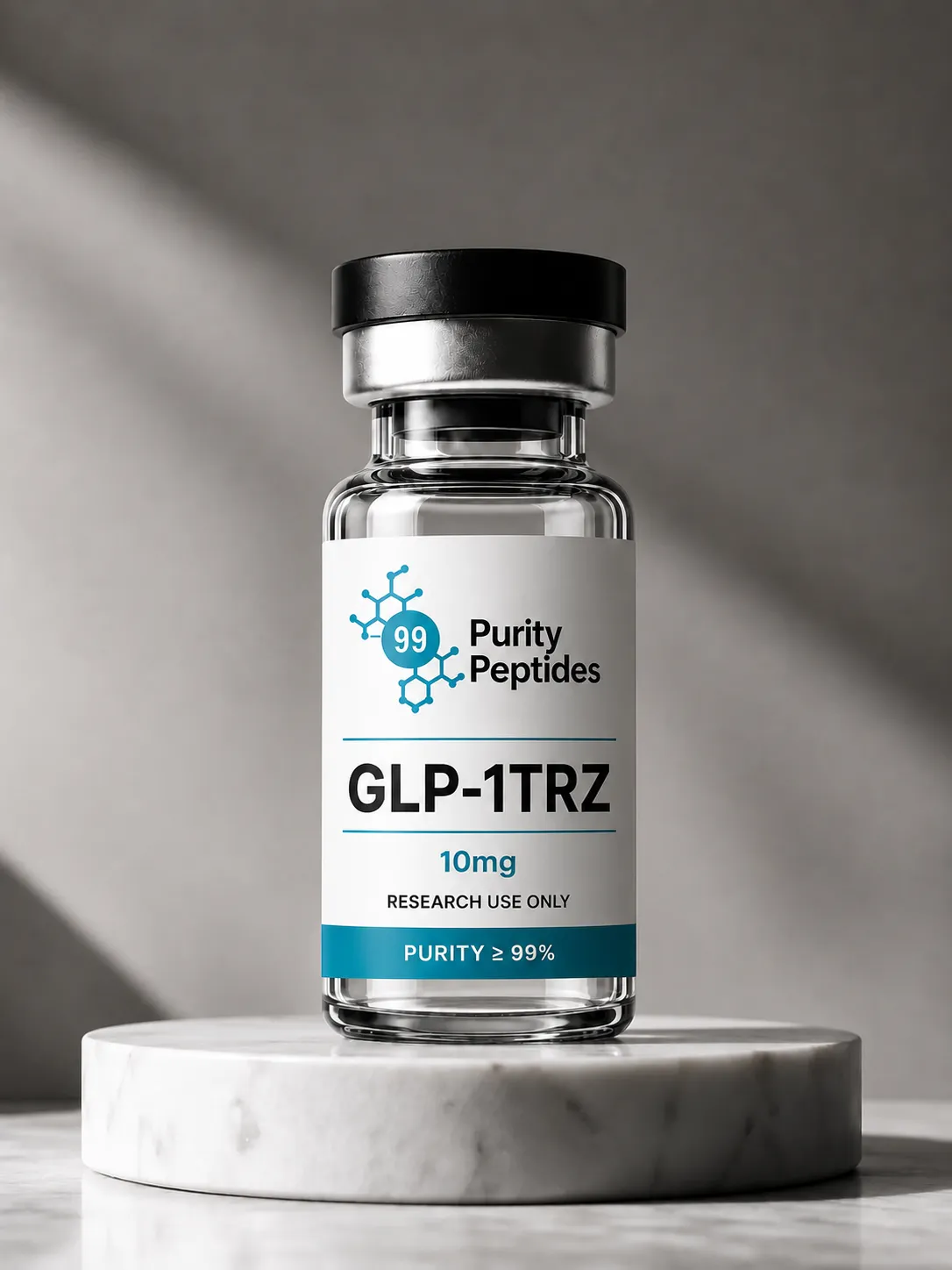
Glp-1TRZ
GLP-1 & Metabolic
A Glp-1TRZ is a dual GIP and GLP-1 receptor agonist used in metabolic research to model powerful incretin effects on insulin secretion, appetite suppression, gastric emptying, and body-weight regulation. Investigators use it to study obesity, type 2 diabetes, visceral fat reduction, and β-cell function, and to compare dual-pathway incretin signaling to single GLP-1 analogs. For research use only - not for human or veterinary use, diagnosis, or treatment.
BPC-157/TB-500
Healing & Recovery
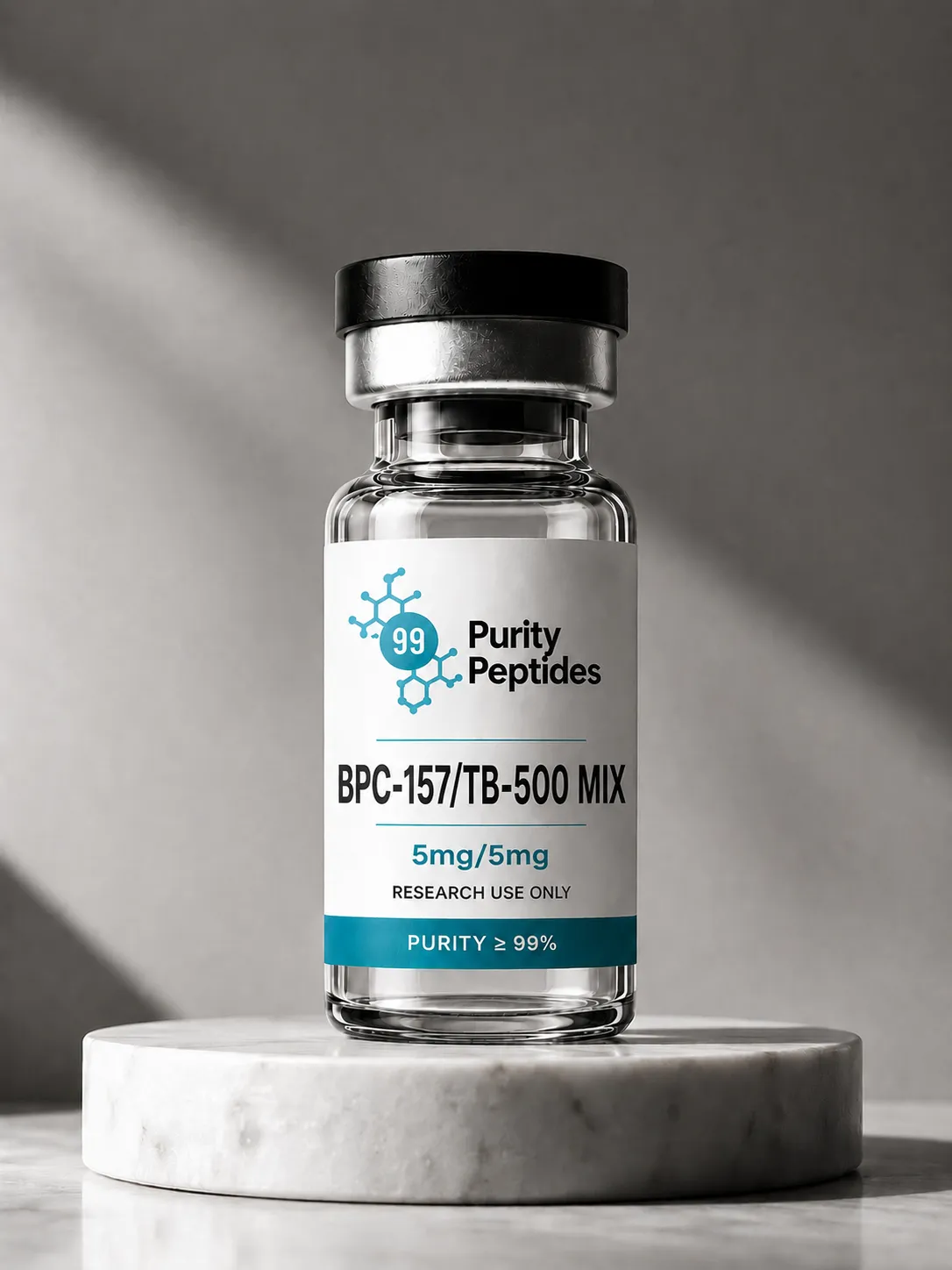
A combination of TB-500’s actin/angiogenesis signalling with BPC-157’s cytoprotection and growth-factor modulation, used in complex injury scenarios. Research applications include multi-tissue regeneration, multi-site injuries, inflammatory control, and functional recovery in musculoskeletal and soft-tissue systems. For research use only - not for human or veterinary use, diagnosis, or treatment.
Retatrutide
GLP-1 & Metabolic
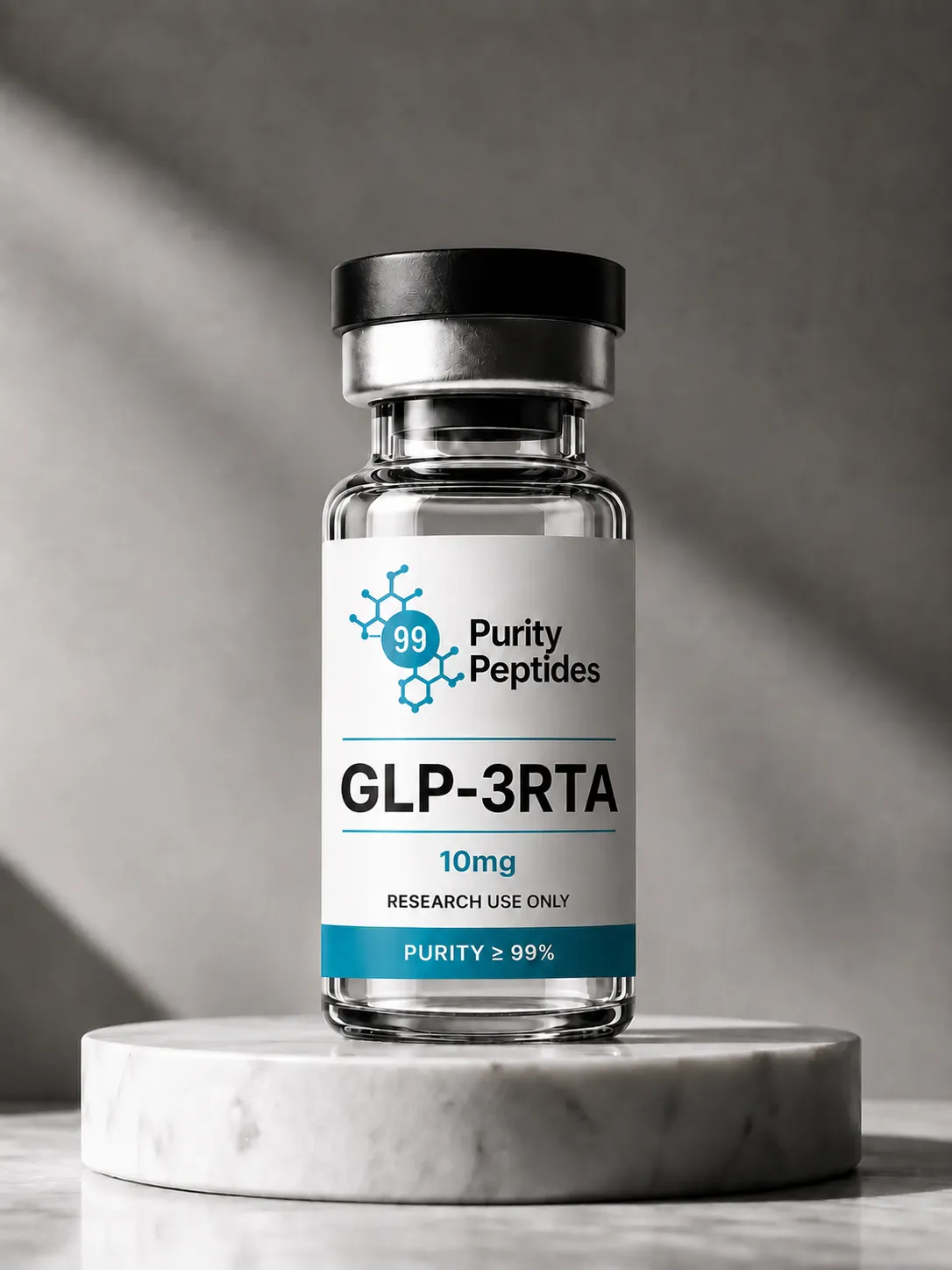
A triple agonist at GLP-1, GIP, and glucagon receptors, providing robust multi-hormone modulation of satiety, insulin secretion, lipid metabolism, and energy expenditure. Deployed in advanced models of severe obesity, dyslipidemia, metabolic syndrome, and combination incretin/glucagon strategies in laboratory research. For research use only - not for human or veterinary use, diagnosis, or treatment.
KLOW
Healing & Recovery
A branded joint and soft-tissue recovery blend, typically incorporating healing and anti-inflammatory peptides (such as BPC-157, TB-500, KPV, GHK etc, depending on formula). Utilized in models of chronic joint stress, tendon/ligament overload, and long-term soft-tissue wear and tear, where multi-pathway support is desirable. For research use only - not for human or veterinary use, diagnosis, or treatment.
GLOW
Healing & Recovery
A cosmetic-oriented skin and connective-tissue rejuvenation blend, often including peptides like GHK-Cu and BPC-157 plus supportive cofactors. Used in dermal remodeling, collagen support, scar appearance, skin elasticity, and hair/follicle health research, bridging regenerative and aesthetic outcomes. For research use only - not for human or veterinary use, diagnosis, or treatment.
MOTS-C
GLP-1 & Metabolic
A mitochondria-derived peptide that influences AMPK activation, folate–purine pathways, and skeletal muscle substrate use. It is central in studies of insulin resistance, obesity, exercise-mimetic effects, aging, and healthspan, particularly where mitochondrial function and metabolic flexibility are key endpoints.It has been studied for its role in cellular metabolism, with research suggesting it may influence energy balance and stress-response pathways. For research use only - not for human or veterinary use, diagnosis, or treatment.
Semax / Selank (Blend)
Cognitive & Nootropic
Semax/Selank 10/10mg is a research-grade dual neuroactive peptide blend developed for laboratory investigations involving melanocortin signaling, GABAergic neurotransmission, neurotrophic factor regulation, intracellular signaling pathways, and peptide pharmacology. Every batch undergoes comprehensive analytical verification to ensure purity, consistency, and reproducibility for advanced neuroscience, receptor biology, and molecular research.
GHK-Cu
Cosmetic & Skin
A naturally occurring copper-binding tripeptide signalling tissue repair and remodelling by upregulating collagen, elastin, and glycosaminoglycan synthesis, while modulating gene expression. Used in skin anti-aging, wrinkle reduction, scar remodelling, wound healing, and hair growth research with both structural and anti-inflammatory endpoints. For research use only - not for human or veterinary use, diagnosis, or treatment.

Mitochondrial Spray Pair
Peptide Bundles
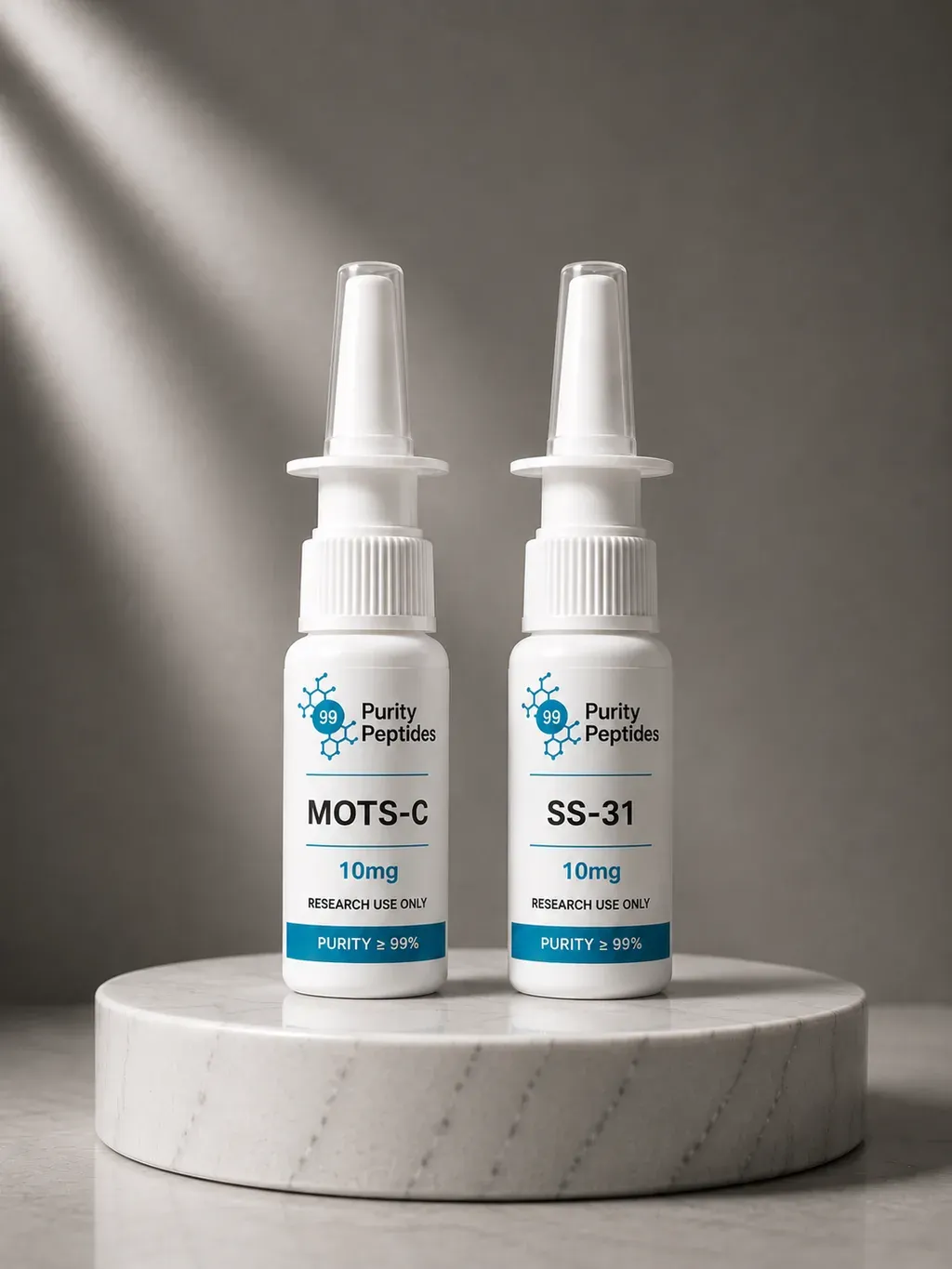
The Mitochondrial Nasal Spray Pair supplies MOTS-c and SS-31 in nasal format, each bottle containing 10 mg across approximately 45 actuations. The two compounds differ substantially in size — SS-31 is a tetrapeptide, MOTS-c a sixteen-residue peptide — which places them in different nasal absorption ranges. The format suits SS-31 considerably better on molecular weight grounds. For research use only.
Copper Peptide Spray Comparator
Peptide Bundles
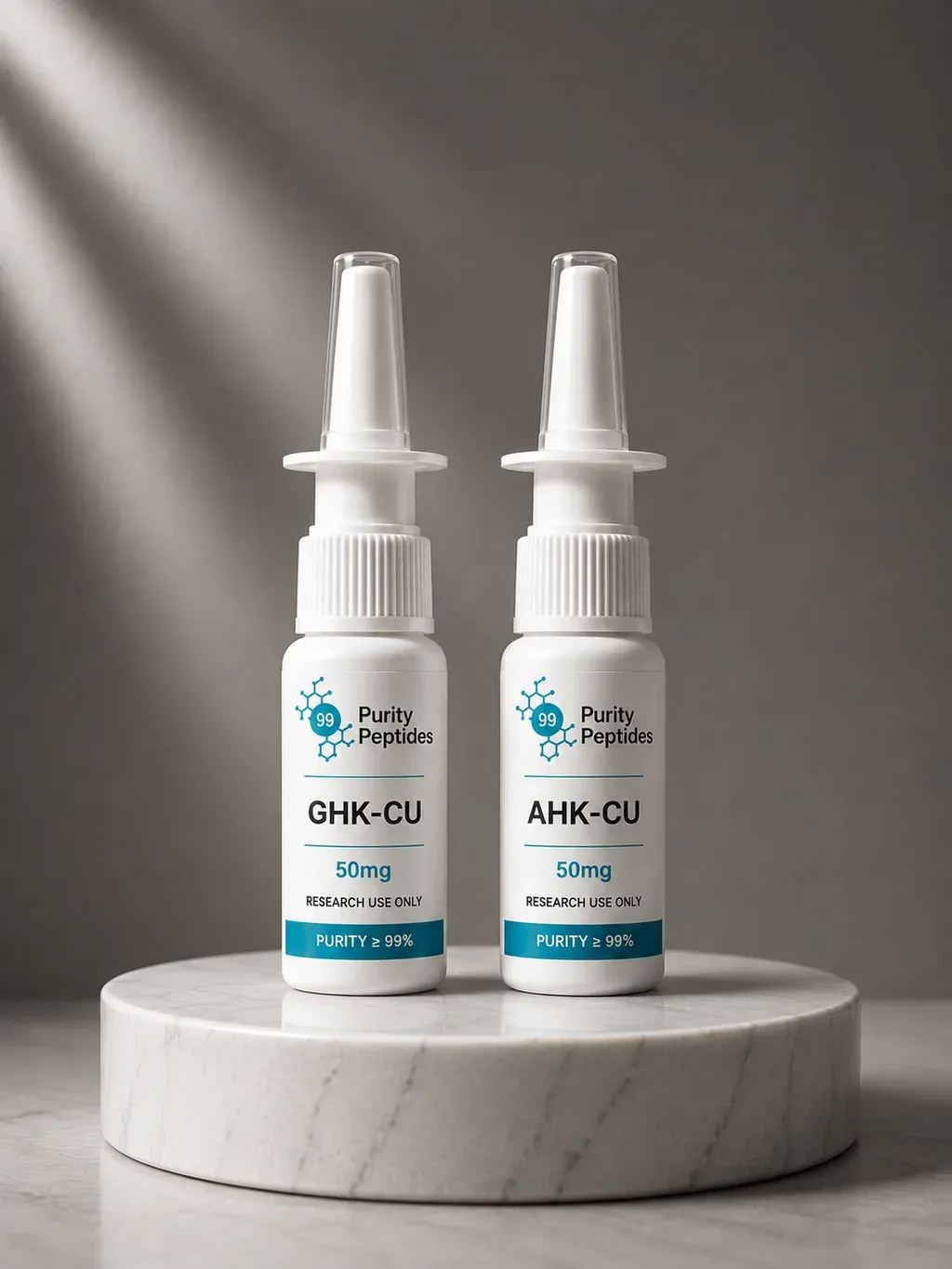
The Copper Peptide Nasal Spray Comparator supplies GHK-Cu and AHK-Cu in nasal format, each bottle containing 50 mg across approximately 45 actuations. Both copper tripeptides fall well below 1,000 daltons, the range in which nasal absorption of peptides is most favourable. Both are supplied as prepared copper(II) complex solutions. For research use only.
Neuropeptide Spray Comparator
Peptide Bundles
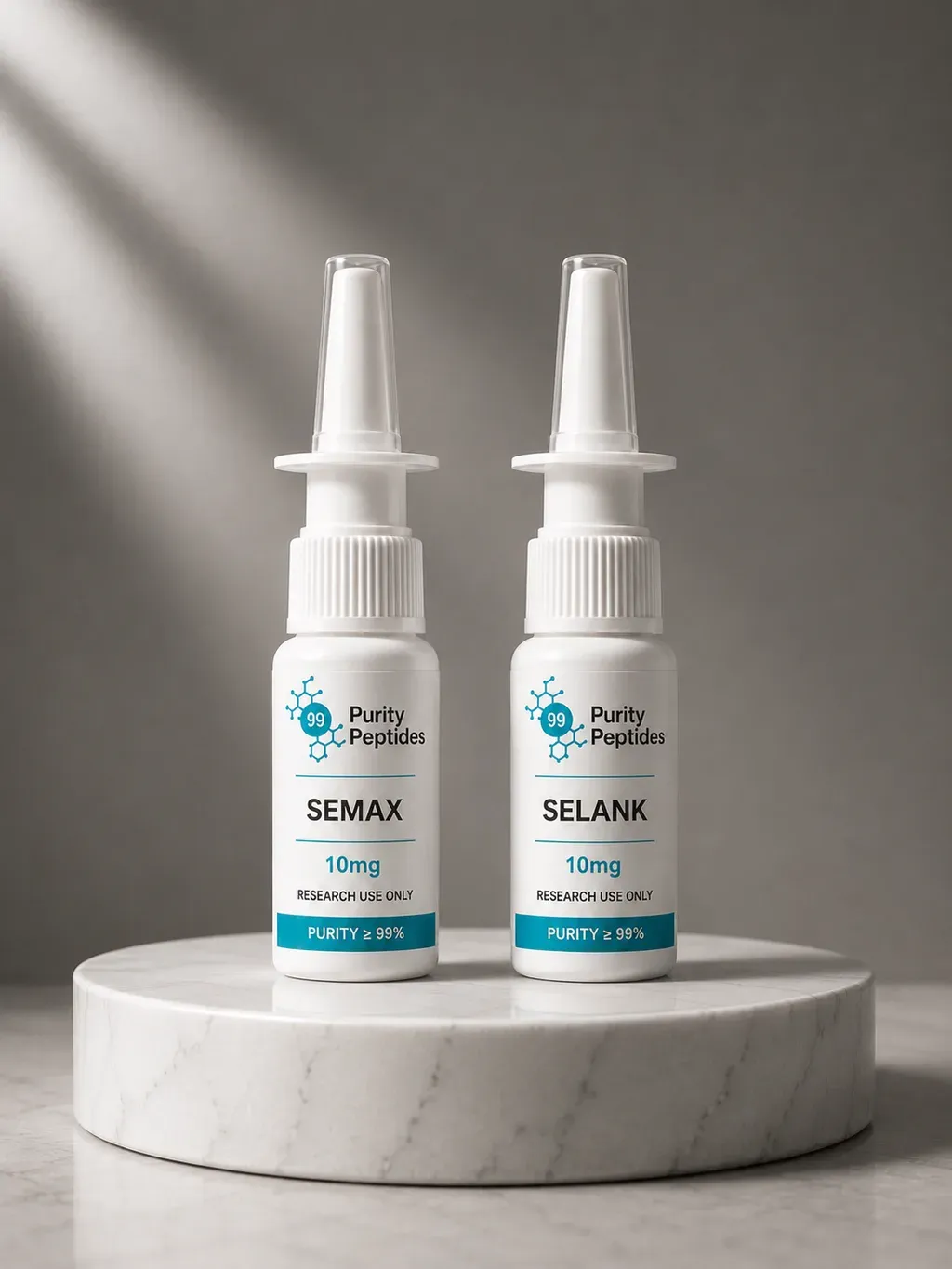
The Semax and Selank Nasal Spray Comparator supplies both neuropeptides in nasal format, each bottle containing 10 mg across approximately 90 actuations. The labelled mass describes the bottle, not the individual spray. Both peptides fall under 1,000 daltons, the molecular weight range in which nasal absorption is most favourable. Supplied as prepared solutions. For research use only.
Almost Everything Happens Within Sight of One Highway
Colorado's research activity is concentrated along a single north-south strip in a way few states match. Fort Collins, Longmont, Boulder, the Denver metro, the Aurora medical campus zone, Golden, Littleton and Colorado Springs are effectively strung along the I-25 corridor, which means the state behaves as one long delivery lane with a mountain annexe rather than as a scattered network. For a buyer that concentration is useful: transit behaves predictably up and down the Front Range, and the exceptions are obvious ones. Predictability, in a state this linear, is worth more than raw speed.
The buyers themselves increasingly sit outside institutional structures. Boulder in particular has generated a steady population of independent researchers and small analytical operations that spun out of larger organizations and kept working. They do not raise requisitions or route purchases through anyone, and our checkout assumes as much — no affiliation is requested or verified, no purchase order exists, no approval step delays dispatch. Selecting a compound, paying personally, and receiving tracking at dispatch is the whole of it. Nobody signs off on their purchases, and nothing here expects anybody to.
Distance sets expectations honestly here. Three to four business days covers the Front Range, and the Western Slope and mountain towns — Grand Junction, Durango, Aspen, Steamboat Springs, Montrose — run to 4–5 when passes and mountain routing enter the picture. Documentation does not degrade over that distance. What ships alongside the vial is an unredacted record — a purity result of ≥99.0% by RP-HPLC, sequence data from ESI-MS, and a lot identifier tying both to the glass in your hand — so a single vial reaching Durango is as well evidenced as anything shipped next door. Elevation and remoteness change the calendar, not the standard of evidence.
Colorado Regional Delivery Corridors
Prioritized domestic courier routing serving life sciences clusters, biotechnology campuses, and analytical testing centers across Colorado.
Denver And Aurora Metro
3–4 Business DaysServes the academic medical campus, respiratory research institutions and commercial laboratories across the metro area.
Boulder And Longmont
3–4 Business DaysCovers the university research programs and biotech companies concentrated in the northern Front Range corridor.
Northern Front Range
3–4 Business DaysReaches infectious disease, veterinary and agricultural research programs anchored at the regional public university.
Golden And Southern Metro
3–4 Business DaysSupports national laboratory facilities, engineering research and the analytical labs along the southern corridor.
Western Slope And Mountain Towns
4–5 Business DaysDelivers to regional medical centers and field research stations west of the Continental Divide.
High, Dry, and Swinging Forty Degrees Between Noon and Midnight
Altitude changes the problem rather than intensifying it. Front Range air is thin and unusually dry, and it sheds heat fast once the sun goes down, which produces diurnal swings that would look extreme almost anywhere else — a warm afternoon in Boulder can give way to near-freezing before morning. A parcel sitting on a porch overnight in Fort Collins may pass through thirty or forty degrees of change in a matter of hours, repeatedly, across a four-day transit.
Cycling like that is genuinely hard on liquid formulations, where repeated expansion and contraction stresses closures and repeated warming accelerates degradation. A dry solid has neither vulnerability. With residual solvent below 0.5% there is no liquid to expand, no phase boundary to cross, and nothing that a swing between afternoon warmth and overnight cold acts on. Low humidity even helps at the point of opening, since condensation is far less likely in dry air — though letting the glass reach room temperature first remains the sound habit.
Third-Party HPLC & Mass Spectrometry Verification
Chromatographic testing independent of production establishes the release-grade purity figure.
Confirms exact monoisotopic mass against the theoretical value for the ordered sequence.
Vacuum freeze-drying removes solvent, unaffected by low-humidity or high-altitude ambient conditions.
Nitrogen-sealed with a butyl stopper rated for the pressure differential at elevation.
The Permitted Domain, Stated Precisely
It is worth being exact about what is permitted rather than gesturing at it. A Colorado order may be used for in-vitro laboratory experimentation, for analytical characterization, and as a reference standard. That is the domain in full. Everything else falls outside: any use where a human or an animal is the recipient, any personal application, compounding in any form, and resale that carries the compound beyond a research setting.
Independence in purchasing does not travel with independence from those terms. Nobody else is reviewing your practice, which means containment, PPE, disposal under local rules, and lot records stored with the vial are entirely on you to maintain. Where an order's stated purpose cannot be squared with laboratory research, it is refused rather than interpreted generously.
Reconstitution & Storage Guidelines
1. Sterile Reconstitution: Use sterile water or PBS, selecting the diluent appropriate to your sequence's solubility profile. Introduce it gently against the inner vial wall and prepare only the volume needed for that session.
2. Gentle Dissolution: Allow the lyophilized cake to wet completely. Swirl gently; avoid violent vortexing to maintain tertiary molecular folding.
3. Long-Term Storage: Store reconstituted aliquots at -20°C in sterile polypropylene cryovials to minimize freeze-thaw degradation cycles.
Check Your Exact Shipping Rate at Checkout
Shipping cost to Colorado depends on your order size and the delivery speed you choose. Add your products to cart and enter your address at checkout — your exact rate is calculated instantly, before you pay, and Standard Shipping is free once your order qualifies.
Other Dedicated State Corridors
Direct Pacific priority logistics network providing analytical-grade lyophilized research peptides to biotechnology facilities, independent analytical testing laboratories, and private research institutions across California.
Direct priority distribution network connecting life sciences laboratories, analytical chemistry centers, and biochemical testing facilities across the state of Texas.
Specialized thermal-resilient delivery network supplying certified research peptides to analytical laboratories, testing facilities, and biotechnology institutions throughout Florida.
Dedicated priority fulfillment pipeline delivering high-purity synthetic peptides to analytical laboratories, testing facilities, and biomedical research centers across South Carolina.
Direct laboratory dispatch network serving the prominent Research Triangle Park (RTP) ecosystem, biotechnology campuses, and analytical research centers across North Carolina.
Research-grade peptides for New York laboratories, from Manhattan academic medical centers to major cancer research centers in Buffalo, with independent HPLC and MS documentation supplied on every lot.
Peptide supply for the densest life sciences cluster in the country, serving Kendall Square benches through to Worcester's medical school with third-party purity data on every lot.
Cross-country peptide supply for Washington research groups, reaching South Lake Union, Seattle's academic medical campus and the labs east of the Cascades with full HPLC and MS lot documentation.
Peptide supply for Illinois laboratories across the Chicago medical district, the Evanston and Skokie science corridor and the downstate university research programs.
Peptide supply for Pennsylvania's two research capitals, serving the Philadelphia cell and gene therapy cluster and the Pittsburgh medical corridor with lot-specific purity data.
Research peptide supply for Georgia laboratories, covering the Atlanta academic core, the Augusta medical corridor and the university research programs in Athens.
Peptide supply for Maryland's biotech corridor and academic medical laboratories, with lot-specific HPLC and mass spectrometry documentation supplied on every shipment.
Peptide supply for Minnesota's Medical Alley corridor and the clinical research community around Rochester, shipped with independent HPLC purity and MS identity data.
Research peptides for Michigan laboratories, serving Ann Arbor, the Detroit medical district and the Grand Rapids research campuses with lot-specific analytical documentation.
Research peptide supply for New Jersey's pharmaceutical corridor and university laboratories, with independent HPLC purity and mass spectrometry data on every lot shipped.
Research peptide supply for Alabama, running from the Huntsville engineering corridor through the Birmingham medical district to the Mobile Bay coast, with lot-specific HPLC and mass spectrometry documentation on every shipment.
Research peptide delivery across Arkansas, serving the Little Rock analytical belt, the northwest food-science corridor and the Delta agricultural testing region with lot-specific purity documentation.
Research peptide supply across Kentucky, benefiting from the Louisville air-cargo gateway and serving fermentation chemistry and equine veterinary research activity through the Bluegrass region.
Research peptide supply for Louisiana, serving the industrial chemistry corridor between Baton Rouge and New Orleans with hurricane-season routing contingency and lot-specific analytical documentation.
Research peptide delivery throughout Mississippi, covering the Jackson metro, the Delta agricultural research districts and the Gulf Coast, with lot-matched HPLC and mass spectrometry documentation.
Research peptide supply across Oklahoma, serving energy-sector analytical chemistry around Tulsa and Bartlesville and the central metro laboratories, with severe-weather routing contingency built in.
Research peptide supply across Tennessee's three grand divisions, from the Memphis air-cargo gateway through the Nashville life sciences corridor to the Knoxville and Oak Ridge research axis.
Research peptide delivery into Alaska, covering Anchorage and the Mat-Su Valley through the Interior and the Southeast Panhandle, with a shipping format built for sustained sub-zero transit.
Research peptide supply across Arizona, from the Phoenix bioscience corridor to Tucson's instrumentation and analytical base, shipped in a solid-state format built for extreme desert heat.
Research peptide delivery to Hawaii by air freight, serving Oahu's marine science base and the neighbor islands with a shipping format that requires no cold chain across the Pacific.
Research peptide supply throughout Idaho, serving the Boise technology corridor, Magic Valley food science operations and the northern Panhandle with lot-specific analytical documentation.
Research peptide delivery across Montana, from the Gallatin Valley and Yellowstone corridor to the Hi-Line, built around long in-state ground legs and sustained winter cold.
Research peptide delivery across Nevada in one to two business days, serving the Las Vegas Valley, the Reno-Sparks technology belt and the Great Basin assay laboratories.
Research peptide supply throughout New Mexico, serving the Albuquerque research corridor, the northern highlands technical community and the Mesilla Valley agricultural laboratories.
Research peptide delivery across Oregon in one to two business days, serving the Portland bioscience corridor and the Willamette Valley agricultural research base through a long wet season.
Research peptide supply for Utah, serving the Salt Lake Valley medical device and biotech corridor, the Utah Valley technology belt and the southern districts with batch-specific documentation.
Research peptide delivery throughout Wyoming, from the Cheyenne gateway to the northwest mountain districts, planned around wind-driven highway closures and severe winter cold.
Research peptide supply across Indiana, serving the central pharmaceutical manufacturing corridor, the West Lafayette agricultural engineering belt and the northern industrial testing base.
Research peptide delivery throughout Iowa, serving the seed science corridor around Des Moines and Ankeny, the Ames research belt and the eastern analytical laboratories.
Research peptide supply for Kansas, covering the animal health corridor along I-70, the Manhattan research belt and the Wichita industrial testing base with run-specific documentation.
Research peptide delivery across Missouri, serving the St. Louis plant science corridor, the Kansas City freight and analytical belt and the mid-Missouri research base.
Research peptide delivery across Nebraska, from the Omaha distribution corridor through the Platte Valley to the western Panhandle, planned around a 450-mile climate transition.
Research peptide delivery throughout North Dakota, from the Red River Valley to the Williston Basin, in a solid-state format built for the coldest sustained transit in the Lower 48.
Research peptide supply across Ohio's three metropolitan research bases in Columbus, Cincinnati and Cleveland, backed by one of the strongest logistics positions in the country.
Research peptide delivery across South Dakota, serving the Sioux Falls health services corridor, the Brookings research belt and the Black Hills district on both sides of the Missouri River.
Research peptide supply throughout Wisconsin, serving the Madison research and device corridor, the Milwaukee industrial belt and the dairy science laboratories of the interior.
Research peptide supply across Connecticut, serving the New Haven life sciences corridor, Fairfield County and the southeastern shoreline laboratories between two major metropolitan hubs.
Research peptide delivery throughout Delaware, from the Wilmington chemical corridor to Sussex County, in a state small enough to behave as a single delivery region.
Research peptide delivery across Maine, serving the Portland coastal corridor, the midcoast aquaculture belt and the Downeast districts along the longest tidal shoreline in the region.
Research peptide supply throughout New Hampshire, from the dense southern tier and Seacoast through the Upper Valley to the North Country mountain districts.
Research peptide delivery across Rhode Island, covering the Providence metro, the Narragansett Bay oceanographic laboratories and Newport within the most compact delivery footprint we serve.
Research peptide delivery across Vermont, from the Champlain Valley through central Vermont to the Northeast Kingdom, planned around mountain routing and long winters.
Research peptide supply across Virginia's four distinct regions, from the Northern Virginia technology corridor through Richmond and Hampton Roads to the Blue Ridge.
Research peptide delivery throughout West Virginia, serving the Kanawha Valley chemical corridor, the Morgantown research belt and the southern coalfields across mountain routing.
FREQUENTLY ASKED QUESTIONS
Key information regarding priority courier transit, analytical COA testing, thermal stability, and lab compliance for Colorado.