Last reviewed: September 2026
Quick answer: The kisspeptin peptide is the brain signal that switches on gonadotropin-releasing hormone (GnRH) neurons, which then drive the entire reproductive hormone cascade. Its gene, KISS1, was found in 1996 by cancer researchers in Hershey, Pennsylvania, and named partly after the town's famous chocolate Kisses [1][2]. Small human trials have tested kisspeptin as an IVF egg-maturation trigger, in hypothalamic amenorrhea and in low sexual desire. No kisspeptin-10 drug is FDA-approved, and we found no approval for any other form of kisspeptin [3][4].
Key Takeaways
- The KISS1 gene was reported in December 1996 in the Journal of the National Cancer Institute. A Penn State team in Hershey found it while studying melanoma spread [1].
- The peptide names "metastin" and "kisspeptin" both date from 2001, when three groups independently showed the gene's product activates the receptor GPR54 [5][6][7].
- In 2003, two teams showed that people with broken GPR54 receptors do not go through puberty [8][9].
- Kisspeptin works one tier above the pituitary, on GnRH neurons. It cannot stand in for GnRH and needs working GnRH neurons to have any hormonal effect [9][10].
- The strongest human evidence is two Imperial College London IVF studies of 53 and 60 women, and neither included an hCG comparison arm [11][12].
- A randomized crossover study published in 2025 found that intranasal kisspeptin-54 rapidly raised luteinizing hormone in men and women [13].
- The 2026 Phase 1 trial tagged "neurodegeneration" uses kisspeptin as a one-dose test of GnRH neuron function, not as a treatment [14].
- Kisspeptin-10 is not a component of any FDA-approved drug [3]. An FDA advisory committee voted 0 to 11 against adding it to the 503A bulks list [15].
Research Use Only. 99 Purity Peptides supplies kisspeptin compounds strictly for laboratory research. They are not for human or veterinary use, and nothing on this page is medical, dosing or health advice. The human studies described below were run by licensed investigators under regulatory oversight.
What Is Kisspeptin, and Why Does It Have This Name?
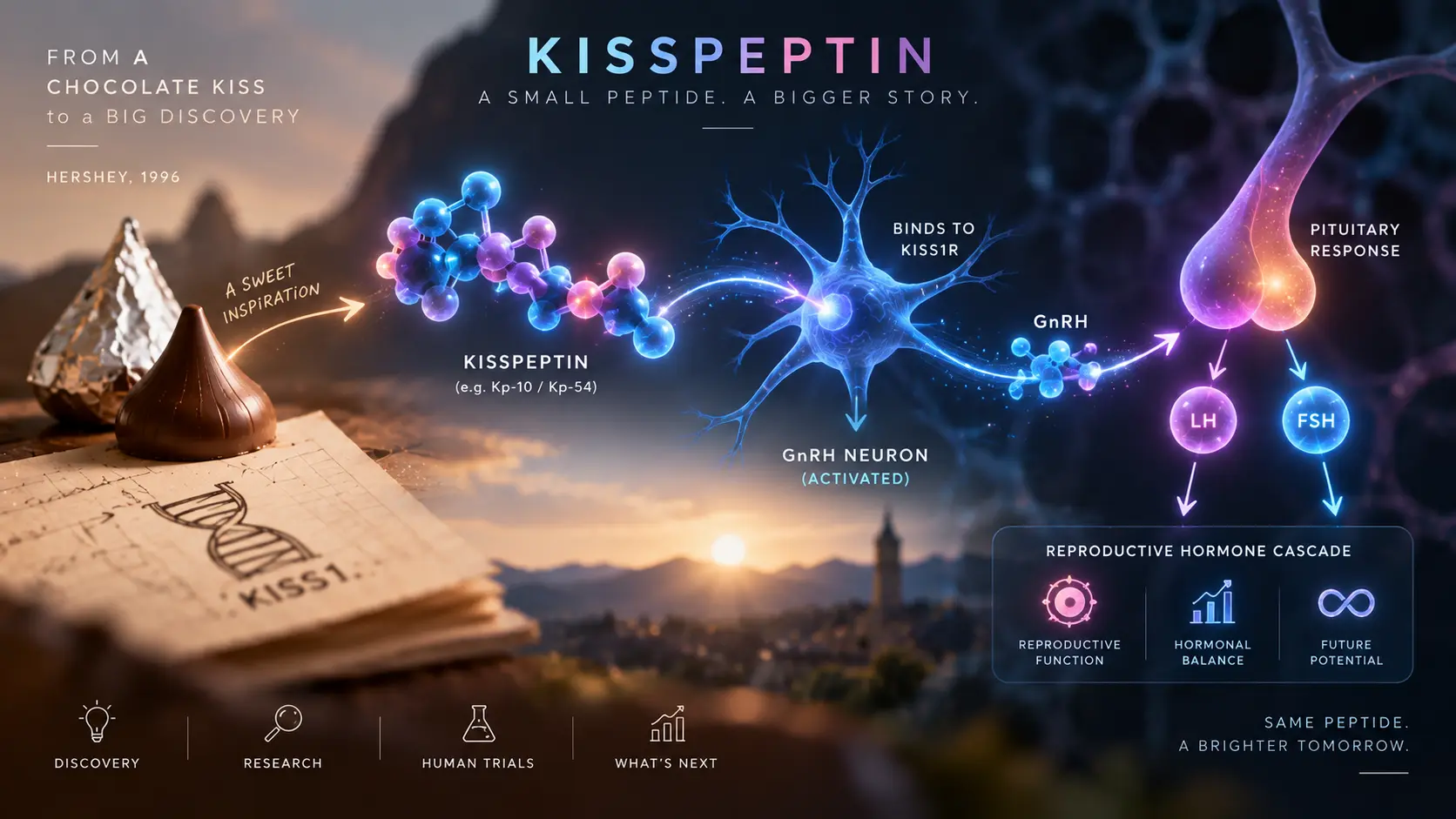
Kisspeptin is a family of peptides cut from the KISS1 gene's protein, and that gene is named partly after Hershey's Kisses [1][2]. In 1996, Danny Welch's laboratory at Penn State's College of Medicine in Hershey was hunting for a gene that stopped melanoma from spreading [1][16]. Moving human chromosome 6 into metastatic melanoma cells had cut their ability to metastasize by at least 95%, without stopping tumor growth [1]. The team then isolated a cDNA that was switched on only in the suppressed cells and called it KiSS-1 [1].
OMIM, the Online Mendelian Inheritance in Man database, records the logic of the name. It combines the lab's shorthand for a suppressor sequence with a salute to the town where the gene was found [2]. A 2018 review in Frontiers in Endocrinology tells the same story and credits the Hershey chocolates directly [16].
Most retellings get one detail wrong. The 1996 paper named a gene, not a hormone. "Metastin" appeared five years later, when Ohtaki and colleagues reported in Nature that the gene's peptide activates an orphan receptor [5]. Two other groups reached the same answer that year, and one of them coined "kisspeptins" [6][7]. Both names were born in 2001, five years after the gene.
Nobody in the melanoma lab was looking for a puberty gene. That link arrived in 2003 [8][9]. A biotech partner on one of those studies nicknamed the receptor gene "Harry Potter." The firm named genes of unknown function after famous orphans [17].
Length separates the forms that researchers use. Kisspeptin-54 is the major circulating form in humans [11]. Kisspeptin-10 is the short fragment that most research suppliers list [3]. All forms share the same final ten amino acids, and that shared fragment is enough to activate the receptor [3].
Year | What happened | Type of evidence | Source |
|---|---|---|---|
1996 | KiSS-1 isolated as a melanoma metastasis suppressor | Cell and mouse studies | [1] |
2001 | Peptide identified as the GPR54 ligand and named metastin and kisspeptin | Cell-based receptor assays | [5][6][7] |
2003 | GPR54 mutations linked to absent puberty | Human genetics plus knockout mice | [8][9] |
2005 | First human infusion raises LH, FSH and testosterone in 6 men | Small placebo-controlled crossover | [18][19] |
2014 to 2015 | Kisspeptin-54 triggers egg maturation during IVF | Dose-finding and Phase 2 studies | [11][12] |
2025 | Intranasal kisspeptin-54 raises LH | Randomized, placebo-controlled crossover | [13] |
2026 | Phase 1 probe study in post-COVID syndrome opens | Registered trial, recruiting | [14] |
How Does Kisspeptin Actually Control Reproduction?
Kisspeptin controls reproduction by switching on GnRH neurons, which sit one step above the pituitary gland. In the hypothalamus, kisspeptin neurons release the peptide onto GnRH neurons, which carry the kisspeptin receptor, KISS1R (formerly GPR54) [3]. One key population, the KNDy neurons, also makes neurokinin B and dynorphin [3]. GnRH neurons then release GnRH into the small blood supply that feeds the pituitary. Pituitary gonadotrope cells answer with luteinizing hormone (LH) and follicle-stimulating hormone (FSH), which act on the testes or ovaries.
Tier | Messenger | Made by | Acts on | Receptor |
|---|---|---|---|---|
1. Upper hypothalamus | Kisspeptin | Kisspeptin neurons, including KNDy neurons | GnRH neurons | KISS1R (GPR54) |
2. Lower hypothalamus | GnRH | GnRH neurons | Pituitary gonadotropes | GnRH receptor |
3. Anterior pituitary | LH and FSH | Gonadotrope cells | Testes or ovaries | LH and FSH receptors |
4. Gonads | Testosterone, estradiol, progesterone | Testicular and ovarian cells | Body tissues and the brain (feedback) | Sex steroid receptors |
That ordering is more than a diagram. Mice bred without GPR54 still had normal GnRH stores in the hypothalamus, and they still responded to injected GnRH [9]. The hormone existed; it simply was not being released on cue.
Human data point the same way. In a 2014 study, 11 people with congenital GnRH deficiency showed no GnRH-driven LH response to kisspeptin [10]. One man whose condition had reversed responded robustly [10]. Kisspeptin works only if the GnRH neurons below it work. GnRH, by contrast, acts directly on the pituitary and needs no kisspeptin at all.
"Master switch" is a fair label with one caveat. Held down continuously, this switch turns itself off. In monkeys given a constant high-dose kisspeptin-10 infusion, LH surged for about three hours and then fell back to baseline despite ongoing exposure [3]. The pattern of the signal matters as much as its presence.
What Do Human Trials Show in Women's Reproductive Health?
Kisspeptin reliably raises reproductive hormones in women and has matured eggs for IVF. No published trial has yet shown it restores ovulation or menstrual cycles.
In hypothalamic amenorrhea, hormones rise but cycles are unproven
Hypothalamic amenorrhea is loss of periods caused by an acquired drop in GnRH secretion, with weak or absent LH pulses [20]. Imperial College London has run three small studies in this group. In 2009, 10 women received kisspeptin-54 or saline for two weeks; hormones rose sharply at first, then desensitization set in [21]. A 2010 study found that a less frequent schedule caused only partial desensitization, with hormones still raised after eight weeks [22]. In 2014, five women received eight-hour infusions, and LH pulses increased in all of them [20].
One ranking clinic page cites the 2014 paper as "Kisspeptin restores pulsatile LH secretion." That is not its title. The published title says kisspeptin increases LH pulsatility, and the authors conclude the effect is temporary [20]. Each study enrolled 20 women or fewer. Their endpoints were hormone levels, pulse patterns and ultrasound measures, not return of regular periods [21][20].
A more physiological test is now under way. At Massachusetts General Hospital, a Phase 2 study is giving kisspeptin-10 in pulses from a small subcutaneous pump [23]. Its participants are women with hypothalamic amenorrhea, treated for two weeks [23]. The primary outcome is the change in LH pulse amplitude, and it also records whether a mature follicle or ovulation appears [23]. About 20 women are planned, and the study was recruiting as of July 2026.
In IVF, the evidence is strongest so far
IVF can cause ovarian hyperstimulation syndrome (OHSS), a potentially life-threatening complication [12]. A kisspeptin-54 injection releases the woman's own LH in a surge lasting roughly 12 to 14 hours [24].
The first study treated 53 women and saw egg maturation at every dose tested [11]. Embryo transfer took place in 92% (49 of 53), and the clinical pregnancy rate was 23% (12 of 53) [11]. A Phase 2 randomized trial then enrolled 60 women at high risk of OHSS [12]. Eggs matured in 95% of women, and live births reached 45% per embryo transfer across all doses [12]. No woman developed moderate, severe or critical OHSS [12]. A 2017 follow-up in 62 women found a second dose ten hours later improved egg yield [24].
Results like these are the most encouraging in the field. Every one of them, though, came from a single IVF unit in London. The 2015 trial randomized women between kisspeptin doses, not against hCG. A Society for Endocrinology release on the trial noted that larger studies were needed to confirm any advantage over hCG [25].
What Do Human Trials Show on Sexual Desire?
Two randomized, placebo-controlled crossover trials found that one kisspeptin infusion changed sexual brain processing in people with hypoactive sexual desire disorder (HSDD) [26][27]. Both came from the Imperial College group and used a 75-minute intravenous infusion of kisspeptin-54.
The women's trial randomized 40 premenopausal women, and 32 completed both visits [26]. Functional MRI showed kisspeptin shifted activity in sexual and facial-attraction brain regions, and no adverse effects were recorded [26]. The men's trial enrolled 32 men and found modulated activity across the brain's sexual-processing network [27]. Secondary measures included penile tumescence up to 56% greater than placebo and higher self-rated happiness about sex [27].
Vendor pages tend to lead with that 56% figure. It was a secondary outcome, measured in a laboratory after a single infusion [27]. The primary outcome was an fMRI signal. Neither trial tested repeated dosing, and neither measured whether desire changed in daily life.
Our view: this is the most interesting neuroscience in the kisspeptin literature, and it remains mechanistic evidence.
Can Kisspeptin Be Delivered Without an Injection?
Yes, at least in short-term human testing. In a randomized, double-blinded, placebo-controlled crossover study, intranasal kisspeptin-54 raised LH without reported side effects [13]. Participants included healthy men, healthy women and women with hypothalamic amenorrhea [13]. Mean peak LH rose 4.4 IU/L above baseline in men, 1.4 IU/L in healthy women and 4.4 IU/L in the amenorrhea group [13]. The spray solution stayed stable for up to 60 days at 4°C [13]. Its authors point to rodent work showing GnRH neurons within the olfactory system as a possible route [13].
The study used kisspeptin-54. Many kisspeptin nasal sprays on the research market list kisspeptin-10, a different molecule. Some do not state the isoform at all. Treating the 2025 result as evidence for a kisspeptin-10 spray is a leap the data do not support. Our intranasal peptide delivery guide explains why systemic absorption and nose-to-brain delivery are separate questions.
Feature | Kisspeptin-10 | Kisspeptin-54 |
|---|---|---|
Length | 10 amino acids | 54 amino acids |
Relationship | The shared C-terminal fragment | Full circulating form, contains the kisspeptin-10 sequence |
Plasma persistence in humans | Half-life of about 4 minutes [28] | About 37-fold higher plasma exposure than kisspeptin-10 at a matched infusion rate [3] |
Effect in early-cycle (follicular) women | No gonadotropin rise at tested doses [28] | LH and FSH rise [29] |
Used in IVF, HSDD and intranasal trials | No | Yes [11][26][27][13] |
Used in the 2026 post-COVID probe study | Yes, as kisspeptin 112-121 [14] | No |
Human studies of repeated dosing beyond one day | None identified by FDA in 2024 [3] | Up to eight weeks in a small study [22] |
Why Is Kisspeptin Now Being Tested Outside Reproduction Entirely?
It is not being tested as a treatment outside reproduction. The newest trial uses kisspeptin as a test of whether GnRH neurons work in people with post-COVID syndrome [14].
Registered as NCT07224490, the study runs at Massachusetts General Hospital [14]. Its sponsor-investigator is Stephanie Seminara, with the National Institute of Child Health and Human Development as collaborator [14]. This Phase 1 case-control study began on March 10, 2026 [14]. Recruitment was open when the record was last verified in July 2026. Each of about 40 participants receives one intravenous dose of kisspeptin 112-121, which is kisspeptin-10 [14]. Blood is then sampled every 10 minutes to map LH pulses [14]. Cases have post-COVID syndrome; controls had COVID-19 without lasting symptoms [14]. The registry lists neurodegeneration, long COVID and reproductive disorder among its conditions.
The logic comes from earlier work by the same investigator's group. In 2014, it used a kisspeptin pulse to probe GnRH neurons in patients with congenital GnRH deficiency [10]. A normal LH response suggests the GnRH network is intact, and a blunted one points to hypothalamic dysfunction. Applying that probe after COVID-19 asks whether one population of brain neurons is working normally.
One trial-finder site describes this study as a novel way to treat COVID-19 by modulating the immune response. The registry says nothing of the kind [14]. This is an early, hypothesis-generating physiology study. It provides no evidence that kisspeptin treats neurodegeneration, dementia or post-COVID syndrome, and results are not expected before the estimated May 2030 completion date [14].
Is Kisspeptin FDA-Approved?
Kisspeptin is not FDA-approved for any use. FDA's 2024 evaluation states that kisspeptin-10 is not a component of an FDA-approved drug and has no United States Pharmacopeia monograph [3]. The same review searched global approval data and found no approved kisspeptin-10 product in any country [3]. We found no approval for kisspeptin-54 or any kisspeptin analog in the FDA documents and trial literature reviewed for this page.
Question | Status as of September 2026 | Source |
|---|---|---|
FDA-approved drug containing kisspeptin-10? | None | [3] |
Approved kisspeptin-10 product in any country? | None found in FDA's 2024 global search | [3] |
FDA interim 503A category | Category 2 since September 29, 2023; still listed on the page current as of April 22, 2026 | [4] |
Advisory committee vote on the 503A bulks list | 0 yes, 11 no, 0 abstain (October 29, 2024) | [15] |
Use the committee evaluated | Treatment of secondary hypogonadism in men | [15] |
The committee was unanimous, citing a lack of convincing safety and efficacy data [15]. Some 2026 compounding-industry pages list kisspeptin-10 among the peptides FDA moved out of Category 2 in April 2026. FDA's own published list contradicts those pages. BPC-157, TB-500 and 15 others appear as "nominated but withdrawn," while kisspeptin-10 remains in Category 2 [4]. For the wider picture, see our guides on whether peptides are legal and which peptides the FDA has approved.
What the Evidence Does Not Establish
How we graded the evidence. A randomized trial with a clinical outcome, such as live birth, and an active or placebo comparator earns Grade A. Randomized human studies with hormonal, imaging or dose-comparison endpoints but no active comparator earn Grade B. Small studies with fewer than ten people per arm, or acute hormone studies only, sit at Grade C. Animal, cell or registry-only evidence is Grade D. None of the studies reviewed here reaches Grade A.
Research area | Key studies | People studied | Grade | Our read |
|---|---|---|---|---|
IVF egg-maturation trigger | [11][12][24] | 53, 60 and 62 women | B | Most advanced use; still needs an hCG head-to-head |
Low sexual desire (HSDD) | [26][27] | 32 women, 32 men | B | Real brain effect; clinical benefit untested |
Intranasal delivery | [13] | Small groups of men and women | B | Proof the route works acutely, for kisspeptin-54 only |
Hypothalamic amenorrhea | [21][22][20][23] | 20 women or fewer per study | C | Hormones rise; recovery of cycles not shown |
Male testosterone | [18][19][3] | Single-digit groups per study | C | See our dedicated testosterone guide |
Post-COVID and neurodegeneration | [14] | 40 planned, no results | D | A diagnostic probe, not a therapy |
Several claims common on vendor and clinic pages have no support in the studies above:
- No published trial shows restored menstrual cycles in hypothalamic amenorrhea. The endpoints were hormones and pulse patterns, and a Phase 2 study that records ovulation is still recruiting [21][20][23].
- No published IVF efficacy study reviewed here compared kisspeptin with hCG. Both randomized between kisspeptin doses [11][12].
- No long-term safety data exist for kisspeptin-10. FDA found no human studies dosing it beyond a single day [3]. It also flagged immunogenicity as an unanswered risk [3].
- Low-desire results cover one infusion in a lab. Nobody has tested repeated dosing or real-world outcomes [26][27].
- Almost all human efficacy data come from one research group. Independent replication of the IVF and HSDD findings is still missing.
- Kisspeptin-54 findings do not transfer automatically to kisspeptin-10. Their half-lives differ, and so do their effects in early-cycle women [28].
Only the IVF work has reached a Phase 2 trial with clinical outcomes such as live birth.
Where Can You Read More and Find Kisspeptin Research Materials?
This page covers discovery, mechanism and the trial record. Our kisspeptin testosterone and fertility guide goes deeper on the male hormone axis, which we have deliberately kept brief here.
For laboratory work, 99 Purity Peptides lists kisspeptin and kisspeptin spray as research materials, supplied for Research Use Only with lot documentation. Check the lot certificate in our COA library to confirm which isoform, kisspeptin-10 or kisspeptin-54, a given lot contains. Our guide on how to read a certificate of analysis explains the identity and purity fields to check.
References
- Lee JH, Miele ME, Hicks DJ, et al. KiSS-1, a novel human malignant melanoma metastasis-suppressor gene. J Natl Cancer Inst. 1996;88(23):1731-1737. PMID: 8944003. doi:10.1093/jnci/88.23.1731. https://pubmed.ncbi.nlm.nih.gov/8944003/
- Online Mendelian Inheritance in Man (OMIM). Entry *603286: KISS1 metastasis suppressor; KISS1. Johns Hopkins University. https://omim.org/entry/603286
- US Food and Drug Administration. FDA Briefing Document, Pharmacy Compounding Advisory Committee Meeting, October 29, 2024: Kisspeptin-10 (Evaluation of Kisspeptin-10 for Inclusion on the 503A Bulk Drug Substances List). https://www.fda.gov/media/182089/download
- US Food and Drug Administration. Certain Bulk Drug Substances for Use in Compounding that May Present Significant Safety Risks (Category 2 list). Content current as of April 22, 2026. https://www.fda.gov/drugs/human-drug-compounding/certain-bulk-drug-substances-use-compounding-may-present-significant-safety-risks
- Ohtaki T, Shintani Y, Honda S, et al. Metastasis suppressor gene KiSS-1 encodes peptide ligand of a G-protein-coupled receptor. Nature. 2001;411(6837):613-617. doi:10.1038/35079135. https://doi.org/10.1038/35079135
- Kotani M, Detheux M, Vandenbogaerde A, et al. The metastasis suppressor gene KiSS-1 encodes kisspeptins, the natural ligands of the orphan G protein-coupled receptor GPR54. J Biol Chem. 2001;276(37):34631-34636. doi:10.1074/jbc.M104847200. https://doi.org/10.1074/jbc.M104847200
- Muir AI, Chamberlain L, Elshourbagy NA, et al. AXOR12, a novel human G protein-coupled receptor, activated by the peptide KiSS-1. J Biol Chem. 2001;276(31):28969-28975. doi:10.1074/jbc.M102743200. https://doi.org/10.1074/jbc.M102743200
- de Roux N, Genin E, Carel JC, et al. Hypogonadotropic hypogonadism due to loss of function of the KiSS1-derived peptide receptor GPR54. Proc Natl Acad Sci U S A. 2003;100(19):10972-10976. PMID: 12944565. doi:10.1073/pnas.1834399100. https://pmc.ncbi.nlm.nih.gov/articles/PMC196911/
- Seminara SB, Messager S, Chatzidaki EE, et al. The GPR54 gene as a regulator of puberty. N Engl J Med. 2003;349(17):1614-1627. PMID: 14573733. doi:10.1056/NEJMoa035322. https://pubmed.ncbi.nlm.nih.gov/14573733/
- Chan YM, Lippincott MF, Butler JP, et al. Exogenous kisspeptin administration as a probe of GnRH neuronal function in patients with idiopathic hypogonadotropic hypogonadism. J Clin Endocrinol Metab. 2014;99(12):E2762-E2771. PMID: 25226293. doi:10.1210/jc.2014-2233. https://pmc.ncbi.nlm.nih.gov/articles/PMC4255107/
- Jayasena CN, Abbara A, Comninos AN, et al. Kisspeptin-54 triggers egg maturation in women undergoing in vitro fertilization. J Clin Invest. 2014;124(8):3667-3677. doi:10.1172/JCI75730. https://www.jci.org/articles/view/75730
- Abbara A, Jayasena CN, Christopoulos G, et al. Efficacy of kisspeptin-54 to trigger oocyte maturation in women at high risk of ovarian hyperstimulation syndrome (OHSS) during in vitro fertilization (IVF) therapy. J Clin Endocrinol Metab. 2015;100(9):3322-3331. PMID: 26192876. doi:10.1210/jc.2015-2332. https://pmc.ncbi.nlm.nih.gov/articles/PMC4570165/
- Mills EG, Silva MSB, Delli V, et al. Intranasal kisspeptin administration rapidly stimulates gonadotropin release in humans. EBioMedicine. 2025;115:105689. PMID: 40215751. doi:10.1016/j.ebiom.2025.105689. https://pmc.ncbi.nlm.nih.gov/articles/PMC12018048/
- ClinicalTrials.gov. Kisspeptin to Quantify GnRH Neuronal Function in Health and Disease. NCT07224490. Sponsor: Stephanie B. Seminara, MD (Massachusetts General Hospital); collaborator: NICHD. Record verified July 2026. https://clinicaltrials.gov/study/NCT07224490
- US Food and Drug Administration. Final Summary Minutes of the Pharmacy Compounding Advisory Committee Meeting, October 29, 2024 (approved January 15, 2025). https://www.fda.gov/media/185412/download
- Guzman S, et al. KISS1/KISS1R in cancer: friend or foe? Front Endocrinol (Lausanne). 2018;9:437. doi:10.3389/fendo.2018.00437. PMCID: PMC6085450. https://www.ncbi.nlm.nih.gov/pmc/articles/PMC6085450/
- Harvard Gazette. Gene needed for puberty discovered. November 2003. https://news.harvard.edu/gazette/story/2003/11/gene-needed-for-puberty-discovered
- Dhillo WS, Chaudhri OB, Patterson M, et al. Kisspeptin-54 stimulates the hypothalamic-pituitary gonadal axis in human males. J Clin Endocrinol Metab. 2005;90(12):6609-6615. PMID: 16174713. doi:10.1210/jc.2005-1468. https://pubmed.ncbi.nlm.nih.gov/16174713/
- Ratnasabapathy R, Dhillo WS. The effects of kisspeptin in human reproductive function: therapeutic implications. Curr Drug Targets. 2013;14(3):365-371. doi:10.2174/1389450111314030008. https://www.eurekaselect.com/article/48852
- Jayasena CN, Abbara A, Veldhuis JD, et al. Increasing LH pulsatility in women with hypothalamic amenorrhoea using intravenous infusion of kisspeptin-54. J Clin Endocrinol Metab. 2014;99(6):E953-E961. PMID: 24517142. doi:10.1210/jc.2013-1569. https://pmc.ncbi.nlm.nih.gov/articles/PMC4207927/
- Jayasena CN, Nijher GMK, Chaudhri OB, et al. Subcutaneous injection of kisspeptin-54 acutely stimulates gonadotropin secretion in women with hypothalamic amenorrhea, but chronic administration causes tachyphylaxis. J Clin Endocrinol Metab. 2009;94(11):4315-4323. PMID: 19820030. doi:10.1210/jc.2009-0406. https://pubmed.ncbi.nlm.nih.gov/19820030/
- Jayasena CN, Nijher GMK, Abbara A, et al. Twice-weekly administration of kisspeptin-54 for 8 weeks stimulates release of reproductive hormones in women with hypothalamic amenorrhea. Clin Pharmacol Ther. 2010;88(6):840-847. PMID: 20980998. doi:10.1038/clpt.2010.204. https://pubmed.ncbi.nlm.nih.gov/20980998/
- ClinicalTrials.gov. Kisspeptin Administration Subcutaneously to Patients With Hypothalamic Amenorrhea. NCT07224438. Sponsor-investigator: Stephanie B. Seminara, MD. Phase 2, recruiting; record updated July 9, 2026. https://clinicaltrials.gov/study/NCT07224438
- Abbara A, et al. A second dose of kisspeptin-54 improves oocyte maturation in women at high risk of ovarian hyperstimulation syndrome: a Phase 2 randomized controlled trial. Hum Reprod. 2017;32(9):1915-1924. doi:10.1093/humrep/dex253. https://spiral.imperial.ac.uk/handle/10044/1/50144
- Society for Endocrinology. Press release on the kisspeptin-54 IVF trigger study presented at the Society for Endocrinology BES 2015 conference. November 4, 2015. https://www.endocrinology.org/media/1083/2015-11-04_newdrugsaferalternative.pdf
- Thurston L, Hunjan T, Ertl N, et al. Effects of kisspeptin administration in women with hypoactive sexual desire disorder: a randomized clinical trial. JAMA Netw Open. 2022;5(10):e2236131. PMID: 36287566. doi:10.1001/jamanetworkopen.2022.36131. https://pmc.ncbi.nlm.nih.gov/articles/PMC9606846/
- Mills EG, Ertl N, Wall MB, et al. Effects of kisspeptin on sexual brain processing and penile tumescence in men with hypoactive sexual desire disorder: a randomized clinical trial. JAMA Netw Open. 2023;6(2):e2254313. PMID: 36735255. doi:10.1001/jamanetworkopen.2022.54313. https://pmc.ncbi.nlm.nih.gov/articles/PMC9898824/
- Jayasena CN, Nijher GMK, Comninos AN, et al. The effects of kisspeptin-10 on reproductive hormone release show sexual dimorphism in humans. J Clin Endocrinol Metab. 2011;96(12):E1963-E1972. PMID: 21976724. doi:10.1210/jc.2011-1408. https://pmc.ncbi.nlm.nih.gov/articles/PMC3232613/
- Narayanaswamy S, Jayasena CN, Ng N, et al. Subcutaneous infusion of kisspeptin-54 stimulates gonadotrophin release in women and the response correlates with basal oestradiol levels. Clin Endocrinol (Oxf). 2016;84(6):939-945. PMID: 26572695. doi:10.1111/cen.12977. https://pmc.ncbi.nlm.nih.gov/articles/PMC4914955/
- Dhillo WS, Chaudhri OB, Thompson EL, et al. Kisspeptin-54 stimulates gonadotropin release most potently during the preovulatory phase of the menstrual cycle in women. J Clin Endocrinol Metab. 2007;92(10):3958-3966. PMID: 17635940. doi:10.1210/jc.2007-1116. https://pubmed.ncbi.nlm.nih.gov/17635940/
Frequently Asked Questions
What is kisspeptin?
Kisspeptin is a family of hypothalamic peptides that activate the KISS1 receptor on GnRH neurons, starting the hormone cascade behind puberty and reproduction. The forms studied most in people are kisspeptin-54, the main circulating form, and kisspeptin-10, the short active fragment. Both share the same final ten amino acids. In the United States it is a research compound with no FDA-approved product.
Why is kisspeptin named after a chocolate?
The KISS1 gene was discovered in 1996 at Penn State's medical campus in Hershey, Pennsylvania, home of Hershey's Kisses. Its name combines the laboratory's label for a suppressor sequence with a nod to the town. The reproductive peptides took the name "kisspeptins" from the gene in 2001, when one of three groups identifying the receptor's ligand coined the term.
Is kisspeptin the same as GnRH?
No, the two are different hormones. Kisspeptin acts one step higher, on GnRH neurons in the hypothalamus. GnRH then acts on the pituitary to release LH and FSH. The difference shows in people with congenital GnRH deficiency, who can fail to respond to kisspeptin yet still respond to GnRH. Put simply, kisspeptin needs working GnRH neurons, while GnRH does not need kisspeptin.
How does kisspeptin control the reproductive system?
It sets the timing of GnRH release. Kisspeptin neurons, including the KNDy population that also makes neurokinin B and dynorphin, signal to GnRH neurons. The resulting GnRH pulses drive LH and FSH, which in turn drive the testes or ovaries. Constant high exposure desensitizes the receptor, so the pattern of the signal matters as much as its presence.
Has kisspeptin been tested in human clinical trials?
Yes, though the trials are small. Since the first human study of six men in 2005, researchers have tested kisspeptin in IVF, hypothalamic amenorrhea, low sexual desire and delayed puberty. FDA estimated in 2024 that roughly 300 people had received kisspeptin-10 in published studies, mostly as single doses. None of the studies reviewed here was a large, long-term efficacy trial.
Does kisspeptin help with hypothalamic amenorrhea?
It raised reproductive hormones in small studies of women with hypothalamic amenorrhea, which is not the same as restoring cycles. Frequent injections caused desensitization within two weeks. A less frequent schedule kept a partial response for eight weeks, and an eight-hour infusion temporarily increased LH pulses. Each of these three studies enrolled 20 women or fewer, all at one London centre.
Is kisspeptin used to trigger ovulation in IVF?
Kisspeptin is used only in IVF research so far. Strictly, the IVF trigger matures eggs before retrieval rather than causing ovulation. In 60 women at high risk of ovarian hyperstimulation syndrome, kisspeptin-54 matured eggs in 95% of women and none developed moderate or severe OHSS. Those trials compared kisspeptin doses rather than testing kisspeptin against the standard hCG trigger, so any advantage over hCG is unproven.
Has kisspeptin been studied for low sexual desire disorder?
Yes, in two randomized, placebo-controlled crossover trials at Imperial College London. A single 75-minute infusion changed sexual brain processing on functional MRI in 32 women and 32 men with hypoactive sexual desire disorder. Men also showed greater penile tumescence as a secondary outcome. Neither trial tested repeated dosing or measured changes in everyday sexual desire.
Can kisspeptin be given as a nasal spray instead of an injection?
In a 2025 randomized crossover study, intranasal kisspeptin-54 raised LH with no side effects reported. Healthy men, healthy women and women with hypothalamic amenorrhea all responded. The rises were acute and modest. That trial used kisspeptin-54, not kisspeptin-10. Kisspeptin-10 has a half-life of about four minutes and behaves differently in women, so the results should not be transferred.
Is kisspeptin being studied for anything besides reproduction?
Its original field was cancer biology, where KISS1 was first described as a metastasis suppressor. A Phase 1 study that opened in 2026 at Massachusetts General Hospital lists neurodegeneration and long COVID among its conditions. It uses a single kisspeptin dose to test GnRH neuron function in people with post-COVID syndrome. Kisspeptin is not being tested there as a treatment.
Is kisspeptin FDA-approved?
No, kisspeptin is not FDA-approved for any use. FDA's 2024 review states that kisspeptin-10 is not a component of any FDA-approved drug and found no approved kisspeptin-10 product in any country. Kisspeptin-10 remains in Category 2 of FDA's interim 503A compounding list. In October 2024, FDA's Pharmacy Compounding Advisory Committee also voted 0 to 11 against adding it to the 503A bulks list.
What was kisspeptin originally discovered for?
Kisspeptin's gene was discovered in cancer research. In 1996, Danny Welch's group at Penn State in Hershey identified KiSS-1 as a gene that suppressed melanoma metastasis without stopping tumor growth. Its role in reproduction emerged in 2003, when two teams linked mutations in its receptor, GPR54, to absent puberty in humans and mice. The peptide itself was first isolated in 2001.
Is kisspeptin the same in men and women?
The molecule is identical, but the response differs. Kisspeptin-10 raised LH and FSH in healthy men and in women close to ovulation. In women early in the cycle, it caused no change at the doses tested. Kisspeptin-54 stimulates gonadotropins most strongly in the preovulatory phase. Menstrual cycle phase is therefore a major variable in any female study.
Does kisspeptin affect testosterone?
Kisspeptin affects testosterone indirectly, through LH. A 90-minute kisspeptin-54 infusion raised LH, FSH and testosterone in six healthy men in a 2005 study. Given as a single intravenous bolus, kisspeptin-10 raised LH but did not consistently raise testosterone, according to FDA's 2024 review. Our kisspeptin testosterone and fertility guide covers the male evidence in depth.
Where can I find published research on kisspeptin?
PubMed and ClinicalTrials.gov are the best starting points. Two groups account for much of the human trial work, led by Waljit Dhillo at Imperial College London and Stephanie Seminara at Massachusetts General Hospital. FDA's 2024 briefing document on kisspeptin-10 summarizes the published human safety data in one place. Search both isoform names, kisspeptin-10 and kisspeptin-54, because results differ between them.