99Purity Peptides
Tienda
Categorías
COAsNosotrosBlogPreguntasContactoAfiliados
Comprar Ahora
Navegación
Top Formulations
View All in Category

Listo para elevar tu investigación.
Explora nuestro catálogo completo.

Explorar Catálogo
Category
Vial
Vial on Ice
Purity
Identity
99 Purity Peptides Logo

Purity You Can Trust.

Setting the gold standard in peptide synthesis with verified HPLC/MS testing for uncompromised results.

Stay ahead of the curve. Join 5,000+ top-tier labs getting exclusive formulations, early drop access, and breakthrough research news.

Explorar

  • Inicio
  • Nosotros
  • Tienda
  • Blog
  • Preguntas Frecuentes
  • COAs
  • Shipping Locations
  • Afiliados

Contacto

orders@99puritypeptides.com
support@99puritypeptides.com
+1 (843) 330-7365
@99puritypeptide

Contáctanos

Comunícate con nuestro equipo de soporte

Ver Catálogo

Ver todos los péptidos de investigación

99purity

Aviso Legal:El contenido de este sitio web no ha sido evaluado ni aprobado por la Administración de Alimentos y Medicamentos de EE. UU. (FDA). Los productos vendidos por 99 Purity Peptides se ofrecen únicamente con fines de investigación y laboratorio, y no están destinados a diagnosticar, tratar, curar o prevenir ninguna enfermedad. 99 Purity Peptides no es una farmacia de preparación magistral y no opera como una instalación de composición química según lo definido en la Sección 503A de la Ley Federal de Alimentos, Medicamentos y Cosméticos. Los productos no son para uso humano ni veterinario, y no están destinados a la ingestión, inyección ni ninguna forma de administración. Los niveles de pureza pueden variar según el producto y el lote; ciertos artículos pueden mostrar una pureza inferior al 99%.

Pay
Pay
PayPal
Zelle
VISA
AMEX
mastercard
+ more
99Purity Peptides © 2026·Política de Privacidad·Términos de Servicio·Política de Reembolso·Política de Uso en Investigación·Política de Envío·Aviso Médico·Política de Correcciones
Diseñado y Desarrollado por Belk Digital
Vista del producto 1
Vista del producto 2
01 / 02
InicioTiendaCosmetic & SkinGHK-Cu
Cosmetic & Skin

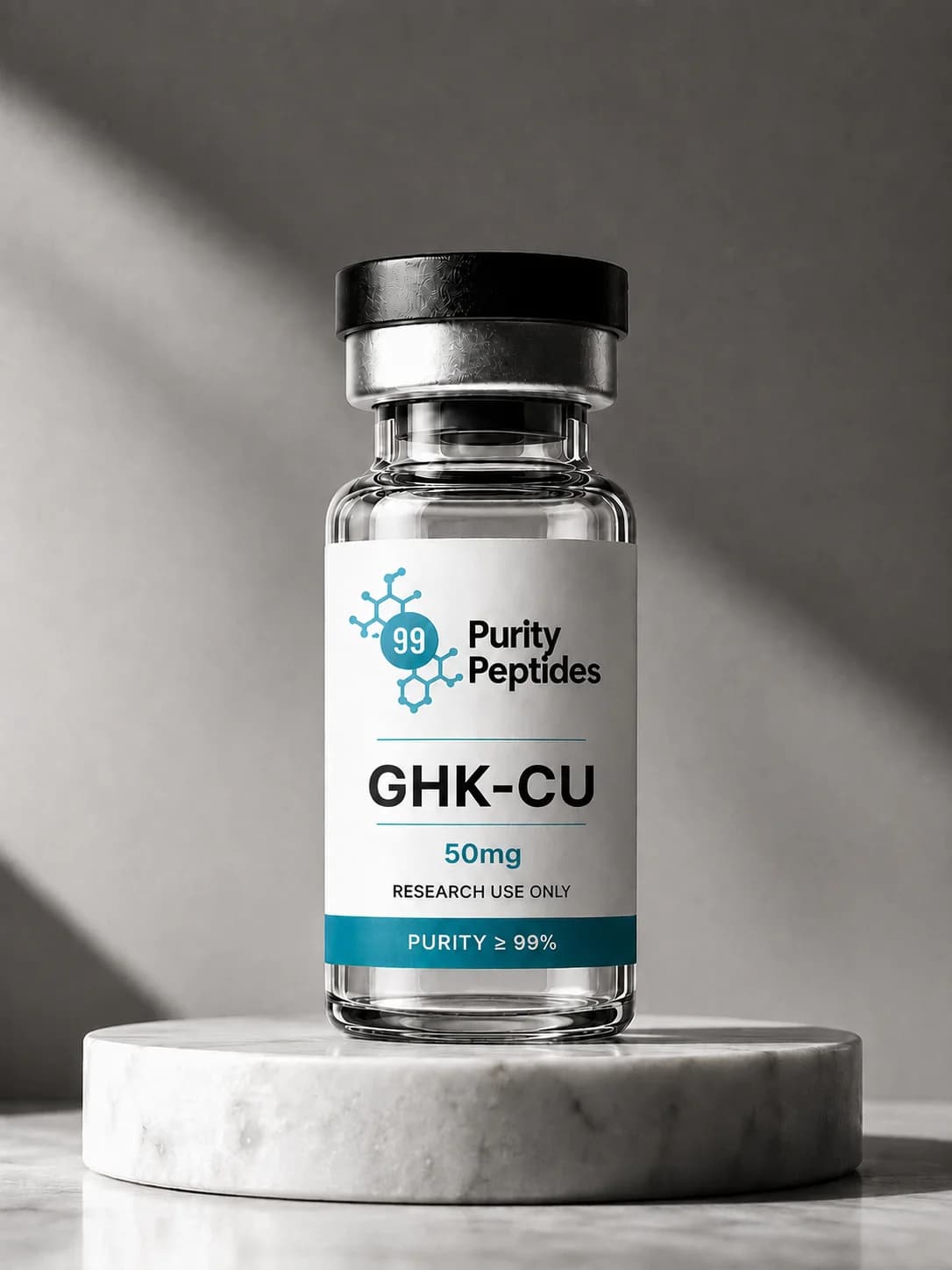
GHK-Cu

4.8 (8 Reviews)
$49.99
Certificado de Análisis50mg · Lote FLL-0629

GHK-Cu 50mg is a research-grade copper-binding tripeptide complex (Glycyl-L-Histidyl-L-Lysine Copper) developed for laboratory investigations involving extracellular matrix biology, copper transport mechanisms, cellular signaling, tissue remodeling, and molecular biology. Every batch undergoes comprehensive analytical verification to ensure purity, consistency, and reproducibility for advanced peptide chemistry, biochemistry, and regenerative biology research.

Seleccionar Tamaño50mg Single
Single Vials
Multi-Kits (Best Value)
In StockEnvío estándar gratis en pedidos de más de $300
1
Guaranteed Safe Checkout
Pay
Pay
PayPal
Zelle
VISA
AMEX
mastercard
+ more
Envío Rápido
99% Pureza
Probado por Terceros
Garantizado
99.9
Perfil del Compuesto

La
Ciencia.

Descargar Certificado
50mg · Lote FLL-0629

≥99%

Certificado por HPLC

Pureza Verificada

Terceros

Análisis independiente

Probado en Laboratorio

Investigación

El más alto estándar

Calidad de Grado

COA

Trazabilidad completa

Documentado
GHK-Cu
Product Profile

Overview

GHK-Cu 50mg is an investigational research-grade copper peptide complex consisting of the naturally occurring tripeptide Glycyl-L-Histidyl-L-Lysine (GHK) complexed with copper ions (Cu²⁺). Researchers investigate GHK-Cu because of its association with copper homeostasis, extracellular matrix biology, collagen-related molecular pathways, cellular communication, tissue remodeling mechanisms, and peptide-mediated signaling. It remains one of the most extensively investigated copper-binding peptides in molecular biology, peptide chemistry, biomaterials research, and regenerative biology.

GHK-Cu 50mg is a research-grade copper-binding tripeptide complex developed for laboratory investigations involving extracellular matrix biology, copper transport mechanisms, peptide-mediated cellular signaling, tissue remodeling, molecular biochemistry, and regenerative biology. The peptide consists of the naturally occurring tripeptide Glycyl-L-Histidyl-L-Lysine (GHK) coordinated with a copper ion (Cu²⁺), forming a stable complex widely investigated for its biochemical properties and molecular interactions. Since its initial identification in human plasma, GHK-Cu has become one of the most extensively studied copper peptides within peptide biology and regenerative science.

One of the defining characteristics of GHK-Cu research is its relationship with copper homeostasis and copper-dependent biological systems. Researchers investigate how GHK-Cu facilitates copper transport, regulates metal ion availability, and participates in intracellular biochemical processes involving metalloproteins and enzyme activity. These investigations continue expanding scientific understanding of trace element biology without implying approved therapeutic outcomes.

Scientific investigations also focus extensively on extracellular matrix (ECM) biology. Laboratory studies evaluate GHK-Cu interactions with molecular systems associated with extracellular matrix organization, collagen-related pathways, elastin biology, glycosaminoglycan regulation, matrix remodeling, and coordinated cellular communication. Researchers continue investigating these mechanisms to better understand connective tissue biology within controlled laboratory environments.

Another major area of investigation involves cellular signaling and molecular communication. Researchers examine peptide-mediated signaling involving growth factor regulation, intracellular messenger systems, transcriptional activity, protein expression, and coordinated biochemical adaptation. These investigations contribute to expanding knowledge of peptide biology while maintaining an exclusive Research Use Only designation.

Current laboratory investigations further evaluate intracellular signaling involving TGF-β, MAPK/ERK, PI3K/Akt, NF-κB, matrix metalloproteinases (MMPs), tissue inhibitors of metalloproteinases (TIMPs), copper-dependent enzymes, and additional molecular pathways associated with extracellular matrix regulation and cellular remodeling. Researchers investigate these pathways to better understand peptide-mediated biochemical communication and tissue biology.

Comparative peptide research represents another major area of scientific interest. Researchers frequently compare GHK-Cu with BPC-157, TB-500, Glutathione, MOTS-c, and other investigational compounds to evaluate differences in molecular signaling, copper-binding characteristics, extracellular matrix interactions, biochemical stability, and laboratory applications. Comparative investigations continue expanding scientific understanding of peptide pharmacology and regenerative biology.

The 50mg presentation is particularly appropriate for institutional laboratory research, large-scale extracellular matrix investigations, extended peptide interaction studies, analytical validation, biomarker discovery, comparative peptide pharmacology, high-throughput biochemical screening, and collaborative scientific initiatives requiring larger quantities of research-grade investigational material. Although the presentation size differs from lower-strength offerings, the molecular identity, manufacturing process, analytical quality standards, and intended research applications remain consistent throughout the GHK-Cu product family.

Beyond extracellular matrix investigations, GHK-Cu serves as an important analytical reference material within peptide chemistry, analytical chemistry, molecular biology, metalloprotein research, biomaterials science, biomarker discovery, analytical method development, systems biology, and cellular physiology. Its reproducible analytical profile makes it valuable for laboratories investigating copper-peptide interactions and molecular signaling networks.

Each batch of GHK-Cu 50mg is manufactured according to research-grade production standards and undergoes comprehensive analytical verification before release. Quality assurance procedures include High-Performance Liquid Chromatography (HPLC) purity analysis, molecular identity confirmation, peptide sequence verification, copper complex validation, molecular weight characterization, and rigorous batch-specific quality control testing. These analytical measures support reproducibility, consistency, and confidence across independent laboratory investigations.

To preserve molecular integrity, GHK-Cu should be stored according to accepted laboratory recommendations for lyophilized peptides. Appropriate storage conditions, controlled handling practices, and adherence to established laboratory protocols help maintain peptide stability before analytical evaluation and experimental preparation.

Although GHK-Cu remains one of the most extensively investigated copper-binding peptides, ongoing scientific research continues exploring extracellular matrix biology, copper transport, cellular signaling, matrix remodeling, metalloprotein regulation, and comparative peptide biology. Consequently, GHK-Cu 50mg should be regarded exclusively as an investigational research peptide intended to support laboratory research and scientific discovery.

GHK-Cu 50mg is supplied exclusively for laboratory research and analytical applications. This product is intended for Research Use Only (RUO) and is not approved for human consumption, therapeutic use, veterinary applications, or diagnostic purposes.

Aviso de InvestigaciónTodos los productos de cada categoría son únicamente para uso en investigación y no aptos para uso humano o veterinario, diagnóstico o tratamiento.
Sigue Explorando

También Considerado.

AHK-Cu

RESEARCH PEPTIDE

Buy AHK-Cu 50mg and 100mg research-grade copper peptide. Studied for copper peptide signaling, extracellular matrix research, and cellular communication pathways. Laboratory use only.

AHK-Cu
From
$49.99

Snap-8

RESEARCH PEPTIDE

Buy research-grade SNAP-8 10mg,20mg (3ML). Acetyl Octapeptide-3 studied for SNARE complex and neurotransmitter research. Laboratory use only.

Snap-8
From
$44.99
Customer Reviews
4.8
8 Reviews
5
6
4
2
3
0
2
0
1
0
8 Reviews
Amanda Price
August 25, 2026

Ordered as part of a larger order and everything shipped in one secure package. Vials were individually wrapped and the checkout process on the site is fast. Tracking updated reliably. Really good supplier.

Jonathan Wade
August 21, 2026

Second time ordering GHK-Cu and the experience has been the same both times. Fast shipping, vial arrives sealed. Product page is informative and documentation is current. Happy with the consistency.

Sheila Brandt
August 18, 2026

Solid order. Vial came in perfect condition, sealed and labeled clearly. No damage. Shipping took 4 days which is fine. Product specs on the site are clear. Would definitely order again.

Ivan Petrov
July 8, 2026

GHK-Cu from 99 Purity has been a consistent part of my orders. Every time the vial arrives sealed and in perfect condition. Product page is detailed, purity listed clearly, COA linked. Fast shipping. One of the better suppliers out there.

Marcus Ellis
June 4, 2026

Really impressed with the quality control here. Vial was sealed properly, label was clean, compound specs matched what's on the product page. COA is easy to pull up. Good all around.
Educación e Investigación

Más Información.

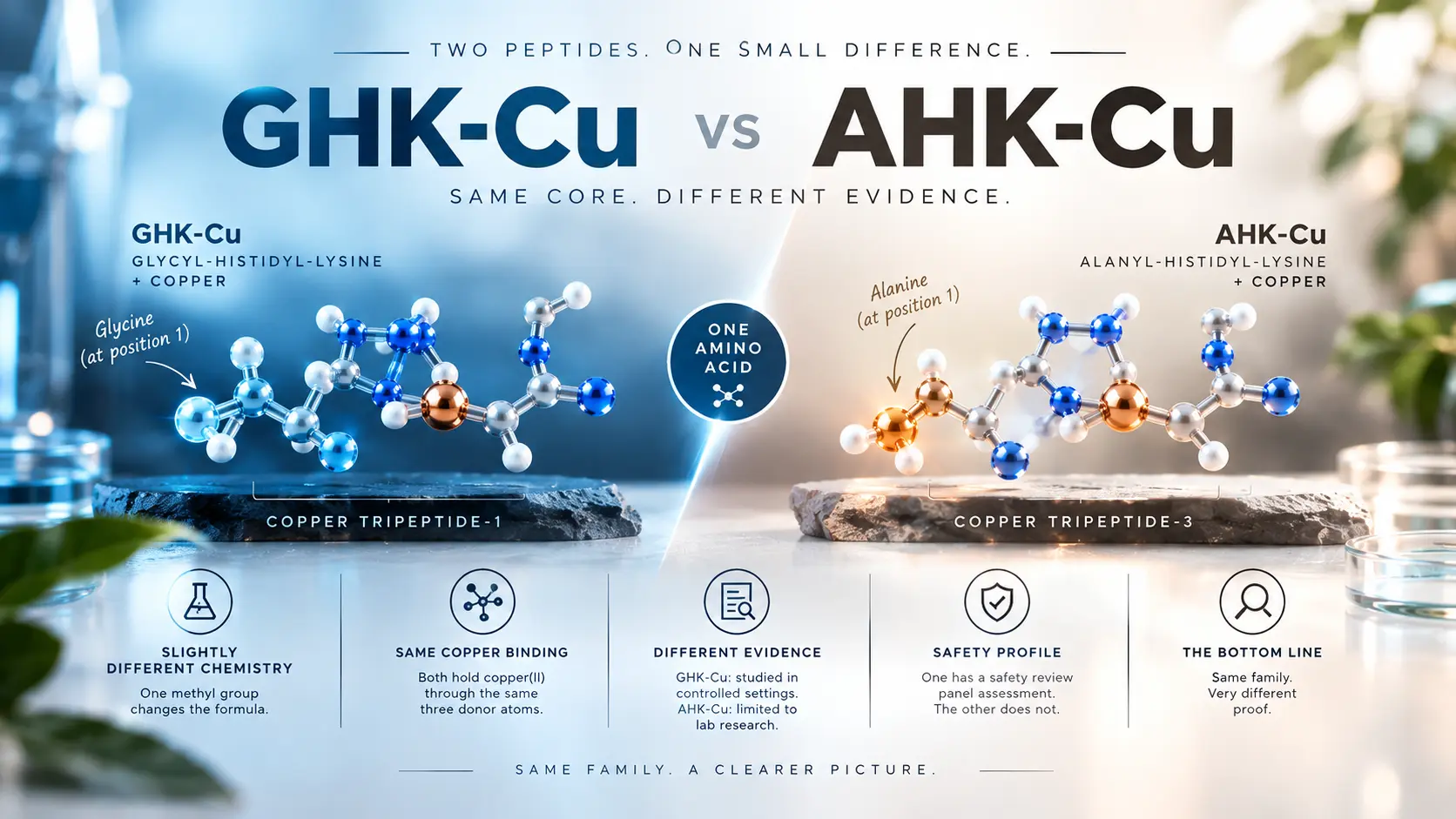
GHK-Cu vs AHK-Cu: un aminoácido, dos bases de evidencia muy distintas
Product Guides
Sep 12, 20265 min read

GHK-Cu vs AHK-Cu: un aminoácido, dos bases de evidencia muy distintas

GHK-Cu vs AHK-Cu: los separa un grupo metilo, pero no un mismo nivel de evidencia. Comparación con fuentes de la química, los ensayos y el marketing.

Cómo saber si un péptido está en mal estado: paquete tibio, turbidez y apelmazamiento
Product Guides
Sep 11, 20265 min read

Cómo saber si un péptido está en mal estado: paquete tibio, turbidez y apelmazamiento

Cómo saber si un péptido está en mal estado: guía de laboratorio sobre paquetes tibios, soluciones turbias, pastilla apelmazada y lo que el ojo no detecta.
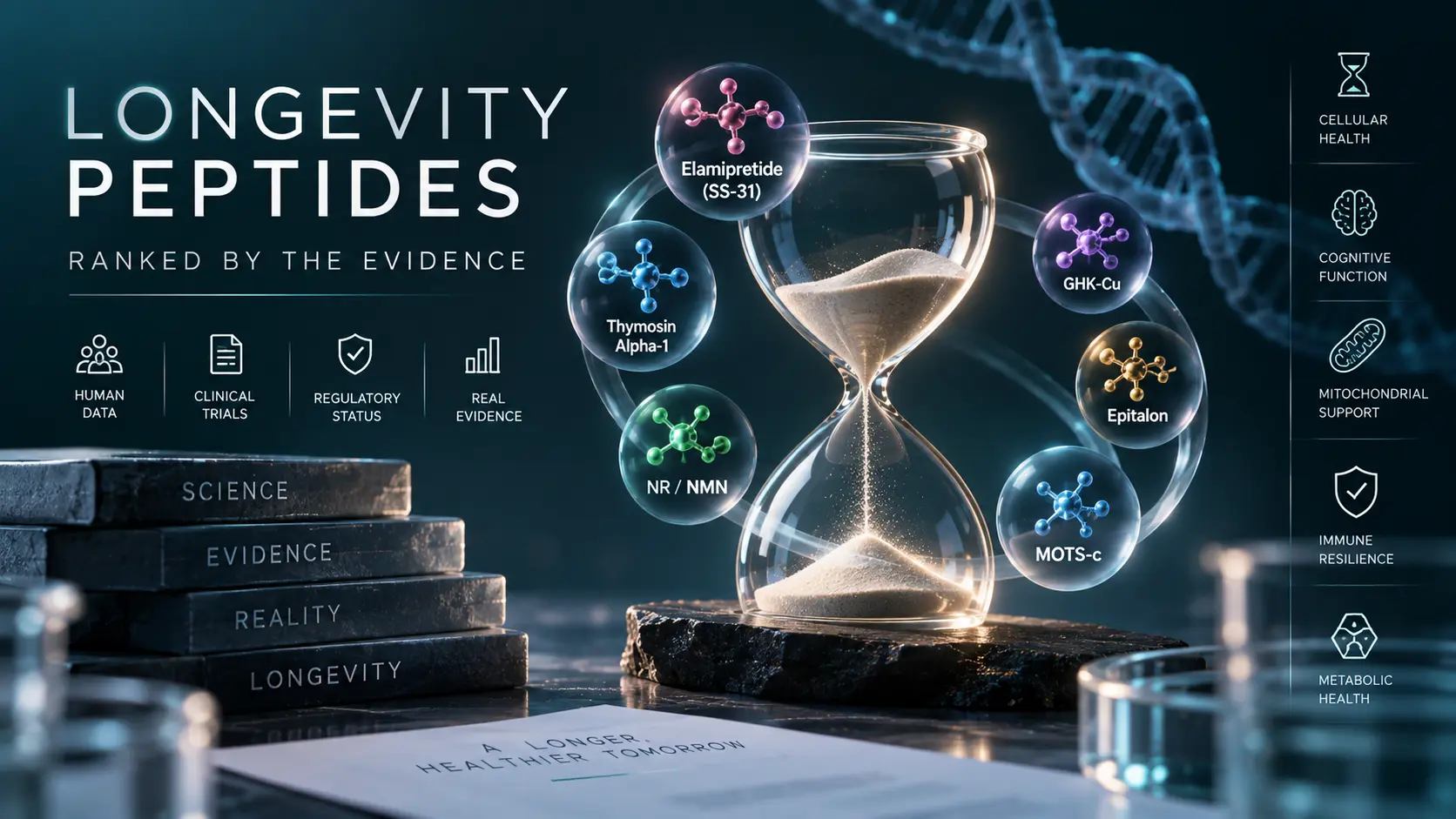
Los mejores péptidos para la longevidad, clasificados según la evidencia
Product Guides
Sep 9, 20265 min read

Los mejores péptidos para la longevidad, clasificados según la evidencia

Ranking de los mejores péptidos para la longevidad por nivel de evidencia en humanos, con ensayos fallidos, correcciones y datos regulatorios de cada uno.

READ

(preguntas frecuentes)

Preguntas Frecuentes

01

What is GHK-Cu 50mg?

GHK-Cu 50mg is a research-grade copper-binding tripeptide complex (Glycyl-L-Histidyl-L-Lysine Copper) investigated for extracellular matrix biology, copper homeostasis, cellular signaling, and molecular biology research.
02

Which biological systems are commonly investigated with GHK-Cu?

Researchers commonly investigate GHK-Cu in studies involving extracellular matrix regulation, copper transport, metalloprotein biology, connective tissue biology, peptide signaling, and cellular communication.
03

Which intracellular signaling pathways are associated with GHK-Cu research?

Laboratory investigations commonly evaluate TGF-β, MAPK/ERK, PI3K/Akt, NF-κB, matrix metalloproteinases (MMPs), TIMPs, and copper-dependent enzyme systems associated with extracellular matrix regulation.
04

Why is GHK-Cu widely studied in peptide biology research?

GHK-Cu is one of the most extensively investigated naturally occurring copper-binding peptides because of its unique ability to coordinate copper ions while participating in peptide-mediated cellular communication and extracellular matrix biology.
05

Which scientific disciplines commonly investigate GHK-Cu?

GHK-Cu is widely studied in peptide chemistry, molecular biology, regenerative biology, biomaterials science, metalloprotein research, analytical chemistry, biochemistry, cellular physiology, and systems biology.
06

What analytical testing is performed before release?

Every production batch undergoes HPLC purity testing, peptide identity verification, amino acid sequence confirmation, copper complex validation, molecular weight characterization, and comprehensive batch-specific quality control procedures.
07

What laboratory investigations commonly include GHK-Cu?

Researchers utilize GHK-Cu in extracellular matrix investigations, metalloprotein research, peptide interaction studies, biomarker discovery, analytical chemistry, assay development, biomaterials research, and systems biology.
08

How should GHK-Cu be stored?

GHK-Cu should be stored according to accepted laboratory recommendations for lyophilized peptides to help preserve molecular integrity before analytical or experimental use.
09

Is GHK-Cu commonly compared with other regenerative research peptides?

Yes. Comparative investigations commonly include BPC-157, TB-500, Glutathione, MOTS-c, and additional regenerative research compounds to evaluate molecular signaling, extracellular matrix interactions, biochemical characteristics, and laboratory applications.
10

What distinguishes GHK-Cu from other research peptides?

Researchers investigate GHK-Cu because of its copper-binding properties, naturally occurring tripeptide structure, and extensive association with extracellular matrix biology, metalloprotein regulation, and peptide-mediated cellular signaling.
11

Is GHK-Cu approved for therapeutic or diagnostic use?

No. The GHK-Cu 50mg product supplied by 99 Purity Peptides is intended strictly for Research Use Only (RUO) and is not approved for human consumption, therapeutic use, diagnostic procedures, or veterinary applications.
12

How is research-grade consistency maintained?

Research-grade consistency is achieved through standardized peptide synthesis, copper complex verification, HPLC purity testing, molecular identity confirmation, batch-specific quality control, and comprehensive analytical documentation.
13

What distinguishes the 50mg presentation?

The 50mg presentation provides a larger quantity of investigational material for institutional laboratory research, extended extracellular matrix investigations, high-throughput analytical validation, comparative peptide research, and collaborative scientific studies, while maintaining identical molecular identity and analytical quality standards.
14

How does GHK-Cu differ from BPC-157 in research?

Although both compounds are frequently investigated within regenerative biology, researchers compare GHK-Cu and BPC-157 to evaluate differences in copper-binding activity, extracellular matrix regulation, molecular signaling pathways, peptide structure, and laboratory applications.
15

Why does GHK-Cu continue to generate scientific interest?

Its unique association with copper homeostasis, extracellular matrix biology, metalloprotein regulation, cellular signaling, and peptide-mediated molecular communication has established GHK-Cu as one of the most extensively investigated copper peptides in modern laboratory research.