Research Use Only Retatrutide is an investigational compound supplied strictly for laboratory research. It is not approved for human or veterinary use, and nothing on this page is medical advice or a dosing protocol. |
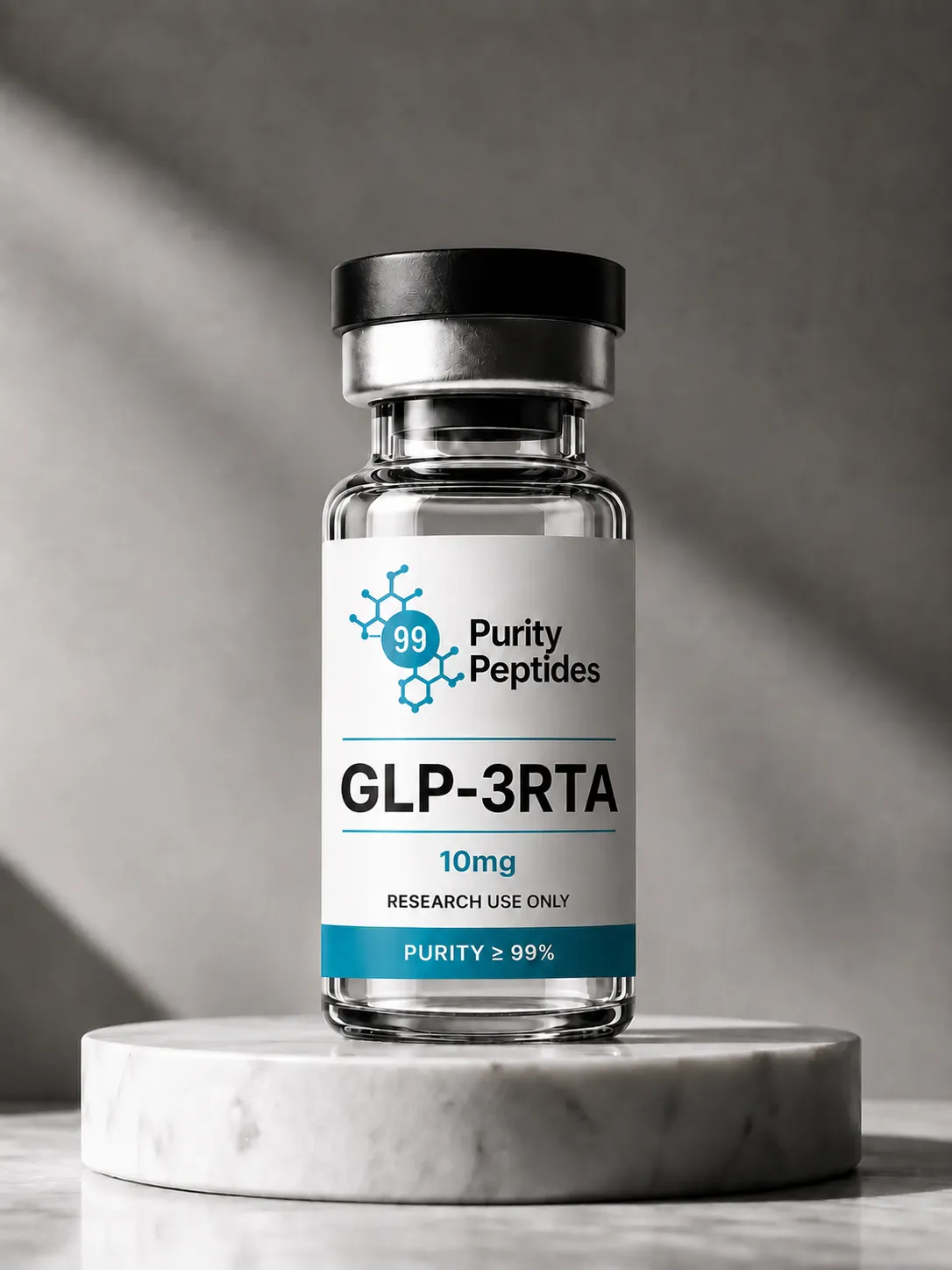
Retatrutide (development code LY3437943, commonly abbreviated "reta") is an investigational peptide that acts as an agonist at three receptors: GLP-1, GIP and glucagon. It is not an approved medicine in any major jurisdiction and is supplied here as a research-use-only material. Preclinical mouse studies have reported reduced tumor growth in pancreatic, lung, and breast cancer models. No clinical evidence in humans establishes that retatrutide treats, prevents, or causes cancer. |
Does Retatrutide Kill Cancer Cells? Quick Answer
Not in the way the phrasing implies. Mouse studies have reported substantially reduced tumor growth, but the mechanism described in that work is largely indirect — altering the metabolic and immune environment around tumors rather than acting directly on cancer cells. These are animal findings. No human trial has tested retatrutide as a cancer treatment.
Is Retatrutide Linked to Cancer? Quick Answer
No human study has linked retatrutide to cancer. The concern usually originates from the GLP-1 drug class, where rodent studies produced thyroid C-cell tumors, prompting an FDA boxed warning on approved GLP-1 medicines. Large human cohort studies have mostly not found a corresponding increase, though the question is not fully closed.
Key Takeaways
- Retatrutide is investigational. As of this writing it is not approved by the FDA or EMA for any indication, including obesity.
- A 2025 mouse study reported a 14-fold reduction in pancreatic tumor volume and a 17-fold reduction in lung tumor volume versus controls. (Mouse model finding.)
- The anti-tumor effect in that study persisted after the compound was withdrawn and the mice regained weight — suggesting the effect was not purely a consequence of weight loss. (Mouse model finding.)
- No human trial has evaluated retatrutide in cancer. Every figure above comes from mice.
- The safety concern people ask about is a class-level issue inherited from rodent thyroid findings in GLP-1 drugs. Human evidence is largely, but not entirely, reassuring — and none of it is specific to retatrutide.
What Is Retatrutide?
Retatrutide, developed by Eli Lilly under the code LY3437943, is a synthetic peptide that activates three metabolic receptors simultaneously: the GLP-1 receptor, the GIP receptor, and the glucagon receptor. Most incretin compounds act on one or two. Semaglutide targets GLP-1 alone; tirzepatide targets GLP-1 and GIP. Retatrutide adds glucagon receptor agonism to both — see our retatrutide mechanism comparison for the full receptor breakdown.
In research and community discussion it is very often shortened to "reta" — a useful thing to know, since a large share of the questions asked about this compound use the abbreviation rather than the full name.
Development Status
Retatrutide is not FDA approved and not EMA approved. It remains an investigational compound in Eli Lilly's Phase 3 program. The published foundational human data is the Phase 2 trial reported in the New England Journal of Medicine in 2023. Since then, several Phase 3 readouts have been reported, with additional readouts outstanding and a regulatory submission publicly anticipated but not, at the time of writing, completed.
None of these trials studied cancer as an endpoint. They studied weight, glycemic control, and condition-specific outcomes in obesity, type 2 diabetes, sleep apnea, and osteoarthritis populations.
Why this matters for the cancer question: a compound with no completed regulatory submission has, by definition, no long-term human outcome data. Cancer incidence signals typically require years of follow-up to detect. That data does not yet exist for retatrutide.
Does Retatrutide Kill Cancer Cells?
The honest answer: mouse studies report large reductions in tumor growth, but the mechanism described is mostly indirect, and no human evidence exists.
The phrase "kill cancer cells" implies direct cytotoxicity — a compound attacking tumor cells the way chemotherapy does. That is not what the published research describes.
The Pancreatic and Lung Cancer Study (Marathe et al., 2025)
The most substantial study to date came from Sandesh Marathe and colleagues in the Makowski Lab at the University of Tennessee Health Science Center, published in npj Metabolic Health and Disease in March 2025.
The design: mice were made obese on a high-fat diet, then assigned to receive retatrutide, semaglutide, calorie restriction matched to the semaglutide weight loss, or a vehicle control. Cancer cells were then implanted, and pancreatic ductal adenocarcinoma and lung adenocarcinoma endpoints were tracked.
Outcome | Retatrutide | Semaglutide | Model |
|---|---|---|---|
Pancreatic tumor volume vs control | 14-fold reduction | 4-fold reduction | PDAC |
Lung tumor engraftment | ~50% reduced | — | Lung adenocarcinoma |
Lung tumor volume vs control | 17-fold reduction | — | Lung adenocarcinoma |
Tumor onset | Significantly delayed | — | Both |
Two details in that study matter more than the headline numbers.
First, the effect persisted after withdrawal. One arm received retatrutide, then had it withdrawn, and regained weight. The anti-tumor benefit was still present. That is difficult to explain as a simple consequence of being thinner.
Second, the proposed mechanism is immunological, not cytotoxic. The authors describe systemic and tumor-microenvironment immune reprogramming — increased antigen-presenting cells, reduced immunosuppressive cell populations, and altered circulating signaling. On that account retatrutide is not killing cancer cells. It is changing the conditions around them.
The Breast Cancer Study (Cui et al., 2025)
An independent group, publishing in Advanced Science, examined triple-negative breast cancer in obese mice and described a different mechanism entirely: obesity-driven metabolic dysfunction increases activity in the hexosamine biosynthesis pathway, which stabilizes the YAP protein and contributes to chemotherapy resistance. In their models, retatrutide reduced that pathway's activity, lowered YAP levels, decreased tumor size, and improved chemotherapy efficacy — most markedly in obese animals.
That two unrelated research groups, using different cancers and different mechanistic frameworks, both reported tumor suppression is the most substantive thing about this evidence base. Independent convergence is worth more than any single fold-change figure.
Did the Effect Depend on Weight Loss?
This is the most-asked follow-up, and there is a partial answer. A 2025 conference abstract from the same Tennessee group, presented in the Journal for ImmunoTherapy of Cancer, tested low-dose retatrutide against anti-PD-1 immunotherapy in a pancreatic cancer mouse model. Body weight stayed stable across groups, and tumor volume still fell roughly three-fold with retatrutide alone. Anti-PD-1 produced a larger reduction; combining the two did not clearly beat either on its own.
This was a conference abstract, not a full peer-reviewed paper. Abstracts report preliminary findings that sometimes change substantially before publication. Treat it as suggestive, not settled.
Why None of This Establishes an Anticancer Effect in Humans
Mouse tumor models are engineered systems. Cells are implanted rather than arising spontaneously; the immune context is standardized; doses are scaled to mouse metabolism; and follow-up is weeks rather than years. Compounds that suppress tumors dramatically in these models routinely fail in human trials — this is one of the most consistent patterns in oncology drug development, not an occasional disappointment.
No published clinical trial has evaluated retatrutide as a treatment for any cancer. Anyone telling you otherwise is describing mouse data without saying so.
Is Retatrutide Linked to Cancer?
No human study has linked retatrutide specifically to cancer. The concern is inherited from the GLP-1 class.
This is the other half of what people are actually asking, and it deserves an answer as thorough as the first.
Where the Concern Comes From: Rodent Thyroid Findings
Approved GLP-1 medicines carry an FDA boxed warning against use in people with a personal or family history of medullary thyroid carcinoma (MTC) or MEN2 syndrome. That warning exists because long-term rodent studies found that GLP-1 receptor agonists produced thyroid C-cell hyperplasia and tumors in a dose- and duration-dependent way.
Why Rodent Findings May Not Translate
GLP-1 receptor expression in thyroid C-cells is substantially higher in rodents than in humans, and downstream signaling differs between species. Rodent studies also used high doses over long durations. Human calcitonin monitoring — calcitonin being the marker of C-cell activity — has not shown the sustained elevation the rodent mechanism would predict.
What Human Studies Have Found
Large national-registry cohorts, including a Scandinavian study published in the BMJ in 2024 and an international multisite cohort published in Thyroid in 2025, have generally not found the increase in thyroid cancer that the rodent data raised concern about. A 2026 pooled analysis of trial-program data reported small absolute numbers of thyroid cancer events and attributed much of the apparent difference to detection bias — people starting these medicines are monitored more closely, so pre-existing nodules get found that would otherwise have gone undetected.
Not every analysis agrees. A 2026 study in Head & Neck integrated the SEER cancer registry with the FDA's adverse event reporting system across more than 109,000 GLP-1 users and found a higher reporting proportion for medullary thyroid carcinoma than for comparator drug classes. The authors called for prospective studies. Pharmacovigilance databases have well-known limitations — reporting is voluntary and shaped by publicity — but the honest summary is that the question is not fully closed.
What This Means for Retatrutide Specifically
Every study above concerns approved GLP-1 medicines. None of them studied retatrutide. Retatrutide adds GIP and glucagon receptor agonism, and no long-term human cancer surveillance data exists for it, because it has not been on the market. Its Phase 3 trials have reported adverse events relevant to their endpoints, but cancer incidence over years is not something a two-year trial is designed to detect.
The accurate statement is not "retatrutide is safe" and not "retatrutide causes cancer." It is: the data that would answer this question does not yet exist.
Does Retatrutide Prevent Cancer? The Obesity Connection
There is a real, well-established link between obesity and cancer risk — but that is a statement about body weight, not about any specific compound.
Obesity as an Established Risk Factor
The National Cancer Institute identifies obesity as a risk factor for a substantial number of cancer types, including several of those studied in the retatrutide research — pancreatic, breast, and others. This relationship is supported by large-scale human epidemiology and is not in serious scientific dispute.
Why That Does Not Translate Into a Claim About Retatrutide
It is reasonable to hypothesize that a compound producing substantial weight loss might reduce obesity-associated cancer risk over time. It is not reasonable to state it as fact. Demonstrating it would require large, long-duration human outcome trials with cancer incidence as a prespecified endpoint. No such trial has reported for retatrutide — see our retatrutide weight-loss comparison for what the trial data does show on the metabolic side.
There is also a complication worth stating: the Marathe findings persisted after weight regain, and the immunotherapy-comparison abstract found effects at stable body weight. If the mechanism is not primarily weight-mediated, then reasoning from "weight loss reduces cancer risk" does not straightforwardly apply either. The mechanistic picture is genuinely unresolved.
How to Read Research Like This
Understanding which tier a finding sits in is the most useful skill for interpreting claims about this compound.
Tier | What It Can Tell You | What It Cannot |
|---|---|---|
Cell / mechanism | A pathway exists and can be modulated | Whether that matters in a living organism |
Mouse model | The compound affects tumors in an engineered system | Whether humans respond the same way |
Human trial | Effect on a measured endpoint in people | Anything about endpoints it did not measure |
Human observational | Associations in real-world populations | Causation; vulnerable to bias and confounding |
What would be required to establish retatrutide as a cancer therapy:
- Reproducible preclinical findings across multiple independent laboratories and model types
- A clear, characterized mechanism of action
- Phase 1 safety data in a cancer population specifically
- Phase 2 trials with prespecified tumor-response endpoints
- Randomized Phase 3 trials against standard of care
- Regulatory review and approval for an oncology indication
Retatrutide is at step one, and only for certain cancer types.
What We Don't Know
Stated plainly, because the gaps are the most important part of an honest review:
- Whether any of the mouse findings translate to humans at all
- Whether the immune-reprogramming mechanism operates in human tumor microenvironments
- Whether long-term retatrutide exposure carries any cancer risk, in either direction
- Whether the additional GIP and glucagon agonism changes the class-level thyroid picture
- Whether observed effects are weight-mediated, metabolically mediated, immunologically mediated, or some combination
- What happens across the multi-year timescales on which cancer risk is normally assessed
If you are reading this because you or someone close to you has cancer, or because you are worried about your own cancer risk, please speak with an oncologist or your physician. This page describes laboratory research in animals. It cannot tell you anything about your situation, and no one should make a health decision on the basis of a mouse study.
Conclusion
The preclinical retatrutide cancer literature is genuinely interesting. Two independent groups, three cancer models, effects that persisted after withdrawal, and a proposed immunological mechanism that is more sophisticated than "weight loss helps." For researchers studying the intersection of metabolic signaling and tumor biology, this is a real line of inquiry.
It is also entirely preclinical. The large fold-change figures circulating online come from mice, and the pages reporting them as breakthroughs generally omit that. Retatrutide is not approved for anything, has never been tested against cancer in a human trial, and has no long-term human safety record in either direction.
Both of those things are true at once, and a reader is better served by holding both than by either headline alone.
A Note on This Article This page summarizes findings from published preclinical and observational research for general research and educational purposes. We compile information from multiple peer-reviewed and regulatory sources, but research in this area is evolving quickly and individual studies can be revised, retracted, or superseded. This is not medical advice and should not be treated as a substitute for consulting a qualified physician or oncologist. Please do your own research, verify claims against the primary sources, and speak with a medical professional about any personal health questions. |
Frequently Asked Questions
Does retatrutide kill cancer cells?
Not directly, based on published research. Mouse studies report large reductions in tumor growth, but the described mechanism is indirect — altering the immune and metabolic environment around tumors rather than attacking cancer cells directly. These findings come from animal models only. No human trial has tested retatrutide as a cancer treatment.
Does reta kill cancer cells?
"Reta" is the common abbreviation for retatrutide. In mouse studies it reduced tumor volume substantially in pancreatic and lung cancer models, apparently by reprogramming the immune environment rather than by direct cytotoxicity. All of this is animal data. Nothing has been demonstrated in humans.
Does retatrutide cause cancer?
No study has shown that retatrutide causes cancer. No long-term human data exists for it at all, because it is investigational and not on the market. Related GLP-1 medicines carry a thyroid warning based on rodent studies, but that warning concerns other compounds and human evidence has been largely reassuring.
Is retatrutide linked to cancer?
No human study has linked retatrutide to cancer. The concern generally comes from the wider GLP-1 class, where rodent studies produced thyroid C-cell tumors. Large human cohort studies have mostly not found a matching increase, although at least one 2026 pharmacovigilance analysis reported a signal warranting further study.
Does retatrutide prevent cancer?
This has not been demonstrated in humans. Obesity is an established risk factor for several cancers, so weight loss plausibly affects risk over time, but no trial has tested whether retatrutide reduces cancer incidence. Mouse studies showed reduced tumor development, which is not the same claim.
Can retatrutide shrink tumors?
In mouse models, yes — substantially. A 2025 study reported a fourteen-fold reduction in pancreatic tumor volume and a seventeen-fold reduction in lung tumor volume compared with untreated controls. These are engineered animal systems. No human tumor-response data exists for retatrutide.
Does retatrutide cure cancer?
No. Retatrutide has never been tested as a cancer treatment in humans, is not approved for any indication, and no evidence supports it curing any cancer. Content suggesting otherwise is describing mouse studies without saying so. Anyone facing a cancer diagnosis should speak with an oncologist.
Has retatrutide been tested against cancer in humans?
No. Its clinical trial program studies obesity, type 2 diabetes, sleep apnea, and osteoarthritis populations, with endpoints around weight and glycemic control. Cancer has not been a study endpoint. All cancer-related findings for retatrutide come from animal and laboratory research.
What preclinical cancer research exists on retatrutide?
Three main sources: a 2025 study in npj Metabolic Health and Disease covering pancreatic and lung cancer models, a 2025 Advanced Science study on triple-negative breast cancer and chemotherapy resistance, and a 2025 conference abstract comparing retatrutide with anti-PD-1 immunotherapy in pancreatic cancer.
What did the Marathe study find?
Researchers at the University of Tennessee Health Science Center gave obese mice retatrutide, semaglutide, calorie restriction, or a control, then implanted cancer cells. Retatrutide-treated mice showed a fourteen-fold reduction in pancreatic tumor volume versus a fourfold reduction with semaglutide, plus delayed onset and reduced engraftment in a lung cancer model.
Did the anti-tumor effect persist after stopping retatrutide?
In the 2025 mouse study, yes. One group had retatrutide withdrawn and regained weight, but the anti-tumor benefit remained. This is notable because it suggests the effect was not simply a consequence of the animals being lighter. It has not been examined in humans.
Did the effect depend on weight loss?
Apparently not entirely. A 2025 conference abstract tested low-dose retatrutide in pancreatic cancer mice while body weight stayed stable, and still observed roughly a threefold reduction in tumor volume. As a conference abstract rather than a full paper, this finding should be treated as preliminary.
How does retatrutide compare with semaglutide in cancer models?
In the same 2025 mouse study, retatrutide produced a fourteen-fold reduction in pancreatic tumor volume against a fourfold reduction for semaglutide. Researchers have suggested the difference may relate to retatrutide's additional GIP and glucagon receptor activity, but the mechanism behind the gap has not been established.
Do GLP-1 receptor agonists cause cancer?
Human evidence has largely not supported this. Large registry cohorts and pooled trial analyses have generally found no meaningful increase in overall cancer risk. Some apparent associations appear explainable by detection bias from increased medical monitoring. A minority of analyses report signals that researchers say warrant prospective investigation.
Why do GLP-1 medicines carry a thyroid tumor warning?
Long-term rodent studies found that GLP-1 receptor agonists caused thyroid C-cell hyperplasia and tumors, including medullary thyroid carcinoma, at high doses over extended periods. The FDA applied a boxed warning contraindicating use in people with a personal or family history of medullary thyroid carcinoma or MEN2 syndrome.
Do the rodent thyroid findings apply to humans?
The evidence suggests substantial species differences. GLP-1 receptor expression in thyroid C-cells is considerably higher in rodents than in humans, and downstream signaling differs. Human calcitonin monitoring has not shown the sustained changes the rodent mechanism would predict. The warning nonetheless remains in place as a precaution.
What is medullary thyroid carcinoma?
Medullary thyroid carcinoma is an uncommon thyroid cancer arising from calcitonin-producing C-cells, accounting for a small fraction of thyroid cancers overall. It is the specific cancer named in the GLP-1 class boxed warning, distinct from the far more common papillary and follicular thyroid cancers.
Is retatrutide FDA approved?
No. Retatrutide is investigational and not approved by the FDA or the EMA for any indication. It remains in Phase 3 clinical development. It cannot be legally prescribed or sold as a medicine, and it is supplied for research use only.
What stage of clinical development is retatrutide at?
Phase 3. Several trials in the program have reported results, with additional readouts remaining outstanding. None of these trials studied cancer as an endpoint.
What is a triple receptor agonist?
A triple receptor agonist activates three receptor targets at once. Retatrutide acts at the GLP-1, GIP, and glucagon receptors. By comparison, semaglutide targets GLP-1 alone and tirzepatide targets GLP-1 and GIP. The additional glucagon receptor activity is what distinguishes retatrutide within this class.
Does obesity increase cancer risk?
Yes. The National Cancer Institute identifies obesity as a risk factor for a substantial number of cancer types, supported by large-scale human epidemiology. This is a well-established relationship. It is a statement about body weight and metabolic health, however, not about any particular compound.
What does "preclinical" mean?
Preclinical research is conducted before human testing begins — typically in cell cultures and animal models. It can identify mechanisms and generate hypotheses, but cannot establish whether something works or is safe in people. Most compounds showing preclinical promise do not succeed in human trials.
Why can't mouse studies predict human outcomes?
Mouse tumor models use implanted cells in standardized immune contexts, with doses scaled to mouse metabolism and follow-up measured in weeks. Human cancers arise spontaneously in varied genetic and immune backgrounds over years. Compounds that dramatically suppress mouse tumors frequently show no benefit in human trials.
Who should I speak to about my cancer risk?
An oncologist, endocrinologist, or your primary care physician. They can assess your personal and family history, order appropriate testing, and interpret it in your context. This page describes laboratory research in animals and cannot tell you anything about your individual situation.