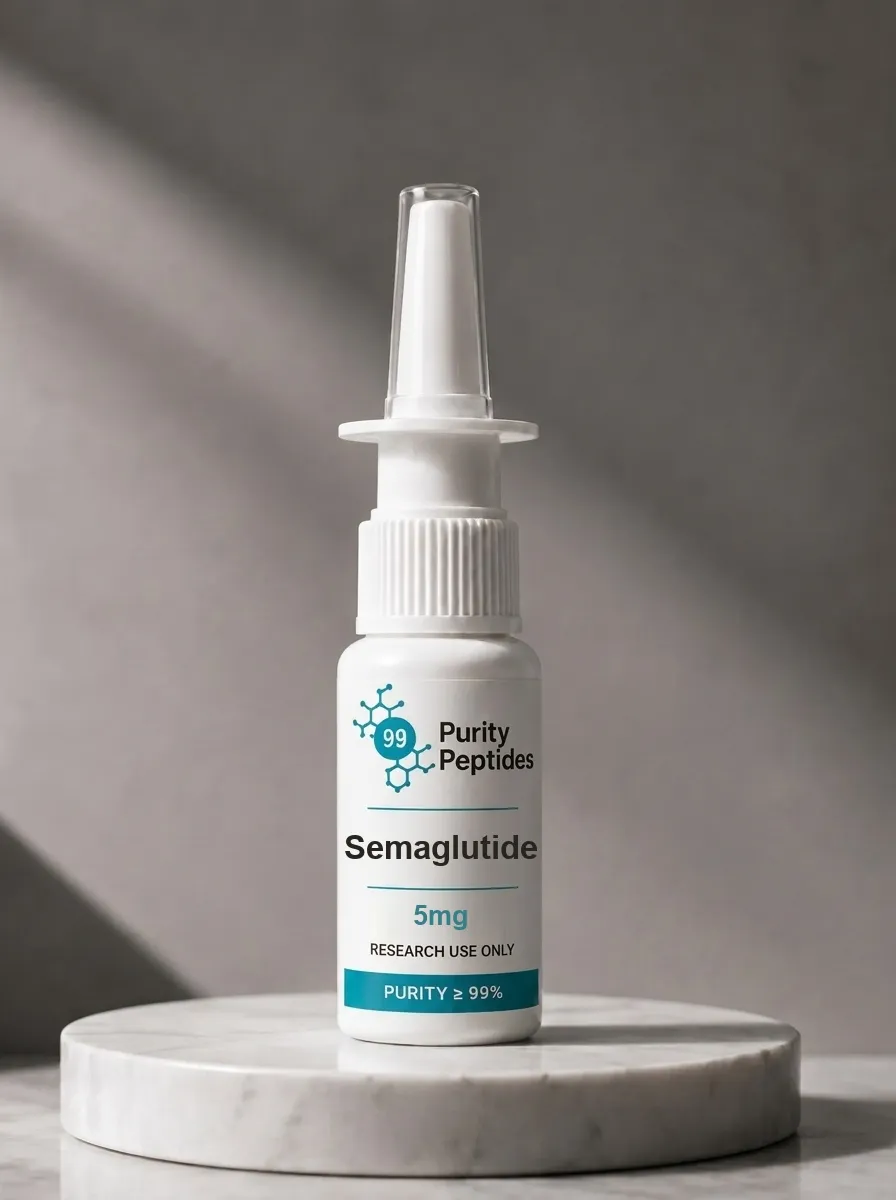
Semaglutide 5mg Spray is a research-grade formulation of semaglutide, a synthetic 34-amino acid glucagon-like peptide-1 (GLP-1) receptor agonist sharing 94% sequence homology with endogenous human GLP-1. Distinguished from native GLP-1 by three deliberate structural modifications — an alpha-aminoisobutyric acid (Aib) substitution at position 8 conferring dipeptidyl peptidase-4 (DPP-4) resistance, a C18 fatty diacid chain conjugated to lysine at position 26 via a hydrophilic spacer enabling albumin binding, and an arginine substitution at position 34 protecting acylation site integrity — semaglutide exhibits substantially extended pharmacokinetic stability relative to the native hormone. As a selective GLP-1 receptor (GLP-1R) agonist, it is investigated for its interaction with the Class B G-protein-coupled receptor signaling cascade, cAMP/PKA/Epac2-mediated intracellular pathways, and its role as a research model in comparative incretin pharmacology. Each batch is manufactured to research-grade standards and analytically verified to support reproducible scientific investigations.
HPLC certified
Independent analysis
Highest standard
Full traceability
Semaglutide 5mg Spray is a research-grade synthetic GLP-1 receptor agonist formulated for laboratory investigations examining Class B GPCR pharmacology, incretin signaling biology, pancreatic beta cell signaling pathways, and comparative metabolic peptide research. Semaglutide is a 34-amino acid peptide engineered to retain the GLP-1 receptor binding profile of endogenous glucagon-like peptide-1 while significantly extending molecular stability through three structural modifications. The Aib8 substitution renders the peptide resistant to dipeptidyl peptidase-4 (DPP-4) cleavage — the enzyme responsible for rapid native GLP-1 degradation in physiological conditions. The Lys26 acylation attaches a C18 fatty diacid side chain via a dual AEEA-glutamic acid hydrophilic linker, enabling tight and reversible non-covalent binding to human serum albumin (HSA) and leveraging the neonatal Fc receptor (FcRn)-mediated albumin recycling pathway to extend circulating half-life. The Arg34 substitution prevents off-target acylation by removing an alternative lysine attachment site. Together, these modifications produce a structurally defined GLP-1R agonist with an extended pharmacokinetic profile that makes it a valuable and extensively characterized model compound in incretin receptor biology and GPCR pharmacology research.
Researchers investigate Semaglutide 5mg Spray across multiple domains of laboratory science including GLP-1 receptor biology, Class B GPCR signaling, cAMP/PKA/Epac2 intracellular cascade research, glucose-dependent insulin secretory pathway studies, pancreatic beta cell biology, GLP-1R internalization and endosomal trafficking, albumin-mediated pharmacokinetic research, PDX-1 transcription factor biology, and comparative incretin pharmacology. Its selective GLP-1R agonist profile and well-characterized structural design make semaglutide one of the most actively studied incretin peptides in contemporary metabolic research and GPCR pharmacology. As scientific interest in multi-receptor incretin signaling systems continues to expand, semaglutide serves as the essential single-receptor reference compound against which dual and triple agonist peptides are evaluated in comparative laboratory investigations.
Semaglutide 5mg Spray is a research-grade synthetic GLP-1 receptor agonist formulated for laboratory investigations into Class B GPCR pharmacology, incretin signaling biology, pancreatic beta cell research, and comparative metabolic peptide science. Semaglutide is a 34-amino acid peptide that shares 94% sequence homology with endogenous human glucagon-like peptide-1 (GLP-1) — an incretin hormone produced and secreted by intestinal L-cells in response to nutrient ingestion. While native GLP-1 is degraded within minutes by the enzyme dipeptidyl peptidase-4 (DPP-4) and renal clearance, semaglutide incorporates three deliberate structural modifications that substantially extend molecular stability: an alpha-aminoisobutyric acid (Aib) substitution at position 8 confers steric protection against DPP-4 cleavage; a C18 fatty diacid chain — octadecanedioic acid — attached to lysine at position 26 via a hydrophilic linker consisting of two 8-amino-3,6-dioxaoctanoic acid (AEEA) moieties and a glutamic acid spacer enables tight, reversible non-covalent binding to human serum albumin; and an arginine substitution at position 34 removes the alternative lysine attachment site that would otherwise compromise acylation site integrity during synthesis. Together, these modifications produce a structurally defined research compound with a plasma half-life of approximately 160 to 168 hours — enabling sustained receptor engagement in experimental models that require prolonged ligand availability.
The GLP-1 receptor (GLP-1R) is a Class B G-protein-coupled receptor — a receptor family characterized by a large extracellular N-terminal domain that forms part of the ligand binding interface, and a seven-transmembrane helical bundle that couples intracellular signal transduction to ligand engagement. Upon semaglutide binding to the GLP-1R's extracellular domain, the receptor undergoes conformational changes that couple to Gs-protein, activating adenylyl cyclase and generating a sustained elevation of intracellular cyclic adenosine monophosphate (cAMP). This cAMP signal engages two primary downstream effector systems extensively studied in GLP-1R research: Protein Kinase A (PKA) and Exchange Protein directly Activated by cAMP-2 (Epac2). PKA phosphorylates multiple downstream substrates involved in gene expression, insulin vesicle exocytosis regulation, and transcription factor activation. Epac2 acts as an additional cAMP-responsive effector that modulates intracellular calcium dynamics and insulin vesicle fusion in pancreatic beta cell research models. The coordinated activation of both PKA and Epac2 downstream of sustained GLP-1R engagement represents a well-characterized but still actively investigated aspect of incretin receptor biology.
A central focus of GLP-1R research using semaglutide involves the glucose-dependent nature of insulin secretory signaling in pancreatic beta cell experimental models. Laboratory studies examine how GLP-1R activation by semaglutide potentiates glucose-stimulated insulin secretion — specifically through the enhancement of voltage-gated calcium channel opening, intracellular calcium elevation, and insulin-containing vesicle exocytosis downstream of the cAMP/PKA/Epac2 cascade. This glucose-dependency — whereby GLP-1R-driven insulin secretion enhancement is contingent on concurrent glucose elevation rather than occurring constitutively — is a pharmacologically significant characteristic studied in detail within beta cell signaling research. Investigations also examine semaglutide's relationship to glucagon suppression in pancreatic alpha cells and to the regulation of PDX-1 (Pancreatic and Duodenal Homeobox 1) — a master transcription factor governing beta cell identity, insulin gene transcription, and beta cell proliferation in experimental models.
GLP-1R internalization and intracellular trafficking represent another active area of semaglutide receptor biology research. Unlike many Class A GPCRs, the GLP-1R internalizes via a primarily beta-arrestin-independent mechanism involving clathrin-mediated and caveolae-mediated endocytic pathways in experimental cell systems. Following internalization, the receptor undergoes complex endosomal trafficking — between early endosomes, recycling endosomes, and the trans-Golgi network — that determines the duration and intracellular localization of sustained cAMP signaling. Research has documented that GLP-1R continues to signal from endosomal compartments after plasma membrane internalization, generating spatiotemporally distinct cAMP responses compared to plasma membrane signaling. Investigators use semaglutide as a research ligand to study the kinetics of GLP-1R internalization, endosomal residence, receptor recycling, and the functional consequences of sustained versus transient receptor engagement for downstream signaling in controlled experimental systems.
Semaglutide's pharmacokinetic architecture — specifically the FcRn-mediated albumin recycling mechanism — is itself a subject of laboratory investigation beyond its GLP-1R pharmacology. Human serum albumin undergoes natural recycling by the neonatal Fc receptor (FcRn) expressed in endothelial cells and other cell types, which rescues albumin from lysosomal degradation within endosomal compartments and returns it to circulation. Because semaglutide reversibly binds albumin through its C18 fatty diacid side chain, it participates in this recycling pathway — effectively using albumin as a circulating depot that slowly releases free semaglutide for GLP-1R engagement. Researchers investigating peptide half-life extension strategies, fatty acid-albumin binding pharmacokinetics, and FcRn-mediated drug recycling mechanisms use semaglutide as a well-characterized model compound for studying how lipid conjugation and albumin binding can be engineered to extend the pharmacokinetic lifespan of short peptides.
From a comparative pharmacology perspective, semaglutide occupies a pivotal position as the foundational GLP-1 receptor monoagonist reference compound against which more complex multi-receptor incretin systems are evaluated. Laboratory studies compare semaglutide against liraglutide — an earlier generation GLP-1R agonist with a C16 fatty acid chain and daily administration profile — to examine how differences in albumin binding affinity, acylation chain length, and DPP-4 resistance modifications influence receptor activation kinetics and pharmacokinetic duration. Studies involving Tirzepatide (a GLP-1R and GIP receptor dual agonist) and Retatrutide (a GLP-1R, GIP receptor, and glucagon receptor triple agonist) use semaglutide-treated experimental groups as the single-receptor signaling benchmark, enabling investigators to precisely attribute additional biological responses to GIP receptor or glucagon receptor co-activation in multi-receptor experimental designs.
Each batch of Semaglutide 5mg Spray is produced using research-grade manufacturing processes designed to support consistency, analytical traceability, and reproducibility across scientific investigations. Comprehensive quality assurance includes identity verification of the 34-amino acid semaglutide sequence, confirmation of key structural modifications (Aib8, Lys26 acylation, Arg34), purity assessment through high-performance liquid chromatography (HPLC), and batch-specific quality control documentation. These measures ensure that researchers receive material suitable for reproducible analytical and experimental work across diverse laboratory applications including GLP-1R binding assays, signaling cascade studies, and comparative incretin pharmacology research programs.
Semaglutide 5mg Spray should be stored under appropriate laboratory conditions in accordance with established handling protocols for research-grade peptide spray formulations. Researchers should follow storage guidance provided with the product, minimize temperature fluctuations, and avoid repeated environmental exposure to preserve the structural integrity of the fatty diacid chain conjugate and the overall 34-amino acid backbone throughout the research lifecycle.
Scientific understanding of semaglutide's GLP-1R pharmacology, endosomal signaling dynamics, FcRn-albumin interaction pharmacokinetics, and comparative incretin biology continues to evolve. While the canonical GLP-1R/cAMP/PKA signaling cascade is well-established, many aspects of beta-arrestin-independent GLP-1R internalization mechanisms, endosomal versus plasma membrane signaling kinetics, PDX-1-mediated beta cell regulatory biology, and the molecular basis of glucose-dependent secretory responses remain active areas of laboratory investigation. For this reason, Semaglutide 5mg Spray should be regarded as an investigational research compound whose primary value lies in advancing scientific understanding of GLP-1 receptor biology and incretin pharmacology.
Semaglutide 5mg Spray is supplied exclusively for laboratory research and analytical applications. It is intended for Research Use Only (RUO) and is not approved for human consumption, therapeutic use, veterinary use, diagnostic applications, or any other non-research purpose. This product is formulated solely to support scientific investigation, analytical testing, and educational research conducted by qualified professionals within appropriate laboratory environments.
Be the first to share your experience with this product and help other researchers!
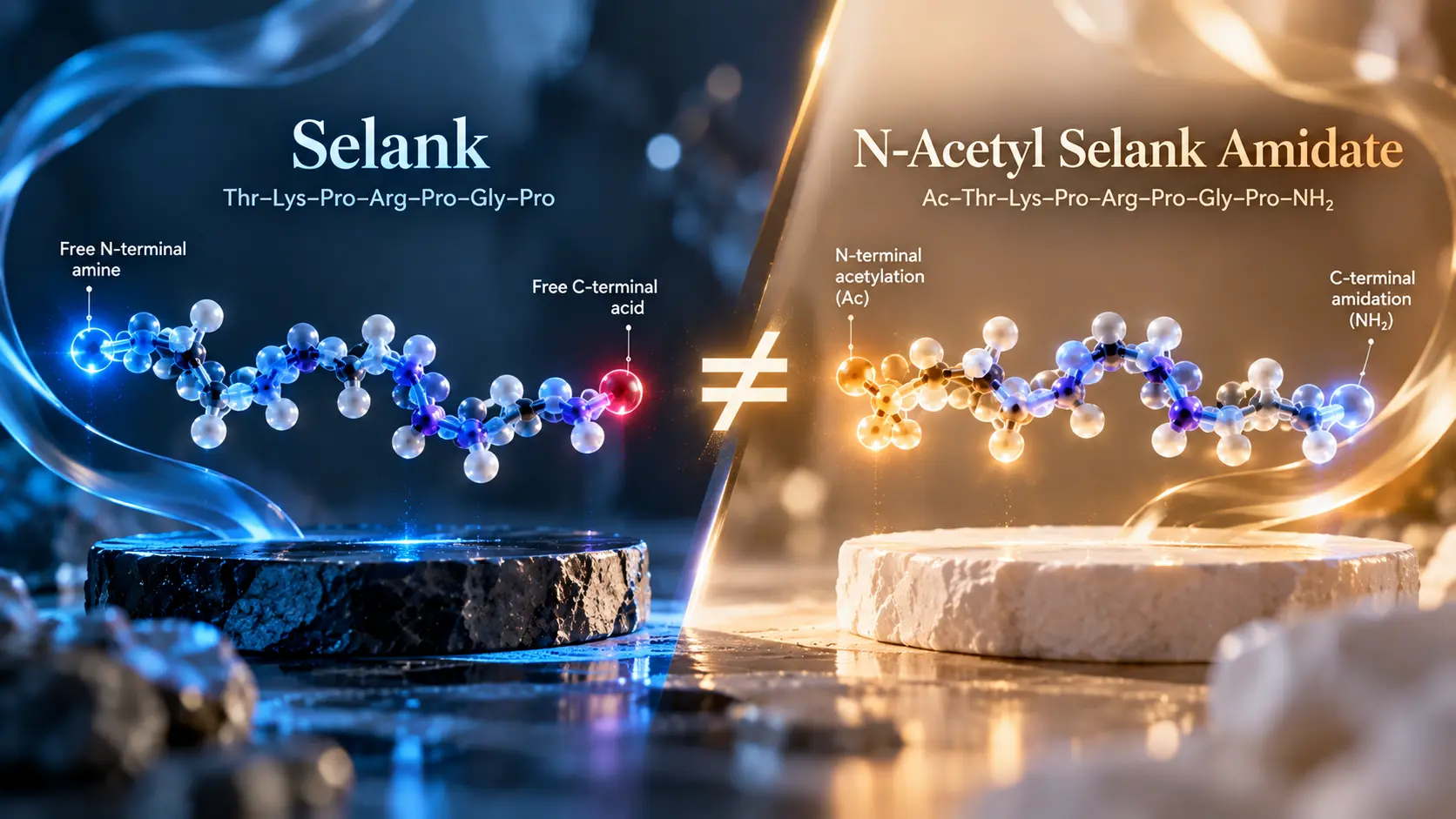
N-acetyl selank amidate is not Selank's full chemical name. Compare sequences, masses and database records, and learn how to tell the two apart on a COA.

Is CJC-1295 legal? It is not FDA-approved, left FDA Category 2 in 2024, was voted down for 503A compounding, and is banned by WADA. Verified status.
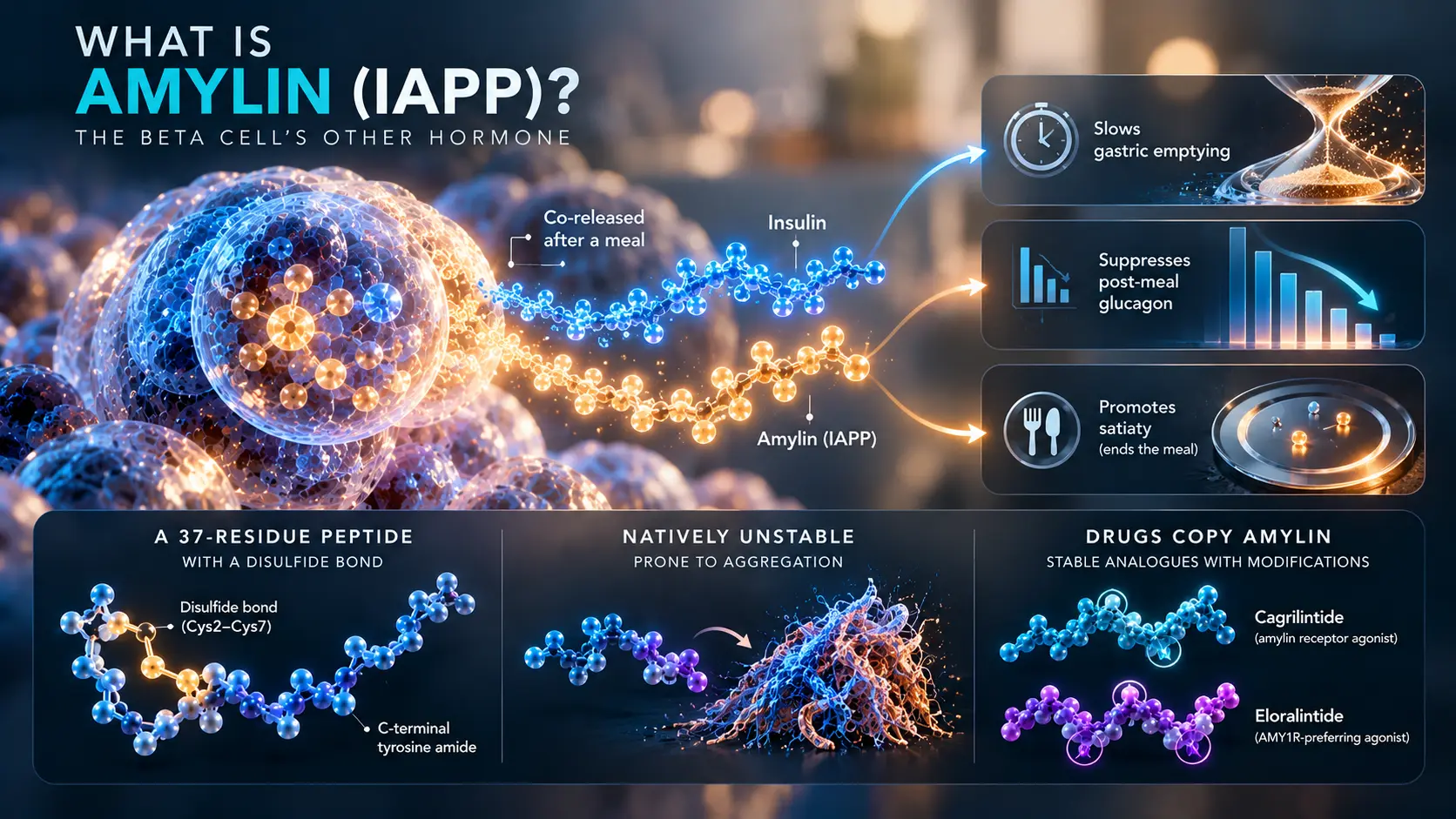
What is amylin? A 37-residue hormone the beta cell releases alongside insulin. Its real job, why it clumps, and how cagrilintide and eloralintide copy it.
(faqs)