Introduction
A lab manager opening a new vial of any glycoprotein reagent asks the same three questions before it goes anywhere near an assay: is the identity confirmed, is the purity documented, and will it still perform after two freeze-thaw cycles. For human chorionic gonadotropin (hCG) — a molecule researchers reach for in immunoassay calibration, receptor-binding studies, and reproductive endocrinology work — those questions matter more than usual, because hCG is a heterodimeric glycoprotein that degrades and aggregates differently than a small-molecule standard.
Featured Product
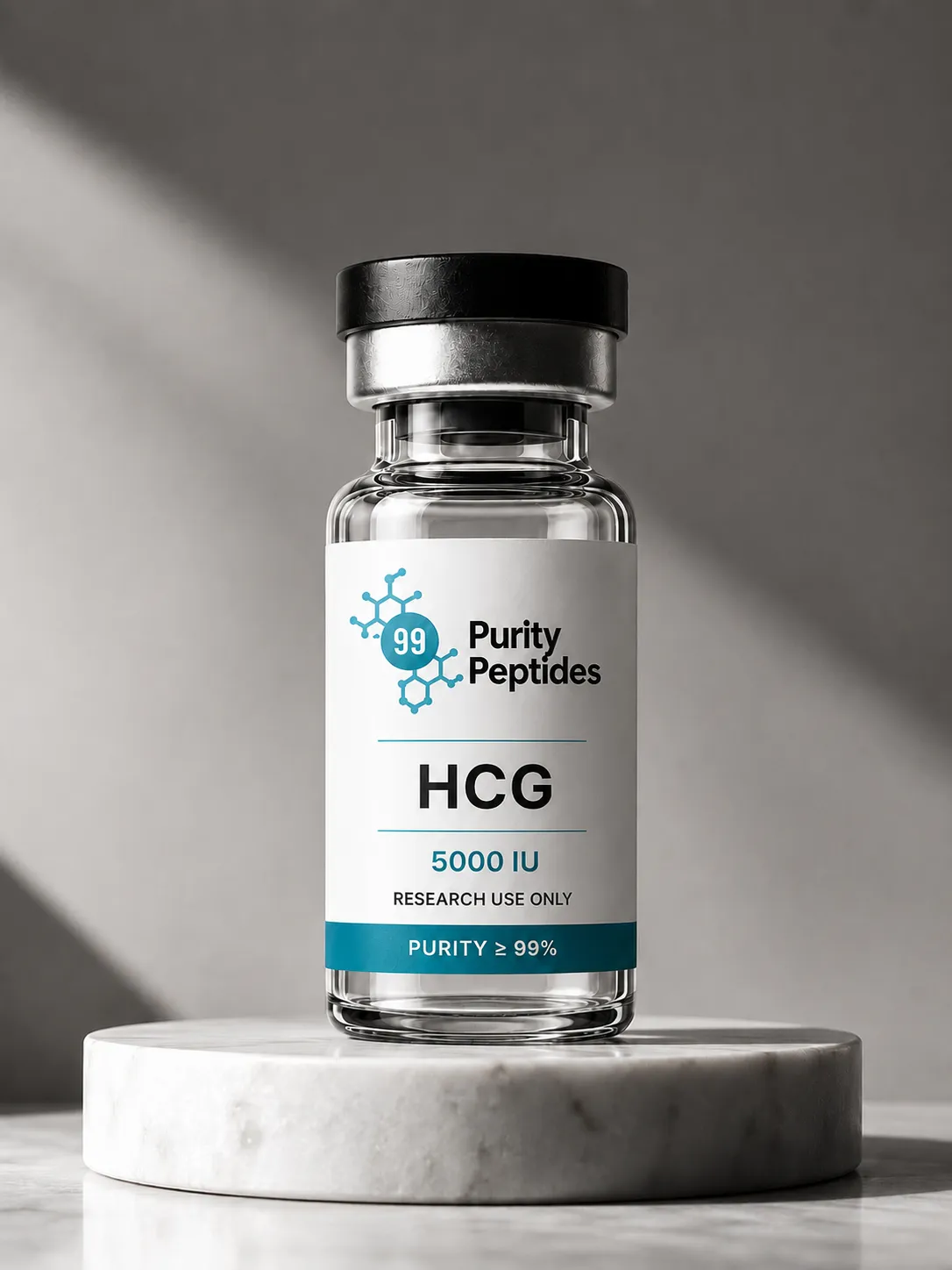
This guide walks through what research-grade hCG actually is at the molecular level, how to read the documentation a legitimate supplier should provide, what the standard analytical methods (HPLC, LC-MS, NMR) actually tell you, and how to store and handle it so a vial doesn't turn into a wasted assay run. It's written for lab managers, procurement staff, and researchers evaluating suppliers or setting up new protocols — not for anyone seeking the compound for personal, therapeutic, or off-label use.
1. What Is HCG? Biochemistry and Structure
Human chorionic gonadotropin is a glycoprotein hormone naturally produced during pregnancy, structurally related to luteinizing hormone (LH), follicle-stimulating hormone (FSH), and thyroid-stimulating hormone (TSH). All four belong to the same glycoprotein hormone family and share a common alpha subunit, with a hormone-specific beta subunit that determines biological specificity.
Quick answer: HCG is a heterodimeric glycoprotein made of a non-covalently linked alpha and beta subunit, stabilized by extensive disulfide bonding and carbohydrate side chains that make it substantially larger and more structurally complex than a synthetic peptide of similar chain length.
The alpha subunit is nearly identical across LH, FSH, TSH, and hCG. The beta subunit is what distinguishes hCG immunologically and functionally — it's also the target most immunoassays and antibody-based detection kits are raised against. This shared-subunit architecture is why cross-reactivity is a real concern in assay design and why researchers need to know exactly which subunit, fragment, or intact heterodimer a reagent contains before building a protocol around it.
Because hCG carries multiple N-linked and O-linked glycosylation sites, its apparent molecular weight varies by source and preparation method — recombinant material and urinary-derived material do not glycosylate identically, and that difference can show up in HPLC retention time, MS spectra, and immunoassay reactivity. A COA should specify the source (recombinant vs. urinary-derived) for exactly this reason.
2. Key Molecular Specifications
Property | Typical Value / Description |
Classification | Glycoprotein hormone, heterodimer (alpha + beta subunit) |
Approximate molecular weight | ~36–40 kDa (varies by glycosylation and source) |
Subunit linkage | Non-covalent association, stabilized by disulfide bonds within each subunit |
Common CAS reference | 9002-61-3 — verify against the specific product's lot COA before purchase |
Physical form | Typically supplied as lyophilized (freeze-dried) powder |
Solubility | Generally soluble in water and dilute aqueous buffers; confirm per lot |
A note on precision: exact molecular weight, glycosylation pattern, and CAS registry can differ between recombinant hCG, urinary-derived hCG, and isolated subunit/fragment products. Values for a specific product should trace back to that lot's own COA — not a generic reference table, including this one.
3. How to Read an HCG Certificate of Analysis (COA)
Quick answer: A usable COA for hCG should show lot-specific purity by HPLC, identity confirmation (typically by mass spec or immunoassay), source material, storage recommendations, and a signed/dated release by qualified personnel — not a generic template reused across lots.
A COA is only as useful as its specificity. Here's what to check, in the order a QC reviewer would check it:
- Lot number match — the lot on the vial label must match the lot on the COA exactly.
- Purity method and result — HPLC is standard; ideally with a chromatogram available on request.
- Identity confirmation — typically mass spectrometry or an immunoassay-based check, not purity alone.
- Source designation — recombinant or urinary-derived, since this affects glycosylation and assay compatibility.
- Storage and handling instructions specific to that lot.
- Date of analysis and expiry or retest date.
- Signature or authorization from the lab or QC personnel who released the lot.
If a supplier can't produce a lot-specific COA on request before purchase, that's a legitimate reason to look elsewhere — this is standard practice for any research reagent, not a special requirement unique to hCG.
4. Analytical Verification Methods
HPLC (High-Performance Liquid Chromatography)
HPLC separates the sample based on how components interact with a stationary phase, producing a chromatogram where each peak represents a distinct component. For hCG, a single dominant peak with minimal shoulder peaks or fronting indicates a homogeneous preparation. Because hCG is a glycoprotein rather than a small molecule, reverse-phase HPLC methods used for peptides sometimes need modification to resolve it cleanly — a supplier's method notes should reflect that.
LC-MS / LC-MS/MS
Liquid chromatography coupled to mass spectrometry confirms molecular identity by mass, and MS/MS fragmentation can help verify subunit composition. Glycoprotein MS analysis is more complex than small-molecule MS because glycosylation heterogeneity produces a spread of masses rather than one clean peak — expected, and not itself a purity red flag, but it means MS data should be interpreted by someone familiar with glycoprotein analysis.
NMR
NMR is used less routinely for intact glycoproteins than for small molecules, given the size and structural complexity of hCG, but can be relevant for fragment or subunit-level characterization work.
Immunoassay-Based Identity Testing
Because hCG detection kits are built around beta-subunit recognition, immunoassay cross-reactivity testing is a practical, widely used identity check for research material, complementing rather than replacing HPLC/MS data.
Method | What It Confirms | Limitation |
HPLC | Purity, homogeneity | Doesn't confirm molecular identity alone |
LC-MS/MS | Molecular identity, mass confirmation | Glycosylation creates mass heterogeneity |
NMR | Structural detail (fragments) | Less practical for intact glycoproteins |
Immunoassay | Functional/immunological identity | Doesn't quantify chemical purity |
No single method tells the whole story. A COA that combines purity (HPLC) with identity (MS or immunoassay) gives a far more complete picture than either alone.
5. Solubility and Reconstitution
Quick answer: Lyophilized hCG is generally reconstituted in sterile water or an appropriate aqueous buffer, at a concentration and pH consistent with the supplier's lot-specific documentation, and used promptly per the assay protocol.
hCG's aqueous solubility profile differs from small synthetic peptides — it's generally more water-soluble due to its glycosylation and does not typically require organic co-solvents like DMSO. That said, buffer pH, ionic strength, and even vial material can affect protein stability during and after reconstitution. Repeated freeze-thaw cycling is a known degradation risk for glycoproteins generally, which is why single-use aliquoting after reconstitution is standard lab practice.
6. Storage and Stability
Quick answer: Lyophilized hCG is typically stored frozen (commonly -20°C, with -80°C used for longer-term storage of reconstituted material), protected from light and repeated freeze-thaw cycling, in accordance with the specific lot's COA.
- Store lyophilized powder frozen and desiccated until first use.
- Once reconstituted, aliquot into single-use volumes rather than repeatedly freeze-thawing a stock vial.
- Avoid unnecessary exposure to light and temperature fluctuation during transport within the lab.
- Track lot number against storage duration — stability data is lot-specific.
7. Shipping and Regulatory Considerations for Research Chemicals
Research reagents shipped within and into the United States are subject to standard chemical/biological shipping regulations (which may include IATA dangerous goods provisions depending on formulation and packaging) and institutional receiving protocols. A legitimate supplier selling to research institutions should be able to speak clearly to RUO labeling, accompanying documentation (COA, SDS), and any institutional or end-user verification processes.
It's worth being direct here: hCG is also manufactured and sold as an FDA-approved prescription pharmaceutical for specific approved medical uses. Research-grade material sold under an RUO designation is intended for laboratory and analytical use by qualified institutions — it is not an alternate purchasing channel for the pharmaceutical product, and legitimate suppliers structure their sales processes accordingly.
8. Supplier Verification Checklist
- Lot-specific COA available before purchase, not just a generic spec sheet
- SDS (Safety Data Sheet) provided
- Analytical method disclosed (HPLC conditions, MS method), not just a final number
- Source material specified (recombinant vs. urinary-derived)
- Storage/stability data specific to the product
- Clear RUO labeling and appropriate institutional sales practices
- Responsive technical support that can answer method-level questions
9. Research Applications
- Immunoassay calibration and reference standard development
- Receptor-binding and signal transduction studies (hCG shares receptor binding with LH)
- Reproductive endocrinology research
- Antibody development and cross-reactivity testing for hCG-detection assays
- Glycoprotein structural and analytical method development
This list reflects general categories of laboratory use documented in the scientific literature on glycoprotein hormones; it is not a claim about any specific product's validated applications, which should come from the supplier's own technical documentation.
10. Common Myths About Research-Grade HCG
Myth: "Research grade" and "pharmaceutical grade" are basically the same thing.
They're not. Research-grade material is intended for laboratory use and is not manufactured, tested, or labeled to pharmaceutical (drug) standards. The intended use, regulatory pathway, and quality system behind each are different.
Myth: A high purity percentage on its own proves a reagent is authentic hCG.
Purity (HPLC) and identity (MS/immunoassay) are two different questions. A sample can be highly pure and still not be the compound claimed if identity wasn't independently confirmed.
Myth: All hCG reagents behave identically in an assay regardless of source.
Recombinant and urinary-derived hCG can differ in glycosylation pattern, which can affect assay performance. Source matters for reproducibility.
Myth: Once reconstituted, a glycoprotein reagent is stable indefinitely at refrigerator temperature.
Glycoproteins are generally more sensitive to repeated freeze-thaw and prolonged storage at higher temperatures than small molecules. Follow lot-specific guidance rather than assuming refrigerator stability.
12. Conclusion
Evaluating an HCG research chemical supplier comes down to documentation discipline: a lot-specific COA that pairs a purity method with an identity method, clear sourcing (recombinant vs. urinary-derived), storage guidance tied to that specific lot, and an SDS on hand before the vial ever ships. Researchers who build their supplier evaluation around those checkpoints — rather than a purity percentage in isolation — end up with more reproducible assay data and fewer surprises when a shipment arrives. If you're setting up a new protocol or re-evaluating a current supplier, start by requesting a sample COA and reviewing it against the checklist above before any purchasing decision.
Frequently Asked Questions
What is HCG used for in research?
Research-grade hCG is primarily used in immunoassay calibration, receptor-binding studies, reproductive endocrinology research, and antibody development work targeting hCG detection assays.
What is the difference between research-grade and pharmaceutical-grade HCG?
Research-grade material is manufactured and documented for laboratory use only, without the regulatory approval, clinical testing, and quality system required of an FDA-approved pharmaceutical product. They are not interchangeable.
How can I verify the purity of an HCG research reagent?
Purity is typically verified by HPLC, with results documented on a lot-specific Certificate of Analysis. Purity alone doesn't confirm identity — pair it with MS or immunoassay-based identity testing.
How should HCG be stored in the laboratory?
Lyophilized hCG is generally stored frozen and protected from moisture until reconstitution; reconstituted material should be aliquoted for single use and handled per the lot's specific documentation.
What documentation should a legitimate HCG supplier provide?
At minimum, a lot-specific Certificate of Analysis (COA) and Safety Data Sheet (SDS). Method-level detail on how purity and identity were established is a strong positive signal.
Does HCG dissolve well in water?
Lyophilized hCG is generally water-soluble, more so than many small synthetic peptides, though exact reconstitution parameters should follow the supplier's lot-specific instructions.
What analytical methods are used to confirm HCG identity and purity?
HPLC for purity, LC-MS/MS for molecular identity and mass confirmation, and immunoassay-based testing for functional/immunological identity. NMR is used less commonly for intact glycoproteins.
Is there a difference between recombinant and urinary-derived HCG?
Yes — they can differ in glycosylation pattern, which affects molecular weight and potentially assay performance. A COA should specify the source material.
How many freeze-thaw cycles can HCG withstand?
Repeated freeze-thaw cycling is a general degradation risk for glycoproteins. Standard lab practice is to aliquot reconstituted material into single-use portions rather than repeatedly refreezing a stock vial.
What should I check on an HCG Certificate of Analysis?
Lot number matching the physical vial, purity method and result, identity confirmation method, source material, storage instructions, analysis date, and signed authorization.
Is HCG regulated for research use in the USA?
Research-grade hCG sold as a laboratory reagent under Research Use Only (RUO) labeling is distinct from the FDA-approved pharmaceutical product; confirm current regulatory status and institutional policy before purchase, as this can change.
Why does purity percentage vary between suppliers?
Purity results depend on the analytical method, column/method parameters, and how the result is calculated (area-under-curve vs. other methods). Comparing suppliers means comparing methods, not just the final percentage.