
Introduction
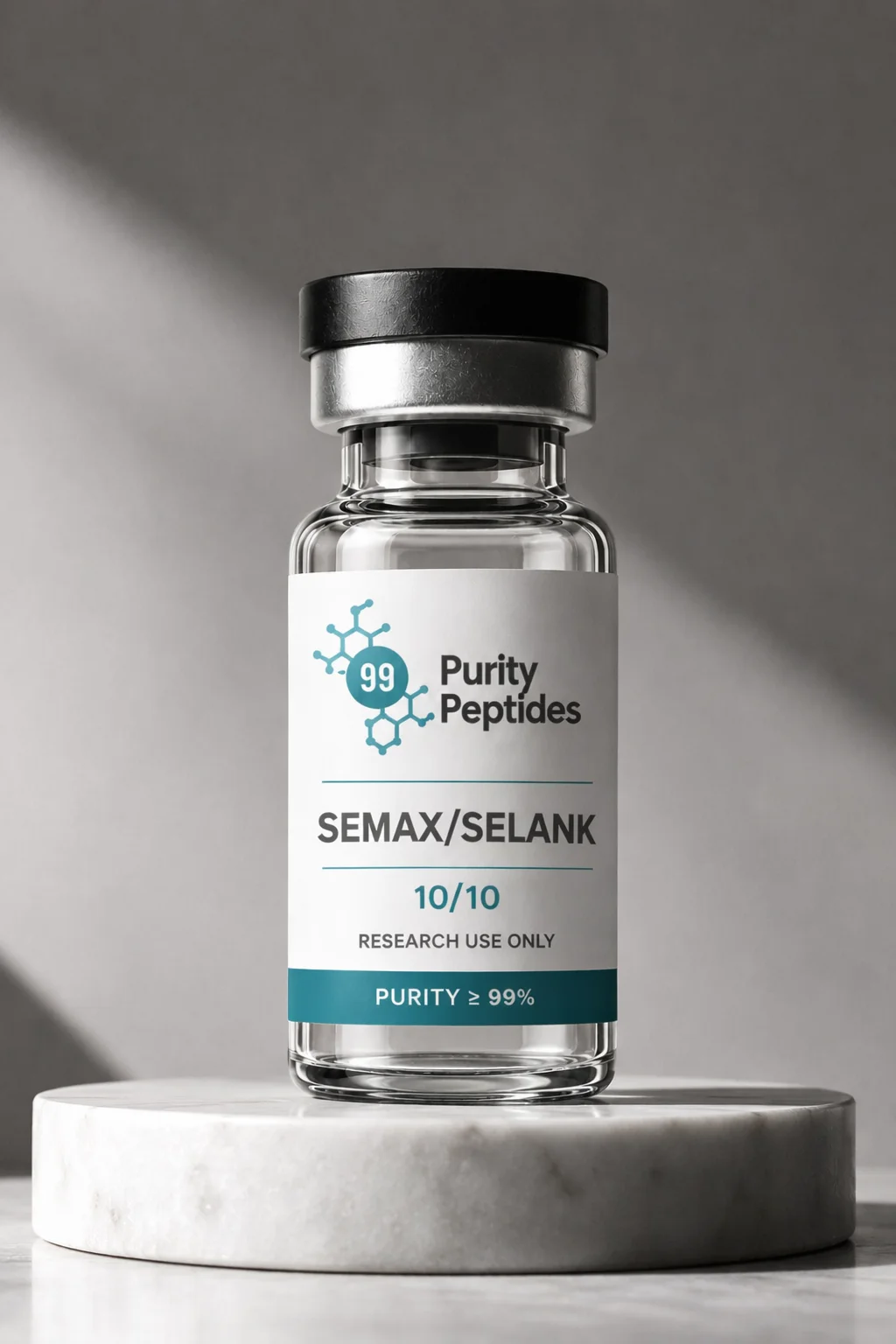
SEMAX is a synthetic heptapeptide (seven amino acids) developed in Russia that has garnered increasing attention in nootropic communities for its purported effects on cognitive function, focus, learning, and mental clarity. Administered as an intranasal spray, SEMAX represents one of several peptide-based cognitive enhancers circulating in research and alternative health communities, offering a fundamentally different approach to cognitive enhancement compared to conventional nootropics like caffeine, L-theanine, or racetams.
Critical Context: Unlike many compounds discussed in comprehensive health guides, SEMAX exists in a significant legal and regulatory gray area. The compound is not FDA-approved for human use in the United States, has limited peer-reviewed human research compared to established nootropics, and the intranasal spray administration route carries specific safety considerations that merit careful examination. While some evidence suggests potential cognitive benefits, the research base is substantially smaller than for conventional nootropics, and long-term human safety data is minimal.
This guide provides comprehensive, evidence-based information about SEMAX spray—including what it is, proposed mechanisms, available research, practical considerations, safety concerns, and realistic expectations. The goal is enabling informed decision-making about a compound with genuine scientific interest but also significant uncertainties and regulatory constraints.
Important Disclaimer: This guide is educational and informational. SEMAX is not approved by regulatory agencies in most countries. Any consideration of SEMAX use should involve thorough personal research, consultation with healthcare providers familiar with peptides, and understanding of local legal status and personal risk tolerance for using investigational compounds.
What is SEMAX? Understanding This Synthetic Peptide
The Molecular Structure and Composition
SEMAX is a synthetic heptapeptide with a specific amino acid sequence:
Chemical Sequence: Met-Glu-His-Phe-Pro-Gly-Pro (seven amino acids)
Molecular Origin: SEMAX is a synthetic fragment derived from ACTH (adrenocorticotropic hormone), a naturally occurring hormone produced by the anterior pituitary gland. However, SEMAX is not identical to any naturally occurring molecule—it's a synthesized peptide created specifically to achieve certain effects.
Structure Significance: The specific seven-amino-acid sequence is designed to interact with specific neurobiological targets while avoiding some of ACTH's systemic effects (like adrenal hormone release).
Synthetic Production: Unlike peptides derived from dietary sources or produced endogenously, SEMAX is entirely synthesized in laboratories. Commercial SEMAX is manufactured through peptide synthesis techniques.
Stereochemistry: Like other peptides, SEMAX has a specific stereochemistry (3D structure) that's essential for its biological activity. Only the correctly configured stereoisomer provides the intended effects.
Historical Development and Context
SEMAX's history provides important context:
Soviet Development: SEMAX was developed in the Soviet Union (specifically in Russia) in the 1980s-1990s as a potential cognitive enhancer and therapeutic agent.
Research Environment: Developed within Soviet research institutions studying nootropic compounds and cognitive enhancement—a research area that differed significantly from Western pharmaceutical development approaches.
Limited Western Adoption: Despite decades of existence, SEMAX has not gained significant adoption in Western pharmaceutical systems, suggesting either limited efficacy, safety concerns, regulatory hurdles, or insufficient commercial interest.
Current Status: Circulates primarily in research communities and alternative health markets; remains investigational and unapproved in major regulatory jurisdictions.
Availability: Available primarily through online suppliers, research chemical vendors, and alternative health practitioners—not through conventional pharmaceutical channels.
Why Intranasal Administration?
The spray delivery system is significant:
Intranasal Route Rationale:
- Peptides cannot cross the blood-brain barrier efficiently when taken orally
- Intranasal administration bypasses the gastrointestinal system and blood-brain barrier
- Delivers peptides directly to nasal epithelium with potential direct brain access
- Enables lower systemic doses while achieving brain effects
Olfactory Pathway: Some researchers propose SEMAX can access the brain via the olfactory bulb (the part of the brain processing smell), which has direct neural connections to the nasal epithelium—potentially enabling direct brain delivery.
Implications: Intranasal administration is more direct and effective for brain peptides than oral, but also introduces specific safety considerations regarding nasal tissue irritation, infection risk, and direct brain chemical exposure.
How SEMAX Works: Proposed Mechanisms of Cognitive Action
Proposed Neurobiological Mechanisms
SEMAX's exact mechanism of action in the brain remains incompletely understood, but several proposed mechanisms exist:
Neurotrophic Factor Stimulation:
- SEMAX may stimulate production of brain-derived neurotrophic factor (BDNF)
- BDNF supports neuronal survival, growth, and plasticity
- Increased BDNF could theoretically support learning and cognitive enhancement
- Mechanism remains partially unclear
Dopamine System Modulation:
- Some evidence suggests SEMAX affects dopaminergic (dopamine) neurotransmitter systems
- Dopamine is involved in motivation, focus, reward, and executive function
- Enhanced dopamine signaling could improve motivation and focus
- Research on this mechanism is limited
Neuropeptide Receptor Interaction:
- SEMAX may interact with specific neuropeptide receptors in the brain
- These receptors regulate various cognitive and behavioral functions
- Specific receptor targets and effects remain incompletely characterized
- Different neural pathways than conventional nootropics
Neuroplasticity Enhancement:
- Proposed to enhance the brain's ability to form new neural connections (neuroplasticity)
- This could theoretically support learning and memory formation
- Mechanism involves complex molecular signaling cascades not fully elucidated
Anti-Inflammatory Effects:
- Some research suggests SEMAX has neuroimmune modulatory effects
- May reduce neuroinflammation, which can impair cognitive function
- This mechanism is speculative and requires further investigation
Important Caveat: These mechanisms are largely derived from animal studies and in vitro research. Human neurobiological research on SEMAX is extremely limited. The actual mechanisms in human brains are incompletely understood and may differ substantially from proposed animal-model mechanisms.
SEMAX vs. Conventional Nootropics: Mechanism Differences
Understanding how SEMAX differs mechanistically from established nootropics provides context:
Conventional Nootropics (Caffeine, L-theanine, Racetams):
- Work through well-characterized neurotransmitter systems
- Caffeine blocks adenosine receptors
- L-theanine enhances GABA and increases alpha waves
- Racetams affect membrane fluidity and ion channels
- Mechanisms relatively well-understood through extensive research
SEMAX:
- Proposed mechanisms involve neurotrophic factors and peptide receptor interaction
- Mechanisms less well-characterized
- Different pathway than conventional nootropics
- Limited understanding of how effects translate to humans
- Requires significantly more research for full mechanistic clarity
Practical Implication: SEMAX represents a fundamentally different approach to cognitive enhancement, making direct comparison with conventional nootropics difficult.
Research Evidence on SEMAX
The Limited Human Research Base
This is the critical issue distinguishing SEMAX from established nootropics:
Peer-Reviewed Human Studies: Extremely limited. Most published SEMAX research involves:
- Animal studies (rats, mice)
- In vitro studies (cell cultures)
- Small human case reports or open-label studies
- Studies published primarily in Russian-language journals (limited Western accessibility)
Placebo-Controlled Human Trials: Virtually non-existent. The gold standard for establishing efficacy—randomized, double-blind, placebo-controlled human trials—are largely absent for SEMAX.
Long-Term Human Safety Data: Minimal. No comprehensive long-term human safety studies exist.
Clinical Validation: SEMAX is not clinically validated in major medical systems or approved by regulatory agencies, suggesting either:
- Insufficient evidence of efficacy
- Safety concerns
- Lack of commercial interest
- Regulatory/approval hurdles
What Animal Research Suggests
While human research is limited, animal studies provide some insights (with important caveats):
Animal Learning Studies:
- Some rodent studies suggest SEMAX improves learning and memory in animal models
- Effects observed in maze-learning tasks and other cognitive assays
- Animal models may not translate to human cognitive effects
Neuroprotection Research:
- Animal studies suggest potential neuroprotective effects
- May reduce neural damage in specific injury models
- Relevance to healthy human cognition unclear
Brain Plasticity Studies:
- Some animal research suggests neuroplasticity enhancement
- Potential support for learning in animal models
- Translation to human learning enhancement remains speculative
Important Limitations:
- Animal studies don't reliably predict human effects
- Effects in rodent brains may not translate to human cognition
- Dosing, administration, and mechanisms differ from human use
- Animal studies often use much higher relative doses
Why Human Research is So Limited
Several factors explain the scarcity of human SEMAX research:
Regulatory Status: Without pharmaceutical approval, funding for rigorous human trials is limited. Major research institutions prioritize approved compounds.
Commercial Viability: Patent status and commercial potential limited. Without strong patent protection or clear commercial path, pharmaceutical companies haven't invested in human research.
Research Accessibility: Most SEMAX research is in Russian-language journals, limiting accessibility to Western researchers and making meta-analyses difficult.
Ethical Considerations: Intranasal peptide administration to the brain raises ethical questions requiring careful research protocols, limiting ease of human studies.
Research Standards: The small research base doesn't meet modern standards for establishing clinical efficacy (large RCTs, pre-registration, multiple independent replications).
Purported Benefits of SEMAX Spray
Enhanced Cognitive Focus
Proposed Mechanism: Enhanced dopamine signaling and neuropeptide receptor activation theoretically improve attention and focus.
Research Evidence:
- Animal studies suggest improved attention in some models
- Human evidence is anecdotal
- Placebo effect is substantial for focus-related subjective experiences
- No controlled human trials definitively establish this benefit
User Reports: Some SEMAX users report improved focus and concentration, but testimonials are inherently unreliable and highly subject to placebo effect.
Realistic Assessment: Possible but unproven in controlled human studies. Reported improvements may reflect placebo effect or other non-specific factors.
Improved Memory and Learning
Proposed Mechanism: BDNF stimulation and neuroplasticity enhancement could theoretically support memory formation and learning ability.
Research Evidence:
- Animal studies show memory improvements in specific tasks
- Human evidence limited to anecdotal reports
- No controlled human trials
- Memory enhancement claims are particularly susceptible to placebo effects
User Reports: Some users report improved memory and faster learning, but without objective measurement, placebo effects cannot be excluded.
Realistic Assessment: Theoretically plausible based on animal research, but unproven in humans. Claims require rigorous human research to establish validity.
Enhanced Mental Clarity and Cognition
Proposed Mechanism: General neuroprotection and neuroplasticity enhancement could theoretically produce subjective mental clarity.
Research Evidence:
- Very limited human data
- Subjective experiences highly variable
- Placebo expectancy enormous for "clarity" claims
- No objective cognitive testing in humans
User Reports: Some report improved mental clarity, but this is entirely subjective and subject to massive placebo effects.
Realistic Assessment: Largely unproven. Subjective reports unreliable without objective cognitive testing.
Neuroprotection and Brain Health
Proposed Mechanism: Anti-inflammatory and neurotrophic effects could theoretically protect neural tissue.
Research Evidence:
- Some animal studies suggest neuroprotective potential
- No human evidence for neuroprotective effects
- No clinical indication for healthy brain protection
- Theoretical but unproven
Realistic Assessment: Possible but highly speculative in humans. No evidence in healthy individuals.
Mood and Motivation Enhancement
Proposed Mechanism: Dopamine system modulation could theoretically enhance mood and motivation.
Research Evidence:
- Very limited evidence
- Anecdotal reports only
- Could reflect placebo effect or dopamine-related placebo response
- No controlled human studies
User Reports: Some report improved mood and motivation, but again, entirely anecdotal.
Realistic Assessment: Possible but unproven. Requires rigorous human research.
Safety Considerations and Concerns with SEMAX Spray
Intranasal Administration Specific Risks
The spray administration route carries particular safety concerns:
Nasal Tissue Irritation:
- Chronic intranasal administration can irritate nasal epithelium
- Repeated daily spraying may cause inflammation, soreness, or tissue damage
- Risk of nasal polyp development with chronic intranasal use
- Symptoms: nasal irritation, epistaxis (nosebleeds), altered sense of smell
Infection Risk:
- Intranasal application bypasses some immune barriers
- Repeated nasal tissue disruption increases infection susceptibility
- Risk of bacterial or fungal nasal infections
- Potential for serious infections if barriers compromised
Biofilm Development:
- Chronic intranasal administration can promote biofilm formation in nasal passages
- Biofilms harbor pathogenic bacteria
- Can lead to recurrent infections
- Difficult to treat once established
Olfactory System Effects:
- Direct application to olfactory epithelium unknown long-term effects
- Potential for altered sense of smell
- Unknown effects on olfactory neurons
- Direct neural exposure requires study
Cerebrospinal Fluid Contamination Risk:
- Intranasal peptides potentially access brain via olfactory pathway
- Direct brain exposure with non-sterile or contaminated preparations poses serious infection risk
- Could theoretically lead to meningitis or encephalitis
- Requires pharmaceutical-grade sterile preparation
Mucociliary Clearance Impairment:
- Chronic intranasal administration can impair nasal mucociliary clearance (the nose's cleaning mechanism)
- Increases susceptibility to upper respiratory infections
- Creates cascade of nasal problems
Systemic Safety Concerns
Limited Long-Term Human Safety Data:
- No comprehensive long-term human safety studies
- Unknown cumulative effects from chronic use
- Unknown potential for tolerance, dependence, or rebound effects
- Long-term effects on BDNF, dopamine systems unknown
Neurobiological Concerns:
- Direct peptide effects on brain systems incompletely understood
- Potential for unintended neurobiological changes
- Unknown interactions with existing neural conditions
- Potential for off-target receptor effects
Contamination and Quality Issues:
- Research chemical suppliers have minimal quality standards
- Risk of contaminated, impure, or incorrectly synthesized peptides
- No pharmaceutical-level quality assurance
- Unknown health effects from impurities or incorrect isomers
Interaction Potential:
- Unknown interactions with medications
- Unknown interactions with other supplements
- Unknown effects in combination with other neurochemical modulators
- Particularly concerning with psychiatric medications
Individual Sensitivity:
- Unknown factors determining individual response
- Potential for serious adverse reactions in susceptible individuals
- No predictive tests for adverse response risk
- No medical monitoring to detect emerging problems
Special Populations at Higher Risk
Certain individuals face substantially elevated risks with SEMAX:
Psychiatric Conditions:
- Unknown effects in depression, anxiety, psychosis, bipolar disorder
- Could theoretically destabilize mood or psychiatric conditions
- Interactions with psychiatric medications unknown
- Significantly elevated risk
Neurological Conditions:
- Unknown effects in Parkinson's, dementia, epilepsy, migraine
- Could theoretically worsen or trigger neurological problems
- Direct brain peptide exposure with pre-existing neural disease high-risk
- Medical oversight essential and difficult
Chronic Nasal Conditions:
- Pre-existing rhinitis, sinusitis, polyps, or other nasal disease
- Intranasal administration likely to exacerbate
- Elevated infection risk with compromised nasal immunity
- Should absolutely avoid
Immunocompromised Individuals:
- Significantly elevated infection risk from intranasal administration
- Potential for serious infections
- Absolutely contraindicated
Pregnancy and Breastfeeding:
- No safety data whatsoever
- Unknown fetal effects
- Unknown effects in breast milk
- Should absolutely avoid
Cardiovascular Disease:
- Unknown effects on cardiovascular system
- Dopamine modulation could theoretically affect cardiovascular function
- Requires medical oversight if considering
Legal and Regulatory Status
United States:
- Not FDA-approved
- Exists in legal gray area (not explicitly illegal, but unapproved)
- Cannot be marketed for human consumption
- Possession for personal use may be legal, but regulatory status ambiguous
- Not covered by any pharmaceutical oversight
Europe:
- Regulatory status varies by country
- Generally not approved
- Legal status ambiguous similar to US
- No pharmaceutical oversight
Other Jurisdictions:
- Highly variable legal status
- Some countries may prohibit
- No international regulatory approval
Practical Reality: Using SEMAX means accepting a compound without regulatory oversight, pharmaceutical quality standards, or legal protection if problems arise.
CALLOUT BOXES
⚠️ WARNING: Critical Safety and Regulatory Concerns with SEMAX Spray
- Not FDA-Approved: SEMAX is not approved by the FDA or any major regulatory agency. It exists in a legal gray area in most jurisdictions. Using unapproved compounds means accepting unknown risks and no regulatory oversight.
- Intranasal Peptide Risks: Chronic intranasal peptide administration carries specific risks including nasal tissue irritation, infection, biofilm development, and direct exposure of brain tissue to synthetic peptides with unknown long-term effects.
- Extremely Limited Human Research: Unlike established nootropics with decades of human research, SEMAX has minimal peer-reviewed human studies and no large-scale controlled trials. Most research is animal-based or in Russian-language journals. Benefits in humans are unproven.
- Unknown Long-Term Effects: No comprehensive long-term human safety data exists. Chronic effects of intranasal peptide exposure to the brain are completely unknown.
- Contamination Risk: Research chemical suppliers have minimal quality standards. Risk of contaminated, impure, or incorrectly synthesized peptides. No pharmaceutical-level quality assurance. Contaminated peptide spraying into nasal passages/brain is serious infection risk.
- Psychiatric/Neurological Risk: Unknown effects on psychiatric conditions or neurological disease. Direct peptide effects on dopamine and other brain systems in individuals with pre-existing conditions could be dangerous. Absolutely contraindicated for those with psychiatric or neurological conditions without extensive medical oversight.
- Intranasal Infection Risk: Direct nasal administration bypasses immune barriers. Chronic use increases susceptibility to nasal and respiratory infections. Risk of serious infections is real.
- No Medical Oversight: Unlike pharmaceutical treatments, SEMAX use lacks any medical monitoring or professional oversight. Problems may go undetected until serious.
- Cognitive Enhancement Claims: Claims about cognitive enhancement are largely unproven in humans and highly susceptible to placebo effects. Expectancy effects are enormous for subjective cognitive claims.
- Interaction Potential: Unknown interactions with medications, supplements, and other compounds. Particularly concerning with psychiatric medications or other neurochemical modulators.
- Placebo Effect: Subjective cognitive improvements are particularly susceptible to placebo effect. Without blinded studies, it's impossible to distinguish real effects from expectations.
💡 TIP: If You're Considering SEMAX Despite Risks
If you're seriously considering SEMAX use despite the significant uncertainties and risks outlined above:
- Research Thoroughly: Invest substantial time understanding SEMAX, its limited research base, and real risks. This isn't a casual supplement decision.
- Consult Healthcare Providers: Discuss with providers familiar with peptides and nootropics. Standard healthcare providers may not be familiar with investigational compounds.
- Assess Personal Risk Factors: Honestly evaluate your own risk factors—psychiatric history, neurological conditions, nasal conditions, immunocompromise, medication regimen, etc.
- Source Quality Carefully: If obtaining SEMAX, verify source quality, request certificates of analysis, verify peptide synthesis, confirm sterility, and assess contamination risk.
- Intranasal Hygiene: If using intranasal formulation, maintain strict nasal hygiene, monitor for irritation or infection signs, and use sterile technique.
- Monitor Carefully: Maintain detailed records of effects, side effects, any cognitive changes, nasal symptoms, or health changes. Monitor objectively if possible.
- Start Minimally: If experimenting, use lowest doses initially to assess individual tolerance before increasing.
- Avoid Chronic Use: Consider time-limited trials rather than ongoing chronic use given unknown long-term effects.
- Track Objectively: While subjective improvements are possible, try to track any changes objectively (cognitive testing, performance metrics) rather than relying on subjective impression.
- Have Exit Strategy: Know how to discontinue use safely if problems emerge. Don't commit to ongoing use of an unproven compound.
✅ BEST PRACTICES: If Choosing to Use SEMAX
Should you decide to proceed despite risks:
- Medical Consultation: Consult with healthcare provider familiar with peptides. Disclose SEMAX consideration. Ensure no absolute contraindications.
- Baseline Assessment: Establish baseline cognitive function, nasal health, mood, and other relevant metrics before starting.
- Psychiatric Screening: If any psychiatric history, consult with psychiatrist before use. Risk of psychiatric destabilization with dopamine-modulating compounds real.
- Quality Verification: Source from established vendors with reputation for quality. Request certificates of analysis. Verify peptide authenticity if possible.
- Sterility Assurance: Ensure preparation is pharmaceutical-grade sterile to minimize infection risk.
- Intranasal Technique: Learn proper sterile intranasal administration technique. Poor technique increases infection and irritation risk.
- Start Low: Begin with lowest recommended dose. Assess tolerance before increasing.
- Monitor Rigorously: Track cognitive changes, nasal symptoms, mood changes, any adverse effects in detailed journal.
- Objective Testing: Use cognitive testing apps or standardized assessments to objectively measure any changes, not just subjective impression.
- Regular Nasal Monitoring: Examine nasal passages regularly for irritation, redness, polyp development, or infection signs.
- Short-Term Trials: Limit initial use to 4-8 weeks. Reassess after trial whether to continue. Avoid chronic indefinite use of unproven compound.
- Discontinuation Plan: Have clear plan for discontinuation if problems emerge. Don't ignore warning signs hoping they'll resolve.
- Document Everything: Keep comprehensive records of all SEMAX use and any health changes for medical reference if problems develop.
- Seek Expert Help Immediately: If experiencing nasal infections, psychiatric symptoms, cognitive problems, or any concerning changes, seek immediate medical evaluation and disclose SEMAX use.
SEMAX Compared to Alternatives for Cognitive Enhancement
SEMAX vs. Established Nootropics (Caffeine, L-theanine, Racetams)
Caffeine:
- Evidence: Decades of research, proven efficacy
- Safety: Well-characterized safety profile
- Mechanism: Well-understood dopamine/adenosine effects
- Regulation: FDA-approved, available everywhere
- Recommendation: Far superior evidence base
L-Theanine:
- Evidence: Substantial research, proven effects on attention/focus
- Safety: Excellent safety profile
- Mechanism: Well-understood GABA/alpha wave effects
- Regulation: FDA-approved dietary supplement
- Recommendation: Better evidence, safer, legal
Racetams (Piracetam):
- Evidence: Decades of research, moderate evidence
- Safety: Generally well-tolerated, known side effects
- Mechanism: Membrane fluidity and ion channel effects
- Regulation: Approved in many countries, some research use in US
- Recommendation: Better evidence than SEMAX
SEMAX:
- Evidence: Minimal human research, unproven
- Safety: Unknown long-term effects, intranasal risks
- Mechanism: Incompletely understood
- Regulation: No approval, legal gray area
- Recommendation: Inferior evidence compared to all established alternatives
SEMAX vs. Other Brain-Derived Peptides
BPC-157:
- Evidence: More animal research than SEMAX, but still limited human data
- Safety: Better safety data than SEMAX; primarily injection-based
- Mechanism: Tissue repair and growth factor stimulation
- Administration: Injection, not intranasal
- Comparison: Similar regulatory uncertainty, but different risk profile
LL37:
- Evidence: More research than SEMAX, different application (immune/healing)
- Safety: Better-characterized than SEMAX
- Mechanism: Immune-modulating, not cognitive-focused
- Comparison: Better evidence base; not a direct cognitive competitor
SEMAX:
- Stands out as particularly poorly-studied for cognitive claims
- Most novel/unproven in its specific application
- Riskiest intranasal administration route
- Least evidence supporting use
SEMAX vs. Prescription Cognitive Enhancers
Modafinil/Armodafinil:
- Evidence: Extensive clinical research, proven effects
- Safety: Well-known side effects, professional oversight
- Mechanism: Dopamine/norepinephrine effects well-characterized
- Regulation: FDA-approved, prescription required
- Recommendation: Far superior evidence and safety monitoring
Amphetamines:
- Evidence: Extensive research, proven effects
- Safety: Known side effects, potential dependence
- Mechanism: Catecholamine effects well-understood
- Regulation: Controlled substance, prescription required
- Recommendation: Better evidence than SEMAX, but more serious risks
SEMAX Comparison:
- Less proven than any prescription cognitive enhancers
- No professional oversight in use
- No pharmaceutical quality assurance
- Higher uncertainty about safety
- Intranasal administration less researched than oral
Safer Cognitive Enhancement Approaches
Rather than SEMAX, evidence-based cognitive optimization includes:
Sleep Optimization:
- Single most important factor for cognitive function
- Effects larger than any supplement
- No risks, only benefits
- Priority number one
Exercise:
- Proven cognitive benefits
- Neurogenesis and neuroplasticity enhancement
- Dopamine system optimization
- Better established than SEMAX
Nutrition:
- Omega-3 fatty acids for brain health
- Adequate B vitamins, minerals
- Reduced inflammation through diet
- Established benefits
Established Nootropics:
- Caffeine + L-theanine (proven synergy)
- Racetams (decades of research)
- Creatine (cognitive benefits documented)
- Better evidence than SEMAX
Cognitive Training:
- Brain training and learning activities
- Challenging mental exercise
- Meditation and mindfulness
- Proven benefits
Medical Evaluation:
- Rule out medical causes of cognitive issues
- Sleep apnea, thyroid, B12 deficiency screening
- Appropriate diagnosis and treatment
- Better foundation than unproven peptides
Conclusion: Making an Informed Decision About SEMAX Spray
SEMAX represents an intriguing example of investigational neuropharmacology—a compound with theoretical scientific interest and animal research suggesting potential cognitive benefits, but with minimal peer-reviewed human evidence, unknown long-term safety profile, regulatory approval status, and delivery via intranasal route carrying specific safety concerns.
The Honest Scientific Assessment:
SEMAX occupies a unique position in cognitive enhancement discussions: it's more experimental than most compounds discussed in health guides, less proven than any conventional nootropic, carries more regulatory uncertainty, and involves a delivery route (intranasal to the brain) with known risks and incompletely understood long-term effects.
The Evidence Gap:
- Animal research: Suggests potential cognitive benefits
- Human research: Virtually non-existent or unpublished
- Safety data: Minimal long-term human data
- Mechanism: Incompletely understood in humans
- Efficacy in humans: Unproven
The Risk Profile:
- Intranasal administration: Known risks (tissue damage, infection)
- Unknown long-term effects: No comprehensive human studies
- Contamination risk: No pharmaceutical quality standards
- Psychiatric risk: Unknown effects in pre-existing conditions
- Regulatory status: Legal gray area with no oversight
The Practical Reality:
For someone genuinely interested in cognitive enhancement, the evidence-based recommendation is unambiguous: prioritize sleep, exercise, nutrition, and cognitive training. If interested in supplementation, countless options have far superior evidence bases (caffeine, L-theanine, racetams, established prescription options) and better safety profiles.
SEMAX remains an experimental compound suitable only for:
- Individuals with thorough understanding of risks and uncertainties
- Those who've exhausted all conventional approaches
- People comfortable accepting unknown long-term consequences
- Those willing to operate outside pharmaceutical regulation
- Individuals able to obtain quality-assured preparation
- People with extensive medical knowledge and self-monitoring capability
For Most People: SEMAX is not a reasonable choice. Better alternatives with superior evidence, safety profiles, regulatory approval, and professional oversight exist.
For Those Considering SEMAX Despite Advice:
- Thoroughly research the limited evidence
- Understand real risks and unknowns
- Consult healthcare providers knowledgeable about peptides
- Assess personal risk factors honestly
- Source carefully from quality suppliers
- Monitor rigorously
- Maintain short-term trial framework
- Have clear discontinuation plan
- Seek immediate medical help if problems develop
The fundamental issue with SEMAX is not that it's definitely harmful—insufficient research exists to make that determination. The issue is that sufficient research doesn't exist to confidently recommend it, combined with known risks from intranasal administration and lack of regulatory oversight. This combination makes it a poor choice for most people seeking cognitive enhancement.
Key Takeaways
- SEMAX is a synthetic heptapeptide developed in Russia proposed to enhance cognitive function through neurotrophic factor stimulation, dopamine modulation, and neuropeptide receptor interaction
- Administered as intranasal spray, bypassing blood-brain barrier for direct brain access via olfactory pathway
- Human research is extremely limited—almost no peer-reviewed human studies, primarily animal research or Russian-language publications
- Cognitive benefits in humans are unproven; animal research suggests potential, but human efficacy undemonstrated
- Intranasal administration carries specific risks: nasal tissue irritation, infection, biofilm development, direct synthetic peptide exposure to brain tissue
- Not FDA-approved; exists in legal gray area in most jurisdictions; no regulatory oversight or pharmaceutical quality standards
- Long-term human safety data essentially non-existent; unknown chronic effects of intranasal peptide administration
- Contamination risk from research chemical suppliers lacking pharmaceutical quality assurance
- Particularly concerning for psychiatric/neurological patients; dopamine effects could destabilize pre-existing conditions
- Cognitive enhancement claims highly susceptible to placebo effects; without blinded studies, distinguishing real effects from expectations impossible
- Unknown drug interactions; particularly concerning with psychiatric medications or other neurochemical modulators
- Safer, more proven alternatives exist for cognitive enhancement (sleep, exercise, nutrition, established nootropics)
- Evidence-based recommendation: prioritize conventional approaches; SEMAX remains experimental with insufficient evidence for general recommendation
- For those considering use: thorough research, medical consultation, careful quality sourcing, rigorous self-monitoring, and clear exit strategy essential