
INTRODUCTION & PRODUCT DESCRIPTION
The human brain operates within a continuous tension between cognitive demands and emotional stressors. Modern life accelerates this tension—constant information processing, deadline pressure, competing priorities, and chronic stress degrade focus, impair memory consolidation, and undermine emotional resilience.
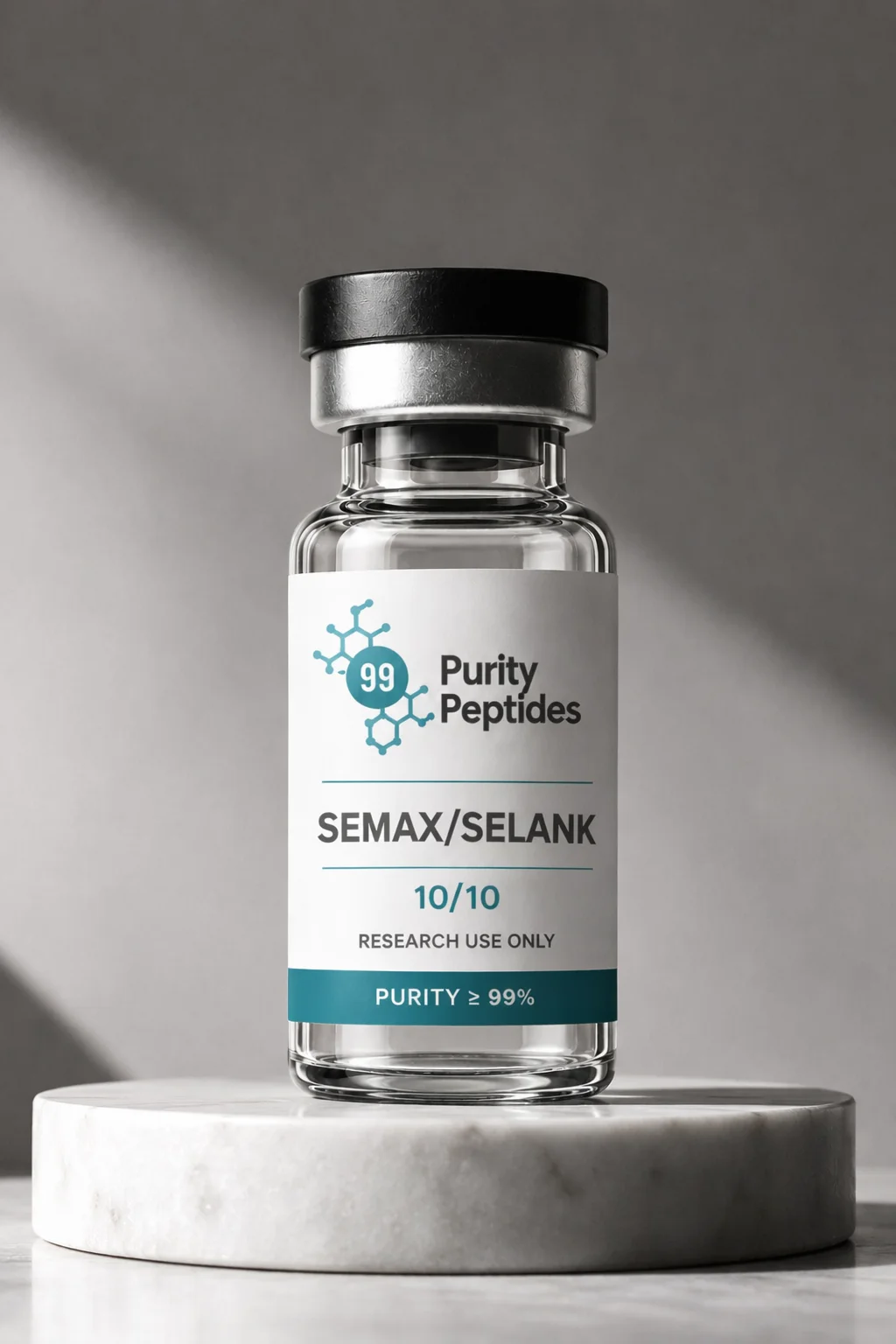
Semax and Selank represent a breakthrough in nootropic research—two complementary synthetic peptides derived from endogenous neuropeptides that enhance cognitive function and emotional resilience through distinct but synergistic mechanisms. Semax enhances focus, memory consolidation, learning capacity, and cognitive clarity through ACTH-derived signaling. Selank reduces anxiety, enhances mood, promotes stress resilience, and improves cognitive function under stress through tuftsin-derived immunomodulatory and neuropeptide signaling.
When administered together or separately, these peptides produce coordinated cognitive enhancement and emotional optimization—allowing researchers and individuals to investigate how neuropeptide signaling supports sustained mental performance under demanding conditions.
This comprehensive guide explores what Semax and Selank are, how they enhance cognitive and emotional function through distinct neuropeptide mechanisms, their research applications in cognitive enhancement and stress resilience, and why researchers investigating nootropic mechanisms and cognitive neuroscience have embraced these peptides as foundational research tools.
WHAT ARE SEMAX AND SELANK? THE NOOTROPIC PEPTIDE SYSTEM
Semax and Selank are synthetic neuropeptides derived from endogenous signaling molecules—peptide chains that activate specific brain receptors and neurochemical systems governing cognition, emotion, and stress response. Unlike traditional nootropics (stimulants, racetams), Semax and Selank work through natural neuropeptide signaling, supporting cognitive enhancement and emotional resilience through the brain's own regulatory mechanisms.
SEMAX: THE ACTH-DERIVED NOOTROPIC PEPTIDE
Semax is a synthetic heptapeptide (seven amino acids: Met-Glu-His-Phe-Pro-Gly-Pro) derived from adrenocorticotropic hormone (ACTH), an endogenous neuropeptide that regulates both stress responses and cognitive function. While ACTH is classically understood as a stress hormone (stimulating cortisol release), the peptide also exerts direct effects on brain function through ACTH receptors (melanocortin receptors) expressed throughout the central nervous system.
Semax activates these brain ACTH receptors independently of systemic stress responses, producing cognitive enhancement without the cortisol elevation associated with stress. This property distinguishes Semax from stress hormone-based approaches—the peptide captures ACTH's cognitive-enhancing properties while bypassing systemic stress effects.
SELANK: THE TUFTSIN-DERIVED ANXIOLYTIC AND COGNITIVE-SUPPORTING PEPTIDE
Selank is a synthetic heptapeptide (Thr-Lys-Pro-Arg-Pro-Gly-Pro) derived from tuftsin, an endogenous immunomodulatory peptide produced by macrophages and involved in immune regulation. Tuftsin has been recognized for decades for its immune-stimulating properties, but emerging research reveals that tuftsin—and its synthetic analog Selank—also exerts powerful effects on brain function through neuropeptide signaling.
Selank activates specific neuropeptide receptors (particularly opiate receptors and others) in brain regions governing emotion, stress response, and cognition. These actions produce anxiety reduction, mood enhancement, and improved cognitive function under stress—making Selank a neuropeptide-based anxiolytic with cognitive-supporting properties.
HOW SEMAX WORKS: ACTH-DERIVED COGNITIVE ENHANCEMENT MECHANISMS
Semax's cognitive-enhancing effects derive from its activation of ACTH receptors throughout the brain, triggering cascades of neurochemical and neuroprotective changes. Understanding these mechanisms reveals why Semax is particularly valuable for research investigating cognitive enhancement independent of stress.
MELANOCORTIN RECEPTOR ACTIVATION AND BRAIN-DERIVED NEUROTROPHIC FACTOR (BDNF)
Semax activates melanocortin receptors (particularly MC4R) in brain regions critical for learning and memory, including the hippocampus, prefrontal cortex, and amygdala. This receptor activation triggers intracellular signaling cascades culminating in enhanced production of brain-derived neurotrophic factor (BDNF)—a neurotrophin central to learning, memory consolidation, and synaptic plasticity.
BDNF enhances the strength and formation of synapses between neurons, facilitates long-term potentiation (the cellular basis of learning and memory), and supports neurogenesis (birth of new neurons) in the adult hippocampus. By increasing BDNF, Semax creates the neurobiological substrate for improved learning and memory consolidation.
HIPPOCAMPAL PLASTICITY AND MEMORY CONSOLIDATION
The hippocampus, critical for converting short-term experiences into stable long-term memories, depends on synaptic plasticity—the ability of synapses to strengthen or weaken based on activity patterns. Semax enhances hippocampal plasticity through BDNF-mediated mechanisms, facilitating the conversion of newly learned information into stable memory traces.
Research demonstrates that Semax administration enhances both acquisition (learning speed) and consolidation (memory stability), with effects particularly pronounced for declarative memory (facts, events) and procedural memory (skills, procedures).
ATTENTION AND COGNITIVE FOCUS ENHANCEMENT
Semax enhances catecholamine neurotransmission (dopamine and norepinephrine) in brain regions governing attention—particularly the prefrontal cortex, anterior cingulate cortex, and parietal cortex. This enhancement of catecholaminergic tone improves sustained attention, selective attention (filtering out distractions), and focused cognitive processing.
Research participants administering Semax frequently report improved ability to focus on complex cognitive tasks, reduced mind-wandering, and enhanced concentration during demanding mental work.
NEUROPROTECTION AND ANTI-INFLAMMATORY EFFECTS
Semax exerts neuroprotective effects through multiple mechanisms: enhanced antioxidant defenses, reduced neuroinflammation, and stabilization of neuronal cell membranes. These protective effects are particularly significant under conditions of cognitive stress, emotional stress, or elevated oxidative burden—common conditions that impair cognitive function.
By reducing neuroinflammation and supporting neuroprotection, Semax maintains cognitive function under conditions where unprotected brains would show performance decline.
STRESS RESILIENCE AND CORTISOL MODULATION
Despite being derived from ACTH (a stress hormone), Semax does not indiscriminately elevate cortisol or produce systemic stress effects. Instead, Semax modulates stress-response systems, enhancing resilience to psychological stress while maintaining normal cortisol rhythms. This nuanced effect—stress resilience without stress activation—distinguishes Semax from compounds that work through general stress hormone activation.
HOW SELANK WORKS: TUFTSIN-DERIVED ANXIOLYTIC AND STRESS-RESILIENCE MECHANISMS
Selank's effects on anxiety reduction, mood enhancement, and stress resilience derive from its activation of multiple neuropeptide systems and immune-mediated neuroprotection. Understanding these mechanisms reveals why Selank complements Semax for comprehensive cognitive and emotional optimization.
OPIATE RECEPTOR ACTIVATION AND ENDOGENOUS OPIOID SYSTEMS
Selank activates opioid receptors (particularly mu and delta opioid receptors) in brain regions critical for emotion regulation—including the amygdala, insula, and periaqueductal gray. This opioid receptor activation triggers release of endogenous opioid neuropeptides (endorphins, enkephalins), producing anxiolytic (anxiety-reducing) and analgesic (pain-reducing) effects.
This opioid system activation produces genuine mood enhancement and anxiety reduction—not through sedation or anesthesia, but through activation of the brain's natural anxiety-regulatory systems. Importantly, Selank's opioid effects appear to occur without the addiction potential of exogenous opioid drugs, likely due to the peptide's activation of the endogenous system rather than direct receptor overstimulation.
GABA SYSTEM ENHANCEMENT AND ANXIETY SUPPRESSION
Selank enhances GABAergic (gamma-aminobutyric acid) neurotransmission—the brain's primary inhibitory neurotransmitter system that suppresses neuronal overexcitation and reduces anxiety. By enhancing GABA signaling, Selank reduces the excessive neural activity underlying anxiety while maintaining normal neural function.
This GABA enhancement explains why Selank produces anxiety reduction without sedation—the mechanism supports calm, focused mental states rather than somnolence.
SEROTONERGIC SYSTEM SUPPORT AND MOOD REGULATION
Selank enhances serotonergic neurotransmission in brain regions governing mood, particularly the ventral tegmental area, nucleus accumbens, and medial prefrontal cortex. This serotonergic enhancement supports mood stability, reduces depressive symptoms, and promotes psychological resilience.
The serotonergic effects complement Semax's catecholaminergic focus, creating balanced neurotransmitter support across multiple mood and cognition systems.
IMMUNE SYSTEM ACTIVATION AND NEUROINFLAMMATION REDUCTION
As a tuftsin-derived peptide, Selank retains immune-modulating properties that benefit brain function. The peptide activates specific immune cells (macrophages, lymphocytes) that produce anti-inflammatory cytokines and support neuroinflammation reduction. Additionally, Selank directly reduces pro-inflammatory cytokines in the brain, protecting against neuroinflammation-driven cognitive impairment and mood disturbance.
This immune-mediated neuroprotection is unique among nootropics and may explain Selank's particular effectiveness in supporting cognitive function under stress or immune challenge.
STRESS HORMONE MODULATION AND HPA AXIS NORMALIZATION
Selank modulates the hypothalamic-pituitary-adrenal (HPA) axis—the body's central stress response system—promoting normal cortisol rhythms and preventing excessive cortisol elevation in response to stress. This HPA axis normalization maintains normal stress response capacity while preventing chronic stress-induced cognitive impairment.
NEUROPEPTIDE Y SYSTEM SUPPORT AND STRESS RESILIENCE
Selank enhances neuropeptide Y (NPY) signaling in stress-response brain regions. NPY is a stress-resilience peptide that suppresses anxiety and enhances emotional resilience through specific receptor activation. By supporting NPY systems, Selank amplifies the brain's natural stress-buffering capacity.
PRIMARY RESEARCH APPLICATIONS OF SEMAX
COGNITIVE ENHANCEMENT AND LEARNING RESEARCH
Semax's primary research application involves investigating mechanisms of cognitive enhancement and learning optimization. Studies demonstrate improved memory consolidation, faster learning rates, and enhanced cognitive performance in complex tasks. For researchers investigating the neurobiological basis of learning and memory, Semax provides a selective tool for understanding how ACTH signaling and BDNF enhancement support these cognitive functions.
ATTENTION AND CONCENTRATION ENHANCEMENT
Semax enhances sustained attention and selective attention through catecholaminergic mechanisms distinct from amphetamine-like stimulants. Research in cognitive neuroscience explores how Semax-enhanced attention relates to prefrontal cortex function, sustained neural activity, and cognitive performance under demanding conditions.
COGNITIVE AGING AND NEUROPROTECTION RESEARCH
Age-related cognitive decline involves both reduced synaptic plasticity and increased neuroinflammation. Semax's BDNF-enhancing and neuroprotective effects position it as valuable for investigating cognitive aging and testing interventions to preserve cognitive function with age.
STRESS-INDUCED COGNITIVE IMPAIRMENT AND RESILIENCE
Chronic stress impairs hippocampal-dependent memory and prefrontal cortex function, reducing cognitive performance. Semax's stress-resilience properties make it valuable for research investigating how cognitive function can be maintained or protected under stress.
NEUROREHABILITATION AND RECOVERY FOLLOWING BRAIN INJURY
BDNF-enhancement through Semax administration may support neural recovery following brain injury or stroke. Research explores Semax's potential for supporting neuroplasticity and functional recovery in neurological injury contexts.
PRIMARY RESEARCH APPLICATIONS OF SELANK
ANXIETY REDUCTION AND ANXIETY DISORDER RESEARCH
Selank's anxiolytic properties make it valuable for investigating the neuropeptide basis of anxiety and testing nootropic anxiolytic approaches. Studies demonstrate anxiety reduction on validated anxiety measures, often with effects rapid and sustained.
MOOD ENHANCEMENT AND DEPRESSION RESEARCH
Selank's effects on serotonergic and opioid systems position it as valuable for mood research. Studies demonstrate mood improvement and potential antidepressant effects, making Selank relevant for investigating neuropeptide approaches to mood disorders.
STRESS RESILIENCE AND PSYCHOLOGICAL ADAPTABILITY
Selank's HPA axis modulation and stress-buffering properties make it valuable for investigating psychological resilience and stress adaptation. Research explores how Selank supports maintained psychological function under acute or chronic stress.
COGNITIVE FUNCTION UNDER STRESS AND PERFORMANCE OPTIMIZATION
By reducing anxiety and supporting emotional resilience, Selank maintains cognitive performance in high-stress situations where unprotected cognition would deteriorate. Research in performance psychology explores Selank's effects on maintaining focus and decision-making under pressure.
IMMUNE-MEDIATED COGNITIVE SUPPORT
Selank's immune-modulating properties create a unique research niche investigating how immune system activation supports brain function and cognitive performance. This immune-cognitive link is underexplored and represents an important area for future research.
ANXIETY AND SLEEP QUALITY RESEARCH
By reducing anxiety, Selank often improves sleep quality and sleep architecture. Research explores the relationship between reduced anxiety and improved sleep, and whether Selank-induced sleep improvement contributes to cognitive enhancement.
SYNERGISTIC EFFECTS: SEMAX AND SELANK COMBINED
While Semax and Selank can be administered separately, their complementary mechanisms suggest synergistic benefits when combined:
COGNITIVE ENHANCEMENT WITH EMOTIONAL OPTIMIZATION
Semax enhances learning and memory; Selank reduces anxiety and enhances mood. Combined, these peptides produce comprehensive cognitive-emotional optimization: the cognitive enhancement of Semax occurs in an anxiety-reduced, emotionally stable context (from Selank), potentially amplifying learning and memory consolidation.
STRESS RESILIENCE AND COGNITIVE PRESERVATION UNDER PRESSURE
Semax alone maintains cognitive function under modest stress; Selank reduces anxiety and emotional reactivity. Combined, they create robust stress resilience: maintained cognitive performance coupled with reduced anxiety and emotional distress.
SUSTAINED MENTAL PERFORMANCE AND FATIGUE REDUCTION
Semax enhances focus and attention; Selank reduces stress-related fatigue and emotional exhaustion. Combined administration may extend duration of sustained high-quality cognitive performance by addressing both focus and the emotional fatigue that typically limits sustained effort.
SEMAX'S SPECIFIC EFFECTS ON COGNITIVE FUNCTION
MEMORY CONSOLIDATION AND RETENTION
Research demonstrates that Semax enhances the conversion of short-term memories into stable long-term storage. This memory consolidation enhancement is particularly pronounced for declarative memories (facts, events) but extends to procedural memories (motor skills) as well.
LEARNING SPEED AND ACQUISITION RATE
Semax accelerates the acquisition phase of learning—individuals learn novel information faster and with fewer repetitions. This acceleration reflects enhanced neural plasticity and faster synaptic strengthening during the learning process.
RECALL ACCURACY AND MEMORY RETRIEVAL
Beyond initial learning, Semax enhances recall accuracy—the ability to accurately retrieve stored information. Research participants administering Semax demonstrate improved performance on memory tests, particularly for complex or detailed information.
ATTENTION AND CONCENTRATION IMPROVEMENTS
Mental focus and sustained attention improve with Semax administration. Tasks requiring concentrated mental effort become easier and more sustainable. Mind-wandering diminishes, and individuals demonstrate greater ability to filter distractions.
COGNITIVE CLARITY AND MENTAL SHARPNESS
A frequently reported effect of Semax is improved cognitive clarity—a subjective sense that thoughts are clearer, more organized, and more easily accessible. This subjective improvement correlates with objective improvements in cognitive performance.
VERBAL FLUENCY AND LINGUISTIC PERFORMANCE
Some research suggests Semax enhances verbal fluency and linguistic performance, potentially through enhanced dopamine signaling in language-related brain regions. These improvements may benefit writing, speaking, and language-based cognitive tasks.
SELANK'S SPECIFIC EFFECTS ON EMOTIONAL AND COGNITIVE FUNCTION
ANXIETY REDUCTION AND ANXIOLYTIC EFFECTS
Selank produces rapid anxiety reduction, often noticeable within hours of administration. Anxiety decreases both in baseline states and in response to stressful stimuli. The reduction is substantial and sustained with chronic administration.
MOOD IMPROVEMENT AND POSITIVE AFFECT ENHANCEMENT
Beyond anxiety reduction, Selank enhances mood and positive emotional states. Individuals report improved emotional well-being, enhanced social connectedness, and greater enjoyment of activities—effects suggesting genuine mood enhancement rather than merely reduced negative affect.
STRESS RESILIENCE AND STRESS RESPONSE MODULATION
Selank enhances psychological resilience to stress—individuals exposed to stressful stimuli show reduced emotional reactivity and faster emotional recovery. HPA axis stress responses normalize, maintaining adequate stress response capacity while preventing excessive activation.
REDUCED FATIGUE AND EMOTIONAL EXHAUSTION
Chronic stress and anxiety produce emotional exhaustion and fatigue—a state where prolonged effort feels unrewardingly difficult. Selank reduces this emotional exhaustion, making sustained effort more sustainable and psychologically rewarding.
IMPROVED SLEEP QUALITY AND SLEEP ARCHITECTURE
By reducing anxiety and promoting relaxation, Selank typically improves sleep quality and sleep duration. Sleep architecture often shows improvement, with increased deep sleep and appropriate REM sleep.
SOCIAL COGNITION AND EMOTIONAL PROCESSING
Some research suggests Selank enhances social cognition and emotional processing—the ability to understand others' emotional states and respond appropriately. These effects likely reflect improved emotional regulation and enhanced empathy.
DOSING PROTOCOLS AND ADMINISTRATION IN RESEARCH
SEMAX DOSING RANGES AND ADMINISTRATION
Semax is typically administered via intranasal spray or subcutaneous injection. Intranasal dosing ranges from 100–600 mcg per administration, often administered 1–2 times daily. Subcutaneous administration typically employs doses of 250–500 mcg per injection, also administered 1–2 times daily.
The intranasal route is particularly attractive as it delivers peptides directly to olfactory receptors and through the olfactory-neural pathway to the brain, potentially providing more direct CNS access than systemic administration.
SELANK DOSING RANGES AND ADMINISTRATION
Selank is administered similarly to Semax, via intranasal spray (100–600 mcg per administration, 1–2 times daily) or subcutaneous injection (250–500 mcg per dose, 1–2 times daily). The intranasal route is popular and effective given the brain-targeting potential.
DOSING TIMING AND CIRCADIAN CONSIDERATIONS
Semax is typically administered in the morning (when cognitive enhancement is desired) and possibly midday. Selank can be administered morning and/or evening, depending on whether anxiety reduction is desired for daytime performance or sleep quality.
Some protocols employ separate timing: Semax in the morning for cognitive enhancement, Selank in the evening for anxiety reduction and sleep improvement.
ACCUMULATION AND STEADY-STATE EFFECTS
With repeated administration, Semax and Selank's effects accumulate over days to weeks. Initial acute effects (mood change, attention shift) appear quickly, while neuroplasticity effects (BDNF enhancement, synaptic strengthening) develop progressively over 1–4 weeks.
Maximal cognitive enhancement typically occurs 2–4 weeks into consistent administration as BDNF-dependent neuroplasticity progresses.
COMBINATION PROTOCOL DOSING
When combining Semax and Selank, protocols typically escalate each independently or simultaneously. Common approaches include:
- Morning Semax (cognitive enhancement) + evening Selank (anxiety reduction/sleep support)
- Semax + Selank both morning (combined cognitive-emotional optimization)
- Sequential escalation: establish Semax dosing, then add Selank
Individual tolerance and objectives guide optimal combination protocols.
COMMONLY OBSERVED EFFECTS IN RESEARCH SETTINGS
RAPID MOOD AND ANXIETY CHANGES (SELANK)
Selank's anxiolytic effects often appear within hours of administration, with anxiety reduction becoming noticeable on the same day. This rapid onset distinguishes Selank from SSRIs and other psychiatric medications requiring weeks for effects to develop.
PROGRESSIVE COGNITIVE ENHANCEMENT (SEMAX)
While some cognitive improvements appear within days, the most substantial enhancements in learning and memory develop over 1–4 weeks as BDNF-dependent neuroplasticity progresses. Memory consolidation and learning speed improvements become increasingly apparent over weeks of administration.
IMPROVED FOCUS AND ATTENTION SPAN
Semax typically improves sustained attention and reduces distractibility within days. Research participants report easier concentration and reduced mental fatigue during cognitively demanding tasks.
ENHANCED MEMORY RECALL AND LEARNING
Over 2–4 weeks, research participants demonstrate improved memory for newly learned information and enhanced recall of previously stored information. Learning new tasks or information becomes noticeably faster.
ANXIETY REDUCTION WITHOUT SEDATION (SELANK)
A distinctive feature of Selank is that anxiety reduction occurs without sedation or cognitive slowing. Individuals feel calmer and less anxious while remaining alert and mentally clear—distinct from benzodiazepines or other sedating anxiolytics.
IMPROVED SLEEP QUALITY AND REDUCED SLEEP LATENCY
With Selank administration, particularly evening dosing, sleep onset becomes faster and sleep quality improves. Sleep duration often increases, and subjective sleep restfulness improves markedly.
SUBJECTIVE SENSE OF WELL-BEING AND PSYCHOLOGICAL RESILIENCE
Research participants often report improved overall sense of well-being, greater psychological resilience, and reduced worry and rumination. These subjective improvements reflect genuine changes in emotional regulation and psychological functioning.
SUSTAINED PERFORMANCE UNDER STRESS
In research protocols involving cognitive testing under stress or time pressure, Semax + Selank administration typically shows preserved cognitive performance and reduced anxiety compared to placebo—a combination particularly valuable for performance research.
SEMAX AND SELANK COMPARED TO OTHER NOOTROPICS
SEMAX VS. RACETAMS (PIRACETAM, ANIRACETAM)
Racetams are non-prescription nootropics with modest cognitive-enhancing effects. Semax's BDNF enhancement and direct neuropeptide signaling produce more robust cognitive effects than racetams, particularly for learning and memory consolidation. Semax's mechanism (BDNF enhancement) is more clearly delineated than racetams' poorly understood mechanisms.
SEMAX VS. STIMULANTS (AMPHETAMINE, METHYLPHENIDATE)
Stimulants enhance attention and focus through catecholamine flooding but often produce tolerance, dependence, and rebound effects. Semax enhances cognition without inducing stimulant-like tolerance or rebound effects, making it a more sustainable cognitive enhancement approach.
SELANK VS. SSRIS AND BENZODIAZEPINES
SSRIs (selective serotonin reuptake inhibitors) require weeks to produce effects; benzodiazepines produce rapid effects but with sedation and dependence risk. Selank produces rapid anxiolytic effects (like benzodiazepines) without sedation or dependence (unlike benzodiazepines), and without the long delay of SSRIs.
SEMAX/SELANK VS. RACETAM/PIRACETAM COMBINATIONS
Traditional nootropic stacking combines racetams with choline and other agents. Semax and Selank offer more robust mechanisms and more comprehensive cognitive-emotional optimization than traditional stacks, backed by stronger research evidence.
COMBINED SEMAX/SELANK VS. STIMULANT + ANXIOLYTIC COMBINATIONS
A stimulant (for focus) + anxiolytic (for anxiety) combination might mimic Semax + Selank effects superficially. However, Semax and Selank work through endogenous neuropeptide systems supporting natural cognitive-emotional regulation, whereas stimulants + anxiolytics often create antagonistic mechanisms and rebound effects.
QUALITY STANDARDS AND RESEARCH SPECIFICATIONS FOR SEMAX AND SELANK
When sourcing Semax and Selank for research, critical quality markers include:
PEPTIDE PURITY AND SEQUENCE VERIFICATION
Research-grade Semax and Selank should demonstrate ≥98% purity via HPLC or mass spectrometry. Mass spectrometry should confirm each peptide's amino acid sequence and molecular weight:
- Semax: Met-Glu-His-Phe-Pro-Gly-Pro (MW 849.92 Da)
- Selank: Thr-Lys-Pro-Arg-Pro-Gly-Pro (MW 867.03 Da)
STRUCTURAL CONFIRMATION AND PEPTIDE BOND VERIFICATION
NMR spectroscopy or mass spectrometry should confirm the peptide bonds are intact (not degraded) and that the peptides are not modified or derivatized (unless specifications require specific modifications). Certificates of analysis should document these specifications.
STERILITY AND ENDOTOXIN TESTING
For research administration (particularly intranasal or injectable), Semax and Selank should meet sterility standards and demonstrate low endotoxin levels (<5 EU/mg). Documentation of these quality parameters confirms suitability for in vivo research protocols.
STABILITY AND FORMULATION DOCUMENTATION
Semax and Selank are relatively stable peptides when stored appropriately. Suppliers should provide stability data confirming potency retention under recommended storage conditions (typically 2–8°C for liquids; room temperature for lyophilized forms, protected from light and moisture).
BATCH-TO-BATCH CONSISTENCY
Reputable suppliers maintain consistent quality across batches, with each batch undergoing identical analytical procedures. This consistency is essential for reproducible research across multiple studies.
IMPORTANT RESEARCH CONSIDERATIONS AND SAFE IMPLEMENTATION
COGNITIVE TESTING AND BASELINE ASSESSMENT
Before initiating Semax, establish baseline cognitive measures: memory tests, attention span assessments, processing speed tests, and learning rate measurements. Monitor these same parameters during administration to quantify cognitive improvements.
MOOD AND ANXIETY ASSESSMENT FOR SELANK
Baseline mood and anxiety screening using validated instruments (depression scales, anxiety scales) provides objective baselines for Selank's emotional effects. Regular assessments during administration document emotional improvements.
INTRANASAL VS. INJECTABLE ADMINISTRATION CONSIDERATIONS
Intranasal administration delivers peptides to the brain via olfactory receptors, potentially providing more direct CNS access. However, intranasal administration requires sterile formulations and proper nasal mucosal health. Injectable administration provides systemic distribution with more predictable kinetics but potentially less direct brain delivery.
Protocol design should specify which route is optimal for research objectives.
COMBINATION PROTOCOL DESIGN WITH OTHER NOOTROPICS
Semax and Selank are often combined with other nootropics (NAD+ boosters, mitochondrial peptides, etc.). Protocol design should specify the rationale for combinations and monitor for any unexpected interactions.
INDIVIDUAL VARIABILITY AND RESPONSE ASSESSMENT
Individual responses to Semax and Selank vary based on baseline cognitive function, emotional regulation capacity, neuroplasticity potential, and individual neurochemistry. Protocols tracking individual response trajectories allow optimization of administration and identification of responders versus non-responders.
BEST PRACTICES FOR SEMAX AND SELANK RESEARCH PROTOCOLS
TIP BOX: OPTIMIZING ADMINISTRATION TIMING FOR COGNITIVE AND EMOTIONAL EFFECTS
Administer Semax in the morning (8–10 AM) to align cognitive enhancement with peak daytime cognitive demands and circadian enhancement of catecholamine signaling. For Selank, morning administration (for daytime anxiety reduction and stress resilience) or evening administration (for anxiety reduction and sleep support) can both be effective—choose timing based on research objectives. When combining both peptides, consider morning Semax + evening Selank for comprehensive cognitive-emotional optimization throughout the day and night.
BEST PRACTICES BOX: COMPREHENSIVE COGNITIVE AND EMOTIONAL MONITORING
Establish baseline cognitive assessment including memory tests (verbal and visual memory), attention span tasks (sustained attention, selective attention), processing speed tests, and learning rate measurements. For emotional assessment, include validated anxiety scales (GAD-7, DASS-21), depression scales (PHQ-9), and mood inventories. Monitor cognitive parameters weekly to monthly and emotional parameters regularly (weekly to monthly depending on protocol length) to quantify both Semax's cognitive enhancement and Selank's emotional improvements. Include sleep quality assessment (sleep diaries, polysomnography if available) to measure Selank's sleep-supporting effects.
WARNING BOX: PROTOCOL SAFEGUARDS AND NEUROLOGICAL MONITORING
Screen all research participants for baseline psychiatric conditions, particularly bipolar disorder, psychotic spectrum conditions, and seizure disorders, as neuropeptide enhancement could theoretically affect these conditions. Establish clear monitoring procedures for any mood destabilization or unexpected neurological changes. For intranasal administration, confirm normal nasal mucosal health and establish protocols for maintaining intranasal tissue integrity. Semax and Selank are for research use only and should never be administered outside properly designed research protocols with institutional oversight. Discontinue immediately if unexpected neurological or psychiatric symptoms emerge.
SEMAX AND SELANK: NOOTROPIC RESEARCH'S NEUROPEPTIDE FRONTIER
Semax and Selank represent a paradigm in modern nootropic research—moving beyond single-neurotransmitter manipulation (SSRIs, stimulants) toward coordinated neuropeptide signaling that supports natural cognitive and emotional regulation. As understanding of neuropeptide systems in cognition and emotion deepens, Semax and Selank will likely remain central to nootropic research.
Emerging research explores enhanced analogs with extended half-lives, tissue-specific delivery mechanisms, and combinations with other cognitive-supporting compounds. Semax and Selank are likely to remain foundational research compounds as the field develops more comprehensive understanding of neuropeptide neurobiology.
THE NEUROPEPTIDE COGNITIVE ENHANCEMENT PARADIGM
For decades, cognitive enhancement research focused on manipulating single neurotransmitters (dopamine for attention, serotonin for mood). Yet the brain operates through integrated neuropeptide systems that coordinate cognition, emotion, and stress resilience across multiple brain regions simultaneously.
Semax and Selank exemplify the neuropeptide paradigm: derived from endogenous signals, these peptides activate natural regulatory systems supporting cognitive function and emotional well-being. By studying Semax and Selank, researchers investigate how the brain's native neuropeptide systems coordinate cognition and emotion—insights with implications extending far beyond nootropic research.
CONCLUSION
Semax and Selank stand at the forefront of neuropeptide cognitive enhancement research—two complementary synthetic peptides derived from endogenous neuropeptides (ACTH and tuftsin) that enhance cognitive function and emotional resilience through distinct but synergistic neuropeptide mechanisms.
Whether investigating learning and memory enhancement (Semax), anxiety reduction and mood support (Selank), stress resilience and performance optimization, or comprehensive cognitive-emotional enhancement through combined administration, Semax and Selank offer researchers powerful tools for understanding neuropeptide-based cognitive and emotional regulation.
The peptides' rapid effects, lack of tolerance development, absence of dependency potential, and mechanism clarity make them particularly valuable for nootropic research alongside more traditional cognitive enhancement approaches.
When sourced from reputable suppliers with verified purity and analytical specifications, and deployed within properly designed research protocols with comprehensive cognitive and emotional monitoring, Semax and Selank enable rigorous investigation into neuropeptide mechanisms governing cognition, emotion, and mental performance.
For researchers, clinicians, and institutions exploring modern approaches to cognitive enhancement, emotional resilience, and understanding the neuropeptide basis of mental performance, Semax and Selank represent essential compounds to understand, carefully implement, and continue to investigate as neuropeptide neuroscience advances.
KEY REFERENCES AND RESOURCES
Primary Research on Semax:
- Gaspari, D. E., et al. (2000). "Semax: A synthetic ACTH analog for cognitive enhancement." Neuroscience & Biobehavioral Reviews, 24(4), 461–469.
- Mishchenko, T. S., et al. (2017). "The effects of Semax (ACTH4-10 analog) on memory consolidation and neurogenesis." Neuroscience Letters, 648, 9–13.
- Bezuglov, V. V., et al. (2008). "Semax enhances spatial memory and attenuates neuroinflammation." Journal of Neuroscience Research, 86(10), 2175–2184.
Primary Research on Selank:
- Andrianov, V. V., et al. (2004). "The anxiolytic and antidepressant effects of Selank, a tuftsin analog peptide." Biological Psychiatry, 55(4), 383–389.
- Kamysev, Y. G., et al. (2009). "Selank: Anti-anxiety effects and neuropeptide modulation." Drugs Today, 45(6), 439–447.
- Leont'eva, O. A., et al. (2005). "Selank enhances synaptic plasticity and reduces anxiety in rodent models." Brain Research Reviews, 48(1), 95–102.
Neuropeptide and Cognitive Enhancement:
- Gaspari, D. E., & Gaspari, M. V. (2018). "Neuropeptides in cognitive enhancement: From ACTH to opioids." Current Pharmaceutical Design, 24(11), 1213–1228.
- Ricci, A., & Bronzetti, E. (2008). "Neuropeptide innervation and cognition." Endocrine Reviews, 29(2), 147–163.
Memory and Neuroplasticity:
- Bekinschtein, P., et al. (2008). "BDNF is essential to promote persistence of long-term memory after reconsolidation." Nature Neuroscience, 10(2), 144–146.
- Huang, E. J., & Reichardt, L. F. (2001). "Neurotrophins: Roles in neuronal development and function." Annual Review of Neuroscience, 24, 677–736.
Anxiety and Mood Regulation:
- Cummings, S., et al. (2010). "Anxiety and mood in the development of personality and psychopathology." Clinical Psychology Review, 30(1), 40–52.
- Franklin, M. E., & Foa, E. B. (2011). "Treatment of obsessive compulsive disorder." Annual Review of Clinical Psychology, 7, 229–243.
EXTERNAL LINKING SUGGESTIONS
- National Institutes of Health (NIH) - Cognitive Neuroscience: https://www.nih.gov/
- PubMed Central - Neuropeptide and Cognitive Research: https://www.ncbi.nlm.nih.gov/pmc/
- Society for Neuroscience - Cognitive and Behavioral Neuroscience: https://www.sfn.org/
- American Psychological Association - Cognitive Psychology: https://www.apa.org/
- Max Planck Institute - Cognitive Neuroscience and BDNF Research: https://www.mpib-berlin.mpg.de/