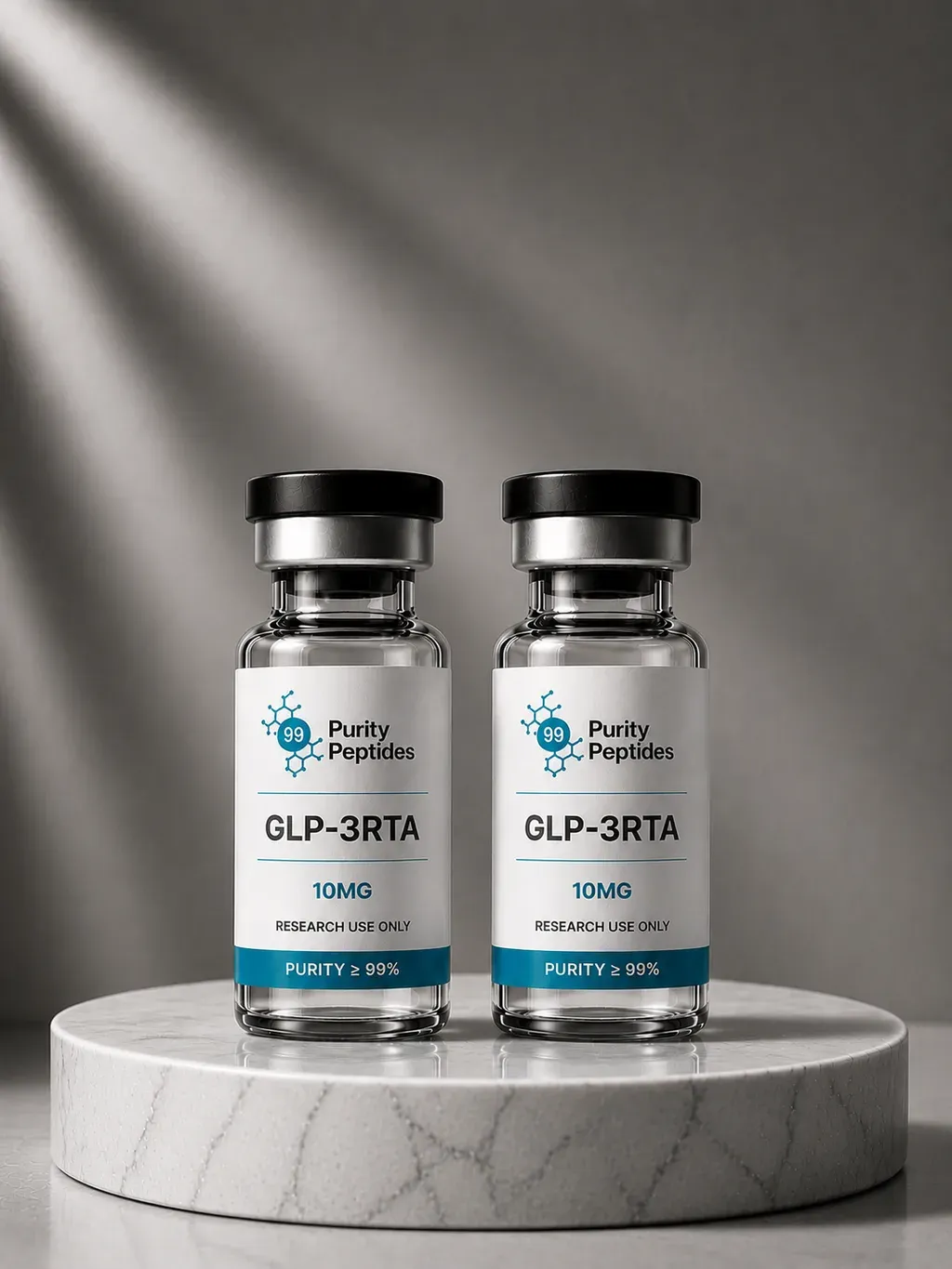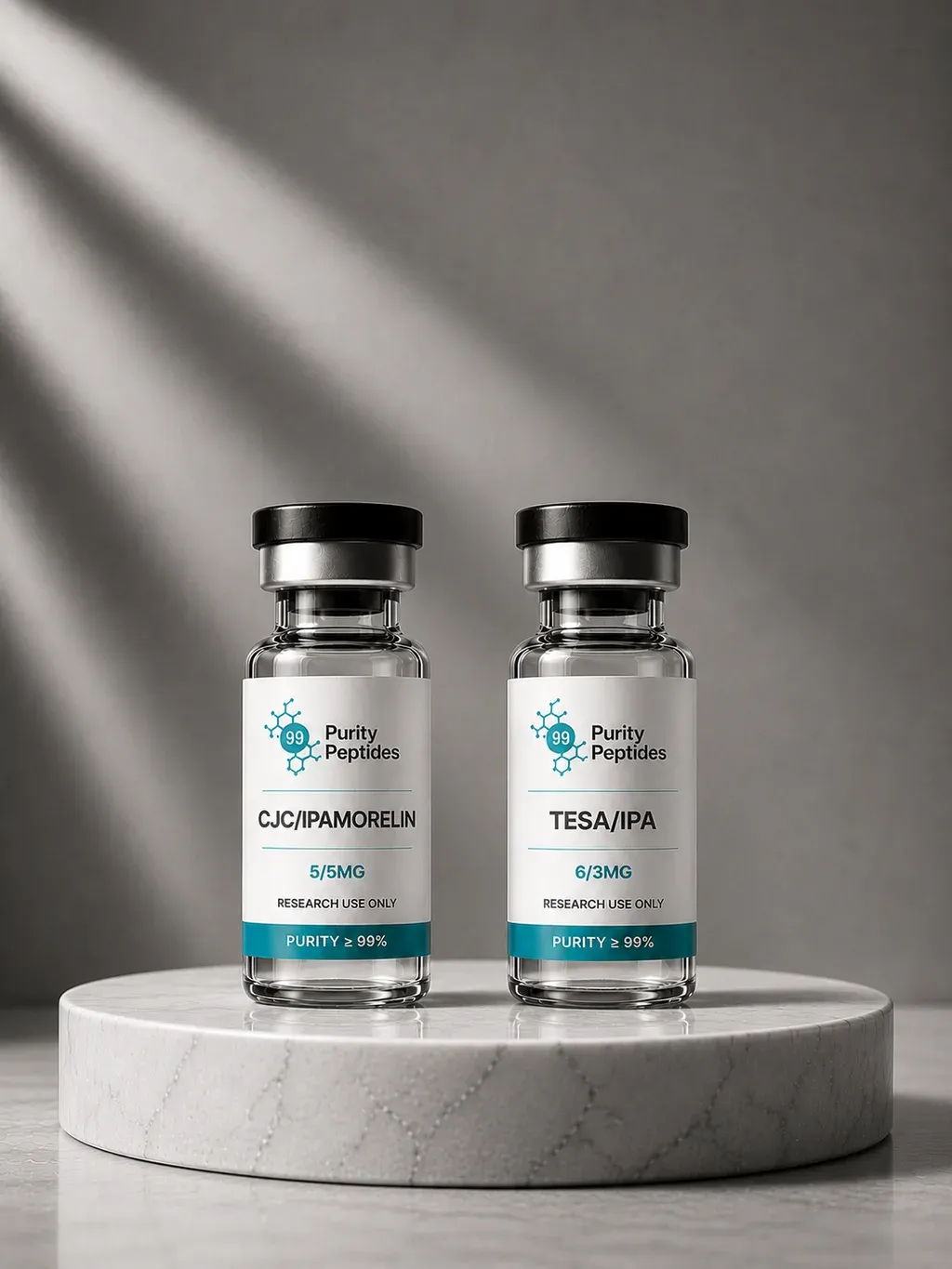
The GHRH / GHS Blend Comparator supplies two premixed formulations, each pairing a GHRH-receptor agonist with Ipamorelin: CJC-1295/Ipamorelin at 5 mg/5 mg and Tesamorelin/Ipamorelin at 6 mg/3 mg. The two differ in both the GHRH component and the component ratio. Notation gives mass per component, so the vials contain 10 mg and 9 mg in total. For research use only.
HPLC certified
Independent analysis
Highest standard
Full traceability
The GHRH / GHS Blend Comparator brings together two premixed peptide formulations that share an architecture. Each pairs an agonist at the growth hormone-releasing hormone receptor with Ipamorelin, a ligand at the growth hormone secretagogue receptor GHS-R1a.
Two things differ between them. The GHRH component is CJC-1295 in one blend and tesamorelin in the other. The ratio is 1:1 in the CJC-1295 formulation and 2:1 in the tesamorelin formulation. Because both change at once, a difference observed between the two blends cannot be attributed to either factor alone — this is a comparison of two formulations rather than a controlled experiment.
The notation gives mass per component. A 5/5 vial contains 5 mg of each compound, 10 mg in total; a 6/3 vial contains 6 mg and 3 mg, 9 mg in total.
Combining the two receptor classes has a documented pharmacological basis at class level. What published work does not establish is that either specific ratio is optimal, or that either formulation has been validated. Ratios in commercial blends reflect formulation convention rather than published optimisation.
A premixed blend also fixes its ratio, so neither component can be varied independently or run alone.
For Research Use Only. Not intended for human consumption, therapeutic use, veterinary use, or diagnostic applications.
The GHRH / GHS Blend Comparator is a two-vial set containing CJC-1295/Ipamorelin at 5 mg/5 mg and Tesamorelin/Ipamorelin at 6 mg/3 mg. Both pair a GHRH-receptor agonist with the GHS-R1a ligand Ipamorelin. The blends differ in two respects — the GHRH component and the ratio — so the set compares formulations rather than isolating a single variable.
| Blend | GHRH component | GHS component | Ratio | Total mass |
|---|---|---|---|---|
| CJC-1295 / Ipamorelin | CJC-1295, 5 mg | Ipamorelin, 5 mg | 1:1 | 10 mg |
| Tesamorelin / Ipamorelin | Tesamorelin, 6 mg | Ipamorelin, 3 mg | 2:1 | 9 mg |
Both are supplied as premixed lyophilized powder in a single vial each, with batch documentation.
Each number gives the mass of one component in milligrams, not the vial total. A 5/5 vial contains 5 mg of CJC-1295 and 5 mg of Ipamorelin — 10 mg in total. A 6/3 vial contains 6 mg of tesamorelin and 3 mg of Ipamorelin — 9 mg in total.
This convention is used consistently across premixed blends in this catalogue, including the BPC-157 / TB-500 blend formats.
Both blends share an architecture: one GHRH-receptor agonist plus Ipamorelin. Two things separate them.
One blend uses CJC-1295, the other tesamorelin. These are different compounds — different sequence basis, different stabilisation approach, different molecular size. They are not interchangeable, and swapping one for the other is the more substantial of the two differences between these products.
The CJC-1295 formulation is 1:1. The tesamorelin formulation is 2:1, with the GHS component at half the mass of the GHRH component.
Because both factors change together, this is a formulation comparison rather than a controlled one. A difference observed between the two blends cannot be attributed to the GHRH component or to the ratio, because neither was held constant.
That is worth stating plainly. Researchers wanting to isolate one variable need components supplied separately, not premixed — see the GHRH Analog Comparator and the GHS-R Ligand Comparator.
Be the first to share your experience with this product and help other researchers!
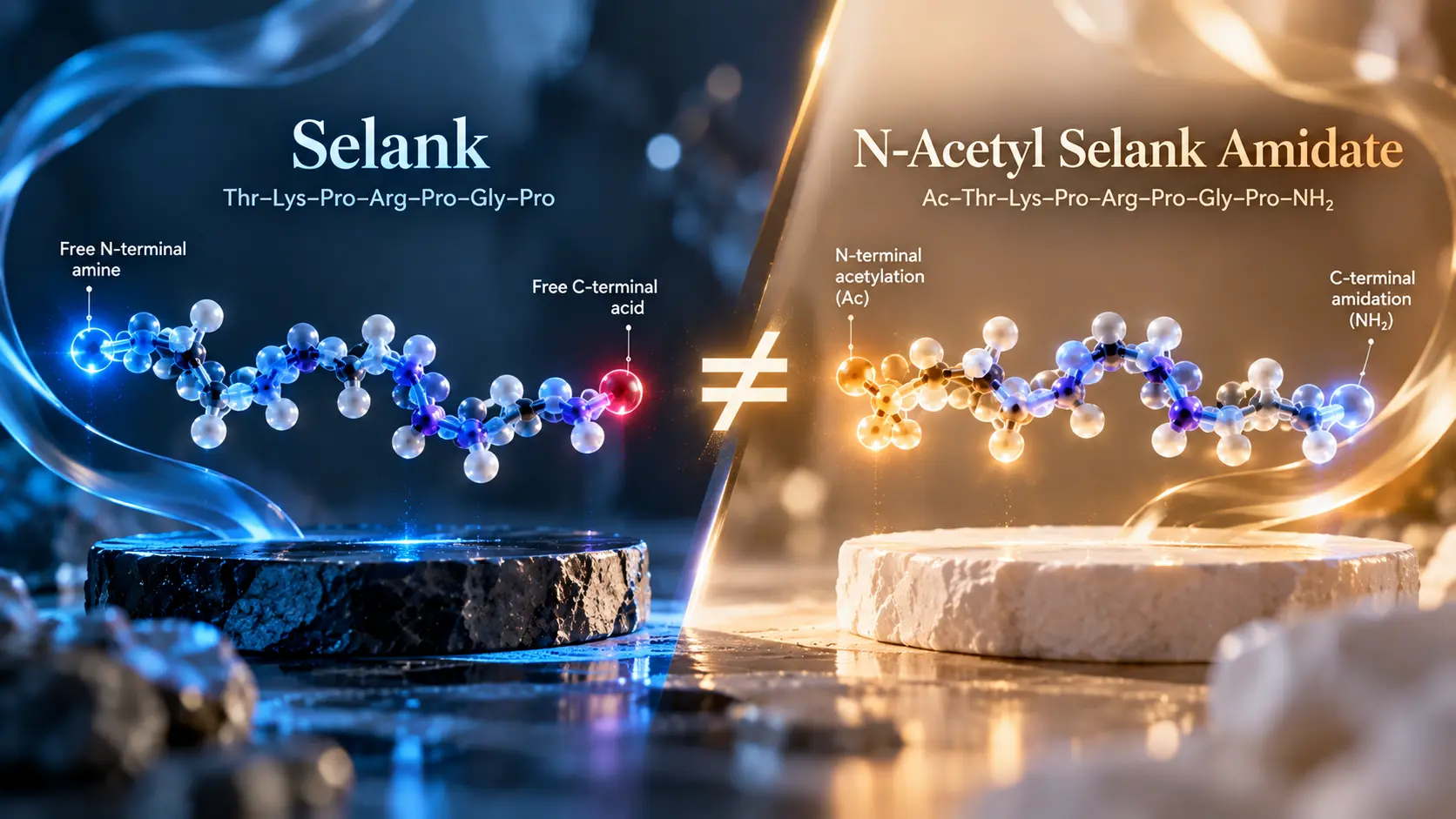
N-acetyl selank amidate is not Selank's full chemical name. Compare sequences, masses and database records, and learn how to tell the two apart on a COA.
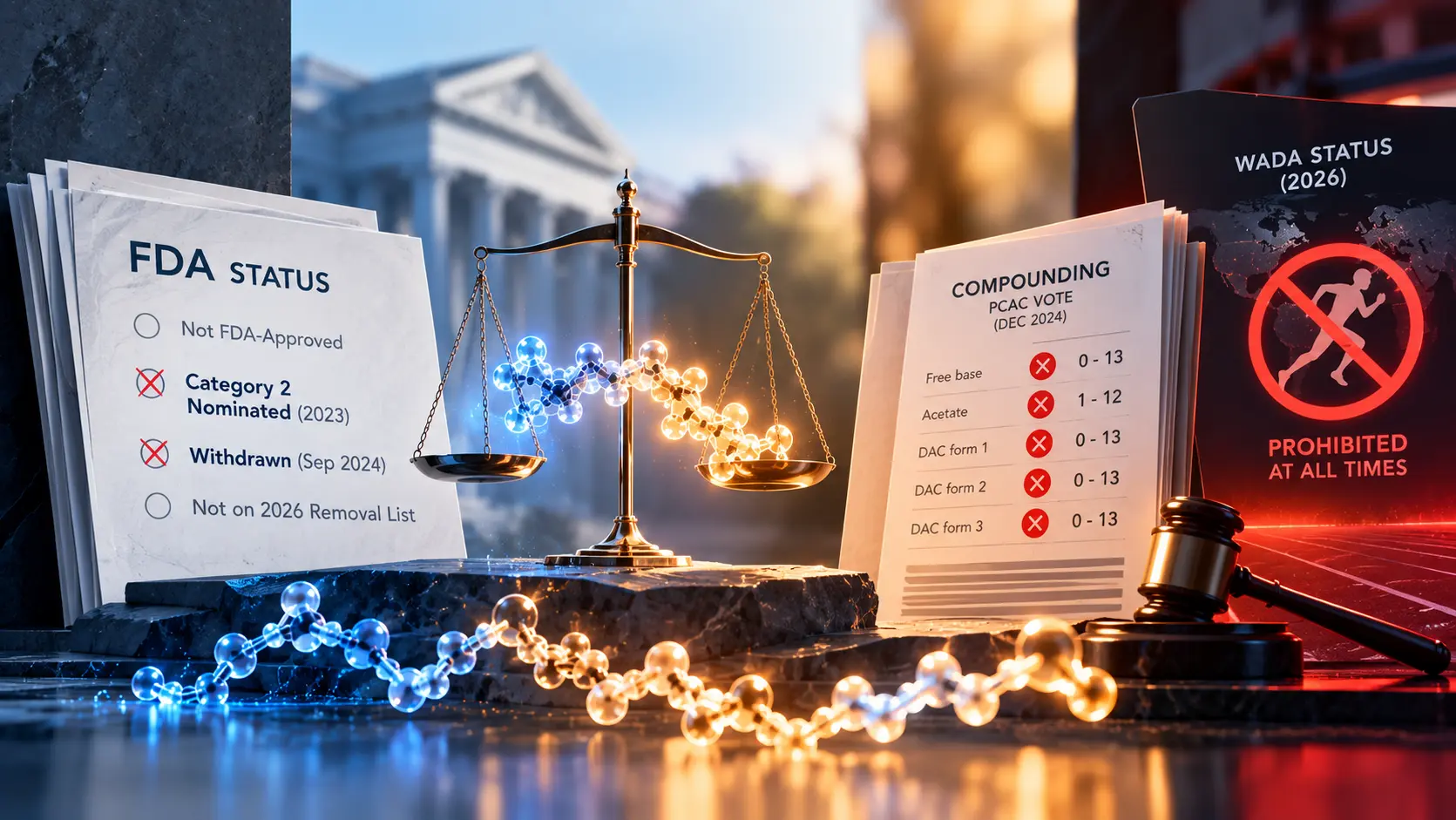
Is CJC-1295 legal? It is not FDA-approved, left FDA Category 2 in 2024, was voted down for 503A compounding, and is banned by WADA. Verified status.
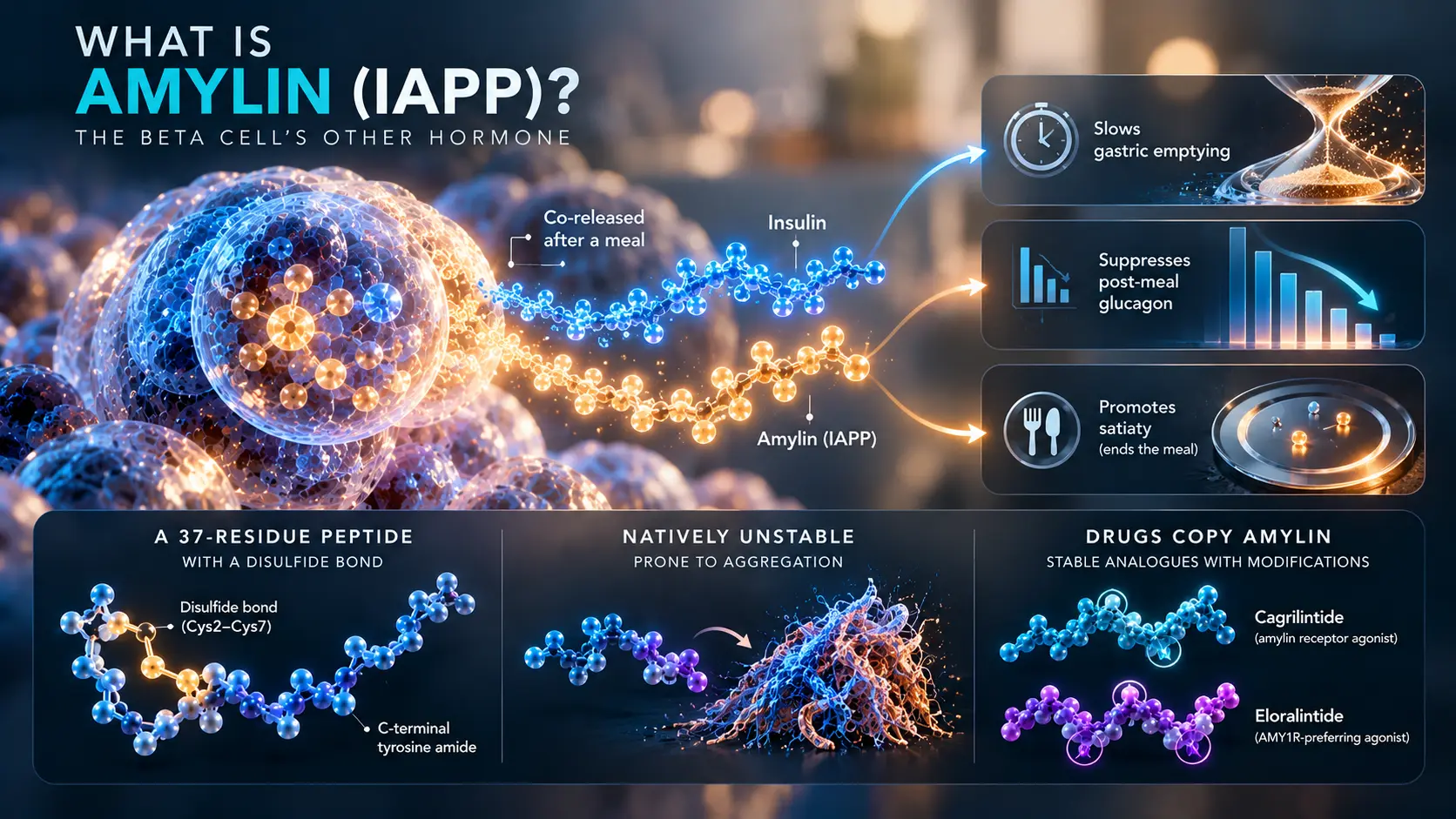
What is amylin? A 37-residue hormone the beta cell releases alongside insulin. Its real job, why it clumps, and how cagrilintide and eloralintide copy it.
(faqs)