Introduction
Two research peptides keep surfacing in tissue-protection and immunology literature searches for very different reasons: ARA-290 and Thymosin Alpha-1. Researchers new to either compound often assume they occupy the same research category simply because both are peptide hormones with anti-inflammatory associations. They don’t. ARA-290 is an erythropoietin-derived peptide engineered to protect tissue and calm inflammatory signaling without touching red blood cell production. Thymosin Alpha-1 is a thymic peptide hormone studied for its influence on immune cell activation and cytokine regulation.
Featured Products
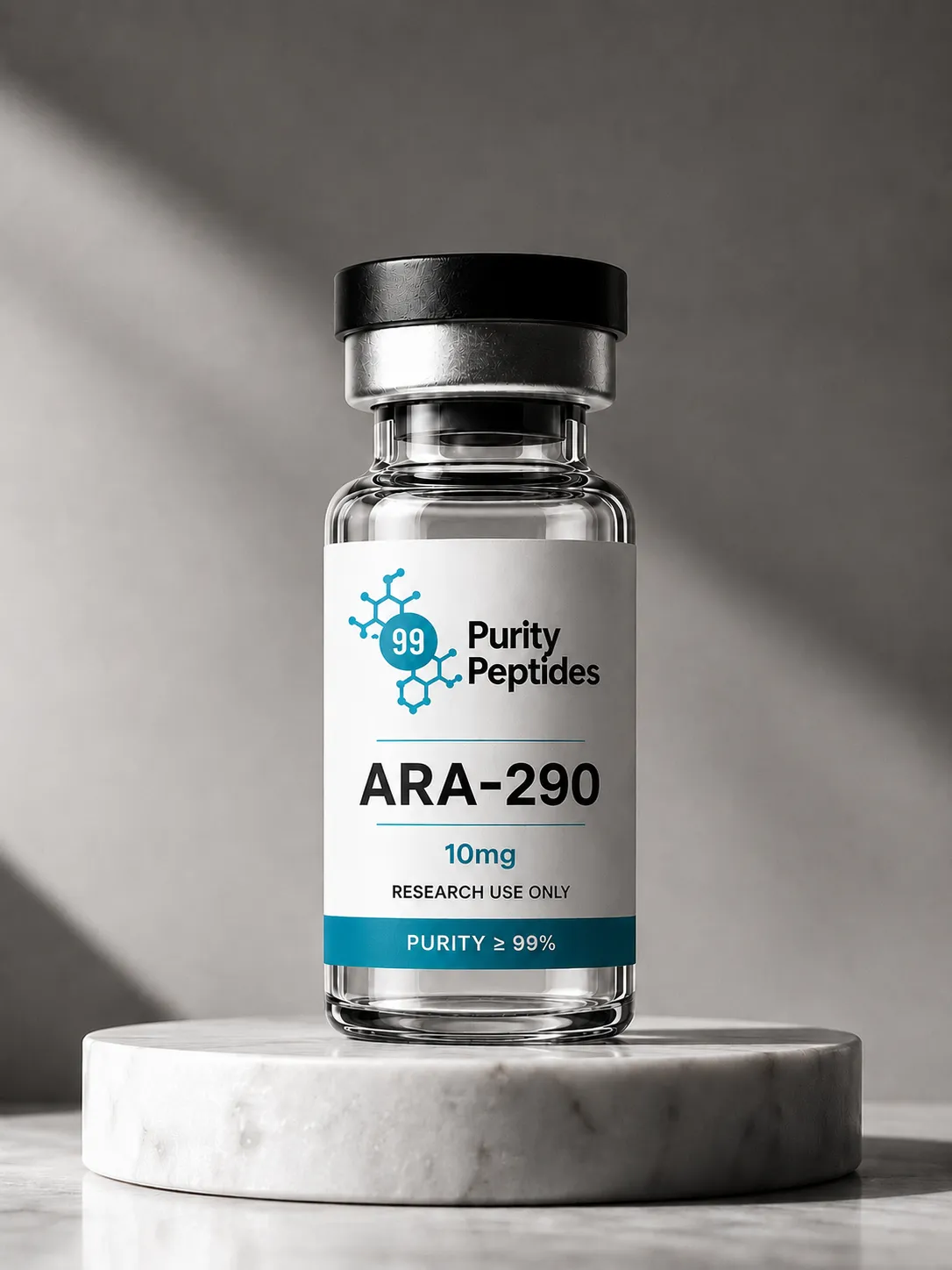
This guide breaks down ARA-290 vs Thymosin Alpha-1 side by side — origin, molecular profile, receptor targets, mechanism of action, and the research applications each compound supports. It also covers the purity verification and reconstitution practices researchers should expect from a research-grade peptide supplier before sourcing either compound.
All information in this guide is presented in a research context only. ARA-290 and Thymosin Alpha-1 peptides sold by 99 Purity Peptides are strictly for laboratory and research use and are not intended for human consumption.
Compliance Note • ARA-290 and Thymosin Alpha-1 discussed in this guide are research-use-only (RUO) compounds. • Content is educational and research-context framed — not human dosing or medical advice. • Not for human consumption. For qualified researchers and laboratory professionals only. |
Quick Answer: ARA-290 vs Thymosin Alpha-1 at a Glance
ARA-290 (cibinetide) is an 11-amino-acid peptide engineered from the helix-B surface domain of erythropoietin, studied for tissue-protective and anti-inflammatory research via the innate repair receptor. Thymosin Alpha-1 is a 28-amino-acid thymic peptide studied for immune modulation — T-cell activation and cytokine regulation. The two compounds target entirely different research systems.
Attribute | ARA-290 (Cibinetide) | Thymosin Alpha-1 |
|---|---|---|
Peptide Class | Non-hematopoietic EPO-derived peptide | Thymic peptide hormone |
Amino Acid Length | 11 residues | 28 residues |
Approx. Molecular Weight | ~1,257 Da | ~3,108 Da |
Primary Research Role | Tissue protection / anti-inflammatory | Immunomodulation |
Core Mechanism Studied | Innate repair receptor (EPOR/CD131) activation | T-cell & cytokine regulation |
Common Research Areas | Nerve fiber regeneration, neuropathic pain models, ischemic tissue research | Immune dysregulation, infection response modeling |
Precursor / Origin | Engineered from erythropoietin (EPO) helix-B domain | Derived from thymosin fraction 5 / thymic tissue |
Purity Standard (99PP) | 99%+, third-party tested | 99%+, third-party tested |
What Is ARA-290 (Cibinetide)?
ARA-290 — also known by its research and clinical-trial name, cibinetide — is a synthetic 11-amino-acid peptide engineered from the helix-B surface domain of erythropoietin (EPO). Researchers identified that this specific region of the EPO molecule carries the hormone’s tissue-protective and anti-inflammatory signaling activity, separate from the erythropoietic activity responsible for red blood cell production.
Origin & Discovery
ARA-290 was developed by researchers at Araim Pharmaceuticals, building on structural work identifying EPO’s helix-B domain as the source of its non-hematopoietic tissue-protective effects. Because it reproduces this signaling without stimulating erythropoiesis, ARA-290 belongs to a distinct research category: non-hematopoietic EPO analogs.
Molecular Profile
- Sequence length: 11 amino acids
- Approximate molecular weight: ~1,257 Da
- Molecular formula: C51H84N16O21
- Classification: Non-hematopoietic erythropoietin-derived peptide
- Solubility: Water-soluble; typically supplied as a lyophilized powder
Mechanism of Action in Research Models
ARA-290 research centers on its selective activation of the innate repair receptor (IRR), a receptor complex distinct from the classical homodimeric EPO receptor that drives red blood cell production. Published research has examined its role in:
- Innate repair receptor (EPOR/CD131 heteromer) activation studies
- Anti-inflammatory signaling research, independent of hematopoietic pathways
- Nerve fiber regeneration and small-fiber neuropathy research models
- Tissue-protective and cellular survival signaling in ischemic injury research
Because of this profile, ARA-290 is most often selected for research protocols centered on tissue protection, inflammation, and nerve-related endpoints rather than immune cell regulation.
What Is Thymosin Alpha-1?
Thymosin Alpha-1 (Tα1) is a 28-amino-acid peptide originally isolated from thymosin fraction 5, a thymic tissue extract studied extensively in immunology research beginning in the 1970s. It is classified as a thymic peptide hormone and is one of the most frequently cited compounds in immunomodulatory peptide research.
Origin & Discovery
Thymosin Alpha-1 was first characterized from calf thymus extract and has since been studied under a synthetic research formulation. It belongs to the broader thymosin peptide family, which also includes Thymosin Beta-4 — a related but mechanistically distinct compound more associated with tissue-repair research.
Molecular Profile
- Sequence length: 28 amino acids
- Approximate molecular weight: ~3,108 Da
- Classification: Acetylated polypeptide, thymic hormone family
- Solubility: Water-soluble; typically supplied as a lyophilized powder
Mechanism of Action in Research Models
In laboratory models, Thymosin Alpha-1 is studied for its interaction with the innate and adaptive immune systems, including:
- T-lymphocyte activation and maturation
- Cytokine production regulation, including interferon and interleukin pathways
- Dendritic cell maturation and antigen presentation research
- Modulation of immune response in infection and immune dysregulation research models
ARA-290 vs Thymosin Alpha-1: Mechanism of Action Comparison
The clearest way to separate these two peptides is by receptor target. ARA-290 acts on the innate repair receptor to influence tissue-protective and anti-inflammatory signaling. Thymosin Alpha-1 acts on immune cell signaling pathways to influence T-cell behavior and cytokine output.
Mechanism Category | ARA-290 | Thymosin Alpha-1 |
|---|---|---|
Primary Function | Tissue-protective / anti-inflammatory | Immunomodulatory |
Target Interaction | Innate repair receptor (EPOR/CD131) | Immune cell receptors & signaling pathways |
Cellular Focus | Neurons, endothelial cells, injured/inflamed tissue | T-cells, dendritic cells |
Research Signal Pathway | JAK2/STAT3, PI3K/Akt, anti-apoptotic signaling | Cytokine / interferon regulation |
Typical Study Context | Nerve fiber regeneration, neuropathic pain, ischemic tissue research | Immune dysregulation, infection response modeling |
ARA-290 vs Thymosin Alpha-1: Research Applications
Tissue-Protection & Nerve Research (ARA-290)
ARA-290 research applications concentrate on tissue-protection and neuroprotection, with published work exploring small-fiber neuropathy models, corneal nerve fiber density as a structural research endpoint, and ischemic tissue protection. Its receptor-specific mechanism makes it a common reference compound in research separating EPO’s tissue-protective effects from its hematopoietic effects.
Immune Modulation Research (Thymosin Alpha-1)
Thymosin Alpha-1 research applications are concentrated in immunology, with published work exploring immune response in models of chronic infection, immune dysregulation, and cytokine imbalance. Its consistent presence in T-cell activation studies makes it a common reference compound in comparative immunomodulatory peptide research.
Overlapping Research Interest: Inflammation Signaling
Although their primary mechanisms differ, both peptides intersect at the level of inflammatory signaling. Some research explores how tissue-protective peptides like ARA-290 influence local inflammatory environments in ways that parallel immunomodulatory peptides like Thymosin Alpha-1 — which is part of why researchers frequently search for a direct ARA-290 vs Thymosin Alpha-1 comparison.
Can ARA-290 and Thymosin Alpha-1 Be Studied in the Same Research Protocol?
Because ARA-290 and Thymosin Alpha-1 engage different receptor systems — the innate repair receptor versus immune cell signaling pathways — some research designs examine them in parallel to explore how tissue-protective and immunomodulatory mechanisms intersect in inflammation and injury-response models. This remains an emerging area rather than a standardized protocol, and study design — including compound selection, controls, and endpoints — should follow the researcher’s own institutional and regulatory guidelines.
99 Purity Peptides supplies both compounds independently so that researchers can source each peptide to the same 99%+ purity standard, whether the protocol calls for one compound or a comparative, side-by-side design.
Purity, Quality Verification & Certificate of Analysis
Peptide purity directly affects research outcomes. A compound with unverified purity introduces variables that can compromise reproducibility — which is why purity testing and documentation matter as much as the peptide itself.
How Purity Is Verified
- High-Performance Liquid Chromatography (HPLC) to quantify purity percentage
- Mass spectrometry to confirm peptide identity and molecular weight
- Endotoxin testing where applicable for research-grade sourcing
- Batch-specific Certificate of Analysis (COA) documentation
99 Purity Peptides Testing Standards
Both ARA-290 and Thymosin Alpha-1 are formulated to 99%+ purity and third-party tested, with COA documentation available for every batch. This gives researchers a verifiable basis for comparing results across studies and vendors, rather than relying on a supplier’s unverified purity claims.
Reconstitution & Storage Guidelines for Research Use
Proper handling preserves peptide stability and supports consistent research results. The general steps below apply to both ARA-290 and Thymosin Alpha-1 in lyophilized form.
- Allow the lyophilized vial to reach room temperature before opening.
- Add bacteriostatic or sterile water slowly, directing the stream along the inside wall of the vial rather than directly onto the powder.
- Gently swirl the vial to dissolve — do not shake, as agitation can degrade peptide structure.
- Inspect the solution for clarity; it should appear clear with no visible particulate.
- Label the vial with the reconstitution date for tracking purposes.
- Store reconstituted peptide refrigerated and protected from light; use within the research timeframe appropriate to the study protocol.
Storage Checklist • Lyophilized powder: store frozen or refrigerated, away from light and moisture. • Reconstituted peptide: refrigerate; avoid repeated freeze-thaw cycles. • Always confirm handling protocols against the batch-specific COA and institutional guidelines. |
Choosing a Research Peptide Supplier: What to Verify
Not all research peptide vendors hold themselves to the same standard. Before sourcing ARA-290, Thymosin Alpha-1, or any comparable compound, researchers should confirm the following:
- Third-party HPLC and mass spectrometry testing, not just in-house claims
- Batch-specific Certificate of Analysis available on request
- Clear research-use-only (RUO) labeling and compliance framing
- US-based sourcing and cold-chain shipping practices
- Transparent documentation of peptide sequence, purity percentage, and storage requirements
99 Purity Peptides applies this standard across its full catalog, including ARA-290 and Thymosin Alpha-1, so researchers can source both compounds from a single verified supplier.
Key Takeaways
Summary • ARA-290 (cibinetide) is a non-hematopoietic EPO-derived peptide (11 amino acids); Thymosin Alpha-1 is an immunomodulatory thymic peptide (28 amino acids). • ARA-290 research centers on innate repair receptor activation, tissue protection, and nerve fiber regeneration; Thymosin Alpha-1 research centers on T-cell activation and cytokine regulation. • The two peptides are not interchangeable — they target different receptor systems and support different research questions. • Purity verification (HPLC, mass spectrometry, COA) matters as much as the compound choice itself. • Both peptides from 99 Purity Peptides are formulated to 99%+ purity, third-party tested, and sold strictly for research use only. |
Frequently Asked Questions
What is ARA-290 peptide used for in research?
ARA-290 (cibinetide) is studied as a tissue-protective and anti-inflammatory peptide, with research focused on nerve fiber regeneration, neuropathic pain models, and innate repair receptor activation.
What is Thymosin Alpha-1 peptide used for in research?
Thymosin Alpha-1 is studied in immunology research for its role in T-cell activation, cytokine regulation, and dendritic cell maturation, with most published work centered on immune modulation models.
What is the main difference between ARA-290 and Thymosin Alpha-1?
ARA-290 is a non-hematopoietic erythropoietin-derived peptide studied for tissue protection and anti-inflammatory signaling via the innate repair receptor, while Thymosin Alpha-1 is a thymic peptide hormone studied for immune modulation. They differ in origin, sequence, receptor target, and research application.
How pure is 99 Purity Peptides' ARA-290 and Thymosin Alpha-1?
Both compounds are formulated to 99%+ purity and are third-party tested, with a certificate of analysis (COA) available for each production batch.
Do you provide a certificate of analysis (COA) with each peptide order?
Yes. Every research peptide batch, including ARA-290 and Thymosin Alpha-1, ships with access to third-party COA documentation confirming purity and identity.
How should ARA-290 and Thymosin Alpha-1 be reconstituted for research use?
Both peptides are typically reconstituted with bacteriostatic or sterile water, added gently along the vial wall rather than directly onto the lyophilized powder, then swirled — not shaken — until fully dissolved.
What is the shelf life of lyophilized ARA-290 and Thymosin Alpha-1?
In lyophilized (freeze-dried) powder form and stored properly away from light, heat, and moisture, both peptides generally maintain stability for extended periods; once reconstituted, stability windows are considerably shorter and refrigeration is recommended.
Can ARA-290 and Thymosin Alpha-1 be studied in the same research protocol?
Some researchers examine tissue-protective and immunomodulatory peptides in parallel to explore how innate repair signaling and adaptive immune regulation interact. Protocol design is study-specific and should follow the researcher's own institutional guidelines.
Is ARA-290 sold for human consumption?
No. ARA-290 sold by 99 Purity Peptides is strictly for laboratory and research use only and is not approved or intended for human consumption.
Is Thymosin Alpha-1 sold for human consumption?
No. Thymosin Alpha-1 sold by 99 Purity Peptides is strictly for laboratory and research use only and is not approved or intended for human consumption.
What makes ARA-290 a tissue-protective peptide?
ARA-290 is engineered from the helix-B surface domain of erythropoietin and is studied for its ability to selectively activate the innate repair receptor, which is associated with anti-inflammatory and tissue-protective signaling independent of red blood cell production.
What makes Thymosin Alpha-1 an immunomodulatory peptide?
Thymosin Alpha-1 is derived from thymic tissue and is studied for its influence on immune cell signaling, including T-lymphocyte activity and cytokine production, which is why it is classified as immunomodulatory.
How is peptide purity tested and verified?
Purity is typically verified using High-Performance Liquid Chromatography (HPLC) and confirmed for identity using mass spectrometry, with results documented in a certificate of analysis.
What storage temperature is recommended for research peptides?
Lyophilized peptide vials are generally kept frozen or refrigerated and protected from light. Once reconstituted, refrigeration is standard practice to help preserve peptide stability during the research window.
What is the difference between ARA-290 and erythropoietin (EPO)?
ARA-290 is engineered from a specific structural region of EPO — the helix-B surface domain — and is studied for retaining EPO’s tissue-protective signaling while excluding the erythropoietic activity that drives red blood cell production.