A peptide's purity means little if it degrades in the freezer before a study ever begins. Storage mistakes — a missed freeze-thaw cycle, a vial left on a bench under fluorescent light, a shipment that sat too long at room temperature — are some of the most common and most preventable threats to research validity. This guide walks through peptide storage guidelines from the moment a shipment arrives through reconstitution, refrigeration, and long-term freezer storage, covering the temperature ranges, container choices, and handling habits that protect peptide stability. Everything here is scoped strictly to storage and handling for research-use-only (RUO) compounds — nothing in this guide describes dosing or administration. By the end, you will have a practical, checklist-ready framework for keeping research peptides stable from delivery to data collection.
What Is Peptide Reconstitution?
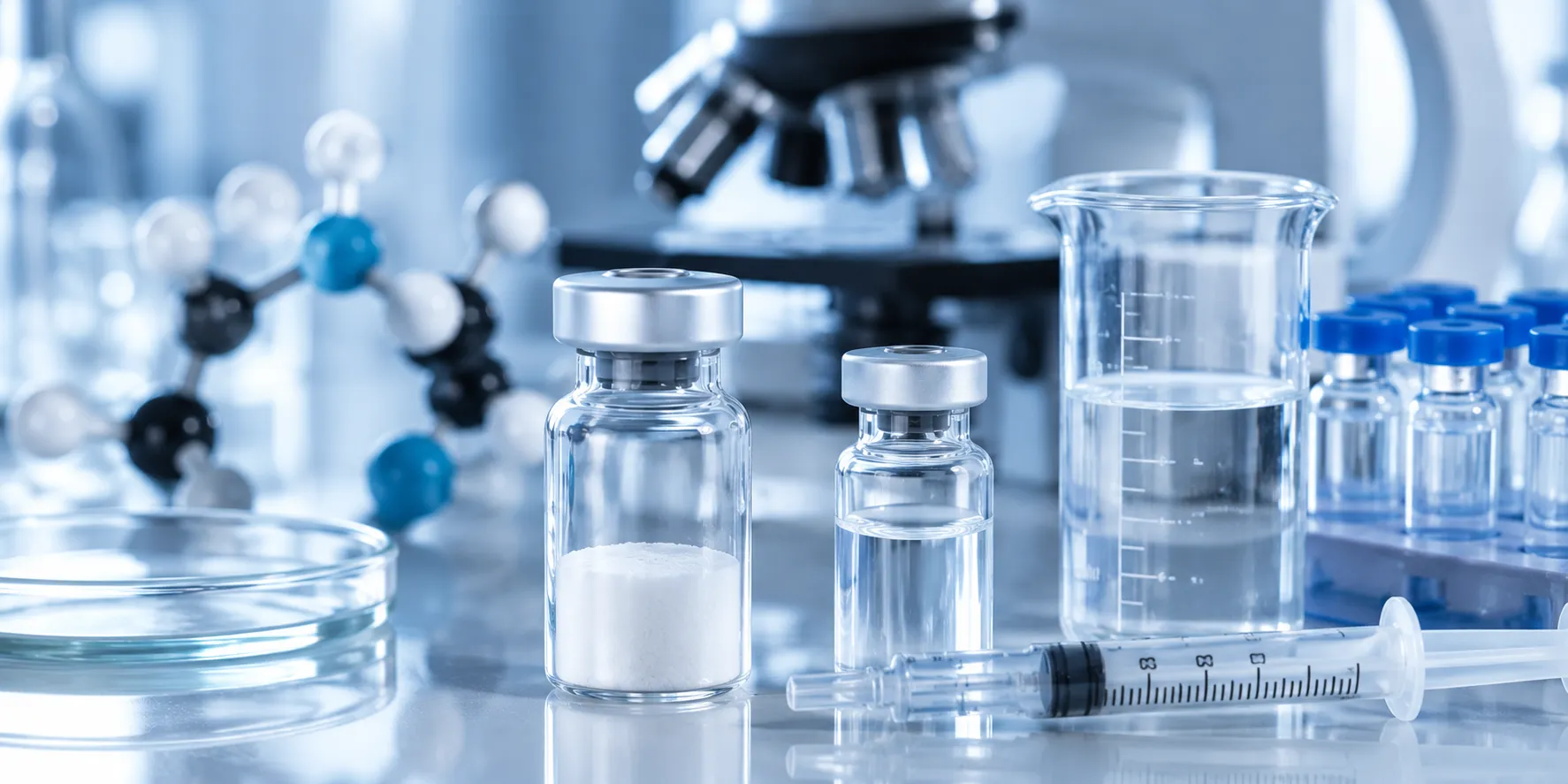
Peptide reconstitution is the process of dissolving lyophilized (freeze-dried) peptide powder in a diluent — almost always bacteriostatic water in research contexts — to create a liquid solution ready for laboratory use. Reconstitution is also the point at which a peptide's stability clock changes: lyophilized powder is chemically far more stable than a reconstituted solution, which is why storage guidance differs sharply before and after this step.
Peptide Storage Temperature: The Core Variable
Temperature is the single largest factor influencing how quickly a peptide degrades. Heat accelerates the chemical reactions — oxidation, hydrolysis, deamidation — that break peptide bonds down over time, while cold storage slows those reactions dramatically.
Storage Condition | Typical Range | Best Suited For |
|---|---|---|
Ultra-low freezer | -80°C | Long-term storage of lyophilized powder or highly sensitive stock |
Standard freezer | -20°C | Medium-term storage of unopened lyophilized peptide vials |
Refrigeration | 2-8°C | Short-term storage of reconstituted peptide solutions |
Room temperature | ~20-25°C | Brief handling only — not a storage condition |
Key Takeaway Lyophilized powder tolerates freezer storage well. Once reconstituted, a peptide solution should move to refrigeration, and room temperature should never be treated as a storage condition — only a brief handling state. |
-20°C vs. -80°C: Which One Do You Need?
For most research peptide applications, a standard -20°C freezer is sufficient for unopened lyophilized stock over a period of months. Ultra-low -80°C storage is generally reserved for long-term archival stock or peptides with documented sensitivity to standard freezer conditions. Neither replaces proper refrigeration once a peptide has been reconstituted — freezing a reconstituted solution introduces its own risk through freeze-thaw stress, covered below.
How to Reconstitute and Store Peptides for Maximum Stability
The steps below describe general laboratory reconstitution and storage handling for research purposes only — not instructions for human use.
- Confirm the peptide vial has been stored frozen and away from light prior to reconstitution.
- Bring bacteriostatic water and the peptide vial to room temperature briefly before mixing, following supplier-specific reconstitution ratio guidance.
- Add the diluent slowly along the inside wall of the vial rather than directly onto the powder, to protect the peptide's structure.
- Gently swirl — do not shake — to avoid introducing mechanical stress that can cause aggregation.
- Label the vial immediately with the reconstitution date and concentration.
- Transfer the reconstituted solution to refrigeration promptly, and store it away from light.
What Causes Peptide Degradation?
Peptide degradation is rarely caused by one factor alone. Four chemical processes account for most stability loss in research peptide storage:
- Oxidation: certain amino acid residues react with oxygen, altering the peptide's structure and reducing potency.
- Hydrolysis: water molecules break peptide bonds, a process accelerated by heat and extended reconstituted storage time.
- Deamidation: a chemical modification of specific amino acid residues that can change a peptide's activity over time.
- Aggregation: peptide molecules clump together, often triggered by mechanical stress (like shaking) or repeated freeze-thaw cycling.
Heat, light, humidity, and freeze-thaw cycling do not cause degradation directly — they accelerate these four underlying chemical pathways, which is why controlling those environmental variables is the practical core of peptide storage guidelines.
Lyophilized vs. Reconstituted Peptide Storage
Factor | Lyophilized (Powder) | Reconstituted (Solution) |
|---|---|---|
Relative stability | High — chemically dormant state | Lower — active chemical environment |
Recommended storage | Frozen (-20°C or -80°C), dark | Refrigerated (2-8°C), dark |
Freeze-thaw sensitivity | Low | High — avoid repeated cycles |
Typical stability window | Longest, per supplier documentation | Shorter, per supplier documentation |
This is the practical reason suppliers ship peptides lyophilized whenever possible: powder form buys researchers a much longer stability runway than a pre-mixed solution would.
Signs of Peptide Degradation
- Cloudiness or turbidity in a solution that was previously clear
- Visible particulate matter or precipitate
- Unexpected discoloration
- A documented freeze-thaw or temperature excursion event, even without visible changes
Common Mistake Assuming a peptide is fine because the solution still looks clear. Some degradation pathways, like deamidation, do not produce a visible change. Documented storage history is a more reliable indicator than appearance alone. |
Peptide Storage Equipment & Supplies
- Amber or opaque glass vials to limit light exposure and reduce photodegradation risk.
- A dedicated lab freezer with reliable temperature logging, rather than a shared or frequently opened unit.
- Desiccant packs for powder storage in humid environments, to limit moisture-driven degradation.
- Clear, consistent vial labeling — compound, concentration, reconstitution date — to track stability windows accurately.
- A backup power or alarm system for freezers holding valuable long-term research stock.
Peptide Shipping & Cold Chain: What to Expect on Arrival
Reputable suppliers ship research peptides using cold-chain packaging — insulated containers with ice packs or gel packs designed to hold a stable temperature range in transit. On arrival, researchers should inspect the packaging for signs of a temperature excursion (melted ice packs, condensation, warm packaging) and move the contents to appropriate refrigerator or freezer storage promptly rather than leaving a shipment on a bench or in a mailroom.
Peptide Storage Mistakes to Avoid
- Leaving reconstituted peptides at room temperature for extended periods between uses.
- Repeatedly freezing and thawing the same vial instead of aliquoting into single-use portions.
- Storing vials under direct light or in a clear, unshielded container.
- Skipping vial labeling, making it impossible to track how long a solution has been reconstituted.
- Assuming all peptides share identical stability windows rather than checking supplier-specific documentation.
Purity, Documentation, and Why Storage Records Matter
Storage conditions and purity verification are closely linked. A Certificate of Analysis (COA) confirms a peptide's purity at the point of testing, but that purity is only preserved if storage conditions are maintained afterward. Reliable research relies on both: verified purity at the source and documented, consistent storage practice afterward. Suppliers that provide batch-specific COAs alongside clear storage and handling guidance make it easier for researchers to maintain an unbroken chain of stability documentation.
KEY TAKEAWAYS
- Lyophilized peptide powder should be stored frozen and dark; reconstituted solutions should move to refrigeration promptly and stay there.
- Freeze-thaw cycling, heat, light, and humidity accelerate the same four underlying degradation pathways: oxidation, hydrolysis, deamidation, and aggregation.
- Amber vials, consistent labeling, and minimizing freeze-thaw cycles are the highest-impact, lowest-effort storage practices researchers can adopt.
- Visual clarity is not a reliable indicator of stability — documented storage history matters more than appearance.
- This guide covers storage, stability, and handling only — it is not dosing or administration guidance, consistent with research-use-only (RUO) framing.
Frequently Asked Questions
How should I store research peptides?
Lyophilized (freeze-dried) peptides should be stored frozen and protected from light before reconstitution. Once reconstituted with bacteriostatic water, refrigeration and minimizing freeze-thaw cycles are the two factors most consistently linked to preserved stability. Always follow the specific guidance your supplier or institutional protocol provides.
What is the ideal temperature for peptide storage?
Unopened, lyophilized peptides are generally kept in a standard freezer (around -20°C) for medium-term storage, with ultra-low freezers (-80°C) reserved for long-term or highly sensitive research stock. Once reconstituted, refrigeration (roughly 2-8°C) is the typical short-term storage condition referenced in peptide handling literature.
How long do reconstituted peptides last?
Stability windows vary by peptide, buffer, and storage conditions, so there is no single universal timeframe. Researchers should rely on the specific stability data their supplier or institutional protocol provides rather than a generic rule, and should always store reconstituted solutions refrigerated and away from light.
Can I store peptides at room temperature?
Brief room-temperature exposure during handling is generally considered low-risk for short periods, but sustained room-temperature storage accelerates degradation processes like oxidation and hydrolysis. Peptides should be returned to refrigeration or freezer storage as soon as handling is complete.
Do peptides need to be refrigerated immediately after arrival?
Yes. Reputable suppliers ship with cold-chain packaging specifically because prompt refrigeration or freezing on arrival is one of the most important variables in preserving peptide integrity. Unpacking and storing peptides as soon as a shipment arrives is standard best practice.
What happens if peptides are exposed to light?
Light exposure, particularly UV light, can drive photodegradation in some peptide sequences, altering molecular structure and reducing potency. This is why amber glass vials and light-protected storage are commonly recommended alongside temperature control.
How do I know if my peptides have degraded?
Visual indicators can include cloudiness, discoloration, or visible particulate in a reconstituted solution that was previously clear. That said, some degradation is not visually detectable, which is why researchers rely on documented storage conditions and stability data rather than visual inspection alone.
Can I refreeze peptides after they've thawed?
Repeated freeze-thaw cycles are one of the more common causes of peptide degradation and potency loss, since each cycle introduces physical and chemical stress on the peptide structure. Aliquoting a reconstituted solution into single-use portions before freezing is a common way to avoid repeated freeze-thaw exposure.
What type of water should be used to reconstitute peptides?
Bacteriostatic water is the standard diluent referenced throughout research peptide literature. It contains a small percentage of benzyl alcohol as a preservative, which helps limit microbial growth in a reconstituted solution during storage, unlike plain sterile water.
How should lyophilized peptide powder be stored before use?
Lyophilized peptide powder should be kept frozen, sealed, and protected from light and humidity until it's ready to be reconstituted. Unopened vials generally have a longer stability window than reconstituted solutions specifically because the freeze-dried form limits the chemical reactions that drive degradation.
What container is best for storing peptide vials?
Amber or opaque glass vials are commonly recommended because they limit light exposure, which is one of the known drivers of peptide photodegradation. Vials should also seal tightly to limit humidity and air exposure during storage.
How many freeze-thaw cycles can a peptide handle?
There is no universal number, since tolerance varies by peptide sequence and formulation, but research handling guidance consistently treats freeze-thaw cycling as cumulative damage rather than a reversible process. Minimizing the number of cycles — ideally to zero after initial reconstitution — is the most reliable practice.
Why do peptides degrade over time?
Peptide degradation is typically driven by a combination of oxidation, hydrolysis, deamidation, and aggregation — chemical processes that are accelerated by heat, light, humidity, and repeated freeze-thaw cycling. Proper storage conditions are designed specifically to slow each of these pathways.
How should peptides be stored during shipping?
Reputable suppliers use cold-chain shipping methods — insulated packaging with ice packs or gel packs — designed to keep peptides within a stable temperature range in transit. Researchers should inspect packaging condition on arrival and refrigerate or freeze the contents promptly.
What is the best practice checklist for peptide storage?
A solid baseline checklist includes: store lyophilized powder frozen and dark, refrigerate reconstituted solution promptly, minimize freeze-thaw cycles, use amber or opaque vials, label vials with reconstitution date and concentration, and always defer to supplier-specific stability documentation over generic assumptions.