
Most peptide affiliate programs start at 10 percent. A higher headline rate does not mean higher pay. Repeat orders, attribution, payout minimums, and clearing periods change the result. A program that pays 20 percent on a first order only can pay less over a year than a program that pays 15 percent on every order.
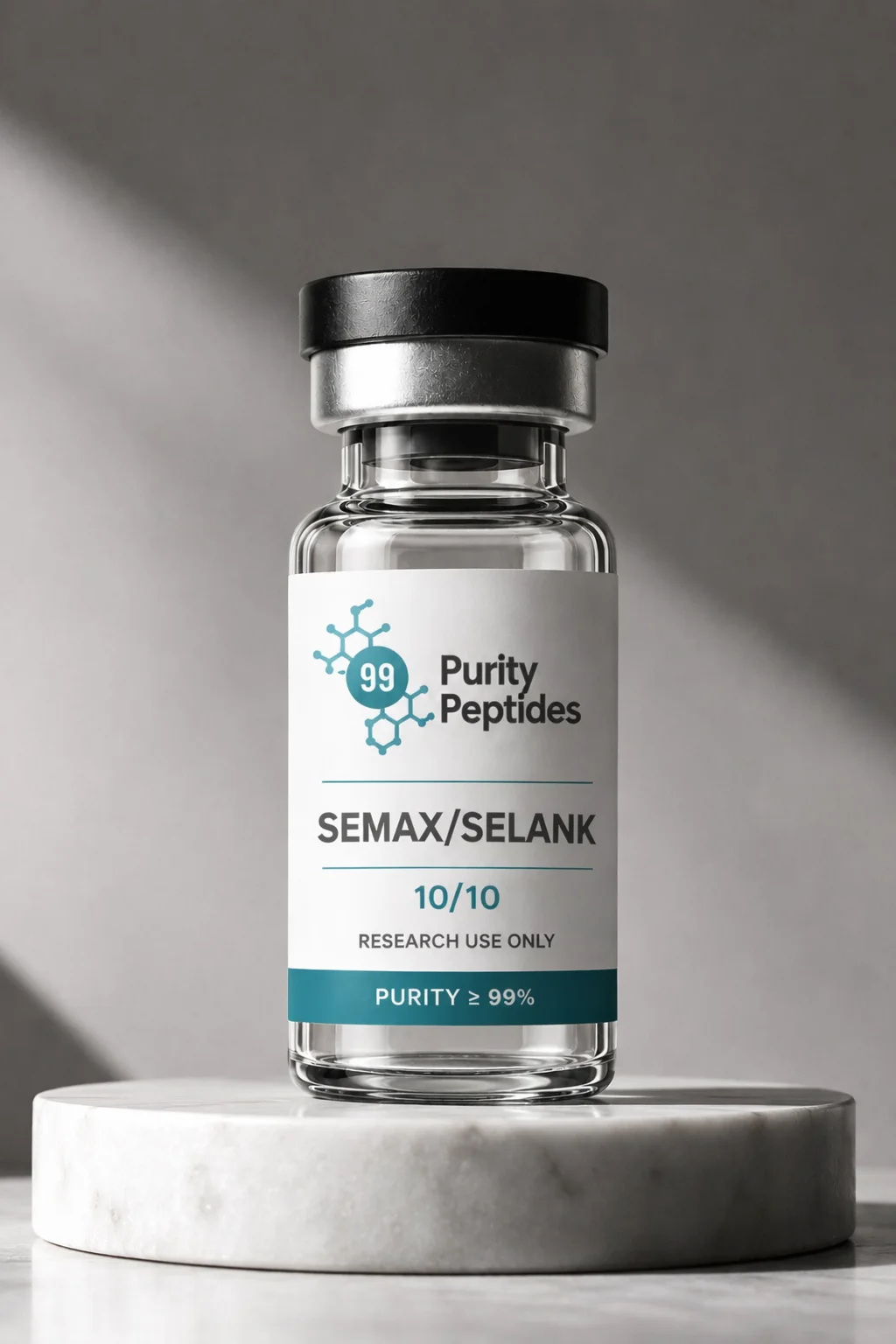
This guide compares the programs that publish their terms. It explains how commission works, how much affiliates can earn, when they get paid, and how to check if a program is worth joining. It gives the 99 Purity Peptides program a full section, based on its official affiliate page. It also explains compliance in plain language, so you can promote research use only products without making health claims or hiding a paid link.
Ready to join? Review full terms and apply to the 99 Purity Peptides Affiliate Program (10% to 25% commission, 7-day link tracking, code always counts, and $50 payout minimum).
What a peptide affiliate program is and how it pays you
A peptide affiliate program pays you for sales you refer. You share a link or a code. A buyer uses it to order. The vendor tracks the sale to you. You earn a share of that sale. The share is called commission.
How a referral link and a code work together
A referral link is a web address with your code in it. A buyer clicks it and buys. The click is saved in the buyer browser for a set number of days. That period is called a cookie window. A code is a short word a buyer types at checkout. It credits the sale to you with no click needed.
The two tools work best together. A link works for blogs, newsletters, and video descriptions. A code works for video, podcasts, and live talks, where a link cannot be clicked. Some programs use both. Some use only one. A program that uses both loses fewer sales when a buyer switches devices.
The 99 Purity Peptides program uses both tools. Its link tracks a click for 7 days. Its code always counts. If a buyer enters your code, the sale is yours. That rule holds even if the buyer clicked another partner link first. With no code, the most recent link click inside 7 days gets the credit.
Affiliate, referral, ambassador and partner explained in plain terms
Vendors use four words for the same basic idea. An affiliate earns commission for referred sales. A referral partner does the same work with a personal link. An ambassador often gets a code and a discount to share. A partner is a broad word for any of these roles.
The name does not change the pay. The written terms change the pay. Read the rate, the repeat order rule, the attribution rule, and the payout rule. Those four points tell you more than the job title on the page.
Some programs ask for an application. Some approve at once. Some ask for a website or a social account. Some ask for no audience at all. The 99 Purity program has no follower minimum and no website requirement. It asks for an account, a short application, and a personal review by its team.
What happens when a customer returns or cancels an order
A refunded order was never a completed sale. Most programs reverse the commission on that order. The timing of the reversal matters. Some programs hold commission for a set period before they pay it. That hold covers the refund window. Some programs pay at once and reverse the amount from a later payout.
The 99 Purity program records commission once payment is confirmed. It clears the amount after 30 days. If an order is refunded before you are paid, the commission is reversed. Once a commission has been paid to you, it is never taken back. Refunded and cancelled orders do not count toward your rate climb.
Many other programs do not publish this rule. Validated Peptides noted in its September 2026 comparison that none of the six programs it compared said what happens to commission on a return. That gap is a real risk. Ask for the refund rule in writing before you join.
How peptide affiliate commission structures work
A headline rate is only the start of the story. The rate basis, the repeat order rule, and the tier rule decide what you are actually paid. A 35 percent ceiling can pay less than a 20 percent flat rate if you never reach the ceiling.
Flat, tiered and first order only rates
A flat rate pays the same share on every order. Spartan Peptides publishes 10 percent flat. Ascension Peptides publishes 10 percent flat for the life of the customer. A flat rate is easy to predict. It is also easy to compare.
A tiered rate rises as you sell more. Validated Peptides starts at 15 percent and rises to 30 percent by lifetime referred sales. American Peptides starts at 10 percent and rises to 35 percent by monthly sales. A tier can reward steady work. It can also hide the real pay if the top tier needs very high volume.
A first order only rate pays more on a first purchase and less after it. Amino Club pays 20 percent on a first order and 10 percent on every order after it. That structure pays more for a one time buyer audience. It pays less for a repeat buyer audience. Research buyers often reorder, so the repeat rate matters more than the first order rate.
Why the rate basis matters more than the headline number
The rate basis is the amount the rate is applied to. Some programs pay on the order total after discounts. Some pay on the product subtotal after discounts. Some pay on a list price before discounts. Those three bases give three different cheques for the same order.
The 99 Purity program pays on the order total after the 10 percent customer discount, before shipping and tax. A 200 dollar order with a 10 percent discount pays 180 dollars. Commission at 10 percent is 18 dollars. That example is on its official page. It is clear and it is easy to check.
Volta Peptides pays 35 percent of the discounted product subtotal. Its table shows 52 dollars and 50 cents on a 150 dollar order. That figure treats 150 dollars as the amount commission is calculated on. If a 10 percent discount applied first, the pay would fall to 47 dollars and 25 cents. The table does not show that step. That is why you must ask for the basis in writing.
BenchGrade Peptides is the clearest program on this point. It states its rate is on the order total after discounts. It deducts 25 dollars for shipping, or the shipping fee the buyer pays when that fee is more. It pays 10 percent on lines of 10 plus units of one item. It pays 0 percent on your own orders. It does not pay commission on lab water. Those exceptions are published before you apply.
Recurring commission and second tier commission
Recurring commission means you are paid when a referred customer orders again. Some programs pay the same rate on every reorder. Some pay a lower rate after the first order. Some pay only on the first order. The wording on the page can hide this point.
Spartan Peptides, Apollo Peptide Sciences, and American Peptides all state that reorders pay. Apollo states lifetime commission on reorders. American states reorders pay your full tier rate for the life of the customer. Amino Club states the opposite in effect, with 20 percent first and 10 percent after.
Second tier commission is different. It pays you for affiliates you recruit. GLP1 Research Lab pays 5 percent on affiliates you recruit. True Peptides pays 5 percent on affiliates you recruit. BenchGrade pays a 3 percent override on orders from your recruits, one level, on top of their own commission. The recruit keeps their own rate. The 99 Purity program publishes no second tier rate. Volta Peptides states it has no sub affiliate tier.
Best peptide affiliate programs compared side by side
No single program wins on every term. The best program for you depends on how your audience buys, how fast you need cash, and how much proof you need to show. The table below puts the published terms on the same footing. Use it as a starting point, not as a final verdict.
What the table shows and what it leaves out
The table uses figures from two dated comparisons and from official program pages. Validated Peptides read each vendor affiliate page on 1 September 2026. Volta Peptides read each vendor affiliate page on 3 October 2026. The 99 Purity figures were read from its official affiliate page on 28 November 2026. BenchGrade figures are from its own affiliate page, with no check date shown in the fetched text.
Where a program does not publish a term, the cell reads Not publicly disclosed. That label means the term was not found on the public page. It does not mean the term does not exist. It means you cannot compare it before you apply.
Terms change without notice. Check the vendor page on the day you decide. Do not rely on a table alone for a choice that affects your income.
Program | Published entry rate | Top rate | Pay on repeat orders | Attribution |
|---|---|---|---|---|
Volta Peptides | 35 percent of discounted subtotal | 35 percent | Yes, same rate, 12 month customer claim | 90 days, widening to 365 days, plus code |
Apollo Peptide Sciences | 20 percent | 30 percent | Yes, lifetime, see note below | 120 days, see note below |
Validated Peptides | 15 percent | 30 percent at 20,000 dollars lifetime sales | Yes, same tier rate | Code never expires, saved in browser |
GLP1 Research Lab | 20 percent, plus 5 percent second tier | 20 percent | Not publicly disclosed in table | 90 days |
CertaPeptides | 15 percent | 25 percent at 25,000 euros lifetime | Not publicly disclosed in table | 90 days |
LiveWell Peptides | 15 percent | 22 percent | Yes, same rate | 30 days |
BenchGrade Peptides | 15 percent | 22.5 percent by prior month sales | Yes, same tier rate | 60 days, plus code |
Amino Club | 20 percent first order, 10 percent after | 20 percent first order | Yes, 10 percent after first order | 30 days |
American Peptides | 10 percent | 35 percent at Elite tier | Yes, full tier rate for life | 30 days |
True Peptides | 10 percent | 20 percent at 5,000 dollars, plus 5 percent second tier | Yes, same tier rate | 30 days |
99 Purity Peptides | 10 percent | 25 percent, plus 5 percent per 35 orders | Yes, same rate | 7 days link, code always counts |
Midwest Peptide | 10 percent | 10 percent | Not publicly disclosed in table | 30 days |
Spartan Peptides | 10 percent | 10 percent | Yes, recurring | Not publicly disclosed |
Ascension Peptides | 10 percent | 10 percent | Yes, lifetime | Not publicly disclosed |
Onyx Biolabs | 10 percent | 10 percent | Not publicly disclosed | Not publicly disclosed |
Almighty Peptides | Not publicly disclosed | Not publicly disclosed | Not publicly disclosed | 30 days |
A note on Apollo Peptides is needed. A later comparison read on 26 November 2026 found a conflict on its own pages. The page lists both a 120 day cookie and a 90 day cookie. The page promises lifetime commission on reorders. Section 4 of its terms says one time commission per purchase through referral links. That conflict matters. It means a reader cannot tell from the public pages alone what a reorder pays. Ask Apollo for the rule in writing before you promote it.
A note on American Peptides is also needed. Its own page lists six tiers from 10 percent to 35 percent. Volta reports that the 35 percent Elite tier needs 75,000 dollars of sales in a single month. That figure was reported by Volta on 3 October 2026. The American page snippet read in November 2026 lists the tiers and says a tier locks for life once earned. It does not show the dollar threshold in the snippet. Check the live page for the current threshold before you use the 35 percent figure in a decision.
Program | Payout schedule | Payout minimum | Payment methods |
|---|---|---|---|
Volta Peptides | Weekly, after 30 day hold | 500 dollars | Interac e-Transfer, PayPal, crypto, Wise |
Validated Peptides | Monthly, at start of month | 1 dollar | Cash App, Zelle, Venmo, Bitcoin, USDT |
BenchGrade Peptides | Monthly, first Monday | 50 dollars | Zelle, Venmo, PayPal, bank wire, ACH |
American Peptides | Monthly, 15th for prior month | 50 dollars | ACH, PayPal |
GLP1 Research Lab | Monthly net 30 | 50 dollars | PayPal, bank transfer |
CertaPeptides | Monthly around 15th, after 7 day approval | 25 euros | Bank transfer |
LiveWell Peptides | Monthly net 30 | 50 dollars | ACH, cheque, product credit at 1.5 times face value |
Amino Club | Not publicly disclosed | 1 dollar | Not publicly disclosed |
True Peptides | After 14 day hold | No minimum published | PayPal, Zelle, Venmo, Bitcoin, store credit |
99 Purity Peptides | On request after 30 day clearing | 50 dollars | Zelle, Cash App, Apple Pay |
Midwest Peptide | Monthly | 50 dollars | Not publicly disclosed |
Spartan Peptides | Not publicly disclosed | Not publicly disclosed | Cash or store credit |
Ascension Peptides | Calculated 5th, paid 7th, monthly | Not publicly disclosed | Not publicly disclosed |
Apollo Peptide Sciences | Not publicly disclosed | Not publicly disclosed | Not publicly disclosed |
Onyx Biolabs | Not publicly disclosed | Not publicly disclosed | Not publicly disclosed |
Almighty Peptides | Not publicly disclosed, 30 day hold | 25 dollars | Cash or store credit |
Entry rate versus top rate
The entry rate is the rate a new partner is actually paid. The top rate is the highest rate a program will pay. Most partners never reach a top tier. That gap is the most common trap in this market.
Volta pays 35 percent from the first referral. That is the highest entry rate in the table. American Peptides reaches 35 percent only at its Elite tier. Apollo and Validated cap at 30 percent. The 99 Purity program caps at 25 percent. CertaPeptides caps at 25 percent. LiveWell caps at 22 percent.
A 20 percent entry rate beats a 10 percent entry rate on every order until the tier changes. Apollo starts at 20 percent. GLP1 Research Lab starts at 20 percent. Validated starts at 15 percent. Most other programs start at 10 percent or 15 percent. If your volume stays low, the entry rate is the only rate that matters.
A top rate can still matter if you sell at volume. American Peptides locks a tier for life once earned. Validated tiers are permanent by lifetime sales. BenchGrade tiers reset by prior month sales, so a quiet month can lower your rate. Read the tier rule, not just the top number.
Which programs publish the least information
Onyx Biolabs, Spartan Peptides, and Apollo Peptide Sciences publish the least on payout terms. They publish a rate and little else. Onyx publishes a 10 percent rate with no cookie, no schedule, and no minimum on the public page. Spartan publishes a 10 percent flat recurring rate with no cookie, no schedule, and no minimum. Apollo publishes a rate and a cookie, but no schedule and no minimum.
Almighty Peptides publishes payout terms and no rate. That is the same problem from the other side. You cannot compare pay without a rate. You cannot compare cash flow without a payout date.
A program that hides a term before you apply is asking you to trust it after you apply. That is a weak start. A program that publishes its rate, its basis, its attribution, its payout date, and its minimum gives you a fair test. BenchGrade, Validated, Volta, American, and 99 Purity all publish most of those points. That does not make them the best fit for every reader. It does make them easier to judge.
How much do peptide affiliates make
No reliable public data shows a typical monthly income for peptide affiliates. No program in this comparison publishes average partner earnings from real partners. The figures below are worked examples. They show how the math works. They do not show what you will earn.
The factors that decide affiliate income
Audience size matters, but audience fit matters more. A small audience that trusts you can convert better than a large audience that does not. Traffic quality matters. A reader who is ready to research and order is worth more than a casual viewer.
Conversion rate matters. That is the share of clicks that become orders. Average order value matters. A 200 dollar order at 10 percent pays 20 dollars before discounts. A 100 dollar order at 20 percent also pays 20 dollars before discounts. The rate alone does not tell you the pay.
Repeat purchases matter. A customer who orders four times a year is worth four times a one time buyer at the same rate. Returns matter. A refunded order pays nothing. Attribution matters. A sale lost to a cleared cookie or a new device pays nothing.
A worked example for one customer over a year
Use one 150 dollar order as the amount commission is calculated on. This keeps the comparison clean. It is not a promise of pay. It is a way to compare rates on the same footing.
Rate | Pay on one 150 dollar order |
|---|---|
10 percent | 15 dollars |
15 percent | 22 dollars and 50 cents |
20 percent | 30 dollars |
25 percent | 37 dollars and 50 cents |
30 percent | 45 dollars |
35 percent | 52 dollars and 50 cents |
Now use one customer who orders four times in a year, each time for 150 dollars. At a flat 10 percent, that customer pays 60 dollars in total. At a flat 15 percent, that customer pays 90 dollars. At a first order only rate of 20 percent then 10 percent, that customer pays 30 dollars on the first order and 15 dollars on each of the next three orders, for a total of 75 dollars. The flat 15 percent beats the first order premium by the second purchase. The gap grows with each reorder.
A discount changes the result. If a 10 percent customer discount applies, a 150 dollar list order becomes a 135 dollar order for commission. At 10 percent, the pay falls from 15 dollars to 13 dollars and 50 cents. At 35 percent, the pay falls from 52 dollars and 50 cents to 47 dollars and 25 cents. Ask for the basis before you quote a dollar figure to your audience.
Why no monthly income figure is typical
A monthly income figure needs three numbers you do not have. You need clicks, conversion rate, and average order value for a real audience. No vendor in this comparison publishes those numbers for its partners. A program that quotes a monthly income without those inputs is guessing.
Use your own numbers instead. Count your clicks in a month. Count your orders. Divide orders by clicks to get your conversion rate. Multiply orders by your average order value and your rate. That gives a range for your audience, not a promise for every audience.
The 99 Purity page gives a clear example of this method. It uses a 209 dollar average order. It states the example is illustrative only and not a guarantee of income. It assumes the order is paid in full, after the 10 percent discount, with the rate shown applied to every order. That is the right way to show an example. Copy that habit in your own planning.
Payout minimums, schedules and clearing periods
A payout minimum is the smallest balance that can be paid out. A payout schedule is the date money is sent. A clearing period is the hold before commission can be paid. Those three terms decide when work turns into cash.
What a payout minimum means in practice
A 50 dollar minimum on a 10 percent rate needs about 500 dollars of referred sales before money moves. That is not a high bar for a busy partner. It is a high bar for a new partner with a small audience. A 1 dollar minimum means almost any sale can be paid. A 500 dollar minimum means a small partner may wait months for a first payout.
Validated Peptides and Amino Club publish a 1 dollar minimum. That is the lowest floor in the table. Almighty publishes 25 dollars. CertaPeptides publishes 25 euros. Midwest, American, GLP1 Research Lab, LiveWell, BenchGrade, and 99 Purity publish 50 dollars. True Peptides publishes no minimum. Volta publishes 500 dollars. A balance below the minimum is not lost at Volta or at most other programs. It carries forward until it reaches the floor. Check that carry forward rule in writing. A balance that expires is a different offer.
Monthly, weekly and on request payout schedules
Monthly is the norm where a schedule is published. Validated pays at the start of each month for the month just ended. American pays on the 15th for the prior month. BenchGrade pays on the first Monday of each month. Ascension calculates on the 5th and pays on the 7th.
Volta pays weekly. That is faster than monthly, but its 500 dollar minimum and 30 day hold mean a small partner still waits for the balance to clear and reach the floor. True Peptides pays after a 14 day hold with no minimum published. That can suit a small partner who needs cash flow.
The 99 Purity program pays on request. You request a payout from your dashboard once your available balance reaches 50 dollars. You are paid by Zelle, Cash App, or Apple Pay. The dashboard shows clicks, conversions, and pending, approved, and paid commission in real time. That visibility helps you plan. A program with no dashboard and no payout date leaves you guessing.
Clearing periods and why programs hold commission
A clearing period is a hold after an order is paid. It covers the refund and chargeback window. A program that holds commission for 30 days can pay a final amount with less risk of a later reversal. A program that holds nothing must reverse a refund from a later payout.
Almighty publishes a 30 day hold. The 99 Purity program uses a 30 day clearing period. Volta uses a 30 day hold. True Peptides uses a 14 day hold. CertaPeptides uses a 7 day approval window. Validated publishes no clearing period at all. Its commission is payable as soon as the order is paid, and a later refund reverses the amount from the next payout.
A long hold is not a bad sign by itself. A short hold is not a good sign by itself. The question is whether the hold, the minimum, and the schedule fit your cash flow. A new partner who needs fast pay should favour a low minimum and a short hold. A larger partner who can wait should favour a higher rate and a longer attribution window.
How to tell if a peptide affiliate program is legit
A program is not legit because it has an affiliate page. It is worth a closer look when its terms are published, its product proof is checkable, and its rules are written down. Use the checklist below for any program, including the ones in this guide.
The checks to run before you apply
- Published rate and rate basis, with the order total after discounts stated in plain words.
- Published repeat order rule, with the rate on a second, fifth, and twelfth order stated.
- Published attribution rule, with cookie length and code rule stated.
- Published payout date, minimum, methods, and clearing period.
- Published refund rule, with what happens to commission on a return.
- Real support contact, with a named team and a reply time where stated.
- Clear product descriptions and a COA library you can open.
- Transparent company information, with a name, location, and contact details where stated.
- Written compliance guidance, with disclosure wording and banned language.
- No promise of a typical income without data to support it.
Run the same test on every program. Do not skip a check because a rate looks high. A high rate with no payout date is not a better offer than a lower rate with a clear payout date.
How to verify product documentation
A Certificate of Analysis, or COA, is a lab report for one batch of one product. It should name the testing lab. It should name the batch. It should show the test method, such as HPLC and MS. It should show the purity result for that batch. A COA proves that one batch was tested. It does not prove that every batch is the same. It does not prove a product is safe for human use. It does not prove a health result.
The 99 Purity certificates page lists 63 batches verified. It states that every batch is verified through independent third party US laboratories using HPLC and MS. It states 100 percent independently tested. Each entry shows a product name, a purity figure, a batch number, and an analysis date. The most recent entries in the fetched page are dated November 2026. A reader can download the COA for a batch from the page.
BenchGrade states a stronger COA claim in one respect. It states lot COAs from a named independent lab, with QR linked COAs on 19 of its 19 products, published before the vial ships, in a public COA library. That is a clear test. Ask any program for the same proof. Can you open the COA. Does it name the lab. Can you match it to the batch on the product page. If the answer is no to any of those points, treat the purity claim as a promise, not as proof.
Red flags that mean you should walk away
- A rate with no stated basis, or a lifetime rate that turns out to mean the first order only.
- No COA, or a COA with no lab name and no lot number.
- No payout dates, a floor most affiliates never reach, or payout only as store credit.
- Encouragement to share personal results, dosing, or anything about use in people.
- No written agreement, or terms that change without notice.
- A promise of a typical monthly income with no clicks, conversion rate, or order value shown.
- Pressure to buy stock, pay a fee to join, or recruit before you have sold anything. None of the programs in this comparison publishes a joining fee, but ask for that point in writing if a program asks for payment.
A single red flag does not prove a program is a scam. It does prove you need more proof before you share a link. A program that answers the checklist in writing is easier to trust than a program that answers with a slogan.
The 99 Purity Peptides affiliate program in detail
The 99 Purity Peptides program is the home program for this blog. It is covered here in full because its official page publishes its terms in detail. The section below uses only that page, read on 28 November 2026, plus its certificates and about pages. It does not use a competitor table for 99 Purity figures.
The commission climb from 10 percent to 25 percent
You start at 10 percent of every qualifying order. Your rate climbs by 5 percent for every 35 qualifying orders. It tops out at 25 percent. The climb is based on order count only. It never resets. A rate you earn stays yours.
Tier | Orders needed | Rate | Pay on a 209 dollar average order after discount |
|---|---|---|---|
Starter | Orders 1 to 35 | 10 percent | About 19 dollars |
Rising | Orders 36 to 70 | 15 percent | About 28 dollars |
Advanced | Orders 71 to 105 | 20 percent | About 38 dollars |
Apex | Order 106 and beyond | 25 percent | About 47 dollars |
The pay figures use the official page example. The page uses a 209 dollar average order, after the 10 percent customer discount, and states the figures are illustrative only. Orders count once payment is confirmed. Refunded, cancelled, and self referred orders do not count toward the climb.
There is no follower minimum and no monthly quota. Your rate depends on how many orders you drive in total, not on how many you drive in a single month. That suits a creator with a small but steady audience. It suits a creator with bursts of sales less well than a program with a monthly volume tier, but it removes the risk of a reset after a quiet month.
Tracking, discount, clearing and payout terms
Your audience saves 10 percent with your personal code. The discount applies to single products. Kits and bundles are excluded. One code can be used per order. Codes do not stack. You can rename your code to something memorable from your dashboard. The discount amount stays fixed.
You earn on what your customer actually pays. That is the order total after the 10 percent discount, before shipping and tax. A 200 dollar order with a 10 percent discount pays 180 dollars. Commission at 10 percent is 18 dollars. That example is on the official page.
Your link tracks a click for 7 days. Your code always counts. If a customer enters your code, the sale is yours. With no code, the most recent link click inside the window gets the credit. The dashboard shows clicks, conversions, and pending, approved, and paid commission in real time. You also get a QR code and one tap sharing to your apps.
Commission is recorded once payment is confirmed. It clears after a 30 day protection period. Once your available balance reaches 50 dollars, you can request a payout by Zelle, Cash App, or Apple Pay. There is no minimum order size. Every qualifying order earns commission, whatever its size.
Eligibility, application and approval
Applicants must be at least 21 and based in the United States. That rule is on the official page. Partners are independent. You are responsible for your own taxes. You can send a W-9 with your application.
You need an account to apply. You log in or create a free account to get started. You tell the team who you are and where you share content. The team reviews every application personally and emails you the moment you are approved. Once approved, your code, referral link, QR code, and dashboard are ready right away. The page does not publish an approval time in days, so treat that point as not publicly disclosed for timing.
Content rules and support for partners
The program gives simple rules that keep everyone protected. Everything sold is for laboratory research only. You sell the brand and the purity, never a result on a body. Every post must say research use only. Every post must add an ad tag or an affiliate tag. You must send content for a quick review before it goes live.
The page lists language you can use and language you must avoid. You can say third party and HPLC tested, COA available on request, the purest you have found about the product, quality you can verify, and for your research. You must not say you take or use or run a product. You must not share personal results or how a product helped you. You must not share doses, amounts in milligrams, injections, or cycles. You must not claim weight loss, muscle, energy, or anti aging results. You must not say safe, cure, treat, or heals. You must not use before and after photos. You must not say FDA approved.
Other rules are also stated. Do not list your code on coupon or deal sites. Do not bid on brand keywords in paid search. Do not use cookie stuffing, fake clicks, or self funded orders. Use your code for a discount on your own orders if you wish, but self referred orders do not earn commission and do not count toward your climb.
The program is built for creators on Instagram, TikTok, YouTube, Snapchat, Facebook, blogs, and email. The page gives a short tip for each platform, such as a link sticker on Stories, a code in a caption, a link in a video description, and a code in a pinned comment. It also warns that some platforms restrict this category, so you should keep every post clean, research focused, and quality framed. When in doubt, ask the team before you post.
You can review the 99 Purity Peptides affiliate program for the current terms and to apply. You can review certificates of analysis to check batch testing. You can read about 99 Purity Peptides for company background and its research integrity position.
Compliance and responsible promotion for research use only products
Compliance is a central part of this topic, not a footnote. An affiliate who promotes research use only products is representing that framing to an audience. A post that implies human use or a health result puts the affiliate and the vendor at risk. A post that hides a paid link breaks trust and breaks disclosure rules. For a full platform-by-platform breakdown, see our guide on how to promote research peptides without getting banned.
Research use only positioning in plain language
Research peptides are sold for laboratory research use only. They are not for human use. They are not for animal use. They are not approved drugs. They are not treatments. That framing must stay in every post.
The 99 Purity about page states its mission in those terms. It supports laboratory professionals with laboratory grade peptides that meet documented analytical quality standards. Its philosophy centres on research integrity, compliance clarity, and material traceability. All products are classed as synthetic research peptides for laboratory research applications only.
BenchGrade states the same point in its compliance check. It asks if promotion rules are written down, if disclosure guidance is given, and what gets an account closed. It states its own rules are written on every program page. Validated and Volta state the same two rules in their FAQ sections. Never imply or describe human use. Disclose the paid relationship in any post that carries your code.
FTC disclosure and truthful advertising
The US Federal Trade Commission, or FTC, requires disclosure of a material connection. A material connection is a financial, employment, personal, or family link that could affect how an audience weighs an endorsement. A commission on a sale is a financial link. A free product is also a link. A discount for posting is also a link.
The FTC Endorsement Guides, at 16 CFR Part 255, state that such a connection must be disclosed clearly and conspicuously when a significant minority of the audience would not expect it. Clear and conspicuous means easy to notice and easy to understand. A disclosure buried in a bio, hidden under hashtags, or placed far from the recommendation does not meet that standard.
The FTC example wording is simple. It states, I get commissions for purchases made through links in this post. That wording is clear. You can adapt it to your post, but keep the meaning plain. Say you earn a commission. Say it near the link or code. Say it in the same format as the post, in text for a text post and in speech for a video.
The 99 Purity program requires an ad tag or an affiliate tag on every post. That tag is a start, not a finish. A tag alone can be missed. Add a plain sentence near the recommendation. State the link pays you. State the product is for research use only. Do not use vague words such as may contain affiliate links if a clearer sentence is available.
Truthful advertising means you claim only what you can prove. Claim the purity figure on the COA. Claim the lab name on the COA. Claim the rate on the affiliate page. Do not claim a product works for a person. Do not claim a result you have not seen in a lab report. Do not use a testimonial that implies a health outcome.
This article is not legal advice. Rules change. Check the current FTC Endorsement Guides and the FTC Disclosures 101 guide before you publish. Check the program rules for each vendor you promote. If a program tells you to hide a disclosure or to make a health claim, walk away from that program.
Language to avoid in every post
Avoid language about human use in any form. Do not say you take a product. Do not say you use a product. Do not say you run a product. Do not share personal results. Do not share how a product helped you in any way.
Avoid dosing language. Do not share doses, amounts, injections, or cycles. Do not link to a dosing chart. Do not link to a calculator that gives a dose. That rule holds even if a reader asks for it in a comment. Reply with the research use only framing and a link to the program rules, not with a number.
Avoid health and outcome claims. Do not claim weight loss, muscle gain, energy, sleep, skin, or anti aging results. Do not say safe, cure, treat, or heals. Do not use before and after photos. Do not say FDA approved. Research products are not approved for human use, and a post must not imply that they are.
Avoid platform tricks. Do not list your code on coupon sites. Do not bid on brand keywords in paid search when the program bans it. Do not use cookie stuffing or fake clicks. Do not create self funded orders to climb a tier. Those acts can close your account and can harm your reputation with your audience.
How to choose the right program for your audience
The right program depends on how your audience buys. Use the four questions below as a final test. What rate will I earn on order five. What rate will I earn on a repeat order. When will I be paid. What proof can I show my audience.
If your audience buys once and moves on
A first order premium pays more for a one time buyer. Amino Club pays 20 percent on a first order. That beats a flat 10 percent on a single purchase. It beats a flat 15 percent on a single purchase too. If your audience rarely returns, that premium is real money.
A high entry rate also helps a one time buyer audience. Apollo starts at 20 percent. GLP1 Research Lab starts at 20 percent. Volta starts at 35 percent. Those rates pay more on order one than a 10 percent start. The trade off is payout terms. Apollo publishes no payout date or minimum. Volta needs a 500 dollar balance. Check those terms before you pick a high entry rate for a small audience.
If your audience reorders
A flat or lifetime rate pays more over a year for a repeat buyer audience. A flat 15 percent beats a 20 percent first order then 10 percent rate by the second purchase. A flat 20 percent beats both. A tier that rises by lifetime sales rewards a repeat audience without a monthly reset.
Attribution matters more for a repeat audience. A 30 day cookie can miss a reorder that happens in month three. A code that never expires can catch it. A customer claim for 12 months can catch it with no cookie at all. Validated saves a code in the browser with no expiry. Volta claims a customer for 12 months. BenchGrade uses a 60 day cookie plus a code. The 99 Purity code always counts, even after the 7 day link window ends.
Check the repeat order rule in writing. Ask if reorders pay the same rate. Ask if a reorder needs the code again. Ask if a customer who switches devices still credits you. Those answers decide what a returning customer is worth.
If you recruit other affiliates or need fast cash flow
A second tier rate pays for the network you build. True Peptides and GLP1 Research Lab pay 5 percent on affiliates you recruit. BenchGrade pays a 3 percent override. The 99 Purity program publishes no second tier rate. Volta states it has no sub affiliate tier. If recruiting is a core part of your plan, pick a program that publishes that term.
Fast cash flow needs a low minimum and a short hold. Validated pays monthly with a 1 dollar minimum and no hold. True Peptides holds 14 days with no minimum published. The 99 Purity program clears in 30 days and pays on request at 50 dollars. Volta pays weekly but needs a 500 dollar balance and a 30 day hold. A weekly schedule does not help a small partner who cannot reach the floor.
A larger partner can trade cash flow for rate. A small partner cannot. Match the payout terms to your size. A program that pays a high rate slowly can pay less in practice than a program that pays a lower rate quickly and reliably.
Conclusion
The best peptide affiliate program in 2026 is not the one with the highest headline rate. It is the one with a fair entry rate, pay on repeat orders, clear attribution, a reachable payout minimum, and written compliance rules. Most programs start at 10 percent. A few start at 15 percent or 20 percent. One starts at 35 percent. Those numbers mean little without the rest of the row.
Use the table in this guide to compare rates on the same footing. Run the legitimacy checklist on any program before you apply. Check the rate basis, the repeat order rule, the attribution rule, and the payout rule. Check the COA and the company page. Then pick the program that fits how your audience buys.
If you want to review the home program for this blog, check the 99 Purity Peptides affiliate program for current terms and to apply. Review certificates of analysis to verify batch testing before you recommend a product. Read about 99 Purity Peptides for company background and its research integrity position.
Read the article aloud once before publishing to catch any remaining sentences that sound clunky.
Frequently Asked Questions
Are peptide affiliate programs worth joining?
They can be worth joining if your audience trusts you and buys research products, and if the program publishes a fair rate, pay on repeat orders, and a reachable payout minimum. They are not worth joining on a headline rate alone. Check the rate basis, attribution, payout date, and compliance rules first.
How do research peptide affiliate commissions work?
You share a link or a code. A buyer uses it to order. The vendor tracks the sale to you and pays you a share of the order. The share is called commission. Most programs pay on the order total after discounts, before shipping and tax. Some pay on a different basis, so check the basis in writing.
How much can a new peptide affiliate earn?
No reliable public data shows a typical monthly income for peptide affiliates. Earnings depend on clicks, conversion rate, average order value, commission rate, repeat orders, and refunds. A 150 dollar order pays 15 dollars at 10 percent, 22 dollars and 50 cents at 15 percent, and 30 dollars at 20 percent, before discounts. Treat all earnings examples as illustrative only.
Do peptide affiliate programs pay recurring commissions?
Most do, but not at the same rate and not by the same method. Spartan Peptides, Apollo Peptide Sciences, and American Peptides state that reorders pay. Amino Club pays 20 percent on a first order and 10 percent after. The 99 Purity program pays the same tier rate on every qualifying order. Ask if reorders need the code again, and if a customer who switches devices still credits you.
How often do research peptide affiliates get paid?
Monthly is the norm where a schedule is published. Validated Peptides pays monthly. American Peptides pays on the 15th for the prior month. BenchGrade Peptides pays on the first Monday of each month. Volta Peptides pays weekly after a 30 day hold. The 99 Purity program pays on request after a 30 day clearing period, once the balance reaches 50 dollars.
What is a typical affiliate payout minimum?
The most common published minimum in this comparison is 50 dollars. Validated Peptides and Amino Club publish 1 dollar. Almighty Peptides publishes 25 dollars. Volta Peptides publishes 500 dollars. True Peptides publishes no minimum. A 50 dollar minimum on a 10 percent rate needs about 500 dollars of referred sales before money moves.
Can affiliates promote research use only peptides?
Yes, if they follow the program rules and disclosure rules. Every post must state research use only and must disclose the paid link or code. Affiliates must not imply human use, share dosing, share personal results, or make health claims. Products are for laboratory research only and are not for human or animal use.
Do peptide affiliate programs accept US affiliates?
Many do, but eligibility varies by program. The 99 Purity program states applicants must be at least 21 and based in the United States. Other programs in this comparison do not publish a clear age or location rule on the pages read, so check the affiliate page for each program before you apply.
How can affiliates verify product documentation?
Open the Certificate of Analysis for the batch. Check that it names the testing lab, names the batch, shows HPLC and MS, and shows a purity result. Check that the batch on the COA matches the batch on the product page. The 99 Purity certificates page lists 63 batches verified through independent third party US laboratories. A COA proves one batch was tested. It does not prove a health result.
What should someone check before joining a peptide partner program?
Check the published rate and rate basis, the repeat order rule, the attribution rule, the payout date and minimum, the refund rule, the support contact, the COA library, and the written compliance guidance. Walk away from a program with no published rate, no payout date, no COA, no written terms, or encouragement to share personal results or dosing.
What is the 99 Purity Peptides affiliate program commission?
You start at 10 percent of every qualifying order, after the 10 percent customer discount, before shipping and tax. Your rate climbs by 5 percent for every 35 qualifying orders, to 15 percent, then 20 percent, then 25 percent. There is no monthly quota and no reset. The 7 day link tracks clicks, the code always counts, commission clears after 30 days, and payouts are on request at 50 dollars by Zelle, Cash App, or Apple Pay.
How long do peptide affiliate cookies last?
Thirty days is the most common published window. Midwest Peptide, Almighty Peptides, Amino Club, LiveWell Peptides, True Peptides, and American Peptides publish 30 days. Apollo Peptide Sciences publishes 120 days on its page, with a later read finding both 120 days and 90 days listed. GLP1 Research Lab and CertaPeptides publish 90 days. BenchGrade publishes 60 days. The 99 Purity program publishes a 7 day link window, with the code always counting.