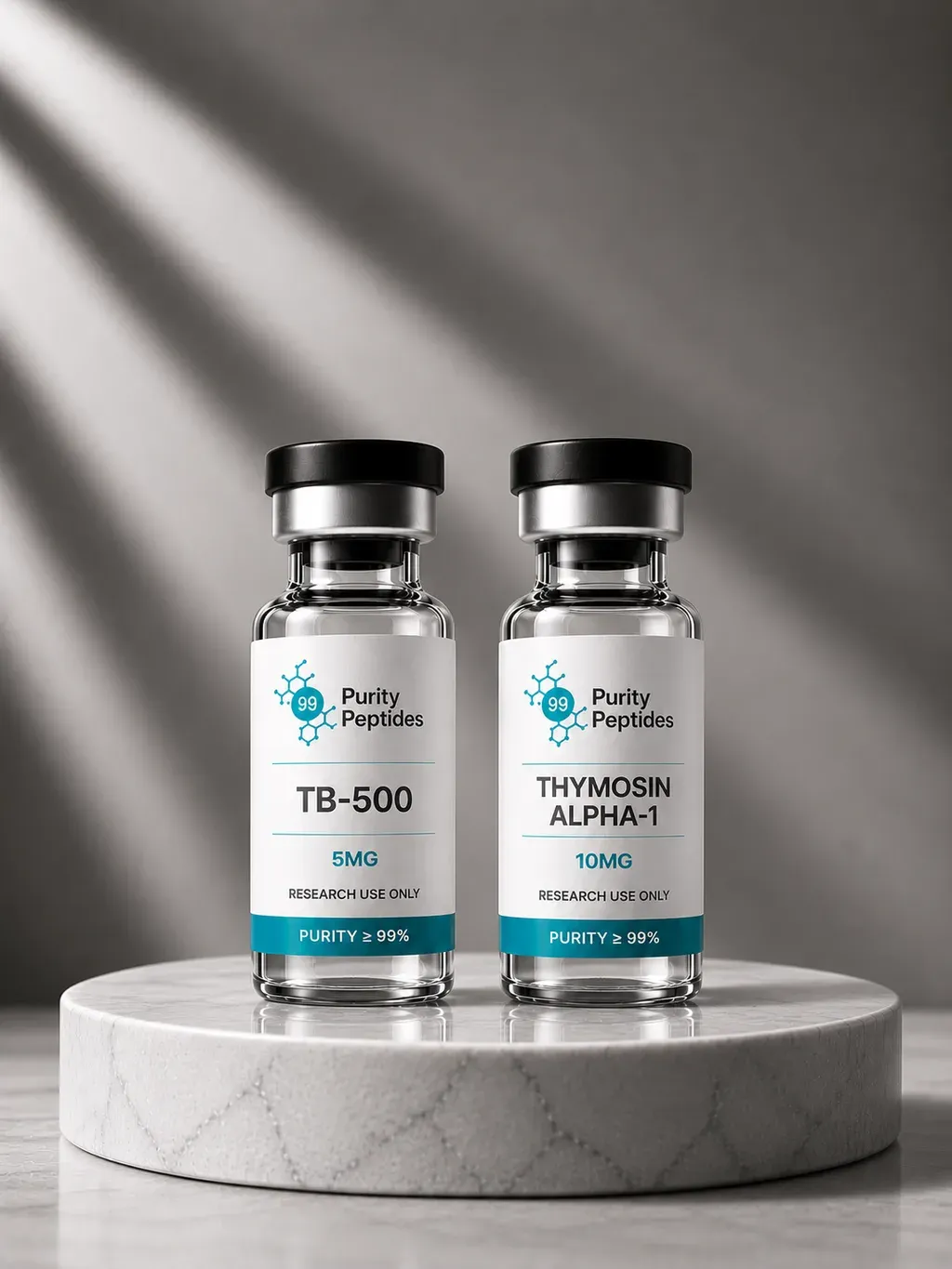
The TB-500 and Thymosin Alpha-1 Comparator supplies two peptides that share a name and little else. Thymosin Alpha-1 is a 28-residue peptide derived from prothymosin alpha and studied in immune signalling. TB-500 is a synthetic fragment of thymosin β-4, studied for actin binding. They derive from different genes with no sequence homology, and the shared "thymosin" name reflects 1970s fractionation rather than relatedness. For research use only.
HPLC certified
Independent analysis
Highest standard
Full traceability
The TB-500 and Thymosin Alpha-1 Comparator brings together two peptides frequently assumed to be related. They are not.
Thymosin Alpha-1 is a 28-residue peptide derived from prothymosin alpha, the product of the PTMA gene, and is studied in immune signalling contexts. TB-500 is a synthetic fragment corresponding to a region of thymosin β-4, the product of the TMSB4X gene, and is studied for actin-binding behaviour. The two share no sequence homology and belong to different structural classes.
The shared name has a specific historical explanation. Both were isolated from Thymosin Fraction 5, a crude thymic extract prepared in the 1960s and 1970s, and the peptides in that fraction were sorted by isoelectric point during separation — alpha for the most acidic, beta for intermediate, gamma for the most basic. The designations describe where fractions migrated, not what the molecules were, and were applied before either peptide’s sequence or function was known.
A second naming point applies to TB-500 specifically. It is a fragment of thymosin β-4, not the full 43-residue protein, and the two should not be treated as interchangeable when recording materials or interpreting literature.
Because the compounds differ substantially in size, the supplied masses of 5 mg and 10 mg do not correspond to comparable molar amounts.
For Research Use Only. Not intended for human consumption, therapeutic use, veterinary use, or diagnostic applications.
The TB-500 and Thymosin Alpha-1 Comparator is a two-vial set containing TB-500 at 5 mg and Thymosin Alpha-1 at 10 mg. Despite the shared “thymosin” name, the two peptides are unrelated — they derive from different genes, share no sequence homology, and are studied in different research areas. The name reflects how both were separated from a thymic extract in the 1970s.
| Compound | Mass | Parent molecule | Gene | Structural class |
|---|---|---|---|---|
| TB-500 | 5 mg | Thymosin β-4 (fragment of) | TMSB4X | β-thymosin fragment |
| Thymosin Alpha-1 | 10 mg | Prothymosin alpha | PTMA | α-thymosin, 28 residues |
Both vials are supplied as lyophilized powder with batch documentation.
TB-500 and Thymosin Alpha-1 are routinely presented as members of a thymosin family. They are not related molecules. They derive from different genes, share no sequence homology, belong to different structural classes, and are studied in different research areas.
The shared name has a specific historical cause, and understanding it explains the whole confusion.
Both peptides were isolated from Thymosin Fraction 5, a crude extract of thymic tissue prepared in the 1960s and 1970s during efforts to identify thymic hormones.
That fraction contained many different peptides. To organise them, researchers separated the mixture by isoelectric point — the pH at which a molecule carries no net charge — and grouped the results by where they migrated. The most acidic fraction was designated alpha, the intermediate fraction beta, and the most basic fraction gamma.
Those designations describe electrophoretic behaviour, not molecular relatedness. They were assigned before the sequences, genes or functions of the individual peptides were known. Two peptides sharing a Greek letter were separated into the same band of a gel; nothing more was implied and nothing more is true.
The names have persisted for fifty years, and the implication of kinship they carry was never part of what they meant.
Thymosin Alpha-1 is a 28-residue peptide derived from prothymosin alpha, the product of the PTMA gene. It is N-terminally acetylated and studied in immune signalling contexts.
Thymosin β-4, from which TB-500 derives, is the product of the TMSB4X gene — an entirely separate gene producing a 43-residue actin-binding protein.
No sequence homology connects them. They are not isoforms, variants or family members in any molecular sense.
A second naming problem applies to TB-500 specifically.
TB-500 is a synthetic fragment corresponding to a region of thymosin β-4, most commonly the segment associated with actin binding. It is not the full 43-residue protein.
This matters when interpreting literature. Research conducted with full-length thymosin β-4 describes a larger molecule with a broader functional profile. Research on the fragment describes the fragment. Materials should be recorded as TB-500 rather than as thymosin β-4.
So the naming chain fails twice: TB-500 is not in a family with Thymosin Alpha-1, and it is not thymosin β-4 either. TB-500 also appears in the BPC-157 / TB-500 blend.
The thymic association in the name reflects where the peptides were first extracted, not where they belong. β-thymosins occur in nearly all cell types rather than being thymic products, and prothymosin alpha is a widely distributed nuclear protein. Neither is a thymus-restricted hormone in the sense the original nomenclature implied.
Be the first to share your experience with this product and help other researchers!
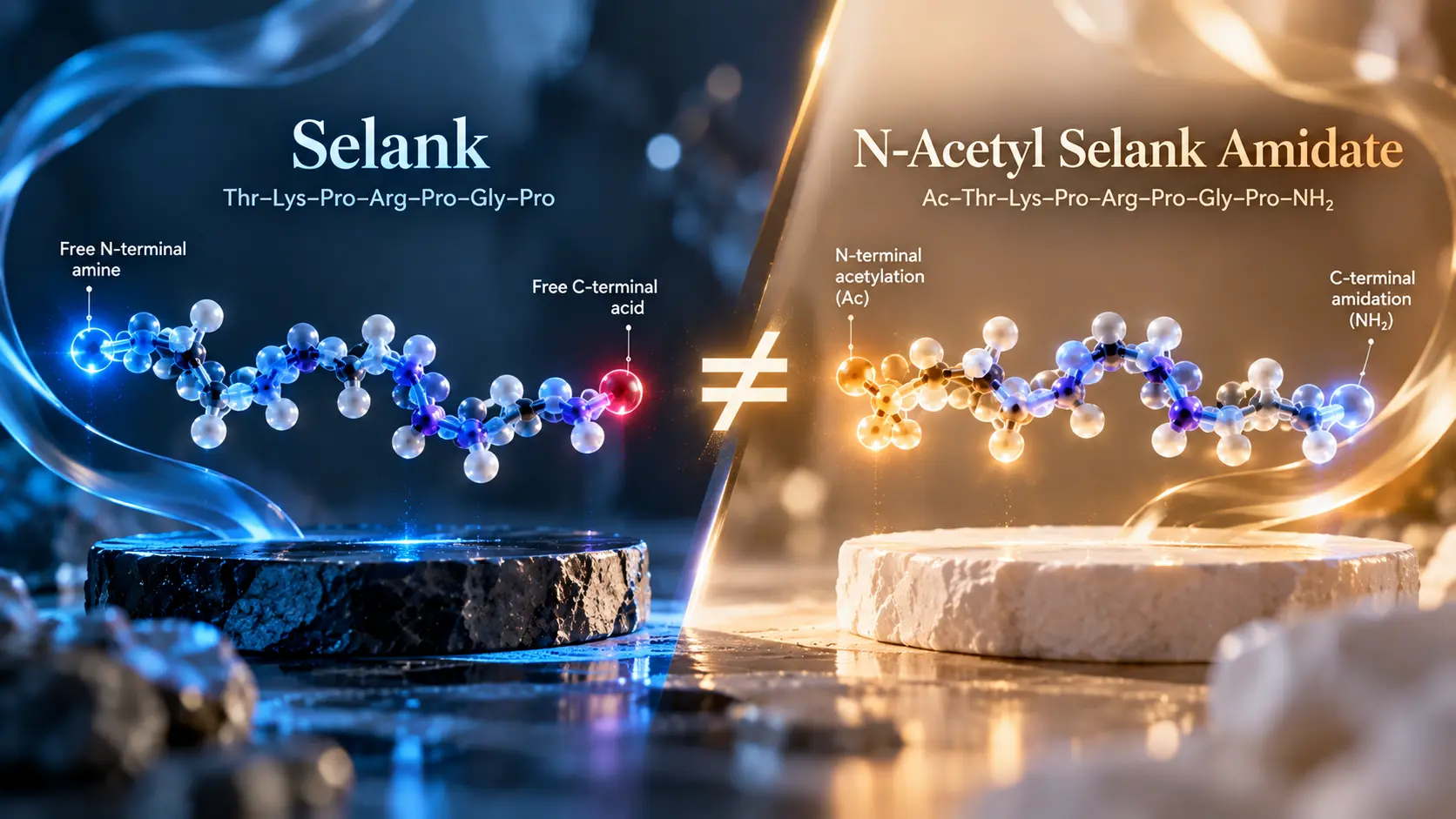
N-acetyl selank amidate is not Selank's full chemical name. Compare sequences, masses and database records, and learn how to tell the two apart on a COA.
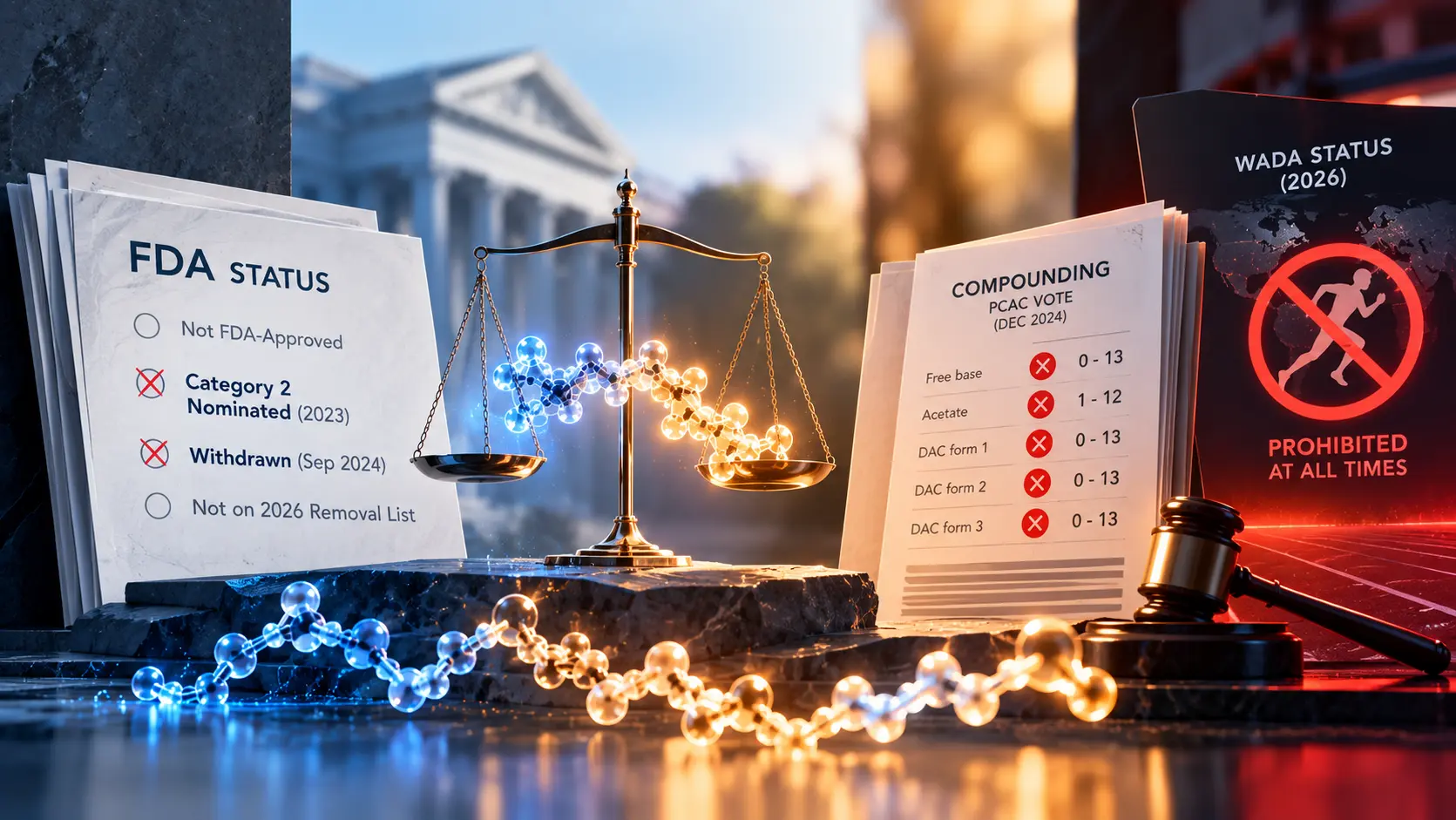
Is CJC-1295 legal? It is not FDA-approved, left FDA Category 2 in 2024, was voted down for 503A compounding, and is banned by WADA. Verified status.
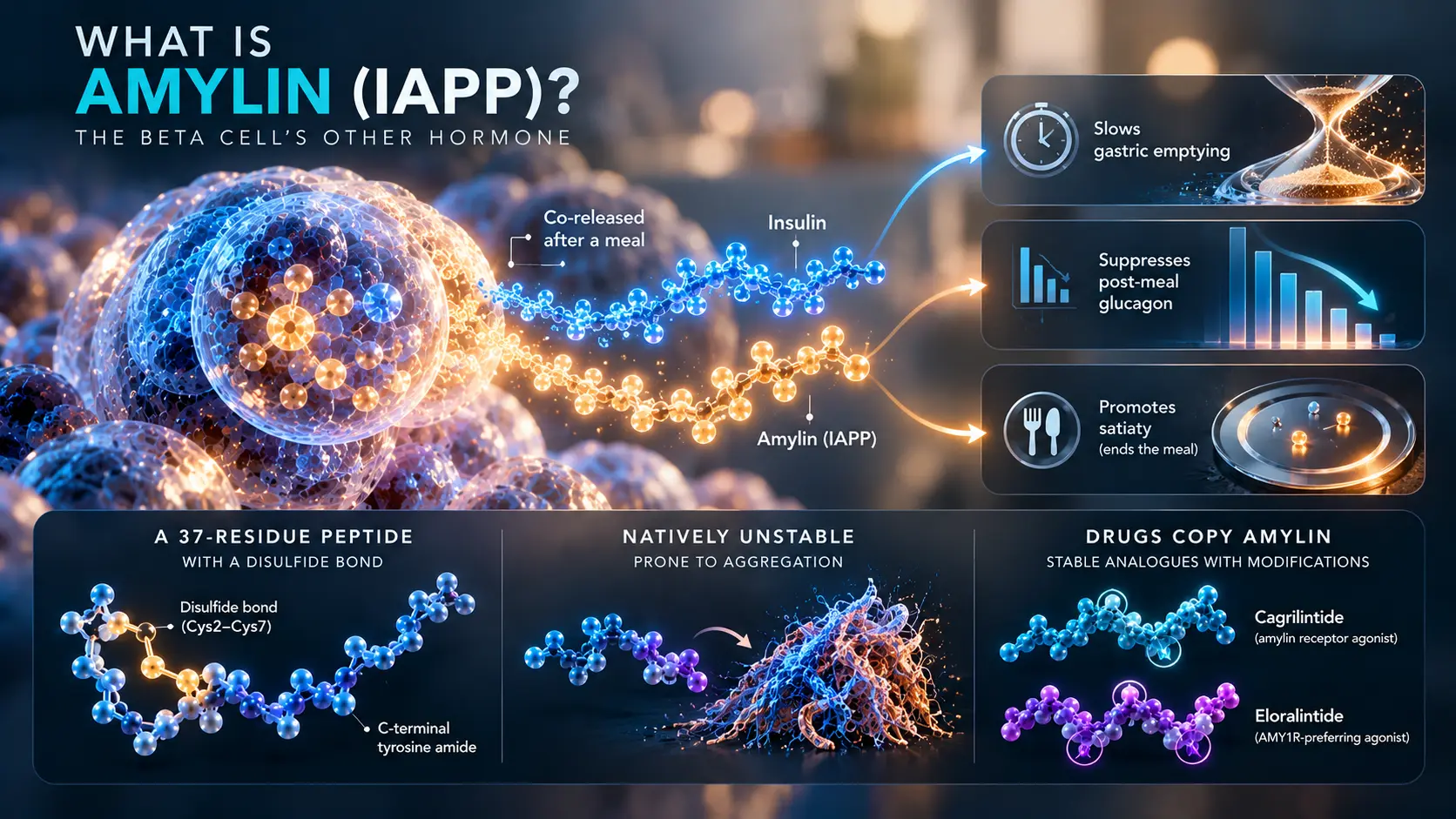
What is amylin? A 37-residue hormone the beta cell releases alongside insulin. Its real job, why it clumps, and how cagrilintide and eloralintide copy it.
(faqs)