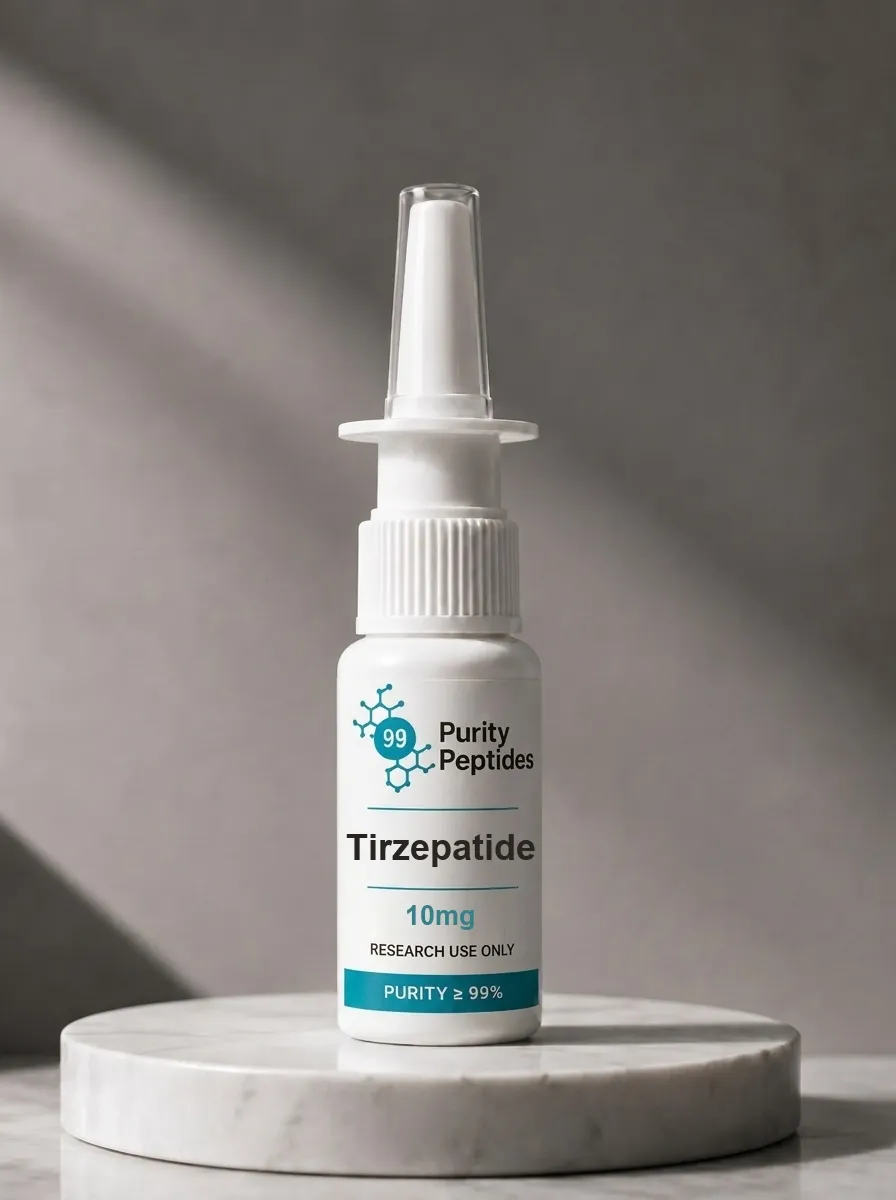
Tirzepatide 10mg Spray is a research-grade synthetic dual GIP and GLP-1 receptor agonist peptide formulated in a pre-metered liquid vehicle for non-invasive laboratory research. As a lipidated 39-amino-acid peptide (C20 fatty diacid attached via a hydrophilic linker at Lys20), Tirzepatide (sequence: GIP-derived base) is highly resistant to enzymatic degradation. Formulated as a stabilized solution at a strength of 10mg, each bottle contains analytically verified peptide by HPLC to support reproducible metabolic and glucose regulation investigations.
HPLC certified
Independent analysis
Highest standard
Full traceability
Tirzepatide 10mg Spray is a synthetic lipidated 39-amino-acid dual agonist peptide solution designed to evaluate non-invasive mucosal transport kinetics and dual incretin receptor signaling. Functioning as a dual GIP/GLP-1 receptor co-agonist, Tirzepatide activates both receptor pathways simultaneously, driving glucose-dependent insulin secretion, suppressing glucagon release, and centrally inducing satiety. Unlike standard lyophilized powders that require reconstitution, this spray format provides a concentration-verified, pre-dissolved liquid format calibrated for precise laboratory assays.
Researchers continue to investigate Tirzepatide across major areas of metabolic and obesity biology, including glucose homeostasis, insulinotropic secretory pathways, hepatic lipid clearance, and hypothalamic satiety activation. The intranasal spray formulation is of exceptional scientific interest because it allows researchers to study epithelial membrane transport kinetics of larger lipidated peptides and direct olfactory-to-brain CNS peptide uptake pathways, enabling dual incretin ligands to bypass the blood-brain barrier (BBB) and directly access central satiety centers, bypassing systemic variables. Formulated with high-purity research-grade materials and verified by HPLC, Tirzepatide 10mg Spray is a specialized molecular tool for laboratories examining dual incretin activation under controlled conditions.
Tirzepatide 10mg Spray is a research-grade synthetic peptide solution developed for laboratory investigations involving dual incretin receptor kinetics, glucose regulation, and non-invasive delivery methods. Chemically classified as a dual GIP and GLP-1 receptor agonist, it comprises 39 amino acid residues containing a C20 fatty diacid moiety attached via a hydrophilic linker at Lys20. As an investigational compound, Tirzepatide is studied for its ability to bind selectively to both GIP and GLP-1 receptors, stimulating insulin secretion.
From a molecular research perspective, Tirzepatide Spray provides a valuable model for investigating the transport kinetics of lipidated peptides across epithelial cell layers. Standard metabolic studies frequently depend on parenteral routes; however, liquid spray preparations enable researchers to evaluate how large lipidated oligopeptides cross mucosal membranes, interact with tight junctions, and engage localized cellular receptors. This spray format is particularly suited for research involving nasal mucosal cell lines.
Current laboratory investigations examine Tirzepatide's dual interaction with GIP and GLP-1 receptors on pancreatic beta cells. Binding of the peptide activates G-protein coupled receptor cascades, leading to intracellular cyclic AMP (cAMP) accumulation. Because GIP receptor activation synergizes with GLP-1 signaling, the combined response stimulates glucose-dependent insulin secretion far more effectively than GLP-1 agonists alone, allowing researchers to study incretin synergy and somatotropic pathways under controlled conditions.
Beyond pancreatic insulin secretion, researchers use Tirzepatide to explore lipolysis and fat redistribution pathways. GIP receptor activation in adipose tissue increases lipid buffering capacity and insulin sensitivity, while central GLP-1 receptor activation suppresses appetite and slows gastric emptying. This integrated feedback loop is studied to analyze receptor sensitivity, cellular signaling thresholds, and homeostatic feedback mechanisms under high-concentration exposure.
In neurobiology and central nervous system (CNS) research, the intranasal spray format provides an optimized experimental model for studying direct blood-brain barrier (BBB) bypass. Researchers evaluate whether mucosal delivery via olfactory or trigeminal nerve pathways facilitates direct transport of lipidated peptides to hypothalamic satiety structures. This allows the study of central metabolic regulation, neuroprotective signaling, and food intake behavior without systemic variables.
Each bottle of Tirzepatide Spray is manufactured using solid-phase peptide synthesis (SPPS), followed by purification, lipidation, and solution formulation steps. The resulting active peptide is dissolved in a stabilized, buffered aqueous solution calibrated to ensure exact concentration per metered spray activation. Quality control protocols include reverse-phase HPLC for purity verification and LC-MS for molecular identity confirmation.
To preserve the stability of the peptide in solution, Tirzepatide Spray should be stored under refrigeration (2°C to 8°C) and protected from light. Because lipidated peptides can undergo slow oxidation, aggregation, or peptide cleavage in aqueous environments over time, maintaining refrigerated storage and minimizing atmospheric exposure is critical to preserving peptide integrity. Proper handling supports consistent concentration and analytical reproducibility across laboratory protocols.
Scientific interest in Tirzepatide continues to expand as researchers seek to characterize its stability, receptor interactions, and transport kinetics. Nevertheless, many aspects of its cellular signaling and epithelial transport remain active areas of scientific inquiry. Ongoing studies continue to refine the understanding of dual incretin receptor agonists in biological systems. For this reason, Tirzepatide Spray should be regarded as an investigational compound whose primary value lies in advancing scientific knowledge of metabolic receptor biology.
Tirzepatide Spray is supplied exclusively for laboratory research and analytical applications. It is intended for Research Use Only (RUO) and is not approved for human consumption, therapeutic use, veterinary use, or diagnostic purposes.
Telomerase enzyme explained: how TERT and TERC maintain telomeres, why it matters in aging and cancer research, plus RUO peptide sourcing. Read the guide.

KLOW peptide research blend is drawing attention across California's research community. Discover its composition, COA basics, and current evidence limits.
Learn what a peptide bond is, how it forms through dehydration synthesis, and why its structure matters for research peptides. Read the full guide now.
(faqs)