What Is GLOW Peptide Blend? Composition, Mechanisms & Research Guide
GLOW was one of the first multi-peptide blends to gain real traction in the research-peptide community, and it's still the reference point everyone else gets compared to — including its own newer sibling, KLOW. This guide covers what's actually in a GLOW vial, what each component is studied for, why the GHK-Cu amount seems to change depending on which supplier you're looking at, and how GLOW stacks up against KLOW for research purposes.
This article is written for laboratory and research audiences. GLOW peptide blend is sold strictly for research use only (RUO) — it is not a drug, supplement, or cosmetic, and nothing in this article should be read as guidance for human or animal use.
1. What Is GLOW Peptide Blend?
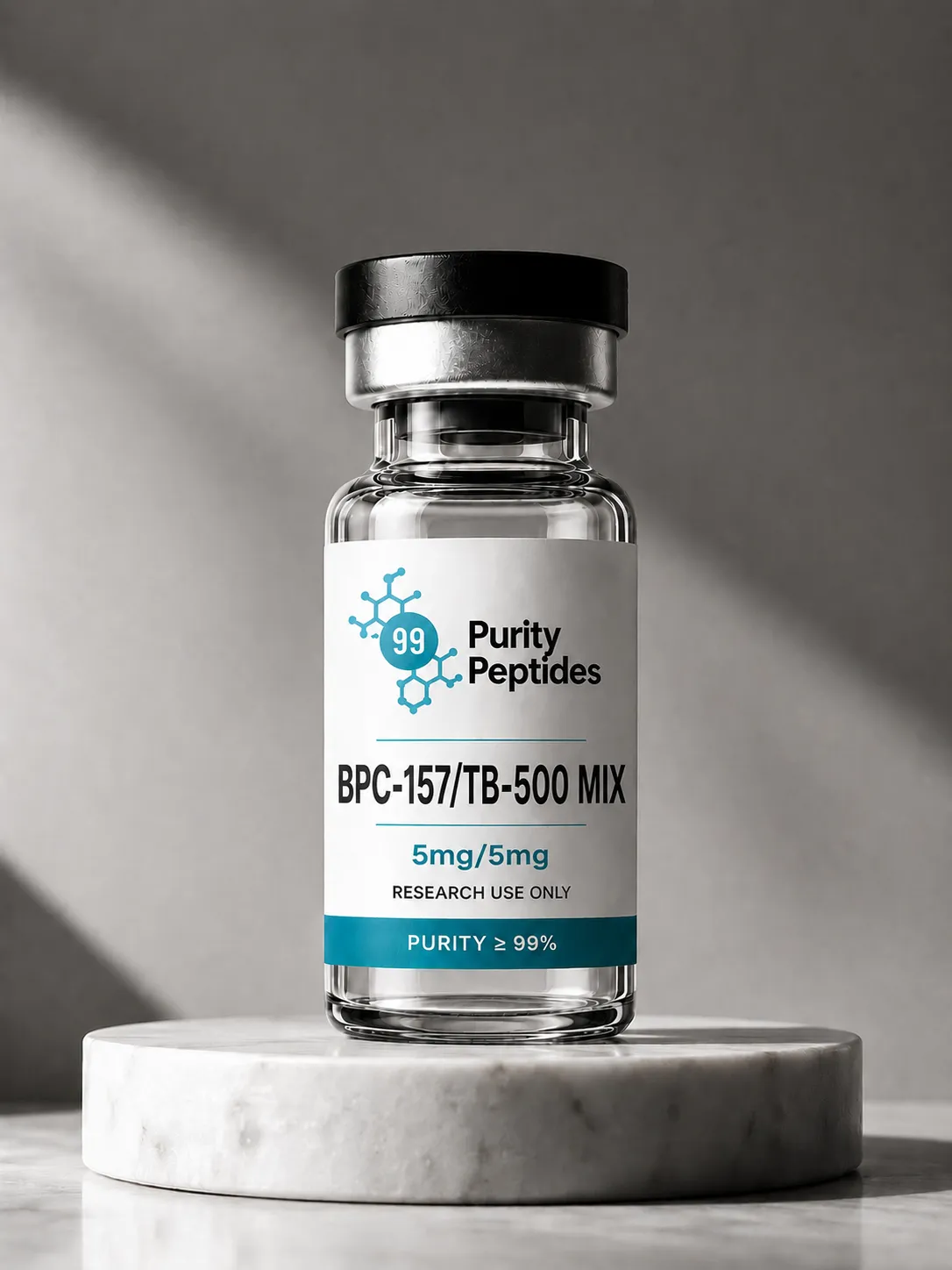
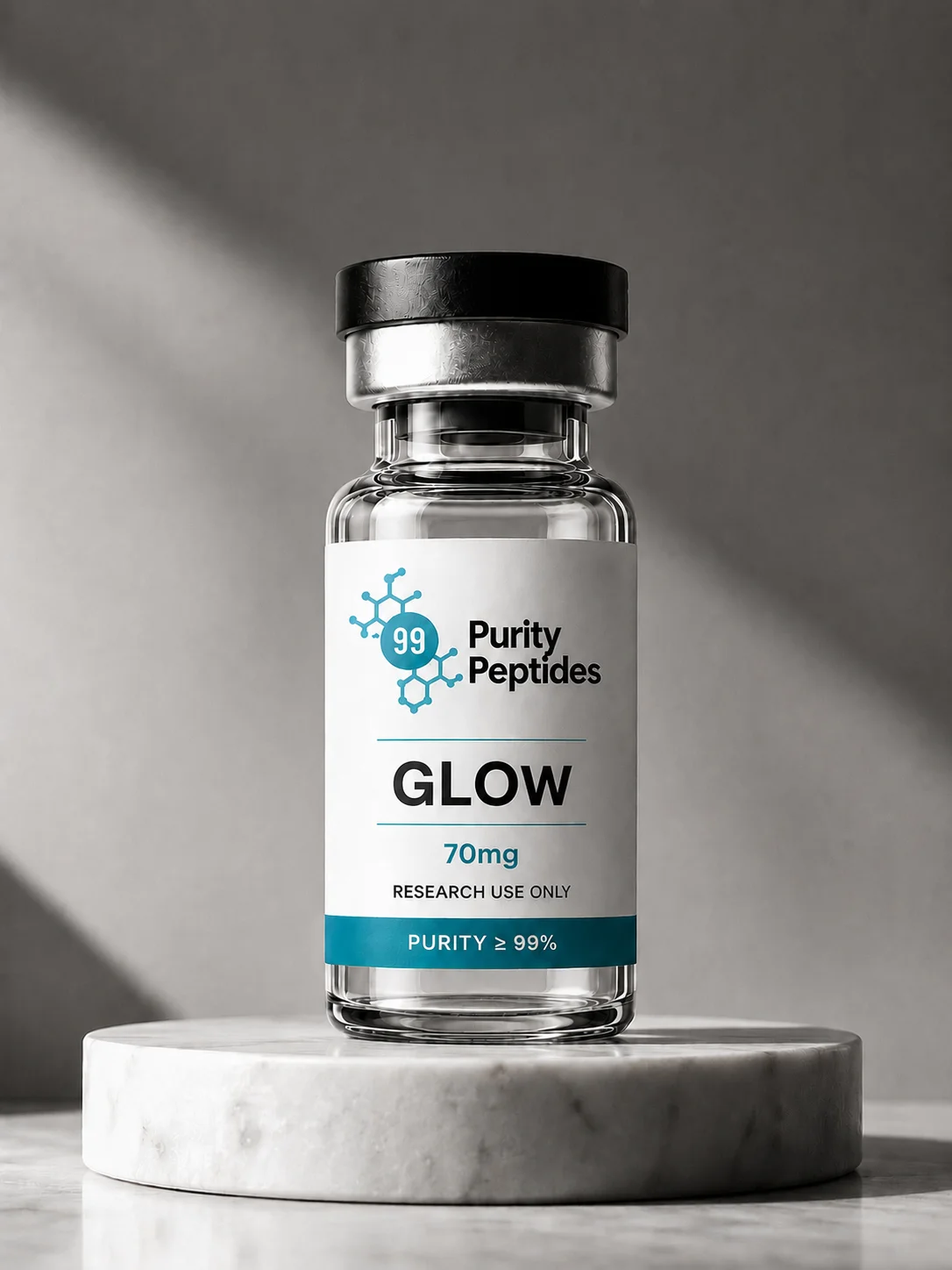
GLOW is a branded three-peptide research blend combining GHK-Cu, BPC-157, and TB-500 into a single lyophilized (freeze-dried) vial. It's one of the more established products in the multi-peptide blend category, with a wider set of competing suppliers than newer entrants. The name refers to the product formulation, not to a scientific classification — the three peptides each have their own independent research history, and the blend itself bundles them for convenience.
2. What's Inside the GLOW Blend
Composition varies more by supplier for GLOW than for some newer blends — this is one of the more common points of confusion researchers run into when comparing listings:
Peptide | Classification | Commonly Listed Range | Research Category |
GHK-Cu | Copper-binding tripeptide | 35 mg – 50 mg | Extracellular matrix / collagen signaling research |
BPC-157 | Pentadecapeptide (15 amino acids) | 5 mg – 10 mg | Tissue repair / gastric-derived peptide research |
TB-500 | Synthetic fragment of Thymosin Beta-4 | 10 mg | Cellular migration / actin-binding protein research |
Total blend weight across suppliers ranges roughly from 50 mg to 70 mg per vial, driven mostly by how much GHK-Cu is included. A batch-specific certificate of analysis — not the product description — is the only reliable way to confirm what's actually in a given vial.
3. How Each Peptide Is Studied: Proposed Mechanisms
None of these three peptides is FDA-approved for any human therapeutic use. What follows summarizes the general research rationale behind each one at a mechanism level, not a set of confirmed clinical outcomes.
GHK-Cu (Copper Tripeptide)
GHK-Cu is a naturally occurring copper-binding peptide that declines with age in human plasma. In cell and animal research, it has been studied for its role in extracellular matrix remodeling, collagen and elastin signaling, and wound-related gene expression. Most of this literature is preclinical — cell culture and animal models — rather than large-scale human clinical trials.
Product page: https://99-purity-peptide.vercel.app/products/ghk-cu | Research literature: https://pubmed.ncbi.nlm.nih.gov/?term=GHK-Cu+copper+peptide
BPC-157 (Body Protection Compound-157)
BPC-157 is a synthetic peptide derived from a protective protein found in gastric juice. Preclinical research has explored its effects on angiogenesis (new blood vessel formation) and tissue repair signaling in animal models, particularly around the gastrointestinal tract and musculoskeletal tissue. Human clinical evidence remains limited, and BPC-157 does not have FDA approval for any indication.
Product page: https://99-purity-peptide.vercel.app/products/bpc-157 | Research literature: https://pubmed.ncbi.nlm.nih.gov/?term=BPC-157
TB-500 (Thymosin Beta-4 Fragment)
TB-500 is marketed as a synthetic fragment of Thymosin Beta-4, a protein involved in actin regulation — the cellular scaffolding that controls cell shape and movement. Research interest centers on cellular migration and how that process relates to tissue regeneration in laboratory models. As with BPC-157, this research base is primarily preclinical.
Product page: https://99-purity-peptide.vercel.app/products/tb-500 | Research literature: https://pubmed.ncbi.nlm.nih.gov/?term=thymosin+beta-4
4. Why GHK-Cu Amounts Vary by Supplier: Understanding Vial-Strength Differences
This is one of the least-explained points in the category, and one of the more common sources of confusion. Some GLOW listings show 35 mg of GHK-Cu; others show 50 mg. Neither number is inherently "correct" — there's no single standardized GLOW formulation that all suppliers are required to follow. The difference is a formulation choice, not a quality signal by itself.
What it does affect is value comparison. A 50 mg GHK-Cu vial priced similarly to a 35 mg GHK-Cu vial from a different supplier is not the same product at the same price — it's more total peptide for the same cost. When comparing suppliers, the useful question isn't just "how much does the vial cost," but "how much of each peptide am I getting per dollar," which requires checking the exact mg listed for each component against the price and, ideally, against a batch-specific COA that confirms those numbers.
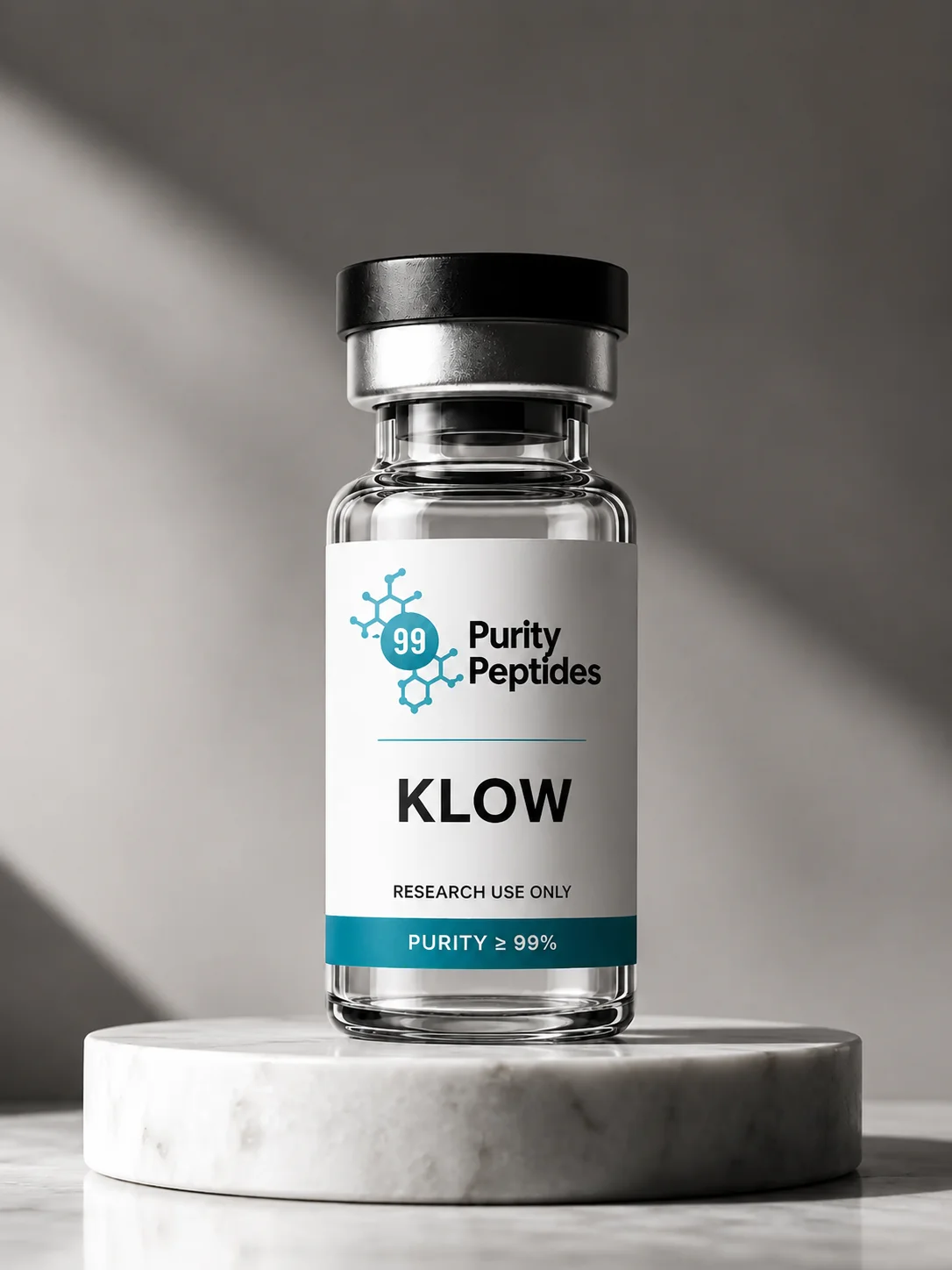
5. GLOW vs. KLOW Peptide Blend: What's the Difference?
Attribute | GLOW Blend | KLOW Blend |
Peptides included | GHK-Cu, BPC-157, TB-500 | GHK-Cu, BPC-157, TB-500, KPV |
Number of components | 3 | 4 |
Distinguishing addition | — | KPV (anti-inflammatory tripeptide) |
Market maturity | More established, wider supplier base | Newer, smaller supplier base |
Research focus | Matrix remodeling, tissue repair, cellular migration | Same three pathways, plus inflammation-pathway research |
Regulatory status | Research Use Only | Research Use Only |
The practical decision between the two comes down to whether a research protocol has a specific interest in the inflammation-modulation pathway KPV is studied for. Neither blend has been evaluated as a combined formulation in controlled research; both are bundles of separately-studied compounds.
See the full KLOW peptide blend listing for a direct side-by-side reference.
6. Why Researchers Combine Multiple Peptides Into One Blend
Multi-peptide blends exist because several of these compounds are hypothesized to act on overlapping or complementary biological pathways — extracellular matrix remodeling, cellular migration, and tissue-repair signaling. Combining them into one formulation is a convenience and cost decision for researchers who want to explore several pathways in the same protocol, not evidence that the combination produces a synergistic effect beyond what's documented for each peptide individually.
This distinction matters more for GLOW than for most blends precisely because it's the most established product in the category — familiarity can create an impression of validation that the underlying research doesn't actually support for the combined formulation.
7. Purity, Third-Party Testing, and Reading a Certificate of Analysis
A certificate of analysis (COA) is the single most important trust document for any research peptide purchase. A COA that is actually useful to a researcher — rather than decorative — should include:
- The exact batch or lot number, matching the number printed on the vial received
- HPLC (High-Performance Liquid Chromatography) purity percentage for each peptide in the blend
- Mass spectrometry confirmation of identity, where available
- The name of the third-party testing laboratory (not an in-house lab affiliated with the seller)
- A test date recent enough to correspond to the batch being sold
- The exact mg quantity of each peptide, so it can be checked against the vial-strength claim on the label
A purity figure or mg quantity quoted on a marketing page without a matching batch-specific COA is a claim, not a verification. This matters more for GLOW than for many products because, as noted above, the mg content genuinely differs across suppliers — so the COA is doing real work here, not just confirming a number everyone already agrees on.
8. Storage and Stability
Lyophilized (freeze-dried) peptide blends are generally more stable than reconstituted solutions and are typically shipped and stored in a dry, temperature-controlled state, protected from light and humidity. Manufacturers and suppliers should provide specific storage temperature and shelf-life guidance on the product label and COA for the batch in question, since stability can vary by formulation and by the specific GHK-Cu/BPC-157/TB-500 ratio used. Researchers should always follow the storage instructions provided by the specific supplier and batch documentation rather than generic guidance from a blog post.
9. Regulatory Status: Research Use Only (RUO) Compliance
GLOW, KLOW, and their component peptides are sold under Research Use Only (RUO) labeling in the United States. This designation means:
- The product is not approved by the FDA for use in humans or animals
- It is not a drug, dietary supplement, or cosmetic under U.S. law
- It is intended exclusively for laboratory and in-vitro research by qualified personnel
- Marketing, sale, or use for human or animal administration falls outside the RUO framework and outside what any legitimate supplier or publisher should represent or encourage
Any content associated with this product — on the product page, in blog content, or in customer communication — should keep this framing prominent and unambiguous. It is both a legal requirement for RUO-labeled compounds and a trust signal that search engines and AI answer engines increasingly weight when evaluating a page's credibility.
10. Common Myths About GLOW and Peptide Blends
Myth: "GLOW has been clinically studied as a combined blend."
Reality: the individual peptides have research literature behind them, largely at the preclinical (cell and animal model) stage. The three-peptide combination sold as GLOW has not itself been the subject of published clinical research.
Myth: "A higher GHK-Cu number always means a better product."
Reality: it means more of that peptide by weight, which is a value and formulation question, not automatically a purity or quality signal. Quality is established by the COA, not the mg figure alone.
Myth: "GLOW and KLOW are basically the same thing."
Reality: KLOW adds KPV, which has a distinct research profile centered on inflammatory pathways, separate from the matrix-remodeling and cellular-migration focus of the other three peptides. Treating them as interchangeable skips that distinction.
11. Current State of the Research
Taken together, the research base behind GLOW's components sits mostly at the preclinical stage — cell culture and animal studies exploring mechanism, rather than large human clinical trials establishing safety or efficacy for any condition. That's true of GHK-Cu, BPC-157, and TB-500 individually, and it is even more true of the three-peptide blend as a combined formulation, which has not been independently studied as a unit.
This article deliberately avoids citing specific studies, journal names, or statistics, since no verified citation list was available at the time of writing and inventing one would violate basic factual-accuracy standards. Before publishing, the content team should add links to real, checkable sources such as PubMed/NCBI records for each peptide, and remove or revise this note once that's done.
12. How to Evaluate a Peptide Supplier
Whether or not a researcher chooses this supplier, the same evaluation checklist applies across the category:
- Does the supplier provide a batch-specific COA, not just a generic purity claim?
- Is the third-party testing lab named and independently verifiable?
- Is RUO / research-use-only language clear and prominent, without wording that implies human use?
- Does the product listing disclose exact peptide content per vial, including the GHK-Cu amount specifically?
- Is there a way to contact the supplier with technical or compliance questions?
14. Conclusion
GLOW peptide blend combines three separately-studied research compounds — GHK-Cu, BPC-157, and TB-500 — into a single research-use-only product, and remains the most established formulation in its category, now serving as the comparison point for newer entrants like KLOW. The blend itself has not been independently studied as a combined unit, and none of its components are approved for human or animal use. For researchers, the decision points that actually matter are the same ones that matter across the category: verified batch-specific purity and mg data, a named third-party testing lab, transparent composition disclosure, and unambiguous RUO compliance language — plus, specifically for GLOW, a clear-eyed comparison of GHK-Cu content across suppliers before assuming any two listings are equivalent.
Researchers evaluating GLOW peptide blend for a laboratory protocol should request the current batch's certificate of analysis, confirm the exact GHK-Cu/BPC-157/TB-500 content, and verify third-party testing before purchase. View the GLOW peptide blend product page for current batch details and COA availability.
Frequently Asked Questions
What is GLOW peptide blend?
GLOW is a three-peptide research blend combining GHK-Cu, BPC-157, and TB-500 in one lyophilized vial, sold for laboratory research use only.
What peptides are in the GLOW blend?
GHK-Cu (copper tripeptide), BPC-157 (pentadecapeptide), and TB-500 (a synthetic fragment of Thymosin Beta-4).
What is the difference between GLOW and KLOW peptide blends?
GLOW contains three peptides — GHK-Cu, BPC-157, and TB-500. KLOW contains the same three plus KPV, which adds an anti-inflammatory research pathway not covered by GLOW alone.
Should I choose GLOW or KLOW for my research application?
That depends on the research question. GLOW covers matrix-remodeling, tissue-repair, and cellular-migration pathways; KLOW adds an inflammation-pathway component through KPV. Neither blend has been studied as a combined formulation, so the choice should be based on which individual peptides align with the protocol.
Why do GLOW blend GHK-Cu amounts vary by supplier (35mg vs 50mg)?
There is no single standardized GLOW formulation that all suppliers follow, so GHK-Cu content is a formulation choice that varies by manufacturer. A higher number isn't automatically better — it reflects more of that peptide by weight, which affects value comparisons rather than purity or quality by itself.
How many milligrams of each peptide are in GLOW?
Listed ranges commonly run 35–50 mg for GHK-Cu, 5–10 mg for BPC-157, and around 10 mg for TB-500, though exact amounts vary by supplier and should be confirmed against a batch-specific certificate of analysis.
Is GLOW peptide blend approved for human or animal use?
No. GLOW is labeled Research Use Only (RUO) and is not approved by the FDA or any regulatory body for human or animal use, diagnosis, treatment, or prevention of disease.
Has GLOW been studied as a combined three-peptide blend?
Not to a published, verifiable extent. The individual peptides have preclinical research behind them; the combined formulation itself has not been independently studied as a unit.
What does 99% HPLC-verified purity mean for a peptide blend?
It means high-performance liquid chromatography testing found that approximately 99% of the tested sample corresponds to the intended peptide, with the remainder being residual solvents, byproducts, or related compounds. This figure is only meaningful when tied to a specific, verifiable batch COA.
What is a certificate of analysis (COA), and why does it matter?
A COA is a lab document confirming a specific batch's identity, purity, and peptide quantities, typically via HPLC and mass spectrometry, ideally performed by an independent third-party lab. It matters because it turns a purity or mg claim into a verifiable fact tied to the exact vial purchased.
How do I verify a COA is authentic and matches my batch number?
Confirm the batch or lot number on the COA matches the number printed on the vial or box received, and check that the testing lab is a real, independently operating facility rather than one affiliated with the seller.
Is GLOW peptide blend legal to purchase for research?
Research peptides sold under RUO labeling are legally available for qualified laboratory and research use in the United States. They are not legal to market or use for human consumption, and buyers are responsible for complying with applicable research-use regulations.
How should GLOW peptide blend be stored?
Lyophilized peptide products are generally stored in a dry, temperature-controlled environment away from light and humidity; exact temperature and shelf-life guidance should come from the supplier's label and batch-specific COA.
Can GLOW peptide blend be used in in-vitro studies?
Yes — RUO peptide products, including blends like GLOW, are intended for laboratory and in-vitro research applications by qualified personnel, not for human or animal administration.
What research has been done on GHK-Cu, BPC-157, and TB-500 individually?
Each has a body of preclinical (cell and animal model) research exploring mechanisms such as extracellular matrix remodeling (GHK-Cu), tissue-repair signaling (BPC-157), and cellular migration (TB-500). Human clinical evidence for each is limited relative to the preclinical literature.
What should a researcher check before buying from any GLOW peptide blend supplier?
A batch-specific COA from an independent third-party lab, transparent listing of exact peptide content (especially the GHK-Cu amount), clear RUO labeling, and a supplier that's reachable for technical or compliance questions.