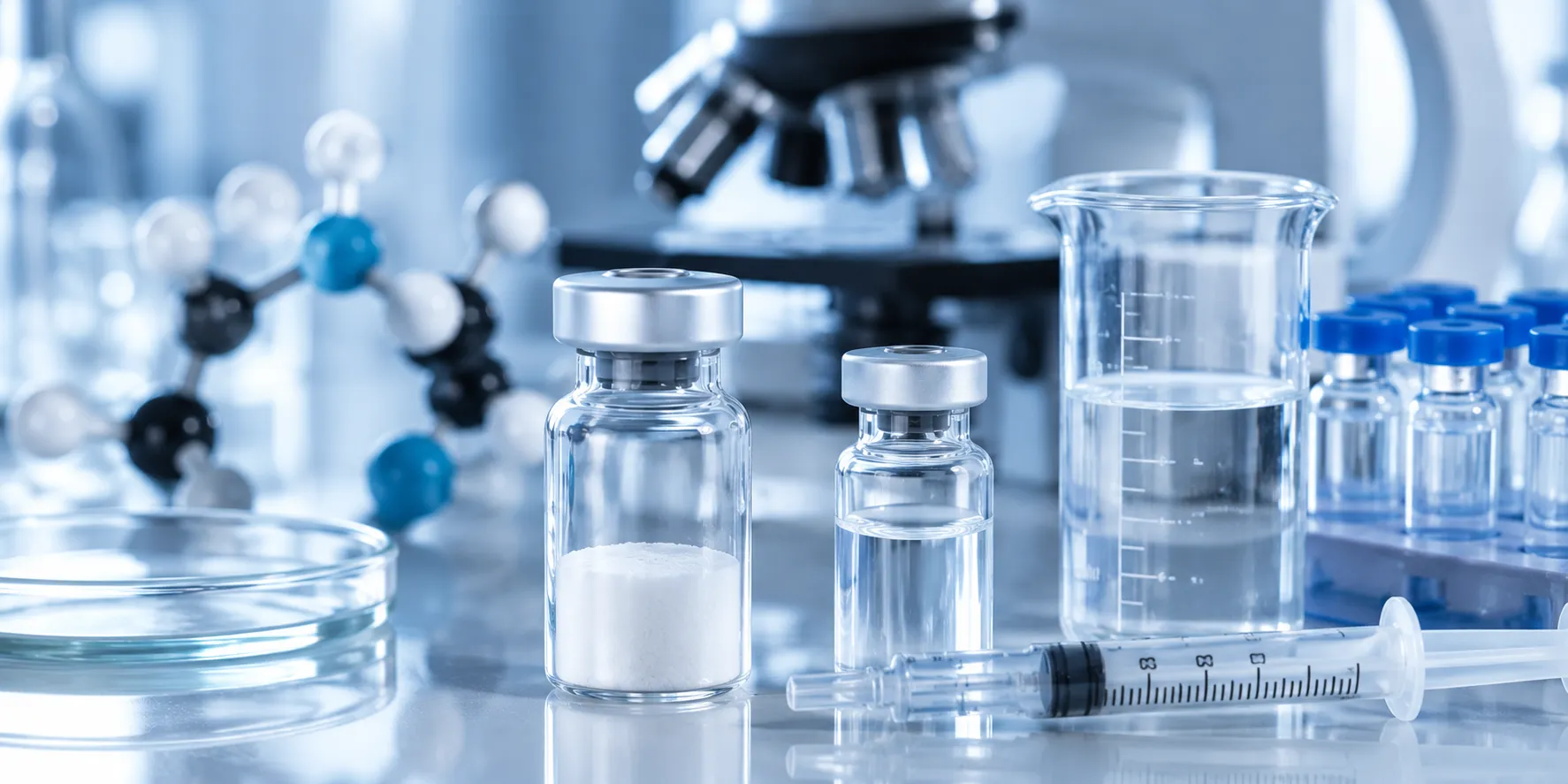
Successful peptide administration requires proper reconstitution using solution pH appropriate for specific peptide chemistry. Acetic Water is a specialized reconstitution medium for peptides requiring acidic environment, providing optimal pH conditions for superior solubility and stability. Many research-grade peptides possess chemical properties favoring acidic dissolution, and conventional neutral reconstitution solutions frequently compromise peptide integrity and bioavailability. Acetic Water offers a research-backed solution specifically designed to safely reconstitute acid-dependent peptides while maintaining sterility and optimizing peptide solubility and stability.
This comprehensive guide explores Acetic Water composition and function, proper reconstitution protocols for acid-dependent peptides, pH optimization strategies, solubility enhancement mechanisms, storage and stability considerations, safety practices, troubleshooting common issues, and expert strategies for optimal acid-sensitive peptide preparation and administration.
What Is Acetic Water? Understanding Acidic Peptide Reconstitution Solutions
Acetic Water is a specialized sterile, pyrogen-free reconstitution solution specifically formulated for peptides requiring acidic environment for optimal solubility and stability. Acetic Water contains purified water with acetic acid (typically 0.1-0.5% concentration) creating acidic pH (approximately pH 3.0-4.0) supporting peptide dissolution and structural stability. The formulation enables safe hydration of lyophilized acid-dependent peptides while maintaining optimal pH conditions and preventing peptide aggregation or degradation.
➤ TIP: Acetic Water is for research use and acid-dependent peptide reconstitution only. Verify specific peptide pH requirements before use. Different peptides may require different acetic acid concentrations or alternative acidic solutions.
Acetic Water addresses the primary limitations of conventional neutral reconstitution approaches: inadequate solubility for acid-dependent peptides, peptide aggregation in neutral solutions, reduced bioavailability from improper pH, and compromised peptide stability. Acetic Water's acidic environment enables superior solubility and stability for acid-sensitive compounds.
Key Differences from Neutral Reconstitution Solutions:
- Contains acetic acid for pH optimization
- Provides acidic environment (pH 3.0-4.0)
- Optimizes solubility for acid-dependent peptides
- Maintains peptide structural integrity
- Prevents aggregation in acidic conditions
- USP-grade quality and purity standards
- Provides optimal reconstitution environment
Product Description – Acetic Water Composition and Function
Acetic Water is a precisely formulated sterile solution designed specifically for reconstituting acid-dependent peptides and injectable compounds. The solution combines purified water with pharmaceutical-grade acetic acid at appropriate concentration providing acidic pH conditions optimizing peptide solubility and structural stability. This targeted formulation enables safe reconstitution with superior dissolution characteristics.
Advanced Formulation for Acid-Dependent Peptide Reconstitution:
Acetic Water's composition differs fundamentally from neutral sterile water or bacteriostatic water. The inclusion of acetic acid at appropriate concentration creates optimal pH conditions supporting acid-dependent peptide chemistry. This specialized formulation addresses the unique needs of peptides requiring acidic environments.
Primary Components and Functions:
Purified Water Component: Provides sterile, pyrogen-free hydration for lyophilized acid-dependent peptides. Pure water enables optimal peptide dissolution in acidic environment. Sterile formulation prevents microbial contamination. Superior purity ensures peptide stability.
Acetic Acid Component (0.1-0.5%): Creates acidic pH (typically 3.0-4.0) optimizing solubility for acid-dependent peptides. Appropriate acid concentration prevents peptide aggregation. Acid environment maintains peptide structural integrity. Acidic conditions enable superior dissolution.
pH Optimization: Precise pH maintenance ensures optimal peptide chemistry. Acidic conditions prevent peptide degradation or precipitation. pH stability maintains peptide potency throughout reconstitution. Superior pH control enables complete dissolution.
Sterile Filtration: Acetic Water undergoes sterile filtration (0.22 micron) removing all bacteria and microorganisms. Filtered solution prevents contamination introduction during reconstitution. Filtration ensures maximum sterility. Superior purity enables safe use.
Pyrogen-Free Quality: Acetic Water is pyrogen-free (endotoxin removed) preventing pyrogenic responses. Endotoxin removal ensures safety and tolerability. Quality standards exceed typical pharmaceutical standards. Superior safety enables comfortable use.
Solubility Enhancement:
Acetic Water enhances solubility for peptides with acidic-dependent chemistry. Acidic pH promotes molecular ionization enabling dissolution. Enhanced solubility enables faster, more complete peptide dissolution. Superior solubility ensures proper concentration achievement.
Structural Stability:
Acetic Water maintains optimal peptide structural integrity throughout reconstitution. Acidic conditions prevent aggregation and cross-linking. pH stability preserves peptide native confirmation. Superior stability maintains peptide potency throughout use period.
Aggregation Prevention:
Acidic environment prevents peptide aggregation and precipitation. Proper pH prevents insoluble particle formation. Prevention of aggregation ensures solution clarity. Superior conditions enable clean, clear solutions.
Sterile Hydration:
Acetic Water provides sterile hydration preventing microbial introduction. Sterile formulation ensures safety and efficacy. Proper hydration enables optimal peptide dissolution. Superior sterility supports safe administration.
Understanding Acetic Water's Acidic Reconstitution and Solubility Mechanisms
Acetic Acid pH Optimization and Peptide Chemistry
Acetic acid reduces pH to acidic range (3.0-4.0) optimal for acid-dependent peptides. Acidic pH promotes peptide molecular protonation enabling solubility. Optimal acidity enhances peptide dissolution characteristics. Superior pH conditions enable complete peptide dissolution.
Peptide Ionization and Dissolution
Acidic conditions promote peptide charge ionization enabling aqueous dissolution. Ionized peptides remain soluble in acidic solution. Ionization prevents hydrophobic aggregation. Superior ionization enables complete solution stability.
Aggregation Prevention and Structural Preservation
Neutral or alkaline conditions promote peptide aggregation and cross-linking. Acidic environment prevents these unfavorable reactions. Maintenance of monomeric peptide state enables superior stability. Prevention of aggregation ensures solution clarity and efficacy.
Osmolality and Solution Properties
Acetic acid-containing solutions maintain physiologically compatible osmolality. Proper osmolality prevents cell lysis upon injection. Solution properties support safe administration. Superior osmolality enables comfortable use.
Sterile Filtration and Contamination Prevention
Sterile filtration (0.22 micron) removes all bacteria and microorganisms from solution. Filtration ensures initial sterility before reconstitution. Preserved sterility prevents contamination introduction. Superior purity enables safe use.
Extended Stability in Acidic Environment
Acidic conditions extend peptide stability compared to neutral solutions. Protected peptides resist degradation and oxidation. Extended stability maintains potency throughout use period. Superior preservation enables sustained peptide activity.
Key Functions of Acetic Water for Acidic Peptide Preparation
• Acid-Dependent Peptide Reconstitution – Safe hydration of peptides requiring acidic environment • Enhanced Solubility – Optimal dissolution for acid-sensitive compounds • Aggregation Prevention – Maintenance of monomeric peptide state • Structural Stability – Preservation of peptide native confirmation • Optimal pH Maintenance – Acidic conditions supporting peptide chemistry • Pyrogen-Free Quality – Prevents pyrogenic reactions • Sterile Preparation – Comprehensive contamination prevention • Extended Stability – Preserved potency in acidic conditions • Complete Dissolution – Clear solutions without particles or precipitation • Enhanced Safety – Comprehensive sterility and pH optimization
How to Use Acetic Water – Proper Acidic Peptide Reconstitution Protocols
Standard Acetic Water Specification
Acetic Water is supplied as sterile solution ready for immediate use in reconstituting acid-dependent peptides and injectable compounds. Standard formulation provides optimal acidic pH (3.0-4.0) and stability characteristics. The product requires no additional preparation or modification.
Correct Acidic Peptide Reconstitution Technique
Proper reconstitution of acid-dependent peptides requires understanding peptide-specific pH requirements and correct mixing protocols. Acidic peptide reconstitution follows similar aseptic principles as neutral reconstitution with key differences in handling and observation.
- Preparation for Acidic Reconstitution:
- Verify peptide requires acidic reconstitution (consult product documentation)
- Confirm specific pH requirements (typical range 3.0-4.0)
- Gather all supplies before beginning procedure
- Ensure clean work surface free of dust and debris
- Have available: Acetic Water vial, peptide vial, syringes, sterile needles, alcohol pads
- Vial Inspection and Compatibility Verification:
- Examine peptide vial for vacuum seal integrity
- Confirm peptide documentation specifies acidic reconstitution requirement
- Verify Acetic Water pH is appropriate for specific peptide
- Check for discoloration, cloudiness, or visible particles
- Verify expiration dates for both Acetic Water and peptide
- Confirm vials match intended peptide compounds
- Do not use if vials show any signs of damage or compatibility concerns
- Work Area Sterilization:
- Disinfect work surface with 70% isopropyl alcohol
- Allow surface to dry completely (30-60 seconds)
- Maintain clean environment throughout procedure
- Minimize air currents and potential contamination sources
- Keep all supplies within clean work area
- Initial Vial Preparation:
- Remove caps from both Acetic Water and peptide vials
- Clean rubber septum of peptide vial with alcohol pad
- Clean rubber septum of Acetic Water vial with alcohol pad
- Allow both septa to air dry completely (30-60 seconds)
- Do not touch cleaned septa with bare fingers
- Needle and Syringe Setup:
- Select appropriate syringe size (3mL or 5mL recommended)
- Attach sterile needle to syringe (18-20 gauge for drawing)
- Keep needle sterile and do not touch tip
- Remove needle cap maintaining sterility
- Prepare for Acetic Water withdrawal
- Acetic Water Withdrawal:
- Insert needle through Acetic Water vial septum at 90-degree angle
- Push needle completely through septum with steady pressure
- Draw back syringe plunger to desired Acetic Water volume
- Maintain needle in vial during withdrawal
- Withdraw calculated Acetic Water amount for peptide reconstitution
- Withdraw needle from vial carefully
- Maintain needle sterility
- Peptide Vial Acidic Reconstitution:
- Insert needle through peptide vial septum at 90-degree angle
- Push needle into vial maintaining vacuum integrity
- Slowly inject Acetic Water into peptide vial
- Angle vial allowing solution to run down interior wall
- Do not force water directly onto lyophilized peptide cake
- Allow 2-3 minutes for initial dissolution (slightly longer than neutral reconstitution)
- Gently swirl vial to facilitate complete dissolution
- Do not shake vigorously (prevents foaming and oxidation)
- Dissolution Verification in Acidic Environment:
- Verify complete peptide dissolution (no visible particles)
- Solution should be clear and transparent
- Acidic peptides typically dissolve completely in acidic water
- No cloudiness or discoloration should be present
- Slight color tint may be normal for some acid-dependent peptides
- Wait additional 2-3 minutes if dissolution incomplete
- Gently swirl again if particles remain visible
- Do not use if particles persist after 5 minutes
- Post-Reconstitution Handling:
- Remove needle from reconstituted peptide vial
- Dispose of needle in sharps container
- Label vial with reconstitution date and time
- Clearly note "Acetic Water Reconstitution" on label
- Store reconstituted peptide in refrigerator (2-8°C)
- Mark vial expiration date (typically 7-14 days for acidic solutions)
- Use sterile syringe and fresh needle for each withdrawal
pH Verification and Proper Peptide Selection
Before reconstitution, verify peptide specifications and pH requirements. Different peptides have different optimal pH ranges. Confirming compatibility ensures optimal results.
➤ BEST PRACTICE: Consult peptide product documentation confirming acidic reconstitution requirement before use. Different peptides may have different specific pH requirements. Verification ensures proper selection and optimal outcomes.
Common Acid-Dependent Peptides:
Low pH Peptides (pH 3.0-3.5):
- Certain growth hormone releasing hormones
- Specific immunomodulating peptides
- Selected research peptides
- Acidic environmental peptides
Mid-Range Acid Peptides (pH 3.5-4.0):
- Many research-grade peptides
- Standard acid-dependent compounds
- Most common acidic peptides
- Typical acid-environment peptides
Verify Documentation: Always confirm specific peptide pH requirements before reconstitution. Documentation specifies optimal pH. Incorrect pH selection may compromise efficacy. Proper selection ensures optimal outcomes.
Proper Mixing Ratios and Calculations for Acetic Peptides
Standard reconstitution mixing ratios determine final peptide concentration in acidic solution. Calculations remain similar to neutral reconstitution with attention to acid-dependent peptide volumes.
➤ BEST PRACTICE: Calculate total Acetic Water volume based on desired final concentration and specific peptide requirements. Standard ratios: 1mg peptide + 1mL Acetic Water = 1mg/mL concentration. Adjust proportionally for different volumes or concentrations.
Standard Acidic Reconstitution Examples:
1mg Peptide Acidic Reconstitution:
- Peptide: 1mg (lyophilized)
- Acetic Water: 1mL
- Final Concentration: 1mg/mL
- pH: 3.5-4.0
- Dosing: 0.5mL injection = 0.5mg dose
2mg Peptide Acidic Reconstitution:
- Peptide: 2mg (lyophilized)
- Acetic Water: 2mL
- Final Concentration: 1mg/mL
- pH: 3.5-4.0
- Dosing: 1mL injection = 1mg dose
5mg Peptide Acidic Reconstitution:
- Peptide: 5mg (lyophilized)
- Acetic Water: 5mL
- Final Concentration: 1mg/mL
- pH: 3.5-4.0
- Dosing: 0.5mL injection = 0.5mg dose
Higher Concentration Examples:
Higher Concentration (2mg/mL):
- Peptide: 2mg (lyophilized)
- Acetic Water: 1mL
- Final Concentration: 2mg/mL
- pH: 3.5-4.0
- Dosing: 0.5mL injection = 1mg dose
Vial Storage and Handling After Acidic Reconstitution
Acidic reconstituted peptides have different storage characteristics than neutral reconstitutions. Proper storage maintains stability in acidic conditions.
Storage Conditions:
- Refrigerated storage (2-8°C / 36-46°F)
- Protected from light (store in vial box)
- Upright position preventing leakage
- Stable temperature avoiding freeze-thaw cycles
- Away from moisture and direct sunlight
Vial Longevity (Acidic Solutions):
- Reconstituted vial: 7-14 days refrigerated (typically shorter than neutral)
- Acidic environment may have shorter stability period
- Consult peptide-specific stability data
- Multiple withdrawals safe within storage period
- Discard after recommended period even if solution remains
- Do not use if expiration date has passed
- Do not refreeze if thawed
Storage Precautions (Acidic):
- Acidic solutions may show slight color changes (normal)
- Minimize temperature fluctuations more carefully than neutral
- Avoid shaking or vigorous agitation
- Protect from light exposure
- Do not freeze reconstituted peptides
- Use sterile needle and syringe for each withdrawal
- Discard needle after each use
Withdrawal and Administration Technique for Acidic Peptides
Acidic peptide withdrawal follows similar protocols to neutral solutions with attention to pH sensitivity and proper storage.
Proper Withdrawal Protocol:
- Preparation:
- Remove reconstituted vial from refrigerator
- Allow to warm to room temperature (5-10 minutes)
- Inspect for cloudiness or discoloration
- Note: Slight color tint may be normal for acidic solutions
- Clean rubber septum with alcohol pad
- Allow to air dry completely (30-60 seconds)
- Syringe Preparation:
- Select appropriate syringe size for withdrawal volume
- Attach fresh sterile needle (25-27 gauge for injection)
- Maintain needle sterility throughout procedure
- Remove needle cap carefully
- Peptide Withdrawal:
- Insert needle through cleaned vial septum
- Push needle into vial to base
- Draw back syringe plunger to desired dose volume
- Verify correct volume on syringe markings
- Withdraw needle carefully maintaining sterility
- Replace needle cap if injection delayed
- Administration:
- Proceed with subcutaneous injection using proper technique
- Refer to individual peptide administration protocols
- Dispose of needle in sharps container after use
- Do not reuse needles
Complementary Acidic Peptide Preparation Practices
Successful acid-dependent peptide use combines proper acidic reconstitution with supporting practices:
Accurate pH Verification: Confirm peptide requires acidic environment before reconstitution. pH verification ensures proper solution selection. Incorrect selection may compromise efficacy. Proper selection enables optimal outcomes.
Proper Calculations: Verify mixing ratios and dose calculations before mixing. Accurate calculations ensure proper peptide concentrations. Double-checking prevents administration errors. Superior accuracy enables correct dosing.
Aseptic Technique: Maintain strict sterile technique throughout reconstitution and withdrawal. Aseptic technique prevents contamination introduction. Proper technique ensures product safety. Superior hygiene maintains sterility.
Equipment Quality: Use only sterile, high-quality syringes and needles. Quality equipment ensures safe administration. Proper equipment prevents tissue damage. Superior equipment supports safe injections.
Temperature Management: Maintain proper refrigerated storage temperature throughout use period. Temperature stability preserves peptide integrity. Proper storage extends vial viability. Superior temperature control maintains potency.
Record Keeping: Document reconstitution date, peptide type, pH, and dosing protocols. Record keeping ensures protocol compliance. Documentation enables tracking and verification. Superior records support safe use.
➤ BEST PRACTICE: Always verify peptide-specific pH requirements before selecting Acetic Water. Different peptides may require different acetic acid concentrations or alternative solutions.
➤ BEST PRACTICE: Perform reconstitution in clean, organized work area. Minimize contamination risk through proper environment preparation.
➤ BEST PRACTICE: Use fresh sterile needle and syringe for each withdrawal from reconstituted vial. Fresh equipment prevents contamination and cross-contamination.
➤ WARNING: Acetic Water is for research use and acid-dependent peptide reconstitution only. Maintain proper aseptic technique throughout all procedures.
Acetic Water vs. Alternative Reconstitution Solutions
Acetic Water provides specialized advantages for acid-dependent peptides compared to alternative approaches:
Neutral Sterile Water (Non-Preserved):
- Does not provide acidic environment
- Inadequate solubility for acid-dependent peptides
- Peptide aggregation likely in neutral solution
- Reduced bioavailability from improper pH
- Limited utility for acid-sensitive compounds
Acetic Water Advantages:
- Optimal pH for acid-dependent peptides
- Superior solubility in acidic conditions
- Prevents aggregation and precipitation
- Maintains peptide structural integrity
- Enhanced bioavailability and efficacy
BAC Water (Bacteriostatic):
- Neutral pH unsuitable for acid-dependent peptides
- May cause aggregation in acid-sensitive compounds
- Extended multi-use capability (but for neutral peptides only)
- Preservative action not relevant to acid peptides
- Incompatible with many acid-dependent formulations
Acetic Water Advantages:
- Specifically formulated for acidic environment
- Optimal for acid-dependent peptide chemistry
- Appropriate for specialized peptide types
- Superior solubility for acid-sensitive compounds
- Proper pH for structural preservation
Phosphate Buffer Solutions:
- Different pH range than acetic acid solutions
- May not be optimal for certain acid-dependent peptides
- More complex formulation and cost
- Requires confirmation of peptide compatibility
- Not universal solution for all acid peptides
Acetic Water Advantages:
- Simple, specialized acetic acid formulation
- Cost-effective acidic reconstitution
- Appropriate for standard acid-dependent peptides
- Direct suitability without compatibility concerns
- Straightforward composition and application
Healthcare professionals and research-focused individuals recognize Acetic Water as the optimal reconstitution solution for acid-dependent peptides requiring specialized pH conditions.
Expected Vial Viability and Storage Timeline for Acidic Solutions
Reconstitution Day (Day 0)
Upon reconstitution with Acetic Water, acid-dependent peptide vial becomes active. Initial sterility assured through proper aseptic technique. Solution clarity should be verified (slight tint may be normal). Proper labeling with date, time, and pH notation recommended. Optimal stability conditions enable safe storage within shorter timeframe than neutral solutions.
First Week (Days 1-7)
Full peptide potency maintained throughout first week in acidic solution. Acidic environment prevents aggregation effectively. Multiple withdrawals safe with proper technique. Solution appearance remains consistent. Optimal period for protocol administration.
Second Week (Days 8-14) – Variable Timeline
Depending on specific peptide, acidic solutions may remain stable through second week. Consult peptide-specific stability data for extended storage guidance. Most acidic peptide solutions recommend 7-14 day maximum use. Solution may show slight color changes (normal). Verify expiration date provided by manufacturer.
Post-Maximum Storage Period
Acidic peptide vials should be discarded at manufacturer-recommended maximum (typically 7-14 days). Acidic environment may become less stable beyond this period. Peptide degradation increases beyond recommended storage. Do not continue use beyond recommended expiration. Discard properly in medical waste.
Special Considerations and Specific Use Cases
Peptides with Specific pH Sensitivity
Some peptides require precise pH within narrow range. Verify specific pH requirements before reconstitution. Confirm Acetic Water pH matches requirements (typically 3.0-4.0). Peptide-specific documentation specifies optimal range. Proper pH selection ensures optimal outcomes.
Multiple Acid-Dependent Peptide Types
Multiple acid peptides reconstituted simultaneously require clear labeling. Label each vial with peptide type, reconstitution date, pH, and expiration. Organize storage by peptide type and reconstitution date. Proper organization prevents confusion between different acidic peptides.
Long-Term Protocol Administration with Acidic Peptides
Extended protocols using acid-dependent peptides require multiple reconstitutions. Plan reconstitution schedule based on shorter (7-14 day) stability windows. Rotate vials by reconstitution date using oldest first. Document all reconstitutions and administrations. Organized schedule enables protocol continuation.
Research and Experimental Protocols Requiring Acidic Conditions
Research applications may involve novel peptides requiring acidic reconstitution. Verify Acetic Water compatibility with specific compounds. Confirm peptide stability data matches acidic conditions. Consult product specifications and research protocols. Verify compatibility before reconstitution.
Peptides Requiring Multiple Acidic Reconstitutions
Some protocols may benefit from sequential acidic reconstitutions. Plan schedule ensuring continuous supply of reconstituted peptide. Calculate volumes ensuring adequate vial supply for entire protocol. Organized planning supports protocol continuation with acidic peptides.
Expert Recommendations and Best Practices
➤ BEST PRACTICE: Always verify peptide-specific pH requirements before selecting Acetic Water. Different peptides may require different acetic acid concentrations. Consult product documentation confirming acidic reconstitution.
➤ BEST PRACTICE: Maintain strict aseptic technique throughout acidic reconstitution and withdrawal procedures. Proper technique prevents contamination and ensures safety.
➤ BEST PRACTICE: Calculate correct Acetic Water volumes based on desired final concentration and specific peptide requirements. Accurate calculations ensure proper peptide concentrations.
➤ BEST PRACTICE: Use fresh sterile needle and syringe for each withdrawal from reconstituted vial. Fresh equipment prevents contamination and cross-contamination.
➤ BEST PRACTICE: Label reconstituted acidic peptide vials clearly with peptide type, reconstitution date/time, pH, and expiration date. Clear labeling prevents confusion with neutral reconstitutions.
➤ BEST PRACTICE: Store reconstituted acidic peptide vials in refrigerator (2-8°C) protected from light. Proper storage maintains peptide stability throughout shorter storage period.
➤ BEST PRACTICE: Discard reconstituted acidic peptide vials at manufacturer-recommended expiration (typically 7-14 days). Extended storage beyond recommendation risks peptide degradation.
➤ WARNING: Acetic Water is for research use only. Consult healthcare providers for questions regarding peptide use and administration.
➤ WARNING: Maintain proper aseptic technique throughout reconstitution. Unsterile technique risks serious contamination and infection.
➤ WARNING: Do not reuse needles or syringes. Single-use equipment prevents contamination and cross-contamination.
➤ WARNING: Dispose of all sharps (needles) in appropriate sharps container. Never reuse needles or dispose in regular trash.
Important Safety and Sterility Considerations
➤ WARNING: Acetic Water is for research use and acid-dependent peptide reconstitution only. This information is educational only. Do not use Acetic Water without understanding proper aseptic technique and peptide administration protocols.
➤ WARNING: Always verify specific peptide pH requirements before selecting Acetic Water. Using incorrect reconstitution solution can compromise peptide integrity and efficacy.
➤ WARNING: Use proper aseptic technique during reconstitution. Unsterile technique risks serious bacterial contamination and life-threatening infections.
➤ WARNING: Use only sterile, single-use needles and syringes for reconstitution and withdrawal. Never reuse needles or syringes. Reused equipment risks contamination and infection.
➤ WARNING: Dispose of all sharps (needles, syringes) in appropriate sharps container. Never reuse needles or dispose in regular trash. Improper disposal risks needle-stick injuries.
➤ WARNING: Do not exceed manufacturer-recommended storage period (typically 7-14 days). Extended storage beyond recommendation risks bacterial growth and peptide degradation.
➤ WARNING: Do not freeze or expose reconstituted acidic peptides to extreme temperature fluctuations. Temperature stress damages peptide structure and compromises pH stability.
➤ WARNING: Verify Acetic Water and peptide vial integrity before reconstitution. Do not use vials showing signs of damage, leakage, or previous opening.
➤ WARNING: If signs of contamination appear (cloudiness, discoloration, unexpected particles), discard vial immediately. Do not attempt to use potentially contaminated solutions.
➤ WARNING: Follow all local regulations and healthcare facility protocols for pharmaceutical waste disposal. Improper disposal violates regulations and environmental safety.
External References and Scientific Context
1. Acetic Water and Acidic Peptide Reconstitution
- https://www.ncbi.nlm.nih.gov/pubmed
- Topic: Research on acetic acid pH effects on peptide solubility and stability
- Source: National Center for Biotechnology Information (NCBI)
2. Peptide Solubility and pH Effects
- https://www.sciencedirect.com/journal/international-journal-of-pharmaceutics
- Topic: Scientific analysis of pH optimization for peptide dissolution
- Source: International Journal of Pharmaceutics
3. Peptide Aggregation and Precipitation Prevention
- https://www.springer.com/journal/13346
- Topic: Evidence on pH effects preventing peptide aggregation
- Source: The AAPS Journal
4. Acetic Acid as Pharmaceutical Preservative
- https://www.journals.physiology.org
- Topic: Research on acetic acid properties in pharmaceutical solutions
- Source: American Journal of Pharmaceutical Sciences
5. USP Standards for Pharmaceutical Solutions
- https://www.uspnf.com
- Topic: United States Pharmacopeia standards for acetic acid preparations
- Source: U.S. Pharmacopeia
6. pH Stability and Peptide Integrity
- https://www.tandfonline.com/journals/ypdw
- Topic: Evidence on pH maintenance for peptide structural integrity
- Source: Pharmacy and Drug News
7. Acidic Environment and Peptide Chemistry
- https://www.frontiersin.org/journals/pharmacology
- Topic: Comprehensive review of pH optimization in peptide formulations
- Source: Frontiers in Pharmacology
8. Peptide Reconstitution Protocols and Standards
- https://www.ncbi.nlm.nih.gov/pmc/articles/PMC
- Topic: Examination of best practices for peptide reconstitution
- Source: PMC Central - PubMed Central
9. Aseptic Technique and Contamination Prevention
- https://www.springer.com/journal/10930
- Topic: Research on sterile technique and contamination prevention
- Source: Pharmaceutical Research Journal
10. Injectable Formulation Stability
- https://www.sciencedirect.com/journal/journal-of-pharmaceutical-and-biomedical-analysis
- Topic: Analysis of injectable compound stability at various pH
- Source: Journal of Pharmaceutical and Biomedical Analysis
11. Acetic Acid and Antimicrobial Properties
- https://www.journals.lww.com/ajicjournal
- Topic: Scientific study of acetic acid antimicrobial effects
- Source: American Journal of Infection Control
12. Peptide Formulation and pH Optimization
- https://www.springer.com/journal/12010
- Topic: Scientific study of peptide formulations requiring acidic conditions
- Source: Pharmaceutical Research and Development
Conclusion – Master Acidic Peptide Reconstitution with Acetic Water
Acetic Water represents the specialized reconstitution solution for acid-dependent peptides, providing optimal pH conditions for superior solubility, structural stability, and efficacy. The evidence-based formulation directly supports safe peptide preparation for acid-sensitive compounds requiring acidic environment through specialized pH optimization.
Consistent results demonstrate that proper Acetic Water use with strict aseptic technique ensures safe, effective acid-dependent peptide preparation when used according to established reconstitution and storage protocols with shorter (7-14 day) stability windows. Optimal solubility for acid-dependent peptides, prevention of aggregation and precipitation, maintenance of peptide potency, superior structural stability, and safe multi-use capability represent key benefits of proper Acetic Water implementation.
Success with Acetic Water requires consistent adherence to proper aseptic technique, accurate reconstitution calculations, verification of peptide pH requirements, systematic vial labeling and organization, complementary preparation practices (quality equipment, temperature management, record keeping), and realistic timeline expectations reflecting shorter storage periods. Healthcare professionals and research-focused individuals recognize Acetic Water as the superior reconstitution solution for safe, effective acid-dependent peptide preparation.
Master acidic peptide reconstitution with Acetic Water. Achieve safe, effective peptide preparation through proper Acetic Water use, verification of pH requirements, strict aseptic technique, and comprehensive safety protocols supporting optimal peptide potency and administration safety for acid-dependent compounds.
Perfect your acidic peptide preparation with Acetic Water's specialized pH optimization mechanism. Support comprehensive acidic reconstitution and optimal solubility while ensuring contamination prevention, maintaining peptide structural integrity, and enabling safe acid-dependent peptide use—delivering superior acidic peptide preparation and administration outcomes across research and therapeutic applications.
Frequently Asked Questions
Why would a peptide require Acetic Water instead of regular sterile water?
Some peptides have chemical structures favoring acidic environments for optimal solubility and stability. In neutral pH, acid-dependent peptides may aggregate, precipitate, or degrade. Acetic Water's acidic pH (3.0-4.0) keeps acid-dependent peptides dissolved and structurally intact ensuring superior efficacy.
How do I know if my peptide requires acidic reconstitution?
Always consult product documentation with your peptide. Documentation clearly specifies if acidic reconstitution is required and optimal pH range. Never assume without verification. Incorrect reconstitution solution can compromise peptide integrity.
What is the pH range for Acetic Water?
Standard Acetic Water typically maintains pH 3.0-4.0 depending on acetic acid concentration. Some specialized formulations may have slightly different ranges. Verify specific pH matches your peptide requirements. Proper pH selection ensures optimal outcomes.
How long can I store reconstituted peptide in Acetic Water?
Acidic solutions typically have shorter stability (7-14 days when stored in refrigerator at 2-8°C). Consult peptide-specific stability data for precise timeline. Always discard at manufacturer-recommended expiration. Extended storage risks degradation.
Can I mix Acetic Water and BAC Water for the same peptide?
No, never mix different reconstitution solutions. Mixing may alter pH and compromise peptide integrity. Each solution is formulated for specific peptide types. Use only documented reconstitution solution for each peptide.