

Published: June 2, 2026 | Last reviewed: June 2, 2026
Reviewed by: Dr. Michael Aronowitz, PhD — Senior Research Editor, 99 Purity Peptides
Introduction
Retatrutide weight loss research entered a new phase on May 21, 2026, when Eli Lilly reported topline results from the Phase 3 TRIUMPH-1 obesity trial. The compound, identified as LY3437943 in the scientific literature, is an investigational triple hormone receptor agonist. It acts on three metabolic receptors simultaneously — GLP-1, GIP, and glucagon — through a single molecule.
This reference compiles what published primary sources currently say about retatrutide in the context of obesity research, covering the mechanism, Phase 2 and Phase 3 trial data, the reported side-effect profile, the current FDA regulatory status, and laboratory considerations that apply when suppliers provide the compound as a research reference standard.
Quick Facts: Retatrutide at a Glance
- Definition: Retatrutide (LY3437943) is an investigational peptide that activates three metabolic receptors — GLP-1, GIP, and glucagon — through one molecule.
- Mechanism: It is the first triple hormone receptor agonist to reach Phase 3 clinical trials.
- Primary research focus: Obesity and body weight reduction, with parallel programs in type 2 diabetes, MASLD, OSA, knee osteoarthritis, and cardiovascular outcomes.
- Regulatory status (June 2026): Not approved by any regulatory authority. The FDA states retatrutide cannot be used in compounding under federal law.
- Expected timeline: Analyst commentary points to a potential NDA filing by Lilly in Q4 2026 at the earliest, with U.S. approval unlikely before 2027.

What Is Retatrutide?
The Compound (LY3437943)
Retatrutide is a synthetic peptide of 39 amino acids that Eli Lilly developed. Inside Lilly's pipeline, it carries the designation LY3437943. Specifically, it is an investigational triple hormone receptor agonist that activates the GLP-1, GIP, and glucagon receptors through one molecule. Investigators describe it as the first triple-agonist peptide to advance to Phase 3 in any indication.
Definition — Retatrutide: A 39-amino-acid synthetic peptide that activates the GIP, GLP-1, and glucagon receptors simultaneously. Not approved by any regulatory authority as of June 2026.
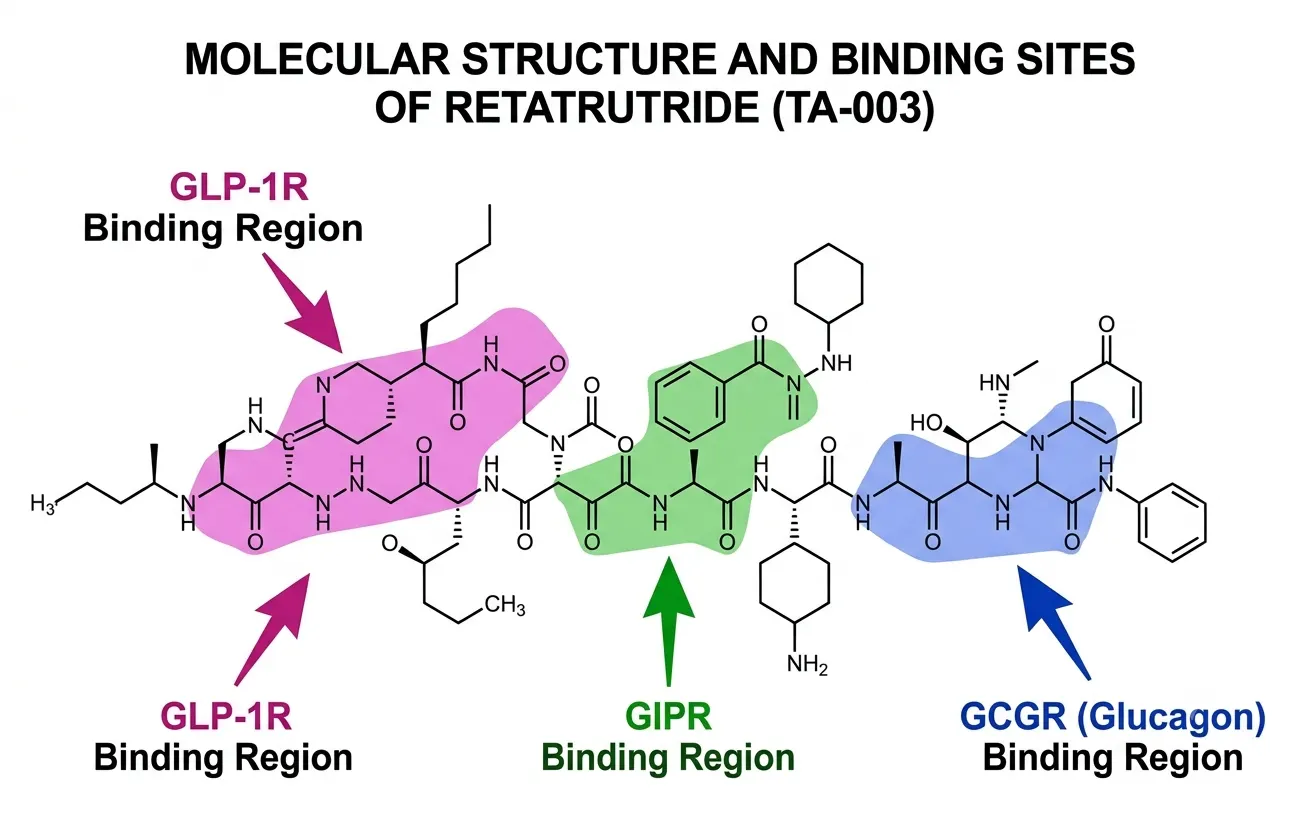
Chemical Identity and Structure
The published sequence carries several modifications relative to native GLP-1: 2-aminoisobutyric acid substitutions resist enzymatic cleavage; an α-methyl-leucine alters conformation; a serinamide C-terminus; and a fatty-acid attachment that supports albumin binding for extended duration of action. As a result, trial protocols administer retatrutide once weekly by subcutaneous injection.
The "Reta" Nickname and Common Misspellings
In forum and search-engine data, "reta" is the colloquial shorthand for retatrutide. Similarly, "tirz" emerged for tirzepatide and "sema" for semaglutide. Notably, a common misspelling — "retta peptides" — has been surging in U.S. search data. All of these terms refer to the same investigational compound.
Developed by Eli Lilly — Research and Trial Pipeline
Eli Lilly developed retatrutide as part of a program to extend the dual-agonist concept tirzepatide proved. As of June 2026, Lilly is running two parallel Phase 3 programs: the TRIUMPH program in obesity and the TRANSCEND-T2D program in type 2 diabetes. Several other indications are under study, including obstructive sleep apnea, MASLD, knee osteoarthritis, chronic kidney disease, and cardiovascular outcomes.
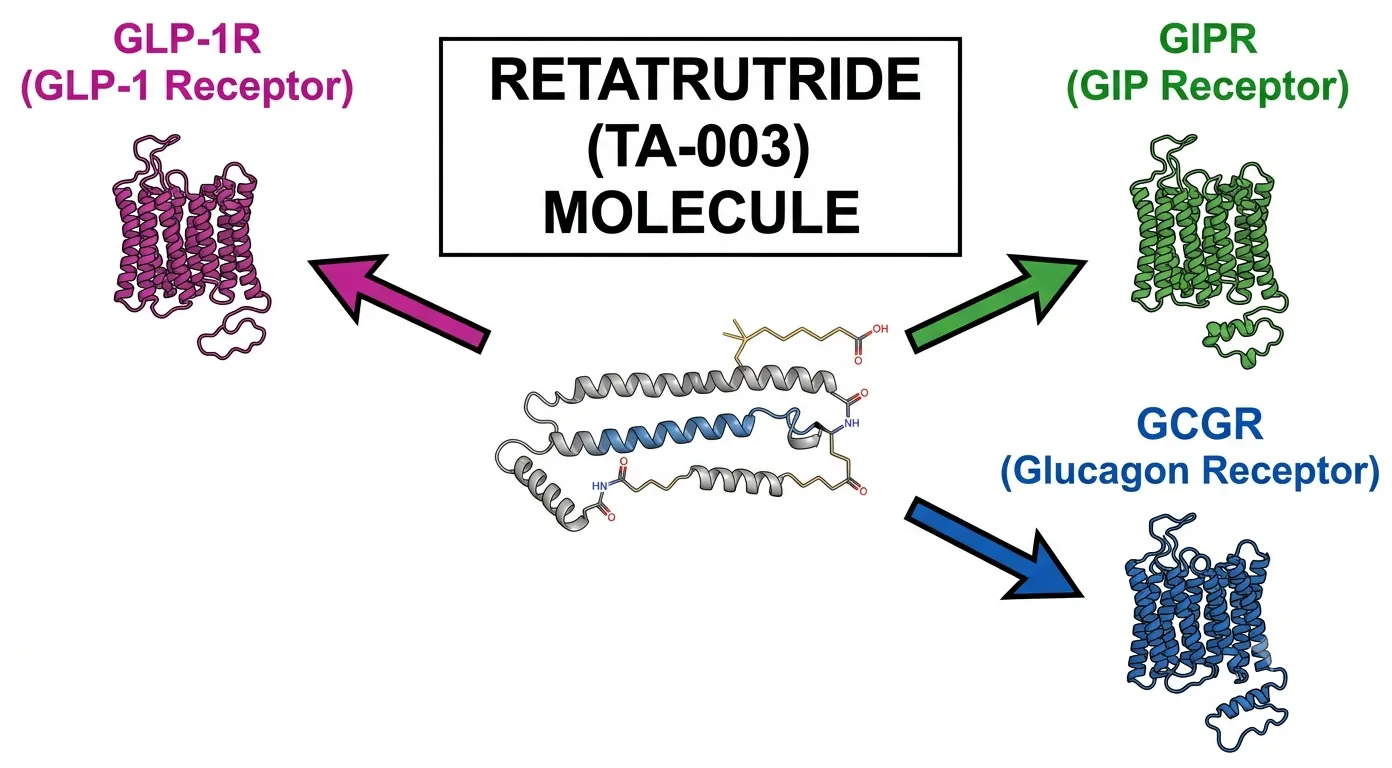
Is Retatrutide a GLP-1? Understanding Triple Agonism
Retatrutide is not "a GLP-1" in the narrow sense. Specifically, it activates the GLP-1 receptor along with two others. Investigators classify it as a GLP-1-class compound, but the more precise label is triple hormone receptor agonist.
GLP-1 Receptor Activity
The glucagon-like peptide-1 receptor regulates pancreatic insulin secretion, slows gastric emptying, and reduces appetite through central pathways. GLP-1 receptor agonism is the mechanism semaglutide uses alone; tirzepatide combines GLP-1 with GIP activity.
Definition — GLP-1 receptor: A G-protein-coupled receptor involved in insulin secretion, gastric emptying, and appetite regulation. The primary target of semaglutide, the shared target of tirzepatide and retatrutide, and one of three retatrutide targets.
GIP Receptor Activity
The glucose-dependent insulinotropic polypeptide receptor influences insulin release in response to nutrient intake and modulates how adipose tissue handles energy substrate. Tirzepatide was the first dual GLP-1/GIP agonist to reach approval, and the published SURMOUNT-1 trial showed that adding GIP to GLP-1 produces additive metabolic effects.
Definition — GIP receptor: A receptor that influences nutrient-stimulated insulin release and adipose handling of energy substrate. Shared by tirzepatide and retatrutide.
Glucagon Receptor Activity (The "GLP-3" Misnomer Explained)
The glucagon receptor is the third lever. When balanced against GLP-1 and GIP activity in the same molecule, investigators believe it raises energy expenditure and influences hepatic lipid handling. However, online forums sometimes label retatrutide a "GLP-3." This is inaccurate — no "GLP-3" receptor exists. Retatrutide is a triple agonist of GIP, GLP-1, and glucagon receptors, not a third-generation GLP-1.
Definition — Glucagon receptor: A receptor that, in balanced co-activation with GLP-1 and GIP, is hypothesized to increase energy expenditure. The third retatrutide target. Not "GLP-3".
Receptor-Binding Comparison
| Compound | GLP-1 | GIP | Glucagon | Peak Phase 3 Weight Loss |
|---|---|---|---|---|
| Semaglutide | ✓ | — | — | 14.9% (STEP-1, 68 wks) |
| Tirzepatide | ✓ | ✓ | — | 22.5% (SURMOUNT-1, 72 wks) |
| Retatrutide | ✓ | ✓ | ✓ | 28.3% at 80 wks; 30.3% at 104 wks (TRIUMPH-1) |
Retatrutide and Weight Loss: What the Research Shows
Phase 2 Body Weight Reduction Data (Jastreboff 2023)
Phase 2 data on retatrutide weight loss first appeared in the New England Journal of Medicine in 2023. Jastreboff et al. reported a 48-week randomized trial in adults with obesity but without diabetes. At the highest dose (12 mg weekly), mean body weight reduction reached 24.2%, compared with a 2.1% reduction in the placebo arm. The Phase 2 readout established the dose-response signal that the Phase 3 program later confirmed at scale.
Phase 3 TRIUMPH-1 Trial Results (2026 Update)
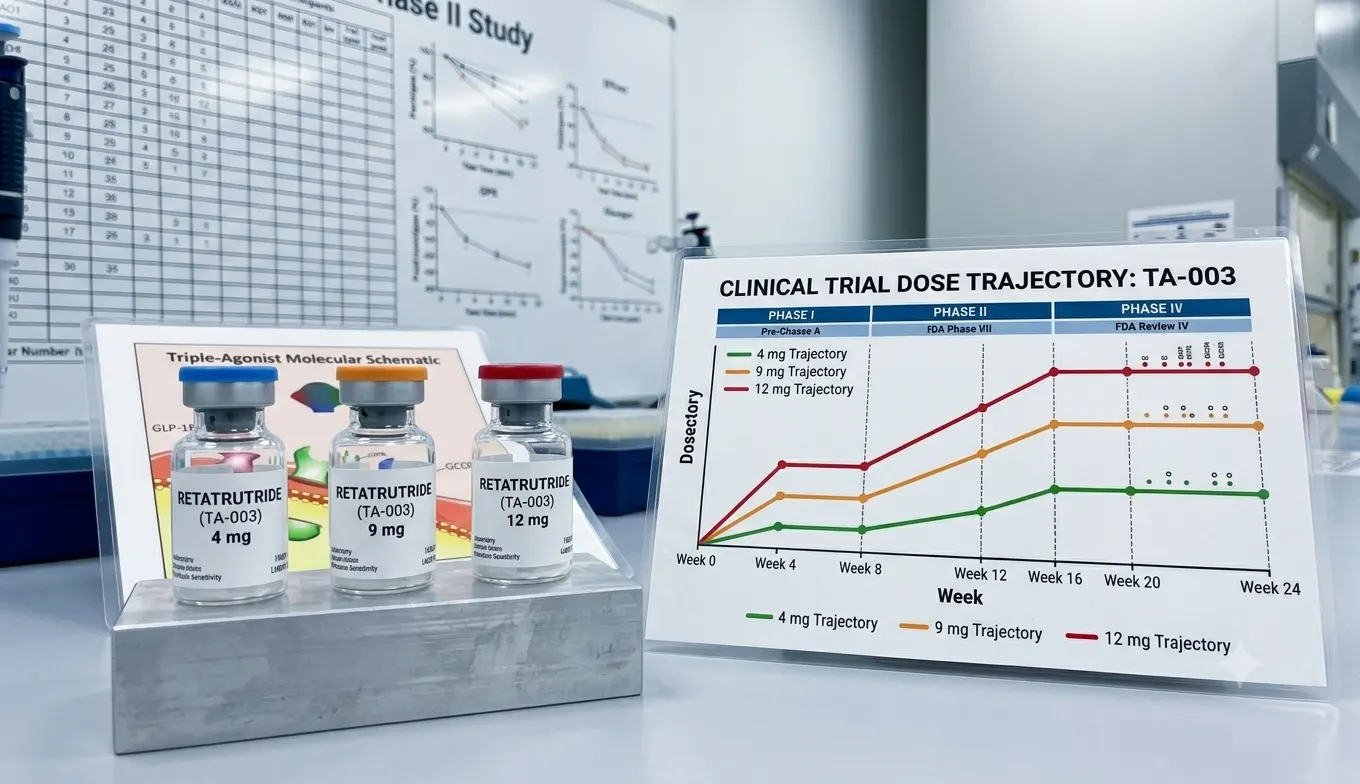
TRIUMPH-1 is the pivotal Phase 3 obesity trial for retatrutide. It enrolled 2,339 adults with obesity or overweight plus at least one weight-related comorbidity, but without diabetes. Participants received once-weekly subcutaneous retatrutide at 4 mg, 9 mg, or 12 mg, or placebo, for 80 weeks.
On May 21, 2026, Eli Lilly reported topline results: mean body weight reduction was 19.0% on the 4 mg arm, 25.9% on the 9 mg arm, and 28.3% on the 12 mg arm. Placebo produced a 2.2% reduction. In addition, 45.3% of participants on the 12 mg arm achieved at least 30% body-weight reduction. A blinded extension among participants with baseline BMI ≥35 continued through 104 weeks, where mean weight loss reached 30.3%.
Reported Mechanisms Behind Body Weight Reduction
Investigators have proposed that retatrutide body weight reduction reflects the combined contribution of all three receptors: GLP-1 activity reduces appetite and slows gastric emptying; GIP activity influences nutrient-driven insulin release and adipose handling; and glucagon activity contributes to energy expenditure and hepatic lipid handling. The mechanism is additive, not duplicative.
Appetite Regulation and Energy Expenditure Pathways
Appetite regulation runs through central pathways the GLP-1 and GIP receptors influence. Energy expenditure contributions come primarily from glucagon receptor activation. This combination is the mechanistic rationale that distinguishes retatrutide from earlier GLP-1-class compounds. The TRIUMPH-1 readout has not yet appeared in a peer-reviewed journal; Eli Lilly has indicated detailed results will be presented at the American Diabetes Association Scientific Sessions in June 2026.
Retatrutide vs Tirzepatide vs Semaglutide
Three compounds dominate current GLP-1-class research conversation: semaglutide (single agonist), tirzepatide (dual agonist), and retatrutide (triple agonist). The best comparison runs across three dimensions: mechanism, published trial efficacy, and reported tolerability.
Mechanism Comparison
Semaglutide activates the GLP-1 receptor alone. Tirzepatide adds GIP receptor activation, making it a dual agonist. Retatrutide adds glucagon receptor activation on top of GLP-1 and GIP, producing a triple mechanism. Each additional receptor contributes a distinct metabolic effect.
Reported Weight-Loss Efficacy in Trial Data
Across pivotal Phase 3 trials, mean weight reduction has scaled with receptor coverage. Semaglutide produced 14.9% mean weight loss in STEP-1 at 68 weeks; tirzepatide reached 22.5% in SURMOUNT-1 at 72 weeks; retatrutide reached 28.3% in TRIUMPH-1 at 80 weeks, with extension data reaching 30.3% at 104 weeks.
Comparison Summary
| Attribute | Semaglutide | Tirzepatide | Retatrutide |
|---|---|---|---|
| Mechanism | GLP-1 agonist | GLP-1 + GIP agonist | GLP-1 + GIP + glucagon agonist |
| Pivotal trial | STEP-1 | SURMOUNT-1 | TRIUMPH-1 |
| Trial duration | 68 weeks | 72 weeks | 80 weeks (104-week extension) |
| Mean weight reduction (high dose) | 14.9% | 22.5% | 28.3% / 30.3% |
| Dosing in trials | Once weekly | Once weekly | Once weekly |
| FDA status (June 2026) | Approved | Approved | Investigational |
Side-Effect Profile in Trials
Reported side effects across all three compounds center on gastrointestinal events. Published data from TRIUMPH-1 and TRIUMPH-4 show that discontinuation rates rise with dose. Specifically, the 12 mg arm of retatrutide has shown the highest discontinuation figures of the three compounds at their respective top doses, though investigators have suggested that part of the rate reflects participants who reached weight loss thresholds and chose to discontinue.
Branded Drug Context: Ozempic, Wegovy, Mounjaro, Zepbound
Ozempic and Wegovy contain semaglutide. Mounjaro and Zepbound contain tirzepatide. An oral semaglutide formulation is approved under the brand Rybelsus. By contrast, retatrutide has no approved brand name and no formulation is approved for any indication anywhere in the world as of June 2026. Retatrutide is therefore not equivalent to Ozempic, Wegovy, Mounjaro, or Zepbound in regulatory or commercial terms.
Reported Side Effects in Retatrutide Research
This section summarizes adverse event data as published trial reports describe them. The compound is investigational, and all material referenced is supplied for laboratory research use only.
Gastrointestinal Effects in Trial Data
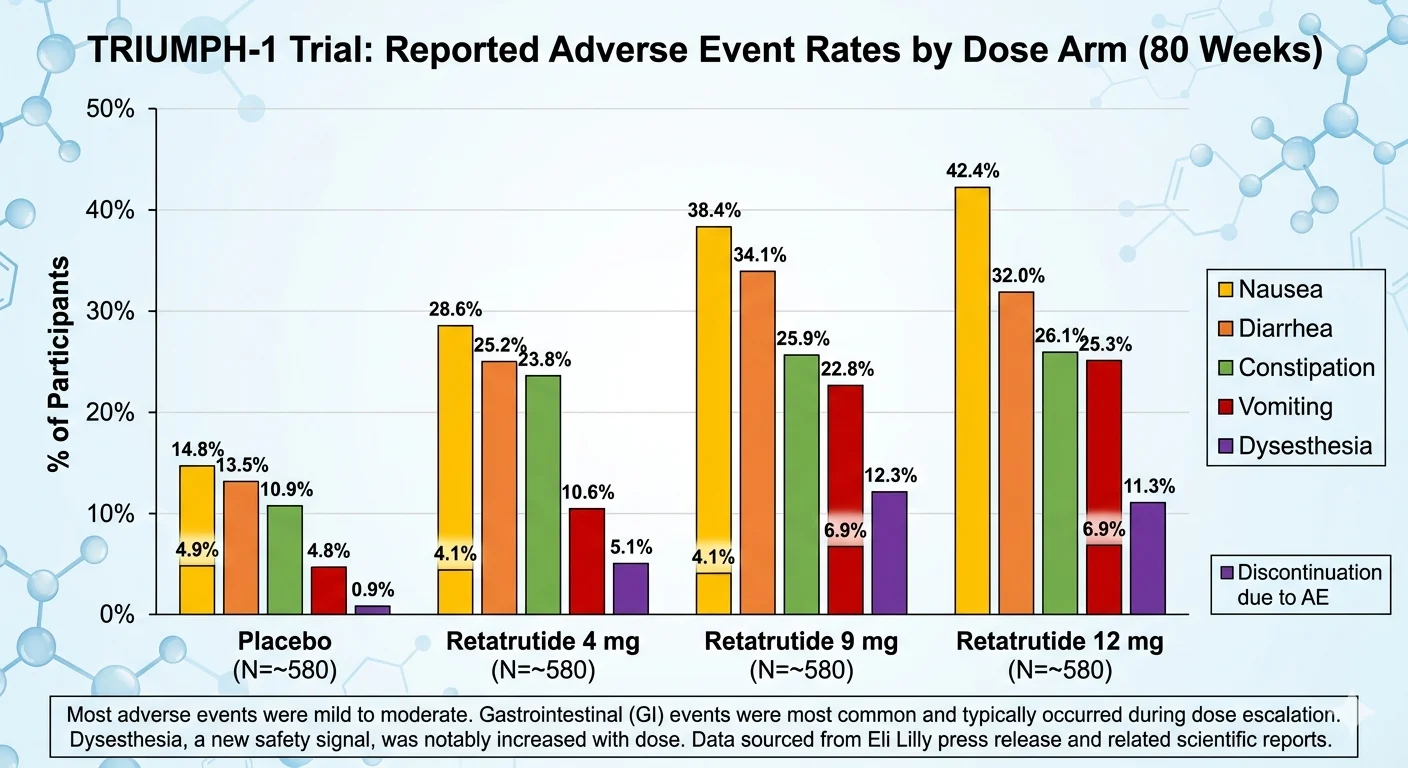
Gastrointestinal adverse events have appeared most often across the retatrutide trial program. Reported events included nausea, vomiting, and diarrhea, consistent with the broader GLP-1 receptor agonist class. In TRIUMPH-1, discontinuation rates due to adverse events were 4.1% on 4 mg, 6.9% on 9 mg, and 11.3% on 12 mg (placebo: 4.9%). TRIUMPH-4 in participants with knee osteoarthritis showed higher rates — 12.2% on 9 mg and 18.2% on 12 mg.
Reports of Fatigue and Energy Changes
Published Phase 3 readouts have not isolated fatigue as a primary adverse event of interest. However, GLP-1-class compounds broadly produce fatigue reports in some participants. Investigators have suggested this may relate to reduced caloric intake during rapid weight loss rather than to direct receptor effects.
Hair Loss Reports — What the Data Actually Shows
Published TRIUMPH-1 and TRIUMPH-4 readouts have not flagged hair loss as a primary adverse event of interest. However, the broader weight-loss literature describes telogen effluvium — a transient hair-shedding pattern — in association with rapid weight reduction from any cause, including bariatric surgery and other GLP-1-class compounds. Any hair-shedding reports should be considered in that broader context.
Cardiovascular and Metabolic Markers
The TRIUMPH-1 press release noted improvements across cardiometabolic risk markers. Eli Lilly has indicated detailed cardiometabolic data will be presented at the ADA Scientific Sessions in June 2026. The TRIUMPH-CVOT cardiovascular outcomes trial will provide longer-term safety data.
Regulatory Status and FDA Approval Timeline
Current FDA Status (as of June 2026)
The FDA has not approved retatrutide for any indication as of June 2026. It is an investigational drug in active Phase 3 trials. The FDA has stated explicitly that "retatrutide and cagrilintide cannot be used in compounding under federal law." The reason is that retatrutide does not appear on the 503A bulks list, is not a component of any FDA-approved drug, and does not have an applicable USP or NF monograph.
When Retatrutide May Become Available
The May 21, 2026 TRIUMPH-1 readout was the first pivotal Phase 3 weight-loss readout. Additional Phase 3 readouts are due through the rest of 2026: TRIUMPH-2, TRIUMPH-3, and the cardiovascular outcomes trial. According to analyst commentary, an Eli Lilly NDA filing could come in Q4 2026 at the earliest. U.S. approval is not expected before 2027.
Why Retatrutide Is Currently Sold as Research-Use-Only
A reference standard for laboratory research is not a medicine. Its purpose is analytical — researchers use it to characterize the compound by HPLC, mass spectrometry, and stability studies. "Research use only" is a regulatory category, not a marketing phrase. Material under that designation is not lawful for human or animal administration.
FDA Warning Letters to GLP-1 Peptide Vendors (Sept 2025)
In September 2025, the FDA issued more than 50 warning letters to U.S. and international companies marketing compounded GLP-1 products. Several letters explicitly named retatrutide. The agency cited violations of the Federal Food, Drug, and Cosmetic Act and stated that a "research use only" label does not exempt a product from federal requirements when the seller in fact markets it for human use. A follow-up round of warning letters in March 2026 targeted telehealth platforms marketing compounded GLP-1 products.
Retatrutide Handling in Research Settings
This section describes laboratory handling of retatrutide reference material as published peptide protocols document it. None of this is instruction for human or animal administration.
Reconstitution with Bacteriostatic Water (Research Protocol Context)
Researchers typically reconstitute lyophilized peptide reference standards with bacteriostatic water, which contains 0.9% benzyl alcohol as a preservative. To reconstitute, direct the diluent down the inner wall of the vial rather than onto the peptide cake, swirl gently to dissolve, then characterize the reconstituted material analytically before using it as a comparator in further research.
BAC Water Volumes Referenced in Published Research
For a 30 mg lyophilized vial, common research-protocol reconstitution volumes range between 1.0 mL and 3.0 mL of bacteriostatic water, resulting in a working concentration of 10 mg/mL to 30 mg/mL. Lower concentrations suit chromatographic injection; higher concentrations suit certain stability studies. These volumes are general laboratory dilution math for analytical work, not human-administration guidance.
Refrigeration, Storage, and Stability
Suppliers typically store lyophilized retatrutide reference standard desiccated at –20 °C and protected from light. Reconstituted solutions are typically held at 2–8 °C and used within the stability window the lot-specific Certificate of Analysis indicates. Stability of reconstituted GLP-1-class peptides is product- and batch-specific; researchers should always refer to the CoA for the specific lot in hand.
Common Concentrations Used in Published Research
The Phase 3 trial program tested 4 mg, 9 mg, and 12 mg per once-weekly subcutaneous dose in human participants. Analytical and preclinical laboratory work uses much lower working concentrations, with each assay — receptor binding, HPLC characterization, mass spectrometry confirmation, and stability studies — having its own working range.
Other Indications Under Study
Type 2 Diabetes (TRANSCEND-T2D)
TRANSCEND-T2D-1 was the first Phase 3 readout in type 2 diabetes, with Lilly reporting results on March 19, 2026. Investigators reported A1C reductions of 1.7% to 2.0% across doses at 40 weeks. The 12 mg arm showed mean weight reduction of 16.8% at 40 weeks, with no weight-loss plateau emerging through 40 weeks.
MASLD / Liver Research
Metabolic dysfunction-associated steatotic liver disease is under Phase 3 evaluation. Investigators are studying whether the combined triple-agonist effect on appetite, energy expenditure, and hepatic lipid handling translates to reductions in liver fat content. Results have not yet been reported.
Obstructive Sleep Apnea
Obstructive sleep apnea is a parallel Phase 3 indication. Weight reduction reduces apnea-hypopnea index in published literature on other interventions. The triple-agonist mechanism is hypothesized to produce similar reductions.
Knee Osteoarthritis and CKD Studies
TRIUMPH-4 evaluated retatrutide in participants with obesity and knee osteoarthritis. The 12 mg arm produced mean weight reduction of 28.7% at 68 weeks and cut WOMAC pain scores by 75.8%. Chronic kidney disease in patients with type 2 diabetes is also under Phase 3 evaluation.
Sourcing Research-Grade Retatrutide
What Research-Use-Only Actually Means
"Research use only" is a regulatory and labeling designation, not a marketing description. Reference standards under that designation serve analytical work, comparator use in research assays, and stability or impurity studies. They are not therapeutic products, do not bear dosing instructions, and are not lawful for administration to humans or animals.
Definition — Research-use-only (RUO): A regulatory and labeling designation for laboratory reagents not intended for diagnostic, therapeutic, or human or veterinary use. RUO peptides serve analytical, mechanistic, and method-development research.
Verifying Purity: CoA, HPLC, Mass Spectrometry
A Certificate of Analysis (CoA) is the supplier's batch-specific documentation of identity, purity, and impurity profile. Reversed-phase HPLC quantifies purity as area-percent; mass spectrometry confirms identity by molecular mass.
A complete CoA for a research peptide includes: batch number, peptide sequence and molecular weight, HPLC purity result, mass spectrometry confirmation, water content, peptide content by quantitative method, and storage and handling instructions.
Red Flags When Evaluating a Peptide Vendor
The FDA's 2025 and 2026 enforcement actions targeted suppliers whose labeling or website language implied human use, suggested therapeutic effects, or marketed the compound by comparison to FDA-approved drugs. Additional red flags include:
- Absence of a batch-specific CoA
- Absence of third-party analytical verification
- Absence of a documented U.S. shipping and warehousing chain
- Pricing significantly below the analytical-cost floor of producing a research-grade peptide
The Future of Triple-Agonist and Weight-Loss Peptide Research
Combination Compounds and Next-Generation Agonists
The CagriSema program pairs cagrilintide with semaglutide, representing the combination-formulation approach. Earlier-stage preclinical literature describes four-receptor designs that add amylin receptor activity to GLP-1, GIP, and glucagon coverage.
Where the Field Is Heading
The retatrutide weight loss readout has set a new published Phase 3 ceiling for the GLP-1-class category. Adjacent peptide research continues across distinct mechanistic categories, including tesamorelin (growth hormone axis), CJC-1295 paired with ipamorelin (GH-axis research), and MOTS-c (mitochondrial metabolism). None of these compounds is mechanistically equivalent to retatrutide, but each contributes to the broader weight-loss-adjacent research landscape.
Glossary
Incretin: A class of gut-derived hormones (including GLP-1 and GIP) that stimulate insulin secretion in response to nutrient intake.
TRIUMPH trial: Eli Lilly's Phase 3 clinical trial program evaluating retatrutide in obesity and related indications. TRIUMPH-1 is the pivotal obesity trial.
TRANSCEND-T2D: Eli Lilly's parallel Phase 3 program evaluating retatrutide in type 2 diabetes. TRANSCEND-T2D-1 reported topline results in March 2026.
Triple agonist: A single molecule that activates three different receptors at once. Retatrutide is the first triple hormone receptor agonist (GIP, GLP-1, glucagon) to reach Phase 3 clinical trials.
Key Takeaways
- Retatrutide (LY3437943) is Eli Lilly's investigational triple hormone receptor agonist, acting at GLP-1, GIP, and glucagon receptors.
- In Phase 3 TRIUMPH-1, the 12 mg arm produced mean body weight reduction of 28.3% at 80 weeks; extension data reached 30.3% at 104 weeks.
- Published Phase 3 weight-loss results for retatrutide exceed those for tirzepatide (22.5% in SURMOUNT-1) and semaglutide (14.9% in STEP-1) at comparable timepoints.
- Gastrointestinal events are the most-reported adverse events; TRIUMPH-1 discontinuation rates were 4.1%, 6.9%, and 11.3% on the 4 mg, 9 mg, and 12 mg arms.
- The FDA has not approved retatrutide and the compound cannot lawfully be used in compounding under U.S. federal law.
- Material sold as retatrutide outside clinical trials is supplied for research use only and is not lawful for human or animal administration.
Frequently Asked Questions
What is retatrutide?
Retatrutide is an investigational peptide that Eli Lilly developed under the code LY3437943. It is a synthetic 39-amino-acid molecule that activates three metabolic receptors — GIP, GLP-1, and glucagon — through one compound. No regulatory authority has approved it; it is in Phase 3 clinical trials.
Is retatrutide a GLP-1?
Retatrutide is not "a GLP-1" in the narrow sense. It activates the GLP-1 receptor along with two others — the GIP receptor and the glucagon receptor. The precise classification is triple hormone receptor agonist.
What is the difference between tirzepatide and retatrutide?
Tirzepatide is a dual agonist acting on GLP-1 and GIP receptors. Retatrutide adds glucagon receptor activation, making it a triple agonist. In published Phase 3 trials, mean weight loss for retatrutide at 80 weeks (28.3%) exceeded the mean for tirzepatide in SURMOUNT-1 at 72 weeks (22.5%).
How much weight loss has retatrutide produced in trials?
TRIUMPH-1 reported mean body weight reduction of 19.0%, 25.9%, and 28.3% on the 4 mg, 9 mg, and 12 mg arms respectively over 80 weeks. Placebo produced a 2.2% reduction. A blinded extension among participants with baseline BMI ≥35 reached mean weight loss of 30.3% at 104 weeks.
Is retatrutide FDA approved?
No. As of June 2026, the FDA has not approved retatrutide for any indication. It is an investigational drug in active Phase 3 trials. The FDA has stated explicitly that retatrutide cannot be used in compounding under U.S. federal law.
When will retatrutide be available?
According to analyst commentary, an Eli Lilly NDA filing could come in Q4 2026 at the earliest. U.S. approval is not expected before 2027. Additional Phase 3 readouts including TRIUMPH-2, TRIUMPH-3, and the cardiovascular outcomes trial are due through 2026.
Who makes retatrutide?
Eli Lilly and Company developed retatrutide, retaining the investigational designation LY3437943. Lilly is running two parallel Phase 3 programs: the TRIUMPH program in obesity and the TRANSCEND-T2D program in type 2 diabetes.
What does "reta" mean?
"Reta" is the colloquial shorthand for retatrutide, widely used in forums, social media, and search queries — analogous to "tirz" for tirzepatide and "sema" for semaglutide. A common misspelling, "retta peptides," also appears in current U.S. search data.
What were the Phase 3 TRIUMPH-1 trial results?
TRIUMPH-1 reported mean body weight reduction of 28.3% at 80 weeks on the 12 mg arm. Specifically, 45.3% of participants on that arm achieved at least 30% weight loss. A blinded extension among participants with baseline BMI ≥35 reached 30.3% mean weight loss at 104 weeks.
What are the side effects of retatrutide?
Gastrointestinal events have appeared most frequently in trials (nausea, vomiting, diarrhea). In TRIUMPH-1, discontinuation rates due to adverse events were 4.1% on 4 mg, 6.9% on 9 mg, and 11.3% on 12 mg, compared with 4.9% on placebo.
How does retatrutide work?
Retatrutide binds three receptors: the GLP-1 receptor (regulates appetite, insulin secretion, and gastric emptying), the GIP receptor (influences insulin response and adipose handling), and the glucagon receptor (affects energy expenditure and hepatic lipid handling).
Is retatrutide a "GLP-3"?
No. There is no "GLP-3" receptor. The term sometimes circulates online as shorthand for the triple-agonist concept, but it is inaccurate. Retatrutide activates GIP, GLP-1, and glucagon receptors — three distinct receptors, not a third-generation GLP-1.
How is retatrutide different from semaglutide (Ozempic / Wegovy)?
Semaglutide acts on GLP-1 alone; retatrutide acts on GLP-1, GIP, and glucagon receptors. The published Phase 3 mean weight reduction for retatrutide (28.3%) is nearly double the figure for semaglutide in STEP-1 (14.9%) over comparable trial durations.
Is retatrutide the same as Ozempic?
No. Ozempic contains semaglutide, a single GLP-1 receptor agonist approved for type 2 diabetes. Retatrutide is an investigational triple hormone receptor agonist with no regulatory approval.
Is retatrutide the same as Mounjaro or Zepbound?
No. Mounjaro and Zepbound contain tirzepatide, a dual GLP-1/GIP agonist. Retatrutide is a triple agonist that adds glucagon receptor activity. The mechanism, clinical pipeline, and regulatory status are different.
Does retatrutide need to be refrigerated?
Lyophilized retatrutide reference standard is typically stored desiccated at –20 °C and protected from light. After reconstitution, working solutions are typically held at 2–8 °C within the stability window the lot-specific Certificate of Analysis indicates.
How much BAC water for 30mg retatrutide?
For a 30 mg lyophilized vial, common research-protocol reconstitution volumes range between 1.0 mL and 3.0 mL of bacteriostatic water, resulting in a working concentration of 10 mg/mL to 30 mg/mL. These volumes are general laboratory dilution math for analytical work, not human-administration guidance.
Where can I buy retatrutide?
Retatrutide is not approved for human use. Suppliers may lawfully provide retatrutide as a chemical reference standard for laboratory research use only, with labeling and marketing that does not imply human use.
Is retatrutide legal to buy in the United States?
No one can lawfully sell retatrutide for human administration or compound it under U.S. federal law. Suppliers may lawfully provide it as a chemical reference standard for laboratory research use only, provided labeling and marketing do not imply human use.
What conditions is retatrutide being studied for besides obesity?
Several Phase 3 trials cover type 2 diabetes (TRANSCEND-T2D), obstructive sleep apnea, MASLD, chronic kidney disease in patients with type 2 diabetes, knee osteoarthritis (TRIUMPH-4), and cardiovascular outcomes.
Research-Use-Only Disclosure
This article serves educational and research reference purposes only. Retatrutide is an investigational compound, and the FDA has not approved it for any indication. No other regulatory authority has approved it. Any material this article references is for laboratory research use only. It is not intended for human or animal administration, diagnostic use, or therapeutic use. This article does not constitute medical advice and is not a substitute for consultation with a qualified healthcare professional.
References
- Eli Lilly and Company. Lilly's triple agonist, retatrutide, delivered powerful weight loss in pivotal Phase 3 obesity trial. PRNewswire press release, May 21, 2026.
- American Journal of Managed Care. Retatrutide Achieves Up to 30.3% Average Weight Loss in Phase 3 TRIUMPH-1 Trial. May 21, 2026.
- Wikipedia. Retatrutide entry (amino acid sequence, modifications, LY3437943 designation).
- Durham Peptides. Peptide Research Trends 2026.
- Eli Lilly. What to know about retatrutide. Last updated May 2026.
- U.S. Food and Drug Administration. FDA's Concerns with Unapproved GLP-1 Drugs Used for Weight Loss.
- U.S. Food and Drug Administration. Warning Letter — GLP-1 Solution (715883). September 9, 2025.
- Scientific American. Trial of next-gen weight-loss drug retatrutide brings it one step closer to FDA approval. May 21, 2026.
- Drugs.com. What is "retatrutide peptide" being sold online? Medically reviewed April 29, 2026.
- Eli Lilly. Press release on TRANSCEND-T2D-1. March 19, 2026.
- ClinicalTrials.gov. Effect of Retatrutide Compared With Placebo in Adult Participants With Type 2 Diabetes (TRANSCEND-T2D-1). NCT06354660.
- HCPLive. Retatrutide Meets Weight Loss Endpoints in Phase 3 Obesity Trial. May 21, 2026.
- Jastreboff AM, Kaplan LM, Frías JP, et al. Triple-Hormone-Receptor Agonist Retatrutide for Obesity — A Phase 2 Trial. New England Journal of Medicine. 2023;389:514-526.
- Eli Lilly Investor Relations. Lilly's triple agonist, retatrutide, delivered weight loss of up to an average of 71.2 lbs along with substantial relief from osteoarthritis pain in first successful Phase 3 trial.
- ClinicalTrials.gov. TRIUMPH cardiovascular outcomes trial entry.
- Wilson Sonsini Goodrich & Rosati. FDA Sends Warning Letters to More Than 50 GLP-1 Compounders and Manufacturers. October 1, 2025.
- Health Law Alliance. FDA Targets GLP-1 and Peptide Compounding, Advertising and "Research Use Only" Labeling. March 31, 2026.
- Venable LLP. FDA's Latest GLP-1 Crackdown: What Compounders and Telehealth Platforms Need to Know. March 13, 2026.
- PubMed search: "triple agonist peptide" — overview of preclinical and clinical literature on multi-receptor agonist peptides.