Order over $300 get free 2-day shipping
Email
Call
GHK-Cu Peptide: Complete Research Guide 2026

GHK-Cu Peptide: Complete Research Guide 2026

Last updated: May 27, 2026Introduction   GHK-Cu peptide — the copper complex of glycyl-L-histidyl-L-lysine — has occupied a quiet but persistent place in regenerative biochemistry since Loren Pickart's 1973 isolation work. This reference page consolidates the...

Retatrutide Peptide: 2026 Research Reference Guide

Retatrutide Peptide: 2026 Research Reference Guide

Last Updated: May 2026 Introduction   Retatrutide peptide, identified in the scientific literature as LY3437943, is an investigational triple hormone receptor agonist developed by Eli Lilly and Company. It has become one of the most-discussed compounds in...

Retatrutide and Carbs: Does This Triple Agonist Need Glucose?

Retatrutide and Carbs: Does This Triple Agonist Need Glucose?

Last Updated: May 2026 Retatrutide is emerging as one of the most mechanistically complex peptides in current metabolic research. As a triple agonist simultaneously targeting GLP-1, GIP, and glucagon receptors, it operates through pathways that interact with...

Reconstituted Peptide Stability: What Laboratory Research Shows

Reconstituted Peptide Stability: What Laboratory Research Shows

Last Updated: May 2026Accurate peptide calculator results in seconds. Enter your vial size, bacteriostatic water volume, and target dose — our tool instantly converts your peptide dosage into precise syringe units. No math errors. No guesswork. Research-grade...

BPC-157 and TB-500 Liver Research: What Preclinical Studies Show

BPC-157 and TB-500 Liver Research: What Preclinical Studies Show

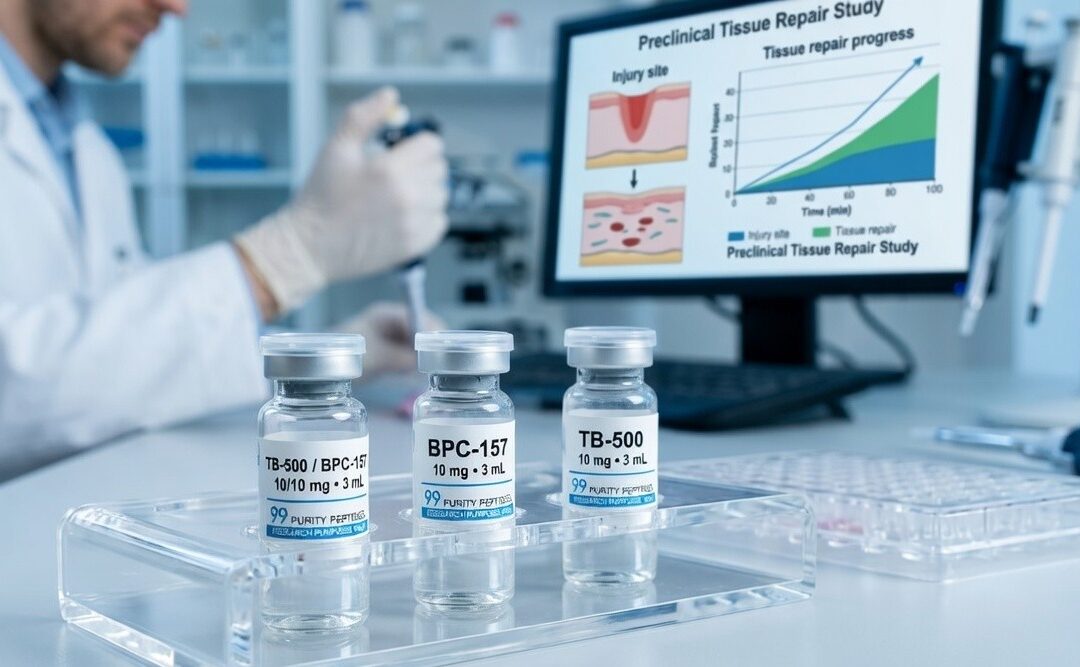
BPC-157 liver research has gained significant traction in the scientific community over the past decade. Understanding hepatoprotective mechanisms and peptide metabolic behavior helps researchers design rigorous, reproducible laboratory studies. Liver tissue responds...

Reconstituted Peptide Stability: What Laboratory Research Shows

Reconstituted Peptide Stability: What Laboratory Research Shows

Reconstituted peptide stability determines experimental reproducibility in laboratory settings. Understanding degradation mechanisms and optimal storage conditions ensures research material integrity across multi-session studies. Peptide stability depends on...

×
Purity Season Purity Season
×
All Products (20% OFF)
99PURITY
Site Entrance Logo

Age Verification

Access to our catalog requires a minimum of 21 years of cellular replication on Earth. Please confirm your maturation level to enter the lab.