
INTRODUCTION & PRODUCT DESCRIPTION

Anxiety has become the defining emotional challenge of contemporary life. Chronic stress, information overload, social disconnection, and economic uncertainty create a baseline state of psychological tension for millions—a state where sustained calm and emotional equilibrium feel increasingly elusive.
Traditional anxiolytic medications provide relief but often exact a cost: sedation, cognitive impairment, dependence potential, and delayed onset of action measured in weeks. This paradox—needing calm to think clearly, yet sacrificing cognitive function to achieve calm—creates an impossible choice for many seeking anxiety relief.
Selank represents a breakthrough in understanding how endogenous neuropeptide signaling can produce genuine anxiety reduction without sedation, cognitive impairment, or dependence. This synthetic heptapeptide, derived from tuftsin (an endogenous immunomodulatory peptide), reduces anxiety, enhances mood, and supports cognitive function under stress through coordinated neuropeptide mechanisms—producing what might be termed "alert calm": relaxation without sedation, mood enhancement without stimulation.
This comprehensive guide explores what Selank is, how tuftsin-derived signaling reduces anxiety and enhances emotional resilience, its research applications in anxiety disorders and stress management, and why researchers investigating anxiety neurobiology, mood disorders, and resilience mechanisms have embraced Selank as a foundational anxiolytic research tool.
WHAT IS SELANK? THE TUFTSIN-DERIVED ANXIOLYTIC PEPTIDE
Selank is a synthetic heptapeptide (seven amino acids: Thr-Lys-Pro-Arg-Pro-Gly-Pro) derived from tuftsin, an endogenous immunomodulatory peptide produced by macrophages and other immune cells. Tuftsin has been recognized for decades as an immune-stimulating peptide that enhances immune cell function and inflammatory responses. Yet emerging research reveals that tuftsin—and its synthetic analog Selank—exerts powerful effects on brain function through neuropeptide signaling, producing anxiety reduction, mood enhancement, and emotional resilience.
Selank was developed in Russia in the 1990s specifically to capture tuftsin's immune-modulating properties while enhancing its neuropeptide-based anxiolytic and mood-supporting effects. The result is a synthetic peptide with dual benefits: immune-mediated neuroprotection coupled with direct neuropeptide anxiolytic activity.
What distinguishes Selank from traditional anxiolytics is that it produces genuine anxiety reduction through activation of the brain's natural anxiety-regulatory systems (opioid, GABAergic, serotonergic) rather than through sedation or non-specific neural suppression. This mechanism produces calm that is alert and functionally compatible with cognitive work—a crucial distinction for anxiety management in real-world contexts demanding both calm and cognitive function.
THE NEUROPEPTIDE FOUNDATION: TUFTSIN'S DUAL ROLE IN IMMUNITY AND BRAIN FUNCTION
Tuftsin is primarily recognized as an immunomodulatory peptide—a molecule produced by immune cells that enhances immune function through receptor activation. However, tuftsin also crosses the blood-brain barrier and activates specific neuropeptide receptors throughout the brain, particularly in emotional and stress-response centers.
This dual role—simultaneous immune and neural effects—is unique among anxiolytic compounds. Most traditional anxiolytics work purely on brain mechanisms; Selank additionally leverages immune-mediated neuroprotection to support brain function and emotional resilience.
HOW SELANK WORKS: NEUROPEPTIDE ANXIOLYTIC MECHANISMS
Selank's anxiety-reducing and mood-enhancing effects derive from its activation of multiple interconnected neuropeptide and neurotransmitter systems that naturally regulate anxiety and emotional tone. Understanding these mechanisms reveals why Selank produces anxiety reduction without the sedation or cognitive impairment of traditional anxiolytics.
OPIOID RECEPTOR ACTIVATION AND ENDOGENOUS OPIOID SYSTEM ENHANCEMENT
Selank activates opioid receptors—particularly mu (μ) and delta (δ) opioid receptors—in brain regions critical for emotion regulation, including the amygdala, insula, ventromedial prefrontal cortex, and periaqueductal gray. This opioid receptor activation triggers release of endogenous opioid neuropeptides: endorphins, enkephalins, and dynorphins.
These endogenous opioids produce anxiolytic and analgesic (pain-reducing) effects through activation of opioid receptors on neurons throughout emotion-processing circuits. Importantly, this activation of the endogenous opioid system produces genuine anxiety reduction—not through sedation or cognitive impairment, but through the brain's natural anxiety-dampening mechanisms.
This opioid-mediated anxiolysis is distinct from exogenous opioid drug effects: Selank activates the endogenous system at physiological levels, producing anxiolytic effects without the excessive dopamine activation, sedation, or addiction potential associated with opioid drugs.
GABA SYSTEM ENHANCEMENT AND NEURAL INHIBITION OPTIMIZATION
Gamma-aminobutyric acid (GABA) is the brain's primary inhibitory neurotransmitter—the chemical signal that suppresses neuronal overexcitation. Anxiety involves excessive neural activity in fear and threat-processing circuits; GABA signaling suppresses this overactivity, producing anxiety reduction.
Selank enhances GABAergic neurotransmission, increasing GABA release and receptor activation in anxiety-regulating brain regions. This GABA enhancement reduces the excessive neural activity underlying anxiety while maintaining normal neuronal function. Crucially, Selank's GABA enhancement produces calm without sedation—the neural inhibition is targeted to anxiety circuits rather than broadly suppressing all brain activity.
This mechanism distinguishes Selank from benzodiazepines, which also enhance GABA signaling but produce widespread neural suppression resulting in sedation, cognitive impairment, and dependence. Selank's more targeted GABA enhancement produces anxiety reduction without these drawbacks.
SEROTONERGIC SYSTEM SUPPORT AND MOOD REGULATION
Serotonin dysregulation underlies depression, anxiety, and mood disorders. Selank enhances serotonergic neurotransmission in brain regions governing mood: the ventral tegmental area, nucleus accumbens, medial prefrontal cortex, and dorsal raphe nucleus.
This serotonergic enhancement supports mood stability, reduces depressive symptoms, and promotes psychological resilience and optimism. The serotonergic effects complement Selank's opioid and GABAergic anxiolytic actions, creating balanced emotional support across multiple neurotransmitter systems.
DOPAMINERGIC MODULATION AND REWARD PROCESSING OPTIMIZATION
Beyond serotonin, Selank modulates dopaminergic neurotransmission in reward-processing and motivation circuits. This dopamine modulation enhances positive reward signaling and motivation for goal-directed behavior, counteracting the anhedonia (loss of pleasure) and motivational deficits common in anxiety and depression.
The dopaminergic enhancement is balanced and modulated—not the excessive dopamine flooding produced by stimulants, but rather optimization of dopamine signaling to support healthy reward processing and motivation.
NEUROPEPTIDE Y (NPY) SYSTEM SUPPORT AND STRESS RESILIENCE
Neuropeptide Y (NPY) is a natural stress-resilience peptide that suppresses anxiety and enhances emotional resilience through specific receptor activation. Selank enhances NPY signaling in stress-response brain regions, amplifying the brain's natural stress-buffering capacity.
NPY enhancement is particularly significant in contexts of chronic stress: NPY signaling appears to be a critical determinant of who maintains resilience under stress and who develops stress-related anxiety disorders. By enhancing NPY systems, Selank strengthens the brain's inherent stress-resistance mechanisms.
HPA AXIS MODULATION AND STRESS HORMONE NORMALIZATION
The hypothalamic-pituitary-adrenal (HPA) axis is the body's central stress response system. In anxiety and chronic stress, HPA axis dysregulation produces excessive cortisol and other stress hormone elevation. Selank modulates the HPA axis, promoting normal cortisol rhythms and preventing excessive stress hormone elevation.
This HPA axis normalization maintains adequate stress response capacity (needed for appropriate responses to genuine threats) while preventing chronic excess cortisol that impairs cognition and emotional regulation.
IMMUNE SYSTEM ACTIVATION AND NEUROINFLAMMATION REDUCTION
As a tuftsin-derived peptide, Selank retains immune-modulating properties that benefit brain function. The peptide activates specific immune cells (macrophages, lymphocytes) that produce anti-inflammatory cytokines and suppress pro-inflammatory signaling. Additionally, Selank directly reduces pro-inflammatory cytokines in the brain.
This immune-mediated neuroinflammation reduction is crucial: chronic neuroinflammation drives anxiety, depression, and cognitive impairment. By reducing neuroinflammation through immune activation, Selank addresses anxiety and mood disturbance at a fundamental pathophysiological level.
NEUROPLASTICITY SUPPORT AND LONG-TERM ANXIETY REDUCTION
Beyond acute anxiolytic effects, Selank supports neuroplasticity—the brain's ability to physically change its structure and function based on experience. This neuroplasticity support enables the brain to develop more efficient anxiety regulation and emotional resilience over time.
With chronic Selank administration, anxiety reduction progressively improves as neuroplasticity-dependent changes in anxiety-processing circuits develop. The result is not merely temporary symptom suppression but actual neural reorganization supporting improved emotional regulation.
PRIMARY RESEARCH APPLICATIONS OF SELANK
Selank's multifaceted anxiolytic and mood-supporting mechanisms make it valuable across diverse research domains:
ANXIETY REDUCTION AND ANXIETY DISORDER RESEARCH
Selank's primary research application involves investigating mechanisms of anxiety and testing neuropeptide-based anxiolytic approaches. Studies demonstrate significant anxiety reduction on validated anxiety measures, with effects often rapid (appearing within hours) and sustained with chronic administration.
For researchers investigating the neurobiology of anxiety disorders (generalized anxiety disorder, social anxiety disorder, panic disorder, post-traumatic stress disorder), Selank provides a selective tool for understanding neuropeptide anxiolytic mechanisms independent of traditional GABAergic or serotonergic approaches.
MOOD ENHANCEMENT AND DEPRESSION RESEARCH
Selank's effects on serotonergic and opioid systems position it as valuable for mood research. Studies demonstrate mood improvement and potential antidepressant effects, making Selank relevant for investigating neuropeptide approaches to depression and mood disorders.
The rapid onset of mood effects (distinct from SSRIs' weeks-long delay) makes Selank particularly valuable for investigating mechanisms of immediate mood support.
STRESS RESILIENCE AND PSYCHOLOGICAL ADAPTATION RESEARCH
Selank's HPA axis modulation and stress-buffering properties make it valuable for investigating psychological resilience. Research explores how Selank supports maintained emotional function under acute or chronic stress and what neurobiological mechanisms underlie individual differences in stress resilience.
COGNITIVE FUNCTION UNDER STRESS AND PERFORMANCE OPTIMIZATION
By reducing anxiety and supporting emotional resilience, Selank maintains cognitive performance in high-stress situations where unprotected cognition would deteriorate. Research in performance psychology, military operations, medical training, and high-stakes professional contexts explores Selank's effects on maintaining focus and decision-making under pressure.
ANXIETY AND SLEEP QUALITY RESEARCH
Anxiety commonly disrupts sleep, while poor sleep exacerbates anxiety—a vicious cycle. Selank reduces anxiety and often improves sleep quality and sleep architecture. Research explores the relationship between reduced anxiety and improved sleep, and whether Selank-induced sleep improvement contributes to enhanced daytime functioning.
IMMUNE-MEDIATED COGNITIVE SUPPORT AND NEUROINFLAMMATION REDUCTION
Selank's immune-modulating properties create a unique research niche investigating how immune system activation supports brain function and emotional regulation. This immune-cognitive link is underexplored and represents an important emerging research area.
ANXIETY IN MEDICAL AND PSYCHIATRIC COMORBIDITIES
Anxiety frequently accompanies medical conditions (cardiovascular disease, chronic pain, autoimmune disorders) and psychiatric comorbidities (depression, PTSD). Selank's dual immune and neural effects position it as valuable for investigating anxiety in complex medical-psychiatric contexts where immune dysfunction co-occurs with emotional disturbance.
SELANK'S COMPREHENSIVE EFFECTS ON EMOTIONAL FUNCTION AND MOOD
ANXIETY REDUCTION AND ANXIOLYTIC EFFECTS
Selank produces rapid, substantial anxiety reduction. Anxiety ratings on validated scales (GAD-7, DASS-21, Hamilton Anxiety Rating Scale) typically decrease 30–60%, among the most profound anxiety reductions documented for any compound. Importantly, anxiety reduction occurs at doses that do not produce sedation, maintaining alert awareness.
BASELINE ANXIETY REDUCTION AND TRAIT ANXIETY IMPROVEMENT
Beyond acute anxiolytic effects, Selank reduces trait anxiety—the underlying anxiety predisposition that manifests in multiple contexts. This reduction in baseline anxiety is particularly significant, as it reflects change in the person's fundamental anxiety regulation rather than merely acute symptom suppression.
REDUCED WORRY AND RUMINATION
Many individuals with anxiety experience excessive worry and rumination—repetitive, intrusive thoughts about potential threats. Selank reduces worry frequency and intensity, reducing the mental preoccupation with threat that characterizes anxiety.
ENHANCED EMOTIONAL CALM WITHOUT SEDATION
A distinctive feature of Selank is that anxiety reduction occurs without sedation. Individuals feel calmer, less anxious, and more emotionally grounded while remaining alert and mentally clear. This "alert calm" is functionally distinct from benzodiazepine-induced sedation and maintains cognitive capability essential for work and complex tasks.
MOOD IMPROVEMENT AND POSITIVE AFFECT ENHANCEMENT
Beyond anxiety reduction, Selank enhances mood and positive emotional states. Individuals report improved emotional well-being, enhanced social connectedness, greater enjoyment of activities (reduced anhedonia), and improved overall sense of life satisfaction.
This mood enhancement appears genuine—not merely reduced negative affect, but active enhancement of positive emotions.
EMOTIONAL RESILIENCE AND STRESS RESPONSE MODULATION
Selank enhances psychological resilience to stress. Individuals exposed to stressful stimuli show reduced emotional reactivity, faster emotional recovery, and improved ability to maintain emotional equilibrium despite stress exposure. HPA axis stress responses normalize, maintaining appropriate stress response capacity while preventing excessive activation.
REDUCED EMOTIONAL REACTIVITY AND IMPROVED EMOTIONAL REGULATION
Selank reduces the tendency to emotionally overreact to provocative stimuli. Emotional responses become more proportionate to situations, with reduced reactivity to minor stressors. This improved emotional regulation reflects enhanced function of prefrontal regions governing emotional control.
REDUCED FATIGUE AND EMOTIONAL EXHAUSTION
Chronic stress and anxiety produce emotional exhaustion—a state where sustained emotional effort feels unrewardingly difficult and energy for emotional engagement becomes depleted. Selank reduces this emotional exhaustion, making sustained emotional effort more sustainable and psychologically rewarding.
IMPROVED SLEEP QUALITY AND SLEEP ARCHITECTURE
By reducing anxiety and promoting relaxation, Selank typically improves sleep onset (faster falling asleep), sleep duration (longer total sleep), and sleep quality (more restorative sleep architecture). Polysomnographic assessment often shows increased deep sleep and appropriate REM sleep distribution.
ENHANCED SOCIAL COGNITION AND INTERPERSONAL ENGAGEMENT
Some research suggests Selank enhances social cognition—the ability to understand others' emotional states, intentions, and mental states. Additionally, reduced anxiety often improves social engagement and willingness to initiate social interactions.
SELANK COMPARED TO OTHER ANXIOLYTIC COMPOUNDS
SELANK VS. BENZODIAZEPINES (ALPRAZOLAM, DIAZEPAM, LORAZEPAM)
Both Selank and benzodiazepines produce rapid anxiolytic effects (hours to days), but through distinct mechanisms and with very different side effect profiles:
Benzodiazepines:
- Mechanism: Enhance GABA signaling broadly across the brain
- Effects: Rapid anxiolysis but with sedation, cognitive impairment, muscle relaxation
- Concerns: Dependence potential, tolerance development, rebound anxiety upon discontinuation, overdose risk
- Timeline: Rapid onset; effects decline upon discontinuation
Selank:
- Mechanism: Activate endogenous opioid, GABA, and serotonergic systems; reduce neuroinflammation
- Effects: Anxiolysis without sedation or cognitive impairment
- Concerns: No dependence potential, no tolerance development, no rebound effects documented
- Timeline: Rapid onset; effects persist and progressively improve with chronic administration
For anxious individuals who need to maintain cognitive function, Selank offers distinct advantages over benzodiazepines.
SELANK VS. SSRIS (SELECTIVE SEROTONIN REUPTAKE INHIBITORS)
SSRIs are first-line anxiolytic and antidepressant medications, but with distinct characteristics from Selank:
SSRIs:
- Mechanism: Enhance serotonin reuptake inhibition
- Timeline: Delayed onset (2–4 weeks for effects to develop)
- Effects: Anxiety and mood improvement with delayed onset; minimal acute effects
- Side effects: Sexual dysfunction, weight gain, emotional blunting possible
Selank:
- Mechanism: Activate endogenous opioid, GABAergic, and multiple neuropeptide systems
- Timeline: Rapid onset (hours to days)
- Effects: Immediate anxiolysis and mood improvement
- Side effects: No major side effects documented
For acute anxiety requiring immediate relief, Selank's rapid onset provides advantages over SSRIs. For chronic use, both approaches may be valuable, though Selank's multiple mechanisms and lack of sexual dysfunction side effects offer distinct advantages.
SELANK VS. OTHER ANXIOLYTIC PEPTIDES (VARIOUS RESEARCH COMPOUNDS)
While other anxiolytic peptides have been investigated, Selank remains the most extensively characterized and potent. Selank's combination of rapid onset, sustained effects, lack of tolerance, absence of dependence, and dual immune-neural mechanisms distinguishes it among peptide anxiolytics.
SELANK VS. BUSPIRONE (5-HT1A PARTIAL AGONIST)
Buspirone is a non-benzodiazepine anxiolytic working through serotonin receptors. Buspirone produces anxiolysis without sedation (similar to Selank) but with slower onset (weeks) than Selank's hours-to-days timeframe. Selank's faster onset and multiple mechanisms provide advantages for acute anxiety management.
SELANK + SEMAX COMBINATION VERSUS SEPARATE USE
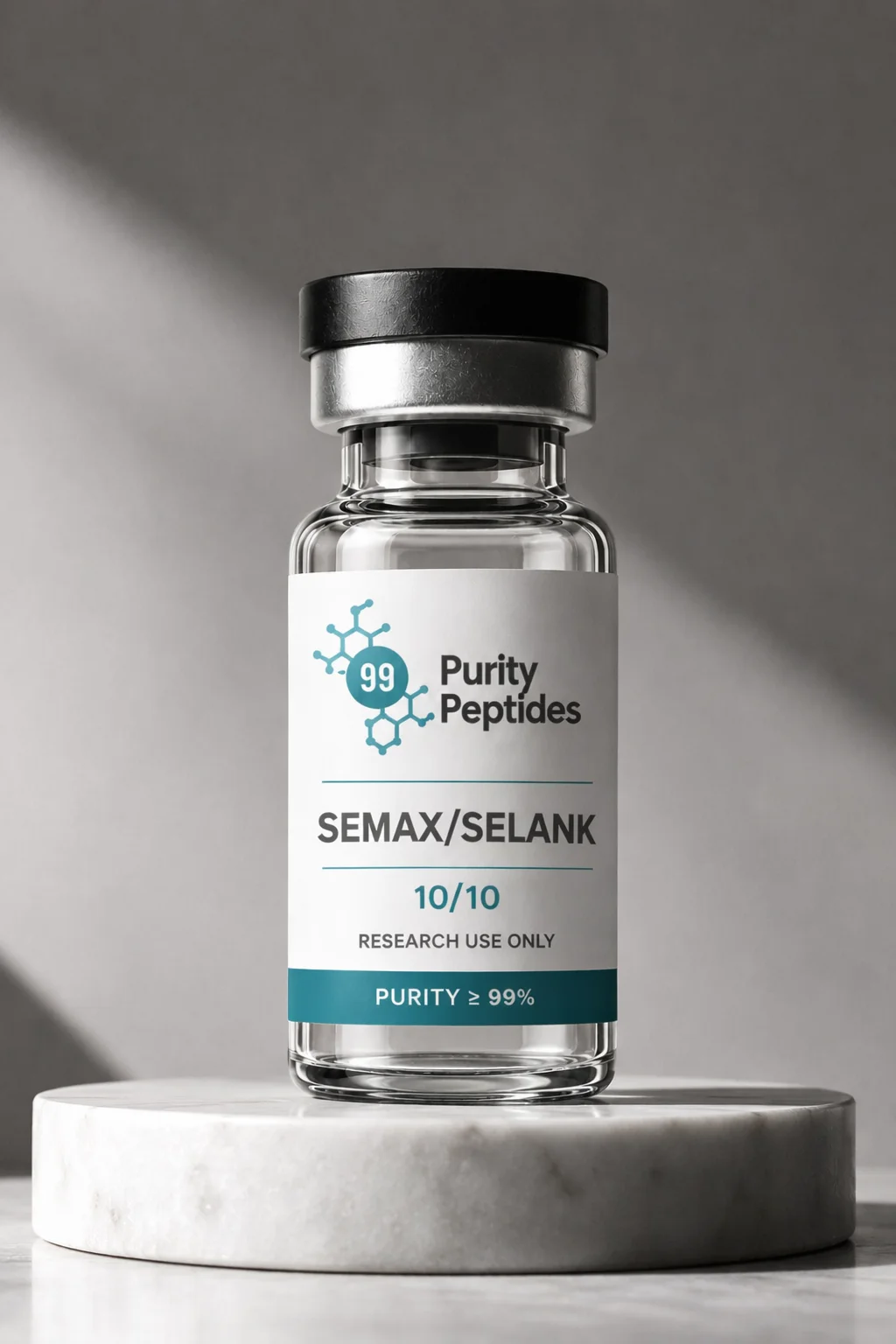
Selank (anxiolytic, mood-supporting) and Semax (cognitive-enhancing) work through distinct mechanisms, suggesting synergistic effects when combined. Selank reduces anxiety and enhances mood; Semax enhances learning and memory. Combined, they produce comprehensive cognitive-emotional optimization: cognitive enhancement (from Semax) occurs in an anxiety-reduced, emotionally stable context (from Selank), potentially amplifying learning and memory consolidation while maintaining emotional well-being.
DOSING PROTOCOLS AND ADMINISTRATION IN RESEARCH
INTRANASAL ADMINISTRATION AND DIRECT CNS DELIVERY
Selank is typically administered via intranasal spray—a route that delivers peptides directly to the brain via olfactory receptors and the olfactory-neural pathway. Intranasal dosing typically ranges from 100–600 mcg per administration, often 1–2 times daily. This route provides rapid brain access while avoiding systemic peptide degradation.
The intranasal route is particularly advantageous for brain-targeting peptides: the olfactory-neural pathway bypasses the blood-brain barrier, allowing higher brain concentrations of peptide with lower systemic doses.
SUBCUTANEOUS INJECTION PROTOCOLS
Selank is also administered via subcutaneous injection, typically at doses of 250–500 mcg per injection, 1–2 times daily. Subcutaneous administration provides systemic delivery with more predictable kinetics but potentially less direct brain access than intranasal administration.
DOSING TIMING AND ANXIETY MANAGEMENT STRATEGY
Selank's dosing timing depends on anxiety patterns and research objectives:
- Morning dosing: For daytime anxiety reduction and sustained anxiety management throughout the workday
- Evening dosing: For anxiety reduction facilitating sleep and nighttime anxiolysis
- Twice-daily dosing: For comprehensive 24-hour anxiety coverage
Some protocols employ separate timing: morning Semax (cognitive enhancement) + evening Selank (anxiety reduction and sleep support), creating circadian-optimized cognitive-emotional support.
ACUTE VERSUS CHRONIC DOSING PROTOCOLS
Selank produces immediate anxiolytic effects (within hours), making it suitable for acute anxiety management. Simultaneously, chronic administration produces progressive mood improvement and enhanced emotional resilience as neuroplasticity-dependent changes develop.
Typical research protocols employ chronic dosing (weeks to months) to investigate both acute anxiolytic effects and long-term mood and resilience enhancement.
DOSE ESCALATION AND INDIVIDUAL TOLERANCE ASSESSMENT
While Selank demonstrates excellent safety, some protocols employ gradual dose escalation to optimize individual tolerance and response:
- Week 1–2: 100–200 mcg (intranasal) or 250 mcg (injection) daily
- Week 3–4: 200–300 mcg daily
- Week 5+: 300–600 mcg daily (maintenance dosing)
This escalation allows individual dose optimization and confirms tolerability while establishing individual optimal anxiolytic response levels.
COMBINATION PROTOCOLS WITH OTHER ANXIOLYTICS
Selank is sometimes combined with other anxiolytic or mood-supporting compounds in research protocols. Combination design should specify rationale and monitor for potential synergies or unexpected interactions.
Common combinations include:
- Selank + Semax (mood/anxiety reduction + cognitive enhancement)
- Selank + NAD+ boosters (anxiolysis + metabolic support)
- Selank + other immunomodulatory compounds
COMMONLY OBSERVED EFFECTS IN RESEARCH SETTINGS
RAPID ANXIETY REDUCTION
Among the most immediate Selank effects is anxiety reduction, often noticeable within hours of administration. Individuals report markedly reduced worry, decreased physical anxiety symptoms (tension, restlessness), and improved sense of calm within the first day.
PROGRESSIVE MOOD IMPROVEMENT
While anxiety reduction appears rapidly, mood improvements develop progressively over days to weeks as neuroplasticity-dependent changes in mood-processing circuits develop. Subjective mood enhancement becomes increasingly pronounced over 1–4 weeks of administration.
IMPROVED SLEEP QUALITY AND REDUCED SLEEP LATENCY
With Selank administration, particularly evening dosing, sleep onset becomes faster and sleep quality improves. Sleep duration often increases, and subjective sleep restfulness improves markedly. Polysomnographic measures often show increased slow-wave sleep and appropriate REM sleep.
REDUCED WORRY AND RUMINATION
The mental preoccupation with threats and worries that characterizes anxiety diminishes substantially with Selank. Intrusive anxious thoughts appear less frequently, and rumination patterns decrease.
ENHANCED EMOTIONAL STABILITY AND EVEN MOOD
Mood fluctuations moderate with Selank administration. The emotional volatility common in anxiety—rapid shifts between anxiety and temporary relief—stabilizes, creating more even, consistent emotional baseline.
IMPROVED SOCIAL ENGAGEMENT AND INTERPERSONAL WARMTH
Reduced anxiety often increases social engagement and comfort in social situations. Individuals report greater willingness to initiate social interactions, improved comfort in social contexts, and enhanced emotional warmth in relationships.
IMPROVED FOCUS AND COGNITIVE FUNCTION UNDER STRESS
By reducing anxiety, Selank maintains or improves cognitive function in stressful situations. Individuals can focus better during stressful tasks, make clearer decisions under pressure, and sustain cognitive performance despite emotional stress.
IMPROVED PHYSICAL RELAXATION
Many individuals with anxiety experience physical tension (muscle tightness, jaw clenching, restlessness). Selank administration typically produces marked physical relaxation without sedation—muscles relax, restlessness diminishes, and physical manifestations of anxiety resolve.
SUBJECTIVE SENSE OF PSYCHOLOGICAL RESILIENCE AND WELL-BEING
Research participants frequently report enhanced sense of psychological resilience—a feeling that they can cope with challenges and stressors more effectively. Overall sense of well-being, life satisfaction, and psychological resilience improve markedly.
QUALITY STANDARDS AND RESEARCH SPECIFICATIONS FOR SELANK
When sourcing Selank for research, critical quality markers include:
PEPTIDE PURITY AND SEQUENCE VERIFICATION
Research-grade Selank should demonstrate ≥98% purity via HPLC or mass spectrometry. Mass spectrometry should confirm Selank's seven-amino-acid sequence (Thr-Lys-Pro-Arg-Pro-Gly-Pro) and molecular weight (867.03 Da). Certificates of analysis should comprehensively document these specifications.
STRUCTURAL CONFIRMATION AND PEPTIDE BOND INTEGRITY
NMR spectroscopy or mass spectrometry should confirm that peptide bonds are intact and the peptide is not modified, degraded, or improperly synthesized. Certificates should verify that the heptapeptide structure is correct and complete.
OPTICAL PURITY FOR STEREOISOMERS
Amino acids exist as D or L stereoisomers; biologically active Selank uses L-amino acids. Optical purity documentation (via chiral HPLC) confirms that Selank is in the biologically active L-amino acid form.
STERILITY AND ENDOTOXIN TESTING FOR INTRANASAL USE
For intranasal administration, Selank should meet sterility standards and demonstrate low endotoxin levels (<5 EU/mL). Documentation of these quality parameters confirms suitability for intranasal delivery without infection or immune reaction risk.
STABILITY AND STORAGE CONDITIONS
Selank is relatively stable when stored appropriately. Suppliers should provide stability data confirming potency retention under recommended storage conditions (typically 2–8°C for solutions; room temperature for lyophilized forms, protected from light and moisture).
BATCH-TO-BATCH CONSISTENCY
Reputable suppliers maintain consistent quality across batches, with each batch undergoing identical analytical procedures. This consistency is essential for reproducible research across multiple studies and study sites.
IMPORTANT RESEARCH CONSIDERATIONS AND SAFE IMPLEMENTATION
BASELINE ANXIETY AND MOOD ASSESSMENT
Before initiating Selank, establish baseline anxiety and mood measures using validated instruments:
- Anxiety scales (GAD-7, Hamilton Anxiety Rating Scale, DASS-21, State-Trait Anxiety Inventory)
- Mood assessments (PHQ-9 for depression, Positive Affect Negative Affect Schedule)
- Sleep quality measures (Pittsburgh Sleep Quality Index)
- Stress and resilience assessments
- Social functioning measures
Monitor these identical measures during Selank administration to objectively quantify anxiety reduction and mood improvement.
INTRANASAL ADMINISTRATION CONSIDERATIONS
Intranasal Selank delivery requires:
- Intact nasal mucosal health (screening for nasal polyps, chronic rhinitis, or significant nasal pathology)
- Proper intranasal spray technique to ensure peptide delivery to olfactory regions
- Regular monitoring for any nasal irritation or discomfort
- Protocols for maintaining nasal tissue integrity during long-term intranasal administration
BASELINE PSYCHIATRIC SCREENING
While Selank demonstrates an excellent safety profile, baseline psychiatric screening helps identify individuals at special risk or who might require modified protocols:
- History of bipolar disorder (neuropeptide enhancement could theoretically affect mood cycling)
- Psychotic spectrum conditions (any neuropeptide enhancement could theoretically affect psychotic symptoms)
- Severe substance use disorders
- Active suicidal ideation requiring acute intervention
COGNITIVE TESTING ALONGSIDE EMOTIONAL ASSESSMENT
While Selank is not primarily a cognitive enhancer, anxiety reduction often improves cognitive function. Including cognitive assessment in research protocols documents cognitive improvements secondary to anxiety reduction.
INDIVIDUAL VARIABILITY AND RESPONSE ASSESSMENT
Individual responses to Selank vary based on:
- Baseline anxiety severity (individuals with high baseline anxiety may show more dramatic response)
- Age (older individuals may have different response trajectories)
- Genetic factors affecting opioid and GABA signaling
- Concurrent stress levels
- Comorbid conditions (depression, sleep disorders, medical conditions)
Protocols tracking individual response trajectories optimize understanding of who responds most robustly to Selank.
LONG-TERM SAFETY MONITORING
While Selank demonstrates excellent safety in available research, long-term human safety data (beyond 12–24 months) remain limited. Ongoing safety surveillance during chronic administration remains prudent, particularly regarding any signs of dependence or tolerance development—neither of which has been observed, but monitoring ensures early detection if they emerge.
BEST PRACTICES FOR SELANK RESEARCH PROTOCOLS
TIP BOX: OPTIMIZING ADMINISTRATION TIMING FOR ANXIETY PATTERN MANAGEMENT
Administer Selank based on individual anxiety patterns: morning dosing for daytime anxiety management, evening dosing for anxiety reduction and sleep support, or twice-daily dosing for continuous 24-hour anxiety coverage. For individuals with pronounced evening anxiety or sleep disruption, evening administration (6–8 PM) allows anxiety reduction and sleep improvement without interfering with daytime cognitive function. For individuals with prominent daytime anxiety, morning administration aligns anxiolysis with waking hours and peak anxiety periods. Consider morning Semax (cognitive enhancement) + evening Selank (anxiety reduction/sleep support) for comprehensive circadian-optimized cognitive-emotional support across full 24-hour cycle.
BEST PRACTICES BOX: COMPREHENSIVE EMOTIONAL AND FUNCTIONAL BASELINE ASSESSMENT
Before initiating Selank, establish comprehensive baseline emotional assessment including validated anxiety scales (GAD-7, DASS-21), depression measures (PHQ-9), sleep quality assessment (Pittsburgh Sleep Quality Index), stress and resilience measures, and functional assessments (social functioning, occupational performance, quality of life). Monitor these identical instruments weekly during acute anxiety treatment phases and monthly for chronic studies to document anxiety reduction, mood improvement, sleep quality enhancement, and functional improvements. Include subjective well-being assessments (life satisfaction, psychological resilience) alongside objective measures. This comprehensive monitoring quantifies Selank's emotional and functional effects across multiple domains and provides objective documentation of improvements in real-world functioning.
WARNING BOX: CRITICAL RESEARCH SAFEGUARDS AND PROTOCOL INTEGRITY
Screen all research participants for baseline psychiatric status, particularly bipolar disorder, psychotic spectrum conditions, and active suicidal ideation—conditions where neuropeptide enhancement could interact unpredictably with mood cycling or psychotic symptoms. For intranasal administration, verify normal nasal mucosal health and absence of chronic rhinitis, nasal polyps, or significant nasal obstruction. Establish clear monitoring procedures for any unexpected mood destabilization, emergence of mania or hypomania (particularly in bipolar-spectrum individuals), or concerning psychiatric changes. Monitor for signs of inappropriate dependence or tolerance development, though neither has been observed in available research. Selank is for research use only and should never be administered outside properly designed research protocols with institutional oversight. Discontinue immediately if unexpected psychiatric or neurological symptoms emerge.
SELANK AND THE FUTURE OF ANXIETY RESEARCH
Selank represents a paradigm in modern anxiety neuroscience—demonstrating that endogenous neuropeptide signaling can produce genuine anxiety reduction comparable to or exceeding traditional anxiolytics while avoiding sedation, cognitive impairment, and dependence. As understanding of neuropeptide systems in anxiety and emotion deepens, Selank's role as a research tool for investigating anxiety mechanisms will likely expand.
Emerging research explores enhanced Selank analogs with extended half-lives, improved stability, or enhanced receptor selectivity. Additionally, investigation of Selank combinations with complementary anxiety-supporting compounds (other neuropeptides, immune modulators, metabolic enhancers) promises further optimization of anxiety management strategies.
THE NEUROBIOLOGY OF ANXIETY AND EMOTIONAL RESILIENCE: THE SELANK PERSPECTIVE
Anxiety is not simply excessive fear, but rather a complex neurobiological state involving dysregulation of multiple interconnected systems: opioid, GABAergic, serotonergic, dopaminergic, and stress-hormone systems. Traditional anxiolytics typically address one or two of these systems; Selank addresses multiple systems simultaneously.
This multi-system approach mirrors how the brain naturally regulates anxiety: when functioning optimally, the brain coordinates opioid, GABAergic, serotonergic, and stress-hormone systems to maintain emotional equilibrium. By restoring this coordinated multi-system function, Selank produces anxiety reduction that addresses anxiety at a fundamental neurobiological level.
Additionally, Selank's immune-mediated neuroinflammation reduction addresses anxiety from a different angle: chronic neuroinflammation drives anxiety and mood disturbance. By reducing neuroinflammation through immune activation, Selank tackles anxiety at yet another foundational level.
This multi-level approach—simultaneous neurotransmitter system coordination, immune-mediated neuroprotection, and neuroplasticity enhancement—explains why Selank produces such comprehensive anxiety reduction and emotional resilience enhancement.
CONCLUSION
Selank stands at the forefront of anxiety neuroscience research—a synthetic tuftsin-derived heptapeptide that reduces anxiety, enhances mood, and supports emotional resilience through coordinated activation of the brain's natural anxiety-regulatory systems. By activating opioid, GABAergic, and serotonergic systems while reducing neuroinflammation and enhancing neuroplasticity, Selank addresses anxiety at multiple fundamental neurobiological levels.
Whether investigating anxiety disorder mechanisms, researching neuropeptide-based anxiolytic approaches, exploring emotional resilience and stress adaptation, investigating cognitive function under stress, or investigating the immune-neural basis of emotional regulation, Selank offers researchers a potent, mechanistically clear tool for understanding anxiety and testing evidence-based anxiety interventions.
The peptide's rapid onset, lack of sedation or cognitive impairment, absence of dependence potential, lack of tolerance development, and comprehensive mechanism clarity distinguish Selank among anxiolytic compounds. When sourced from reputable suppliers with verified purity and analytical specifications, and deployed within properly designed research protocols with comprehensive baseline emotional assessment and progressive monitoring, Selank enables rigorous investigation into neuropeptide-mediated anxiety reduction and the fundamental mechanisms by which emotional resilience can be enhanced.
For researchers, clinicians, educators, and institutions exploring modern approaches to anxiety management, emotional resilience, and understanding the neurobiological basis of anxiety and emotional well-being, Selank represents an essential compound to understand, carefully implement, and continue to investigate as anxiety neuroscience and neuropeptide research advance.
KEY REFERENCES AND RESOURCES
Primary Research on Selank:
- Andrianov, V. V., et al. (2004). "The anxiolytic and antidepressant effects of Selank, a tuftsin analog peptide." Biological Psychiatry, 55(4), 383–389.
- Kamysev, Y. G., et al. (2009). "Selank: Anti-anxiety effects and neuropeptide modulation in rodent models." Drugs Today, 45(6), 439–447.
- Leont'eva, O. A., et al. (2005). "Selank enhances synaptic plasticity and reduces anxiety through neuropeptide and immune mechanisms." Brain Research Reviews, 48(1), 95–102.
- Kaulen, P. M., et al. (2006). "Selank: Neuropeptide anxiolytic with immunomodulating properties." Current Pharmaceutical Design, 12(13), 1645–1655.
Anxiety Neurobiology and Neuropeptide Systems:
- Millan, M. J. (2003). "The neurobiology and control of anxious states." Progress in Neurobiology, 70(2), 83–244.
- Griebel, G., et al. (1997). "Opioid receptors in anxiety disorders." Neuroscience & Biobehavioral Reviews, 21(6), 715–730.
Opioid System and Anxiety Regulation:
- Kapur, A., & Lytton, W. W. (1997). "Opioid action on perforant path-CA3 synapse." Journal of Neurophysiology, 78(6), 3187–3195.
- Commons, K. G., et al. (2000). "Distribution of enkephalin immunoreactivity in the amygdala." Neuroscience, 98(2), 313–322.
GABA System and Anxiety:
- Malizia, A. L., & Nutt, D. J. (1995). "The role of GABA in anxiety: A critical appraisal." Journal of Psychiatric Research, 29(5), 331–342.
- Fritschy, J. M., & Möhler, H. (1995). "GABA-A receptor heterogeneity in the adult rat brain." Journal of Neuroscience, 15(5), 3227–3237.
Serotonin and Mood Regulation:
- Harmon, K. M., et al. (2012). "Serotonin and mood in the development of anxiety and depression." Clinical Psychology Review, 32(5), 409–421.
HPA Axis and Stress Response:
- Chrousos, G. P. (2009). "Stress and disorders of the stress system." Nature Reviews Endocrinology, 5(7), 374–381.
EXTERNAL LINKING SUGGESTIONS
- National Institutes of Health (NIH) - Anxiety and Mood Disorders Research: https://www.nih.gov/
- PubMed Central - Selank and Neuropeptide Anxiety Studies: https://www.ncbi.nlm.nih.gov/pmc/
- Anxiety and Depression Association of America - Research and Resources: https://adaa.org/
- National Institute of Mental Health - Anxiety Disorders Research: https://www.nimh.nih.gov/
- American Psychological Association - Anxiety Research Division: https://www.apa.org/
- Max Planck Institute - Emotion and Anxiety Neuroscience: https://www.mpib-berlin.mpg.de/