
Introduction
Melanotan I, commonly abbreviated as MT-1, is a synthetic peptide analogue of α-melanocyte-stimulating hormone (α-MSH) that represents one of the earliest melanin-stimulating compounds developed for research. Created in the mid-1980s at the University of Arizona alongside its more well-known counterpart MT-2, MT-1 has evolved into an increasingly researched alternative for individuals seeking enhanced skin tanning and melanin production with a reportedly better safety profile and fewer systemic side effects.
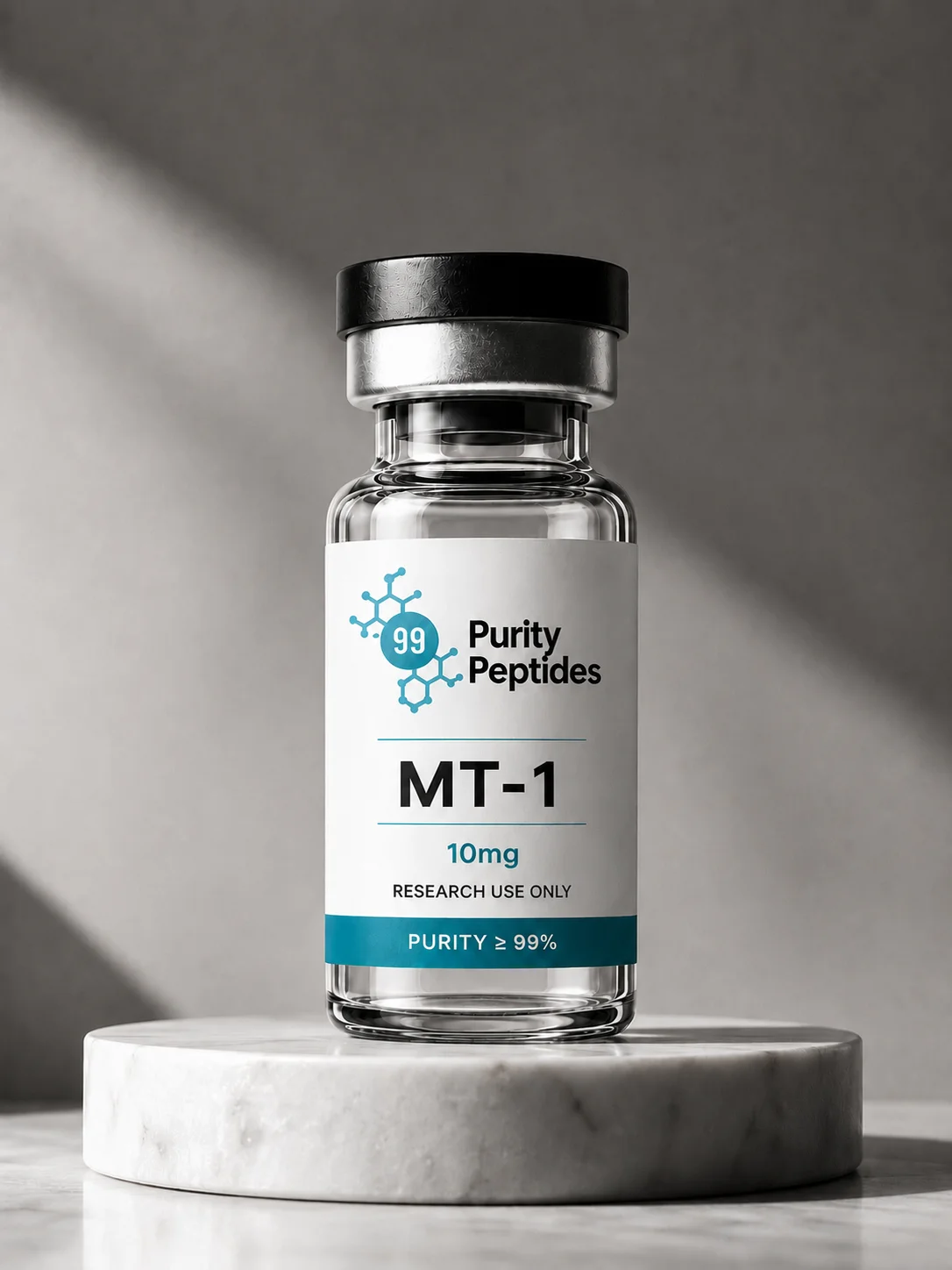
Unlike MT-2, which activates melanocortin receptors broadly throughout the body (resulting in pronounced effects on appetite and sexual function), MT-1 exhibits greater selectivity for the melanocortin-1 receptor (MC1R) in skin cells, theoretically providing more targeted tanning effects with fewer systemic complications. This focused mechanism makes MT-1 an intriguing option for those interested in melanin stimulation who want to avoid the pronounced secondary effects associated with MT-2.
For individuals seeking to achieve enhanced skin pigmentation, reduce their dependence on UV exposure for tanning, and potentially benefit from the photoprotective properties of increased melanin, understanding MT-1's mechanisms, benefits, safety profile, and practical applications provides valuable evidence-based information for making informed decisions.
What is MT-1? Understanding Melanotan I
The Foundational Peptide
MT-1 is a synthetic peptide composed of 13 amino acids that functions as an agonist (activator) of melanocortin receptors, particularly the melanocortin-1 receptor (MC1R). This 13-amino acid sequence is specifically designed to mimic the effects of naturally-occurring α-MSH (alpha-melanocyte-stimulating hormone), a signaling molecule your body naturally produces to regulate melanin synthesis in melanocytes.
The original research motivation behind MT-1 development paralleled that of MT-2: scientists sought compounds that could stimulate melanin production for photoprotection and potential therapeutic applications in skin cancer prevention, particularly for individuals at high risk such as those with xeroderma pigmentosum, fair skin types, or genetic predispositions to insufficient melanin production.
Historical Context and Development
MT-1 was developed during the same research initiative as MT-2 at the University of Arizona in the mid-1980s. However, MT-1 represents an earlier-generation compound:
Original Focus: MT-1 was the first melanin-stimulating peptide developed from this research, with the primary focus on photoprotection and skin cancer prevention.
More Selective: Unlike MT-2, which activates multiple melanocortin receptors broadly, MT-1 exhibits greater selectivity for MC1R in skin, producing more localized effects.
Fewer Systemic Effects: This selectivity results in fewer secondary effects on appetite, libido, and central nervous system function compared to MT-2.
Less Research: Paradoxically, while MT-1 is theoretically safer, it has received less research attention than MT-2, meaning less is definitively known about its long-term effects.
MT-1 vs. MT-2: Key Differences
Understanding the distinctions between MT-1 and MT-2 is crucial for informed decision-making:
Receptor Selectivity:
- MT-1: Greater selectivity for MC1R (primarily skin effects)
- MT-2: Non-selective activation of multiple melanocortin receptors (systemic effects)
Systemic Effects:
- MT-1: Minimal libido enhancement, minimal appetite changes, fewer central nervous system effects
- MT-2: Pronounced libido enhancement, significant appetite changes, central effects
Tanning Intensity:
- MT-1: Moderate tanning response, more natural-looking results
- MT-2: Intense rapid tanning, dramatic pigmentation changes
Side Effect Profile:
- MT-1: Generally mild side effects (occasional nausea)
- MT-2: More pronounced nausea, flushing, systemic effects
Safety Profile:
- MT-1: Theoretically safer due to selectivity, but less research data
- MT-2: More extensively studied but more systemic risks identified
Practical Choice: MT-1 appeals to those seeking tanning without pronounced secondary effects; MT-2 appeals to those seeking comprehensive systemic effects.
How MT-1 Works: The Mechanism of Melanin Stimulation
Targeted Receptor Activation
MT-1's primary mechanism of action involves selective activation of the melanocortin-1 receptor (MC1R) on melanocyte cells:
Step 1 - Administration: MT-1 is injected subcutaneously, entering the bloodstream and distributing to tissues throughout the body.
Step 2 - MC1R Binding: MT-1 selectively binds to melanocortin-1 receptors on the surface of melanocyte cells in the skin.
Step 3 - Signal Transduction: Receptor binding activates intracellular signaling cascades:
- G-protein coupled receptor activation
- Adenylyl cyclase stimulation
- Increased intracellular cAMP (cyclic adenosine monophosphate)
- Activation of protein kinase A (PKA)
- CREB (cAMP response element binding protein) phosphorylation
Step 4 - Gene Expression: Activated CREB binds to cAMP response elements in the promoter region of genes involved in melanin synthesis, particularly the MITF (microphthalmia-associated transcription factor) gene.
Step 5 - Melanin Synthesis: Melanocytes increase production of:
- Eumelanin (brown/black pigment)
- Pheomelanin (red/yellow pigment)
- The ratio depends on individual genetics and MC1R signaling intensity
Step 6 - Melanin Transfer: Newly synthesized melanin is packaged into melanosomes and transferred to surrounding keratinocytes, producing visible skin darkening.
Selectivity as a Key Advantage
MT-1's selectivity for MC1R (as opposed to MT-2's broad activation of MC1R, MC3R, MC4R, and MC5R) is its defining characteristic:
Skin-Specific Effects: By preferentially activating MC1R, MT-1 concentrates its effects where they're desired—in melanocytes of the skin—rather than broadly throughout the body.
Reduced Central Nervous System Activation: Because MT-1 crosses the blood-brain barrier less extensively and activates central MC3R/MC4R less potently, it produces fewer effects on appetite, energy, and libido.
Fewer Systemic Complications: The more localized mechanism of action theoretically reduces systemic side effects associated with widespread melanocortin activation.
Natural Tanning Response: The tanning progression from MT-1 tends to be more gradual and natural-looking compared to MT-2's dramatic rapid darkening.
Timeline of Tanning Response
Understanding MT-1's timeline helps set realistic expectations:
Hours 1-4: Following injection, MT-1 circulates and begins binding to MC1R receptors. Most users experience minimal immediate effects; nausea, if it occurs, typically manifests in this window.
Hours 6-24: Melanin production begins noticeably increasing. Some subtle darkening may be visible, particularly in naturally darker individuals.
Days 2-5: Visible tanning becomes apparent. Skin tone gradually darkens as melanin accumulates in the epidermis. Changes are typically more gradual than with MT-2.
Days 5-10: Peak darkening from a single injection typically occurs. Skin tone change becomes obvious and sustained.
Weeks 2-4: Melanin levels plateau. With proper UV exposure, tanning intensifies further.
Maintenance: Repeated MT-1 injections at intervals (typically every 7-14 days) maintain elevated baseline pigmentation.
Duration: Effects of a single MT-1 dose persist for 2-3 weeks, though baseline pigmentation from multiple doses can persist several weeks longer after discontinuation.
Key Benefits and Effects of MT-1
Primary Benefit: Skin Tanning and Melanin Production
The primary and most researched benefit of MT-1 is its ability to stimulate melanin production and enhance skin tanning:
- Natural-Looking Results: MT-1 typically produces gradual, natural-looking tanning rather than dramatic rapid darkening, which appeals to those seeking subtle enhancement
- Reduced UV Dependence: Significantly less sun exposure is required to achieve desired pigmentation compared to traditional tanning
- Consistent Pigmentation: More uniform darkening compared to patchy sun tanning
- All Skin Types: Effective across skin types, though individual response varies based on genetics and baseline MC1R sensitivity
- Year-Round Maintenance: Enables maintaining tan pigmentation during winter months when natural sun exposure is limited
- Reversible: Unlike permanent procedures, MT-1 effects fade over weeks to months after discontinuation, allowing for adjustment or cessation
Secondary Benefit: Photoprotection Through Enhanced Melanin
An important secondary benefit of MT-1 relates to the photoprotective properties of melanin itself:
Natural UV Protection: Melanin, the pigment produced by MT-1 stimulation, absorbs UV radiation and dissipates the energy as heat, providing intrinsic photoprotection against UV damage.
Reduced Damage Risk: Because MT-1 enables achieving desired skin tone with minimal additional UV exposure, the overall cumulative UV dose—and therefore skin damage risk—is substantially lower than traditional tanning.
Potential Cancer Prevention: The theoretical mechanism behind MT-1 development was that enhanced melanin might provide photoprotection sufficient to reduce skin cancer risk in high-risk populations. This remains an important but under-researched area.
Antioxidant Effects: Melanin possesses antioxidant properties that may protect against oxidative stress beyond simple UV absorption.
Important Caveat: While increased melanin provides photoprotection, it does not replace sunscreen or eliminate skin cancer risk. It should be viewed as complementary to, not replacement for, comprehensive photoprotection strategies.
Minimal Secondary Effects
Unlike MT-2, which produces pronounced secondary effects, MT-1 is notable for its relative lack of systemic effects:
Minimal Libido Enhancement: While some MT-1 users report modest libido effects, these are far less pronounced than MT-2's effects. Most users report minimal change in sexual function.
Minimal Appetite Changes: MT-1 produces significantly less appetite modulation than MT-2. Most users report no noticeable appetite changes.
Minimal Central Nervous System Effects: Mood, energy, and cognition are minimally affected by MT-1, contrasting sharply with MT-2 users' reports of energy and mood changes.
More Selective Benefit: For individuals interested purely in tanning without secondary effects, MT-1's selectivity is a major advantage.
Quality of Life: The absence of pronounced secondary effects makes MT-1 easier to use consistently without unwanted systemic changes.
Tertiary Benefits: Potential Aesthetic Effects
Beyond direct tanning, some MT-1 users report subtle aesthetic benefits:
- Skin Appearance: Enhanced melanin can improve skin appearance, potentially reducing visible blemishes
- Youthful Appearance: Dark skin tone is often associated with youth and health in contemporary aesthetics
- Confidence Enhancement: For some individuals, achieving desired skin tone produces psychological confidence benefits
Important Note: These tertiary benefits are primarily anecdotal and lack rigorous research documentation.
Current Research and Scientific Evidence on MT-1
What Published Research Reveals
MT-1 has been the subject of legitimate scientific research, though less extensively than MT-2:
Tanning Efficacy: Multiple studies confirm MT-1's ability to stimulate melanin production and skin darkening across different skin types.
Melanocortin Receptor Selectivity: Research demonstrates MT-1's greater selectivity for MC1R compared to MT-2, supporting its more localized mechanism of action.
Photoprotection Studies: Earlier research explored MT-1's potential photoprotective effects. Some evidence suggests MT-1-induced melanin provides modest UV protection.
Side Effect Comparison: Studies directly comparing MT-1 and MT-2 confirm MT-1's more favorable side effect profile with fewer systemic effects.
Safety Profile: Animal toxicity studies suggest MT-1 has favorable safety characteristics, though long-term human safety data remains limited.
Critical Research Gaps
Despite decades of research availability, significant gaps remain:
Long-Term Human Studies: No comprehensive long-term (multi-year) human safety studies of MT-1 exist. The longest human studies span weeks to a few months.
Melanoma Risk Assessment: Whether MT-1 increases, decreases, or has no effect on melanoma risk in humans remains insufficiently studied. This is the critical unanswered question.
Optimal Dosing: Evidence-based dosing protocols for humans have not been definitively established through rigorous clinical trials.
Population-Specific Effects: How MT-1 affects specific populations (younger users, fair-skinned individuals, those with extensive moles, those with personal/family history of melanoma) requires further investigation.
Bioaccumulation: Whether MT-1 accumulates in tissue over time with repeated dosing and what long-term consequences might result is essentially unknown.
Drug Interactions: Potential interactions with medications and other compounds have not been comprehensively studied.
Mechanisms Beyond Tanning: The full spectrum of MT-1's physiological effects beyond melanin stimulation remains incompletely characterized.
Administration, Dosage, and Practical Protocols
Administration Routes
MT-1 is administered via injection, similar to MT-2:
Subcutaneous Injection: The primary administration route, injecting MT-1 into subcutaneous tissue (under the skin). This is the standard for most users.
Intramuscular Injection: Occasionally used, though subcutaneous is more common.
Reconstitution Requirements: MT-1 is supplied as lyophilized (freeze-dried) powder requiring reconstitution with sterile water or bacteriostatic water before injection.
Injection Frequency: Typically administered every 7-14 days for continued tanning, compared to more frequent MT-2 dosing.
Typical Dosing Protocols
Standard MT-1 dosing protocols (based on user experience and limited research):
Initial Dose: 0.5-1 mg as a starting injection to assess tolerance and individual response.
Maintenance Doses: 0.25-0.5 mg every 7-14 days to maintain pigmentation. Some users employ less frequent (every 14-21 days) or more frequent (every 5-7 days) protocols based on desired intensity.
Loading Phase: Some protocols involve more frequent initial dosing (every 3-4 days) for 1-2 weeks to establish baseline pigmentation.
Total Weekly Dose: Most protocols maintain total weekly doses of 0.25-0.75 mg, substantially lower than typical MT-2 protocols.
Individual Variation: Optimal dosing depends on:
- Baseline skin type and tone
- Desired darkening intensity
- Individual pharmacokinetics
- Tolerance to side effects
- Frequency of sun/UV exposure
Important Note: These are user-developed protocols rather than medical recommendations. Truly optimal human dosing has not been established through rigorous clinical trials.
Storage and Stability
Proper storage maintains MT-1 efficacy:
Lyophilized Powder: Unopened powder is shelf-stable for 1-2 years when stored at room temperature in a dry environment. Degradation occurs with heat and moisture exposure.
Reconstituted Solution:
- Room Temperature: 24 hours maximum
- Refrigerated (2-8°C): 2-3 weeks
- Frozen (-20°C): 2-3 months
Bacteriostatic Water: Using bacteriostatic water (containing benzyl alcohol as a preservative) for reconstitution extends stability and prevents bacterial growth.
Repeated Access: With each access to a vial, contamination risk increases. Minimize repeated insertions of needles into vials.
Temperature Stability: MT-1 is sensitive to heat. Store away from direct sunlight and heat sources.
Side Effects and Adverse Reactions
Common, Mild Side Effects
Most MT-1 users experience some degree of side effects, though typically less pronounced than MT-2:
Nausea: The most commonly reported side effect, occurring in 30-50% of users, typically within 1-4 hours of injection. Usually mild and often resolves with continued use as tolerance develops.
Facial Flushing: Transient facial redness and warmth, particularly around injection time. Usually mild and self-limited.
Facial Darkening: Some users notice facial skin darkens more rapidly than body skin initially, creating temporary unevenness until body pigmentation catches up.
Mild Headache: Transient headaches reported by some users, typically minimal.
Injection Site Reactions: Localized redness, mild soreness, or swelling at injection sites is common and typically resolves within hours to days.
Fatigue: Some users report mild fatigue with initial injections, though this is less common with MT-1 than MT-2.
Appetite Changes: Unlike MT-2, significant appetite changes are uncommon with MT-1, though some users report subtle changes.
Serious but Rare Adverse Effects
While uncommon, serious complications can occur:
Melanoma Risk: The most critical concern—whether chronic melanocyte stimulation through MT-1 increases melanoma risk. This remains the central unanswered question. The increased melanin theoretically provides photoprotection, but the sustained stimulation of melanocytes could theoretically promote melanoma development. Long-term human evidence is inadequate to definitively answer this question.
Mole Development and Changes: Users frequently report development of new moles or changes in existing moles during MT-1 use. The clinical significance is unclear—this could represent normal variation or potentially concerning growth.
Allergic Reactions: Anaphylactic reactions to MT-1 are rare but possible, manifesting as severe nausea, flushing, hypotension, or other serious symptoms. Anyone with peptide allergies faces elevated risk.
Infection at Injection Sites: With improper injection technique or non-sterile solutions, bacterial infection or sterile abscess formation can occur.
Cardiovascular Effects: While MT-1 has fewer systemic effects than MT-2, theoretically melanocortin receptor activation could affect blood pressure or heart rate in susceptible individuals.
Systemic Allergic Reactions: Some individuals may develop allergic sensitization with repeated injections, potentially progressing to severe reactions.
Special Populations at Elevated Risk
Certain individuals face higher risks with MT-1:
- Personal History of Melanoma: Highest-risk group; MT-1 is contraindicated
- Family History of Melanoma: Significant risk warranting extreme caution and medical clearance
- Dysplastic or Atypical Nevi: Pre-malignant moles increase baseline risk
- Large Number of Moles: Associated with higher melanoma risk
- Fair Skin with Difficulty Tanning: Classic phenotype for melanoma susceptibility
- History of Severe Sunburns: Indicates higher melanoma risk
- Cardiovascular Disease: Risk of adverse hemodynamic effects
- Pregnancy: Inadequate safety data; should be avoided
- Breastfeeding: Unknown penetration into breast milk; should be avoided
CALLOUT BOXES
⚠️ WARNING: Critical Safety Considerations with MT-1
- Melanoma Risk Uncertainty: The most serious concern—while increased melanin theoretically provides photoprotection, chronic melanocyte stimulation could theoretically promote melanoma. This critical question remains unanswered by long-term human studies.
- Mole Changes: Users frequently develop new moles or notice rapid changes in existing moles during MT-1 use. While often benign, any mole changes require dermatological evaluation.
- Regulatory Status: MT-1 is not FDA-approved for human use in the United States. It exists in a legal gray area in most jurisdictions. Any use carries legal and medical risk.
- Injection Safety: Improper injection technique or non-sterile solutions pose serious risks including infection, abscess formation, and tissue damage.
- Product Quality: The MT-1 market includes products of variable quality. Contaminated, counterfeit, or impure products pose serious health hazards.
- Long-Term Unknown Effects: No long-term human safety data exists. Using MT-1 means accepting unknown long-term consequences.
- Insufficient Research: Critical information gaps remain regarding optimal dosing, true safety profile, and effects on specific populations.
- Drug Interactions: Potential interactions with medications have not been comprehensively studied. Discuss with healthcare providers before use.
- Inadequate Monitoring: Unlike medical therapies, MT-1 is not monitored by healthcare systems. Side effects and complications may go unrecognized.
💡 TIP: Optimizing Results While Minimizing Risk with MT-1
If you decide to pursue MT-1 for tanning, implement these strategies to maximize benefits while reducing risks:
- UV Strategy: Use MT-1 to achieve desired pigmentation while minimizing additional UV exposure. The combination of MT-1-stimulated melanin plus minimal sun exposure achieves results with lower cumulative UV dose than traditional tanning.
- Minimal Dosing: Use the lowest MT-1 dose producing desired results. More MT-1 doesn't necessarily produce proportionally better results and increases cumulative risk.
- Cyclic Protocol: Consider using MT-1 cyclically (4-8 weeks on, 4-8 weeks off) rather than continuously, reducing cumulative exposure.
- Baseline Tanning: Avoid frequent additional sun exposure while using MT-1. The peptide is already maximally stimulating melanin production.
- Gradual Implementation: Start with lower doses to assess individual tolerance and response before escalating.
- Hydration: Maintain excellent hydration, as peptide metabolism requires adequate fluid status.
- Antioxidant Support: While not proven to reduce MT-1 risks, comprehensive antioxidant nutrition (vitamin C, E, polyphenols) theoretically supports skin health.
- Sleep Optimization: Adequate sleep supports immune function and cellular repair processes.
- Stress Management: Chronic stress impairs immune function; prioritize stress reduction.
- Comprehensive Nutrition: Ensure adequate protein, zinc, and other micronutrients supporting immune function and skin health.
✅ BEST PRACTICES: Safe Implementation of MT-1
Should you decide to use MT-1 after careful consideration, implement these harm-reduction practices:
- Dermatological Clearance: Obtain explicit written approval from a board-certified dermatologist. Discuss complete medical and family history, particularly regarding skin cancer.
- Baseline Skin Documentation: Get comprehensive dermatological exam with photographic documentation of all moles, nevi, and skin lesions before starting MT-1. This baseline is critical for monitoring changes.
- Source Verification: Purchase MT-1 only from reputable suppliers with third-party testing certifying purity and absence of contaminants. Request certificates of analysis.
- Proper Injection Training: Learn correct subcutaneous injection technique or arrange for trained healthcare professional to administer injections. This is not a skill to learn through trial-and-error.
- Sterile Reconstitution: Always use bacteriostatic water for reconstitution. Maintain strict sterile technique when reconstituting and injecting.
- Single-Use Vials: Consider using single-use vials rather than multi-use vials to minimize contamination risk.
- Strict Hygiene: Use sterile injection supplies (new needles, syringes, alcohol pads for each injection). Never reuse needles.
- Minimize Additional UV: While using MT-1, minimize intentional sun exposure. The peptide is already maximally stimulating melanin; additional UV adds only damage risk.
- Regular Monitoring: Schedule dermatological exams every 3-4 months while using MT-1. Between professional exams, perform monthly self-examinations using ABCDE criteria (Asymmetry, Border irregularity, Color variation, Diameter >6mm, Evolving/changing).
- Documentation: Keep detailed written records of MT-1 use (dates, doses, injection sites) and any skin changes observed. This documentation is valuable for medical reference.
- Immediate Evaluation: Any new mole, mole growth, color change, or other suspicious skin changes should prompt immediate dermatological evaluation.
- Conservative Dosing: Stick to established dosing protocols; don't escalate doses beyond what's typical seeking faster or darker results.
- Informed Healthcare Providers: Ensure all healthcare providers know about MT-1 use. This impacts interpretation of skin findings and medical decision-making.
- Exit Strategy: Have a clear plan for discontinuing MT-1. Most users find 4-8 weeks sufficient to re-establish baseline pigmentation before stopping.
- Realistic Expectations: Recognize that MT-1 produces gradual, natural-looking tanning—not dramatic rapid darkening. If you want dramatic fast results, MT-1 may disappoint.
MT-1 vs. Alternatives: Comparative Analysis
MT-1 vs. Natural Sun Tanning
Sun Tanning:
- Pros: Free, natural, vitamin D production, socially normal, no injection required
- Cons: Slow, inconsistent results, requires substantial UV exposure, high cumulative skin damage, established skin cancer risk
MT-1:
- Pros: Faster than sun tanning, more predictable results, requires minimal UV exposure, more uniform pigmentation
- Cons: Requires injections, theoretical melanoma risk, side effects, cost, less established safety profile
Verdict: Sun tanning is completely free but requires prolonged UV exposure and produces higher cumulative skin damage. MT-1 is faster and requires less UV but carries unknown risks and requires injections.
MT-1 vs. MT-2
MT-2:
- Pros: Faster, more dramatic tanning, pronounced libido effects, more extensively researched
- Cons: More systemic side effects, more pronounced nausea, effects on appetite/energy/mood, potentially higher risk profile
MT-1:
- Pros: Fewer systemic side effects, more natural-looking gradual tanning, minimal libido/appetite changes, theoretically better safety profile
- Cons: Slower results, less dramatic darkening, less research data
Verdict: Choose MT-2 if you want fast dramatic results and systemic effects; choose MT-1 if you want gradual tanning with minimal secondary effects.
MT-1 vs. Spray Tanning/Self-Tanning
Spray Tans/Self-Tanners:
- Pros: No systemic effects, no injection required, no melanoma risk, temporary (easily reversible), no long-term risk
- Cons: Temporary (3-7 days), cosmetic rather than physiological, requires reapplication for maintenance
MT-1:
- Pros: Long-lasting (weeks), physiological tanning, fewer applications needed
- Cons: Systemic effects (though minimal), theoretical melanoma risk, requires injections, side effects
Verdict: For safety and simplicity, spray tans are superior. For sustained tanning, MT-1 is more effective but less safe.
MT-1 vs. Tanning Beds
Tanning Beds:
- Pros: More controlled than sun, faster than natural tanning
- Cons: Significant UV exposure, well-established cancer risk, no advantage over outdoor sun
MT-1:
- Pros: Dramatically less UV required, no direct UV exposure mechanism
- Cons: Unknown long-term risks, requires injections, theoretical melanoma risk
Verdict: Both involve risks. Tanning beds have established UV cancer risk; MT-1 has theoretical but unproven risks. MT-1 has advantage of requiring minimal UV exposure.
Understanding MT-1's Selectivity Advantage
Why Receptor Selectivity Matters
MT-1's greater selectivity for melanocortin-1 receptor (MC1R) in skin represents a theoretical advantage over MT-2's broader activation:
Localized vs. Systemic: MT-1 concentrates effects where desired (skin melanin production) rather than broadly throughout the body. This selectivity means:
- Minimal appetite effects (unlike MT-2)
- Minimal libido changes (unlike MT-2)
- Minimal central nervous system activation
- Fewer systemic complications
Theoretical Safety Benefit: By limiting MC3R/MC4R activation in the hypothalamus and other central sites, MT-1 avoids disrupting appetite regulation and sexual function.
More "Natural" Approach: MT-1's localized mechanism produces tanning through a more physiologically-targeted pathway, resembling natural tanning mechanisms more closely than MT-2's broad systemic activation.
Limitations of This Selectivity Advantage
However, selectivity is not an absolute advantage:
Still Systemic: Despite greater selectivity, MT-1 is still a systemic compound distributed throughout the body. It crosses the blood-brain barrier and activates receptors beyond skin.
Unknown Long-Term Implications: While fewer systemic effects are reported, the long-term implications of selective MC1R activation in skin remain incompletely understood.
Melanoma Risk Unchanged: Greater selectivity for MC1R doesn't address the fundamental concern: chronic stimulation of melanocytes might promote melanoma regardless of selectivity.
Less Research: Ironically, MT-1's potentially better safety profile means it has received less research attention than MT-2. Less is definitively known about MT-1 than MT-2.
Practical Guidance: Should You Consider MT-1?
Decision-Making Framework
Before considering MT-1, honestly address these questions:
- Do I have personal or family history of melanoma? If yes, MT-1 is contraindicated.
- Do I have large numbers of moles or atypical nevi? This increases baseline melanoma risk.
- Am I genuinely interested in tanning, or am I feeling social pressure? Authentic motivation matters for informed consent.
- Have I genuinely explored safer alternatives? Spray tans accomplish cosmetic goals without systemic risk.
- Am I comfortable with ongoing dermatological monitoring? This is essential, not optional.
- Can I access proper medical guidance? Preferably from a dermatologist willing to monitor you and provide appropriate oversight.
- Do I understand the unknowns? Can I genuinely accept long-term risks that remain uncharacterized?
- Would I regret this decision if long-term risks emerge? Honest self-assessment about risk tolerance is important.
The Realistic Assessment
MT-1 represents a middle ground between MT-2 (more effects, more risks, more research) and safer alternatives (spray tans, natural tanning):
For Whom MT-1 Makes Sense:
- Individuals who want sustained tanning beyond spray tan duration
- Those seeking more natural-looking gradual tanning than MT-2 provides
- People who want tanning without pronounced secondary effects
- Individuals comfortable with ongoing dermatological monitoring
- Those able to make genuinely informed decisions about unknown risks
For Whom MT-1 Doesn't Make Sense:
- Anyone with personal or family melanoma history
- Those with dysplastic nevi or large numbers of moles
- People unable to access regular dermatological monitoring
- Individuals unable to make informed consent decisions
- Those for whom spray tanning adequately meets aesthetic needs
- People uncomfortable accepting long-term unknown risks
The Evolving Research Landscape
Current and Emerging Studies
Research on MT-1 is gradually expanding:
Comparative Studies: Growing research directly comparing MT-1 and MT-2 effects and safety profiles is providing clarity on their relative advantages and risks.
Long-Term Safety: Long-overdue long-term human safety studies are beginning, though results won't emerge for years.
Mechanism Studies: Ongoing research clarifies precise mechanisms of MT-1 action and why individual responses vary.
Photoprotection Research: Studies continue exploring whether MT-1-induced melanin provides meaningful photoprotection in humans.
Melanoma Outcomes: As MT-1 users accumulate, observational data on melanoma outcomes in users versus non-users will gradually emerge.
Future Therapeutic Possibilities
Beyond cosmetic tanning, MT-1 may have therapeutic applications:
Xeroderma Pigmentosum: Enhanced melanin production might provide photoprotection in this high-risk population.
Vitiligo: Theoretically, MC1R agonists might stimulate melanin production in depigmented areas, though this remains speculative.
Improved Formulations: Development of more selective melanocortin agonists targeting MC1R even more specifically might reduce risks further.
Topical Formulations: Research into topical MT-1-like compounds could provide local effects without systemic absorption.
What to Watch For
As MT-1 research evolves, monitor for:
- Results of long-term human safety studies
- Melanoma outcome data in MT-1 users
- Development of improved, more selective formulations
- Regulatory decisions regarding approval or restriction
- New findings about optimal dosing protocols
- Identification of high-risk subpopulations
Supporting Practices for Healthy Skin During MT-1 Use
UV Protection Strategies
If using MT-1, implement comprehensive photoprotection:
Sunscreen: Even while using MT-1, apply broad-spectrum sunscreen (SPF 30+) daily to prevent additional UV damage.
Protective Clothing: Wear UV-protective clothing, hats, and sunglasses to minimize additional UV exposure.
Time Avoidance: Avoid peak UV hours (10 AM-4 PM) when possible.
Avoidance of Tanning Beds: Never combine MT-1 use with tanning beds—this is synergistic damage.
Minimal Intentional Sun: Limit intentional sun exposure while using MT-1. The peptide is already maximally stimulating melanin; additional UV adds only damage risk without additional tanning benefit.
Skin Health Optimization
Support skin health during MT-1 use:
Antioxidant Nutrition: Consume antioxidant-rich foods (berries, leafy greens, nuts, dark chocolate) to combat oxidative stress.
Vitamin C: This antioxidant supports collagen synthesis and protects against UV damage. Consider topical vitamin C serum.
Hydration: Maintain excellent skin hydration through both internal water intake and topical moisturizers.
Sleep: Adequate sleep (7-9 hours) supports skin repair and cellular regeneration.
Stress Management: Chronic stress impairs skin barrier function. Practice stress-reduction techniques.
Avoid Smoking: Smoking damages skin collagen and accelerates aging. Avoid during MT-1 use.
Limit Alcohol: Excessive alcohol dehydrates skin and impairs immune function. Moderate consumption only.
Regular Dermatological Care
Ongoing professional skin monitoring is essential:
Baseline Exam: Comprehensive exam with documentation before MT-1 use.
Regular Monitoring: Exams every 3-4 months while using MT-1.
Self-Examination: Monthly self-exams using ABCDE criteria (Asymmetry, Border irregularity, Color variation, Diameter >6mm, Evolving/changing).
Documentation: Photograph your skin monthly for personal comparison.
Immediate Evaluation: Any concerning changes warrant immediate professional evaluation.
Conclusion: Weighing MT-1's Risks and Benefits
MT-1 occupies an interesting position in the landscape of melanin-stimulating compounds. As MT-1 (Melanotan I), it represents a potentially safer alternative to MT-2 by virtue of its greater MC1R selectivity and consequently fewer systemic side effects. For individuals seeking sustained tanning without the pronounced secondary effects of MT-2, MT-1's more gradual, natural-looking approach to pigmentation has genuine appeal.
The Honest Assessment: MT-1 genuinely works for enhancing skin tanning and melanin production. This is established through research and consistent user reports. However, critical knowledge gaps remain:
- No comprehensive long-term (5+ year) human safety studies exist
- Melanoma risk remains theoretical but unproven
- Optimal human dosing protocols haven't been definitively established
- Individual variation in response is enormous
- Long-term effects on mole formation and skin cancer risk remain unclear
The Risk-Benefit Calculation: Unlike some compounds where risk-benefit analysis is straightforward, MT-1's calculation is genuinely complex because:
- Benefits are immediate and personally meaningful to those seeking aesthetic tanning
- Risks are plausible but unproven in human long-term studies
- Alternative options exist with different risk-benefit profiles
- Individual risk factors vary dramatically
- Safer alternatives can achieve cosmetic goals (spray tans) though less durably
MT-1 vs. MT-2: MT-1's theoretical advantage over MT-2 lies in reduced systemic side effects while maintaining tanning efficacy. For those interested in melanin stimulation but wanting to avoid MT-2's pronounced effects on libido, appetite, and energy, MT-1 offers a middle path.
The Safety Foundation: Should you choose MT-1, safety requires rigorous dermatological baseline assessment and ongoing monitoring (every 3-4 months). Using MT-1 without professional medical oversight and regular monitoring is reckless and irresponsible.
Individual Decision-Making: The decision to use MT-1 must be genuinely informed and freely chosen. It's not appropriate for individuals with personal or family history of melanoma, those with dysplastic nevi, or those unable to access ongoing dermatological monitoring. For others, MT-1 use within a carefully monitored protocol represents a calculated risk-benefit decision that individuals can legitimately make.
The Bigger Picture: As biotechnology advances, we gain increasing ability to modify our bodies in powerful ways. This power requires responsibility—both individual responsibility to make genuinely informed decisions based on accurate information, and societal responsibility to adequately research consequences before widespread adoption. MT-1 exemplifies this intersection: a compound with genuine utility but insufficient long-term research.
For some individuals, MT-1 represents an acceptable tool within a deliberate, medically-supervised approach to aesthetic enhancement. For many others, the uncertainties outweigh benefits, and alternative approaches to achieving tanning goals are clearly preferable. The choice must be yours, made with genuine understanding of both possibilities and significant unknowns.
Key Takeaways
- MT-1 is a synthetic peptide agonist of melanocortin-1 receptor (MC1R) that stimulates melanin production and skin tanning
- MT-1 exhibits greater selectivity for MC1R than MT-2, resulting in fewer systemic side effects including minimal libido and appetite changes
- MT-1 produces gradual, natural-looking tanning within 3-7 days, peaking at 7-10 days per injection
- The peptide enables significant tanning with minimal UV exposure, reducing cumulative UV damage compared to traditional tanning
- MT-1 is not FDA-approved; long-term human safety data is essentially non-existent
- The most serious concern is theoretical melanoma risk from chronic melanocyte stimulation, which remains unproven in humans
- Users frequently develop new moles or notice mole changes; clinical significance is unclear
- Safe MT-1 use requires baseline dermatological assessment and ongoing monitoring (every 3-4 months)
- Safer alternatives for achieving tanning exist (spray tans, gradual sun exposure) with lower systemic risks
- Anyone with personal or family history of melanoma should absolutely avoid MT-1
- Optimal use involves conservative dosing, minimal additional UV, and strict professional monitoring protocols
- MT-1 represents a middle ground between MT-2's greater effects and safer spray tanning alternatives