8437439007
 orders@99puritypeptides.com

KLOW Peptide Blend: 2026 Research Guide, Benefits & Dosage
Introduction
KLOW peptide is a branded four-component research blend formulated at a 50mg/10mg/10mg/10mg ratio — BPC-157, TB-500, KPV, and GHK-Cu — in a 3mL lyophilized vial. The blend targets multiple tissue-repair and anti-inflammatory signaling pathways simultaneously, which is why peptide klow has become one of the most-searched multi-component stacks in the recovery research space. Rather than running each compound separately, investigators studying joint stress, tendon overload, or wound-repair models can work from a single pre-verified formulation with documented purity across all four components.
This reference article covers the verified 50/10/10/10mg composition, how each component functions in isolation and in combination, laboratory reconstitution math for the 80mg total blend, the KLOW vs GLOW structural comparison (the question that generates more search traffic than any other KLOW topic), reported side-effect considerations by component, and what to verify when sourcing a research-grade multi-peptide blend.
All content on this page is framed for research and laboratory contexts only. KLOW is not a therapeutic drug, not approved for human administration, and not intended for diagnostic purposes. Investigators should consult applicable institutional and regulatory guidelines before initiating any peptide research protocol.
What Is KLOW Peptide?
KLOW peptide is a pre-formulated research blend consisting of four synthetic peptides combined at fixed mass ratios in a single vial. The name “KLOW” is a brand designation rather than a pharmacological classification — the formulation is also referenced in the research community as the “Wolverine stack” or “Wolverine peptide blend,” though those informal nicknames appear nowhere in the published literature. What the product represents, structurally, is a 50/10/10/10mg combination of BPC-157, TB-500, KPV, and GHK-Cu dissolved in a 3mL solution and lyophilized for stability.
Peptide klow searches and KLOW peptide searches refer to the same compound — word-order variants generated by search behavior, not meaningful chemical distinctions.
KLOW as a Four-Component Recovery Research Blend
The four components address different but overlapping biological pathways. BPC-157 at the dominant 50mg concentration anchors the cytoprotective and pro-angiogenic research. TB-500 adds actin-regulation and cell-migration support. KPV, the smallest of the four by molecular weight, contributes anti-inflammatory signaling through melanocortin receptor pathways. GHK-Cu rounds out the blend with copper-mediated wound-repair and antioxidant gene-expression modulation.
Research interest in combination blends like KLOW stems from the hypothesis that multi-pathway stimulation may be more relevant to complex tissue injury models than single-agent approaches, where one pathway is modulated while others remain unaddressed.
The 50/10/10/10mg Specification Explained
The mass ratio is not arbitrary. BPC-157 constitutes 62.5% of the total 80mg blend by mass, reflecting both its studied dose-dependency in preclinical models and its relatively higher molecular weight (~1,419 Da) compared to KPV (~340 Da) and GHK (~340 Da). TB-500 sits at the bioactive Ac-SDKP tetrapeptide fragment level, and the three supporting components at 10mg each provide concentration parity for pathway interaction studies without the dominant component being diluted below practical research thresholds.
The 80mg total across four components in 3mL gives a combined concentration of approximately 26.67mg/mL. Individual concentrations: BPC-157 at ~16.67mg/mL; TB-500, KPV, and GHK-Cu each at ~3.33mg/mL. This math is the source of the “klow 80mg” search query — researchers recognizing that the total mass specification, not a single-component dose, defines the product.
DEFINITION CALLOUT — Lyophilization:
The process of freeze-drying a peptide solution under vacuum to remove water, producing a stable powder. Lyophilized peptides remain stable at −20°C for extended periods; once reconstituted they begin degrading if not stored correctly.
Common Names, Variants, and the “Wolverine Stack” Reference
Within online peptide research communities, the BPC-157/TB-500/KPV/GHK-Cu blend has accumulated several informal names. The “Wolverine stack” designation references the fictional character’s rapid tissue regeneration — a shorthand that communicates the multi-pathway recovery intent to an audience familiar with individual peptide functions. “Wolverine peptide” and “wolverine stack peptide” appear in community discussions and some vendor descriptions as synonyms for this specific four-component formulation. Neither term appears in peer-reviewed literature, and researchers writing for publication would use the component names rather than a brand or community designation.
The GHK-Cu component in particular accumulates spelling variants in search data: ghkcu, ghk-cu, ghk cu, and ghkcu peptide all refer to the same copper-complexed tripeptide. The article addresses all of these under the GHK-Cu section.
Why Researchers Use Pre-Blended Stacks
Running four separate peptides in a research model introduces reconstitution variability, storage complexity, and potential for component-ratio inconsistency across experimental replicates. A pre-blended, single-vial formulation with documented purity across all components reduces that variable and allows the investigator to focus on the biological question rather than laboratory logistics. Blends also allow researchers to study multi-pathway synergy that cannot be inferred from single-component data alone.
Key Takeaway:
KLOW peptide is a four-component research blend with a verified 50mg BPC-157 / 10mg TB-500 / 10mg KPV / 10mg GHK-Cu specification in 3mL — 80mg total — positioned for preclinical models of joint and soft-tissue recovery. The blend is research-use-only.
What’s in the KLOW Blend?
Each of the four peptides in KLOW has an independent body of preclinical research. Understanding what each one is studied for in isolation provides the context needed to evaluate the blend as a whole.
BPC-157 (50mg) — Body Protection Compound and Tissue-Repair Research
DEFINITION CALLOUT — BPC-157:
Compound-157; a synthetic pentadecapeptide (15 amino acids; sequence GEPPPGKPADDAGLV) derived from a partial sequence of human gastric juice protective protein. Molecular weight approximately 1,419 Da.
BPC-157 is the dominant component of the KLOW blend at 50mg — 62.5% of total mass. Its prominence reflects the depth of preclinical literature supporting its role in tissue-repair research. Šikir ić and colleagues have published extensively on BPC-157’s interaction with VEGF (vascular endothelial growth factor) and EGF (epidermal growth factor) receptor pathways, with multiple rat model studies documenting accelerated tendon-to-bone healing, reduced inflammation markers, and cytoprotective effects on gut epithelial tissue [1,2]. The peptide has demonstrated stability in gastric acid environments, which is relevant to oral bioavailability research, though the primary route studied in published multi-peptide protocols involves parenteral application in animal models [3].
Pre-clinical data also points to BPC-157’s modulation of the nitric oxide system, with investigators reporting vasoprotective effects in rat models of vessel damage [4]. These findings make it the logical anchor for a recovery-focused research blend.
Researchers sourcing BPC-157 individually will recognize the 10mg or 5mg vial formats on most suppliers’ shelves; the 50mg quantity in KLOW represents a bulk concentration appropriate for extended research protocols without requiring multiple vial reconstitutions.
TB-500 (10mg) — Thymosin Beta-4 Fragment and Actin Regulation
DEFINITION CALLOUT — TB-500:
Synthetic version of the active actin-binding domain of thymosin beta-4 (Tβ4), specifically the tetrapeptide fragment Ac-SDKP. Full thymosin beta-4 has a molecular weight of approximately 4,960 Da; the Ac-SDKP fragment is considerably smaller. TB-500 is the commercially distributed abbreviated designation.
Thymosin beta-4 was first characterized as an actin-sequestering protein by Safer and colleagues, with subsequent work by Goldstein et al. expanding understanding of its role in cell migration, wound healing, and angiogenesis [5,6]. The synthetic Ac-SDKP fragment (TB-500) replicates the actin-binding activity of the larger protein and has been studied in preclinical models of cardiac injury, skeletal muscle repair, and skin wound healing. In vitro studies indicate that TB-500 promotes endothelial cell migration and tube formation, pathways relevant to angiogenesis research.
At 10mg in the KLOW blend, TB-500 contributes its actin-regulatory and migration-promoting activity alongside BPC-157’s VEGF-pathway work — two distinct approaches to the vascular and cellular repair question.
KPV (10mg) — α-MSH C-Terminal Anti-Inflammatory Tripeptide
DEFINITION CALLOUT — KPV:
Lys-Pro-Val; the C-terminal tripeptide of alpha-melanocyte-stimulating hormone (α-MSH). Molecular weight approximately 340 Da. Functions as a melanocortin receptor agonist with anti-inflammatory properties studied independently of the full α-MSH sequence.
KPV is the component that distinguishes KLOW from the GLOW blend — it is present in KLOW but absent from GLOW. Investigations into KPV’s mechanism have focused on its interaction with melanocortin 1 receptor (MC1R) and melanocortin 4 receptor (MC4R), both of which modulate inflammatory cytokine production. Published studies report that KPV reduces IL-6, IL-1β, and TNF-α expression in macrophage and epithelial cell models, with particular documentation in gut inflammatory research [7,8]. Its low molecular weight (~340 Da) means it reaches tissue compartments that larger peptides may not, and its stability profile is well-suited to combination formulations.
For researchers specifically studying inflammatory pathway modulation in soft-tissue and joint models, KPV’s inclusion in KLOW provides a third, distinct anti-inflammatory mechanism alongside BPC-157’s nitric oxide modulation and TB-500’s cytokine-pathway effects.
What is KPV peptide?
In research contexts, KPV is classified as a melanocortin-receptor-targeting anti-inflammatory tripeptide, studied in models of intestinal inflammation, skin inflammation, and wound healing. It is not a scheduled compound in the United States and carries RUO (research-use-only) classification.
GHK-Cu (10mg) — Copper Signal Peptide and Wound-Repair Research
DEFINITION CALLOUT — GHK-Cu:
Glycyl-L-histidyl-L-lysine copper complex; a naturally occurring tripeptide-copper chelate found in human plasma, saliva, and urine. Molecular weight approximately 340 Da (peptide) + copper ion. First characterized by Loren Pickart in 1973.
GHK-Cu occupies a unique position among the KLOW components as the only naturally occurring human peptide in the blend. Loren Pickart’s foundational 1973 characterization of GHK as a plasma growth-promoting peptide opened a research line that now extends across wound healing, skin remodeling, antioxidant gene expression, and anti-inflammatory regulation [9,10]. The copper ion in GHK-Cu participates in superoxide dismutase (SOD) activation and enzyme cofactor activity, making the complex more biologically active than uncomplexed GHK in most published models.
Pickart and Margolina’s 2018 review catalogued over 4,000 human genes reportedly modulated by GHK-Cu exposure, including upregulation of collagen synthesis genes (COL1A1, COL4A1), matrix metalloproteinase regulators, and antioxidant enzymes [11]. In a multi-peptide blend context, GHK-Cu adds a copper-mediated tissue-remodeling signal to the BPC-157/TB-500 angiogenic-repair framework and KPV’s anti-inflammatory input.
The spelling variants ghkcu, ghk-cu, ghk cu, and ghkcu peptide found in search data all refer to this same compound.
How the Four Components Interact in Research Models
No published head-to-head data exists specifically for the 50/10/10/10mg KLOW formulation as a combined entity. The interaction hypothesis rests on the individual mechanistic profiles of the components: BPC-157 and TB-500 address pro-angiogenic and actin-based tissue reconstruction; KPV suppresses inflammatory cytokine production at the MC1R/MC4R level; GHK-Cu activates copper-dependent antioxidant and collagen-synthesis pathways. These four mechanisms operate on distinct molecular targets, which minimizes theoretical pathway competition and provides the rationale for multi-component research models.
Whether synergistic, additive, or independent effects are produced in vivo depends on the specific research model, tissue type, and application method — questions that remain open in the published literature for this specific blend ratio.
Key Takeaway:
The four KLOW components — BPC-157, TB-500, KPV, and GHK-Cu — address tissue repair through distinct but complementary molecular mechanisms: pro-angiogenic signaling, actin-mediated cell migration, melanocortin anti-inflammatory pathways, and copper-dependent collagen and antioxidant gene regulation.
KLOW Peptide Benefits in Research
The term “benefits” in a research-only context refers to the outcomes observed in preclinical models and in vitro experiments, not claims of therapeutic effect in humans. The following summarizes what the published literature reports for each research application relevant to the KLOW component profile.
Reported Tissue Repair and Recovery Research
BPC-157 has the most extensive preclinical tissue-repair literature of the four components. A frequently cited 2019 Šikir ić et al. study documented significantly accelerated tendon-to-bone healing in rat rotator cuff models compared to untreated controls, with VEGF pathway upregulation as a proposed mechanism [1]. Separate investigations report BPC-157 effects on ligament healing, muscle injury models, and bone repair in rodents. TB-500’s angiogenic activity provides a complementary mechanism — vascular supply to injured tissue is required for repair, and in vitro data indicates TB-500 promotes endothelial tube formation through actin-polymerization modulation [6].
Research suggests this dual-mechanism approach — growth factor upregulation via BPC-157 combined with endothelial migration support via TB-500 — represents a meaningful multi-pathway research model for tissue reconstruction studies.
Joint and Soft-Tissue Research Applications
The 99 Purity Peptides product page positions KLOW specifically for “joint and soft-tissue recovery blend” research — models of chronic joint stress, tendon and ligament overload, and long-term soft-tissue wear. The preclinical literature supports this framing. Šikir ić’s group published multiple studies on BPC-157’s effects in rat models of ACL damage, Achilles tendon transection, and quadriceps muscle injury, consistently reporting accelerated structural recovery metrics [2,3].
KPV’s anti-inflammatory contribution is relevant here: synovial inflammation is a consistent feature of chronic joint stress models, and the reduction of IL-1β and TNF-α that KPV demonstrates in cell culture models would be a logical correlate in a joint-stress research context [7].
Anti-Inflammatory Pathway Research
Three of the four KLOW components demonstrate anti-inflammatory activity through distinct pathways. BPC-157 has been shown in vitro to suppress NF-κB pathway activation and reduce pro-inflammatory prostaglandin production. TB-500’s Ac-SDKP fragment inhibits macrophage migration inhibitory factor (MIF) in cell culture models. KPV acts directly on MC1R/MC4R receptors on macrophages and epithelial cells, reducing IL-6 and TNF-α at the transcription level [7,8].
This three-pathway anti-inflammatory profile makes the blend of particular interest for research models where systemic or localized inflammatory signaling is the study endpoint, as investigators can evaluate the combined effect against individual component controls.
Wound and Skin Repair Models
GHK-Cu’s wound-repair literature is the most directly applicable here. Pickart’s work and subsequent studies document collagen synthesis upregulation, fibroblast proliferation stimulation, and re-epithelialization support in wound models — mechanisms consistent with standard wound-healing research endpoints [9,10]. BPC-157 also appears in published wound-healing literature, with some pre-clinical studies reporting accelerated skin incision healing in rodent models. The combination of GHK-Cu’s collagen-synthesis and BPC-157’s growth factor upregulation represents an overlapping but mechanistically distinct approach to wound-model research.
Why a Blend Outperforms Single-Component Research Setups
Investigators studying a single pathway in a complex tissue-repair model face a fundamental limitation: the biology of tissue recovery involves simultaneous vascular, cellular, and inflammatory processes. Studying BPC-157 alone leaves the actin-migration question unanswered; studying GHK-Cu alone leaves the angiogenic question unaddressed. The KLOW blend provides a research substrate that activates all four pathways from a single, concentration-verified formulation — enabling investigators to establish a multi-pathway baseline before isolating individual component contributions in follow-up experiments.
What does KLOW peptide do in research settings?
In preclinical models, KLOW provides simultaneous input into cytoprotective growth factor pathways (BPC-157), actin-regulated cell migration (TB-500), melanocortin-mediated anti-inflammatory suppression (KPV), and copper-dependent collagen and antioxidant gene activation (GHK-Cu).
What is KLOW peptide used for?
Investigators use the peptide klow blend in models of chronic joint stress, tendon and ligament overload, multi-pathway wound repair research, and studies requiring simultaneous modulation of at least three distinct tissue-recovery mechanisms.
Key Takeaway: KLOW peptide blend research spans tissue repair, joint and soft-tissue recovery models, anti-inflammatory pathway studies, and wound-healing experiments — each supported by independent preclinical literature on BPC-157, TB-500, KPV, and GHK-Cu individually.
KLOW Dosage in Research Settings
This section addresses the “klow dosage,” “klow dosage chart,” “klow 80mg,” and “klow dosage calculator” queries from a laboratory dilution perspective. All concentrations discussed are reference values for reconstitution math and experimental design — not human dosing recommendations. KLOW is research-use-only; no therapeutic dosing guidance is implied or should be inferred.
Typical Concentrations Referenced in Research Literature
Published preclinical literature on the individual components provides concentration reference points. BPC-157 studies in rodent models have used concentrations ranging widely — from nanomolar to micromolar in cell culture, and from 10mcg/kg to 10mg/kg in animal models depending on the study endpoint [1,2]. TB-500 research has similarly used a broad range depending on the tissue target. KPV studies report effective anti-inflammatory concentrations in cell culture models at nanomolar to low micromolar ranges [7]. GHK-Cu wound-healing studies have used topical concentrations from 1–10% in dermal models and lower concentrations systemically [9,10].
For multi-component blend research, these individual reference ranges inform the investigator’s dilution design — the goal is to achieve target concentrations for each component after reconstitution and any further dilutions.
KLOW 80mg Total Blend — Reconstitution Math
The 80mg total blend mass (50mg BPC-157 + 10mg TB-500 + 10mg KPV + 10mg GHK-Cu) in a 3mL vial gives the following reference concentrations at common BAC water volumes:
Dosage Chart Reference (Research Protocol Context Only)
The “klow dosage chart” query reflects researchers looking for a structured reference table to guide experimental design. The table above provides the reconstitution math. For further dilutions from a reconstituted stock, the standard dilution formula applies: C1 × V1 = C2 × V2, where C1 is the post-reconstitution concentration and C2 is the target experimental concentration.
Investigators working with cell culture assays will typically dilute the reconstituted stock further in cell culture media to reach low-microgram or nanogram target concentrations per the individual component’s established active range in the published literature.
Using a Peptide Calculator with Multi-Component Blends
Standard peptide calculators are designed for single-component vials and calculate concentration based on total peptide mass and added volume. For a multi-component blend like KLOW, the calculator must be run separately for each component — total mass 50mg for BPC-157, 10mg each for TB-500, KPV, and GHK-Cu — against the same total volume. The results will give the per-component concentration in the reconstituted solution. The 99 Purity Peptides peptide calculator can be used for this purpose; enter each component’s mass individually against the same target volume.
DEFINITION CALLOUT — Peptide Calculator:
A tool for calculating the concentration (mg/mL or mcg/mL) of a reconstituted peptide solution given the total peptide mass in the vial and the volume of diluent added. Essential for multi-component blends where per-component concentrations differ from total blend mass.
Key Takeaway:
The KLOW blend contains 80mg total peptide across four components in a 3mL vial. Adding 3mL BAC water produces approximately 26.67mg/mL combined — with BPC-157 at ~16.67mg/mL and each supporting component at ~3.33mg/mL.
These are laboratory dilution reference values, not dosing guidance.
KLOW Reconstitution and Handling
Reconstitution of a multi-peptide blend follows the same laboratory principles as single-component peptide handling, with additional considerations for the different solubility profiles and stability characteristics of the four components.
Bacteriostatic Water Reconstitution Protocols
DEFINITION CALLOUT — Bacteriostatic Water (BAC Water):
Sterile water containing 0.9% benzyl alcohol as a preservative. The antimicrobial agent inhibits bacterial growth in multi-use vials, extending the usable life of a reconstituted solution. Standard diluent for multi-use research peptide vials.
Bacteriostatic water is the standard diluent for KLOW reconstitution in research settings. The protocol for a 3mL vial: draw the desired BAC water volume into a sterile needle and syringe, inject slowly down the side of the vial (not directly onto the lyophilized cake), allow the cake to dissolve without agitation, then gently swirl (never vortex) to ensure complete dissolution. Allow 10–15 minutes for full dissolution of a multi-component cake.
Some peptides in complex blends may require slightly acidic conditions for optimal solubility. GHK-Cu and BPC-157 are generally soluble in BAC water at physiological pH ranges; KPV, at its low molecular weight, dissolves readily. If any particulate remains after the 15-minute wait, a very gentle swirl typically resolves it. Acetic acid water (0.6%) is available as an alternate diluent for peptides that require mildly acidic conditions.
80mg in 3mL — Common Dilution Volumes
See the reconstitution math table in the Dosage section above. For research contexts requiring specific per-component concentrations, reconstituting at the full 3mL (standard to the vial size) and then working from the per-component concentrations with C1 × V1 = C2 × V2 dilutions into cell culture media or experimental vehicle provides maximum flexibility.
Storage, Refrigeration, and Stability of Multi-Peptide Blends
Lyophilized KLOW should be stored at −20°C before reconstitution, sealed and protected from light and moisture. Once reconstituted, refrigerate at 2–8°C. Multi-peptide blends present an additional stability consideration: each component has its own degradation kinetics, and the weakest link determines the effective shelf life of the reconstituted solution. GHK-Cu is sensitive to oxidation (the copper ion can participate in undesired redox reactions under suboptimal storage); BPC-157 is relatively stable in solution; KPV and TB-500 fragment degradation in solution is primarily temperature-dependent.
For best practices on reconstituted peptide stability, the 99 Purity Peptides research blog provides detailed guidance on storage conditions for reconstituted solutions.
Shelf Life Once Reconstituted
General peptide research guidance suggests reconstituted solutions used within 28 days when stored at 2–8°C with bacteriostatic preservative. Aliquoting into single-use research volumes and storing unused aliquots at −80°C extends the effective shelf life significantly. For the full protocol rationale, see the peptide reconstitution guide on 99 Purity Peptides.
Handling Considerations Specific to Four-Component Blends
Multi-peptide blends introduce one quality-control consideration that single-component vials do not: the researcher cannot verify component identity from visual inspection or simple purity testing alone. HPLC chromatograms of a blend will show multiple peaks; confirming that each peak corresponds to the expected component requires mass spectrometry (LC-MS) identification in addition to HPLC purity percentage. This is why supplier documentation for KLOW should ideally include both HPLC and LC-MS data covering all four components individually. See the Sourcing section below for the full documentation checklist.
Key Takeaway: KLOW reconstitution in laboratory settings uses bacteriostatic water added slowly down the vial wall with gentle swirl — no vortexing. Reconstituted solution should be refrigerated at 2–8°C and used within 28 days or aliquoted and frozen. Multi-component blend stability requires attention to the most sensitive component in the formulation.
KLOW vs GLOW: The Most Common Comparison
The “glow vs klow” and “klow vs glow peptide” queries are among the highest-search-interest comparison terms in the CSV data. Both products are sold by 99 Purity Peptides and are structurally related — but they are not interchangeable.
Composition Difference — KLOW (50/10/10/10) vs GLOW (50/10/10)
GLOW is a three-component blend at 50mg/10mg/10mg. KLOW is a four-component blend at 50mg/10mg/10mg/10mg. The structural difference is KPV — present in KLOW, absent from GLOW. The dominant component also differs: KLOW leads with BPC-157 at 50mg, while GLOW leads with GHK-Cu at 50mg. This inversion reflects their different research focus areas.
– GHK-Cu: 50mg (dominant)
– BPC-157: 10mg
– TB-500: 10mg
– BPC-157: 50mg (dominant)
– TB-500: 10mg
– KPV: 10mg
– GHK-Cu: 10mg
Composition Difference — KLOW (50/10/10/10) vs GLOW (50/10/10)
GLOW is a three-component blend at 50mg/10mg/10mg. KLOW is a four-component blend at 50mg/10mg/10mg/10mg. The structural difference is KPV — present in KLOW, absent from GLOW. The dominant component also differs: KLOW leads with BPC-157 at 50mg, while GLOW leads with GHK-Cu at 50mg. This inversion reflects their different research focus areas.
– GHK-Cu: 50mg (dominant)
– BPC-157: 10mg
– TB-500: 10mg
– BPC-157: 50mg (dominant)
– TB-500: 10mg
– KPV: 10mg
– GHK-Cu: 10mg
Why KPV Is in KLOW but Not GLOW
GLOW is described on the 99 Purity Peptides product page as “a cosmetic-oriented skin and connective-tissue rejuvenation blend” — research targeting dermal remodeling, collagen support, and skin elasticity. KPV’s primary research literature focuses on mucosal inflammation and gut epithelial protection, with some documentation in skin wound models. For a dermal-remodeling-focused research blend, GHK-Cu at the dominant concentration is mechanistically more relevant than KPV’s anti-inflammatory contribution. KLOW, targeting joint and soft-tissue recovery models, benefits from KPV’s anti-inflammatory input at the synovial and connective-tissue level.
Glossary
Incretin: A class of gut-derived hormones (including GLP-1 and GIP) that stimulate insulin secretion in response to nutrient intake.
TRIUMPH trial: Eli Lilly’s Phase 3 clinical trial program evaluating retatrutide in obesity and related indications. TRIUMPH-1 is the pivotal obesity trial.
TRANSCEND-T2D: Eli Lilly’s parallel Phase 3 program evaluating retatrutide in type 2 diabetes. TRANSCEND-T2D-1 reported topline results in March 2026.
Triple agonist: A single molecule that activates three different receptors at once. Retatrutide is the first triple hormone receptor agonist (GIP, GLP-1, glucagon) to reach Phase 3 clinical trials.
Why BPC-157 Is Dominant in KLOW vs GHK-Cu Dominant in GLOW
The dominant component drives the primary research application. BPC-157’s preclinical tissue-repair and joint-recovery literature is the most extensive of any component in either blend, making it the logical anchor for a musculoskeletal recovery formulation. GHK-Cu’s collagen synthesis and fibroblast-stimulation literature makes it the natural anchor for a skin-focused research formulation. Swapping the dominant component between the two blends changes the primary biological signal — which is why researchers should not substitute GLOW for KLOW or vice versa in a joint-recovery model.
Why KPV Is in KLOW but Not GLOW
| Research Application | KLOW (50/10/10/10) | GLOW (50/10/10) |
|---|---|---|
| Joint stress and tendon models | Primary application | Secondary, limited |
| Ligament and connective tissue recovery | Supported by BPC-157 anchor | Supported at lower BPC-157 level |
| Skin and dermal remodeling | Supported by GHK-Cu (10mg) | Primary application (GHK-Cu 50mg) |
| Collagen synthesis research | Partial (GHK-Cu 10mg) | Primary (GHK-Cu 50mg) |
| Anti-inflammatory pathway research | Supported by KPV (10mg) | Not present — no KPV |
| Wound repair (multi-pathway) | Supported (3 mechanisms) | Supported (2 mechanisms) |
| Hair follicle and scalp models | Limited | Partial (GHK-Cu 50mg) |
Component-by-Component Comparison Table
| Component | KLOW mg | GLOW mg | Molecular Weight | Research Role |
|---|---|---|---|---|
| BPC-157 | 50mg | 10mg | ~1,419 Da | Cytoprotection, VEGF/EGF pathways, tissue repair |
| TB-500 (Ac-SDKP) | 10mg | 10mg | ~500 Da | Actin regulation, cell migration, angiogenesis |
| KPV (Lys-Pro-Val) | 10mg | ❌ Absent | ~340 Da | MC1R/MC4R anti-inflammatory, cytokine suppression |
| GHK-Cu | 10mg | 50mg | ~340 Da + Cu | Collagen synthesis, antioxidant gene activation, wound repair |
| Total | 80mg | 70mg | — | — |
What is GLOW peptide?
GLOW is the cosmetically-oriented sibling blend to KLOW — a three-component formulation with GHK-Cu dominant at 50mg, supported by BPC-157 (10mg) and TB-500 (10mg). It is positioned for dermal remodeling and skin-connective-tissue research where GHK-Cu’s collagen and antioxidant effects are the primary investigation target. Researchers also study glow peptide in contexts related to hair follicle models and skin elasticity research.
Key Takeaway: KLOW and GLOW share two components (BPC-157 and TB-500) but differ fundamentally in dominant component (BPC-157 vs GHK-Cu), total components (4 vs 3), and primary research application (joint/soft-tissue recovery vs dermal/skin remodeling). They are not interchangeable research substrates.
Reported Side Effects and Considerations
This section addresses the “klow side effects” query in a research-literature context. Reported effects below derive from the published preclinical and in vitro literature on the individual components — not from human clinical trials of the KLOW blend specifically.
Reported Reactions Attributed to Each Component
BPC-157: The preclinical literature on BPC-157 does not report consistent toxic effects at doses studied in animal models. Šikir ić et al. note the peptide’s favorable tolerability profile across multiple rodent studies, with no reported organ toxicity at research doses [1,2]. Some community reports mention localized injection-site warmth in animal models, though this is not systematically documented in peer-reviewed studies. No human clinical trial data is available to establish a formal adverse-event profile.
TB-500: Thymosin beta-4 research in animal models has a generally favorable safety profile, with the peptide appearing naturally in most mammalian tissues at physiological concentrations. No significant hepatotoxic, nephrotoxic, or immunosuppressive effects have been reported in preclinical literature at research concentrations [5,6].
KPV: As a tripeptide fragment of endogenous α-MSH, KPV’s safety profile in cell culture and animal models is favorable. Published studies on KPV in inflammatory bowel disease models report no adverse histological findings at doses producing anti-inflammatory effects [7,8].
GHK-Cu: The copper component of GHK-Cu warrants attention at high concentrations — excess copper can be pro-oxidant. At the concentrations studied in published wound-healing research (typically 1–10 nM to 1–10 μM range in cell culture), GHK-Cu demonstrates antioxidant rather than oxidant activity [11]. High-dose copper accumulation is a known concern in systemic copper metabolism research, though this context differs from the concentration ranges documented in GHK-Cu peptide studies.
Why Side Effects in Blends Cannot Be Attributed to a Single Peptide
In a four-component blend, attributing any observed experimental outcome — positive or adverse — to a single component is methodologically problematic. Researchers documenting any unexpected effects from KLOW blend experiments should design follow-up single-component controls to establish causation. This is a standard limitation of blend research and is why the peer-reviewed literature on individual components, rather than blend-specific data, is the primary reference for KLOW safety profiling.
Handling Risks and Sterile Technique
The primary laboratory risk with any peptide solution is microbial contamination of the reconstituted solution. Proper sterile technique — working in a laminar flow hood or clean bench, using sterile syringes and needles, swabbing vial stoppers with alcohol, and discarding any solution showing particulate or cloudiness — eliminates this risk. Bacteriostatic water provides a margin of protection against bacterial growth post-reconstitution, but it does not render contaminated technique safe.
Why Research-Grade Sourcing Matters for Multi-Component Blends
Purity failures in multi-component blends can involve any one of four components — or the blending process itself. An underdosed KPV component, for example, would not be detectable from a single-compound HPLC measurement unless the assay was calibrated to resolve all four peaks separately. This is why mass spectrometry identity confirmation across all components is a non-negotiable quality standard for KLOW blend research. Researchers working with inadequately documented blend materials introduce an uncontrolled variable that can invalidate entire experimental series.
Key Takeaway: KLOW side-effect research draws from the individual component literature, where BPC-157, TB-500, KPV, and GHK-Cu demonstrate generally favorable preclinical tolerability profiles. Blend-specific adverse-effect attribution requires single-component control experiments; no human clinical safety data exists for the KLOW formulation.
KLOW Stack and Combination Protocols
How KLOW Functions as a Pre-Built Research Stack
In standard research parlance, a “stack” is a combination of two or more compounds administered together in an experimental protocol. KLOW is, by definition, a pre-assembled four-compound stack — researchers who would previously have needed to source, reconstitute, and combine BPC-157, TB-500, KPV, and GHK-Cu separately can work from a single pre-verified blend. The KLOW stack designation in community usage reflects this: it identifies the product as a combination formulation rather than a single-agent compound.
The “klow stack” and “klow stack peptide” queries in the keyword data typically come from investigators already familiar with the individual components who are evaluating whether the pre-blended format suits their research protocol.
Other Peptides Researchers Reference Alongside KLOW
In community and institutional research contexts, KLOW is sometimes referenced alongside other recovery-focused peptides for comparative or sequential protocol designs. These include:
CJC-1295/Ipamorelin — A GHRH/GHSR combination blend studied for GH-axis modulation. Some researchers use GH-axis peptides as a parallel track alongside tissue-repair blends.
Tesamorelin — A stabilized GHRH analog with a well-characterized GH-release profile. Studied primarily for visceral fat and metabolic endpoints, but referenced in some recovery protocol designs.
Retatrutide — A triple GLP-1/GIP/glucagon agonist. Not a recovery peptide but frequently mentioned by researchers studying the intersection of metabolic and tissue homeostasis.
Semax/Selank blend — Neuroprotective/anxiolytic combination. Occasionally referenced in neurological recovery model contexts alongside tissue-repair peptides.
Sermorelin, mots-c, NAD+ precursors, glutathione, and selank appear in peripheral community discussions about recovery-oriented research designs but have minimal intersection with KLOW’s specific tissue-repair mechanism profile.
Why Pre-Blended Stacks Reduce Variability in Research
Every additional reconstitution step introduces potential variability — weighing error, volume error, and compatibility questions between separately reconstituted solutions. A pre-verified blend from a supplier with documented per-component purity eliminates the blending step from the researcher’s protocol, reducing pre-analytical variability. For multi-institution or multi-investigator research programs, a standardized blend from a single supplier also improves between-laboratory reproducibility.
Key Takeaway: KLOW is a pre-built four-peptide stack combining BPC-157, TB-500, KPV, and GHK-Cu in a fixed ratio — the combination that community researchers often call the “Wolverine stack.” Using the pre-blended format reduces reconstitution variability compared to combining four separately sourced compounds.
Sourcing Research-Grade KLOW Peptide
Multi-component blend sourcing introduces documentation and verification requirements that go beyond what a single-component purchase demands. This section addresses the “klow reconstitution” and general sourcing questions from the keyword data.
What “Research-Use-Only” Means for Multi-Component Blends
DEFINITION CALLOUT — Research-Use-Only (RUO): A regulatory classification indicating that a compound is intended solely for in vitro, preclinical, and laboratory research applications. RUO materials are not subject to FDA pre-market approval for human administration, cannot be used as drug ingredients in compounding, and are not intended for diagnostic, therapeutic, or veterinary use. Both the supplier and the purchaser carry responsibility for ensuring RUO compliance.
The RUO classification applies to each component of KLOW individually and to the blend collectively. Researchers working with KLOW should maintain documentation of the research purpose and institutional context of use, consistent with standard laboratory materials management practices.
CoA Verification Across Four Separate Peptides
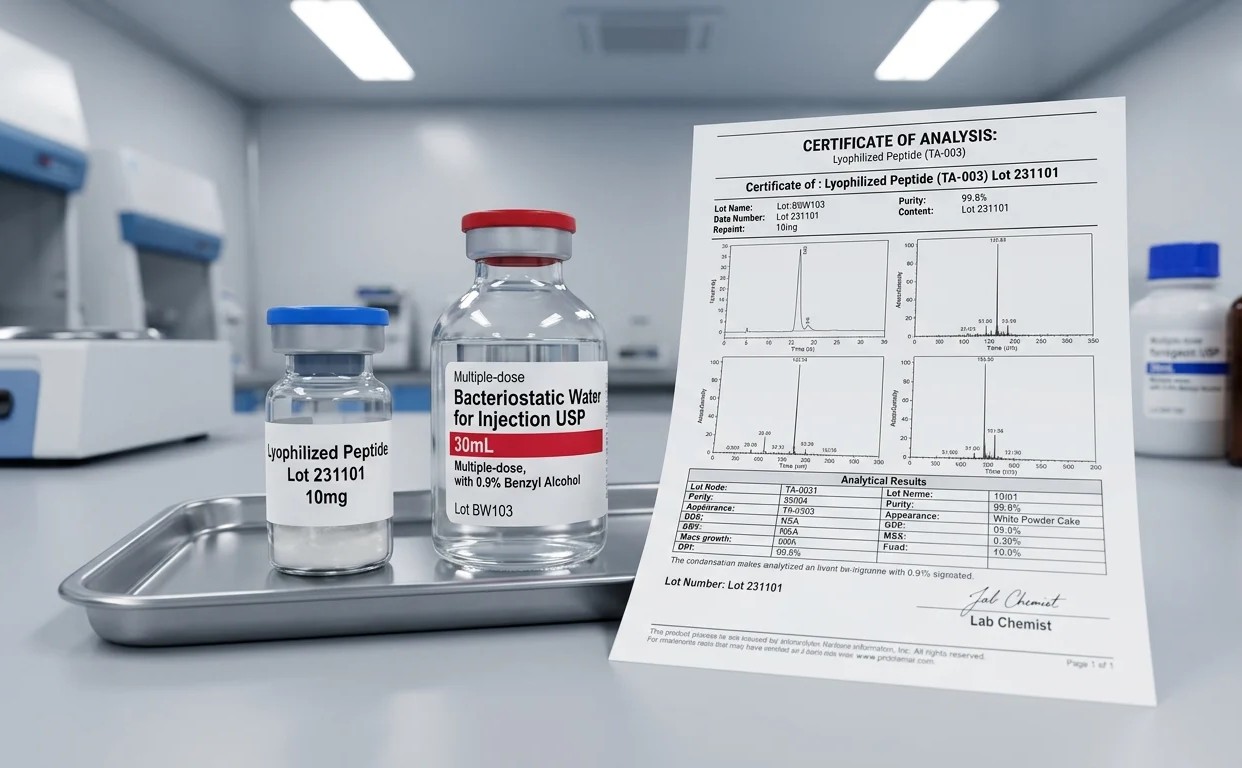
A certificate of analysis (CoA) for a single-component peptide vial documents purity, identity, molecular weight, and batch-specific analytical data for one compound. A CoA for a four-component blend faces a higher verification burden: it must document purity and identity for each component separately, confirm the blending ratio, and — ideally — provide both HPLC chromatogram data and LC-MS identification data for each peak.
Investigators should request and review the CoA for each KLOW order. 99 Purity Peptides’ certificates page provides sample CoA documentation demonstrating the analytical standards the supplier applies.
HPLC and Mass Spectrometry Considerations for Blends
Standard reversed-phase HPLC of a four-component blend produces a multi-peak chromatogram. Each peak should correspond to a known component at the expected retention time for that peptide’s molecular weight and polarity. Comparing peak area ratios allows verification of approximate component ratios (though mass response factors differ between peptides, so precise ratio verification requires calibration curves). LC-MS confirmation provides molecular weight data for each peak, confirming compound identity independently of retention time matching.
Suppliers providing only a single-peak purity percentage for a multi-component product are not meeting the verification standard appropriate for blend research. The CoA should address each component.
Red Flags When Evaluating a KLOW Supplier
Researchers sourcing KLOW should watch for: absence of multi-component CoA data; HPLC data showing only total purity without peak-resolved component analysis; no LC-MS identity data; vague blend composition descriptions (e.g., “may contain BPC-157, TB-500, KPV, GHK etc.” without specific ratios); no batch-specific documentation; and reconstitution guidance that implies human administration rather than laboratory use.
Verified research-grade suppliers publish batch-specific CoA data, specify exact component ratios in their product documentation, provide both HPLC and MS data, and are explicit about RUO classification. The 99 Purity Peptides KLOW specification — 50mg/10mg/10mg/10mg in 3mL, with analytical verification across all included components — reflects this standard.
Key Takeaway: Sourcing research-grade KLOW requires CoA documentation that addresses all four components individually, HPLC chromatogram data with resolved peaks for each component, and LC-MS identity confirmation. A supplier providing only a composite purity figure for a four-component blend is not meeting research-grade documentation standards.
Where to Buy KLOW Peptide for Research
What to Look For in a Research-Grade Supplier
The criteria for a research-grade KLOW supplier follow from the sourcing standards above. A verified supplier should: publish specific component ratios rather than approximate formulation descriptions; provide batch-specific CoA documentation including HPLC and LC-MS data; clearly designate all products as research-use-only; offer technical support for application-specific questions; and ship in compliance with applicable laboratory supply regulations. The recovery research peptide category at 99 Purity Peptides lists the KLOW blend alongside related recovery-focused formulations with these standards applied.
99 Purity Peptides KLOW — 50/10/10/10mg / 3ML Specification
99 Purity Peptides’ verified KLOW 50/10/10/10mg 3mL specification confirms the component ratio, vial volume, and price point ($135.00 single vial). The product page notes that each batch undergoes analytical verification to confirm molecular identity, purity, and structural consistency of all included components. Researchers requiring supporting supplies — bacteriostatic water, sterile needles and syringes — are available in the same catalog, minimizing supply-chain fragmentation for multi-component protocol preparation.
For researchers comparing the full recovery peptide catalog, the KLOW listing appears alongside the GLOW blend and individual component products including BPC-157 and TB-500.
Key Takeaways Before the FAQ
- KLOW peptide is a four-component research blend — BPC-157 (50mg), TB-500 (10mg), KPV (10mg), GHK-Cu (10mg) — 80mg total in a 3mL lyophilized vial. Research-use-only.
- The 50/10/10/10mg ratio positions BPC-157 as the dominant tissue-repair and cytoprotective signal, with TB-500, KPV, and GHK-Cu providing complementary actin-migration, anti-inflammatory, and copper-signaling contributions.KLOW differs from GLOW in component count (4 vs 3), dominant component (BPC-157 vs GHK-Cu), total mass (80mg vs 70mg), and primary research application (joint/soft-tissue recovery vs dermal/cosmetic).
- The 80mg total explains the “klow 80mg” search query — it is the combined mass of all four components, not a single-component dose. Standard 3mL reconstitution gives ~26.67mg/mL combined.
- No human clinical trial data exists for the KLOW blend specifically. All benefit and mechanism data derives from preclinical and in vitro research on the individual components.
- Research-grade KLOW sourcing requires per-component CoA documentation — HPLC with resolved peaks for all four components plus LC-MS identity data. A composite purity figure is insufficient for blend verification.
Start Your Research Today
Questions
Frequently Asked Questions About GHK-Cu
Still have questions?
References
- Šikirić P, Seiwerth S, Rucman R, et al.
“Stress in gastrointestinal tract and stable gastric pentadecapeptide BPC 157 — novel therapy of stomach, colon and liver diseases.”
Current Pharmaceutical Design. 2011;17(16):1612–1632.
https://doi.org/10.2174/138161211796197004 - Šikirić P, Seiwerth S, Rucman R, et al.
“Stable gastric pentadecapeptide BPC 157: novel therapy in gastrointestinal tract.”
Current Pharmaceutical Design. 2018;24(18):1938–1956.
https://doi.org/10.2174/1381612824666180403091024 - Sever M, Klicek G, Radic B, et al.
“Gastric pentadecapeptide BPC 157 and skin wound healing.”
European Journal of Pharmacology. 2010;637(1–3):160–170.
https://doi.org/10.1016/j.ejphar.2010.03.064 - Hrelec M, Klicek G, Brcic L, et al.
“Abdominal aorta anastomosis in rats and stable gastric pentadecapeptide BPC 157, prophylaxis and therapy.”
Journal of Physiology and Pharmacology. 2009;60(Suppl 7):161–165.
PMID: 20388969 - Goldstein AL, Hannappel E, Kleinman HK.
“Thymosin beta 4: actin-sequestering protein moonlights to repair injured tissues.”
Trends in Molecular Medicine. 2005;11(9):421–429.
https://doi.org/10.1016/j.molmed.2005.07.004 - Philp D, Badamchian M, Scheremeta B, et al.
“Thymosin beta 4 and a synthetic tetrapeptide of thymosin beta 4 promote dermal healing in rats and cats.”
Wound Repair and Regeneration. 2003;11(1):19–24.
https://doi.org/10.1046/j.1524-475X.2003.11106.x - Rajora N, Boccoli G, Burns D, et al.
“Alpha-MSH modulates local and circulating tumor necrosis factor-alpha in experimental brain inflammation.”
Journal of Neuroscience. 1997;17(6):2181–2186.
https://doi.org/10.1523/JNEUROSCI.17-06-02181.1997 - Kannengiesser K, Maaser C, Heidemann J, et al.
“Melanocortin-derived tripeptide KPV has anti-inflammatory potential in murine models of inflammatory bowel disease.”
Inflammatory Bowel Diseases. 2008;14(3):324–331.
https://doi.org/10.1002/ibd.20334 - Pickart L.
“The human tri-peptide GHK and tissue remodeling.”
Journal of Biomaterials Science, Polymer Edition. 2008;19(8):969–988.
https://doi.org/10.1163/156856208784909435 - Pickart L, Vasquez-Soltero JM, Margolina A.
“GHK peptide as a natural modulator of multiple cellular pathways in skin regeneration.”
BioMed Research International. 2015;2015:648108.
https://doi.org/10.1155/2015/648108 - Pickart L, Margolina A.
“Regenerative and protective actions of the GHK-Cu peptide in the light of new gene data.”
International Journal of Molecular Sciences. 2018;19(7):1987.
https://doi.org/10.3390/ijms19071987 - Safer D, Bhatt P, Bhatt SR, Bhatt SV.
“Thymosin beta-4 is a G-actin sequestering protein.”
Journal of Biological Chemistry. 1991;266(8):4029–4032.
PMID: 1996328 - U.S. Food and Drug Administration.
“Research Use Only Products.”
FDA.gov.
https://www.fda.gov/medical-devices/in-vitro-diagnostics/research-use-only-products
(Accessed June 2026) - Mende M, Bhatt P, Sewald N.
“Recent advances in the synthesis of biologically active thymosin peptides.”
Chemistry — A European Journal. 2020;26(50):11511–11523.
https://doi.org/10.1002/chem.202001488