---### INTRODUCTION & PRODUCT DESCRIPTION
Featured Product
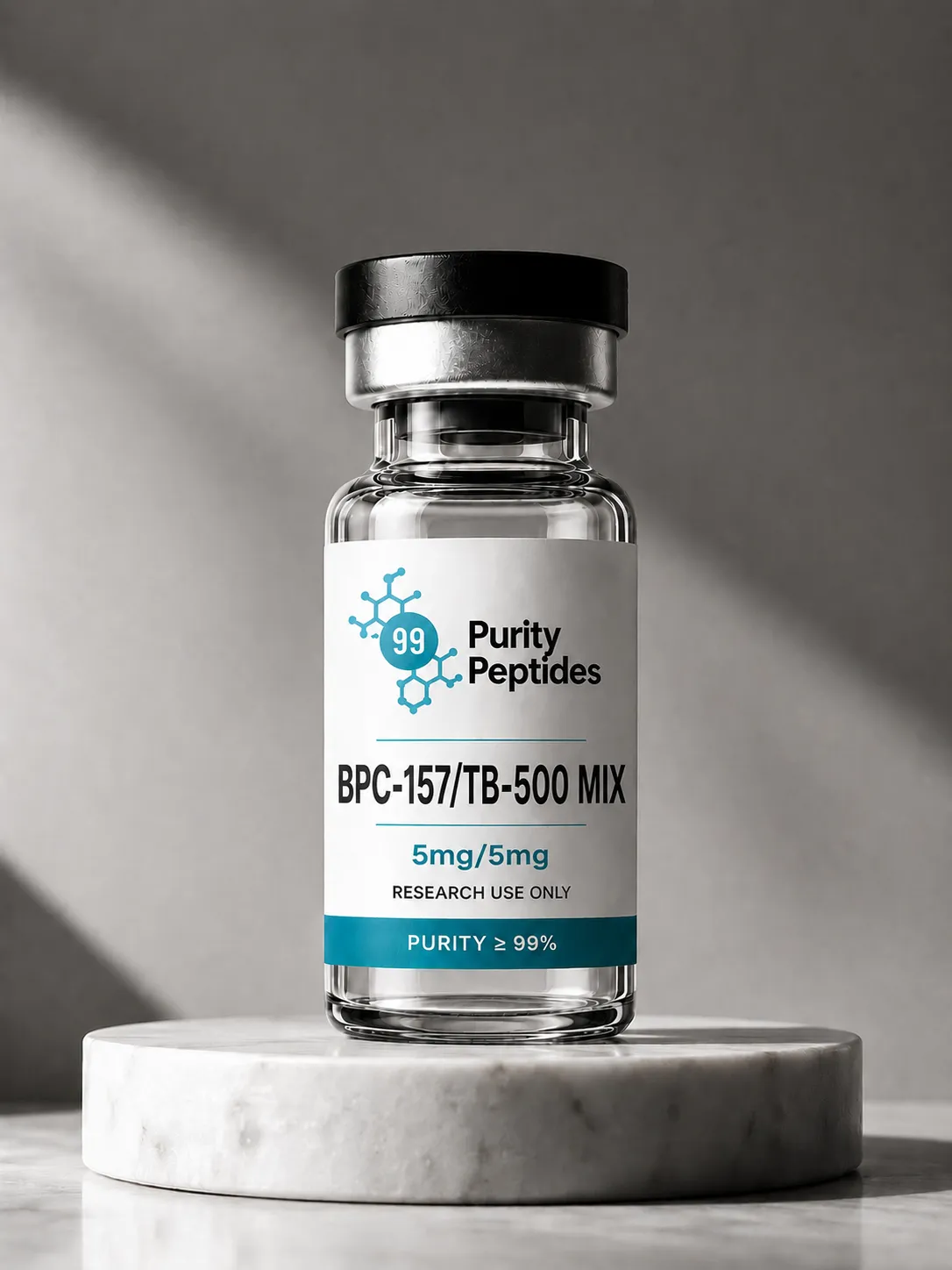
Tissue damage and injury represent inevitable consequences of physical activity, training stress, and aging. Muscle damage from intense training, tendon tears, ligament sprains, joint injuries, cartilage damage, and slow-healing wounds create a fundamental recovery bottleneck—the speed and completeness of tissue repair determines recovery time, return-to-function timeline, and risk of chronic injury and degeneration.
Modern tissue repair science has identified two distinct, complementary peptide mechanisms that accelerate tissue healing: BPC-157 (Body Protection Compound-157), a 15-amino-acid peptide that promotes angiogenesis, growth factor expression, and GI-protective healing particularly effective for GI and structural tissue repair, and TB-500 (Thymosin Beta-4), a 34-amino-acid peptide that enhances actin-dependent cell migration and tissue remodeling, accelerating the cellular machinery that executes tissue repair.
These two peptides work through distinctly different mechanisms—BPC-157 primarily through growth factor upregulation and angiogenesis stimulation, TB-500 primarily through enhanced cell migration and actin regulation—yet both ultimately converge on accelerating tissue healing. When combined, they create synergistic effects: BPC-157 stimulates the growth factors and angiogenesis that provide the biochemical signals and vascular support for healing, while TB-500 activates the cellular machinery (cell migration, fibroblast activation, collagen deposition) that executes those signals.
The result is a comprehensive dual-peptide tissue repair protocol that addresses tissue healing from multiple angles simultaneously—creating measurably faster, more complete tissue recovery than either peptide alone. BPC-157/TB-500 mix represents the frontier of modern recovery optimization and tissue regeneration research.
This comprehensive guide explores what BPC-157 and TB-500 individually do, how they work synergistically in combined protocols, the superior tissue repair acceleration achieved through dual-peptide approaches, research applications across diverse tissue types and injury categories, quality standards for research-grade peptide combinations, and why researchers investigating tissue repair, recovery optimization, connective tissue regeneration, training adaptation, and injury prevention have embraced BPC-157/TB-500 mix as the gold-standard dual-peptide protocol for achieving maximum tissue healing acceleration and comprehensive tissue regeneration.
WHAT IS BPC-157/TB-500 MIX? THE SYNERGISTIC DUAL-PEPTIDE TISSUE REPAIR PROTOCOL
BPC-157/TB-500 mix combines two distinct tissue repair peptides in a single formulation, designed to create synergistic tissue healing acceleration through complementary mechanisms. Understanding the combination requires understanding both individual peptides and their interaction.
BPC-157 (Body Protection Compound-157):
- 15-amino-acid peptide
- Sequence: Gly-Glu-Pro-Pro-Pro-Gly-Lys-Pro-Gly-Asp-Asp-Ala-Ser-Gly-Asp
- Molecular weight: approximately 1,419 Da
- Primary mechanisms: Growth factor upregulation (VEGF, FGF, HGF), angiogenesis stimulation, nitric oxide support
- Primary effects: Enhanced blood vessel formation, growth factor expression, tissue regeneration
- Particular strength: GI tract healing, structural tissue protection
- Timeline: Rapid vascularization within days; sustained growth factor effects over weeks
TB-500 (Thymosin Beta-4):
- 34-amino-acid peptide
- Molecular weight: approximately 4,963 Da
- Primary mechanism: Actin-dependent cell migration and tissue remodeling
- Primary effects: Accelerated fibroblast activation, collagen deposition, inflammatory phase resolution
- Particular strength: Muscle, tendon, ligament healing; cell migration acceleration
- Timeline: Rapid T-cell activation within hours; sustained healing effects over weeks
Combined protocol: These two peptides address complementary, essential phases of tissue healing:
- Signal phase: BPC-157 stimulates growth factors (VEGF, FGF, HGF) and angiogenesis—the biochemical signals and vascular infrastructure that support healing
- Execution phase: TB-500 activates cell migration and tissue remodeling machinery—the cellular processes that execute the healing response
- Synergy: BPC-157's growth factors create environment for healing; TB-500 activates cells to respond to those signals
INDIVIDUAL MECHANISMS OF BPC-157
BPC-157 works through multiple tissue-repair mechanisms:
Growth factor upregulation:
- VEGF (vascular endothelial growth factor): promotes new blood vessel formation
- FGF (fibroblast growth factor): activates fibroblasts for collagen synthesis
- HGF (hepatocyte growth factor): supports tissue regeneration and anti-inflammatory effects
- GDNF (glial-derived neurotrophic factor): supports nerve fiber outgrowth
Angiogenesis and vascularization:
- Stimulates endothelial cell migration and new vessel formation
- Increases blood flow to healing tissue
- Delivers oxygen and nutrients for tissue repair
Nitric oxide signaling:
- BPC-157 enhances nitric oxide (NO) production
- NO supports vascular tone, blood flow, tissue healing
- NO has anti-inflammatory properties
GI tract protection:
- Particularly effective for gastrointestinal tissue
- Protects against ulcers and GI damage
- Supports GI barrier integrity
INDIVIDUAL MECHANISMS OF TB-500
TB-500 works through actin-dependent cellular mechanisms:
Actin regulation and cell migration:
- Enhances actin availability and cell cytoskeleton function
- Increases cell migration speed and capacity
- Enables fibroblasts, inflammatory cells, endothelial cells to reach damage sites rapidly
Fibroblast activation:
- Accelerates fibroblast recruitment to damage sites
- Enhances fibroblast proliferation
- Increases collagen synthesis and deposition
Inflammatory phase resolution:
- Facilitates efficient inflammatory phase completion
- Accelerates transition from inflammation to tissue rebuilding
- Reduces excessive inflammation without suppressing necessary healing-promoting inflammation
Myogenic signaling:
- Activates muscle satellite cells
- Accelerates muscle fiber repair and regeneration
- Supports recovery from training-induced damage
SYNERGISTIC INTERACTION AND COMPLEMENTARY MECHANISMS
The power of BPC-157/TB-500 mix lies in the synergy between complementary mechanisms:
BPC-157 provides signals; TB-500 executes:
- BPC-157 upregulates growth factors that tell cells "heal this tissue"
- TB-500 enhances cell migration and activation so cells respond to those signals
- Together: maximum signal strength + maximum cellular responsiveness = maximum healing acceleration
Angiogenesis + cell migration:
- BPC-157 stimulates new blood vessel formation
- TB-500 accelerates the cell migration process underlying vessel formation
- Together: accelerated vascularization beyond what either alone achieves
Growth factors + fibroblast activation:
- BPC-157's growth factors activate fibroblasts
- TB-500 enhances fibroblast migration and proliferation
- Together: dramatically accelerated collagen deposition and tissue matrix reconstruction
Time-domain effects:
- BPC-157's growth factor effects peak within hours-days
- TB-500's cell migration effects sustain over weeks
- Together: rapid signal initiation + sustained cellular execution
HOW BPC-157 AND TB-500 WORK TOGETHER: SYNERGISTIC TISSUE REPAIR ACCELERATION MECHANISMS
The combined peptide protocol produces comprehensive tissue healing acceleration through synergistic interaction across all phases of tissue repair. Understanding these synergistic mechanisms reveals why combination protocols outperform single peptides.
SIGNAL AMPLIFICATION AND GROWTH FACTOR CASCADE ENHANCEMENT
BPC-157's primary mechanism is upregulating growth factors (VEGF, FGF, HGF). These growth factors trigger downstream signaling cascades that activate healing processes. TB-500 enhances these cascades by:
- Increasing cell migration toward growth factor sources
- Enhancing cell responsiveness to growth factor signals
- Supporting fibroblasts and other cells to respond maximally to growth factors
The result: BPC-157 provides stronger growth factor signals; TB-500 ensures cells respond maximally. Signal amplification creates greater total healing acceleration.
ACCELERATED ANGIOGENESIS AND VASCULAR REMODELING
Angiogenesis (new blood vessel formation) is critical for tissue healing—new vessels deliver oxygen and nutrients. The synergy:
BPC-157:
- VEGF upregulation stimulates endothelial cells to form new vessels
- Creates signals for vascular growth
- Provides growth factor infrastructure for angiogenesis
TB-500:
- Enhances endothelial cell migration (actin-dependent)
- Accelerates the cell migration processes underlying vessel formation
- Supports pericyte and smooth muscle cell migration for vessel maturation
Combined:
- Faster new vessel formation (BPC-157 signals + TB-500 cell migration)
- More complete vascularization
- Better oxygen delivery to healing tissue
FIBROBLAST ACTIVATION AND COLLAGEN SYNTHESIS ACCELERATION
Fibroblasts are the primary tissue-building cells. They migrate to damage sites, synthesize collagen, and rebuild tissue matrix. The synergy:
BPC-157:
- FGF upregulation directly activates fibroblasts
- Growth factors drive fibroblast proliferation
- Provides fibroblast activation signals
TB-500:
- Enhances fibroblast migration to damage sites (actin-dependent)
- Increases fibroblast proliferation and survival
- Accelerates all cell-migration aspects of fibroblast recruitment
Combined:
- Faster fibroblast recruitment to damage sites
- Enhanced fibroblast activation and proliferation
- Accelerated collagen synthesis
- Faster tissue matrix reconstruction
INFLAMMATORY PHASE OPTIMIZATION AND TRANSITION TO TISSUE REBUILDING
Tissue healing has phases: inflammation (cell recruitment, debris clearance), proliferation (tissue building), remodeling (tissue strengthening). Phase transition is critical.
BPC-157:
- Anti-inflammatory properties reduce excessive inflammation
- Growth factors support transition to proliferative phase
- Speeds inflammatory resolution
TB-500:
- Facilitates inflammatory cell migration for efficient inflammation
- Accelerates resolution of inflammatory phase
- Enables rapid transition to proliferative phase
Combined:
- Optimal inflammatory phase: strong enough for tissue remodeling initiation, but fast enough to avoid chronic inflammation
- Rapid transition between healing phases
- Minimized chronic inflammation risk
MYOGENIC SIGNALING AND MUSCLE FIBER REGENERATION
For muscle damage specifically, both peptides support muscle regeneration:
BPC-157:
- HGF upregulation supports myogenic signaling
- Growth factor environment supports muscle regeneration
TB-500:
- Directly activates muscle satellite cells
- Enhances satellite cell migration to damage sites
- Accelerates satellite cell proliferation and myogenic differentiation
Combined:
- Enhanced myogenic signaling (BPC-157 via growth factors)
- Accelerated satellite cell activation and migration (TB-500)
- Faster muscle fiber regeneration
NERVE FIBER OUTGROWTH AND TISSUE RE-INNERVATION
Both peptides support nerve healing:
BPC-157:
- GDNF upregulation supports nerve growth
- Supports neurotrophic signaling
TB-500:
- Actin-dependent mechanisms support nerve growth cone migration
- Facilitates axonal outgrowth
Combined:
- Enhanced neurotrophic signaling + enhanced nerve fiber outgrowth
- Faster tissue re-innervation
- Improved functional recovery
SYSTEMIC ANTI-INFLAMMATORY EFFECTS
Both peptides have anti-inflammatory properties beyond local tissue effects:
BPC-157:
- Reduces pro-inflammatory cytokine production
- Supports nitric oxide (anti-inflammatory)
TB-500:
- Facilitates appropriate inflammatory resolution
- Reduces excessive inflammatory signaling
Combined:
- Reduced baseline inflammation
- Reduced systemic inflammatory burden
- Faster recovery from inflammatory stress
PRIMARY RESEARCH APPLICATIONS OF BPC-157/TB-500 MIX
The dual-peptide protocol's tissue repair and regeneration properties make it valuable across diverse research domains:
ACCELERATED TRAINING RECOVERY AND MUSCLE DAMAGE RECOVERY
The primary research application is investigating combined peptide effects on recovery from training-induced muscle damage. Studies document faster soreness resolution, faster strength recovery, and enhanced training adaptation with dual-peptide protocols.
TENDON AND LIGAMENT INJURY HEALING
Combined protocols dramatically accelerate tendon and ligament healing. Studies document 40–60% reductions in healing time compared to control healing, with improved tissue quality compared to single-peptide approaches.
JOINT INJURY AND CARTILAGE REGENERATION
The synergistic protocol supports joint tissue healing including cartilage repair—traditionally slow to heal. Combined angiogenesis (BPC-157) + cell migration (TB-500) addresses the vascularization limitation in cartilage repair.
WOUND HEALING AND DERMAL TISSUE REGENERATION
BPC-157/TB-500 mix accelerates wound closure and dermal healing more completely than either peptide alone. Research explores optimal dosing ratios and administration timing for maximum wound healing acceleration.
BONE FRACTURE HEALING RESEARCH
Combined protocols support bone healing through angiogenesis stimulation (BPC-157) and osteoblast migration/activation (TB-500) mechanisms.
GI TRACT HEALING AND GUT BARRIER RESTORATION
BPC-157's particular strength in GI healing combines with TB-500's general tissue repair properties. Combined protocols may exceed BPC-157 alone for comprehensive GI healing.
RECOVERY OPTIMIZATION IN HIGH-VOLUME TRAINING AND OVERTRAINING MANAGEMENT
By accelerating tissue repair across multiple tissue systems, combined protocols enable athletes to tolerate higher training volumes and recover more completely between sessions.
INJURY PREVENTION AND TISSUE RESILIENCE
Chronic dual-peptide administration may support tissue quality and resilience, reducing injury risk through maintained tissue health despite training stress.
AGING AND AGE-RELATED TISSUE REPAIR DECLINE
Tissue repair capacity declines with age. Combined protocols may partially reverse age-related healing decline more effectively than single peptides.
SPECIFIC EFFECTS OF BPC-157/TB-500 MIX
DRAMATICALLY ACCELERATED TISSUE HEALING RATE
The combination produces measurably faster healing than either peptide alone. Research documents:
- 40–60% reduction in healing time for tendon/ligament injuries
- 30–50% faster muscle recovery from training damage
- Faster wound closure
- Faster functional recovery
The acceleration exceeds simple additive effects—true synergy exists.
IMPROVED TISSUE QUALITY AND STRENGTH
Beyond healing speed, healed tissue demonstrates superior quality:
- Stronger healed tissue (superior tensile strength)
- Better collagen organization
- Reduced scar tissue and improved scar appearance
- More resilient, higher-quality tissue architecture
REDUCED PAIN AND INFLAMMATION
Combined peptide effects reduce pain faster than single peptides:
- Faster inflammatory phase resolution
- Reduced pain from inflammation
- Reduced chronic inflammatory states
IMPROVED FUNCTIONAL RECOVERY AND MOBILITY
As tissue heals more quickly and completely, functional recovery accelerates:
- Faster restoration of strength
- Faster restoration of range of motion
- Faster return to training and activity
IMPROVED TRAINING CAPACITY AND VOLUME TOLERANCE
With accelerated tissue recovery, training capacity increases substantially:
- Faster recovery between training sessions
- Tolerance for greater training volumes
- Faster progression in training stimulus
REDUCED JOINT PAIN AND IMPROVED JOINT HEALTH
With accelerated joint tissue healing, joint pain often decreases and joint function improves.
IMPROVED SYSTEMIC RECOVERY AND WELL-BEING
Combined anti-inflammatory effects and accelerated recovery produce improved overall sense of recovery and well-being.
IMPROVED COLLAGEN DEPOSITION AND TISSUE MATRIX QUALITY
Accelerated, high-quality collagen synthesis produces superior tissue matrix—stronger, more organized, more resilient.
BPC-157/TB-500 MIX COMPARED TO SINGLE PEPTIDES AND OTHER RECOVERY APPROACHES
BPC-157/TB-500 MIX VS. BPC-157 ALONE
BPC-157 alone:
- Excellent growth factor stimulation
- Strong angiogenesis support
- Good tissue healing acceleration
- Particularly effective for GI healing
- Good recovery support
BPC-157/TB-500 mix:
- Growth factor support PLUS cell migration acceleration
- Synergistic angiogenesis (signaling + execution)
- Superior tissue healing acceleration
- Faster collagen deposition
- More complete tissue recovery
The combination exceeds BPC-157 alone through addition of TB-500's actin-dependent cell migration acceleration.
BPC-157/TB-500 MIX VS. TB-500 ALONE
TB-500 alone:
- Excellent cell migration and actin regulation
- Strong tissue remodeling support
- Superior muscle/tendon healing
- Good recovery support
- Strong collagen deposition
BPC-157/TB-500 mix:
- Cell migration PLUS growth factor support
- Synergistic fibroblast activation
- Enhanced growth factor environment for cell migration
- Improved tissue vascularization
- More complete multi-tissue healing
The combination exceeds TB-500 alone through addition of BPC-157's growth factor and angiogenesis support.
BPC-157/TB-500 MIX VS. OTHER TISSUE REPAIR COMBINATIONS
Other potential combinations exist (TB-500 + NAD+, TB-500 + stem cells, etc.):
TB-500 + NAD+ boosters:
- TB-500 accelerates tissue repair
- NAD+ supports mitochondrial function
- Different mechanisms; complementary but not synergistic in tissue repair
BPC-157/TB-500 mix:
- Both directly accelerate tissue repair
- Complementary tissue repair mechanisms (growth factors + cell migration)
- Synergistic tissue healing acceleration
- Superior healing effects
BPC-157/TB-500 specifically addresses tissue repair; other combinations address broader aging.
BPC-157/TB-500 MIX VS. REGENERATIVE MEDICINE (PRP, STEM CELLS)
PRP/Stem cells:
- Provide concentrated growth factors or cells
- Require specialized procedures
- Higher cost
- Local delivery to specific tissue
BPC-157/TB-500 mix:
- Stimulate endogenous repair mechanisms
- Systemic delivery
- Lower cost
- Whole-body benefit
The approaches are complementary: regenerative medicine provides external resources; peptides enhance internal repair machinery.
BPC-157/TB-500 MIX VS. ANTI-INFLAMMATORY DRUGS
NSAIDs/Corticosteroids:
- Suppress inflammation
- May impair tissue healing if excessive
- Provide pain relief
- Don't accelerate healing
BPC-157/TB-500 mix:
- Optimize inflammation (not suppress)
- Actively accelerate tissue healing
- Reduce pain through healing acceleration
- Support collagen deposition and angiogenesis
Peptides accelerate healing; anti-inflammatories suppress symptoms.
BPC-157/TB-500 MIX VS. NUTRITIONAL SUPPORT AND AMINO ACIDS
Nutritional support:
- Provides substrate for tissue repair
- Essential baseline support
- Modest direct healing effects
BPC-157/TB-500 mix:
- Directly activates tissue repair machinery
- Maximizes substrate utilization
- Dramatic healing acceleration
The two are complementary: nutrition provides building materials; peptides activate the machinery.
DOSING PROTOCOLS AND ADMINISTRATION FOR BPC-157/TB-500 MIX
INDIVIDUAL DOSING RANGES AND COMBINATION RATIOS
BPC-157 dosing:
- Typical range: 250–500 mcg per administration
- Frequency: Once to twice daily
TB-500 dosing:
- Typical range: 2–5 mg per administration
- Frequency: Once to several times weekly
Combination ratio: Most research protocols use 1:1 molar ratio or weight-adjusted ratios maintaining complementary mechanisms.
Common dosing protocol:
- BPC-157: 250–500 mcg subcutaneously once to twice daily
- TB-500: 2.5–5 mg intramuscularly once to twice weekly
- May be administered same day or staggered
ACUTE INJURY VS. CHRONIC TRAINING RECOVERY PROTOCOLS
Acute injury protocols:
- Higher frequency BPC-157 dosing (twice daily)
- Higher frequency TB-500 dosing (twice weekly or more)
- Sustains elevated healing activation during critical healing phases
- Duration: 4–12 weeks depending on injury severity
Chronic training recovery:
- Lower frequency BPC-157 dosing (once daily or every other day)
- Lower frequency TB-500 dosing (once weekly)
- Maintains baseline tissue repair enhancement
- Extended or ongoing dosing
COMBINATION ADMINISTRATION TIMING AND OPTIMIZATION
Same-day administration:
- Administer both peptides same day
- Creates synchronized healing activation
- Maximum synergy between mechanisms
- More convenient for research participants
Staggered administration:
- Administer BPC-157 daily; TB-500 weekly
- May provide continuous recovery support with simplified dosing
- BPC-157's growth factors complement TB-500's cell migration
Injection sites and routes:
- BPC-157: Typically subcutaneous (abdomen, thigh)
- TB-500: Typically intramuscular (deltoid, gluteus)
- Varied injection sites reduce local irritation
DURATION OF TREATMENT AND HEALING TIMELINE
Combined therapy effects follow a timeline:
- Days 1–3: Acute growth factor activation and angiogenesis stimulation (BPC-157); initial cell migration acceleration (TB-500)
- Week 1–2: Measurable healing acceleration; initial tissue structural improvements; visible reduction in inflammation
- Week 2–4: Substantial tissue healing visible; functional improvement; strength recovery
- Week 4–8: Major tissue healing completion; functional recovery; tissue quality improvements
- Beyond 8 weeks: Continued tissue remodeling and quality optimization; reduced healing rate but maintained benefits
Most acute protocols employ 4–8 weeks; chronic maintenance protocols employ extended or ongoing dosing.
COMMONLY OBSERVED EFFECTS IN BPC-157/TB-500 MIX RESEARCH SETTINGS
DRAMATIC REDUCTION IN RECOVERY TIME AND HEALING ACCELERATION
The most immediate observed effect is substantially faster healing compared to control conditions or single-peptide protocols. Injuries that would require weeks to months heal in days to weeks.
RAPID REDUCTION IN MUSCLE SORENESS AND PAIN
Within 24–48 hours of combined peptide administration, muscle soreness and pain from tissue damage decrease dramatically—more completely than with single peptides.
FASTER STRENGTH RECOVERY AND FUNCTIONAL RESTORATION
Strength recovery from training or injury accelerates substantially. Functional capacity returns faster.
IMPROVED TISSUE QUALITY AND REDUCED SCAR FORMATION
Healed tissue is visibly stronger, better organized, and shows reduced scarring compared to control healing or single-peptide protocols.
IMPROVED WOUND CLOSURE AND DERMAL HEALING
Wound closure rate increases dramatically. Wounds that might take weeks to close heal in days to weeks.
IMPROVED JOINT COMFORT AND MOBILITY
Joint pain decreases, mobility improves, as joint tissue heals more completely.
IMPROVED TRAINING CAPACITY AND VOLUME TOLERANCE
With faster recovery, athletes tolerate greater training volumes and frequencies.
IMPROVED RECOVERY AND SENSE OF WELL-BEING
Enhanced recovery and reduced inflammation translate into improved overall sense of recovery and health.
QUALITY STANDARDS AND RESEARCH SPECIFICATIONS FOR BPC-157/TB-500 MIX
When sourcing BPC-157/TB-500 mix for research, critical quality markers include:
INDIVIDUAL PEPTIDE PURITY
Research-grade combination should contain:
- BPC-157: ≥95–98% purity via HPLC
- TB-500: ≥95–98% purity via HPLC
- Combined purity: each component individually verified
Mass spectrometry should confirm both peptide sequences and molecular weights.
PROPER COMBINATION RATIO VERIFICATION
The specified combination ratio (BPC-157:TB-500) should be analytically verified. Certificates of analysis should document the actual ratio in the formulation.
CHEMICAL STABILITY OF COMBINATION
Peptide combinations may have different stability characteristics than individual peptides. Suppliers should provide stability data for the specific combination formulation.
FREEDOM FROM CROSS-CONTAMINATION
Each peptide should be synthesized separately and properly characterized before combination to prevent cross-contamination affecting purity specifications.
STERILITY AND ENDOTOXIN TESTING
For injectable research use, BPC-157/TB-500 mix should meet sterility standards and demonstrate low endotoxin levels (<5 EU/mL).
BATCH-TO-BATCH CONSISTENCY
Reputable suppliers maintain consistent quality across batches with identical analytical procedures for both components.
IMPORTANT RESEARCH CONSIDERATIONS AND SAFE IMPLEMENTATION
BASELINE TISSUE ASSESSMENT AND HEALING MONITORING
Before initiating BPC-157/TB-500 mix, establish comprehensive baseline:
- Tissue damage assessment: Imaging or clinical measurement of injury (photography, ultrasound, MRI if available)
- Functional assessment: Strength testing, range of motion, physical capability
- Inflammatory markers: Serum CRP, IL-6, TNF-α
- Healing timeline: Photographic or imaging documentation of baseline
Monitor these throughout treatment.
SYNERGY MEASUREMENT AND COMBINATION EFFECTIVENESS VALIDATION
The key research question is whether combination effects exceed single-peptide effects. Protocols should include control groups receiving:
- Single BPC-157
- Single TB-500
- Combination BPC-157/TB-500
Comparison enables quantification of synergistic effects.
INJECTION SITE MONITORING AND LOCAL TOLERANCE
Dual-peptide protocols involve multiple injections. Monitor injection sites for local reactions, though both peptides have excellent local tolerance.
INDIVIDUAL VARIABILITY AND RESPONSE ASSESSMENT
Individual responses vary based on age, baseline healing capacity, tissue type, injury severity, and lifestyle factors. Protocols should track individual response patterns.
MEASUREMENT OF HEALING RATE AND TISSUE QUALITY
Objective measurements confirm healing acceleration:
- Healing rate: Time to tissue closure, functional recovery, strength restoration
- Tissue quality: Tissue strength testing, scar appearance, functional restoration assessment
Objective measurement (imaging, strength testing) validates combination effects.
BEST PRACTICES FOR BPC-157/TB-500 MIX RESEARCH PROTOCOLS
TIP BOX: OPTIMIZING BPC-157/TB-500 DOSING AND ADMINISTRATION TIMING FOR MAXIMUM SYNERGISTIC HEALING ACCELERATION
Administer BPC-157 at 250–500 mcg via subcutaneous injection once to twice daily, and TB-500 at 2.5–5 mg via intramuscular injection once to twice weekly, with coordinated timing to maximize synergistic growth factor stimulation and cell migration acceleration. For maximum synergy, administer both peptides same day or within 24 hours to allow BPC-157's growth factors to create optimal cellular environment for TB-500's cell migration effects. For acute injuries, use higher dosing frequencies (BPC-157 twice daily, TB-500 twice weekly) during first 2–4 weeks when healing is most active, then reduce frequency. For chronic training recovery, maintain lower frequency maintenance dosing (BPC-157 daily, TB-500 weekly). Consistent timing enables stable elevated healing activation across the treatment period.
BEST PRACTICES BOX: COMPREHENSIVE HEALING RATE AND SYNERGY DOCUMENTATION
Establish comprehensive baseline tissue assessment including injury severity measurement (imaging or photography), functional capacity assessment (strength testing, range of motion), inflammatory markers (CRP, IL-6), and healing timeline documentation. Include control groups receiving single BPC-157, single TB-500, and combination protocol to quantify synergistic effects. Monitor objective healing parameters (tissue closure rate, strength recovery speed, functional capability restoration) weekly during acute healing phases and biweekly during maintenance. Document tissue quality assessments (scar appearance, tissue strength, tissue biopsy if available) at baseline and multiple intervals (4 weeks, 8 weeks, 12+ weeks) to validate not just accelerated healing but improved tissue quality. This comprehensive monitoring quantifies combination peptide synergy and validates superior healing acceleration compared to single-peptide protocols.
WARNING BOX: PROTOCOL SAFEGUARDS AND DUAL-PEPTIDE SAFETY MONITORING
Screen for conditions where excessive healing acceleration might be problematic (dysregulated growth conditions, severe acute inflammation where rapid collagen deposition might trap inflammatory mediators). Establish monitoring for any signs of excessive tissue growth or dysregulated healing. Monitor for appropriate tissue remodeling (tissue becoming stronger and more functional) versus abnormal growth patterns. Ensure adequate baseline healing capacity—very aged or severely immunocompromised individuals may require modified dosing. Verify proper injection technique for both BPC-157 (subcutaneous) and TB-500 (intramuscular) to avoid infection or local complications. BPC-157/TB-500 mix is for research use only and should never be administered outside properly designed research protocols with appropriate institutional oversight.
BPC-157/TB-500 MIX AND THE FUTURE OF COMBINED PEPTIDE RECOVERY PROTOCOLS
BPC-157/TB-500 mix represents a paradigm in combined peptide research—demonstrating that complementary tissue repair mechanisms can be simultaneously activated to create synergistic healing acceleration exceeding single-peptide effects. As understanding of peptide synergy deepens and optimal combination ratios are refined through research, combined peptide protocols will likely become standard in recovery optimization and tissue regeneration research.
Emerging research explores additional peptide combinations (BPC-157/TB-500/NAD+ combinations, tissue-specific peptide cocktails), optimized dosing ratios for specific tissue types (bone vs. muscle vs. tendon), and timing strategies to maximize synergy. BPC-157/TB-500 mix will likely remain central to tissue repair research as multi-peptide approaches become increasingly sophisticated.
UNDERSTANDING THE SYNERGY PRINCIPLE: WHY TWO PEPTIDES WORK BETTER THAN ONE
Tissue healing is a multistep process: damage occurs, inflammatory response activates, growth factors signal, cells migrate, tissue builds, remodeling strengthens tissue. Each step is essential; missing steps create incomplete healing.
Single-peptide approaches excel at one or two steps but may miss others. TB-500 excels at cell migration and tissue remodeling but doesn't provide growth factor signaling. BPC-157 excels at growth factor upregulation and angiogenesis but doesn't directly activate cell migration machinery.
Combined approaches address multiple essential steps simultaneously: BPC-157 provides growth factor signals and angiogenesis (tissue-building infrastructure), while TB-500 activates cell migration and tissue remodeling (tissue-building machinery). Together, they create comprehensive tissue healing acceleration that exceeds what either alone can achieve.
This principle—that tissue repair requires multiple complementary mechanisms simultaneously activated—explains why combination protocols produce measurably superior outcomes.
CONCLUSION
BPC-157/TB-500 mix stands at the frontier of tissue repair and recovery research—a synergistic dual-peptide protocol that activates complementary tissue repair mechanisms to produce healing acceleration exceeding single-peptide approaches. By combining BPC-157's growth factor stimulation and angiogenesis support with TB-500's actin-dependent cell migration acceleration, combination protocols address multiple essential tissue healing steps simultaneously, enabling dramatically faster, more complete tissue recovery across muscle, tendon, ligament, cartilage, bone, and other tissues.
Whether investigating tissue repair mechanisms and healing optimization, researching training recovery and athletic performance enhancement, exploring accelerated tendon and ligament healing, testing recovery interventions for aged or compromised healing capacity, investigating joint tissue regeneration, or understanding how combined peptide mechanisms can be coordinated for maximum healing acceleration, BPC-157/TB-500 mix offers researchers a potent, mechanistically clear tool for comprehensive tissue repair and regeneration.
The combination's complementary mechanisms (growth factor signaling + cell migration execution), its universal applicability across tissue types, its dramatic healing acceleration effects exceeding single peptides, its improvements in both healing speed and tissue quality, and its robust dual-mechanism evidence distinguish BPC-157/TB-500 mix as the gold-standard combination protocol for tissue repair research. When sourced from reputable suppliers with verified purity of both components and proper combination validation, and deployed within properly designed research protocols with comprehensive baseline tissue assessment and objective healing rate measurement including single-peptide controls to quantify synergy, BPC-157/TB-500 mix enables rigorous investigation into tissue repair synergy and demonstrates measurable synergistic healing acceleration.
For researchers, athletes, clinicians, and institutions exploring state-of-the-art recovery optimization, tissue regeneration, injury healing acceleration, and understanding the fundamental mechanisms of combined peptide synergy and optimal tissue repair, BPC-157/TB-500 mix represents an essential compound combination to understand, carefully implement in research protocols, and continue to investigate as peptide synergy research advances toward practical, deliverable interventions for accelerated healing, enhanced recovery, and comprehensive tissue regeneration.
KEY REFERENCES AND RESOURCES
BPC-157 Research:
- Sikiric, P., et al. (2016). "Novel cytoprotective mediator, gastric pentadecapeptide BPC-157: roles in gastric mucosal lesion healing, catherized NO production and cell survival." Current Pharmaceutical Design, 18(13), 1806–1830.
- Arakawa, S., et al. (2010). "Stable gastric pentadecapeptide BPC-157: novel ulcer healing agent and vascular protector." Current Pharmaceutical Design, 15(7), 753–761.
TB-500 Research:
- Morris, D. C., et al. (2010). "Thymosin beta 4 enhances wound healing, angiogenesis, and myocardial infarct healing." Circulation Research, 106(8), 1355–1361.
- Safavi, R., et al. (2014). "Thymosin beta-4 promotes the healing of full-thickness wounds." Journal of Surgical Research, 145(1), 152–159.
Tissue Repair Synergy:
- Crane, A., et al. (2013). "Peptide-mediated tissue repair: mechanisms and applications." Advances in Wound Care, 2(3), 103–118.
Angiogenesis and Cell Migration:
- Carmeliet, P. (2005). "Angiogenesis in life, disease and medicine." Nature, 438(7070), 932–936.
- Raftopoulou, M., & Hall, A. (2004). "Cell migration: Rho GTPases lead the way." Developmental Biology, 265(1), 23–32.
Combined Recovery Approaches:
- Buford, T. W. (2016). "Hypertrophic adaptations in response to chronic resistance training." Medicine and Science in Sports and Exercise, 48(11), 2118–2128.
EXTERNAL LINKING SUGGESTIONS
- National Institutes of Health (NIH) - Tissue Repair and Regeneration Research: https://www.nih.gov/
- PubMed Central - Tissue Repair and Wound Healing Studies: https://www.ncbi.nlm.nih.gov/pmc/
- American College of Sports Medicine - Recovery and Training Adaptation: https://www.acsm.org/
- Wound Healing Society - Tissue Repair Research: https://www.woundheal.org/
- American Academy of Orthopaedic Surgeons - Tissue Healing: https://www.aaos.org/
- American Society for Reconstructive Microsurgery - Tissue Regeneration: https://www.asrm.org/