8437439007
 orders@99puritypeptides.com

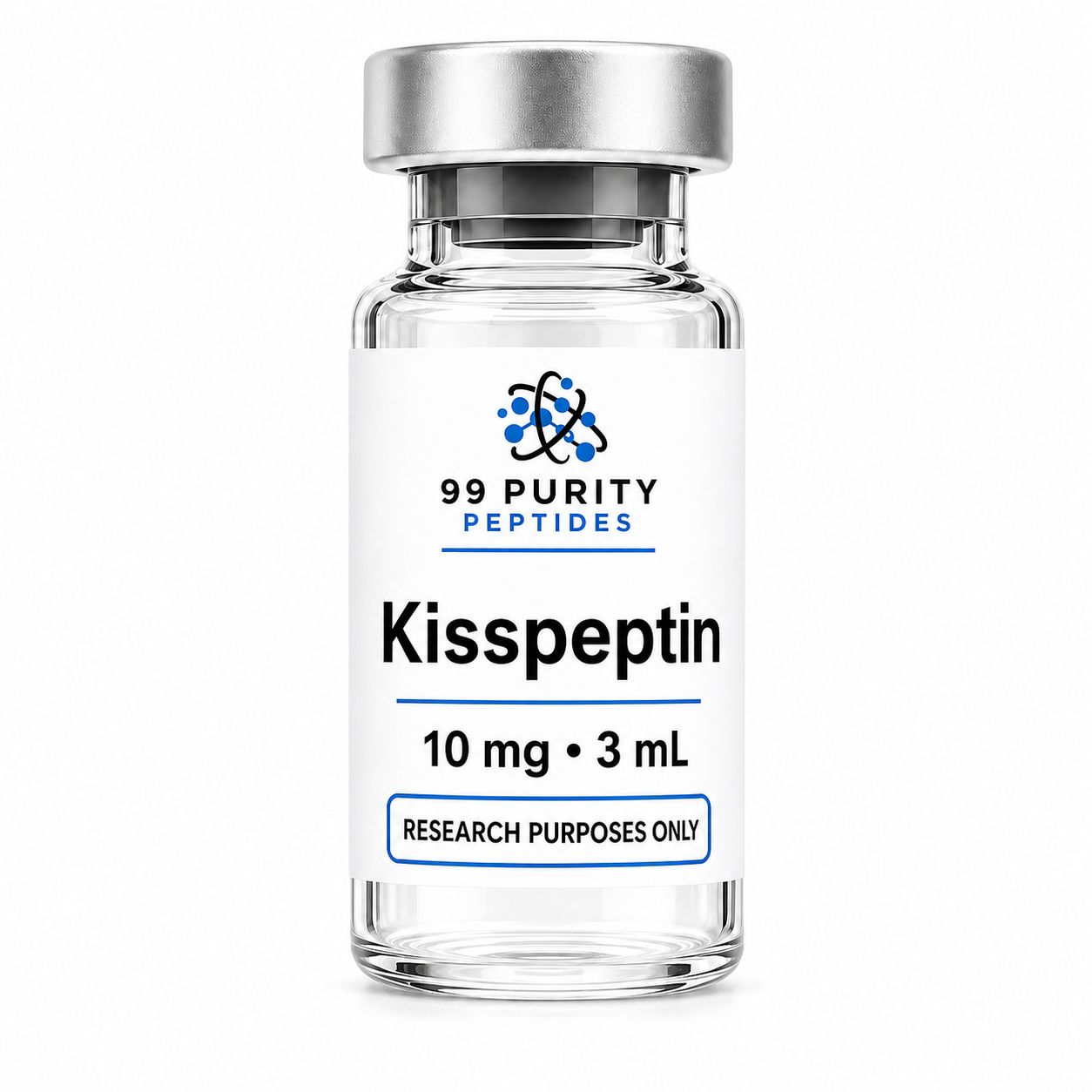
Kisspeptin
Master HPG-axis regulator peptides that activate GPR54 on GnRH neurons, triggering LH/FSH release and downstream sex-steroid production. Fundamental to research on puberty onset, reproductive endocrinology, infertility, PCOS, hypothalamic amenorrhea, and sexual behavior circuitry.
For research use only – not for human or veterinary use, diagnosis, or treatment.
$65.00
Additional information
| Weight | 0.1 lbs |
|---|---|
| Strength | 10mg |
| Volume | 3ML |
Kisspeptin is a synthetic neuropeptide studied in controlled laboratory environments for its interaction with the GPR54 receptor (also known as KISS1R) and its regulatory role within the hypothalamic-pituitary-gonadal (HPG) axis. In experimental research models, Kisspeptin has been investigated for its influence on gonadotropin-releasing hormone (GnRH) signaling pathways and reproductive endocrine communication systems. Due to its receptor specificity and upstream regulatory function, it remains a key compound in neuroendocrine research frameworks.
Preclinical investigations have examined Kisspeptin for its interaction with luteinizing hormone (LH) and follicle-stimulating hormone (FSH) pathway research, as well as its involvement in puberty-related signaling and reproductive hormone modulation models. Ongoing scientific studies continue to evaluate its receptor-binding characteristics and downstream intracellular signaling behavior within controlled laboratory conditions.
This research peptide is supplied in a 3ML vial and manufactured under strict laboratory-controlled standards. Each batch undergoes analytical verification to confirm molecular identity, purity, and structural integrity. Kisspeptin is intended strictly for laboratory research and analytical purposes only and is not for human consumption.
- GPR54 (KISS1R) receptor interaction research
- Studied for GnRH signaling pathway regulation
- Investigated in HPG axis communication models
- Evaluated in LH and FSH endocrine signaling research
- Explored in neuroendocrine regulatory frameworks
- Research-grade Kisspeptin peptide
- High-purity synthesis protocols
- Analytical verification (HPLC tested)
- Batch-specific quality control procedures
- Secure, laboratory-compliant packaging
Related products
-

KPV
$55.00A tripeptide (Lys-Pro-Val) derived from the C-terminus of α-MSH with strong anti-inflammatory and mucosal-protective effects in preclinical models.Add to cart -
VIP (Vasoactive Intestinal Peptide)
$80.00A 28-amino-acid neuropeptide and vasodilator with powerful effects on smooth-muscle relaxation, immune modulation, and circadian and neuroendocrine regulation.Add to cart -
SS-31 (Elamipretide)
$145.00A mitochondria-targeting tetrapeptide that binds cardiolipin in the inner mitochondrial membrane, improving electron transport chain efficiency, ATP production,…Add to cart -
Sale!
KPV Capsules
Original price was: $125.00.$110.00Current price is: $110.00.A tripeptide (Lys-Pro-Val) derived from the C-terminus of α-MSH with strong anti-inflammatory and mucosal-protective effects in preclinical models.Add to cart


Questions
Common questions about research peptides, ordering, and lab standards