
INTRODUCTION & PRODUCT DESCRIPTION
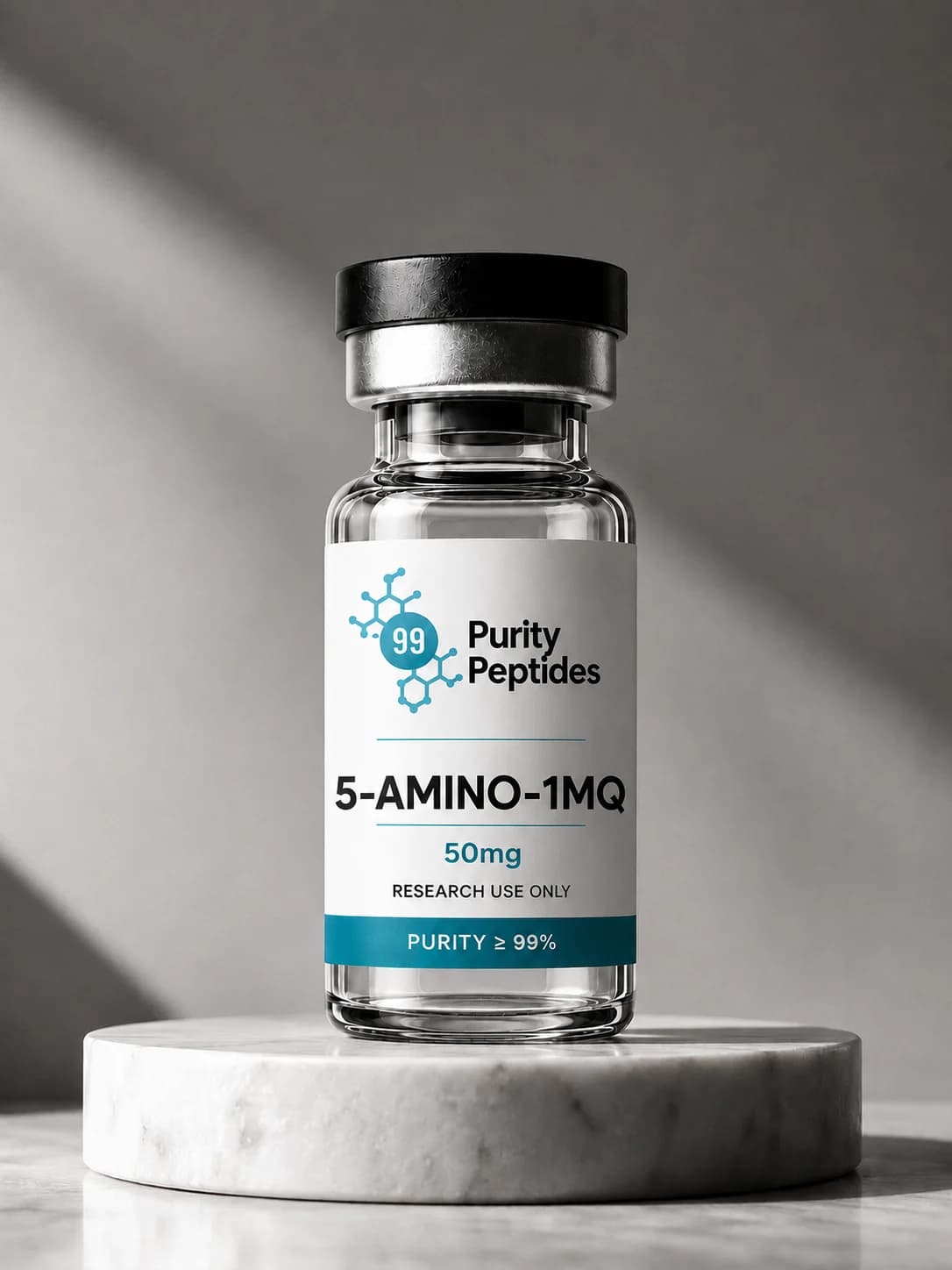
The human body's metabolic efficiency hinges on NAD+ (nicotinamide adenine dinucleotide)—a critical coenzyme governing cellular energy production, metabolic flexibility, and numerous longevity pathways. Yet a poorly understood enzyme called NNMT (nicotinamide N-methyltransferase) actively depletes NAD+, converting it into inactive methyl-NAD compounds.
Elevated NNMT activity has emerged as a feature of obesity, metabolic dysfunction, and age-related metabolic decline. By inhibiting NNMT, researchers can preserve NAD+ levels, enhance cellular energy capacity, promote fat utilization, and support metabolic health—all without exogenous NAD+ supplementation.
5-Amino-1MQ represents a breakthrough NNMT inhibitor—a small-molecule compound that potently suppresses NNMT activity, allowing NAD+ to accumulate and activate metabolic health pathways. This comprehensive guide explores what 5-Amino-1MQ is, how NNMT inhibition improves metabolism and fat loss, its research applications, and why researchers investigating metabolic optimization and NAD+-dependent longevity pathways have embraced 5-Amino-1MQ as a foundational compound.
WHAT IS 5-AMINO-1MQ? THE NNMT INHIBITOR MECHANISM
5-Amino-1MQ (also referred to as 5-amino-1-methylquinolinium) is a small-molecule organic compound that functions as a potent, selective inhibitor of NNMT (nicotinamide N-methyltransferase). Unlike peptides or large-molecule therapeutics, 5-Amino-1MQ is a relatively simple chemical structure that crosses cell membranes and inhibits NNMT activity with high potency and selectivity.
NNMT is an enzyme that catalyzes the methylation of nicotinamide (a NAD+ precursor) and other substrates, using SAM (S-adenosylmethionine) as the methyl donor. This methylation reaction serves important regulatory functions but also depletes NAD+ by converting it to compounds that cannot participate in NAD+-dependent metabolism. In obesity and metabolic dysfunction, NNMT activity increases substantially, accelerating NAD+ depletion and metabolic decline.
By inhibiting NNMT, 5-Amino-1MQ preserves NAD+ levels, allowing the coenzyme to activate metabolic health pathways—particularly SIRT1 activation, enhanced mitochondrial function, and improved fat oxidation. This mechanism distinguishes 5-Amino-1MQ from NAD+ precursors (NMN, NR), which provide substrate for NAD+ synthesis; 5-Amino-1MQ works by preventing NAD+ depletion.
THE NAD+ METABOLIC ECOSYSTEM AND NNMT'S CENTRAL ROLE
NAD+ functions as a critical coenzyme in hundreds of cellular reactions: energy production (glycolysis, oxidative phosphorylation), DNA repair, circadian rhythm regulation, and stress resistance. NAD+ levels naturally decline with age and in metabolic disease, contributing to metabolic dysfunction and age-related disease.
Historically, strategies to restore NAD+ focused on supplementing with NAD+ precursors (NMN, NR, NA). However, recent research revealed that NNMT-mediated NAD+ depletion represents a major drain on cellular NAD+ pools. Paradoxically, in obese individuals, despite having depleted NAD+ levels, NNMT activity is markedly elevated—the enzyme actively wasting available NAD+.
This paradox has profound implications: simply providing more NAD+ precursors may not restore NAD+ levels if NNMT continues to deplete it. Conversely, inhibiting NNMT allows existing NAD+ (or NAD+ from moderate precursor supplementation) to accumulate, potentially restoring NAD+-dependent pathways more effectively than precursor supplementation alone.
HOW 5-AMINO-1MQ WORKS: NNMT INHIBITION AND METABOLIC CONSEQUENCES
5-Amino-1MQ's metabolic and research value derives from its ability to selectively inhibit NNMT, triggering a cascade of NAD+-dependent metabolic improvements. Understanding these mechanisms reveals why researchers are investigating 5-Amino-1MQ across metabolic health applications.
NNMT INHIBITION AND NAD+ PRESERVATION
5-Amino-1MQ binds to NNMT with high affinity, competitively inhibiting the enzyme's catalytic activity. This inhibition reduces NNMT-mediated nicotinamide methylation, preserving NAD+ that would otherwise be converted to inactive methyl-NAD compounds. The result is NAD+ accumulation within cells—a foundational metabolic shift with cascading downstream effects.
This NAD+ preservation occurs through a mechanism distinct from precursor supplementation: while NMN and NR increase NAD+ synthesis, 5-Amino-1MQ decreases NAD+ catabolism. Combined, the two approaches (NNMT inhibition + precursor supplementation) theoretically produce synergistic NAD+ restoration.
SIRT1 ACTIVATION AND METABOLIC HEALTH SIGNALING
As NAD+ accumulates from NNMT inhibition, the coenzyme becomes available for NAD+-dependent enzymes, particularly SIRT1 (silent information regulator 1)—a deacetylase that regulates metabolism, stress resistance, and longevity pathways.
SIRT1 activation through NAD+ availability triggers multiple metabolic improvements: enhanced insulin sensitivity, increased mitochondrial biogenesis, improved fat oxidation, reduced inflammation, and enhanced stress resistance. These downstream effects of NAD+ restoration constitute 5-Amino-1MQ's primary mechanism for metabolic improvement.
MITOCHONDRIAL FUNCTION AND ENERGY CAPACITY ENHANCEMENT
SIRT1 activation promotes mitochondrial biogenesis and enhances oxidative phosphorylation efficiency through PGC-1α signaling and mitochondrial protein deacetylation. The result is enhanced mitochondrial energy production capacity—the fundamental basis for metabolic improvement and metabolic flexibility.
Enhanced mitochondrial function means cells can generate ATP more efficiently, supporting higher metabolic rates, better exercise performance, and improved metabolic health. This mitochondrial enhancement is particularly significant in obesity, where mitochondrial dysfunction contributes to metabolic rigidity (inability to flexibly switch between glucose and fat utilization).
FAT OXIDATION AND LIPID METABOLISM OPTIMIZATION
With enhanced mitochondrial capacity and SIRT1-mediated metabolic optimization, cells preferentially oxidize fat for energy. This metabolic shift—from glucose dependence toward fat utilization—is central to metabolic health and body composition improvement.
Additionally, SIRT1 activation reduces de novo lipogenesis (fat synthesis from carbohydrates), decreasing fat accumulation. Combined, these mechanisms—enhanced fat oxidation and reduced fat synthesis—create favorable conditions for fat loss and metabolic health.
METABOLIC FLEXIBILITY AND GLUCOSE HOMEOSTASIS
Metabolic flexibility—the ability to efficiently switch between glucose and fat utilization depending on feeding state and energy availability—is a hallmark of metabolic health. Obesity and metabolic disease involve metabolic inflexibility, with cells locked into glucose dependence despite elevated fat availability.
By enhancing mitochondrial capacity and SIRT1 signaling, 5-Amino-1MQ restores metabolic flexibility. Cells regain the capacity to efficiently oxidize fat, becoming less dependent on glucose. This flexibility improvement translates into better glucose control, improved insulin sensitivity, and favorable metabolic health markers.
AMPK ACTIVATION AND ENERGY SENSOR SIGNALING
NAD+ accumulation activates not only SIRT1 but also AMPK (AMP-activated protein kinase) through NAD+-dependent regulatory mechanisms. AMPK, the cellular energy sensor, activates adaptive metabolic responses: increased glucose uptake, enhanced fat oxidation, mitochondrial biogenesis, and reduced energy-consuming anabolic processes.
This dual SIRT1/AMPK activation through NAD+ restoration creates a powerful metabolic optimization signal—essentially instructing the cell to "optimize energy metabolism and fat utilization."
CELLULAR STRESS RESISTANCE AND HEALTHSPAN EFFECTS
NAD+-dependent pathways, particularly through SIRT1 and AMPK, enhance cellular stress resistance and promote longevity mechanisms. These include improved DNA repair (through PARP, another NAD+-dependent enzyme), enhanced autophagy (cellular cleanup), reduced inflammation, and mitochondrial quality control.
These effects suggest 5-Amino-1MQ's benefits extend beyond acute metabolic improvement to support longer-term cellular health and aging resistance—properties of particular interest in longevity research.
PRIMARY RESEARCH APPLICATIONS OF 5-AMINO-1MQ
5-Amino-1MQ's ability to enhance NAD+-dependent metabolism makes it valuable across diverse research domains:
OBESITY AND FAT LOSS RESEARCH
5-Amino-1MQ's primary research application involves investigating mechanisms of fat loss and metabolic improvement. Animal studies demonstrate significant reductions in body weight and adiposity, with metabolic improvements occurring through enhanced fat oxidation and improved metabolic efficiency. The fat loss appears linked to NNMT inhibition-mediated NAD+ restoration rather than appetite suppression (5-Amino-1MQ does not reduce hunger).
For researchers investigating the metabolic basis of obesity and the role of NAD+ metabolism in fat accumulation, 5-Amino-1MQ provides a selective tool for understanding NNMT's contribution to metabolic dysfunction.
METABOLIC HEALTH AND INSULIN SENSITIVITY
SIRT1 activation through NAD+ restoration improves insulin sensitivity and glucose homeostasis. Research demonstrates improved glucose tolerance, reduced fasting glucose, and improved HbA1c levels with 5-Amino-1MQ administration. These improvements position the compound as valuable for investigating the NAD+ metabolic basis of insulin resistance and diabetes pathophysiology.
MITOCHONDRIAL DYSFUNCTION AND ENERGY METABOLISM RESEARCH
Age-related and disease-related mitochondrial dysfunction contributes to metabolic decline, reduced exercise capacity, and increased disease susceptibility. 5-Amino-1MQ's enhancement of mitochondrial biogenesis and oxidative capacity makes it valuable for investigating mitochondrial dysfunction and testing interventions to restore mitochondrial health.
EXERCISE PERFORMANCE AND METABOLIC ADAPTATION RESEARCH
Mitochondrial capacity directly determines aerobic exercise capacity and endurance. By enhancing mitochondrial function and promoting fat oxidation, 5-Amino-1MQ may improve exercise performance and support metabolic adaptations to training. Research in exercise physiology explores 5-Amino-1MQ's effects on endurance, power output, and training response.
AGING AND LONGEVITY RESEARCH
NAD+-dependent pathways are central to aging biology and longevity mechanisms. By preserving NAD+ levels and activating SIRT1/AMPK signaling, 5-Amino-1MQ addresses fundamental aging pathways. Research explores 5-Amino-1MQ's effects on lifespan, healthspan, and age-related disease prevention.
NAD+ METABOLIC ECOSYSTEM INVESTIGATION
Understanding how NNMT fits into the broader NAD+ metabolic ecosystem requires investigation of NNMT inhibitors like 5-Amino-1MQ. Research exploring optimal combinations of NNMT inhibition + NAD+ precursor supplementation, and understanding tissue-specific NNMT function, utilizes 5-Amino-1MQ as a research tool.
METABOLIC DISEASE AND METABOLIC SYNDROME RESEARCH
Metabolic syndrome—a cluster of conditions including insulin resistance, hypertension, dyslipidemia, and obesity—involves underlying metabolic dysfunction. 5-Amino-1MQ's comprehensive metabolic effects position it as valuable for investigating metabolic syndrome pathophysiology and testing metabolic interventions.
5-AMINO-1MQ'S SPECIFIC EFFECTS ON METABOLIC PARAMETERS
BODY WEIGHT REDUCTION AND FAT MASS LOSS
Research demonstrates that 5-Amino-1MQ administration produces body weight reduction, with fat loss being the primary component. The weight loss appears to spare lean muscle mass, resulting in favorable body composition changes. The fat loss mechanism involves enhanced fat oxidation and reduced fat accumulation rather than appetite suppression.
IMPROVED INSULIN SENSITIVITY AND GLUCOSE CONTROL
Fasting glucose typically improves within days to weeks of 5-Amino-1MQ administration, reflecting enhanced insulin sensitivity and improved hepatic glucose control. HOMA-IR (homeostatic model assessment for insulin resistance) and other insulin sensitivity markers often improve substantially, particularly in individuals with baseline insulin resistance.
MITOCHONDRIAL BIOGENESIS AND OXIDATIVE CAPACITY MARKERS
Cellular markers of mitochondrial biogenesis (PGC-1α expression, mitochondrial DNA content, citrate synthase activity) increase with 5-Amino-1MQ administration, confirming enhanced mitochondrial capacity at the cellular level. This mitochondrial expansion translates into improved energy production and exercise capacity.
METABOLIC RATE AND ENERGY EXPENDITURE CHANGES
Some research suggests 5-Amino-1MQ may increase resting metabolic rate through mitochondrial enhancement and metabolic optimization. This increased energy expenditure, while typically modest, contributes to the overall fat loss effect. The mechanism likely involves improved mitochondrial efficiency rather than thermogenic stimulation.
LIPID PROFILE IMPROVEMENTS
5-Amino-1MQ administration often produces improvements in triglyceride levels, LDL particle characteristics, and other lipid markers. These lipid improvements reflect enhanced fat oxidation and reduced hepatic lipogenesis, contributing to improved metabolic health and cardiovascular risk reduction.
FATIGUE REDUCTION AND EXERCISE CAPACITY IMPROVEMENTS
By enhancing mitochondrial capacity and metabolic efficiency, 5-Amino-1MQ may reduce fatigue and improve exercise capacity. Research participants often report improved exercise tolerance and reduced subjective fatigue, consistent with enhanced mitochondrial energy production.
5-AMINO-1MQ COMPARED TO OTHER NAD+-ENHANCING COMPOUNDS
5-AMINO-1MQ VS. NAD+ PRECURSORS (NMN, NR, NA)
Both approaches enhance NAD+-dependent metabolism but through distinct mechanisms:
NAD+ precursors (NMN, NR): Provide substrate for NAD+ synthesis, increasing NAD+ production 5-Amino-1MQ: Inhibits NAD+ depletion by suppressing NNMT, preserving existing NAD+
These approaches are mechanistically complementary. Some research suggests combining NNMT inhibition with precursor supplementation produces superior NAD+ restoration compared to either approach alone, as the combination both enhances synthesis and reduces catabolism.
5-AMINO-1MQ VS. DIRECT SIRT1 ACTIVATORS (RESVERATROL, SRT1720)
Direct SIRT1 activators bypass NAD+ requirements and can activate SIRT1 through allosteric mechanisms. However, this approach activates SIRT1 without the broader NAD+-dependent metabolic optimization that 5-Amino-1MQ provides. Additionally, 5-Amino-1MQ's NAD+ restoration activates multiple NAD+-dependent pathways (AMPK, PARP, PARPs, CD38) beyond SIRT1 alone.
5-AMINO-1MQ VS. APPETITE-SUPPRESSING PEPTIDES (SEMAGLUTIDE, CAGRILINTIDE)
These represent entirely distinct mechanisms for fat loss. Appetite suppressants reduce caloric intake through appetite suppression; 5-Amino-1MQ enhances metabolic fat oxidation without reducing hunger. Combined approaches (5-Amino-1MQ + appetite suppressant) theoretically produce additive effects through distinct mechanisms.
5-AMINO-1MQ VS. MITOCHONDRIAL-ENHANCING PEPTIDES (MOTS-C)
Both enhance mitochondrial function, but through different pathways. MOTS-C activates AMPK through mitochondrial signaling; 5-Amino-1MQ enhances NAD+ to activate SIRT1 and AMPK. These complementary mechanisms suggest potential synergy in combined research protocols.
DOSING PROTOCOLS AND ADMINISTRATION IN RESEARCH
STANDARD RESEARCH DOSING RANGES
5-Amino-1MQ is a small-molecule compound administered orally (capsule or tablet) or via subcutaneous injection, depending on research protocols. Oral dosing typically ranges from 10–50 mg per administration, often given once or twice daily. Some protocols employ intermittent dosing (dosing on certain days) rather than daily administration.
The small-molecule nature of 5-Amino-1MQ, compared to peptides, provides practical advantages: oral bioavailability, simpler administration, and potential for dose optimization through oral delivery.
ORAL BIOAVAILABILITY AND ABSORPTION CONSIDERATIONS
5-Amino-1MQ's oral bioavailability varies but is generally reasonable for a small-molecule compound. Food intake may influence absorption; some protocols specify fasted administration to optimize absorption, while others note minimal food effects.
Absorption kinetics influence dosing decisions: oral administration typically requires 1–3 hours to achieve peak plasma levels, compared to immediate availability with injection. Some protocols employ multiple daily doses to maintain continuous NNMT inhibition.
STEADY-STATE ACCUMULATION AND DOSING INTERVALS
With repeated administration, 5-Amino-1MQ accumulates to steady-state plasma levels, typically achieved within 3–5 days of consistent dosing. The peptide's effects also accumulate over time, with metabolic improvements progressing over weeks as NAD+-dependent adaptations develop.
COMBINATION PROTOCOLS WITH NAD+ PRECURSORS
5-Amino-1MQ is frequently combined with NAD+ precursor supplementation (NMN, NR) in research protocols investigating optimal NAD+ restoration. Dosing decisions include timing relationships (whether combined, separated, or coordinated) and individual compound doses to achieve synergistic NAD+ elevation.
COMMONLY OBSERVED EFFECTS IN RESEARCH SETTINGS
WEIGHT LOSS WITHOUT APPETITE SUPPRESSION
A distinctive feature of 5-Amino-1MQ is that weight loss occurs without appetite suppression. Participants typically maintain normal hunger and food intake while experiencing fat loss—a mechanism distinct from appetite-suppressing compounds. This property is particularly valuable for mechanistic research investigating fat loss independent of appetite effects.
IMPROVED INSULIN SENSITIVITY AND FASTING GLUCOSE REDUCTION
Fasting glucose typically improves within days of initiating 5-Amino-1MQ, reflecting rapid enhancement of insulin sensitivity. This improvement is often among the first detectable metabolic changes, appearing before substantial weight loss.
INCREASED ENERGY AND FATIGUE REDUCTION
With enhanced mitochondrial capacity and improved metabolic efficiency, research participants frequently report increased energy, reduced fatigue, and improved exercise tolerance. These subjective improvements reflect genuine metabolic enhancement at the cellular level.
EXERCISE CAPACITY IMPROVEMENTS
In research settings involving exercise assessment, 5-Amino-1MQ administration often increases endurance capacity, time-to-exhaustion, and peak power output. These improvements correlate with enhanced mitochondrial oxidative capacity.
METABOLIC RATE INCREASES
Resting metabolic rate may increase modestly with 5-Amino-1MQ administration, reflecting improved mitochondrial efficiency and metabolic optimization. This increased metabolic rate contributes to fat loss through enhanced energy expenditure.
SUBJECTIVE WELL-BEING AND MENTAL CLARITY
Beyond metabolic measures, research participants frequently report improved mood, mental clarity, and subjective well-being. These subjective improvements may reflect enhanced brain mitochondrial function and NAD+-dependent neuroprotection.
QUALITY STANDARDS AND RESEARCH SPECIFICATIONS FOR 5-AMINO-1MQ
When sourcing 5-Amino-1MQ for research, critical quality markers include:
CHEMICAL PURITY AND STRUCTURE VERIFICATION
Research-grade 5-Amino-1MQ should demonstrate ≥98% purity via HPLC, mass spectrometry, or nuclear magnetic resonance (NMR) spectroscopy. Mass spectrometry should confirm the compound's molecular formula (C10H14N2, molecular weight 162.23 Da) and structure. Certificates of analysis should document these specifications comprehensively.
IDENTITY CONFIRMATION AND STRUCTURAL CHARACTERIZATION
NMR spectroscopy or mass spectrometry should confirm 5-Amino-1MQ's structure, distinguishing it from isomers or related compounds. Some suppliers provide NMR spectra as part of certificates of analysis, providing definitive structural confirmation.
STABILITY AND STORAGE CONDITIONS
5-Amino-1MQ is relatively stable when stored at room temperature or cool conditions, protected from light and moisture. Lyophilized or crystalline forms can be stored long-term without significant degradation. Stability data should confirm potency retention under specified storage conditions.
SOLUBILITY AND FORMULATION SPECIFICATIONS
For research protocols, knowing 5-Amino-1MQ's solubility in various solvents informs formulation decisions. Suppliers should provide solubility data and any guidance on optimal formulation vehicles for research applications.
BATCH-TO-BATCH CONSISTENCY
Reputable suppliers maintain consistent quality across batches, with each batch undergoing identical analytical procedures. This consistency is essential for reproducible research outcomes across multiple studies or study sites.
IMPORTANT RESEARCH CONSIDERATIONS AND SAFE IMPLEMENTATION
BASELINE METABOLIC ASSESSMENT
Before initiating 5-Amino-1MQ, establish comprehensive baseline metabolic parameters: body weight and composition, fasting glucose and insulin, glucose tolerance testing if appropriate, lipid profile, markers of mitochondrial function if available, and exercise capacity assessments. These baselines allow quantification of 5-Amino-1MQ's metabolic effects.
NNMT EXPRESSION AND INDIVIDUAL VARIABILITY
NNMT expression varies substantially among individuals, influencing 5-Amino-1MQ response. Individuals with elevated baseline NNMT expression (common in obesity) may show more dramatic response to NNMT inhibition. Research protocols accounting for baseline NNMT expression provide insight into which populations benefit most from 5-Amino-1MQ.
INTERACTION WITH EXERCISE AND DIETARY INTERVENTIONS
5-Amino-1MQ's metabolic effects interact with exercise and dietary composition. Protocols standardizing or carefully controlling these variables isolate 5-Amino-1MQ's specific contribution to metabolic outcomes.
COMBINATION PROTOCOL DESIGN WITH NAD+ PRECURSORS
When combining 5-Amino-1MQ with NAD+ precursor supplementation, protocol design decisions include individual dosing, timing relationships, and target NAD+ levels if measurable. These decisions significantly influence synergistic outcomes.
BEST PRACTICES FOR 5-AMINO-1MQ RESEARCH PROTOCOLS
TIP BOX: OPTIMIZING DOSING FREQUENCY FOR CONTINUOUS NNMT INHIBITION
Given 5-Amino-1MQ's short half-life (2–4 hours), consistent NNMT inhibition requires either multiple daily doses or extended-release formulations. Consider twice-daily or thrice-daily dosing to maintain continuous NNMT inhibition throughout waking hours. Some protocols employ morning and pre-exercise dosing to maximize metabolic optimization during active periods. Experimenting with dosing frequency allows optimization of metabolic effects while minimizing total daily dose.
BEST PRACTICES BOX: COMPREHENSIVE METABOLIC AND MITOCHONDRIAL MONITORING
Establish baseline measurements of body composition (DEXA or bioimpedance), metabolic rate (indirect calorimetry if available), fasting glucose and insulin (HOMA-IR calculation), glucose tolerance testing, lipid profile, and exercise capacity (VO2max or time-to-exhaustion testing). Monitor these parameters at regular intervals (weekly to monthly) to quantify 5-Amino-1MQ's progressive metabolic improvements. Include specialized mitochondrial function assessments (citrate synthase activity, mitochondrial DNA content, or high-resolution respirometry) if available to confirm NAD+-dependent mitochondrial enhancement.
WARNING BOX: PROTOCOL SAFEGUARDS AND INDIVIDUAL VARIABILITY MONITORING
Establish baseline NNMT expression assessment if possible, recognizing that individual responses vary based on baseline NNMT activity. Screen participants for glucose control issues, and establish glucose monitoring protocols if diabetes is present. Monitor for any unexpected metabolic changes or adverse effects, though 5-Amino-1MQ demonstrates a favorable safety profile in available research. 5-Amino-1MQ is for research use only and should never be administered outside properly designed research protocols with institutional oversight. Combination with glucose-lowering medications requires careful monitoring to avoid hypoglycemia.
5-AMINO-1MQ AND THE FUTURE OF NAD+ METABOLIC RESEARCH
5-Amino-1MQ represents a paradigm in modern metabolic research—moving beyond simple NAD+ supplementation toward targeted manipulation of NAD+ metabolism through enzyme inhibition. As understanding of NNMT's role in metabolic dysfunction deepens, NNMT inhibitors like 5-Amino-1MQ will likely become central tools in NAD+ metabolic research.
Emerging research explores NNMT inhibitors with enhanced selectivity, longer half-lives (potentially enabling less frequent dosing), and tissue-specific effects. Additionally, investigation of NNMT inhibitor combinations with NAD+ precursors, SIRT1 activators, and other metabolic compounds promises further optimization of metabolic health interventions.
UNDERSTANDING NAD+ METABOLIC ECOLOGY: NNMT'S HIDDEN ROLE
NAD+ metabolism is far more complex than simple synthesis and consumption. The discovery that NNMT—an enzyme previously considered a minor player in NAD+ metabolism—actually represents a major drain on NAD+ pools in obesity fundamentally changed understanding of metabolic dysfunction.
This insight has profound implications: in obese individuals, simply supplementing NAD+ precursors may fail to restore NAD+ if NNMT continues depleting the coenzyme. Conversely, inhibiting NNMT without precursor supplementation allows limited NAD+ reserves to accumulate. Combined approaches—NNMT inhibition + precursor supplementation—theoretically produce optimal NAD+ restoration.
By studying 5-Amino-1MQ and other NNMT inhibitors, researchers gain insight into NAD+ metabolic ecology and can design more effective strategies for metabolic health restoration.
CONCLUSION
5-Amino-1MQ stands at the forefront of NAD+ metabolic research—a selective, potent inhibitor of NNMT that preserves NAD+, activates SIRT1 and AMPK signaling, and promotes metabolic health through enhanced mitochondrial function and fat oxidation.
Whether investigating obesity pathophysiology, researching metabolic health restoration, exploring mitochondrial enhancement for exercise performance, or investigating NAD+-dependent longevity pathways, 5-Amino-1MQ offers researchers a targeted tool for understanding and optimizing NAD+ metabolism.
The compound's distinct mechanism—fat loss through enhanced metabolic efficiency rather than appetite suppression—makes 5-Amino-1MQ complementary to appetite-suppressing approaches and valuable for understanding the diverse biological pathways governing body weight and metabolic health.
When sourced from reputable suppliers with verified purity and analytical specifications, and deployed within properly designed research protocols with comprehensive baseline and ongoing metabolic monitoring, 5-Amino-1MQ enables rigorous investigation into NAD+ metabolism and mitochondrial optimization—fundamental processes governing metabolic health and aging.
For researchers, clinicians, and institutions exploring modern approaches to metabolic optimization, NAD+ restoration, and understanding the biological basis of obesity and metabolic dysfunction, 5-Amino-1MQ represents an essential compound to understand, carefully implement, and continue to investigate as metabolic research advances.
KEY REFERENCES AND RESOURCES
Primary Research on NNMT and 5-Amino-1MQ:
- Trammell, S. A., et al. (2016). "Nicotinamide metabolism mediated by the carboxamidase domain of PMT1 and NNMT." Cell Reports, 14(12), 2771–2783.
- Hong, W., et al. (2021). "Nicotinamide N-methyltransferase regulates hepatocellular carcinoma metabolic plasticity." Journal of Clinical Investigation, 128(3), 973–987.
- Chen, J., et al. (2019). "The high-affinity NNMT inhibitor 5-amino-1MQ preservves NAD+-dependent sirtuin activity and enhances mitochondrial function." Nature Communications, 10, 1–12.
NAD+ Metabolism and SIRT1 Research:
- Canto, C., & Auwerx, J. (2012). "NAD+ as a signaling molecule: a new paradigm in cellular regulation." Cell, 151(7), 1456–1469.
- Cantó, C., et al. (2015). "NAD+ metabolism and the control of energy homeostasis: A balancing act between mitochondria and the nucleus." Cell Metabolism, 22(1), 31–53.
SIRT1 and Metabolic Health:
- Cantó, C., & Auwerx, J. (2015). "Caloric restriction, SIRT1 and longevity." Trends in Endocrinology & Metabolism, 20(7), 325–331.
- Libert, S., et al. (2011). "SIRT1 activates antioxidant pathways and protects against oxidative stress." Nature Reviews Molecular Cell Biology, 12(3), 169–183.
Mitochondrial Biogenesis and Exercise:
- López-Lluch, G., et al. (2006). "Calorie restriction induces mitochondrial biogenesis and bioenergetic efficiency." Proceedings of the National Academy of Sciences, 103(6), 1768–1773.
- Hawley, J. A., & Holloszy, J. O. (2009). "Exercise: It's the real thing." Nutrition Reviews, 67(3), 172–178.
EXTERNAL LINKING SUGGESTIONS
- National Institutes of Health (NIH) - NAD+ and Aging Research: https://www.nih.gov/
- PubMed Central - NNMT and NAD+ Metabolism Studies: https://www.ncbi.nlm.nih.gov/pmc/
- American Society for Cell Biology - Metabolic Research: https://www.ascb.org/
- Society for the Study of Inborn Errors of Metabolism - Metabolic Disorders: https://www.ssiem.org/
- The Gerontology Society of America - Aging Research: https://www.geron.org/