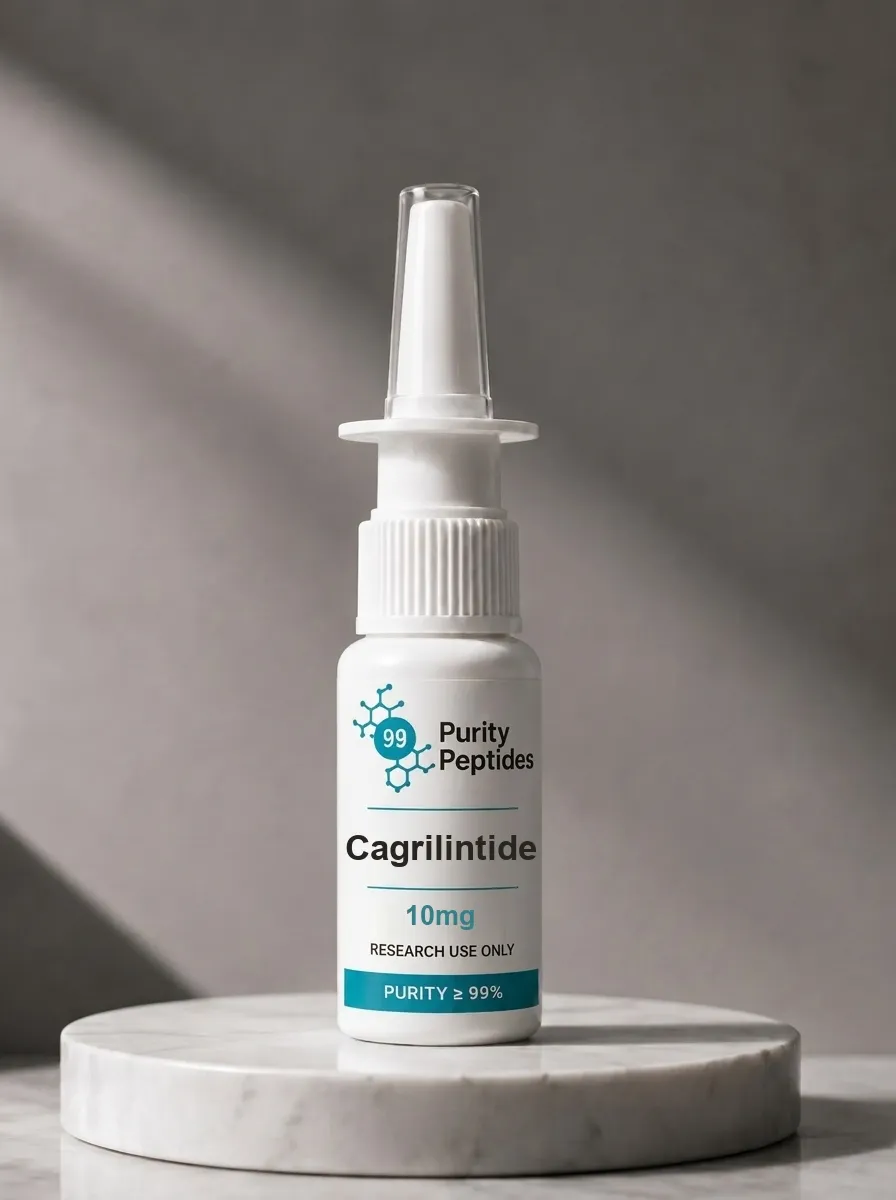
Cagrilintide 10mg Spray is a research-grade synthetic acylated amylin analog formulated in a pre-metered liquid vehicle for non-invasive laboratory research. As a long-acting co-agonist targeting both amylin receptors (AMY1, AMY2, AMY3) and calcitonin receptors (CTR), Cagrilintide is investigated for its capacity to stimulate hindbrain satiety pathways, delay gastric emptying, and modulate glucagon secretion. Formulated as a stabilized solution, each bottle contains 10mg total active peptide, analytically verified by HPLC to support reproducible scientific investigations in metabolic regulation and mucosal delivery kinetics.
HPLC certified
Independent analysis
Highest standard
Full traceability
Cagrilintide 10mg Spray is a synthetic lipid-modified peptide solution designed to evaluate non-invasive mucosal transport kinetics and central metabolic signaling. Acylation of the peptide chain provides a prolonged biological half-life and enhanced lipophilic properties, making it an excellent candidate for transport studies across epithelial membranes and intranasal olfactory-to-brain pathways. Unlike lyophilized powders that require reconstitution, this spray formulation offers a concentration-verified, pre-dissolved liquid format for consistent dispensing in laboratory trials.
Researchers continue to investigate Cagrilintide across metabolic biology, peptide pharmacology, and non-parenteral delivery systems. Its dual-agonist profile on amylin and calcitonin receptors enables the study of integrated satiety signaling in the hindbrain (area postrema and nucleus tractus solitarius) independently of pancreatic amylin secretion. In comparative research, Cagrilintide is frequently evaluated alongside GLP-1 receptor agonists (such as Semaglutide) to study synergistic metabolic pathways. Formulated with high-purity research-grade materials, Cagrilintide 10mg Spray is a specialized molecular tool for laboratories examining receptor binding kinetics and mucosal peptide transport under controlled conditions.
Cagrilintide 10mg Spray is a research-grade synthetic acylated peptide analog developed for laboratory investigations involving metabolic signaling, amylin receptor pharmacology, and non-invasive delivery systems. Classified as a long-acting dual amylin and calcitonin receptor agonist (AMY/CTR), its structure is derived from the native amylin sequence with specific amino acid substitutions and acylation (lipid modification) to enhance stability and binding affinity. The acylation side-chain increases its lipophilic properties, allowing researchers to study peptide behavior and receptor interactions over extended periods.
From a molecular research perspective, Cagrilintide Spray provides a valuable model for investigating epithelial transport kinetics and mucosal barrier passage. Standard peptide research is frequently limited to parenteral delivery; however, liquid spray preparations enable researchers to analyze how acylated lipophilic peptides interact with mucosal membranes, tight junction proteins, and local cellular receptors. This spray format is particularly suited for in vitro and in vivo studies of nasal and oral mucosal absorption.
Current laboratory investigations examine Cagrilintide's interaction with satiety-regulating pathways in the hindbrain. Studies focus on receptor binding dynamics in the area postrema (AP) and the nucleus tractus solitarius (NTS), where amylin and calcitonin receptors are highly expressed. Researchers use Cagrilintide to investigate downstream intracellular signaling, including cyclic adenosine monophosphate (cAMP) generation, and how these pathways modulate appetite regulation, gastric motility, and glucagon secretion in metabolic models.
Beyond isolated receptor pharmacology, Cagrilintide is extensively utilized in comparative research examining synergy between different metabolic pathways. Preclinical models evaluate Cagrilintide in combination with GLP-1 receptor agonists, such as Semaglutide, to analyze how simultaneous activation of hindbrain amylin pathways and hypothalamic GLP-1 pathways coordinates energy homeostasis. These studies help map the networks governing satiety and metabolic regulation in experimental models.
In neurobiology and central nervous system (CNS) research, the intranasal spray format provides a unique model for exploring blood-brain barrier (BBB) bypass. Researchers evaluate whether the lipophilic acylation of Cagrilintide, combined with olfactory mucosal delivery, facilitates transport into hindbrain structures via olfactory or trigeminal nerve pathways. This allows the study of central satiety signaling without the systemic variables associated with systemic administration.
Each bottle of Cagrilintide 10mg Spray is manufactured using solid-phase peptide synthesis (SPPS), followed by purification and acylation steps. The resulting active peptide is dissolved in a buffered, sterile carrier solution calibrated to ensure exact peptide mass per spray activation. Quality assurance procedures include reverse-phase high-performance liquid chromatography (HPLC) for purity analysis and liquid chromatography-mass spectrometry (LC-MS) for molecular identity confirmation.
To preserve the stability of the acylated peptide in solution, Cagrilintide Spray should be stored under controlled laboratory refrigeration (2°C to 8°C) and protected from light. Researchers minimize temperature fluctuations and environmental exposure to prevent peptide degradation or self-assembly (fibrillation), which can affect receptor binding. Proper handling maintains concentration consistency and ensures reproducible analytical results.
Scientific interest in Cagrilintide continues to expand as researchers seek to characterize its long-acting pharmacodynamics, receptor co-agonism, and synergistic metabolic effects. Nevertheless, many aspects of its cellular signaling and transport kinetics remain active areas of scientific inquiry. Ongoing studies continue to refine the understanding of acylated peptide behavior in biological systems. For this reason, Cagrilintide 10mg Spray should be regarded as an investigational compound whose primary value lies in advancing scientific knowledge of metabolic receptor biology.
Cagrilintide 10mg Spray is supplied exclusively for laboratory research and analytical applications. It is intended for Research Use Only (RUO) and is not approved for human consumption, therapeutic use, veterinary use, or diagnostic purposes.
Be the first to share your experience with this product and help other researchers!
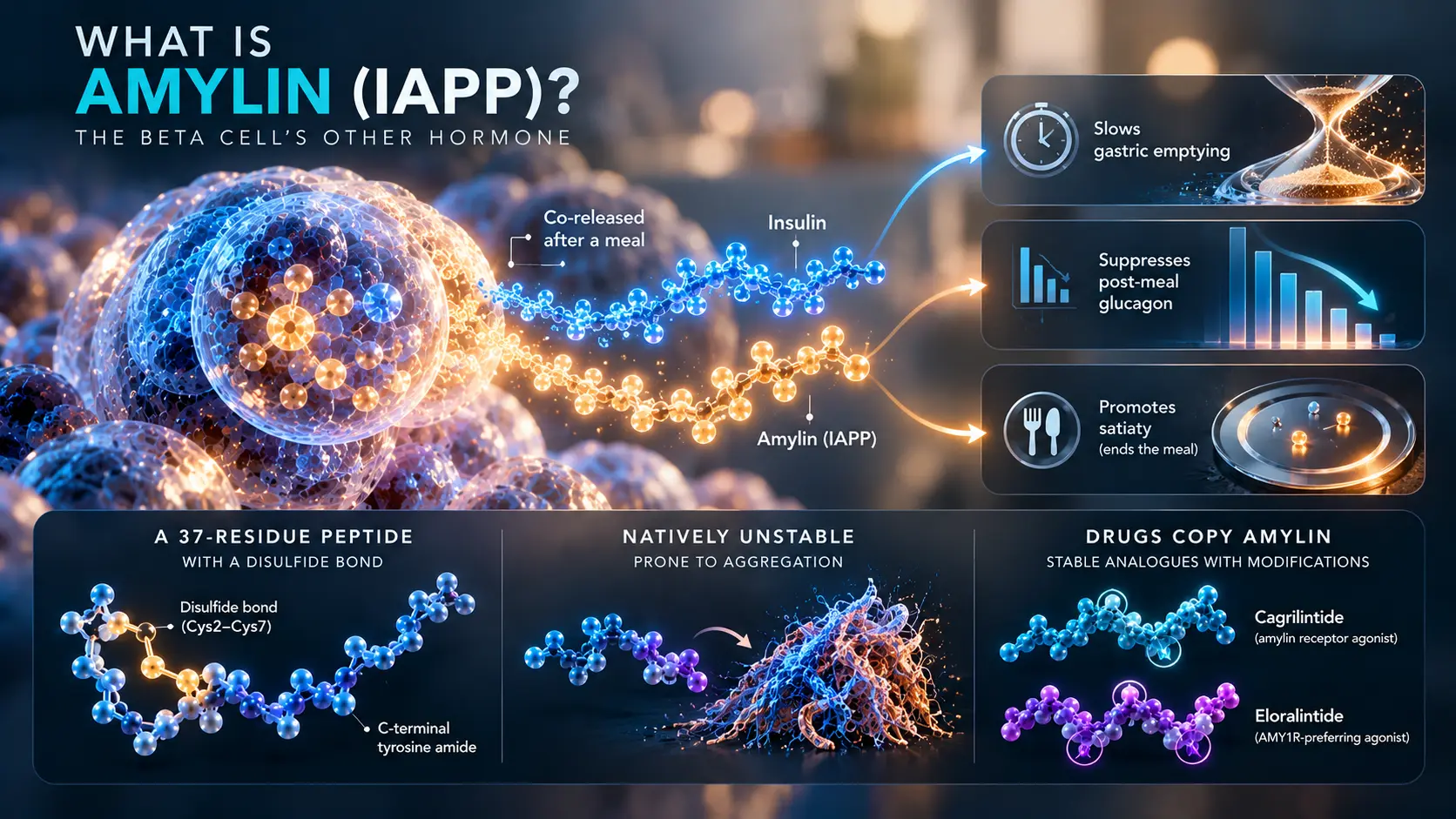
What is amylin? A 37-residue hormone the beta cell releases alongside insulin. Its real job, why it clumps, and how cagrilintide and eloralintide copy it.
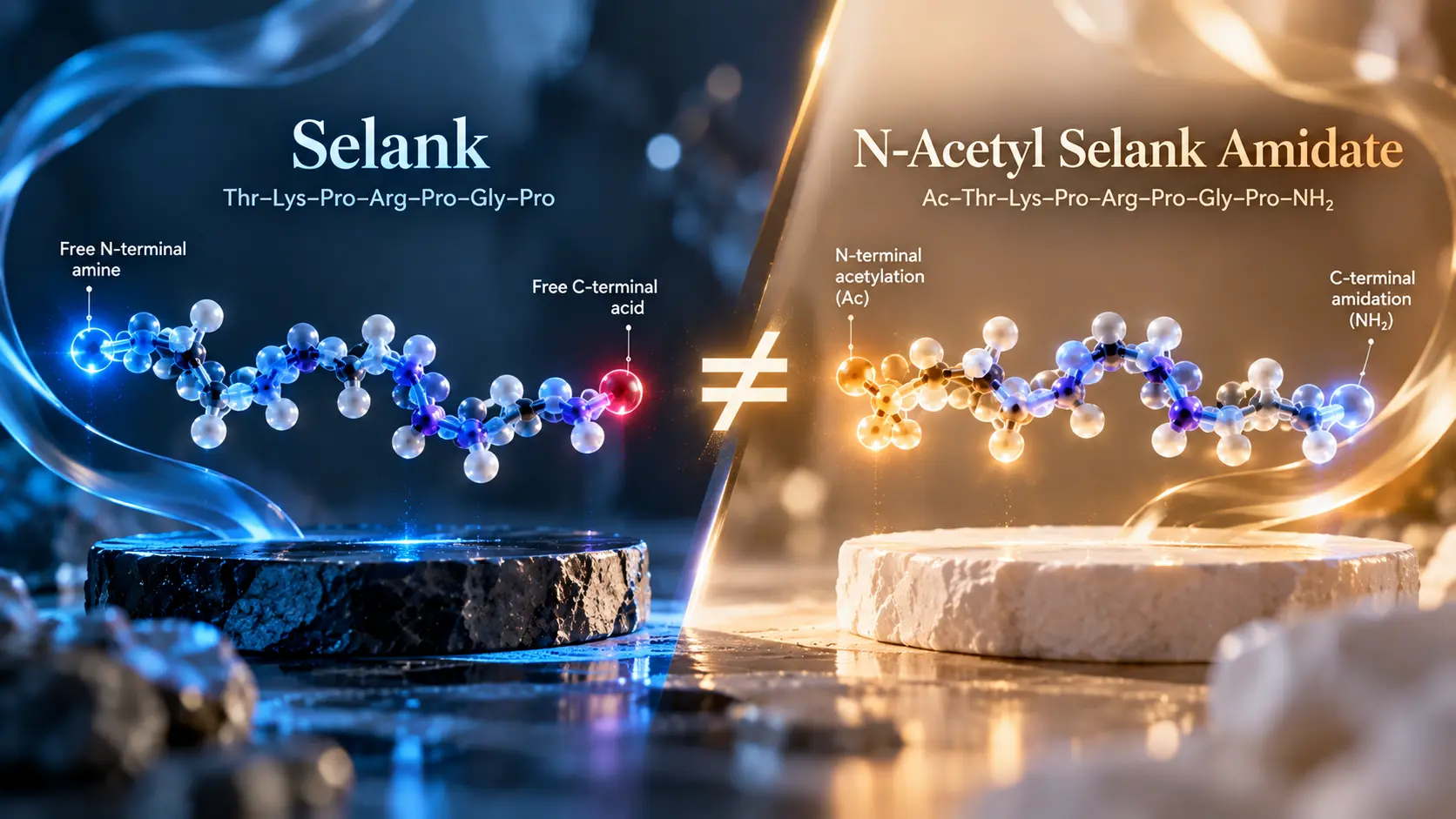
N-acetyl selank amidate is not Selank's full chemical name. Compare sequences, masses and database records, and learn how to tell the two apart on a COA.

Is CJC-1295 legal? It is not FDA-approved, left FDA Category 2 in 2024, was voted down for 503A compounding, and is banned by WADA. Verified status.
(faqs)