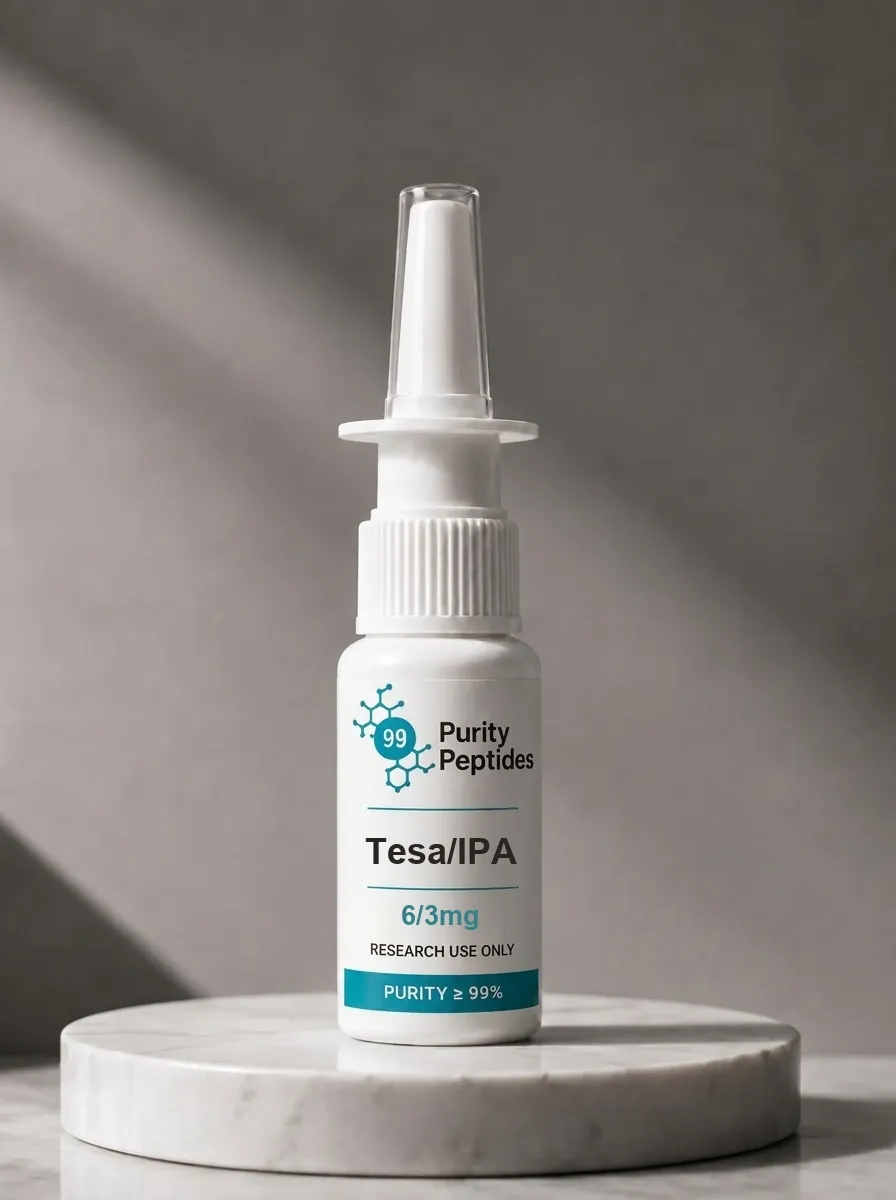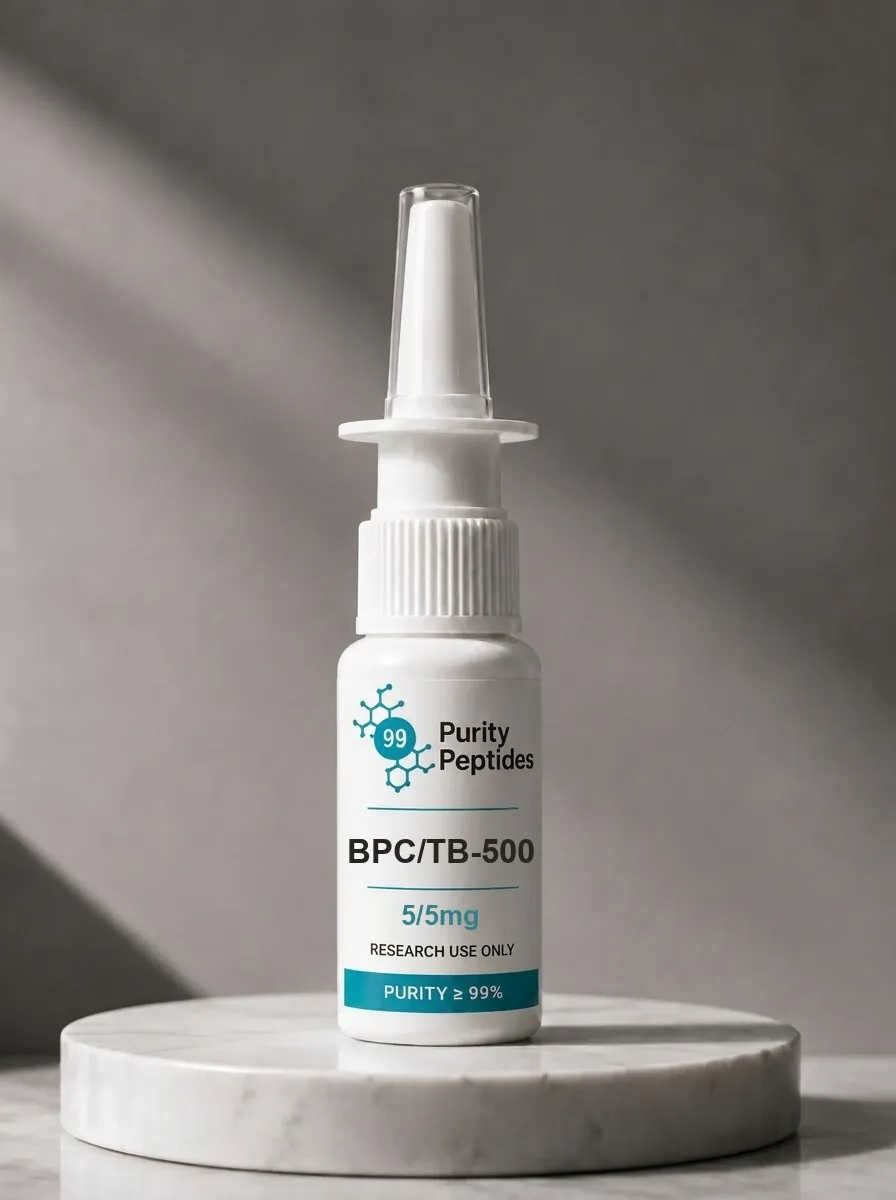
BPC/TB-500 5/5mg Spray is a combined research formulation containing 5mg of BPC-157 and 5mg of TB-500. The two peptides have been investigated separately in preclinical research related to tissue repair, angiogenesis, cellular responses, and inflammation. Direct evidence for the specific 5mg/5mg combination and spray formulation is much more limited, so the product should be studied as a combined experimental system rather than assuming that findings from either peptide alone establish an effect for the combination.
HPLC certified
Independent analysis
Highest standard
Full traceability
BPC-157 is a synthetic pentadecapeptide that has been investigated extensively in preclinical models of tissue injury and inflammation. Recent reviews describe evidence involving angiogenesis, fibroblast activity, vascular responses, and repair-related signaling, while also emphasizing that human evidence remains limited. A 2026 review concluded that BPC-157 has no approved formulation or validated dosing regimen and that its clinical development remains underdeveloped.
TB-500 is generally described in the research literature and regulatory documents as a fragment related to thymosin beta-4. Preclinical work on thymosin beta-4 and its derivatives has investigated angiogenesis, cell migration, and tissue-repair processes. Importantly, FDA's 2026 briefing document states that it did not identify clinical studies or human exposure data using TB-500 by any route, leaving human safety insufficiently characterized.
The combination therefore has a specific research rationale but should not be described as clinically validated combination therapy. FDA documents also identify reports involving blended BPC-157 and TB-500 products, including a reported adverse-reaction case, which reinforces the need to keep research descriptions separate from therapeutic claims.
BPC/TB-500 5/5mg Spray contains two distinct investigational peptides: BPC-157 and TB-500, supplied together at 5mg of each component. Combining the materials creates an experimental system in which researchers can investigate the behavior of two peptides that have independently attracted interest in tissue-repair and regenerative biology.
BPC-157 is a synthetic 15-amino-acid peptide derived from a gastric protein fragment. Its preclinical literature is unusually broad for an investigational peptide, with studies examining gastrointestinal, vascular, musculoskeletal, and other experimental injury models. A recent systematic review of BPC-157 in orthopaedic and sports medicine identified 36 studies through 2024, of which 35 were preclinical and only one was clinical. The review concluded that the evidence is promising but that clinical safety data remain absent or very limited.
Research into BPC-157 has examined processes including angiogenesis, fibroblast activity, inflammatory signaling, and vascular integrity. These observations provide a scientific basis for studying how the peptide interacts with repair-related biological systems. They remain predominantly preclinical findings, however, and should not be converted into claims of proven human tissue regeneration.
TB-500 requires even greater care in terminology. FDA's current regulatory materials identify TB-500 as thymosin beta-4 fragment (LKKTETQ), while the broader thymosin beta-4 literature concerns the full-length 43-amino-acid peptide. Results obtained with full-length thymosin beta-4 should therefore not automatically be presented as direct evidence for TB-500.
Preclinical research involving thymosin beta-4 and related fragments has examined angiogenesis, cell migration, and tissue-repair mechanisms. These mechanisms are relevant to the scientific rationale for investigating TB-500, but FDA reported in 2026 that it had not identified clinical studies or human exposure data using TB-500 through any route. Human safety consequently remains insufficiently characterized.
The combined BPC-157/TB-500 formulation is therefore best understood as a research product rather than as a proven regenerative treatment. The available literature supports studying the individual components in controlled experimental systems, but there is not an equivalent body of evidence demonstrating that a 5mg/5mg combination produces a particular outcome.
The spray format adds another variable that researchers may need to consider. Route and formulation can affect peptide stability, absorption, local exposure, and analytical recovery. Published research on BPC-157 and TB-500 does not establish a validated pharmacokinetic profile for this specific 5mg/5mg spray. Product-specific formulation data should therefore be taken from the relevant batch documentation rather than inferred from studies using injections, purified solutions, animal models, or different formulations.
For laboratories, the combination may be useful in comparative studies examining individual versus combined peptide exposure, formulation behavior, peptide stability, analytical recovery, and cellular or tissue-model responses. A well-controlled experimental design should include appropriate single-peptide and vehicle controls so that any observed response can be attributed to the combination rather than assumed.
The 5mg/5mg designation identifies the nominal amount of each peptide in the product. It is not a clinical dose, administration recommendation, or evidence that the two compounds should be used together in humans.
Quality assessment is particularly important for a multi-peptide product. Researchers should verify identity, composition, purity, and formulation characteristics using batch-specific documentation and appropriate analytical methods. Exact purity percentages, concentrations per spray, stability periods, or analytical results should not be invented when those data are not supplied.
The current regulatory context also warrants explicit caution. FDA lists BPC-157 and TB-500 among bulk substances for which it has identified significant safety-related uncertainties, including immunogenicity and peptide-related impurity/API-characterization concerns. For TB-500 specifically, FDA states that human exposure data were not identified. These limitations do not eliminate the value of laboratory research, but they make unsupported therapeutic claims inappropriate.
BPC/TB-500 5/5mg Spray is consequently positioned for controlled research into peptide biology, formulation science, tissue-repair models, cellular responses, and comparative peptide studies. The strongest description is not that the combination is a proven healing product, but that it provides a defined two-peptide research system whose individual components have attracted substantial preclinical interest while the combination itself remains insufficiently characterized.
Be the first to share your experience with this product and help other researchers!
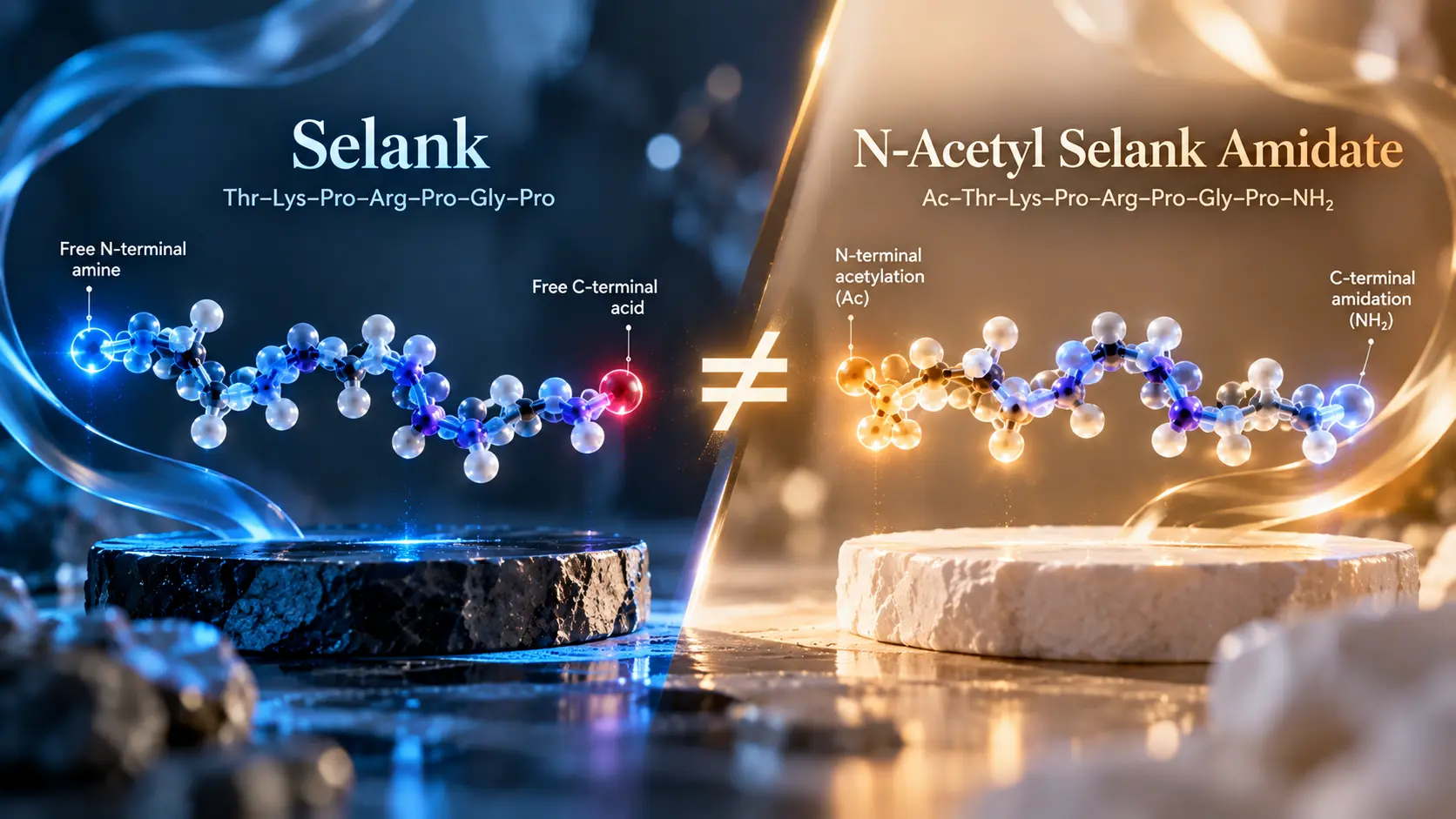
N-acetyl selank amidate is not Selank's full chemical name. Compare sequences, masses and database records, and learn how to tell the two apart on a COA.
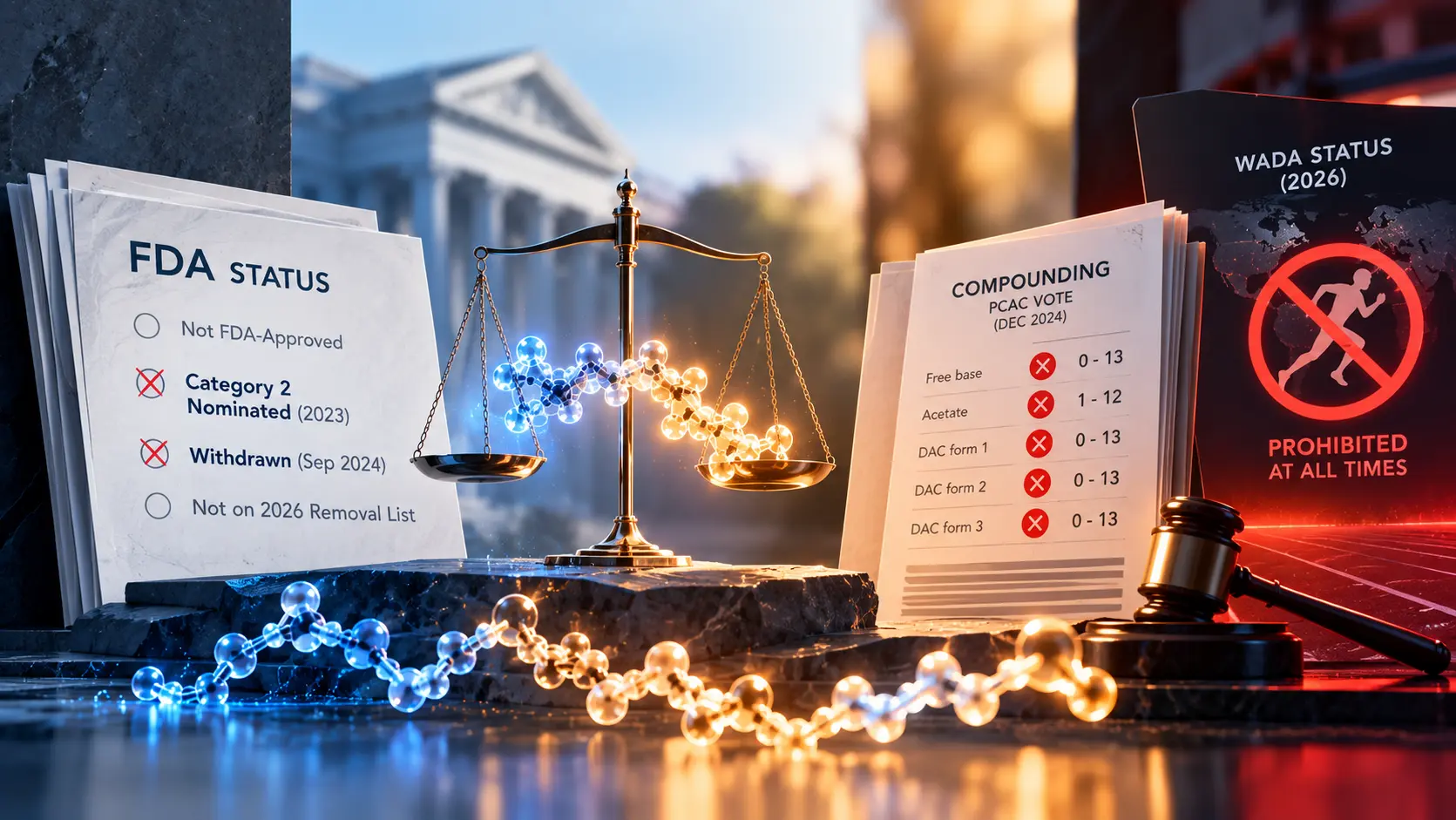
Is CJC-1295 legal? It is not FDA-approved, left FDA Category 2 in 2024, was voted down for 503A compounding, and is banned by WADA. Verified status.
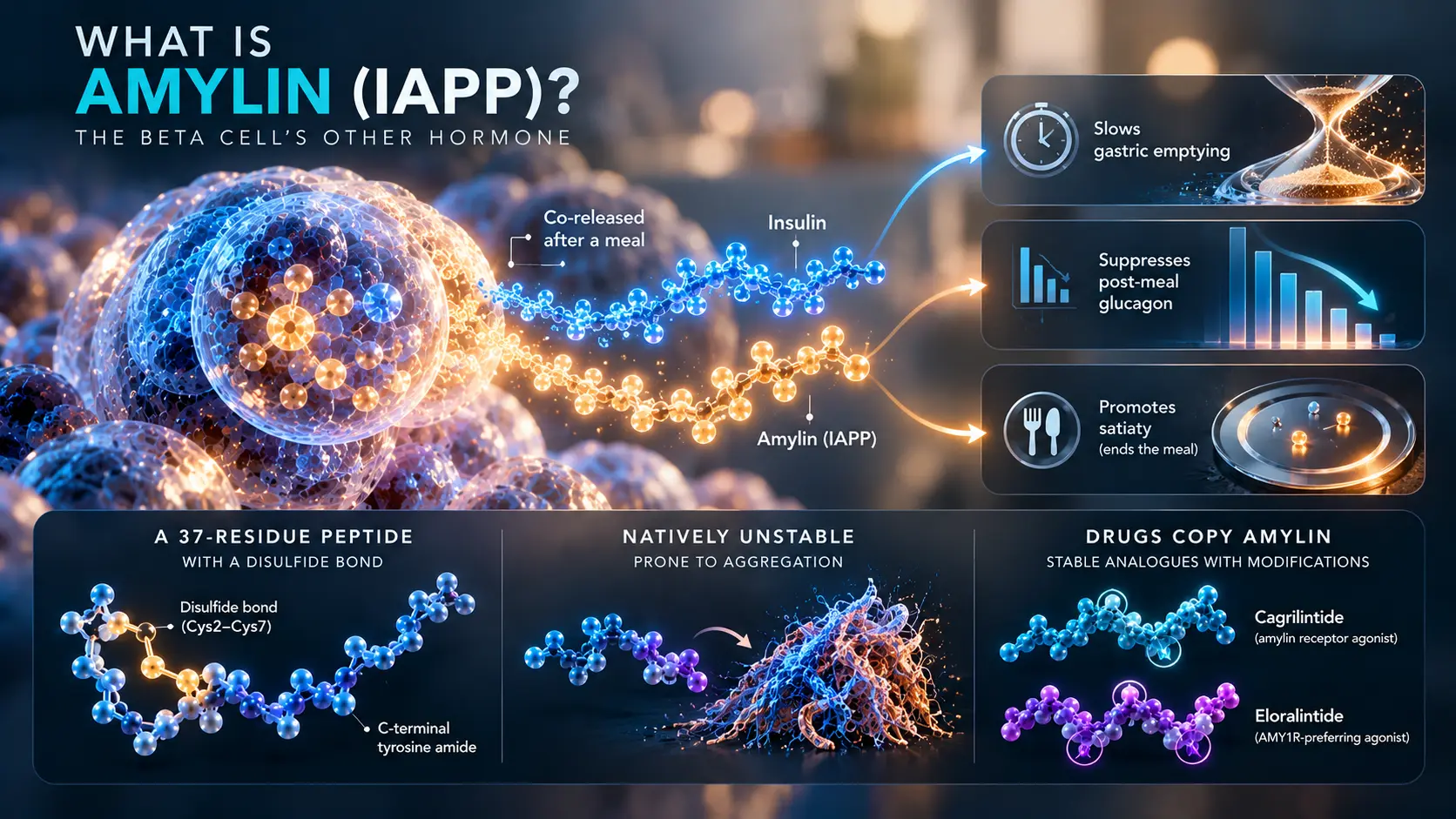
What is amylin? A 37-residue hormone the beta cell releases alongside insulin. Its real job, why it clumps, and how cagrilintide and eloralintide copy it.
(faqs)